
Reviewed · BHAKTAPUR TOURS
Patan and Bhaktapur Boutique Tour
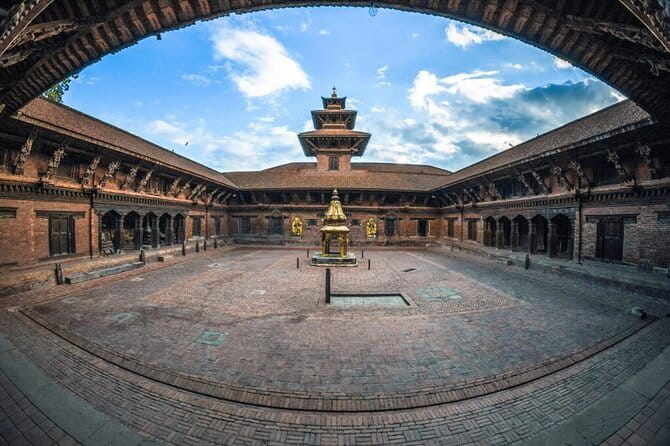
Patan and Bhaktapur give you two very different views of the Kathmandu Valley. Patan is an artist’s city, with courtyards, Buddhist monasteries, carved water spouts, and a palace square packed into a walkable old center. Bhaktapur feels broader and more theatrical, with pottery workshops, towering temples, and open squares.
I like the way this tour begins beyond the headline sights, at Patan Dhoka and Pimbahal, where old water systems, pilgrim routes, and local legends help you understand the city. I also like the small-group format, capped at 10 people, plus air-conditioned transport between sites. The main consideration is cost: the $40 tour price does not include lunch or the entrance fees for the historic squares, museums, and Golden Temple.
In This Review
- Key points at a glance
- Why Patan and Bhaktapur work well together
- Starting at Patan Dhoka and Pimbahal
- Nag Baha Galli and the Golden Temple
- Manga Hiti, Patan Museum, and the palace square
- Bhaktapur Durbar Square and Pottery Square
- Taumadhi Square and Nyatapola Temple
- Dattatraya Temple and the Peacock Window
- What the $40 price really covers
- Guides, group size, and the pace of the day
- Who should book this Patan and Bhaktapur tour?
- Should you book it?
- FAQ
- Where does the tour start?
- Where does the tour end?
- How long does the tour last?
- Is lunch included?
- Are entrance fees included?
- How many people can join the tour?
- What is the minimum age and fitness requirement?
Key points at a glance
- Patan starts with local history: Patan Dhoka, Pimbahal, Nag Baha Galli, and Manga Hiti show daily life beyond the main palace square.
- The Golden Temple requires an extra fee: This three-story Buddhist pagoda is one of Patan’s most memorable religious sites.
- Patan Museum adds useful context: Its setting in a restored Malla-era palace helps explain the art you see outside.
- Bhaktapur offers hands-on atmosphere: Pottery Square lets you watch artisans shape and sell handmade clay vessels.
- Nyatapola Temple is the visual high point: The five-story temple dominates Taumadhi Square.
- The day is long but well structured: The 8:30 am start, transport, sightseeing, and lunch or coffee stop fill about nine and a half hours.
Why Patan and Bhaktapur work well together
If you have only one full day for the Kathmandu Valley’s old royal cities, this pairing makes sense. Patan and Bhaktapur are both former Malla kingdom centers, yet they offer different experiences.
Patan, also called Lalitpur, rewards close attention. Its old lanes lead to courtyards, shrines, monastic buildings, and carved stone fountains. The major square is important, but the smaller stops before it give you a better feel for how the city worked.
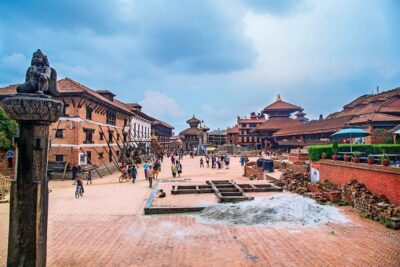
Bhaktapur is more spacious and easier to read at a glance. Its Durbar Square, Pottery Square, Taumadhi Square, and Dattatraya area create a sequence of grand public spaces. You get large temples and palace buildings, but also the sight of people carrying on traditional crafts.
The tour runs for about nine hours and 30 minutes, including transport and time for lunch and coffee. That makes it a full day rather than a quick sightseeing loop. You should be ready for repeated walking on old streets and stone-paved squares, so a moderate level of fitness is expected.
More of Bhaktapur:
- Private Bhaktapur and Nagarkot Day Tour From Kathmandu
★ 5.0 · 305 reviews - Day Trip to Bhaktapur and Panauti from Kathmandu
★ 5.0 · 184 reviews - Bhaktapur & Patan Durbar Square Day Tours
★ 5.0 · 122 reviews
Starting at Patan Dhoka and Pimbahal
The day begins at 8:30 am from Filli Chai near Kathmandu Guest House Road in central Thamel. Pickups are also available from Boudha and KGH Hotel, according to the tour details. The activity ends back at the meeting point.
Your first stop is Patan Dhoka, the old entrance gate to Patan. Its painted images of the Asta Matrika, the eight mother goddesses, give you an immediate introduction to the religious art found throughout the city. The stop lasts about 15 minutes and costs nothing.
From there, Pimbahal adds a more human scale. The area helps you picture how pilgrims, traders, and other old visitors cooked, collected water, and rested. You also hear the story of Gaya Baje, a Hindu priest connected with the site.
I like this opening because it avoids rushing straight to a palace square. The stories of water, food, travel, and worship make the later temples easier to understand. The drawback is that the first stops may feel modest if you want grand architecture from the first minute, but their value comes from the explanation.
Nag Baha Galli and the Golden Temple
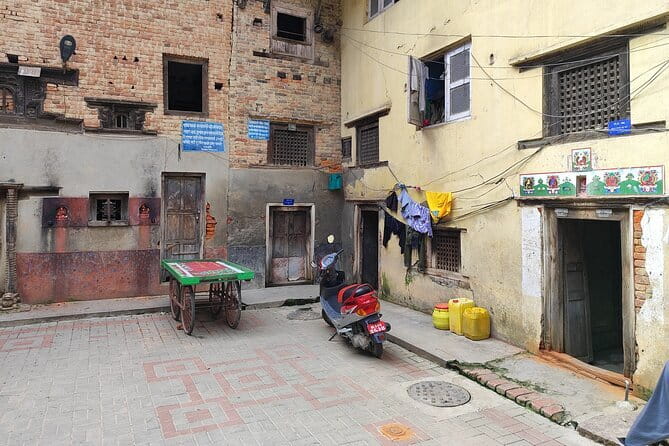
Nag Baha Galli leads you to Nagbahal, a courtyard associated with serpents. It is also linked with Samyak Mahadan, a major giving festival held every five years. The scheduled visit lasts around 30 minutes.
This is the kind of place where a guide matters. A quick walk through a courtyard can seem simple until you learn what the space means, how religious festivals use it, and why serpents appear in local traditions. The route gives you an early look at the community courtyards that make Patan feel different from a standard monument-only visit.
The Golden Temple, formally called Hiranya Varna Mahavihar, is one of Patan’s essential stops. This three-story pagoda has a gilded roof and detailed carvings, and it is dedicated to Gautam Buddha. The planned visit is about 30 minutes.
Admission to the Golden Temple is not included. The supplied cost information lists the Durbar Square entrance at NRP 1,000, about US$9, paid in cash, and recommends at least an NRP 100 donation to the Royal Kumari. Because the details group several admission charges together, I would carry enough Nepalese rupees for the Golden Temple and the historic squares rather than rely on a card.
The Golden Temple is a religious site, not simply a photo stop. You should enter with suitable respect and follow any local instructions. Thirty minutes is enough for an introduction, though not for a slow study of every carving.
Manga Hiti, Patan Museum, and the palace square
Manga Hiti, also called Manga Dhara, is a historic stone water spout in the center of Patan. It dates to the Lichhavi period and is decorated with figures of gods and other carved designs. The stop lasts about 15 minutes and has no separate admission charge listed.
Water spouts are easy to overlook when a city is full of temples. Here, the stop connects the old city to practical life. It shows that architecture was not only about royal display or worship. Water collection was part of the city’s basic design, and the stonework gave even useful public structures a strong visual character.
Patan Museum occupies a restored Malla-era palace and takes about 30 minutes. Its displays focus on Nepal’s art, culture, and history. Admission is not included.
I consider this one of the most useful parts of the day for first-time visitors. After seeing carvings and religious buildings in the streets, you have a place where the art can be considered more carefully. The palace setting is also part of the experience, so you are not stepping into a plain modern gallery.
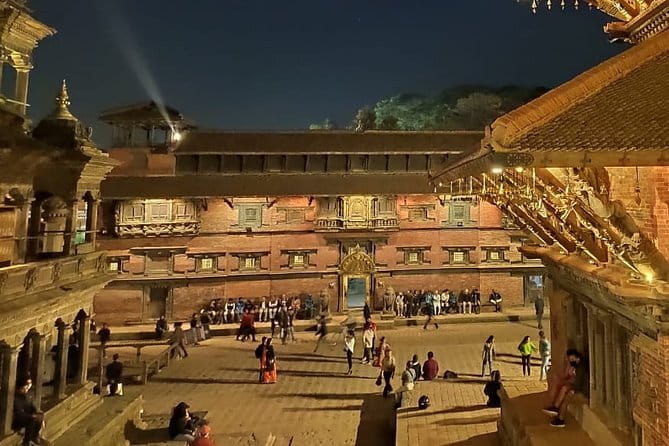
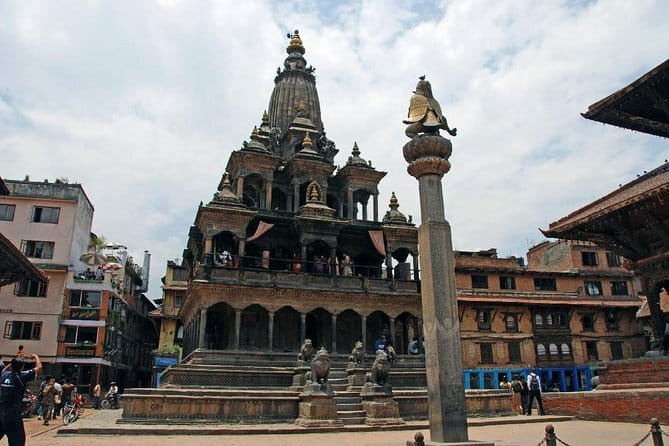
Next comes Patan Durbar Square, a UNESCO World Heritage Site and former royal center of the Malla kings. Expect intricately carved temples, courtyards, palace buildings, and a concentrated display of Newar design. The listed visit is about 30 minutes.
That half-hour gives you a strong overview, but it is not generous if you want to linger at every shrine or take detailed photographs. The tour’s advantage is that the guide can help you focus on the most important structures. Its limitation is the fixed pace. If Patan’s architecture is your main reason for booking, you may wish for more unstructured time.
More of Patan:
- Kathmandu: Private Patan and Bhaktapur Sightseeing Tour
★ 4.7 · 64 reviews - Patan and Bhaktapur City Full Day Tour
★ 5.0 · 24 reviews - City tour of Bhaktapur and Patan Durbar Square
★ 4.5 · 20 reviews - Patan Heritage Tour – Private/Small Group
★ 5.0 · 14 reviews
Bhaktapur Durbar Square and Pottery Square
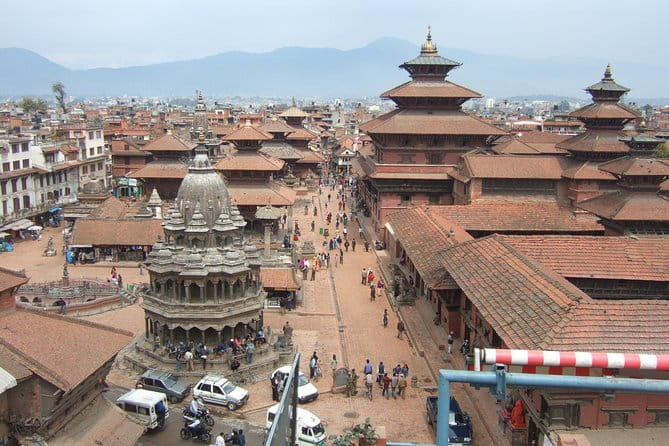
The tour then moves to Bhaktapur, another UNESCO World Heritage Site. Bhaktapur Durbar Square presents old palace architecture, temples, courtyards, and traditional Newar forms in a larger setting than Patan’s central square. The scheduled visit is 30 minutes, and admission is not included.
Bhaktapur’s appeal comes from the way its sights connect. You can move from formal royal buildings to working craft spaces without leaving the old city. The square offers the grand setting, while the nearby lanes show that Bhaktapur is not only an open-air monument.
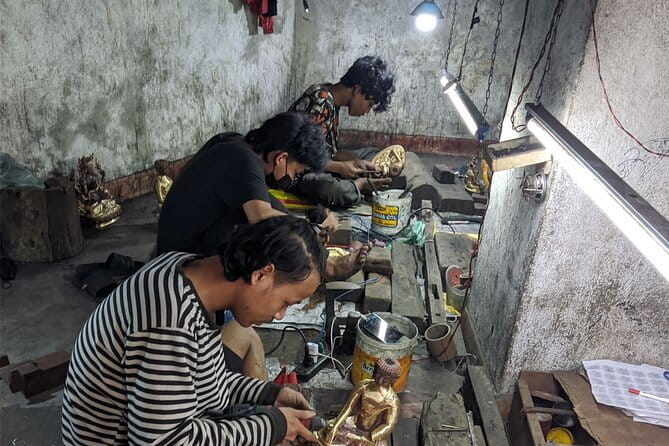
Pottery Square is scheduled for another 30 minutes. Local artisans make and sell handmade clay pottery here, giving you a direct view of a traditional craft. You might see pots at different stages of shaping and drying, depending on the activity at the time of your visit.
This stop is especially good for anyone who prefers living culture to a series of old facades. It also gives the day a change of pace after the temples and palace architecture. The visit is not described as a formal workshop, so you should expect observation rather than a guaranteed hands-on class.
Taumadhi Square and Nyatapola Temple
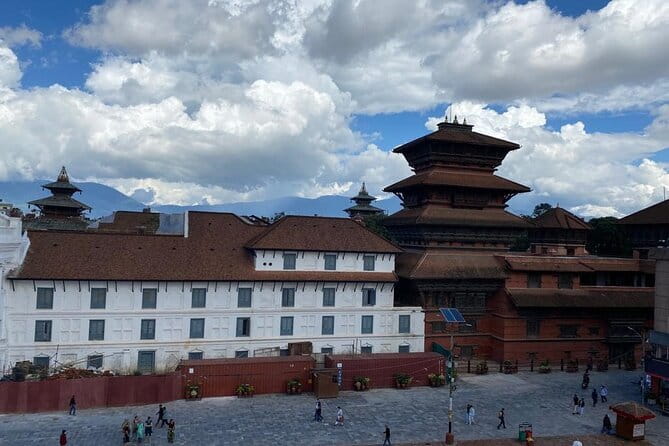
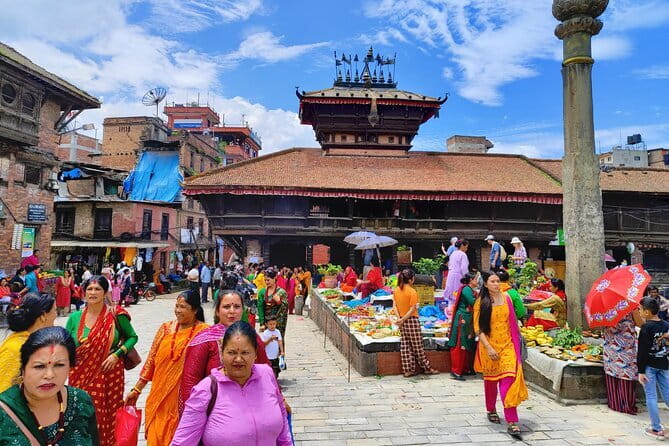
Taumadhi Square is home to Nyatapola Temple, the five-story pagoda that dominates the area. Dedicated to Siddhi Lakshmi, it is among Nepal’s tallest and most striking temples. The stop lasts about 30 minutes, with admission not included.
Nyatapola is the kind of building that makes an immediate impression even before you know its story. Its height and layered design give Taumadhi Square a strong sense of place. The guide can explain the temple’s religious role and the meaning of its carved details, while you take in the full scale from the square.
The scheduled time is enough to see the square and understand why the temple matters. If you want to climb, photograph every level, or study nearby buildings, you may need to keep moving. The tour is designed to cover two cities in one day, so it favors range over a long, quiet stay at any one monument.
Dattatraya Temple and the Peacock Window
The final Bhaktapur highlight is Dattatraya Square, home to Dattatraya Temple. The temple honors the Hindu deity understood as a union of Brahma, Vishnu, and Shiva. The square is also known for the Peacock Window, a carved architectural detail that rewards a careful look.
The stop lasts about 30 minutes and has no admission fee listed. This is a quieter counterpoint to Nyatapola Temple. Instead of focusing only on size, you are looking at religious meaning, wood carving, and the smaller details that make Bhaktapur’s old quarters so memorable.
The itinerary also includes about 30 minutes in Patan, or Lalitpur, for connected pathways, open spaces, an old palace, stupas, and peaceful temples. The supplied schedule places this stop at the end, though the exact order may vary as the guide manages the day. I would treat this as additional walking and orientation rather than a separate major monument visit.
What the $40 price really covers
At $40 per person, this tour offers solid value if you want transport, a guide, and two historic cities in one day. You are not paying only for a vehicle. The guide helps connect small places such as Pimbahal and Nagbahal with the larger sights, and the air-conditioned vehicle saves you from arranging transport between Kathmandu, Patan, and Bhaktapur.
WiFi is provided on board, which may be useful during a long day, though the tour’s main benefit is the route and guiding rather than onboard technology. The group maximum is 10 people, small enough for questions without the feel of a large coach tour.
You still need to budget for lunch, coffee, and entrance fees. The tour information gives NRP 1,000, about US$9, for Durbar Square entrance, paid in cash, and recommends a minimum NRP 100 donation to the Royal Kumari. Since several sites list admission as not included, carry extra Nepalese cash and confirm the exact fees with the guide.
The price is strongest for someone who values convenience and interpretation. If you are comfortable arranging local transport and exploring alone, you may spend less independently. You will also have more control over how long you stay at each square.
Guides, group size, and the pace of the day
Named guides praised in the supplied feedback include Shreya Karki and Santosh. Shreya is specifically associated with clear explanations of Nepal’s culture, history, and traditions, while Santosh is described as charming and helpful on wider Kathmandu sightseeing days. Your assigned guide may differ, so treat these names as useful indicators of the company’s guiding style, not a guarantee of who will lead your departure.
A group of up to 10 is a practical middle ground. You get the social ease of a shared tour, but the guide should still be able to answer questions and keep the group together in narrow lanes. The tradeoff is that the pace cannot be tailored fully to one person’s interests.
The day starts at 8:30 am and finishes at the original meeting point. Because transport and a lunch or coffee stop are included in the total duration, the actual walking time is spread across many sites. Wear comfortable shoes and plan for a day with frequent stops, short walks, and old urban surfaces.
Children must be at least nine years old. The operator states that babies and children under nine cannot join for insurance reasons, including the inability to sit on a parent’s lap. The tour also calls for moderate physical fitness.
Who should book this Patan and Bhaktapur tour?
I would choose this tour if you are visiting Kathmandu for the first time, want historical context without hiring a private car, or have one open day for the valley’s old cities. It suits adults, older children aged nine and above, and anyone who likes a mix of major monuments and ordinary city details.
It is also a good choice if you want more than the usual postcard stops. Patan Dhoka, Pimbahal, Nagbahal, and Manga Hiti give the route a local texture. Pottery Square adds a working craft tradition, while the museum helps make sense of the art outside.
I would hesitate if you want a slow photography day, a private itinerary, or a hands-on pottery lesson. Eleven listed sightseeing areas in about nine and a half hours means the schedule is full. You will see a lot, but you may not have time to sit quietly in every courtyard.
Free cancellation is available if you cancel at least 24 hours before the local start time. Changes or cancellations inside that window are not accepted for a refund.
Should you book it?
Book this tour if your priority is efficient coverage of Patan and Bhaktapur with a guide, vehicle, and small group. The strongest part is the balance between major sights such as Patan Durbar Square and Nyatapola Temple and smaller stops that explain water, worship, craft, and neighborhood life.
Before booking, set aside cash for admissions and donations, accept that lunch is extra, and expect a physically active day. If you can handle that pace, $40 is a fair way to see two of the Kathmandu Valley’s most important old cities without having to arrange every transfer yourself.
FAQ
Where does the tour start?
The tour starts at 8:30 am from Filli Chai on Kathmandu Guest House Road in Kathmandu. Pickup is also available from Boudha and KGH Hotel in central Thamel.
Where does the tour end?
The activity ends back at the meeting point.
How long does the tour last?
The tour lasts approximately nine hours and 30 minutes. This total includes transportation and time for a lunch and coffee stop.
Is lunch included?
No. Lunch and coffee are not included in the ticket price.
Are entrance fees included?
No. Entrance fees are extra. The tour information lists Durbar Square admission at NRP 1,000, about US$9, payable in cash, and recommends at least NRP 100 as a donation to the Royal Kumari.
How many people can join the tour?
The group has a maximum of 10 travelers.
What is the minimum age and fitness requirement?
Children must be at least nine years old. The tour requires a moderate level of physical fitness.
Recently added around Kathmandu
- Kathmandu : Swambhunath & Durbar Square Guided Half Day Tour★ 3.3 · 3 reviews
- Private Day Tour in Kathmandu Valley Rim with Bhaktapur Sightseeing★ 5.0 · 3 reviews
- From Kathmandu / Pokhara / Chitwan: River Rafting – 1 Day★ 4.6 · 3 reviews
- Nepali Cooking training & Cultural Homestay Experience★ 5.0 · 3 reviews
- Private 3-Hour Nagarkot Sunset Tour from Kathmandu★ 3.5 · 3 reviews
- From Kathmandu: Everest Base Camp Landing Helicopter Tour★ 5.0 · 3 reviews
- 4 UNESSCO World heritage sites of Kathmandu-private tour★ 5.0 · 3 reviews
- Kailashnath Mahadev, Panauti and Namo Buddha Monastery Sightseeing★ 5.0 · 3 reviews
Bhaktapur Tours, compared.
Private Bhaktapur and Nagarkot Day Tour From Kathmandu
Read our review →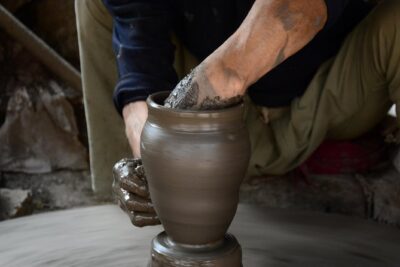
Day Trip to Bhaktapur and Panauti from Kathmandu
Read our review →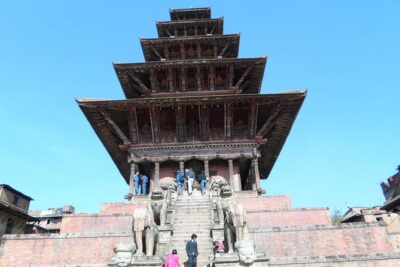
Nagarkot Sunrise & Bhaktapur UNESCO Heritage Private Tour
Read our review →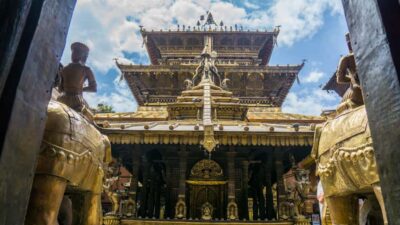
Bhaktapur & Nagarkot Day Tour with Lunch – Private/Group
Read our review →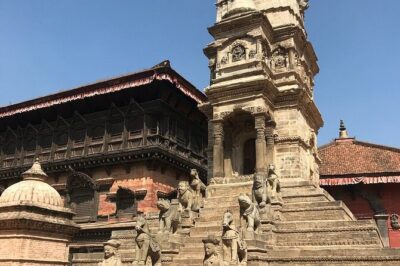
Nagarkot Sunrise & Bhaktapur Heritage Tour -Private Full Day Trip
Read our review →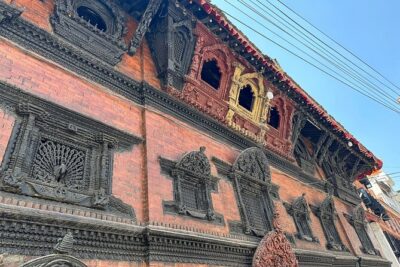
Browse the lists this tour appears in