
Reviewed · MARKETS
Oldest Local Market Walking Tour With Living Goddess Kumari
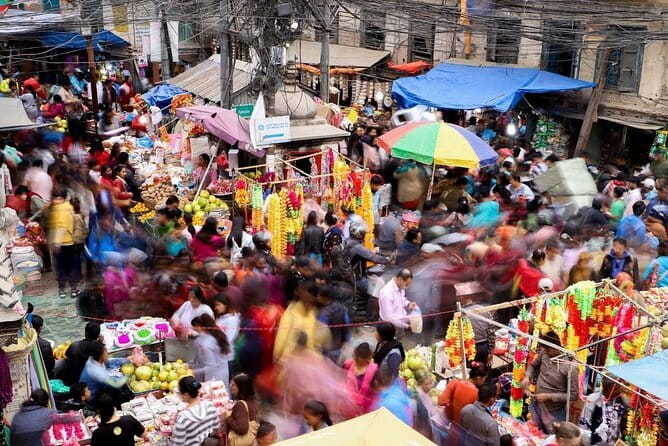
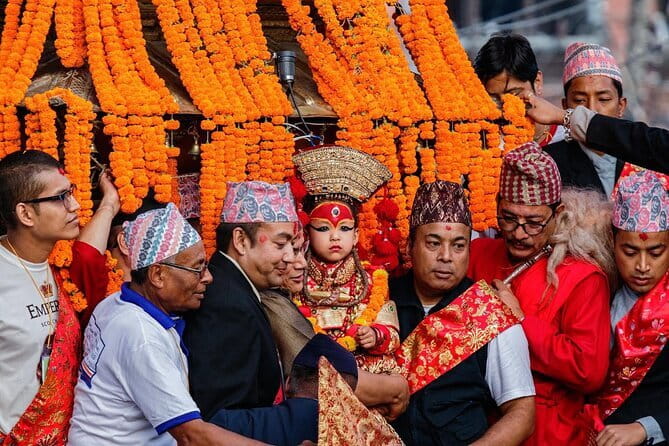
The most unusual part of this two-hour walk is the chance to see Kumari, Nepal’s living goddess, a prepubescent girl regarded as the earthly form of the goddess Taleju. The route also takes you through Ason, Kathmandu’s oldest local market, where spices, textiles, household goods, and souvenirs crowd the streets.
I like the mix of daily market life and royal history, and I like that the guide explains both Hindu and Buddhist customs instead of treating the Kumari as a curious photo stop. The main drawback is cost: $39 does not include the NPR 1,000 Kathmandu Durbar Square entry fee, and the short two-hour schedule leaves little spare time.
In This Review
- Key points to know before you book
- Why this short Kathmandu walk feels different
- Starting at Chhaya Devi Complex in Thamel
- Ason market: Kathmandu’s old commercial heart
- Kathmandu Durbar Square and its royal setting
- Meeting the Kumari of Kathmandu
- Hinduism and Buddhism in one compact route
- What the $39 price really covers
- Who will get the most from this walk
- Practical details that affect your day
- Should you book the Kumari and Ason walk?
- FAQ
- How long does the Oldest Local Market Walking Tour with Living Goddess Kumari last?
- Where does the tour start?
- Where does the tour finish?
- Is Kathmandu Durbar Square entry included?
- What language is the tour conducted in?
- Is bottled water included?
- Can I cancel for a full refund?
Key points to know before you book
- Ason gives you a close look at ordinary Kathmandu life, with market stalls, shops, traditional buildings, spices, textiles, and local goods.
- Kathmandu Durbar Square links the market walk to Nepal’s royal and religious past, with palaces, courtyards, and temples.
- The Kumari visit is the tour’s defining moment, offering a look at a living religious tradition rather than a museum display.
- Santos is one named guide associated with the experience, and the tour is conducted in English.
- The $39 price includes a guide, taxes, VAT, and bottled water, but not the NPR 1,000 square admission charge or food.
- The two-hour format suits a first look at central Kathmandu, though it is too short for a slow, detailed exploration of every monument.
Why this short Kathmandu walk feels different
Many city walks focus on buildings. This one is more interesting because it connects commerce, faith, and royal power in a compact stretch of central Kathmandu.
You begin at Chhaya Devi Complex near Thamel, then head toward Ason. The route brings you from a modern meeting point into one of the city’s oldest market areas. That change matters. You are not simply walking between attractions. You are seeing how Kathmandu’s sacred center and working city sit side by side.
Ason is known for its busy streets and tightly packed shops. You might find spices, textiles, souvenirs, and other everyday goods. The market is a useful place to watch local routines, but it is not a calm heritage site. Expect movement, noise, and plenty of visual clutter. That is part of its appeal, but anyone hoping for a quiet stroll should set expectations accordingly.
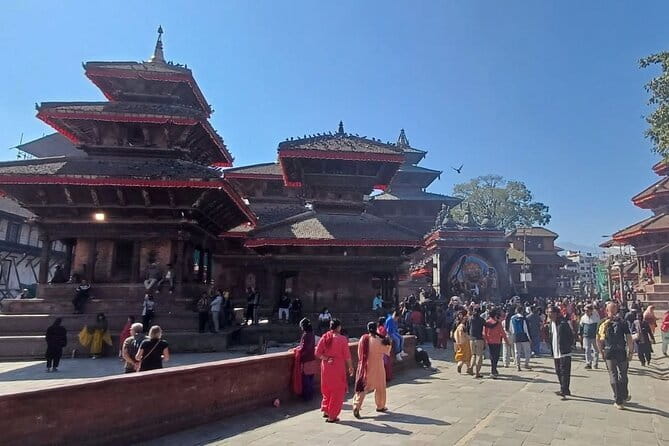
The tour then moves into Kathmandu Durbar Square, one of the valley’s major historic centers. Here, palaces, temples, and courtyards show the artistic and religious importance of the old Kathmandu kingdom. The square gives the market walk a wider frame: Ason shows the city in use, while the square shows the power and belief systems that shaped it.
More Kathmandu markets:
- Kathmandu Secret Food Crawl & Local Market Tour
★ 4.7 · 54 reviews - Kathmandu Food Crawl & Market Tour
★ 5.0 · 26 reviews - Best Nepali Cooking Class in Thamel with Local Market Trip
★ 5.0 · 26 reviews
Starting at Chhaya Devi Complex in Thamel
The meeting point is the main gate side of Chhaya Devi Complex in Thamel. This is practical for people staying in the Thamel area, since you do not need to arrange a separate transfer to begin the walk.
You should arrive with comfortable shoes and a little patience for city streets. The exact starting time depends on availability, so check the schedule when booking. Since the experience lasts only two hours, arriving on time is important. A late start could reduce the time available at Ason or Kathmandu Durbar Square.
The walk returns to Chhaya Center after the visit. No transport is listed, so you should understand this as a walking experience from beginning to end. Bring water, although one bottle of mineral water is included.
The guide is the key to making the route worthwhile. English is the tour language, and Santos is specifically associated with one of the bookings. The strongest comments about the experience point to clear explanations, detailed storytelling, and friendly guidance. That is especially useful here, since the meaning of the Kumari and the relationship between Hindu and Buddhist traditions are not always obvious from the street.
Ason market: Kathmandu’s old commercial heart
Ason is the first major reason to book this walk. It is described as Kathmandu’s oldest local market area, and its value comes from the way it still functions as a place of trade rather than only as a preserved attraction.
You can expect shops and stalls selling spices, textiles, souvenirs, and other goods. The market gives you a chance to see products that connect with everyday Nepalese life, not just items arranged for sightseeing. Even if you do not plan to shop, the area helps you understand the practical side of Kathmandu.
I like this part because it puts religious monuments into context. The old center of Kathmandu was not built as a silent museum. People bought and sold goods, met neighbors, followed religious customs, and moved through the same streets. A guide can point out details you might miss while trying to avoid other pedestrians.
Ason may also be the least comfortable section of the tour for some people. The streets are active, and the market setting means you should watch your footing and stay close to the group. The information provided does not give a specific route through the market or promise shopping time, so think of Ason as a guided cultural walk, not a dedicated shopping trip.
If you want to buy something, ask the guide before stopping for long. With only two hours, extended browsing could take time away from Kathmandu Durbar Square and the Kumari visit. You can also ask about the goods you see. A short explanation of a spice, textile, or religious item may be more useful than buying something quickly.
Kathmandu Durbar Square and its royal setting
Kathmandu Durbar Square is the main historic stop on the walk. It sits in the heart of Kathmandu and contains palaces, temples, and courtyards linked to the old rulers of the Kathmandu Valley.
The square is valuable even if you have already seen temples elsewhere in Nepal. Its buildings bring together royal power, religious practice, and local art in one place. A guide can help you read the square as more than a collection of attractive façades. You will learn how the site reflects the valley’s Hindu and Buddhist traditions, which often overlap in Kathmandu.
The tour is listed as a two-hour guided experience, including the visit to the square and the return to Chhaya Center. That is enough for a focused introduction, but not enough for a slow examination of every courtyard or temple. If you want extensive architectural detail or time for independent photography, plan a separate visit.
Entry to Kathmandu Durbar Square costs NPR 1,000 and is not included in the $39 tour price. This is the most important extra expense to remember. At the exchange rate used when you book, the total cost will be higher than the advertised tour price.
Still, the guide adds value here. You are paying not only for movement through the city but also for explanations of the buildings, beliefs, and traditions connected with them. For a first visit, that can prevent the square from becoming a blur of similar-looking shrines and carved wood.
More shopping streets in Kathmandu:
- Kathmandu Food & Drink and Shopping Rickshaw Tour
★ 5.0 · 48 reviews - Oldest Local Market Walking Tour with Living Goddess Kumari
★ 5.0 · 8 reviews - Kathmandu Food Crawl & Market Tour
★ 5.0 · 8 reviews - Kathmandu: Food, Drink and Shopping Rickshaw Tour
★ 4.7 · 7 reviews
Meeting the Kumari of Kathmandu
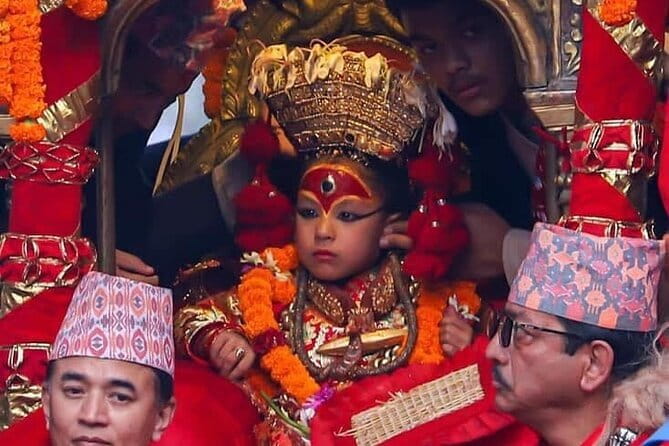
The Kumari is the tour’s central draw. In Nepalese tradition, the Kumari is a young girl regarded as the living embodiment of Taleju, a goddess with an important place in Kathmandu’s religious life.
She resides in the Kumari Ghar, the historic Kumari House in Kathmandu Durbar Square. Seeing a living religious figure in an active tradition is very different from viewing a statue or an old painting. The experience asks you to pay attention to local beliefs on their own terms, even if they are unfamiliar.
The visit should be approached respectfully. The Kumari is not a performer, and this is not a standard celebrity sighting. Keep your behavior guided by the tour leader and by the rules at the site. The supplied details do not specify photography rules or the exact viewing arrangement, so ask the guide what is permitted before taking out your camera.
One recent booking described the Kumari’s gaze as impressive and expressed a strong sense of honor at the visit. That reaction makes sense: the power of the encounter comes from its religious meaning and its human presence. You are looking at a living tradition that continues today, not simply learning about something that ended centuries ago.
At the same time, you should not expect a long personal meeting. The information promises the opportunity to witness the Living Goddess, but it does not describe a private audience, extended conversation, or guaranteed photography. The best approach is to value the cultural encounter rather than measure it by the number of minutes you spend looking.
Hinduism and Buddhism in one compact route
Kathmandu is especially rewarding when you look at Hindu and Buddhist traditions together. This tour is designed to explain both, rather than presenting the Kumari as an isolated curiosity.
The Kumari tradition is rooted in Hindu belief, yet Kathmandu’s religious life has long included close contact between Hindu and Buddhist communities. The temples, courtyards, market practices, and rituals around the old center reflect that shared setting. A clear English explanation can help you understand how the two traditions appear in the same urban space.
This is where the guide matters most. One English-speaking guide can point out symbols and customs as you walk, while another might focus more on architecture or royal history. Santos is the only guide name provided, and the available comments describe him as an excellent communicator with detailed explanations. You should still treat guide style as something that can vary by departure.
The short duration keeps the experience approachable. You do not need a full day of religious study to gain a useful introduction. You will receive a compact look at the beliefs connected with Ason, the square, and the Kumari. If you already have a strong background in Nepalese religion, the tour may feel introductory rather than advanced.
What the $39 price really covers
The price is $39 per person. It includes an English-speaking guide, government taxes and VAT, and bottled mineral water.
It does not include meals, other drinks, personal expenses, or the NPR 1,000 entry fee for Kathmandu Durbar Square. There is no meal break listed, so eat before the walk if you need something substantial. Ason has shops and food activity, but the tour does not promise a food tasting or restaurant stop.
For value, I would judge this experience by the quality of the explanation rather than by the number of places visited. Ason and Kathmandu Durbar Square are close enough to fit into two hours, but their meaning is not always obvious without context. If you want a guide to connect the market, the old royal center, and the Kumari tradition, the price is reasonable for a short introduction.
If you are comfortable exploring historic squares on your own, the value is less clear. You will still need to pay the entry fee, and you may prefer to spend more time inside the square than this tour allows. The tour makes the most sense for a first visit, especially if you want the cultural background explained in English.
Who will get the most from this walk
I would recommend this experience to first-time visitors staying near Thamel who want an efficient introduction to central Kathmandu. It suits you if a local market, religious traditions, and a major historic square sound more appealing than a long list of monuments.
It is also a good fit if you want to understand the Kumari within her cultural setting. The market and square give the visit a broader frame, so the Living Goddess is not treated as a strange stand-alone attraction.
Families with older children may find the subject memorable, though the tour data does not specify a minimum age or family program. People with limited time in Kathmandu may appreciate the two-hour format. English speakers will benefit most directly because English is the stated tour language.
You may want another option if you need a slow pace, extensive shopping time, a food stop, or a full architectural study of the square. The route is compact and focused. It is not designed as a full-day exploration of Kathmandu.
Practical details that affect your day
Free cancellation is available up to 24 hours before the activity for a full refund. You can also reserve now and pay later, which helps if your Kathmandu plans may change.
The meeting point is the main gate side of Chhaya Devi Complex at Thamel, while the return point is Chhaya Center. Confirm the exact meeting instructions and starting time before you leave your hotel, especially if you are unfamiliar with the complex.
Wear footwear suitable for city walking. Carry some Nepalese rupees for the NPR 1,000 square admission fee and any personal purchases. Food and beverages are not included, and only one bottle of mineral water is supplied.
Because the tour is short, keep your schedule after it flexible enough for a meal or further independent sightseeing. You may want more time at Kathmandu Durbar Square once the guide has introduced its main features.
Should you book the Kumari and Ason walk?
Book it if you want a focused cultural introduction to Kathmandu and the chance to see the Kumari is high on your list. The strongest reasons are the unusual living-goddess tradition, the contrast between Ason market and the old royal square, and the English explanations from guides such as Santos.
Keep the extra NPR 1,000 entry fee in your budget, and do not expect a long private encounter or an unhurried tour of every monument. For a first look at Kathmandu’s religious and historic center, $39 is a fair price. For independent visitors who already know the city or want extensive time at the square, the short schedule may feel limiting.
FAQ
How long does the Oldest Local Market Walking Tour with Living Goddess Kumari last?
The experience lasts two hours.
Where does the tour start?
The meeting point is at the main gate side of Chhaya Devi Complex in Thamel, Kathmandu.
Where does the tour finish?
The tour returns to Chhaya Center.
Is Kathmandu Durbar Square entry included?
No. The Kathmandu Durbar Square entry fee is listed separately at NPR 1,000.
What language is the tour conducted in?
The tour is conducted in English with a live English-speaking guide.
Is bottled water included?
Yes. One bottle of mineral water is included.
Can I cancel for a full refund?
Yes. You can cancel up to 24 hours in advance for a full refund.
More Walking Tours in Kathmandu
- Kathmandu Food and Drink Walking Tour
★ 5.0 · 266 reviews - Kathmandu: Food and Drink Walking Tour
★ 4.9 · 119 reviews - Walking Street Food Tour in Kathmandu
★ 5.0 · 111 reviews - Walking Food Tour in Hidden Local Eateries of Kathmandu
★ 5.0 · 40 reviews
Recently added around Kathmandu
- Kathmandu : Swambhunath & Durbar Square Guided Half Day Tour★ 3.3 · 3 reviews
- Private Day Tour in Kathmandu Valley Rim with Bhaktapur Sightseeing★ 5.0 · 3 reviews
- From Kathmandu / Pokhara / Chitwan: River Rafting – 1 Day★ 4.6 · 3 reviews
- Nepali Cooking training & Cultural Homestay Experience★ 5.0 · 3 reviews
- Private 3-Hour Nagarkot Sunset Tour from Kathmandu★ 3.5 · 3 reviews
- From Kathmandu: Everest Base Camp Landing Helicopter Tour★ 5.0 · 3 reviews
- 4 UNESSCO World heritage sites of Kathmandu-private tour★ 5.0 · 3 reviews
- From Kathmandu Budget: 15 Day Everest Base Camp Trek★ 5.0 · 3 reviews
Markets, compared.

Best Nepali Cooking Class in Thamel with Local Market Trip
Read our review →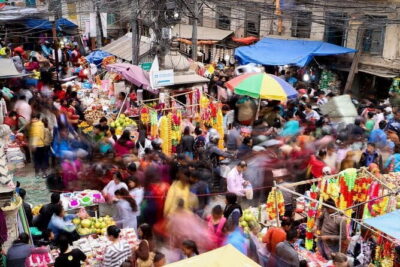
Oldest Local Market Walking Tour with Living Goddess Kumari
Read our review →
Half Day Cooking Class in Thamel with Local Market Visit
Read our review →
Local Bazaar Walking Tour in Kathmandu with Professional Guide
Read our review →Browse the lists this tour appears in