
Reviewed · EVEREST BASE CAMP TREKS
From Kathmandu Budget: 15 Day Everest Base Camp Trek
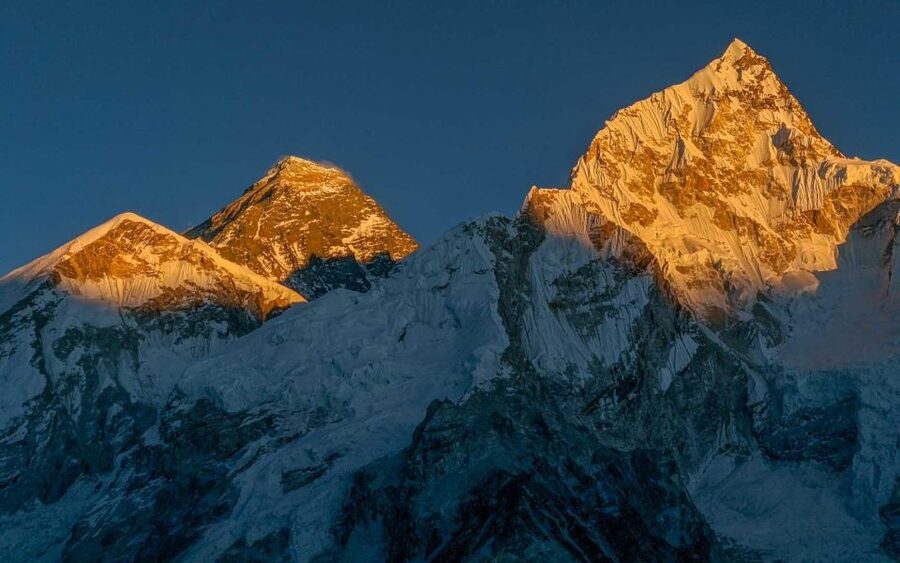
Everest Base Camp is only half the story here. The real prize comes the next morning at Kala Patthar, a rocky summit at 5,545 meters with broad views of Everest, Lhotse, and Nuptse. You also pass through Sherpa villages, cross long suspension bridges, and spend time in the high Khumbu rather than simply rushing to a photo stop.
I like the 15-day pace, which includes an acclimatization day in Dingboche and a flexible approach to rest and walking speed. I also like the practical value: permits, guesthouse lodging, a guide, trekking poles, and Kathmandu transfers are included for $796 per person.
The main caution is the transport. This is not a flight-based Lukla itinerary. You travel by shared jeep or bus between Kathmandu and Salleri, making the first and final days long, roughly 10 hours each, and you still pay separately for food, drinks, travel insurance, and any emergency rescue.
In This Review
- Key points before you book
- What the $796 price really covers
- Kathmandu to Salleri: a long first day
- Surkhe to Namche Bazaar, through bridges and villages
- Tengboche and the first high monastery
- Dingboche’s rest day is not wasted time
- Lobuche and the approach to Base Camp
- Kala Patthar delivers the big mountain view
- The return route through Panboche and Namche
- Lukla to Kathmandu by shared road transport
- Guesthouses, meals, and what to pack
- Weather, timing, and who should choose it
- Should you book this Everest Base Camp trek?
- FAQ
- How long is the Everest Base Camp and Kala Patthar trek?
- Where does the trek begin?
- Is transport to and from Kathmandu included?
- Is this a private trek?
- What languages does the guide speak?
- Is food included in the price?
- Is travel insurance included?
- What altitude does Everest Base Camp reach?
- What is the highest point of the trek?
Key points before you book
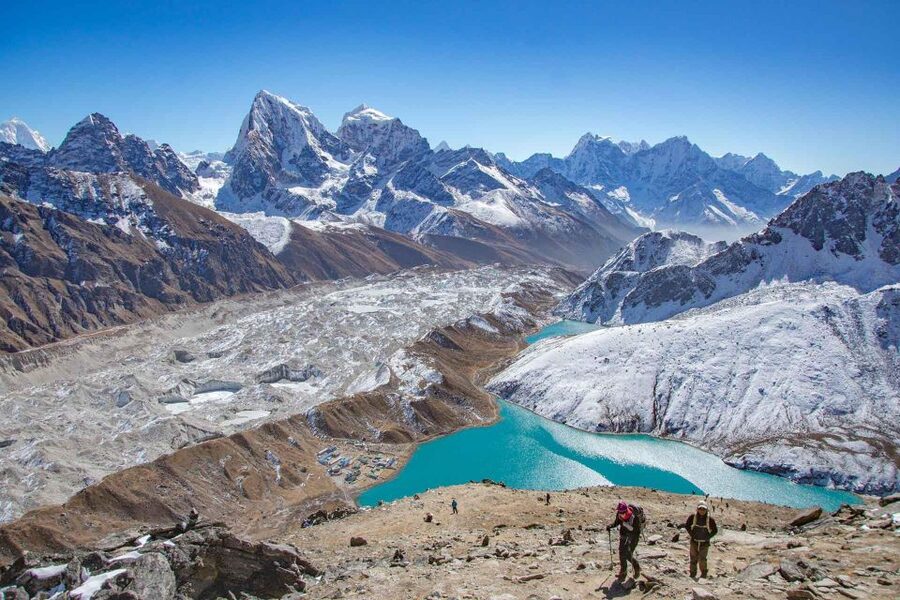
- Kala Patthar is the best viewpoint: The 5,545-meter climb gives you the clearest stated views of Everest, Lhotse, and Nuptse.
- The route starts overland: You reach the trekking area through Salleri and Tham Danda by shared jeep, rather than beginning with a Lukla flight.
- Dingboche includes an acclimatization day: This pause matters before the route climbs toward Lobuche and Base Camp.
- Base Camp sits at 5,364 meters: The famous expedition starting point is reached on Day 9, followed by a night at Gorak Shep.
- The walking group is private, but road transfers are shared: Your trek is arranged for your own party, while the jeep or bus sections are shared.
- Guide support is a major part of the package: English, Nepali, and Hindi are available, with first aid and trekking poles supplied.
What the $796 price really covers
At $796, this is a budget-minded Everest Base Camp package with several useful inclusions. You receive hotel pickup and drop-off in Kathmandu, round-trip overland transport by shared bus or jeep, an English-speaking trekking guide, official permits and documents, guesthouse accommodation, and a trekking pole.
The guide’s food, accommodation, personal expenses, and insurance are also covered. That matters on a long high-altitude trek, since guide costs can otherwise add a surprising amount to the total.
The price does not include your own food or drinks. You buy those during the trek, so your actual spending will be higher than the advertised rate. Travel insurance is also your responsibility, and it needs to cover emergency rescue at altitude. This is not a minor technicality. The package specifically excludes rescue costs, so insurance is essential.
I see the price as good value for someone who wants the basic structure handled without paying for a luxury lodge trek. You get a private trekking arrangement and guide support, but the road journey and accommodation are practical rather than polished. Ask for the full list of included documents and confirm how meals are handled before departure.
More ways to trek to Everest Base Camp:
- Everest Base Camp Trek – 14 Days
★ 5.0 · 1,499 reviews - Everest Base Camp Helicopter Tour landing at Everest View Hotel
★ 5.0 · 668 reviews - Everest Base Camp Trekking
★ 5.0 · 485 reviews
Kathmandu to Salleri: a long first day
Day 1 begins with an early pickup in Kathmandu. The drive to Salleri takes about 10 hours and covers roughly 266.9 kilometers, ending around 2,600 meters.
This is a useful part of the route to understand before booking. You avoid the cost and weather risk of a Lukla flight, but you pay for it with a long road day. Shared jeep or bus travel can be tiring, especially after arriving in Nepal or if you are not used to winding mountain roads.
Salleri gives you a lower and slower entry into the Everest region. You are not walking yet, but the overland approach can help the route feel gradual. Keep your passport, warm layer, water, and any medication close at hand rather than buried in luggage.
On Day 2, you continue by jeep to Tham Danda, then walk to Surkhe. The full day takes about seven to nine hours. This combination of road travel and trekking is less elegant than a direct Lukla start, but it gets you into the walking route without an airport transfer.
Surkhe to Namche Bazaar, through bridges and villages
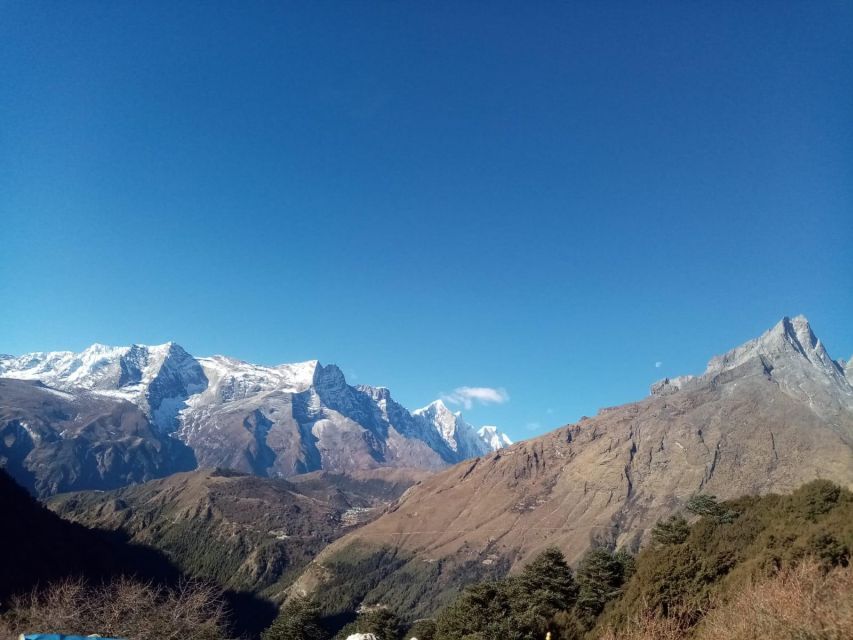
Day 3 takes you from Surkhe to Phakding in six to seven hours. This is where the trip settles into its walking rhythm. The route passes through forested sections, mountain villages, and suspension bridges over deep gorges.
Phakding is an important overnight stop because it breaks up the climb toward Namche. The trail is already active with porters, local residents, and trekkers, but the main attraction is the gradual change in terrain as you move higher.
Day 4 is the demanding walk from Phakding to Namche Bazaar. Allow six to seven hours, finishing at 3,440 meters. Namche is the Khumbu region’s main trading and meeting center, with a more substantial village feel than the smaller stops below.
The climb to Namche is one of the first days when altitude becomes a serious concern. Walk slowly, drink regularly, and resist the temptation to race ahead simply because the distance looks manageable. Your guide can adjust the pace, and that flexibility is one of the most useful features of a private group.
Tengboche and the first high monastery
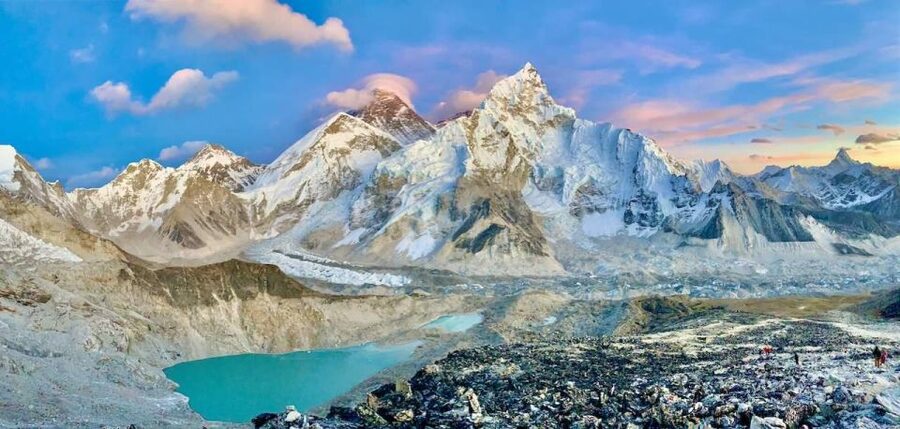
Day 5 leads to Tengboche Monastery in about five hours, reaching 3,860 meters. This is one of the route’s most memorable stops because the monastery gives the journey a cultural center, not just a mountain goal.
Prayer flags and Buddhist features become more common as you move through the Khumbu. Tengboche also provides a strong contrast with the physical effort of the trail. You have time to notice the religious character of the villages and the role of monasteries in this high mountain region.
The next day, you walk five to six hours to Dingboche at 4,350 meters. The air is thinner here, and even a moderate walking day can feel much harder than the distance suggests. Guesthouse accommodation is included, but you should expect a simple mountain stay rather than hotel-style comfort.
More treks starting in Kathmandu:
- Nagarkot Sunrise View and Day Hiking from Kathmandu
★ 5.0 · 471 reviews - Annapurna Circuit Trek with Tilicho Lake
★ 5.0 · 368 reviews - Everest Base Camp Trekking – 13 Day
★ 5.0 · 365 reviews - Everest Base Camp Trek -14 Days
★ 5.0 · 321 reviews
Dingboche’s rest day is not wasted time
Day 7 is set aside for acclimatization in Dingboche. This is one of the itinerary’s strongest choices. At this height, adding a rest day gives your body time to adjust before the route climbs toward Lobuche, Gorak Shep, and Base Camp.
An acclimatization day does not have to mean lying in bed all day. The details of the day are not specified, so ask your guide what walking plan is suitable for your group and health. The key point is that you are not gaining sleeping altitude on this day.
The package’s flexible style is helpful here. One guide named Milan is specifically associated with changing the pace around a participant’s health and allowing an extra rest day when needed. Another guide, Krisna, is described as attentive to group needs and willing to adapt. Since guide assignment should be confirmed before booking, treat these names as useful points to ask about rather than a guarantee.
Lobuche and the approach to Base Camp
Day 8 takes you to Lobuche in about five hours, at 4,910 meters. This is a short day by clock time, but altitude makes it serious. You are now well above the level where most people walk with ease, and cold, wind, and tired legs can all affect your pace.
Lobuche is a staging point for the biggest day of the trip. Keep your evening simple. Organize your warm clothes, water, snacks, and head covering before bed so you are not sorting gear when you are tired.
Day 9 is the long push to Everest Base Camp and back to Gorak Shep. The stated walking time is about eight hours, Base Camp reaches 5,364 meters, and Gorak Shep sits at about 5,180 meters.
Base Camp is the symbolic high point of the trek. It is the starting area for Everest expeditions, and reaching it gives you a direct connection to the mountain’s climbing history. You are surrounded by the Khumbu’s highest peaks, but Base Camp itself is not the best viewpoint for seeing the full shape of Everest. The route wisely adds Kala Patthar the next morning.
This day demands patience. You need to reach Base Camp and still return to Gorak Shep, so a private guide who watches your condition can make a real difference. Do not judge success by speed. At this altitude, getting there safely is the achievement.
Kala Patthar delivers the big mountain view
Day 10 begins with the climb to Kala Patthar, at 5,545 meters. The full day is listed as about seven hours, followed by a descent to Pheriche at 4,120 meters.
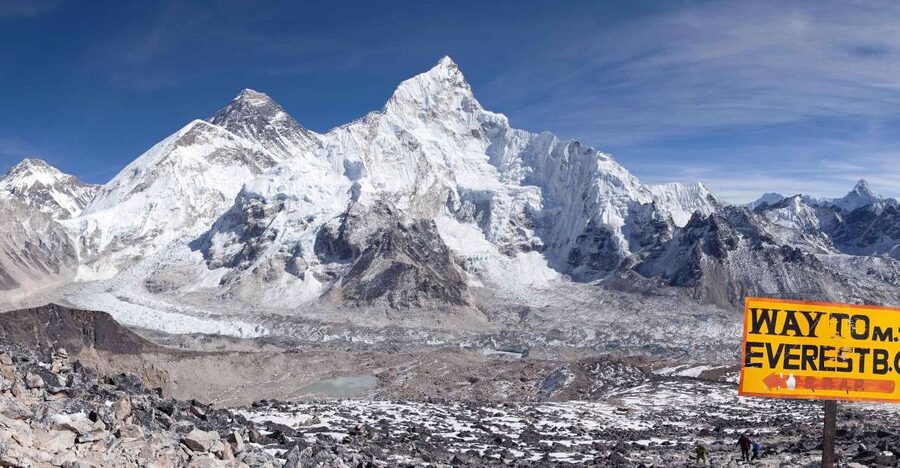
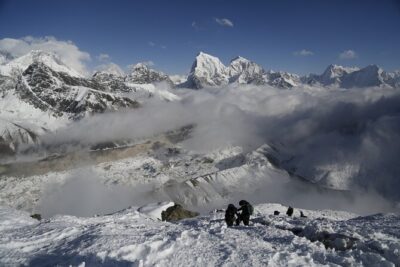
This is the viewpoint I would prioritize. From Kala Patthar, you are positioned for broad views of Everest, Lhotse, Nuptse, and nearby peaks. Sunrise or sunset can provide the most striking light, although the mountain weather is unpredictable and clear conditions are never guaranteed.
The summit is a rocky outcrop, not a gentle overlook. You need warm clothing, proper hiking shoes, and enough patience for a slow ascent. The reward is not simply reaching another number on the altitude chart. It is having time to look across the high peaks from a point designed by nature for exactly that view.
Descending to Pheriche is welcome after two demanding high-altitude days. It also lowers your sleeping elevation, which can make the night more comfortable. Still, do not assume the downhill section will feel easy. Tired knees and loose trail can be as frustrating as the climb.
The return route through Panboche and Namche
Day 11 runs from Pheriche to Panboche in five to six hours, ending at 3,985 meters. This is a quieter return stage, with time to appreciate the villages and mountain setting without the pressure of reaching Base Camp.
Day 12 takes you back to Namche in about seven hours. The descent gives your breathing some relief, but the route still includes uneven ground and suspension bridges. Your legs may be tired by this point, so trekking poles are more than a token inclusion. Use the supplied pole for balance and downhill control.
Day 13 goes from Namche to Lukla in five to six hours, ending around 2,860 meters. This is a significant drop from Kala Patthar and the high valleys. Lukla is not the final stop, however, because this package returns to Kathmandu overland.
Lukla to Kathmandu by shared road transport
Day 14 uses a shared jeep from Lukla to Salleri, taking about seven to eight hours and ending around 2,400 meters. The road section is another long travel day, so keep expectations practical. You are trading the convenience of a flight for a land route that is part of the package.
Day 15 continues from Salleri to Kathmandu by shared jeep or bus. The journey takes about 10 hours, and the trek ends on arrival.
The final two days are the clearest drawback for anyone hoping for a quick finish. They also explain how the package reaches a lower price than many itineraries that include air travel. If you value budget control and do not mind long road transfers, this arrangement can work well. If you want the quickest possible return, ask about transport options before paying.
Guesthouses, meals, and what to pack
Guesthouse accommodation is included throughout the trek. The information does not specify room standards, bathroom arrangements, or heating, so I would ask the provider what to expect at each altitude. Mountain guesthouses are generally chosen for location and basic shelter, not for luxury.
Food and drinks are available for purchase but are not included. Carry enough personal snacks for long days, especially the Base Camp and Kala Patthar stages. The package does not list meals, hot drinks, or bottled water among the inclusions, so budget for these separately.
Bring:
- Warm clothing for cold high-altitude mornings and evenings
- Hiking shoes with reliable grip
- Hiking pants
- Travel insurance that covers emergency rescue
- Your passport, with a copy accepted as specified
- A passport-sized photo
A trekking pole is provided, but you still need suitable footwear and clothing. Pets are not allowed, and the trek is not suitable for pregnant women or wheelchair users.
Weather, timing, and who should choose it
The best stated seasons are spring, from March to May, and autumn, from September to November. These periods usually offer the most stable conditions and clearest mountain views, but the weather can change quickly at any time of year.
The trek can run throughout the year, yet you should be ready for changes in temperature and mountain weather. Kala Patthar views depend on visibility, so no responsible operator can promise a clear summit panorama.
I would recommend this trip to a fit adult who wants a classic Everest route with a guide, simple lodging, and a lower price. It suits someone who values a private walking group and flexible pacing more than fast transport or upscale accommodation.
The three published ratings are all five-star, with especially strong praise for guide care, communication, safety, and flexibility. Milan is described as checking in often, answering questions in detail, and putting health first. Krisna is associated with listening closely and adapting to group needs. Those are exactly the qualities you want at altitude, but confirm which guide will lead your departure.
Should you book this Everest Base Camp trek?
Book it if you want the full Base Camp and Kala Patthar route for $796, understand that meals and rescue insurance cost extra, and can accept two long shared road journeys on each end.
Think twice if you want a quick Lukla flight, higher-end lodging, or a package with every meal and emergency cost built in. For a budget-focused trekker who wants guide support, official permits, guesthouses, trekking poles, and room for the guide to adjust the pace, this is a practical Everest experience with a particularly strong viewpoint at Kala Patthar.
FAQ
How long is the Everest Base Camp and Kala Patthar trek?
The experience lasts 15 days, including the road transfers between Kathmandu and Salleri, the trek to Base Camp and Kala Patthar, and the return journey.
Where does the trek begin?
The trip begins with pickup in Kathmandu. You travel by shared jeep or bus to Salleri, then continue by jeep to Tham Danda before walking to Surkhe.
Is transport to and from Kathmandu included?
Yes. Hotel pickup and drop-off are included, along with round-trip transfer by shared bus or jeep. The return route includes shared transport from Lukla to Salleri and then Salleri to Kathmandu.
Is this a private trek?
Yes. The walking arrangement is described as a private group. The road transfers are by shared jeep or bus, so those transport sections are not necessarily private.
What languages does the guide speak?
Live guiding is available in English, Nepali, and Hindi.
Is food included in the price?
No. Food and drinks are available for purchase during the trek but are not included in the listed price.
Is travel insurance included?
No. You must arrange your own travel insurance. Emergency rescue is also excluded and should be covered by your policy.
What altitude does Everest Base Camp reach?
Everest Base Camp on this route reaches 5,364 meters, or about 17,598 feet.
What is the highest point of the trek?
Kala Patthar is the highest stated point, at 5,545 meters, or about 18,192 feet.
Recently added around Kathmandu
- Kathmandu : Swambhunath & Durbar Square Guided Half Day Tour★ 3.3 · 3 reviews
- Private Day Tour in Kathmandu Valley Rim with Bhaktapur Sightseeing★ 5.0 · 3 reviews
- From Kathmandu / Pokhara / Chitwan: River Rafting – 1 Day★ 4.6 · 3 reviews
- Nepali Cooking training & Cultural Homestay Experience★ 5.0 · 3 reviews
- Private 3-Hour Nagarkot Sunset Tour from Kathmandu★ 3.5 · 3 reviews
- From Kathmandu: Everest Base Camp Landing Helicopter Tour★ 5.0 · 3 reviews
- 4 UNESSCO World heritage sites of Kathmandu-private tour★ 5.0 · 3 reviews
- Kailashnath Mahadev, Panauti and Namo Buddha Monastery Sightseeing★ 5.0 · 3 reviews
Everest Base Camp Treks, compared.
Everest Base Camp Helicopter Tour landing at Everest View Hotel
Read our review →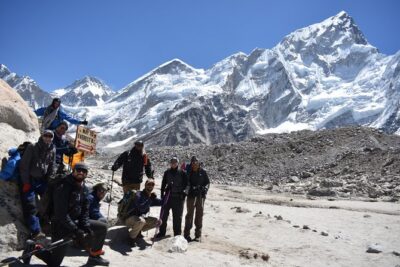
Everest Base Camp Helicopter Tour landing at Hotel Everest View
Read our review →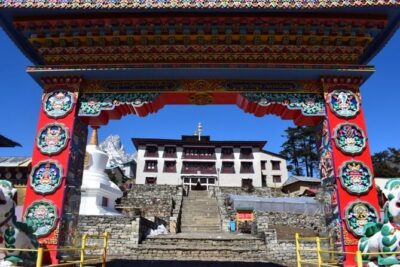
Browse the lists this tour appears in