
Reviewed · KATHMANDU
5-Day Sunrise Tour in Kathmandu Near Everest
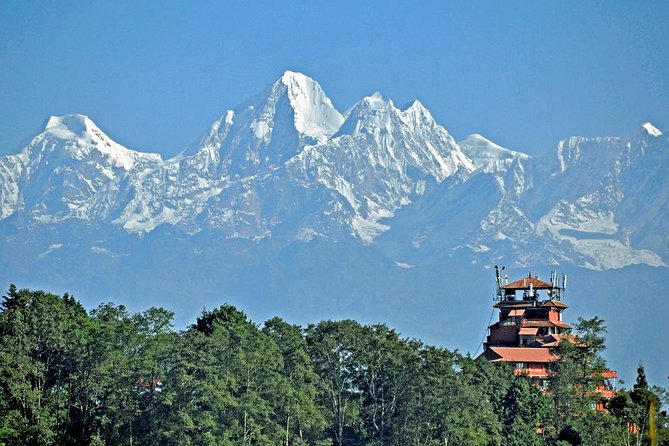
Kathmandu’s biggest reward on this five-day trip comes at dawn in Nagarkot, where clear weather can reveal Mount Everest and other Himalayan peaks. The tour also covers the valley’s major temples and old squares, so you get both mountain scenery and Nepal’s cultural heart in one short visit.
I like the private vehicle and airport transfers, especially in a city where traffic can turn a simple ride into a slow one. I also like the small maximum group of seven, plus the chance to spend a night outside Kathmandu rather than staying in the city for all four nights.
The main consideration is time. Four major Kathmandu sights are packed into one day, and the Everest view is never guaranteed. You’ll also pay entrance fees, most lunches and dinners, and personal costs separately.
In This Review
- Key points to know before booking
- A compact introduction to Kathmandu and the Himalayas
- Day 1: Airport pickup, hotel orientation, and a welcome dinner
- Day 2: Four important Kathmandu sights in one long day
- Swayambhunath, the hilltop temple complex
- Pashupatinath Temple and the Bagmati River
- Boudhanath Stupa
- Patan Durbar Square
- Day 3: Bhaktapur before the road to Nagarkot
- Day 4: Sunrise at Nagarkot, then back to Kathmandu
- Day 5: Breakfast and airport drop-off
- What the $370 price really covers
- The guide and driver can shape the whole trip
- What you should budget and prepare for
- Who should book this five-day route
- Should you book the Kathmandu and Nagarkot tour?
- FAQ
- Does the tour include airport pickup and drop-off?
- How many nights of accommodation are included?
- Is Mount Everest guaranteed to be visible?
- Are sightseeing entrance fees included?
- Are meals included?
- What currency should I bring?
- How large is the group?
- Can I cancel for a full refund?
Key points to know before booking
- Nagarkot sunrise: A clear morning may reveal Mount Everest and other eastern Himalayan peaks.
- Four nights included: Three nights are scheduled at Himalayan Suite Hotel and one at Himalayan Villa Hotel.
- Private transport: You travel by private air-conditioned car or van, with vehicle size based on group numbers.
- Four major sights in one day: Swayambhunath, Pashupatinath, Boudhanath, and Patan Durbar Square are all included.
- Small group format: The tour requires at least two people and accepts a maximum of seven.
- Extra costs: Entrance tickets, lunches, most dinners, and personal expenses are not covered.
A compact introduction to Kathmandu and the Himalayas
This tour is designed for a short first visit. It begins and ends at Tribhuvan International Airport, includes four nights of lodging and breakfast, and gives you a guide and driver for the main sightseeing days.
That arrangement removes much of the early guesswork. You do not need to find a taxi after landing, organize separate transport to Nagarkot, or work out how to connect the valley’s major sights on your own. You can focus on the places themselves.
At the same time, this is not a slow, leisurely exploration of Kathmandu. Day 2 is full. Day 3 combines Bhaktapur with the drive to Nagarkot. The plan works best if you value seeing the main sights over spending long periods in one neighborhood.
More early starts in Kathmandu:
- Nagarkot Sunrise View and Day Hiking from Kathmandu
★ 5.0 · 471 reviews - Kathmandu: Nagarkot Sunrise View & Morning Hike with Lunch
★ 4.9 · 188 reviews - Kathmandu: Nagarkot Sunrise and Hike Tour to Changu Narayan
★ 4.7 · 151 reviews
Day 1: Airport pickup, hotel orientation, and a welcome dinner
Your trip starts with airport pickup at Tribhuvan International Airport. The stated start time is 4:45 pm, but your international flight must arrive in Kathmandu for the operator to receive you, so send your flight details as soon as possible.
You’ll be taken to your hotel and given an orientation program. This is useful after a long flight because it gives you a basic outline of the next few days before the sightseeing begins.
A welcome cultural dinner is included. The inclusion is modest but helpful: you have an organized first meal instead of needing to search for a restaurant immediately after arrival. Breakfast is included on all four mornings.
The scheduled accommodation is three nights at Himalayan Suite Hotel and one night at Himalayan Villa Hotel in Nagarkot. The arrangement is for two people per room. If you are traveling alone, confirm the room and single-supplement arrangements before paying, since the published information is written around two people sharing.
One practical warning: accommodation can change if a hotel is full. That has happened on this trip, so treat the named hotels as the planned properties rather than an absolute guarantee. Ask what replacement hotel will be used if the plan changes.
Day 2: Four important Kathmandu sights in one long day
After breakfast, you visit four of the Kathmandu Valley’s best-known places. They are all worthwhile, but the order is demanding and traffic can affect the amount of time you have at each stop.
Swayambhunath, the hilltop temple complex
Your first stop is Swayambhunath, scheduled for about an hour. The site is often called the Monkey Temple, and its elevated setting gives you a useful view across Kathmandu.
An hour lets you see the main area and take in the religious atmosphere, but it is not much time for a slow visit. Keep your walking shoes on and expect steps or uneven ground around a hilltop religious site.
Admission is not included, so keep Nepali rupees available. The tour information says only Nepali currency is accepted during the trip, a detail worth taking seriously before you leave the airport.
A few more Kathmandu tours worth comparing
- Annapurna base camp trek 5 Days
★ 5.0 · 252 reviews - Kathmandu to Annapurna Base Camp (ABC) 5-Day Trek
★ 5.0 · 102 reviews - 5 Day Private Guided Trekking in Annapurna Base Camp
★ 5.0 · 25 reviews - 5 Days Hiking, Tour, Meditation and Yoga Retreat in Kathmandu, Nepal
★ 5.0 · 10 reviews
Pashupatinath Temple and the Bagmati River
The next stop is Pashupatinath Temple, also planned for one hour. This is one of Nepal’s most important Hindu pilgrimage sites, located along the Bagmati River.
The site is a place for observation and respect. Some temple areas may be restricted according to religious rules, so follow your guide’s instructions and do not assume every building is open to everyone.
Again, the entrance fee is separate. The one-hour schedule gives you a strong introduction, but not a lingering visit. If religious sites are your main reason for coming to Nepal, you may wish to return independently if your flight schedule allows.
Boudhanath Stupa
Boudhanath follows, with another hour scheduled. The great stupa is one of the valley’s most recognizable places, with a broad circular area around the central monument.
This stop feels different from Swayambhunath and Pashupatinath. Instead of a hilltop setting or a riverside temple complex, you’ll walk around a large Buddhist center where the circular route makes the layout easy to understand.
One hour is enough to see the stupa and take photographs, though you may want extra time for nearby shops. One of the useful details from this trip is that the route can include antique shops and painting shops. Shopping is not the main purpose, so clarify with your guide how much time is available before buying anything.
Patan Durbar Square
The final stop is Patan Durbar Square. This old royal square is known for its traditional architecture, courtyards, temples, and carved details.
The schedule provided lists only one minute here, which is clearly too short for a meaningful visit and may be a timing error or shorthand in the schedule. Confirm the actual time with the operator before booking, because Patan deserves more than a drive-by glance.
Entrance costs at Kathmandu’s sightseeing sites are not included. Budget for them separately, and ask your guide for the current amount when you arrive.
Day 3: Bhaktapur before the road to Nagarkot
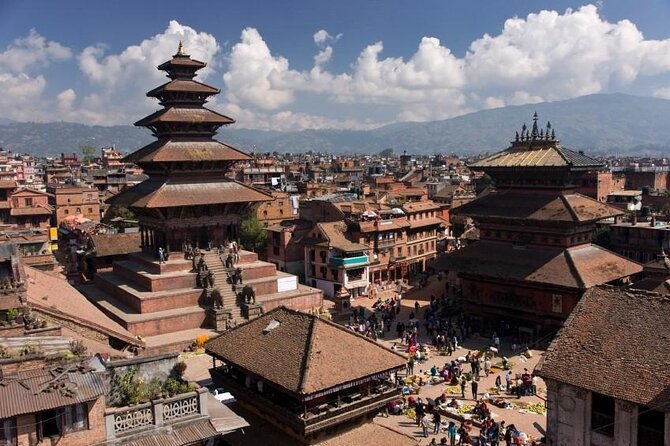
Day 3 begins at Bhaktapur Durbar Square, with about two hours for the visit. Of the old-city stops on this trip, Bhaktapur gets the most time, and that makes sense.
You’ll have room to look at the square, walk through its historic streets, and see the traditional character of the city without rushing quite as hard as on Day 2. Bhaktapur is also a good place to notice the difference between a formal royal square and the daily life around it.
The next stage is the drive to Nagarkot. The schedule allows five hours for the Nagarkot portion, including the move and time around the View Tower. Nagarkot is known for sunrise, sunset, and mountain views toward eastern Nepal, including Mount Everest on a clear day.
Do not read the Everest promise too literally. The mountain may be visible only when weather conditions cooperate. Clouds, haze, and seasonal conditions can block the view, so the value of Nagarkot is not limited to one famous peak.
The road trip also changes the feel of the trip. Kathmandu is dense and noisy, while Nagarkot offers a more rural setting. You’ll spend the night there rather than returning to the city, which makes the early morning start far easier.
Your vehicle is private and air-conditioned. The size can range from a four-seat vehicle to a 14-seat vehicle depending on the number of people, although the tour’s maximum is seven. That means your vehicle should be matched to the group rather than shared with a large coach party.
Day 4: Sunrise at Nagarkot, then back to Kathmandu
The morning begins early at Nagarkot View Tower. You’ll watch for the first light over the Himalaya, with possible views of Everest and other eastern peaks.
The key word is possible. The operator specifically notes that Everest is visible in clear weather, and no sunrise tour can control cloud cover. I would book this for the chance to see the Himalaya, not as a guaranteed Everest sighting.
After breakfast, the plan is to drive back to Kathmandu around 10 am. The scheduled View Tower visit is about one hour, leaving part of the day for the return journey and any remaining time in the city.
If your international flight departs on Day 5, this is not a day for an ambitious extra excursion. Use the time to rest, shop, or arrange a separate activity only if the operator confirms your schedule.
The supplied information also notes that flights for viewing Mount Everest are available directly from a local operator. That is a separate option, not part of this five-day package, and it would require its own planning and cost.
Day 5: Breakfast and airport drop-off
After breakfast, you’ll be taken to Tribhuvan International Airport. The transfer is included, which is particularly useful for a departing international flight.
The schedule allows up to two hours for this airport transfer. Kathmandu traffic can be unpredictable, so give the driver your flight time early and follow the operator’s advice about departure timing.
The tour ends when you are dropped at the airport. If you already have your own hotel booked before or after the trip, the operator says pickup and drop-off can be arranged from your hotel instead.
What the $370 price really covers
At $370 per person, the price buys more than a sightseeing day. It includes four nights of accommodation, four breakfasts, airport transfers, a private vehicle, an English-speaking guide and driver, the welcome dinner, and transport between Kathmandu, Bhaktapur, and Nagarkot.
That can be good value if you want a ready-made plan and are traveling with another person. Private transport alone has real value in Kathmandu, where finding taxis and estimating journey times can be tiring.
The price does not cover everything. You must pay for:
- Lunches in Kathmandu and Nagarkot
- Most dinners
- Sightseeing entrance fees
- Personal expenses
- Any separate Everest viewing flight
- Visa requirements and related costs
Plan to carry Nepali rupees. The tour information says only Nepali rupees are accepted during the experience, so do not rely entirely on foreign currency or cards for small purchases and entrance charges.
A minimum of two people is required per booking. For couples, friends, or a small family group, that condition is straightforward. Solo visitors should ask about availability and room arrangements before booking.
The guide and driver can shape the whole trip
You have an English-speaking guide and a private driver throughout the sightseeing program. That combination matters in Kathmandu because the route includes several busy roads and tightly scheduled stops.
One especially positive detail is the praise for a driver named Mr Victory. He was described as well spoken, funny, and able to explain some of the local history while driving. The same account also praised the food and felt it offered good value.
That does not mean every departure will have Mr Victory, so ask if you particularly want him. Still, it gives you a useful standard: a good driver here is not just someone behind the wheel. A calm approach to local traffic, clear communication, and a sense of humor can make long transfers much easier.
The tour can also include opportunities to see antique shops and painting shops. Treat those stops as optional shopping time, not as a core cultural visit. If you are interested, ask about prices, authenticity, shipping, and available time before committing to a purchase.
What you should budget and prepare for
The easiest way to keep this tour affordable is to plan for the extras in advance. Entrance tickets are not included at the listed sights, and meals beyond the included breakfasts and welcome dinner are your responsibility.
Carry Nepali rupees in small denominations. The currency rule is unusually important here, especially if you want snacks, drinks, souvenirs, or optional shopping.
You also need to confirm visa requirements before traveling. The operator places responsibility for visa arrangements on you, so check your own nationality’s rules before booking flights.
Bring clothing suitable for an early mountain morning. The provided details do not specify temperatures or seasonal conditions, but sunrise at Nagarkot is the coldest part of the itinerary by timing alone. You should also use comfortable footwear for temple grounds, squares, and uneven walking surfaces.
The tour is described as suitable for most people, but a full sightseeing day with several stops may feel tiring if you prefer a slow pace. Tell the operator about mobility concerns before booking rather than assuming every site will be effortless.
Who should book this five-day route
I would choose this tour if you are visiting Nepal for the first time, have only five days, and want the major Kathmandu Valley sights without arranging every transfer yourself.
It also suits you if you like a small group but do not need a private itinerary built around your own pace. A maximum of seven people is more manageable than a large coach, while the private vehicle keeps the transport arrangement simple.
This is a good match for couples and friends who want to share a room and split the experience across cultural sites and mountain scenery. It can also work for families, provided everyone is comfortable with the full Day 2 schedule and early Nagarkot morning.
I would hesitate if your main goal is trekking, extended time in the Himalaya, or a guaranteed Everest view. This is a Kathmandu Valley sightseeing trip with a sunrise opportunity, not a trek and not a mountain flight.
I would also hesitate if you dislike fixed schedules. The route covers a lot, and traffic or a late start can reduce your time at individual sites.
Should you book the Kathmandu and Nagarkot tour?
Book it if you want a well-organized first look at Kathmandu and value included transport, hotels, breakfast, and a guide. The combination of Swayambhunath, Pashupatinath, Boudhanath, Patan, Bhaktapur, and Nagarkot gives you a strong sample of the valley in five days.
Before paying, confirm the actual time at Patan Durbar Square, the hotel names, the room arrangement, and the expected entrance fees. Also send flight details early and accept that Mount Everest may be hidden by weather.
The tour has a 4.8 rating from 12 reviews and a 92 percent recommendation rate. The strongest practical praise centers on the driver, good food, and handling of Kathmandu’s difficult traffic. At $370, it offers solid value for a short, structured visit, as long as you budget for the excluded meals and admission charges.
FAQ
Does the tour include airport pickup and drop-off?
Yes. Arrival and departure transfers at Tribhuvan International Airport are included. Pickup and drop-off can also be arranged from your own Kathmandu hotel if you book accommodation separately before or after the tour.
How many nights of accommodation are included?
Four nights are included: three nights in Kathmandu and one night in Nagarkot. The planned hotels are Himalayan Suite Hotel in Kathmandu and Himalayan Villa Hotel in Nagarkot, though accommodation may change if a hotel is fully booked.
Is Mount Everest guaranteed to be visible?
No. Everest and other eastern Himalayan peaks can be seen from Nagarkot in clear weather. Cloud or haze may block the view.
Are sightseeing entrance fees included?
No. Entrance fees for Kathmandu Valley sightseeing sites are not included in the tour price.
Are meals included?
Four breakfasts and a welcome cultural dinner are included. Lunches, dinners in Kathmandu and Nagarkot, and personal food expenses are not included.
What currency should I bring?
The tour information says only Nepali rupees are accepted during the tour. Bring Nepali currency for entrance fees, meals, shopping, and personal expenses.
How large is the group?
At least two people are required per booking, and the maximum group size is seven travelers. Transport is provided in a private air-conditioned car or van, with vehicle size based on group numbers.
Can I cancel for a full refund?
Yes, if you cancel at least 24 hours before the experience start time. Cancellations made within 24 hours are not refunded, and changes within that period are not accepted.
Recently added around Kathmandu
- Kathmandu : Swambhunath & Durbar Square Guided Half Day Tour★ 3.3 · 3 reviews
- Private Day Tour in Kathmandu Valley Rim with Bhaktapur Sightseeing★ 5.0 · 3 reviews
- From Kathmandu / Pokhara / Chitwan: River Rafting – 1 Day★ 4.6 · 3 reviews
- Nepali Cooking training & Cultural Homestay Experience★ 5.0 · 3 reviews
- Private 3-Hour Nagarkot Sunset Tour from Kathmandu★ 3.5 · 3 reviews
- From Kathmandu: Everest Base Camp Landing Helicopter Tour★ 5.0 · 3 reviews
- 4 UNESSCO World heritage sites of Kathmandu-private tour★ 5.0 · 3 reviews
- From Kathmandu Budget: 15 Day Everest Base Camp Trek★ 5.0 · 3 reviews