
Reviewed · ANNAPURNA TREKS
5 Day Private Guided Trekking in Annapurna Base Camp
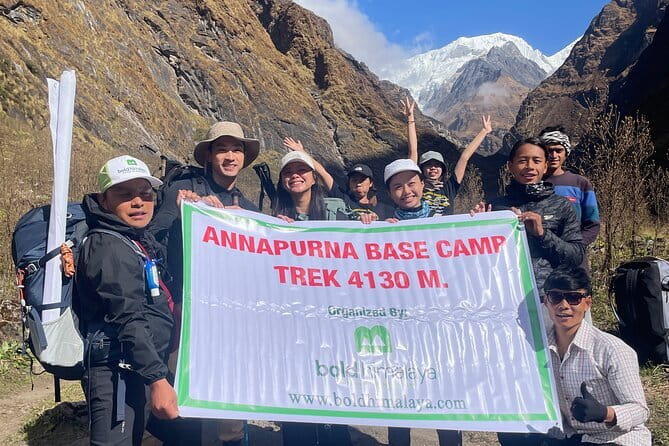
The great prize here is Annapurna Base Camp at 4,100 meters, a mountain sanctuary ringed by Annapurna South, Annapurna I, Machapuchare, and Hiunchuli. You begin with a road trip from Pokhara, then walk through bamboo forest, rhododendrons, Gurung villages, waterfalls, and high alpine country before reaching the snowy heart of the range.
I like the private format, since your guide can match the pace to your group rather than a large crowd. I also like the finish at Jhinu Danda, where natural hot springs can ease tired legs. The catch is the schedule: five days is short for a high-altitude trek, so you need moderate fitness and should be ready for long walking days.
In This Review
- Key points before you book
- What the five-day route is really like
- Day 1: From Pokhara to Siwai and the first trail
- Day 2: Bamboo, Dovan, waterfalls, and the Modi Khola
- Day 3: Machapuchare Base Camp and Annapurna Base Camp
- Day 4: Sunrise, MBC, Deurali, and the long descent
- Day 5: Through bamboo forest to Siwai and back to Pokhara
- The guide and the private format
- Meals, tea houses, and what the price covers
- Who will enjoy this trek most
- Practical booking advice
- Should you book the five-day ABC trek?
- FAQ
- Where does the trek begin?
- How high is Annapurna Base Camp?
- Is transportation included?
- Are meals included?
- Is this a private group activity?
- What happens if bad weather cancels the trek?
Key points before you book
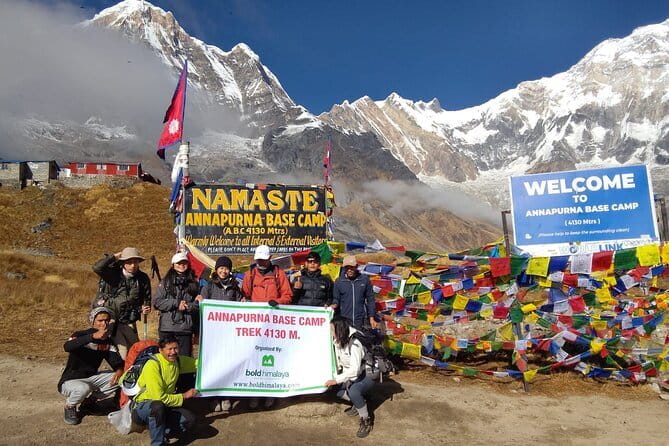
- Reach Annapurna Base Camp at 4,100 meters after passing Machapuchare Base Camp.
- Start in Pokhara and walk from Siwai, with private transport included.
- Sleep in local tea houses, with four breakfasts, four lunches, and four dinners covered.
- See bamboo forests, rhododendrons, waterfalls, terraced fields, and Gurung villages along the route.
- Relax in natural hot springs at Jhinu Danda, an excellent recovery stop.
- Guide Sirjan is frequently named in the supplied feedback, with praise for his care, steady support, and friendly manner.
What the five-day route is really like
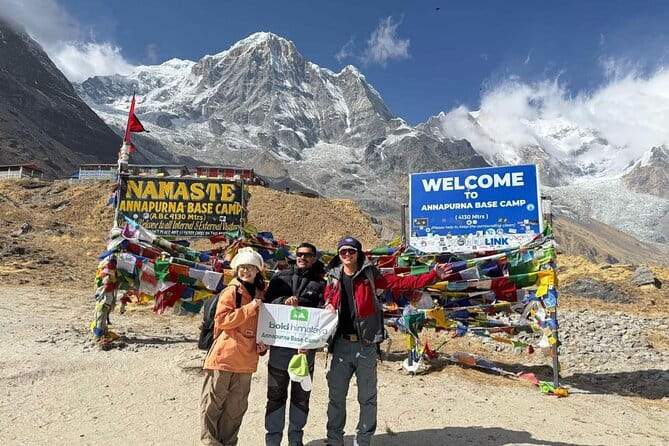
This is a compact version of the Annapurna Base Camp trek. The route gives you the main rewards, but the short timetable leaves little room for slow mornings, extra rest, or weather delays. You should see the five days as an active mountain trip, not a gentle village stroll.
The trek begins and ends in the Pokhara area, although the tour location is listed as Kathmandu. That matters when planning your Nepal trip. You will need to arrange your own way to Pokhara unless the operator confirms another pickup plan. Private transportation is included for the trek transfers, including the road journey from Pokhara to Siwai and the return from Siwai.
The price is listed at $225 per person, with group discounts available. That is strong value if your booking includes the stated guide service, private transport, permits, TIMS card, four nights of meals, and the guide’s salary, food, lodging, and insurance. It is less of an all-in price than it first appears, since drinks, desserts, travel insurance, and tips are extra.
More Annapurna treks:
- Annapurna Circuit Trek with Tilicho Lake
★ 5.0 · 368 reviews - Annapurna base camp trek 5 Days
★ 5.0 · 252 reviews - Annapurna Base Camp Trek
★ 5.0 · 111 reviews
Day 1: From Pokhara to Siwai and the first trail
Your first day starts with a road transfer from Pokhara to Siwai, the trailhead for this version of the ABC route. The drive is part of the practical reality of trekking in Nepal. It gets you to the walking route, but it also means the day is not spent entirely on foot.
From Siwai, you begin walking through changing scenery. The path includes forest, terraced fields, and local villages, with the character of the hills changing as you gain height. This is a good introduction to the region because you see daily village life alongside the first mountain views.
The cultural side is important here. The route passes through traditional Gurung communities, giving you a chance to see the human side of the Annapurna region rather than only focusing on peaks. Keep your pace sensible on this opening day. It is easy to walk too fast at the start because the excitement is high.
Day 2: Bamboo, Dovan, waterfalls, and the Modi Khola
After breakfast in Sinuwa, the trail enters a more heavily wooded section. Bamboo and forest shade make this part feel cooler and enclosed, a useful change from exposed walking in the sun.
You continue toward Dovan beside the Modi Khola River. Waterfalls add sound and variety to the route, and the river helps you follow the valley toward the higher country. The scenery becomes more rugged as the path moves deeper into the Annapurna Sanctuary.
This day is not simply a scenic walk. You are gaining altitude, and the effort begins to show. The private guide format helps here. Sirjan is repeatedly praised for staying attentive, checking pace, and offering support when the walking becomes harder. Still, your guide cannot remove the physical demand, so drink regularly and keep your own expectations realistic.
Tea-house accommodation is part of the experience. The rooms and services are simple, and the included meals are practical fuel rather than a restaurant outing. Since drinks are not included, budget for water and other beverages separately.
Day 3: Machapuchare Base Camp and Annapurna Base Camp
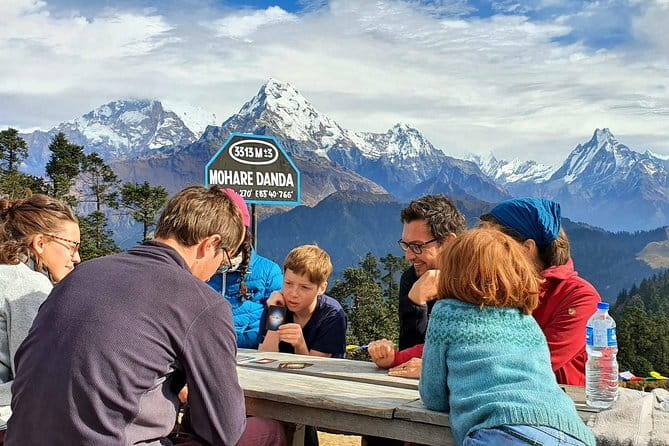
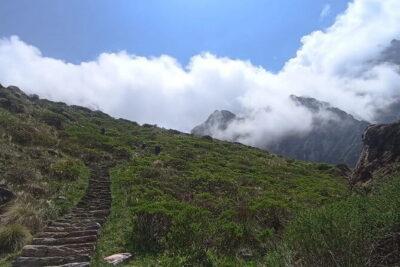
Day three is the main test and the emotional center of the trip. You leave after an early breakfast and continue through rhododendron forest. Depending on conditions and timing, you might see yak herders along the way, a reminder that this is working mountain country as well as a famous trekking route.
After lunch, the route continues toward Machapuchare Base Camp, often called MBC. Machapuchare means Fishtail, and the mountain has a distinctive double summit. It is regarded as sacred, and the base camp gives you a close view of this striking peak.
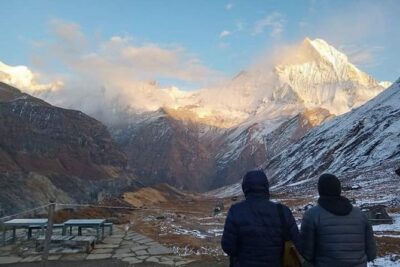
From MBC, you continue to Annapurna Base Camp at about 4,100 meters. The setting changes quickly. Trees give way to open high country, and the surrounding peaks feel much larger as you enter the sanctuary. Annapurna South, Annapurna I, Machapuchare, and Hiunchuli form the great wall around the basin.
The supplied schedule gives about three hours for the Annapurna Base Camp stop, with admission included. Treat that as a broad planning figure rather than a guarantee. Walking time depends on the group, trail conditions, weather, and how long you spend taking photographs.
This is also the point where altitude becomes a serious consideration. The tour asks for moderate physical fitness, but that phrase should not be read as a promise that the trek will feel easy. You may find the thin air more difficult than the distance. Walk slowly, follow your guide’s advice, and tell the guide at once if you feel unwell.
The reward is not only the destination marker. At ABC, you are surrounded by immense peaks in a high-altitude bowl, with a clear sense of arrival after days of forest walking. Early evening light can be especially memorable, though mountain weather can change quickly.
More treks starting in Kathmandu:
- Everest Base Camp Trek – 14 Days
★ 5.0 · 1,499 reviews - Everest Base Camp Trekking
★ 5.0 · 485 reviews - Nagarkot Sunrise View and Day Hiking from Kathmandu
★ 5.0 · 471 reviews - Everest Base Camp Trekking – 13 Day
★ 5.0 · 365 reviews
Day 4: Sunrise, MBC, Deurali, and the long descent
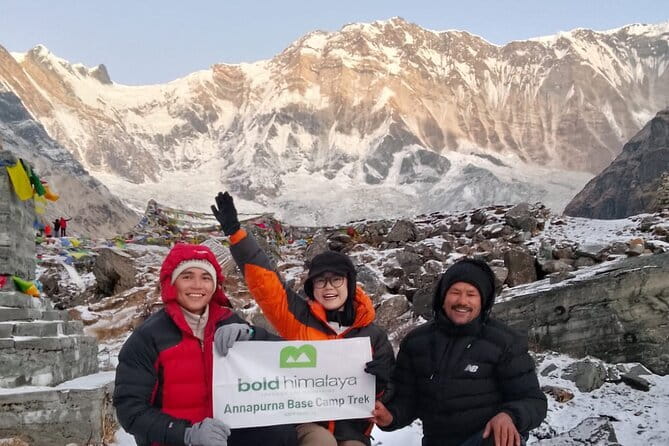
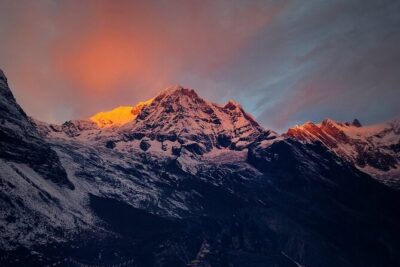
The day begins early at Annapurna Base Camp so you can watch sunrise over the Annapurna massif. This is one of the strongest reasons for sleeping at ABC rather than turning back after reaching it. The mountains catch the changing light, and the setting feels very different from the previous afternoon.
After sunrise, you descend through the same high country, passing Machapuchare Base Camp and Deurali. Going down is often easier on the lungs, but it can be demanding on knees and ankles. Trekking poles, if you use them, can be useful, though they are not listed as part of the package.
The descent also lets you notice details you may have missed while climbing. Forest edges, rock shapes, river crossings, and shifts in vegetation become more visible as you lose height. The route feels less severe, but you still need to manage your energy because the day follows an early start at altitude.
Day 5: Through bamboo forest to Siwai and back to Pokhara
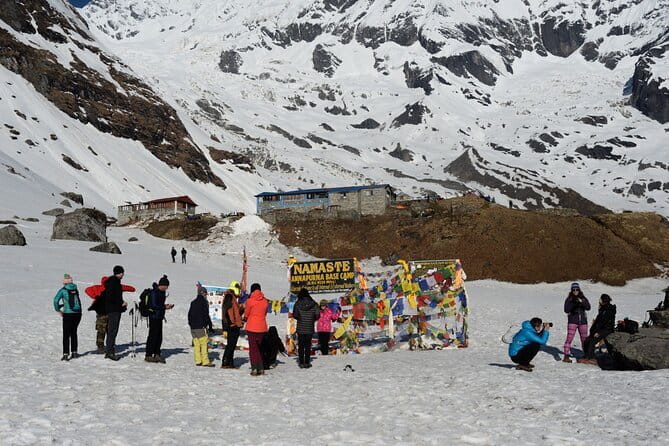
The final day continues downhill beyond the bamboo forest toward Siwai. You return to greener surroundings and lower elevations, with forest and hill views replacing the stark high-country setting.
At Siwai, the Bold Himalaya guide arranges a jeep for the return to Pokhara. Private transport is included, which is useful after several days on foot. The ride marks the practical end of the trek, but allow enough time afterward to rest. A five-day ABC schedule packs a great deal into a short period.
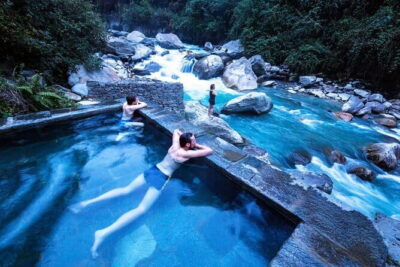
The natural hot springs at Jhinu Danda are highlighted as part of the route’s appeal. They offer a pleasant way to loosen tired muscles, though the exact timing of the stop is not fully set out in the supplied schedule. Ask the operator before departure when Jhinu Danda fits into your group’s plan.
The guide and the private format
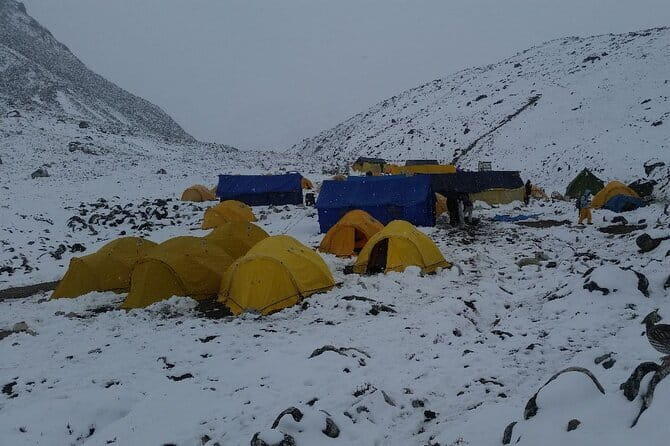
The human service is one of the strongest reasons to consider this trip. Sirjan is named repeatedly in the supplied feedback, with particular praise for his friendly attitude, close attention, and habit of matching the group’s pace. Some comments spell his name Srijan, so you may want to confirm the assigned guide before setting out.
A private tour is useful on a route where people walk at very different speeds. You can stop for photographs, adjust meal breaks, and discuss how hard the next section may feel. The group discount also means the per-person price may improve if you are traveling with friends.
There is an important point to clarify before booking: the included list covers the guide and his expenses, but it does not clearly state that porters are included. Several supplied comments describe porters, including a group of three, but you should not assume that every booking receives the same porter arrangement. Ask specifically about porter numbers, baggage limits, and porter fees.
Meals, tea houses, and what the price covers
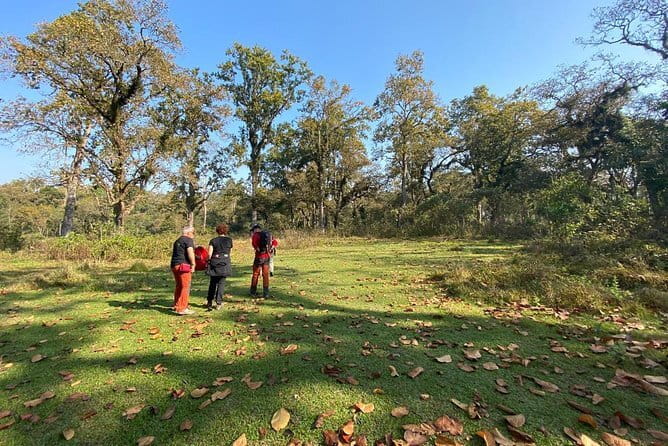
Four breakfasts, four lunches, and four dinners are included. That arrangement keeps the main food costs predictable and suits the five-day plan. Seasonal fruit is also included, a small but welcome addition during active days.
Drinks are not included, and extra meals or dessert items cost more. Plan for separate spending on water, tea, soft drinks, or other beverages. Travel insurance and tips for the trekking crew are also outside the quoted price.
The guide’s accommodation, meals, salary, and insurance are covered. Trekking permits and the TIMS card are included too, which saves you from handling those core trail requirements yourself. All fees and taxes are listed as included, along with private transportation.
The value is best for someone who wants a guided route with the main paperwork and meals arranged, but who understands that mountain extras still add up. The $225 price is appealing, especially for a private booking, yet it should not be treated as the total cost of a Nepal holiday.
Who will enjoy this trek most
You are a good match if you have moderate fitness, enjoy walking for several days, and want a direct route to a major Himalayan base camp. The private setup works especially well for friends, couples, or families who want to stay together rather than join a large fixed group.
You should also like simple accommodation and a steady routine. The trek is built around early breakfasts, long trail days, tea-house meals, and limited personal comfort. That is part of the appeal, but it is not a luxury trip.
This is less suitable if you want a relaxed schedule or have no experience with sustained uphill walking. The itinerary reaches 4,100 meters in only five days, so altitude and fatigue deserve serious thought. The tour requires good weather, and poor conditions can lead to a new date or a full refund.
The route also suits people who want more than mountain photographs. Gurung villages, terraced fields, forest ecology, waterfalls, and the Modi Khola give the walk variety. The Annapurna Conservation Area is known for varied plant and animal life, though sightings are not guaranteed.
Practical booking advice
Confirm the pickup point carefully. The tour information names Kathmandu as the location, but the itinerary begins in Pokhara. Ask if pickup means pickup in Pokhara, transport from Kathmandu, or simply assistance arranging the starting transfer.
Ask for the exact daily walking times and overnight villages. The supplied plan names Sinuwa, Dovan, Deurali, MBC, ABC, Jhinu Danda, and Siwai, but it does not provide complete distance and elevation figures for every day. Those details will help you judge the pace.
Also confirm the porter arrangement, what luggage you may bring, and the expected cost of drinks and tips. A private guide does not always mean a private vehicle for every small road segment, so clarify the transport plan if that matters to you.
The cancellation terms are fair: cancel at least 24 hours before the start for a full refund. Changes made inside 24 hours are not accepted, and poor weather can lead to a new date or full refund. Remember that the cut-off follows local Nepal time.
Should you book the five-day ABC trek?
Book it if you want a short, guided route to Annapurna Base Camp with private attention, basic meals, permits, and transport handled. The views, Gurung villages, forest sections, MBC stop, sunrise at ABC, and hot springs create a strong mix of scenery and local experience.
Think twice if you need a slow acclimatization plan, dislike tea houses, or want every expense included. Five days is efficient, but it is also demanding. Before paying, confirm the Pokhara pickup, porter service, daily walking details, and drink costs.
For a fit person with limited time in Nepal, this is a good-value mountain experience. Go prepared, walk at the pace your body allows, and treat the guide as a key part of the safety plan. That approach gives you the best chance of enjoying the high peaks instead of simply racing toward them.
FAQ
Where does the trek begin?
The walking portion begins at Siwai, after transport from Pokhara. The tour information lists Kathmandu as the location, so confirm the exact pickup and transfer plan before booking.
How high is Annapurna Base Camp?
Annapurna Base Camp is at approximately 4,100 meters.
Is transportation included?
Yes. Private transportation is included, and a jeep is arranged from Siwai for the return journey to Pokhara.
Are meals included?
Four breakfasts, four lunches, and four dinners are included. Seasonal fruits are also included. Drinks, extra meals, and dessert items are not included.
Is this a private group activity?
Yes. Only your group participates in the private tour.
What happens if bad weather cancels the trek?
If poor weather causes cancellation, you will be offered another date or a full refund. For other cancellations, cancel at least 24 hours before the start time to receive a full refund.
More 5-Day Experiences in Kathmandu
- Kathmandu to Annapurna Base Camp (ABC) 5-Day Trek
★ 5.0 · 102 reviews - 5-Day Sunrise Tour in Kathmandu Near Everest
★ 5.0 · 12 reviews - 5 Days Hiking, Tour, Meditation and Yoga Retreat in Kathmandu, Nepal
★ 5.0 · 10 reviews - Pokhara: 5-Day Annapurna Base Camp (ABC) Trek
★ 5.0 · 9 reviews
Recently added around Kathmandu
- Kathmandu : Swambhunath & Durbar Square Guided Half Day Tour★ 3.3 · 3 reviews
- Private Day Tour in Kathmandu Valley Rim with Bhaktapur Sightseeing★ 5.0 · 3 reviews
- From Kathmandu / Pokhara / Chitwan: River Rafting – 1 Day★ 4.6 · 3 reviews
- Nepali Cooking training & Cultural Homestay Experience★ 5.0 · 3 reviews
- Private 3-Hour Nagarkot Sunset Tour from Kathmandu★ 3.5 · 3 reviews
- From Kathmandu: Everest Base Camp Landing Helicopter Tour★ 5.0 · 3 reviews
- 4 UNESSCO World heritage sites of Kathmandu-private tour★ 5.0 · 3 reviews
- Everest Helicopter Tour★ 5.0 · 3 reviews
Annapurna Treks, compared.
Kathmandu to Annapurna Base Camp (ABC) 5-Day Trek
Read our review →
Browse the lists this tour appears in