
Reviewed · ANNAPURNA TREKS
Annapurna base camp trek 5 Days
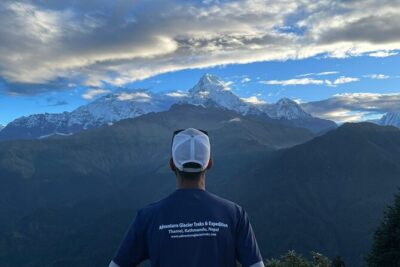
The best part of this Annapurna Base Camp trek is the quick change of scenery. In six days, you move from Kathmandu’s busy streets to Pokhara’s lakefront, then into forest trails and high mountain country beneath Annapurna and Machhapuchare, the famous Fish Tail peak. I like that the route includes teahouse lodging, meals, permits, transport, and a guide, so you can focus on walking rather than arranging every detail. I also like the small group size, capped at 12 people.
The main caution is the pace. This is a short schedule for a serious mountain trek, with long walking days and steep sections. I would also read the inclusions carefully: the package covers five breakfasts, five lunches, and five dinners, but food in Kathmandu and Pokhara is not included. Two detailed complaints point to missed water-purification tablets and confusion over the plan, so clear communication with the provider before departure is wise.
In This Review
- Key things to know before booking
- Why this short Annapurna route works
- Day 1: Kathmandu to Pokhara and an evening by the lake
- Day 2: Jeep transfer to Siwai and the trail to Chhomrong
- Day 3: Upper Sinuwa and the forested middle section
- Day 4: Reaching Annapurna Base Camp
- Day 5: Sunrise views and the return to Upper Sinuwa
- Day 6: Chhomrong, Jhinu hot spring, and the ride back
- What the $699 price includes
- Group size, guide support, and practical concerns
- Who should book this trek?
- Should you book the Annapurna Base Camp trek?
- FAQ
- How long does the Annapurna Base Camp trek take?
- Where does the tour start and finish?
- Is transport included?
- Are meals included?
- Is accommodation included?
- What level of fitness do I need?
- What is the cancellation policy?
Key things to know before booking
- Six days, despite the five-day title: The published route has six days, starting in Kathmandu and ending in Pokhara.
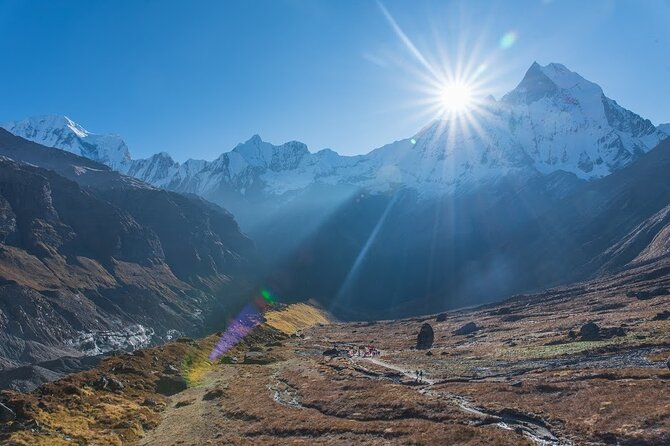
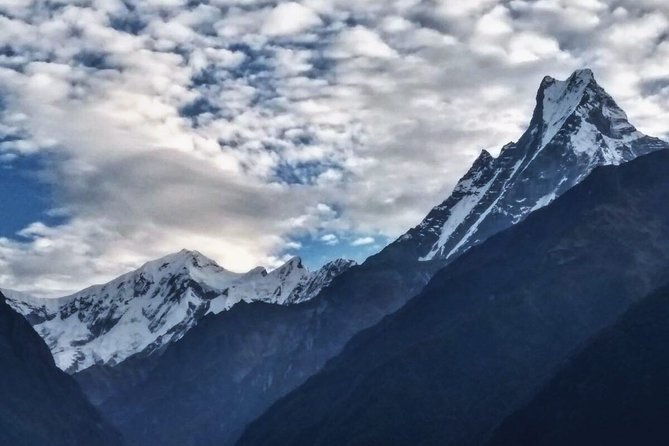
- Machhapuchare is a major visual reward: The Fish Tail peak appears above the route, along with Annapurna and other high Himalayan summits.
- The trip mixes road travel with trekking: A tourist bus takes you from Kathmandu to Pokhara, followed by local jeep transfers and several days on foot.
- Teahouse nights keep the cost practical: Lodging, meals, permits, sleeping bags, and a down jacket are included.
- The group stays fairly small: A maximum of 12 people makes a guide-led mountain trip easier to manage than a large departure.
- You need moderate fitness: Expect steep trail sections, long days, early starts, and changing weather at altitude.
Why this short Annapurna route works
Annapurna Base Camp is one of Nepal’s classic trekking goals because you do not need weeks on the trail to reach a famous Himalayan viewpoint. This version compresses the journey into six days, with the first and final days shaped partly by road travel.
That makes the trip appealing if you have limited time in Nepal. You get a taste of Pokhara, several days in the hills, and the achievement of reaching base camp without committing to a much longer expedition. The tradeoff is that you have less spare time if weather, road delays, or fatigue disrupt the plan.
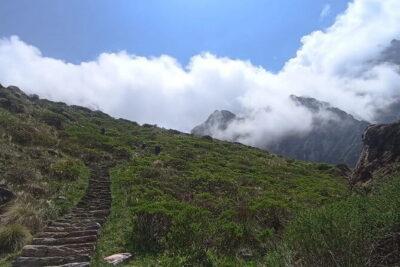
The route passes through rhododendron, bamboo, and oak forests before opening toward bare, snowy peaks. That variety matters. The walk is not simply a steady climb through exposed rock. You move through changing plant life and mountain settlements, then arrive in a high bowl surrounded by peaks.
The operator, Alpine Ramble Treks, provides an English-speaking local guide or sherpa. The guide is meant to manage permits, lodges, transport, and the daily route. That support is especially useful on a trek where road transfers and trail logistics are closely connected.
More Annapurna treks:
- Annapurna Circuit Trek with Tilicho Lake
★ 5.0 · 368 reviews - Annapurna Base Camp Trek
★ 5.0 · 111 reviews - Kathmandu to Annapurna Base Camp (ABC) 5-Day Trek
★ 5.0 · 102 reviews
Day 1: Kathmandu to Pokhara and an evening by the lake
The first day begins early, at about 6:45 am, with a tourist bus from Kathmandu along the Prithvi Highway. The drive takes roughly seven hours. It is not a quick transfer, but it gives you a useful first look at Nepal beyond the capital.
Once you reach Pokhara, the plan includes time around the Lakeside area. Pokhara is a pleasant pause between the city and the mountains, with the lakefront providing a relaxed setting before the walking begins. Admission is free, and the value here is not a formal attraction. It is the chance to get your bearings, eat at your own expense, and prepare for the trail.
The bus ride is one point to consider. A seven-hour road journey can feel long, especially after arriving in Nepal or connecting from an international flight. The airport pickup and drop-off are included, but you should confirm the timing of your arrival carefully. The first morning is early, and the schedule leaves little room for a casual start.
Food in Pokhara is not included. I would use this evening to buy any preferred snacks, drinks, or personal trail supplies, since the trek begins the next day.
Day 2: Jeep transfer to Siwai and the trail to Chhomrong
After breakfast at the Pokhara hotel, you travel by local jeep toward Siwai. The drive takes about two hours, with a stop at Birethati, described as an entry point to the trekking area. From there, the route shifts from road travel to walking.
The day ends at Chhomrong Cottage after about five hours of activity. This is your first real introduction to the trail, with village paths and mountain scenery replacing the roads. Chhomrong is an important stop on the route because it links the lower approach with the higher valleys leading toward base camp.
The short jeep ride is helpful, but the transition can still feel busy. You are packing, riding, walking, and settling into a teahouse all in one day. The included lodge arrangement takes pressure off finding a room yourself, though teahouse accommodation is simple rather than hotel-style.
The tour includes a sleeping bag and down jacket. Those items can save luggage space and reduce the need to rent equipment separately. You should still bring suitable walking clothes and personal essentials, since the supplied gear does not replace a complete trekking kit.
Day 3: Upper Sinuwa and the forested middle section
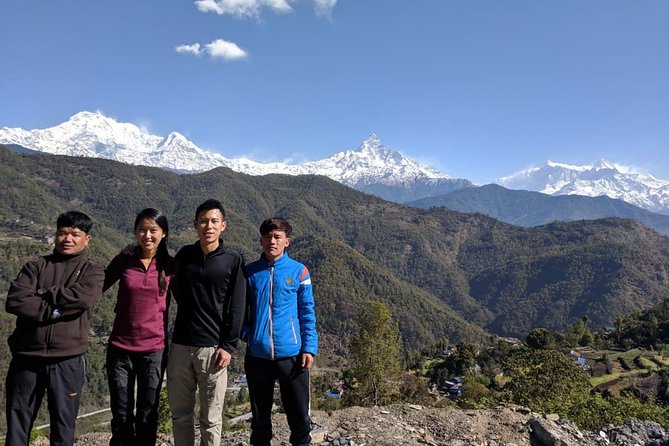
The third day starts with tea and, weather permitting, a sunrise view over the white mountains. Breakfast at the lodge comes before the trail continues toward Upper Sinuwa. The listed activity time is around six hours, although the schedule display gives a much shorter duration in one place, so I would ask the operator to confirm the expected walking time before departure.
Upper Sinuwa Hilltop Lodge and Restaurant is the stop named for this day. The setting is valuable because this portion of the route brings you deeper into the forested mountain zone. Bamboo, rhododendron, and oak create a softer trail experience than the exposed high country ahead.
Morning light is often the best reason to rise early in the mountains, but the program correctly makes the view weather-dependent. Clouds can hide the peaks, especially on a mountain route. You should enjoy the sunrise if it appears, but not treat it as guaranteed.
This is also the point where the physical nature of the trip becomes clearer. The route has climbs and descents, and the next day is the main push toward Annapurna Base Camp. Keep your day pack light, drink regularly, and walk at a steady pace rather than trying to race ahead.
More treks starting in Kathmandu:
- Everest Base Camp Trek – 14 Days
★ 5.0 · 1,499 reviews - Everest Base Camp Trekking
★ 5.0 · 485 reviews - Nagarkot Sunrise View and Day Hiking from Kathmandu
★ 5.0 · 471 reviews - Everest Base Camp Trekking – 13 Day
★ 5.0 · 365 reviews
Day 4: Reaching Annapurna Base Camp
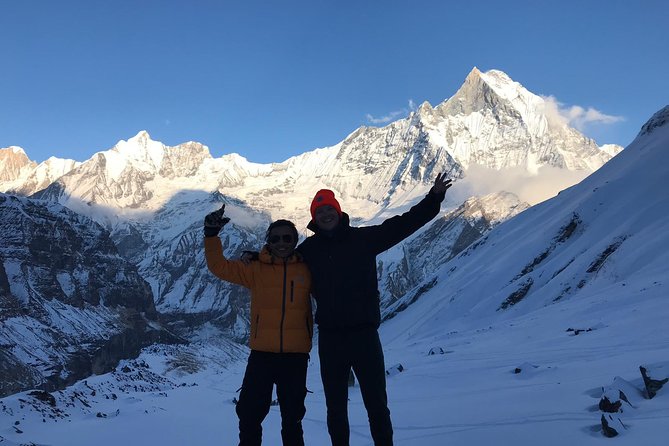
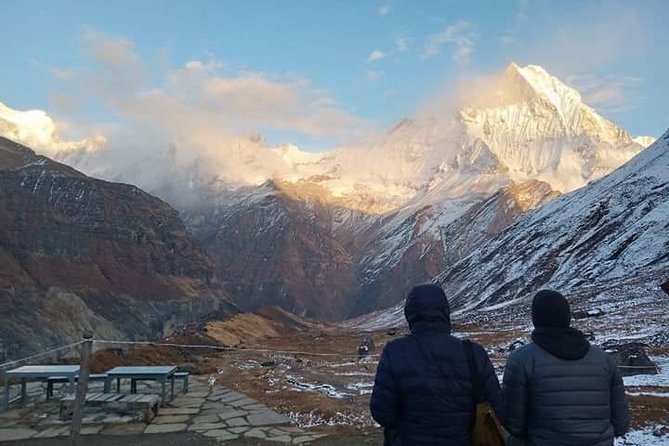
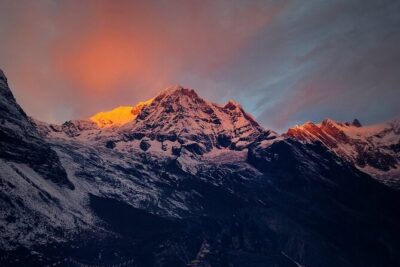
Day four is the emotional center of the trek. After breakfast, you walk toward Annapurna Base Camp, located at the foot of Annapurna, described in the program as the world’s tenth-tallest mountain. The route also brings you beneath the striking profile of Machhapuchare, or Fish Tail.
This is the day for which the earlier road rides and forest walking have prepared you. The scenery changes as you gain height, with the surrounding peaks becoming more dominant. The appeal is not one single viewpoint but the feeling of being enclosed by major Himalayan summits.
The schedule calls this one of the most exciting days, and that is easy to understand. Reaching base camp on foot gives the trip a clear goal. You are not simply visiting a scenic area by vehicle. You have spent days walking through the foothills to arrive there.
At the same time, the day demands effort. The tour requires a moderate level of physical fitness, and the short overall duration means there is limited recovery time. You should not book this expecting a gentle sightseeing trip. It is a guided mountain trek with early starts, uneven paths, and high-altitude conditions.
The exact sleeping arrangement at base camp is not detailed, so confirm the night’s lodge plan with Alpine Ramble Treks. The package does include trekking lodges, five dinners, five breakfasts, and five lunches overall.
Day 5: Sunrise views and the return to Upper Sinuwa
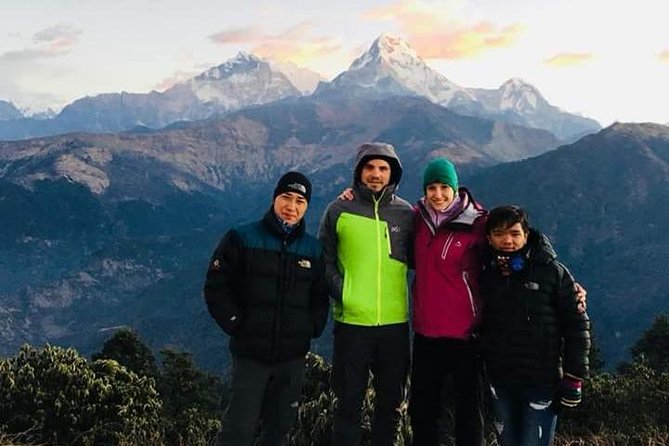
The following morning begins with a short walk to find a view of sunrise over Machhapuchare and Annapurna. This is one of the strongest moments in the schedule because the peaks can look very different in early light than they do during the day.
After breakfast, you return toward Upper Sinuwa. The listed duration is about six hours. Retracing part of the route has a practical benefit: you recognize the trail and avoid the need for a completely new route on a tight schedule. The drawback is that the return can feel tiring after the base camp day.
I like that the route gives you another chance to see the mountains rather than treating base camp as a quick photo stop. If weather blocked the view on the way up, the morning descent may provide a second opportunity.
Do not assume the downhill sections will be easy. Descending can be hard on knees and legs, especially on steep paths. Trekking poles, sturdy footwear, and a measured pace are sensible choices, though personal equipment beyond the listed jacket and sleeping bag is your responsibility.
Day 6: Chhomrong, Jhinu hot spring, and the ride back
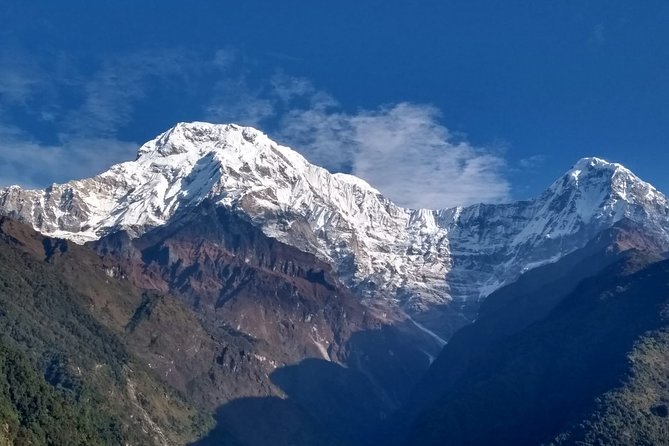
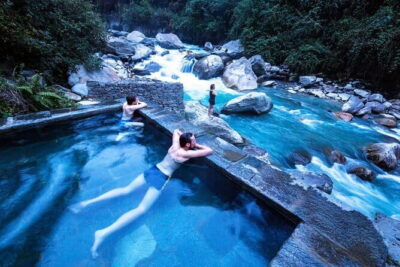
The final day follows the trail toward Chhomrong before descending steeply to the Jhinu hot spring area. From Jhinu Dada, you walk for about two hours to Siwai, where a local jeep takes you back toward Pokhara.
Jhinu is a welcome change of pace at the end of the trek. The schedule includes the hot spring area as part of the route, but it does not specify admission arrangements or how long you will stay. Ask the guide what time is available there and what you should carry for the stop.
The steep descent is the day’s main physical challenge. After several days of walking, a sharp downhill trail can feel harder than expected. Take care with footing, especially if the trail is wet.
The day ends at the Pokhara Museum stop, though the exact museum visit is not described in detail. Do not book this expecting a full museum tour unless the provider confirms it. The clear endpoint is the return toward Pokhara after the jeep ride.
What the $699 price includes
At $699 per person, this package offers value if you make use of the included services. You receive airport transfers, ground transportation, the tourist bus from Kathmandu to Pokhara, local jeep transfers, a guide, permits, trekking lodges, meals on the trek, a down jacket, and a sleeping bag.
The package also includes all fees and taxes, an ART hiking T-shirt, a certificate of achievement, a farewell dinner, and guide-related costs such as insurance, equipment, food, transportation, and salary. Buying these items separately would take planning, and transport alone can become complicated on a short Nepal itinerary.
The price is less attractive if you want private rooms, extra nights, or meals in Kathmandu and Pokhara. Those costs are outside the package, as are visa fees, tips, and travel insurance. Extra accommodation caused by delays is also not included.
I would compare the package with the cost of arranging a guide, permits, lodging, meals, and transport yourself. The strongest financial reason to book is convenience, not luxury. You are paying to have the moving parts handled in a compact schedule.
Group size, guide support, and practical concerns
The maximum group size is 12. That is small enough for a guide to keep track of the group on the trail, while still allowing the operator to run the trip at a shared-tour price.
The guide’s role matters here. You need someone who can coordinate the jeep, lodge, meals, permits, and daily walking plan. The tour is designed so you can concentrate on the mountain views rather than arranging each stop.
I would confirm the guide’s name and the final day-by-day plan before leaving Kathmandu. Two low-scoring accounts describe confusion about the route plan and a problem with water-purification tablets. The tablets were expected but reportedly forgotten at first, and one account says the guide initially tried to have the group pay for bottled water.
That does not prove every departure will have the same problem, but it is a useful warning. Ask in writing about water treatment, daily walking hours, sleeping arrangements, and what happens if transport is delayed. Carry a backup water-purification method if you have one, and budget for personal drinks and snacks.
The overall experience carries a 5 out of 5 rating from 252 ratings, with a 99 percent recommendation figure. Those numbers suggest broad satisfaction, but the detailed complaints show why basic preparation and direct communication still matter.
Who should book this trek?
I would recommend it to you if you want a short, organized Himalayan trek and have moderate fitness. It suits people who value included transport and a local guide, and who prefer teahouses to carrying camping equipment.
It is also a good match if Annapurna Base Camp is a specific goal. The itinerary is built around reaching it, not simply taking scenic walks near Pokhara.
I would hesitate if you need a slow pace, dislike long road journeys, or want a flexible itinerary with spare days. Six days leaves little room for weather problems or personal recovery. I would also hesitate if you expect polished hotels or full meal coverage in every city.
The free-cancellation rule gives you a practical safety net before departure: cancel at least 24 hours before the start time for a full refund. Changes within 24 hours are not accepted, and a weather cancellation offers a different date or a full refund. Travel insurance remains your responsibility.
Should you book the Annapurna Base Camp trek?
Book it if you want a neatly packaged route from Kathmandu to Pokhara, through forest trails, and up to Annapurna Base Camp, with the major trekking costs already covered. The views of Machhapuchare and Annapurna are the clear reward, while the small group and included guide make the logistics easier.
Before paying, confirm that the six-day schedule matches your plans, since the product title refers to five days while the detailed route has six. Also confirm water treatment, the guide assignment, lodge arrangements, and the expected walking hours.
For a fit traveler with limited time, this is a strong-value introduction to Nepal’s high mountain trails. Just treat it as a real trek, not a relaxed excursion, and prepare for a tightly packed schedule.
FAQ
How long does the Annapurna Base Camp trek take?
The detailed route takes six days, although the tour title refers to five days. Confirm the schedule with Alpine Ramble Treks before departure.
Where does the tour start and finish?
The experience starts in Kathmandu and includes travel to Pokhara. The trekking route returns to Pokhara at the end.
Is transport included?
Yes. Airport pickup and drop-off, the tourist bus from Kathmandu to Pokhara, local jeep transfers, and other ground transportation are included.
Are meals included?
Five breakfasts, five lunches, and five dinners are included during the trek. Food in Kathmandu and Pokhara is not included.
Is accommodation included?
Yes. Trekking lodge or teahouse accommodation is included. Extra accommodation outside the planned schedule is not included.
What level of fitness do I need?
You should have a moderate level of physical fitness. The route includes long walking days, steep sections, early starts, and changing mountain conditions.
What is the cancellation policy?
You can cancel at least 24 hours before the start time for a full refund. Cancellations or changes made within 24 hours are not accepted for a refund. If poor weather causes cancellation, you will be offered another date or a full refund.
More 5-Day Experiences in Kathmandu
- 5 Day Private Guided Trekking in Annapurna Base Camp
★ 5.0 · 25 reviews - 5-Day Sunrise Tour in Kathmandu Near Everest
★ 5.0 · 12 reviews - 5 Days Hiking, Tour, Meditation and Yoga Retreat in Kathmandu, Nepal
★ 5.0 · 10 reviews - Pokhara: 5-Day Annapurna Base Camp (ABC) Trek
★ 5.0 · 9 reviews
Recently added around Kathmandu
- Kathmandu : Swambhunath & Durbar Square Guided Half Day Tour★ 3.3 · 3 reviews
- Private Day Tour in Kathmandu Valley Rim with Bhaktapur Sightseeing★ 5.0 · 3 reviews
- Nepali Cooking training & Cultural Homestay Experience★ 5.0 · 3 reviews
- Private 3-Hour Nagarkot Sunset Tour from Kathmandu★ 3.5 · 3 reviews
- From Kathmandu / Pokhara / Chitwan: River Rafting – 1 Day★ 4.6 · 3 reviews
- From Kathmandu: Everest Base Camp Landing Helicopter Tour★ 5.0 · 3 reviews
- 4 UNESSCO World heritage sites of Kathmandu-private tour★ 5.0 · 3 reviews
- From Kathmandu Budget: 15 Day Everest Base Camp Trek★ 5.0 · 3 reviews
Annapurna Treks, compared.
Kathmandu to Annapurna Base Camp (ABC) 5-Day Trek
Read our review →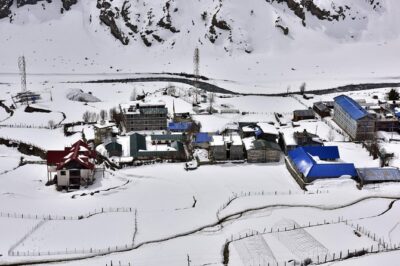
Browse the lists this tour appears in