
Reviewed · KATHMANDU
From Kathmandu: 2 Stupas and Kopan Monastery Spiritual Tour
Kathmandu’s sacred side comes into focus on this compact tour, which links a quiet stupa, a hilltop monastery, and the great white dome of Boudhanath. The best part is the change of mood from the calm grounds of Jamchen Vijaya Stupa to the more active religious life around Boudhanath.
I like the private format, since guides such as Pooja, Karma, Pranav, and Aneel have been praised for clear explanations and an easy, friendly manner. I also like that the tour asks you to do more than take photos, with time for meditation at Kopan Monastery and discussion of Buddhist beliefs, symbols, and daily practice.
The main consideration is that this is a five-hour introduction, not a full retreat or a slow monastery study. Kopan Monastery has occasionally been closed, and the tour involves walking and steps, so it is not a good fit for wheelchair users or people with serious mobility limits.
In This Review
- At a glance
- Why these three places work together
- Starting with the quiet Jamchen Vijaya Stupa
- Kopan Monastery, views and a chance to sit still
- Boudhanath, where pilgrimage meets daily life
- The guide is the real reason to book
- Transport, timing, and what the $6 price means
- Who will enjoy this half-day outing
- Should you book the Jamchen, Kopan, and Boudhanath tour?
- FAQ
- How long does the tour take?
- Which sites are visited?
- Is hotel pickup included?
- Is the tour private?
- What language does the guide speak?
- Can I meditate at Kopan Monastery?
- What should I bring, and are there any restrictions?
At a glance
- Three very different Buddhist sites: Move from the quiet Jamchen Vijaya Stupa to Kopan’s monastic setting and then Boudhanath’s busy pilgrimage center.
- A genuinely private experience: Your guide can adjust the pace, answer questions, and change the order or stop if needed.
- Meditation is part of the appeal: Time at Kopan may allow you to sit quietly for close to an hour, depending on access and conditions.
- Local guides add the most value: Pooja, Karma, Pranav, Aneel, and other English-speaking guides explain Buddhist ideas in plain language.
- Kathmandu transport is covered: Pickup and drop-off from your city accommodation come by car with a driver and licensed guide.
- Good for a first Buddhist introduction: At $6 per person, the tour offers a low-cost way to see major religious sites, though lunch and any unlisted entrance costs are not included.
Why these three places work together
Many Kathmandu sightseeing outings string together monuments with little time to understand them. This tour has a clearer idea behind it. Each stop gives you a different view of Buddhist practice.
Jamchen Vijaya Stupa offers quiet and space for thought. Kopan Monastery brings you closer to monastic life and formal teaching. Boudhanath then shows Buddhism as a living public tradition, with pilgrims walking clockwise around the stupa, prayer wheels turning, mantras being recited, and Tibetan-style shops and restaurants filling the surrounding streets.
That progression matters. You begin with stillness, move into study and meditation, and finish in a major religious center where devotion is part of everyday life. I would not book this only for a checklist of monuments. Book it if you want someone to explain what you are seeing and why people come here.
The five-hour length is also useful. You get a meaningful half-day without giving up a whole day in Kathmandu. The private group setup helps here. You are not locked into the same pace as a large bus group, and the guide can spend more time on questions that interest you.
Other Kathmandu days people book alongside this one:
- Everest Base Camp Trek – 14 Days
★ 5.0 · 1,499 reviews - Private Kathmandu Sightseeing Tour | UNESCO World Heritage sites
★ 5.0 · 756 reviews - Everest Base Camp Helicopter Tour landing at Everest View Hotel
★ 5.0 · 668 reviews
Starting with the quiet Jamchen Vijaya Stupa
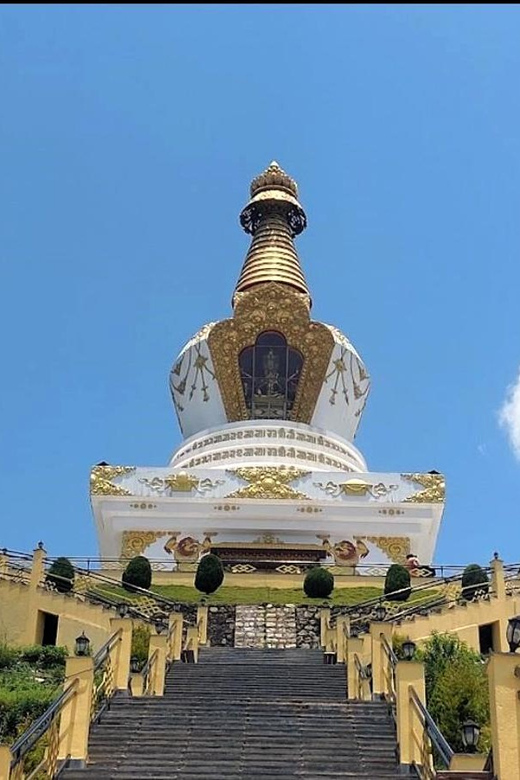
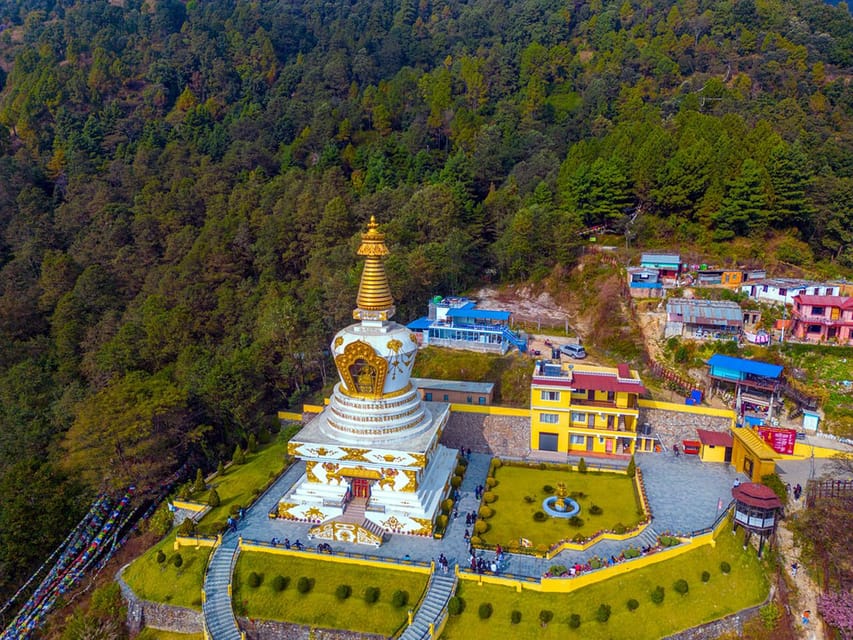
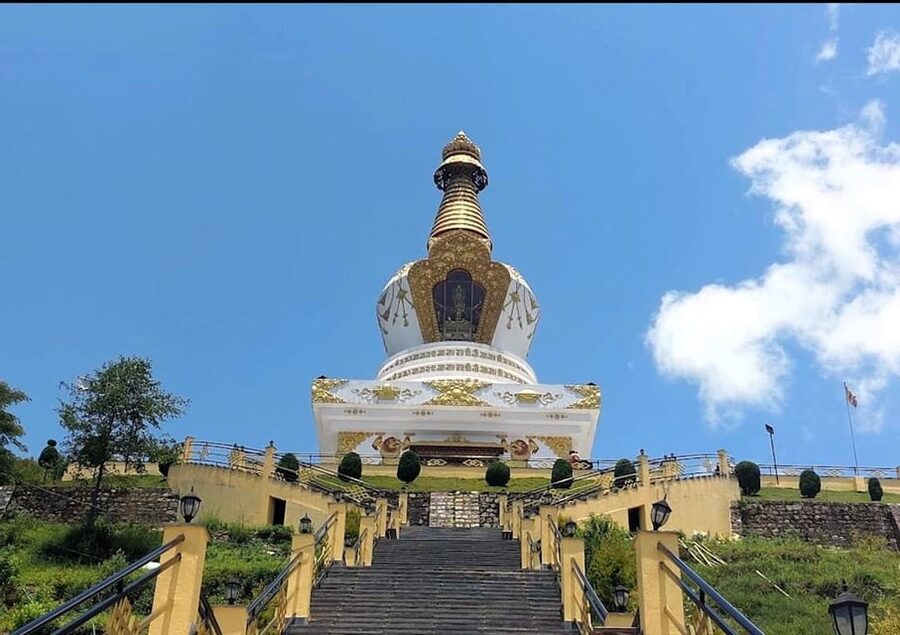
The first stop is Jamchen Vijaya Stupa, also written as Jamche Vijaya Stupa in the tour information. It is the least familiar of the three sites and the place most likely to give you a sense of calm before Kathmandu’s traffic and crowds take over again.
Plan on about an hour for a guided visit, sightseeing, and walking. The setting is described as peaceful, with natural surroundings and views that make it suitable for reflection. The stupa’s architecture offers a first look at Buddhist design, while the guide explains the religious meaning behind the structure and the practices connected with it.
This is where a good guide makes a real difference. Instead of simply pointing out the dome, prayer features, or decorative details, your guide can explain how Buddhist symbols relate to wisdom, compassion, meditation, and the cycle of daily practice. Guides including Aneel and Pranav have been praised for explaining both Buddhist and Hindu ideas in ways that are easy to follow.
Do not expect the same scale or energy as Boudhanath. That is precisely the point. Jamchen Vijaya is a quieter opening, and you may appreciate it most if you give yourself permission to slow down rather than rushing through for photographs.
Kopan Monastery, views and a chance to sit still
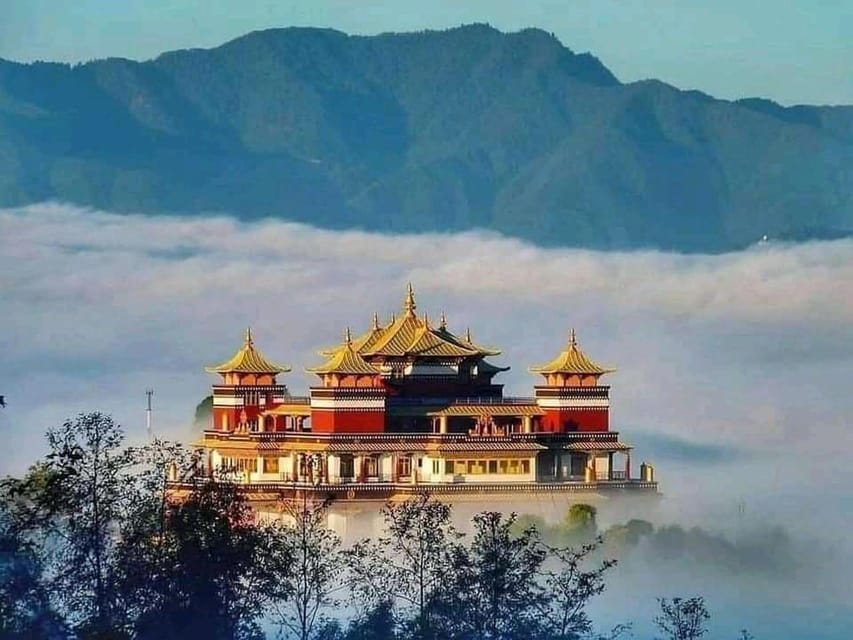
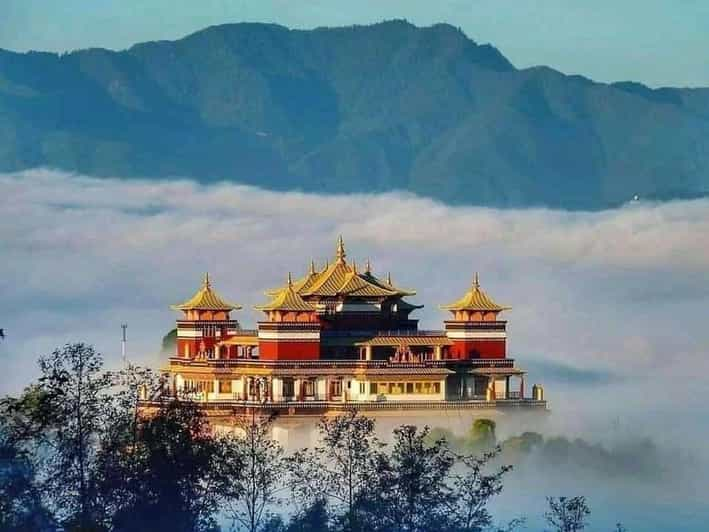
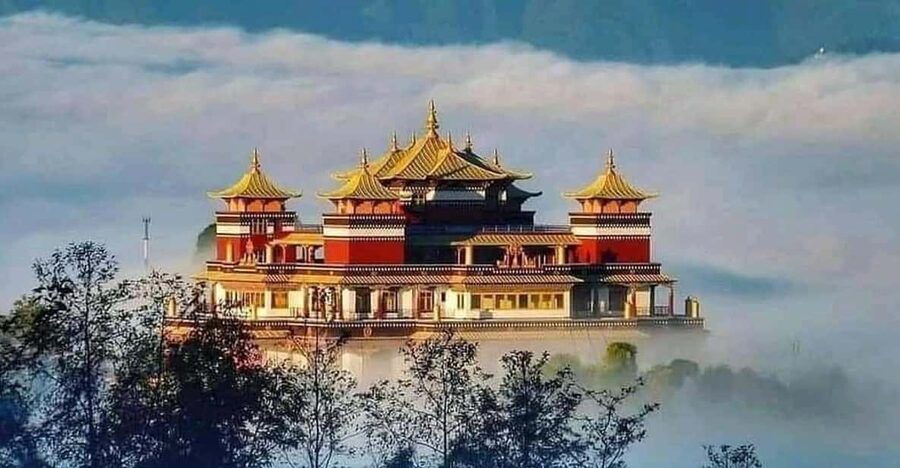
Kopan Monastery is the emotional center of the outing for many people. Set on a hill, it offers views over Kathmandu Valley along with monastic buildings, prayer wheels, colorful murals, gardens, and spaces used for teaching and meditation.
The scheduled visit lasts about an hour and may include a photo stop, free time, walking, scenic views, and a class or teaching session when available. The most useful part is the chance to sit and meditate. Some bookings have allowed nearly an hour of meditation, although you should treat that as dependent on monastery access rather than a guaranteed fixed session.
This is not a performance arranged only for sightseeing. The monastery is a place of Buddhist study and monastic life, so respectful behavior matters. Keep your voice low, follow instructions about where to walk or sit, and ask before photographing people or religious activity.
The guide’s role here is more than historical narration. Pooja has been praised for encouraging people to experience the site rather than simply look at it. Karma has also been described as passionate when explaining the beliefs and practices connected with the monastery. That approach suits Kopan, where a few quiet minutes may tell you more than a long list of dates.
There is one practical warning. Kopan can be closed at times. One person still found the day worthwhile after missing the monastery, but you should be prepared for a change if access is restricted. Ask at pickup if the monastery is open and how much meditation time is likely to be available.
The hilltop setting also means walking and possibly uneven ground or steps. The tour specifically says it is not suitable for people with mobility impairments or wheelchair users. Comfortable shoes are sensible, even though the activity is not presented as a hike.
Boudhanath, where pilgrimage meets daily life
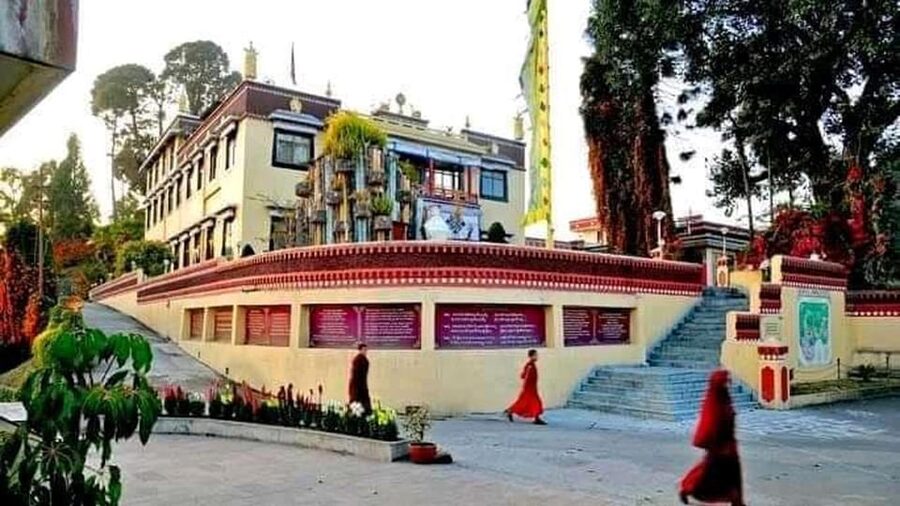
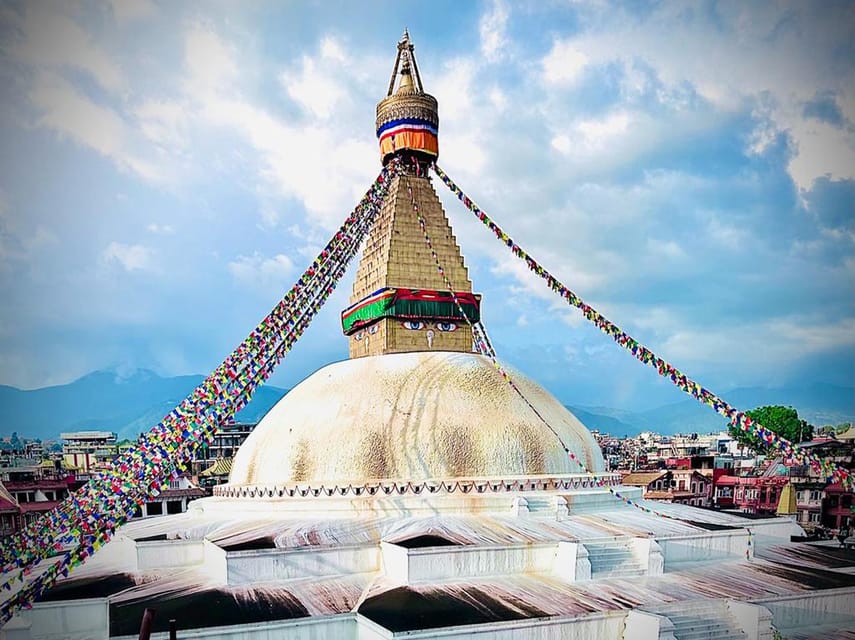
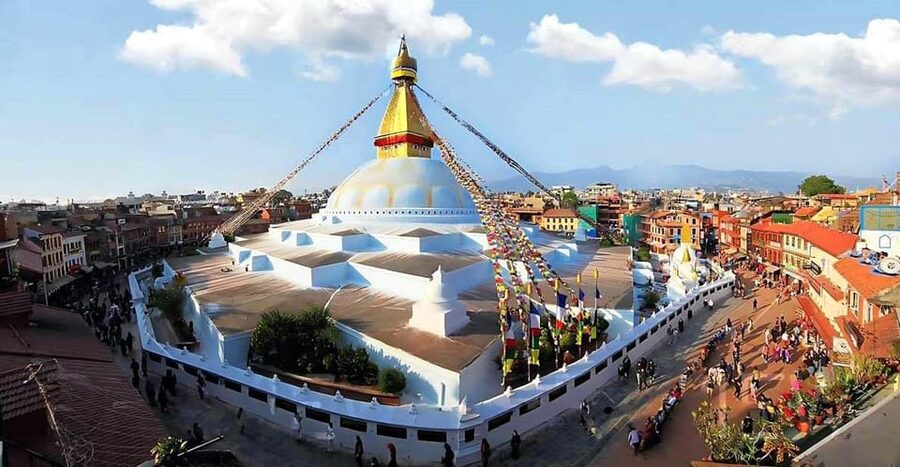
The final major stop is Boudhanath Stupa, one of Kathmandu’s best-known Buddhist sites and a UNESCO World Heritage Site. Its huge white dome and Buddha’s watchful eyes make it instantly recognizable, but the setting becomes more meaningful when you understand how people use it.
You will have about an hour here for a guided visit, photographs, free time, walking, and a break. Watch the flow of people walking clockwise around the stupa. You may see prayer wheels being spun, prayer flags moving overhead, and worshippers reciting mantras as they make their circuit.
Boudhanath is not a silent monument. The surrounding area is full of Tibetan Buddhist culture, shops, prayer items, cafés, and traditional eateries. That contrast with Jamchen Vijaya is one of the tour’s strengths. At the first stop, you have room to reflect. Here, devotion takes place amid ordinary shopping, eating, conversation, and city movement.
Your guide can help you read the visual details. The eyes of the Buddha are linked with wisdom and awareness, while the stupa itself represents central Buddhist ideas about the path toward understanding. Ask about the colors, signs, prayer wheels, and rituals. Several guides have been praised for explaining these points clearly, rather than assuming you already know Buddhist terminology.
You may have time to buy an authentic Nepalese lunch or local food around Boudhanath, but lunch is not included in the tour price. One useful local tip from a guide was to look for good momos, Nepal’s familiar dumplings. Since the stop includes free time, this is a good place to eat if your schedule and appetite allow.
Boudhanath can feel crowded compared with the earlier stops. That is not a flaw, but it changes the mood. If your main goal is silence, you will prefer Kopan. If you want to see how a sacred place functions as part of city life, Boudhanath is the stronger finish.
A completely different sort of day in Kathmandu:
- Half day cooking class in Thamel kathmandu
★ 5.0 · 607 reviews - Everest Base Camp Trekking
★ 5.0 · 485 reviews - Nagarkot Sunrise View and Day Hiking from Kathmandu
★ 5.0 · 471 reviews - Kathmandu: Full Day 7 UNESCO Tour with Lunch – Private/Group
★ 5.0 · 415 reviews
The guide is the real reason to book
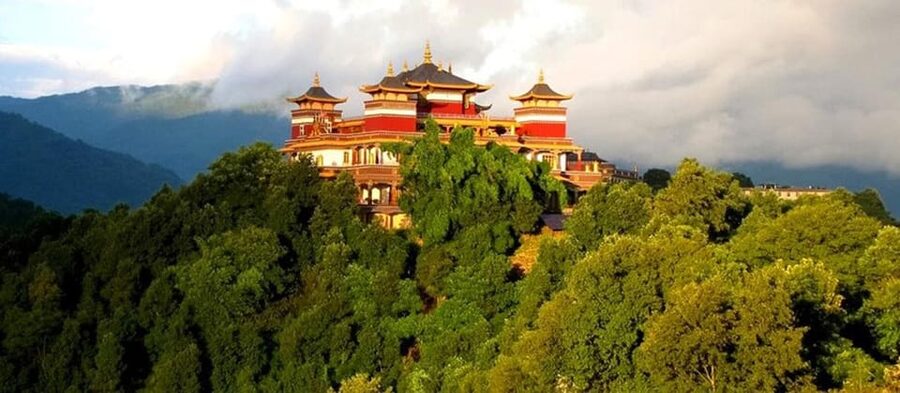
The sites are important, but the guide determines how much you take away. This is a private tour with an English-speaking live guide, and the strongest comments focus on the people leading it.
Pooja is repeatedly praised for warmth, humor, patience, and clear explanations. Karma is noted for his calm manner and strong understanding of local culture and Buddhist practice. Pranav is described as open and conversational, with the ability to connect spiritual subjects to both ancient and modern Nepal. Aneel is praised for enthusiasm, clear English, and thoughtful answers.
Those details matter because religion can be hard to interpret from architecture alone. A guide can explain the difference between simply seeing a prayer wheel and understanding how it is used. They can also help you approach a monastery with the right level of respect.
You should still take an active role. Ask about meditation, monastic education, the meaning of the stupa design, and the relationship between Buddhism and Hinduism in Nepal. The tour seems best when treated as a conversation, not a one-way lecture.
The private format helps solo visitors in particular. One-on-one time means you can ask basic questions without feeling self-conscious, and the guide can adjust the explanation to your interests. Couples and small groups also benefit from the ability to pause, take photos, or sit quietly without holding up a large party.
Transport, timing, and what the $6 price means
The tour lasts five hours from pickup in Kathmandu to return in the city. Car transportation, hotel pickup and drop-off, and a licensed guide are included. A driver handles the roads while you focus on the sites, and several people have specifically appreciated careful driving and smooth transfers.
Kathmandu traffic can make a short route feel longer, so the private car is more than a minor convenience. It saves you from arranging separate taxis to three religious sites and gives you a clear half-day plan. Starting times vary, so check availability for the time that suits your day.
At $6 per person, the price is remarkably low for private transport and a guide. It offers strong value if you are traveling alone or with a small group and want an organized introduction without paying for a full-day excursion. One person considered it relatively expensive compared with other local trips, so the value depends on what you want from the outing.
You are paying mainly for access, transport, and interpretation. The price does not list lunch, and it does not clearly state that every possible entrance or donation is included. Bring some Nepalese currency or a payment method for food and any optional cost you encounter.
The provider also offers free cancellation up to 24 hours before departure and a reserve-now, pay-later option. Those terms are useful if your Kathmandu schedule may shift, but check the booking conditions at the time you reserve.
Who will enjoy this half-day outing
I would recommend this tour to a first-time visitor who wants more context than a standard city drive can provide. It suits people curious about Buddhism, visitors with only one free morning or afternoon, and solo travelers who value conversation with a local guide.
It is also a good choice for anyone who has already seen Kathmandu’s main Hindu sites and wants a balanced look at the city’s Buddhist traditions. The route gives you quiet reflection, formal monastic culture, and a major public pilgrimage site in one outing.
You may want another type of activity if you want a long meditation retreat, detailed religious instruction, or a full day at one monastery. The experience is also a poor fit if you cannot manage walking or steps. Large bags and luggage are not allowed, so leave those at your accommodation.
Bring your passport or another ID card. A copy is accepted. Wear clothing suitable for religious places, keep your phone use discreet, and allow yourself enough time to sit rather than treating every stop as a quick photo call.
Should you book the Jamchen, Kopan, and Boudhanath tour?
Book it if you want a low-cost, private introduction to Kathmandu’s Buddhist heritage and appreciate a guide who can explain beliefs, rituals, and local culture in plain English. The strongest part is the combination of sites, especially the quiet start and the chance for meditation at Kopan before the lively finish at Boudhanath.
I would confirm Kopan’s opening status before setting out, and I would not book this expecting a guaranteed class or a fixed hour of meditation. If the monastery is open and you are comfortable walking, this is one of the better ways to give a single half-day in Kathmandu some spiritual depth.
FAQ
How long does the tour take?
The tour lasts five hours, including pickup and return to your accommodation in Kathmandu.
Which sites are visited?
The tour visits Jamchen Vijaya Stupa, Kopan Monastery, and Boudhanath Stupa in Kathmandu.
Is hotel pickup included?
Yes. Pickup and drop-off from accommodations in Kathmandu are included, with transportation by car.
Is the tour private?
Yes. It is offered as a private group experience.
What language does the guide speak?
The live guide speaks English.
Can I meditate at Kopan Monastery?
Meditation may be available at Kopan Monastery, and some visits have allowed close to an hour for it. Access and available time can vary, and the monastery may occasionally be closed.
What should I bring, and are there any restrictions?
Bring a passport or ID card, with a copy accepted. Large bags and luggage are not allowed, and the activity is not suitable for wheelchair users or people with mobility impairments.
Recently added around Kathmandu
- Kathmandu : Swambhunath & Durbar Square Guided Half Day Tour★ 3.3 · 3 reviews
- Private Day Tour in Kathmandu Valley Rim with Bhaktapur Sightseeing★ 5.0 · 3 reviews
- From Kathmandu / Pokhara / Chitwan: River Rafting – 1 Day★ 4.6 · 3 reviews
- Nepali Cooking training & Cultural Homestay Experience★ 5.0 · 3 reviews
- Private 3-Hour Nagarkot Sunset Tour from Kathmandu★ 3.5 · 3 reviews
- From Kathmandu: Everest Base Camp Landing Helicopter Tour★ 5.0 · 3 reviews
- 4 UNESSCO World heritage sites of Kathmandu-private tour★ 5.0 · 3 reviews
- Kailashnath Mahadev, Panauti and Namo Buddha Monastery Sightseeing★ 5.0 · 3 reviews