
Reviewed · EVEREST BASE CAMP TREKS
Everest Base Camp Trek – 14 Days
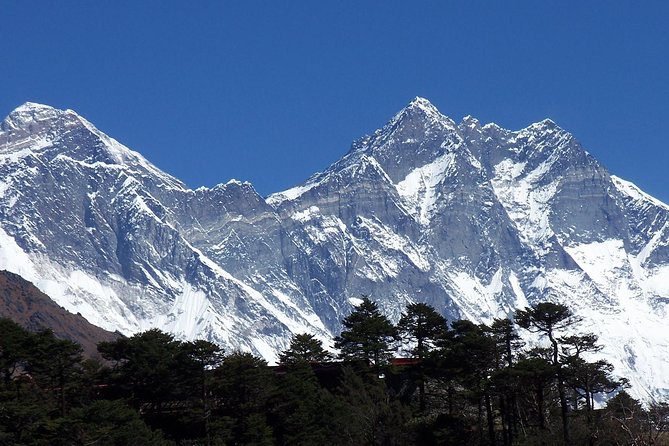
Everest Base Camp is not a quick sightseeing stop. It is a demanding two-week walk through Sherpa villages, Buddhist monasteries, suspension bridges, and thin mountain air, with the payoff of reaching Everest Base Camp at 5,365 meters and climbing Kala Patthar even higher. Ace the Himalaya handles the permits, flights, rooms, meals, porters, and emergency planning, so you can concentrate on putting one foot in front of the other.
I like the careful acclimatization plan, especially the rest days at Namche Bazaar and Dingboche. I also like the small-group format, with a maximum of 14 people and one porter assigned to every two clients. Guides vary by departure, but recent trips have included Kishor, Chris, Maddy, and Rajendra Khatry, with porters such as Saman and Sher receiving warm praise for their care and good humor.
The main catch is simple: this is a serious high-altitude trek, not a comfortable mountain holiday. Lukla flights can be shifted to Ramechhap during busy seasons, luggage is limited to 15 kilograms, and you must arrange insurance covering high-altitude rescue and evacuation yourself.
In This Review
- Key points before you book
- What the $1,800 price really covers
- Kathmandu arrival and the first night
- Day 2: Lukla and the first trail to Phakding
- Day 3: Suspension bridges and Namche Bazaar
- Day 4: Acclimatization at Namche Bazaar
- Day 5: Tengboche Gompa at 3,860 meters
- Day 6: Dingboche and the upper Imja Valley
- Day 7: Nangkartshang Peak acclimatization hike
- Day 8: The Khumbu Glacier and Lobuche
- Day 9: Everest Base Camp at 5,365 meters
- Day 10: Kala Patthar at 5,555 meters
- Days 11 and 12: Returning through Namche to Lukla
- Day 13: The scenic flight back to Kathmandu
- Day 14: Airport transfer and departure
- Guides, porters, and group size
- Who should book this trek
- Practical costs, timing, and cancellation
- FAQ
- How long is the Everest Base Camp trek?
- Where does the tour begin?
- Where does the activity end?
- What is the maximum group size?
- Are domestic flights included?
- What is the domestic flight luggage allowance?
- Are porters included?
- Are meals included?
- Is travel insurance included?
- Does the tour include a private room?
- Should you book the Ace the Himalaya EBC trek?
Key points before you book
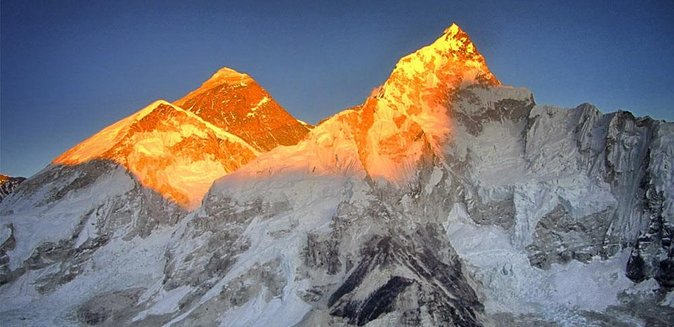
- Reach Everest Base Camp at 5,365 meters: The route finishes at the famous Khumbu Glacier staging area, followed by a Kala Patthar climb to 5,555 meters.
- Two built-in acclimatization days: Namche includes a Sherpa Museum visit, while Dingboche offers a hike toward Nangkartshang Peak.
- Porters carry the main load: One porter serves two clients for 11 trekking days, leaving you with only a day pack.
- Small groups make a difference: The maximum group size is 14, with personalized support from a licensed guide.
- Most major costs are included: Domestic flights, permits, accommodation, standard meals, staff costs, filtered trail water, and transfers are covered.
- The price is $1,800 per person: That is solid value for a fully arranged trek, but insurance, drinks, tips, equipment, visa costs, and Kathmandu dinners are extra.
What the $1,800 price really covers
At $1,800 per person, this trek is priced as a practical package rather than a bare-bones walk. You receive airport and hotel transfers, two nights in a three-star twin-share hotel in Kathmandu, the Kathmandu to Lukla flights, trekking permits, accommodation on the trail, a first-aid trained guide, porters, and standard breakfast, lunch, and dinner during the trek.
The staff costs are also covered. That includes food, rooms, wages, insurance, equipment, and medicine for the guide and porter team. This matters in Nepal, where arranging mountain transport, permits, porters, rooms, and meals separately can quickly become confusing.
You also receive a company duffel, trekking map, sun hat, filtered water on the trail, seasonal fruit, a first-aid kit, and a trip completion certificate. The Katadyn Pocket Water Filter is a useful touch, since buying bottled water all the way to Base Camp can become expensive and creates a great deal of plastic waste.
The price does not include lunch or dinner in Kathmandu, alcoholic drinks, hot and cold drinks on the trail, personal trekking gear, your Nepal visa, international flights, tips, or travel insurance. The insurance requirement deserves special attention. Your policy must cover high-altitude emergency rescue and evacuation, not just ordinary medical treatment.
The listed price applies to one person based on two people booking and can also be used for a solo booking. If no one is available to share a room on your date, or if you request a private departure, a $250 single supplement applies on arrival in Nepal.
More ways to trek to Everest Base Camp:
- Everest Base Camp Helicopter Tour landing at Everest View Hotel
★ 5.0 · 668 reviews - Everest Base Camp Trekking
★ 5.0 · 485 reviews - Everest Base Camp Trekking – 13 Day
★ 5.0 · 365 reviews
Kathmandu arrival and the first night
Your trip begins at Tribhuvan International Airport, where an Ace the Himalaya representative meets you outside the terminal with a sign. A private tourist vehicle takes you to your hotel, and the first night gives you a chance to rest before the mountain flight.
Kathmandu is not a throwaway stop here. It is where you collect yourself, check your kit, meet the guide, and prepare for a route that quickly moves into remote mountain country. The package includes breakfast at the Kathmandu hotel, but you pay for your own lunch and dinner in the city.
The airport pickup and private transfer are especially useful after a long international flight. You do not need to work out local transport while carrying trekking bags and trying to understand a new city.
Day 2: Lukla and the first trail to Phakding
The mountain section begins with the flight to Tenzing-Hillary Airport in Lukla. The flight itself is short, listed at about 30 minutes, but the schedule can be affected by weather and seasonal air traffic.
During peak trekking months, flights may operate from Manthali Airport in Ramechhap instead of Kathmandu because of congestion at Tribhuvan International Airport. That can mean an early road transfer from Kathmandu, so confirm the departure airport before you travel.
Lukla is the trailhead for the classic Everest route. From here, the walking begins through the Dudh Koshi valley toward Phakding. The first day is not about reaching a dramatic altitude. It is about settling into the pace, learning how your group moves, and getting used to walking with a day pack.
Accommodation in Lukla and Phakding is in twin-sharing mountain guesthouses. Attached toilets are specifically included in Lukla, Phakding, and Namche, while other nights use the facilities available at the guesthouse.
Day 3: Suspension bridges and Namche Bazaar
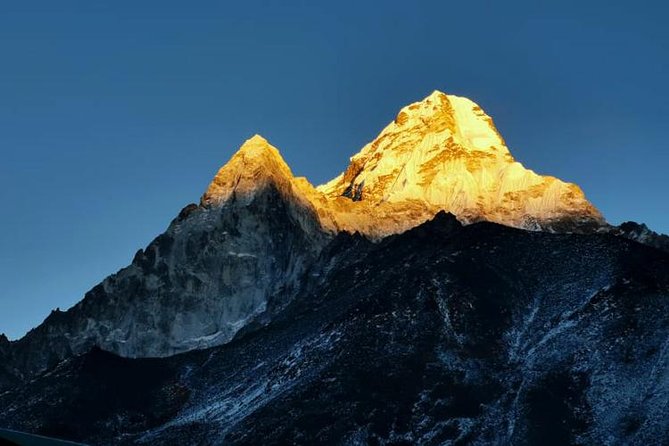
The walk toward Namche follows the Dudh Koshi and crosses the river several times on suspension bridges decorated with prayer flags. These bridges are among the route’s memorable early sights, though they can feel exposed if you are not fond of heights.
After entering Sagarmatha National Park, the trail climbs more sharply toward Namche Bazaar. The itinerary lists this day at about 16 hours, which signals a very long trekking day. That timing may include the full movement and activity window rather than continuous walking, but you should still expect a demanding ascent.
Namche is the main trading town of the Khumbu region and an important place to pause. It is more than a bed for the night. You begin to feel the change from foothill walking to high mountain travel, and the surrounding peaks make the effort worthwhile.
More treks starting in Kathmandu:
- Nagarkot Sunrise View and Day Hiking from Kathmandu
★ 5.0 · 471 reviews - Annapurna Circuit Trek with Tilicho Lake
★ 5.0 · 368 reviews - Everest Base Camp Trek -14 Days
★ 5.0 · 321 reviews - Annapurna base camp trek 5 Days
★ 5.0 · 252 reviews
Day 4: Acclimatization at Namche Bazaar
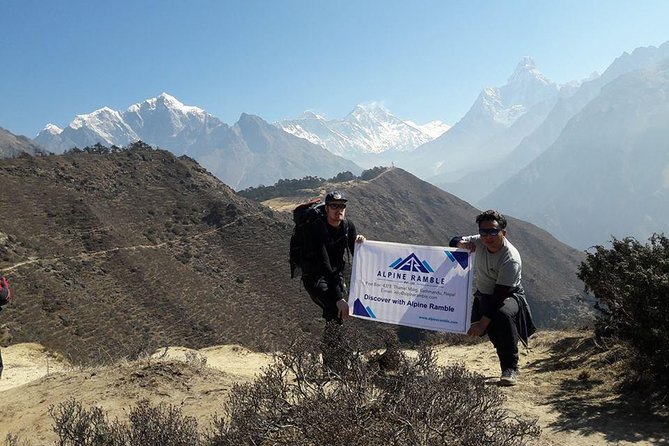
The first rest day is spent in Namche so your body can adjust to the thinning air. You do not simply remain indoors. A short walk leads to the Sherpa Museum, where you can learn about local customs, mountaineering, and the people whose culture shapes the route.
This is one of the smartest parts of the itinerary. Beginners often want to walk farther every day, but altitude rewards patience. The schedule gives you time to gain height and then sleep at the same elevation before continuing upward.
The word rest can be misleading. You may still walk several hours, and the climb toward the museum can feel harder than expected. Keep your pace slow, drink the filtered water provided on the trail, and tell your guide if you develop symptoms that concern you.
Day 5: Tengboche Gompa at 3,860 meters
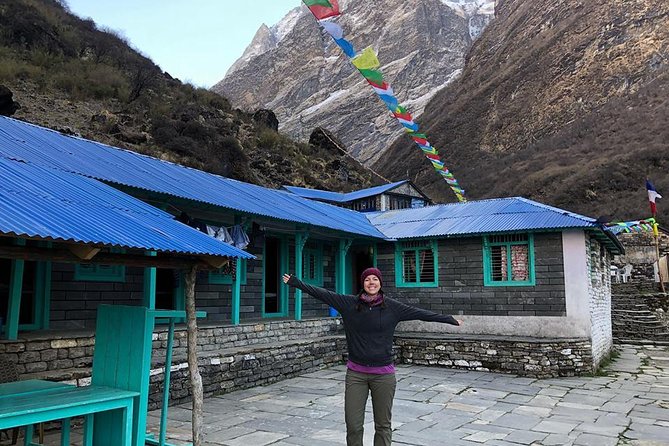
From Namche, the trail follows the Dudh Koshi past mountain views and drops toward Debuche before crossing the Imja Khola. It then climbs through Pangboche, where mani stones mark the Buddhist character of the valley.
The day ends at Tengboche, at an altitude of about 3,860 meters. Tengboche Gompa is one of the cultural highlights of the route. The monastery gives the walk a sense of place that a simple peak-viewing trip would miss.
The itinerary again describes this as roughly a 16-hour activity window. The route is physically demanding, with repeated climbs and descents, so do not judge the day only by its distance. You are gaining altitude, and that makes every uphill section more costly.
Day 6: Dingboche and the upper Imja Valley
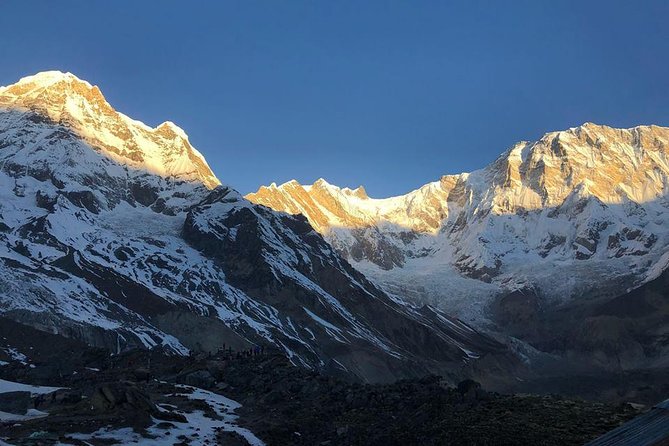
The trail continues toward Dingboche, passing through Pangboche and climbing higher through the Imja Valley. The views grow more severe and open as the route leaves the lower wooded sections behind.
Dingboche is a good place for a second acclimatization stop because the elevation is now significant. Your accommodation remains in a trekking guesthouse, and the package continues to cover standard meals.
This is the point where the trek begins to feel like a high-altitude expedition rather than a long hill walk. Your porter is carrying the main luggage, but you still need a day pack with water, warm layers, rain protection, sunscreen, and personal essentials.
Day 7: Nangkartshang Peak acclimatization hike
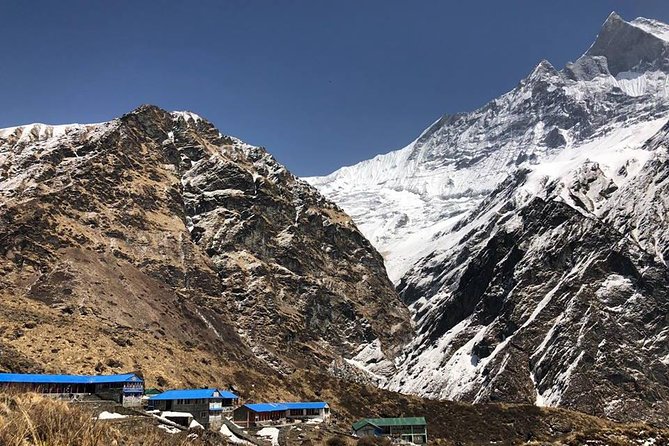
You spend another day in Dingboche without moving closer to Base Camp. Instead, the group hikes toward Nangkartshang Peak, a viewpoint above the village.
The benefit is twofold. You gain height during the day, then return to sleep lower in Dingboche, which supports acclimatization. You also get a strong view over the surrounding mountains without the pressure of a major transfer day.
This outing can be tiring even though it is called an acclimatization hike. At this altitude, a short climb may leave you breathing hard. The guide’s role becomes especially important here, since the correct response to altitude problems is not simply to push harder.
Day 8: The Khumbu Glacier and Lobuche
The route from Dingboche heads toward Lobuche along the lateral moraine of the Khumbu Glacier. You pass stone memorials dedicated to climbers who died on nearby peaks. These memorials bring a quiet seriousness to the walk and remind you that Everest is not merely a postcard subject.
Lobuche marks another step into the high country. The air is thin, the terrain is more exposed, and the trail can feel rougher underfoot. The package includes your room and meals, but comfort is naturally more basic than in Kathmandu.
This is another long day, listed at roughly 16 hours. Pay attention to how your body responds. Headaches, nausea, unusual fatigue, and other altitude symptoms should be reported promptly to the guide.
Day 9: Everest Base Camp at 5,365 meters
The walk to Everest Base Camp is the emotional center of the trip. You follow the Khumbu Glacier and climb to the camp at 5,365 meters, the highest point on the route before the next morning’s Kala Patthar climb.
The distance is only part of the challenge. The altitude makes the walking slow, and the glacier terrain can be uneven. You are reaching the famous base camp area, but you should not expect to see Mount Everest rising directly from the camp itself. Kala Patthar provides the more famous Everest view.
The listed stop duration is about 30 minutes, which is enough for photographs and a short pause before returning. Base Camp is also seasonal. In spring, expedition activity may be visible, but conditions and camp arrangements change through the year.
Day 10: Kala Patthar at 5,555 meters
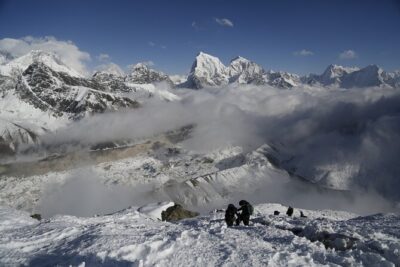
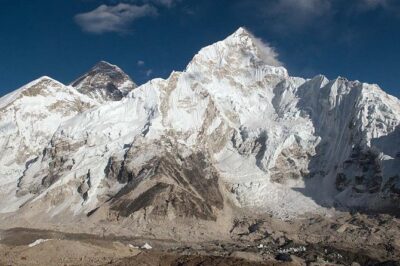
Kala Patthar is often the hardest and most rewarding morning of the trek. The climb reaches about 5,555 meters, higher than Everest Base Camp, and the viewpoint is prized for its broad mountain panorama.
You should treat this as a serious summit day, even though the peak is small by Himalayan standards. The climb is demanding because you are already tired and operating in very thin air. The reward is the route’s best chance for a clear, close view toward Mount Everest and the surrounding peaks.
After Kala Patthar, the trek begins its return. That change in direction can bring relief, but descending does not make the day effortless. You still need to manage loose ground, tired legs, and the cold.
Days 11 and 12: Returning through Namche to Lukla
The descent retraces the route through Pangboche and Tengboche before reaching Namche Bazaar. After the high point of the trip, Namche feels like a welcome return to lower elevation and a more familiar stop.
Day 12 continues toward Lukla, where the trek ends. This is another long walking day, listed at about 16 hours, so the final stretch requires stamina. Reaching Lukla gives the group time to reflect on the achievement before the flight back to Kathmandu.
The porter service runs for 11 days, which covers the main trekking portion. You still carry your day pack throughout, so pack carefully and keep it light.
Day 13: The scenic flight back to Kathmandu
The return flight from Lukla to Kathmandu takes about 35 minutes and offers one final mountain view. Flights in this region are not a minor detail. Weather and air traffic can affect schedules, so avoid planning an international connection immediately after the return flight.
Back in Kathmandu, the company provides the transfer to your hotel. Your second included Kathmandu night gives you a buffer before departure and a chance to rest after the trek.
Day 14: Airport transfer and departure
The final morning is straightforward. An airport representative transfers you to Tribhuvan International Airport for your international flight.
The activity ends where it began, at the Kathmandu airport. Since the tour includes the transfer, you do not need to arrange a taxi while managing your luggage and departure timetable.
Guides, porters, and group size
The maximum group size is 14, though the actual group can be smaller. This is large enough to offer company on long days but small enough for a guide to keep track of the group.
The guide is a government-licensed, English-speaking professional with first-aid training. Recent departures have included guides named Kishor, Chris, Maddy, and Rajendra Khatry. The guide assigned to your departure may be different, so ask for the name before you arrive.
The porter arrangement is one porter for every two clients. That is a useful balance: you avoid hauling your main bag uphill, while the system does not require an excessive support team. Pack within the 15-kilogram domestic flight allowance, and remember that your day pack remains your responsibility.
Tips are not included, and tipping is expected. Plan for this as part of the real cost rather than treating it as an unexpected extra.
Who should book this trek
I would choose this trip if you want the classic Everest Base Camp route but do not want to arrange permits, flights, porters, meals, rooms, and emergency plans yourself. It suits someone with moderate physical fitness who is ready for repeated long days and high-altitude walking.
The trip also works well for solo bookers who like the idea of joining a small group. You receive personalized attention without paying a fully private-tour price, unless a $250 single supplement becomes necessary.
I would not choose it if you want flexible daily distances, private rooms throughout, or a relaxed holiday with plenty of spare time. The schedule is fixed, the high points are physically demanding, and the return to Lukla includes another long walking day.
Practical costs, timing, and cancellation
The experience is booked an average of 80 days ahead, which suggests that planning early is sensible, especially for popular trekking seasons. The listed cancellation terms allow a full refund when you cancel at least six full days before the start time. Cancellation two to six full days ahead brings a 50 percent refund, while cancellation less than two full days ahead is nonrefundable.
The tour offers a mobile ticket and airport pickup. Confirmation is provided at booking, and the meeting point is Tribhuvan International Airport in Kathmandu.
Remember the extra costs: Nepal visa, international airfare, insurance, drinks, Kathmandu meals, personal equipment, and tips. These are not small details on a two-week trip, so include them when comparing this trek with cheaper-looking alternatives.
FAQ
How long is the Everest Base Camp trek?
The tour lasts approximately 14 days, including arrival and departure transfers, domestic flights, acclimatization days, the trek to Base Camp, and the return to Kathmandu.
Where does the tour begin?
The tour begins at Tribhuvan International Airport in Kathmandu, Nepal, where an Ace the Himalaya representative meets you outside the terminal.
Where does the activity end?
The activity ends back at the Kathmandu meeting point, with an airport transfer provided on Day 14.
What is the maximum group size?
The group can include a maximum of 14 people.
Are domestic flights included?
Yes. The Kathmandu to Lukla and Lukla to Kathmandu flights are included, along with the airport departure tax for that sector.
What is the domestic flight luggage allowance?
The domestic flight luggage allowance is 15 kilograms.
Are porters included?
Yes. Porter service is included for 11 days, with one porter assigned to every two clients.
Are meals included?
Breakfast, lunch, and dinner are included during the trekking portion. Breakfast is included for the two Kathmandu hotel nights. Lunch and dinner in Kathmandu are not included, and drinks are extra.
Is travel insurance included?
No. You must arrange your own travel insurance, and it must cover emergency high-altitude rescue and evacuation.
Does the tour include a private room?
The standard arrangement is twin-sharing accommodation. A $250 single supplement applies if no roommate is available or if you request a solo departure.
Should you book the Ace the Himalaya EBC trek?
I would book it if you want a well-organized classic route with strong logistical support and a sensible acclimatization schedule. The combination of licensed guides, porter service, included flights, permits, meals, filtered water, and emergency planning gives the $1,800 price real value.
Go in with clear expectations. This is not an easy walk, and the 5,555-meter Kala Patthar climb can be tougher than the Base Camp day. If you are prepared for basic mountain accommodation, long trekking days, altitude, and extra costs for insurance and gear, this is a practical way to take on one of Nepal’s great routes without handling every moving part yourself.
Recently added around Kathmandu
- Kathmandu : Swambhunath & Durbar Square Guided Half Day Tour★ 3.3 · 3 reviews
- Private Day Tour in Kathmandu Valley Rim with Bhaktapur Sightseeing★ 5.0 · 3 reviews
- Nepali Cooking training & Cultural Homestay Experience★ 5.0 · 3 reviews
- Private 3-Hour Nagarkot Sunset Tour from Kathmandu★ 3.5 · 3 reviews
- From Kathmandu / Pokhara / Chitwan: River Rafting – 1 Day★ 4.6 · 3 reviews
- From Kathmandu: Everest Base Camp Landing Helicopter Tour★ 5.0 · 3 reviews
- 4 UNESSCO World heritage sites of Kathmandu-private tour★ 5.0 · 3 reviews
- From Kathmandu Budget: 15 Day Everest Base Camp Trek★ 5.0 · 3 reviews
Everest Base Camp Treks, compared.
Everest Base Camp Helicopter Tour landing at Everest View Hotel
Read our review →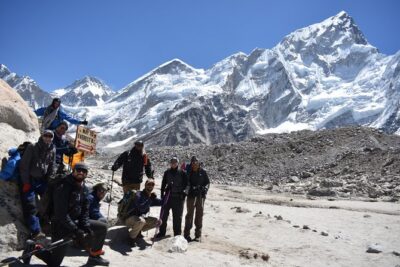
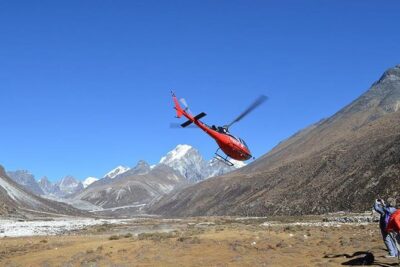
Everest Base Camp Helicopter Tour landing at Hotel Everest View
Read our review →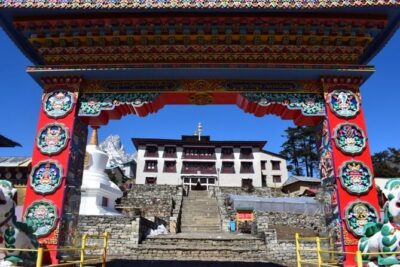
Everest Base Camp Trek with Helicopter Return from Gorakshep to Lukla
Read our review →Browse the lists this tour appears in