
Reviewed · EVEREST BASE CAMP TREKS
Everest Base Camp Trekking
Reaching Everest Base Camp is only part of the story. The real reward comes in the steady change from pine forest and rushing river to high, spare valleys beneath Ama Dablam, Thamserku, and Everest. This 14-day guided trek takes care of the route, meals, teahouse lodging, and local transport, leaving you to concentrate on your legs and the views.
I like the small group size, capped at 10 people, because a guide can keep a closer eye on your pace and condition. I also like the sensible acclimatization stop in Namche Bazaar, plus the early morning walk to Kala Patthar for the best Everest views. The drawback is clear: this is a serious high-altitude trek, not a sightseeing holiday, and the schedule can feel tough even for an active person.
In This Review
- Key points to know before you book
- What the $1,350 price really gives you
- Day 1: Kathmandu arrival and a gentle start
- Day 2: Flying to Lukla and entering the Khumbu
- Days 3 and 4: Forest trails and acclimatization in Namche Bazaar
- Day 5: Namche to Phorse via high mountain views
- Day 6: Buddhist culture and the approach to Dingboche
- Days 7 and 8: Moraine, memorial stones, and high-altitude walking
- Day 9: Everest Base Camp and the Khumbu Glacier
- Day 10: Kala Patthar sunrise
- Days 11 and 12: Returning through Pheriche and Pangboche
- Day 13: Lukla to Kathmandu
- Day 14: Kathmandu before departure
- What the guides add to the experience
- Who should book this trek?
- Final verdict: a strong choice for a prepared trekker
- FAQ
- How long is the Everest Base Camp trek?
- Where does the trek start?
- How large is the trekking group?
- Is accommodation included?
- Are meals included?
- What level of fitness is required?
- Is airport pickup available?
- Can I cancel for a full refund?
Key points to know before you book
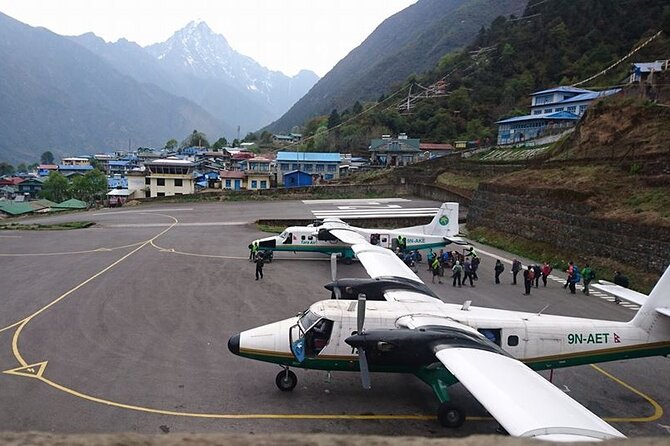
- Lukla flight begins the mountain journey: The short domestic flight from Kathmandu offers sunrise views of snow-covered peaks before you land at Tenzing-Hillary Airport.
- Namche Bazaar is your first major rest stop: You get an acclimatization day with access to bakeries, restaurants, internet cafes, and ATMs.
- The route includes real altitude gain: You need strong physical fitness for steep trails, rocky ground, moraine, and long walking days.
- Everest Base Camp is not the best Everest viewpoint: The sunrise from Kala Patthar on Day 10 gives the stronger view of Mount Everest itself.
- The group is limited to 10 people: That allows more personal attention than a large commercial trek.
- The $1,350 price covers the basics: Teahouse accommodation, meals, guiding, and local transport are included, which makes the package easier to budget.
What the $1,350 price really gives you
At $1,350 per person, this trek offers solid value if you want a guided route with the main practical pieces handled for you. The package includes teahouse accommodation, meals, and local transportation, including the flights between Kathmandu and Lukla described in the schedule.
That matters in the Everest region. You are not simply paying for a walking route. You are paying for a guide who knows the trail, a planned acclimatization pattern, places to sleep along the way, and help with the basic daily logistics. The route also includes airport pickup in Kathmandu, a private tourist vehicle transfer to your hotel, and a return flight after the trek.
The price does not mean a luxury trip. Teahouses are practical mountain lodging, and the experience is built around walking rather than comfort. You should also read the included items carefully when budgeting, since the provided details do not list every possible personal expense.
A full refund is available if you cancel at least 24 hours before the start time. Changes or cancellations made within 24 hours are not accepted for a refund.
More ways to trek to Everest Base Camp:
- Everest Base Camp Trek – 14 Days
★ 5.0 · 1,499 reviews - Everest Base Camp Helicopter Tour landing at Everest View Hotel
★ 5.0 · 668 reviews - Everest Base Camp Trekking – 13 Day
★ 5.0 · 365 reviews
Day 1: Kathmandu arrival and a gentle start
Your airport arrival is met by a representative at Tribhuvan International Airport. A private tourist vehicle takes you to your hotel, giving you a simple start after a long international flight.
You can rest or visit the company office for more information about the trek. I like this low-pressure first day. Kathmandu can be a lot to absorb, so having time to recover before the mountain section is useful.
This is also the moment to check that you have your passport and travel details in order. A current passport is required, and the booking requires each participant’s passport name, number, expiry date, and country.
Day 2: Flying to Lukla and entering the Khumbu
The day begins early, with a drive from your hotel to the domestic airport terminal after breakfast. The flight to Lukla is a major part of the experience, not just a transfer. The schedule highlights sunrise views over snow-capped mountains, and the arrival at Tenzing-Hillary Airport brings you directly into the trekking region.
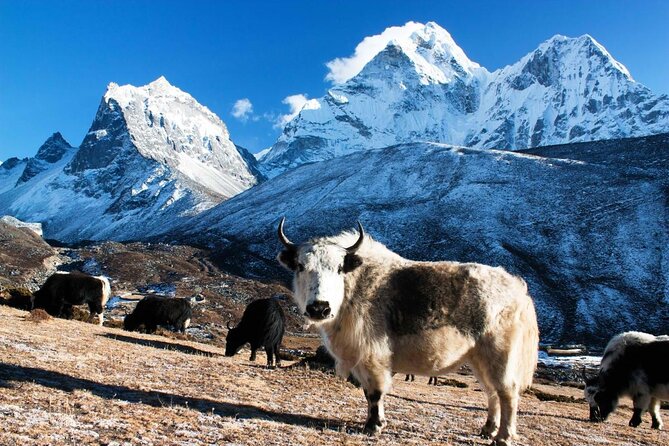
From Lukla, the trail passes through pine forests and follows the Dudh Koshi River. You also get views of Mount Thamserku before passing settlements and entering Sagarmatha National Park at a checkpoint.
This first walking day helps you shift from city time to mountain time. The forests and river make the route feel welcoming, but do not mistake the scenery for an easy stroll. You are beginning a long sequence of walking days, and keeping a calm pace early on is wise.
Days 3 and 4: Forest trails and acclimatization in Namche Bazaar
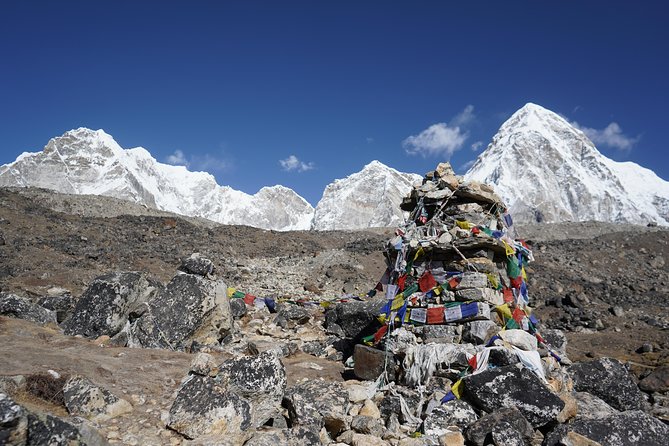
The route reaches Namche Bazaar, the largest settlement in the Khumbu region. Namche is an important practical stop. You may find ATMs, internet cafes, restaurants, bakeries, and other useful services here, making it feel far more connected than the smaller settlements higher up.
Day 4 is set aside for acclimatization rather than a full rest with no activity. You take a short hike to a nearby viewpoint, with the purpose of helping your body adjust to the increasing altitude.
That short hike is one of the most valuable parts of the schedule. Altitude affects people differently, and a planned pause gives you time to notice how you feel before the route climbs higher. The guide’s role matters here. Several people who completed this trip worked with guides named Biru, Amabar, or Ramesh, and their strongest praise centered on safety, care, and help when conditions became difficult.
You should still be honest about your condition. A guide can assist, but no itinerary removes the effects of altitude.
More treks starting in Kathmandu:
- Nagarkot Sunrise View and Day Hiking from Kathmandu
★ 5.0 · 471 reviews - Annapurna Circuit Trek with Tilicho Lake
★ 5.0 · 368 reviews - Everest Base Camp Trek -14 Days
★ 5.0 · 321 reviews - Annapurna base camp trek 5 Days
★ 5.0 · 252 reviews
Day 5: Namche to Phorse via high mountain views
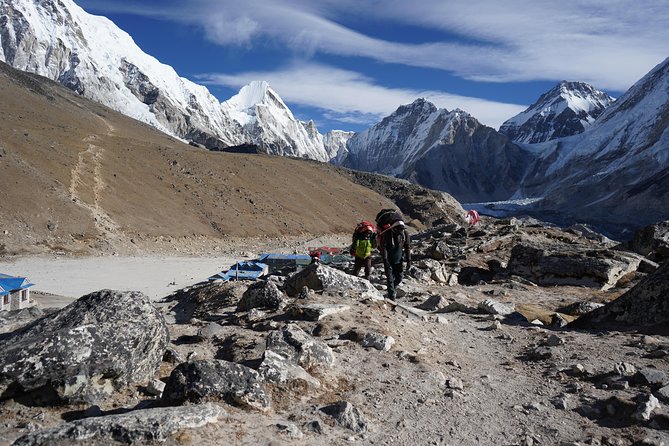
After breakfast, the trek continues from Namche toward Phorse. The route reaches Mugla Pass and opens views toward Ama Dablam, Khumbu, and Thamserku.
The trail then descends toward the Dudh Koshi and crosses the river before continuing toward the settlement. This is a good example of Himalayan walking: you gain height, lose some of it, and gain again. The total effort can be greater than the distance on a map suggests.
Phorse provides a quieter mountain setting than Namche. You are now farther from the conveniences of the larger settlement, so the teahouse format becomes more central to your day. You walk, eat, rest, and prepare for the next climb.
Day 6: Buddhist culture and the approach to Dingboche
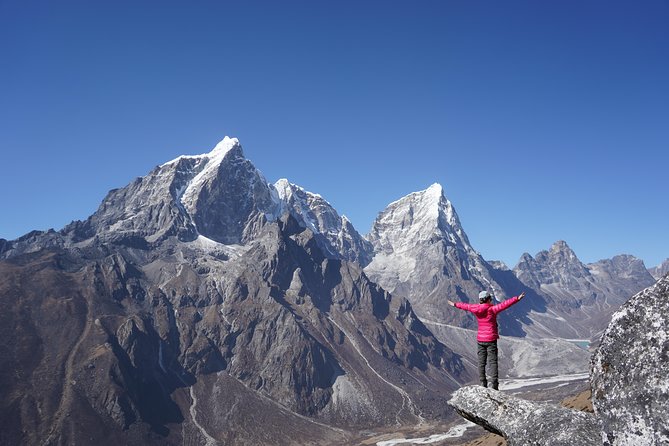
The route from Phorse to Dingboche begins with a visit to the region’s largest Buddhist monastery. That visit adds an important cultural layer to the trek. You are not only moving toward a famous mountain destination. You are passing through communities shaped by Tibetan Buddhist practice and the demands of life at high altitude.
The trail continues through alpine forest to Pangboche, a large village, then onward through Shomare and other settlements toward Dingboche. The change in vegetation becomes noticeable as the route climbs. Forest gives way to more open ground and a colder, more exposed setting.
Dingboche is another key stage before the highest part of the route. By this point, the guide’s pacing and your own discipline matter. Drink enough, walk steadily, and avoid treating a fast pace as a sign of strength. At altitude, slow and controlled usually wins.
Days 7 and 8: Moraine, memorial stones, and high-altitude walking
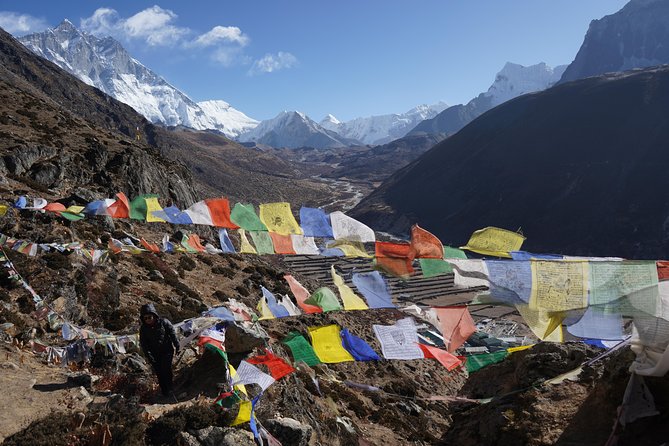
The route continues through the Khumbu Khola valley, with a climb from the Duglha area. Along the way, you pass Dusa, associated with yak herders, and Phulong Karp, identified as the camp of the first successful Everest expedition in 1953.
The surroundings become increasingly stark. You encounter the terminal moraine of the Khumbu Glacier and climb toward Chupki Lhara, where boulder-covered slopes and collections of stones with prayer flags create a solemn pause.
This section is physically demanding because the ground becomes rocky and the air is thinner. The details in the schedule also refer to Chola Lake, reflecting the high mountain terrain and nearby route features. You should expect the upper section to require patience, balance, and close attention to your guide’s instructions.
This is where a small group can make a real difference. A guide can help maintain a sensible pace and spot when someone needs to stop. Several named guides, including Biru and Amabar, were praised for keeping trekkers safe and offering practical help when the route became hard.
Day 9: Everest Base Camp and the Khumbu Glacier
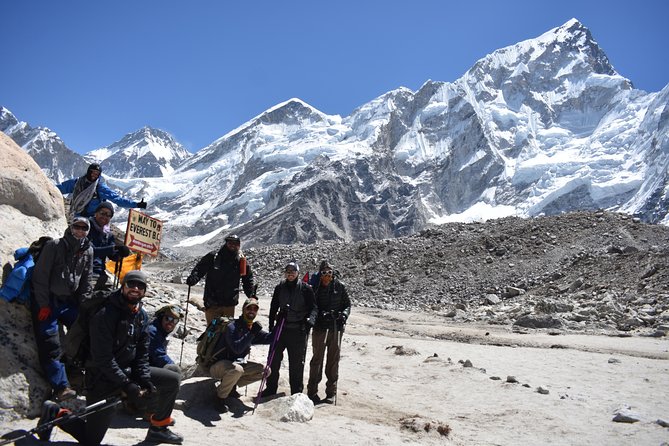
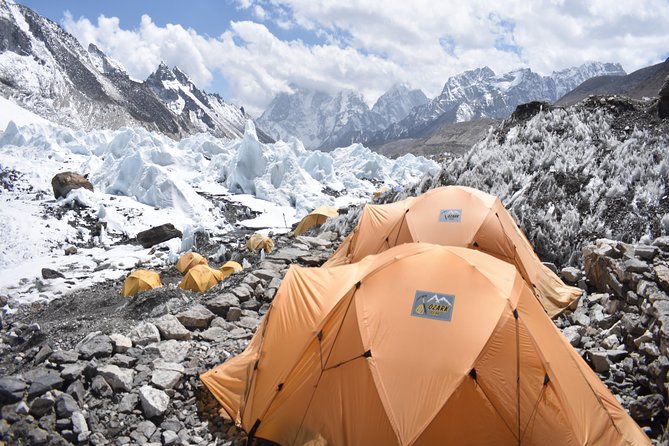
Day 9 is the central goal of the trek. The route reaches Everest Base Camp after continuing through high mountain terrain and the Khumbu Glacier area. One viewpoint at Thangma Riju offers a 360-degree panorama of snow-covered peaks.
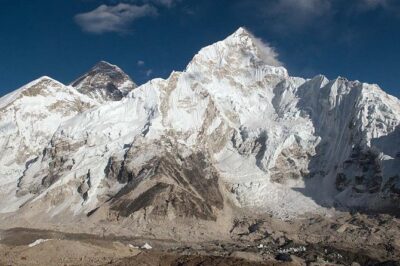
There is an important point here: you do not get the clearest view of Mount Everest from Base Camp itself. Base Camp is a milestone and a place to appreciate the scale of expeditions, glaciers, and surrounding peaks. It is not simply a front-row photo spot for the summit.
The stop at Everest Base Camp is listed as about 30 minutes. That may sound brief, but at this altitude, time outdoors can feel demanding. Use the visit to take in the setting, take photographs, and conserve energy for the route back.
The emotional value of this day comes from the effort behind it. You have crossed rivers, forests, settlements, steep trails, and moraine to reach a place known around the world. The destination matters, but the changing mountain environment along the way is just as memorable.
Day 10: Kala Patthar sunrise
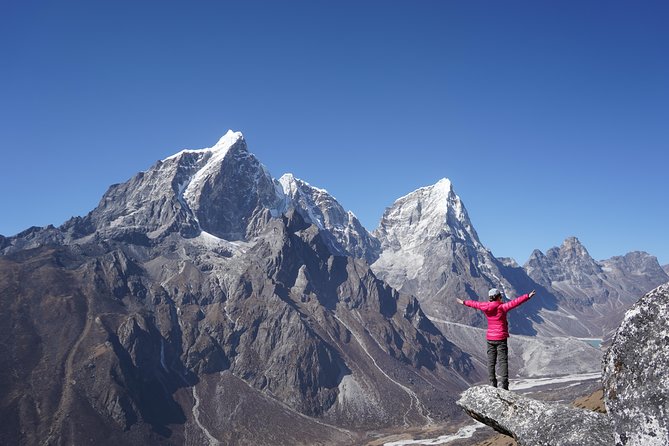
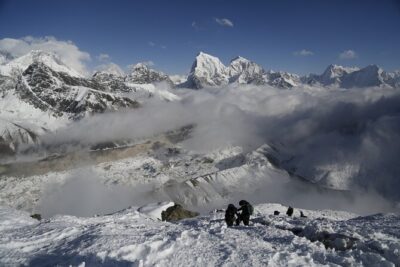
The trek starts very early on the trip’s high point. The aim is to reach Kala Patthar as darkness gives way to morning light, with views of Everest and the surrounding peaks.
This is probably the best viewpoint day of the entire schedule. Kala Patthar is specifically included for sunrise, and the morning light gives the mountains a changing appearance as the day begins. The stop is listed as about 30 minutes, though the full walk to and from the viewpoint is the important part.
You will need warm clothing and a willingness to start before dawn. The early hour is not a minor inconvenience. It is chosen because the morning often provides the clearest and most dramatic mountain views in the itinerary.
After Kala Patthar, the route turns back toward lower ground. That change can bring relief, but descending is not effortless. Rocky trails can punish knees and ankles, especially after several days at altitude.
Days 11 and 12: Returning through Pheriche and Pangboche
The descent follows the same general route through Duglha, Pheriche, Orsho, and Shomare before reaching Pangboche. You pass through familiar valleys from a different direction, with more attention now on footing and recovery.
Pangboche includes an opportunity to explore an old monastery. This gives the return journey a cultural stop rather than making it a simple march back to Lukla.
Day 12 continues downhill through steep terrain. You need to walk slowly and stay balanced on the rocky trail until reaching a suspension bridge over the Dudh Koshi. The guide’s help is especially useful here. Downhill fatigue can make people careless, and a controlled pace reduces the risk of a slip.
The descent also gives you a different view of the route. Forest becomes more common again, and the air may feel easier as you lose altitude. Do not rush simply because the hardest ascent is behind you.
Day 13: Lukla to Kathmandu
The final mountain day includes the return flight from Lukla to Kathmandu. From the air, you get another chance to see the Himalayan peaks, this time with the satisfaction of having walked through the region.
Back in Kathmandu, the schedule leaves time for shopping and walking around the city. The evening is set aside to celebrate completing the trek.
This extra city time is useful. After two weeks of early mornings and mountain trails, Kathmandu gives you a chance to slow down before your international departure. It also makes the trip feel like more than an isolated high-altitude challenge, linking the Himalaya with Nepali city life.
Day 14: Kathmandu before departure
Your last day allows time for more shopping and sightseeing around Kathmandu Valley before the scheduled airport transfer.
The schedule does not specify particular monuments or sightseeing stops, so you should treat this as free time rather than a fixed cultural tour. That flexibility is useful if you need souvenirs, rest, or a final walk through the city.
What the guides add to the experience
A guided Everest Base Camp trek is about more than avoiding a wrong turn. Your guide helps you manage the rhythm of each day, understand the villages and Buddhist sites, and focus on walking instead of arranging every meal and bed.
The strongest praise for this operation centers on care and safety. Biru is repeatedly singled out as an excellent companion and guide. Amabar and porter Kanchar are also named for making a trekker feel safe and offering steady help. Ramesh is described as a Sherpa guide who supported a solo trekker on a more demanding Three Passes route.
Those experiences do not guarantee a particular guide for your departure. Ask who will lead your group and what porter support is included before you pay. Still, the repeated focus on attentive guiding is a good reason to consider this package if you do not want to manage the route alone.
Who should book this trek?
You should consider it if you are active, comfortable walking for many consecutive days, and ready for steep, rocky trails at high altitude. The tour is designed for people with strong physical fitness, not for casual walkers looking for a short mountain outing.
A small group of up to 10 suits solo trekkers and couples who want company without joining a very large party. It also gives you a better chance to ask questions and receive personal attention.
You should think twice if you dislike basic accommodation, cold weather, early starts, or plans that depend on mountain conditions. The tour operates in all weather, so appropriate clothing is essential. The listed schedule is approximately 14 days, and mountain transport can never feel as predictable as an ordinary city transfer.
Final verdict: a strong choice for a prepared trekker
I would book this trek if I wanted a guided Everest Base Camp route with a clear 14-day structure, a small group, meals, teahouse accommodation, and airport support included. The itinerary gives you the major landmarks: Lukla, Namche Bazaar, Buddhist monasteries, high valleys, Everest Base Camp, and Kala Patthar sunrise.
I would not book it expecting comfort or an easy achievement. The price is attractive for the services included, but the physical demands remain real. Prepare seriously, ask about your guide and porter arrangements, and treat acclimatization as essential rather than optional.
If you are fit, patient, and eager to see the Himalaya on foot, this is a well-focused way to reach Everest Base Camp without handling every logistical detail yourself.
FAQ
How long is the Everest Base Camp trek?
The experience lasts approximately 14 days, including arrival and departure time in Kathmandu, the flight to Lukla, the trek, the return flight, and time in Kathmandu.
Where does the trek start?
The meeting point is Tribhuvan International Airport in Kathmandu, Nepal. An airport representative meets you there and arranges transport to your hotel.
How large is the trekking group?
The group has a maximum of 10 participants.
Is accommodation included?
Yes. Teahouse accommodation is included as part of the experience.
Are meals included?
Yes. Meals are included during the trekking program.
What level of fitness is required?
The experience is intended for active people with strong physical fitness. The route includes steep trails, rocky terrain, high altitude, and long walking days.
Is airport pickup available?
Yes. Pickup is offered from Tribhuvan International Airport, with transport to the hotel arranged by private tourist vehicle.
Can I cancel for a full refund?
Yes, if you cancel at least 24 hours before the experience start time. Cancellations or changes made less than 24 hours before the start time are not accepted for a refund.
Recently added around Kathmandu
- Kathmandu : Swambhunath & Durbar Square Guided Half Day Tour★ 3.3 · 3 reviews
- Private Day Tour in Kathmandu Valley Rim with Bhaktapur Sightseeing★ 5.0 · 3 reviews
- From Kathmandu / Pokhara / Chitwan: River Rafting – 1 Day★ 4.6 · 3 reviews
- Nepali Cooking training & Cultural Homestay Experience★ 5.0 · 3 reviews
- Private 3-Hour Nagarkot Sunset Tour from Kathmandu★ 3.5 · 3 reviews
- 4 UNESSCO World heritage sites of Kathmandu-private tour★ 5.0 · 3 reviews
- From Kathmandu: Everest Base Camp Landing Helicopter Tour★ 5.0 · 3 reviews
- From Kathmandu Budget: 15 Day Everest Base Camp Trek★ 5.0 · 3 reviews
Everest Base Camp Treks, compared.
Everest Base Camp Helicopter Tour landing at Everest View Hotel
Read our review →
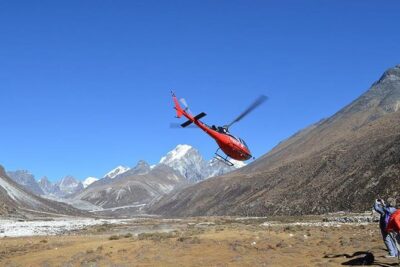
Everest Base Camp Helicopter Tour landing at Hotel Everest View
Read our review →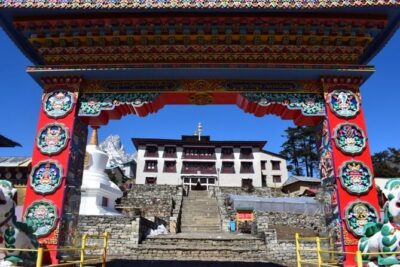
Everest Base Camp Trek with Helicopter Return from Gorakshep to Lukla
Read our review →Browse the lists this tour appears in