
Reviewed · KATHMANDU UNESCO HERITAGE TOURS
Kathmandu: 7 UNESCO-Listed city sites group day trip
Kathmandu’s seven UNESCO sites pack an astonishing amount of history into one long day. You move from hilltop Swayambhunath to royal courtyards, medieval streets, Hindu cremation ghats, and the great Buddhist stupa at Boudhanath. The route gives you a useful first look at how Hindu and Buddhist traditions share the same city.
I like the private group format, which lets you ask questions and adjust your pace, and I like the range of sites. Guides Karma and Pooja have been singled out for clear explanations, warmth, and the ability to connect old traditions with modern Nepal. The main drawback is time: the advertised duration is eight hours, but the listed driving and stop times add up to roughly eleven and a half hours, so confirm the day’s schedule before booking.
In This Review
- Key points at a glance
- Seven major sites, one very full day
- Swayambhunath: Kathmandu from the hilltop
- Kathmandu Durbar Square and the old royal center
- Patan Durbar Square: Newari detail at close range
- Bhaktapur Durbar Square: the longest palace-square visit
- Changu Narayan: a shorter stop with ancient roots
- Pashupatinath beside the Bagmati River
- Boudhanath: closing the day at the great stupa
- What the $64 price really covers
- Guide quality and the human side of the tour
- Practical advice for making the day work
- Should you book this Kathmandu heritage circuit?
- FAQ
- How long does the Kathmandu UNESCO sites tour last?
- Which UNESCO-listed sites are included?
- Is hotel pickup included?
- Is transportation included?
- Is a guide included?
- Are entrance tickets included?
- What should I bring?
- Is the tour suitable for wheelchair users?
- Can I cancel the booking?
Key points at a glance
- Seven UNESCO sites in one route: Cover Swayambhunath, Kathmandu Durbar Square, Patan Durbar Square, Bhaktapur Durbar Square, Changu Narayan, Pashupatinath, and Boudhanath.
- Private transport and hotel pickup: Start and finish in Kathmandu, with a driver or guide confirming your pickup in the hotel lobby.
- Strong guide element: English-speaking guides such as Karma and Pooja explain art, ritual, architecture, and local customs.
- Best city views at Swayambhunath: The hilltop stupa gives you a broad view across the Kathmandu Valley.
- Royal and religious Nepal in one day: Compare Newari palace squares with Hindu and Buddhist places of worship.
- Budget for entrance fees: The $64 price covers transport and a licensed guide, but heritage-site tickets, food, and personal costs are extra.
Seven major sites, one very full day
This is not a relaxed neighborhood walk. It is a fast, ambitious circuit designed for someone who wants to see Kathmandu’s headline cultural sites in a single outing.
You begin with hotel pickup in Kathmandu and travel by van to Swayambhunath Temple. The route then heads to Kathmandu Durbar Square, Patan Durbar Square, Bhaktapur Durbar Square, Changu Narayan Temple, Pashupatinath Temple, and Boudhanath Stupa before returning to Kathmandu.
The order makes geographic sense, though the day still includes a lot of road time. Kathmandu Valley traffic can make even short distances feel slow, and the schedule allows only 30 to 40 minutes at some of the most important religious sites. I would treat the stated times as a guide rather than a guarantee and ask how the operator plans to handle traffic and entrance lines.
The reward is breadth. By the end, you will have seen hilltop Buddhist worship, Hindu rituals beside the Bagmati River, royal Newari architecture, medieval urban streets, and one of the world’s most important Tibetan Buddhist centers.
More of the valley’s UNESCO heritage sites:
- Private Kathmandu Sightseeing Tour | UNESCO World Heritage sites
★ 5.0 · 756 reviews - Kathmandu: Full Day 7 UNESCO Tour with Lunch – Private/Group
★ 5.0 · 415 reviews - Kathmandu: Full Day Top 4 UNESCO Tour with Lunch – Private/Group
★ 5.0 · 269 reviews
Swayambhunath: Kathmandu from the hilltop
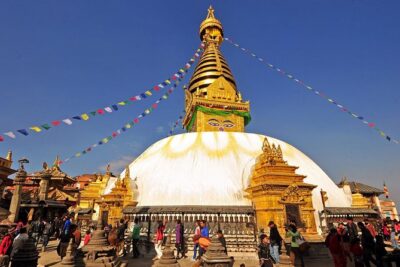
The first major stop is Swayambhunath, often called the Monkey Temple. The listed visit lasts about 75 minutes and includes time for photographs, a guided visit, free time, walking, and shopping.
The hilltop location is the main draw. From here, you can look across the Kathmandu Valley and get your bearings before spending the rest of the day among temples and courtyards. The stupa itself is a powerful introduction to Nepal’s Buddhist traditions, while the surrounding shrines and stairways give the site a lived-in religious feel.
Expect some stair climbing and uneven walking. That matters because this tour is not suitable for wheelchair users and may be difficult for anyone with mobility limits. Bring water, keep your passport or ID with you, and use the first stop to settle into the pace.
The 75-minute slot is enough for an overview, photographs, and a guide’s explanation. It is not enough for a slow, detailed study of every shrine. If panoramic views are a priority, make that clear early so you do not spend the whole visit inside the tighter temple areas.
Kathmandu Durbar Square and the old royal center
After about 15 minutes in the van, you reach Kathmandu Durbar Square for roughly 90 minutes. This is where the city’s royal past meets daily religious life.
The square is filled with palaces, courtyards, temples, carved windows, and sculptural details linked to Newari craftsmanship. A guide adds real value here because the architecture can otherwise feel like a dense wall of wood, brick, and stone. You will get more from the stop if you ask which buildings served royal purposes, which remain active religious sites, and how Hindu and Buddhist practices appear side by side.
The visit includes guided sightseeing, free time, walking, photographs, and shopping. That flexibility is useful, but it also means the experience depends partly on how your guide manages the clock. I would rather spend focused time on a few major courtyards than rush through every corner.
This is also a place where restoration and the effects of the 2015 earthquake may shape what you see. The supplied details do not promise a particular building or restoration display, so ask your guide to explain what is original, what has been repaired, and what remains under work.
Patan Durbar Square: Newari detail at close range
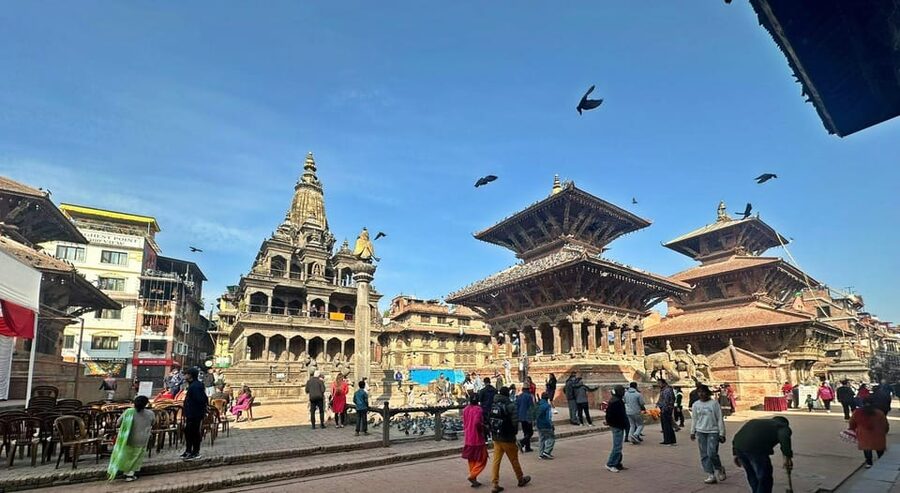
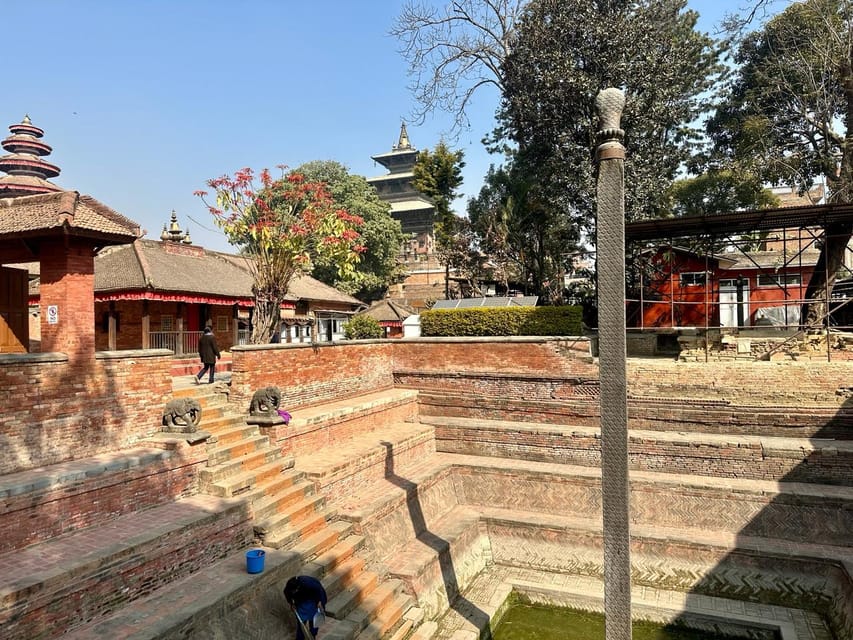
A 20-minute drive brings you to Patan Durbar Square, with about 90 minutes to explore. Patan is especially useful as a contrast to Kathmandu’s central square. The setting gives you another view of Newari design, with Hindu and Buddhist influences appearing together in a compact historic center.
Look closely at the carved doors, windows, roof supports, statues, and layered temple forms. The appeal here is not only the size of the monuments. It is the precision of the workmanship. A good guide can point out details you would likely walk past and explain how religious symbols, royal power, and local craft traditions fit together.
The tour allows free time and shopping, so this may be a sensible place to browse if you want a small craft item. Keep the group schedule in mind, though. Shopping is listed as an option, not a separate shopping trip, and the day still has several major stops ahead.
Patan is one of the places where an English-speaking guide can make the largest difference. The buildings are visually impressive, but their meaning is not always obvious. The strongest guide feedback attached to this experience centers on people who answer questions and tailor explanations to individual interests. That is exactly the approach you want in a square filled with layers of symbolism.
A few more Kathmandu tours worth comparing
- Kathmandu: 7 UNESCO Sites Tour in 1 Day (Private Tour)
★ 4.9 · 204 reviews - Day Trip to Bhaktapur and Panauti from Kathmandu
★ 5.0 · 184 reviews - The Most Beautiful 1 Day Experience in Kathmandu Nepal
★ 5.0 · 84 reviews - Nagarkot Sunrise & Bhaktapur Heritage Tour -Private Full Day Trip
★ 4.0 · 42 reviews
Bhaktapur Durbar Square: the longest palace-square visit
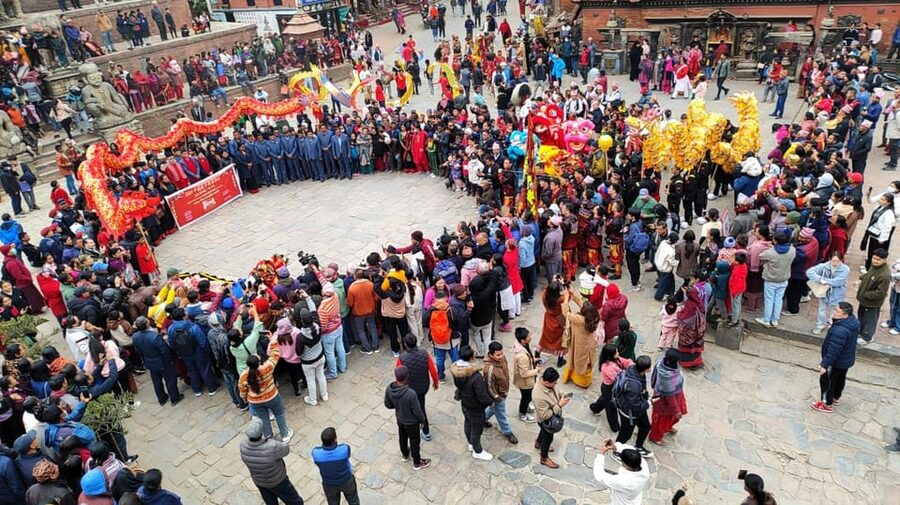
The drive to Bhaktapur takes about 30 minutes, followed by the longest stop of the day, roughly two hours. That extra time is welcome because Bhaktapur is more than a single open square. You can walk through medieval streets and adjoining courtyards, with time for photographs, guided sightseeing, and a little shopping.
The old city is presented as a place where Newari culture remains especially visible in the streets and buildings. Expect brick lanes, carved façades, temples, and palace architecture. The setting feels different from a modern city center, which is why this stop often becomes the visual centerpiece of the tour.
Two hours gives your guide room to explain the main square without turning every stop into a hurried photograph. You can also use the free time to look at details that interest you, rather than following a fixed line from monument to monument.
The practical issue is timing. Bhaktapur comes after three substantial visits and several drives, so you may be tired by the time you arrive. Wear shoes suited to walking and keep your expectations realistic. You will see a broad sample of the area, but not every lane or shrine in depth.
Changu Narayan: a shorter stop with ancient roots
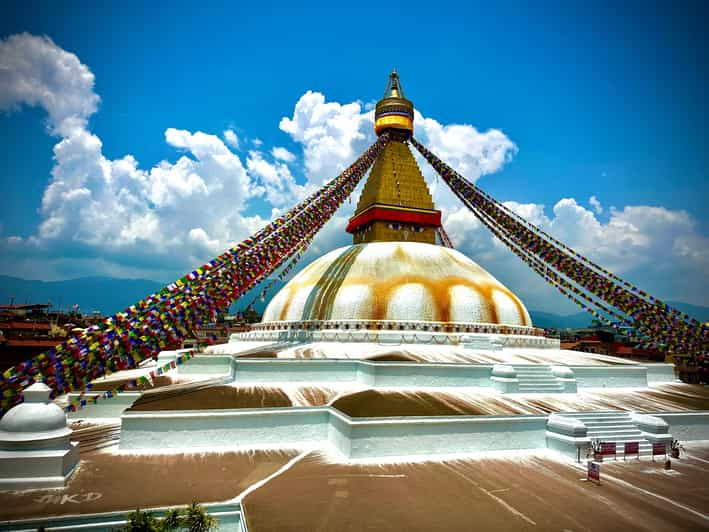
From Bhaktapur, the van continues for about 20 minutes to Changu Narayan Temple. The planned visit is only 30 minutes, making this the briefest cultural stop on the route.
Changu Narayan is presented as a quieter site with detailed sculptures and ancient inscriptions. Its value lies in the close look at early stone and metal work, rather than in the scale of a large palace square. If you enjoy inscriptions, religious art, and older architectural details, listen closely to the guide here.
Thirty minutes will pass quickly. You will have time for a guided introduction, photographs, and a short look around, but you should not expect a long wander. Ask your guide to point out the most important sculpture or inscription first, then use any remaining time for photographs.
This stop also adds variety. Without it, the day would focus heavily on the three Durbar Squares and the two large stupas. Changu Narayan gives the route a smaller, more focused temple visit.
Pashupatinath beside the Bagmati River
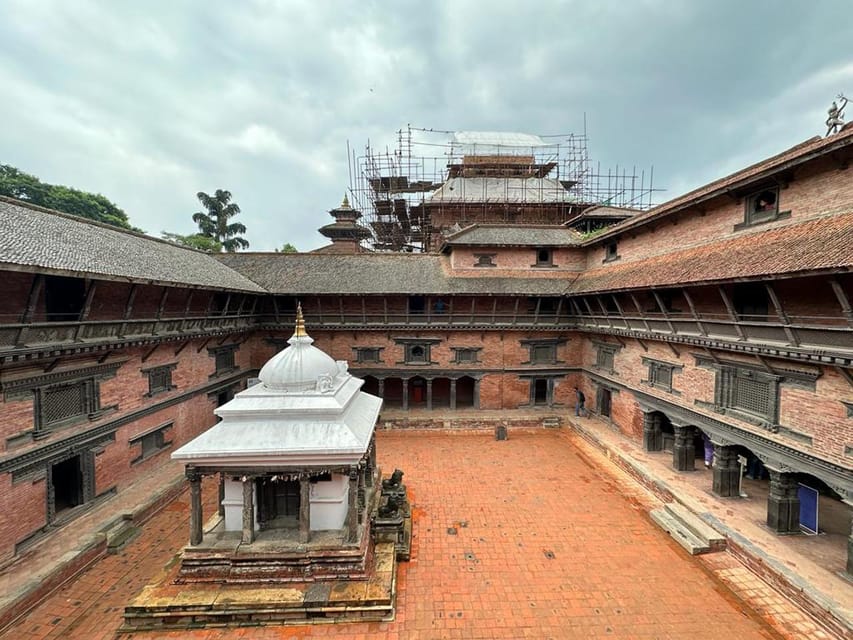
The longest drive of the day, listed at about 40 minutes, takes you to Pashupatinath Temple. The scheduled visit is about 40 minutes and includes a guided visit, sightseeing, and free time.
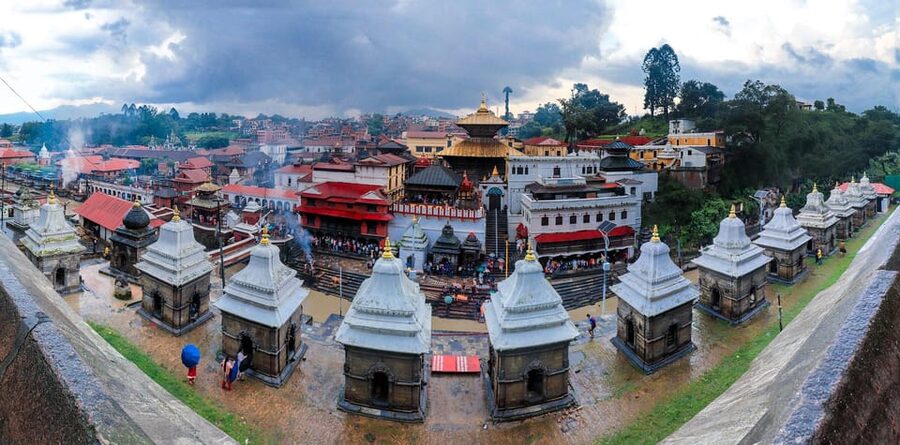
Pashupatinath is one of Nepal’s most important Hindu pilgrimage sites. The Bagmati River runs beside the temple complex, and cremation rituals take place along its banks. This is a serious place of worship, not a staged cultural show, so your guide’s explanation and your own discretion matter.
The highlight is the chance to understand Hindu rituals in a working religious setting. You may see ceremonies connected with death and cremation, but the exact activity at the river will vary. Keep a respectful distance, follow local instructions, and ask before taking photographs of people or rituals.
The 40-minute slot is short for such a significant site. It works as an introduction, especially if you have never visited a Hindu temple complex, but it will not allow a slow exploration of the entire area. If Pashupatinath is your main reason for booking, ask whether more time can be arranged within the private format.
Also note that the tour does not promise entry into every temple building. At religious sites, access can depend on local rules, and the tour description emphasizes observation, explanation, and sightseeing.
Boudhanath: closing the day at the great stupa
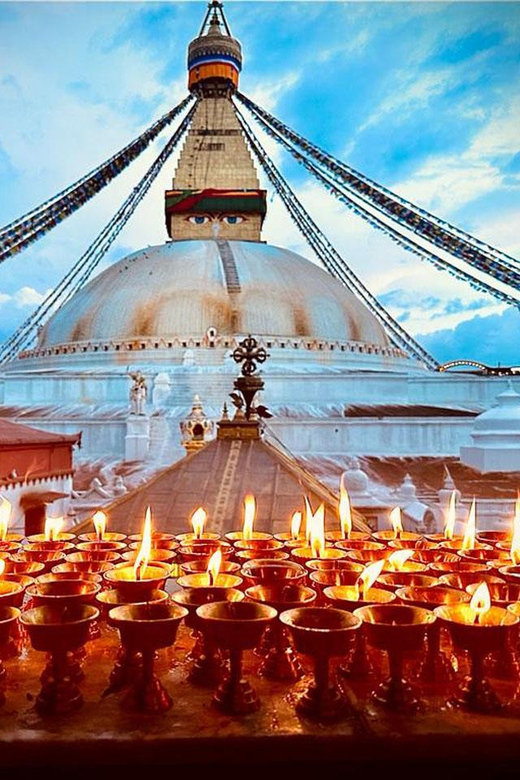
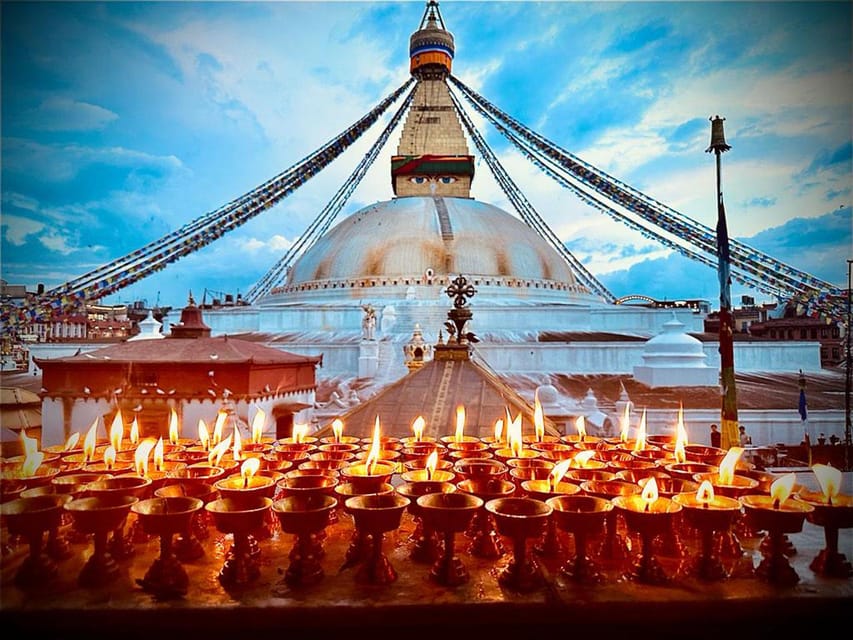
The final major stop is Boudhanath Stupa, reached after about 10 minutes from Pashupatinath. The visit lasts roughly one hour and includes guided sightseeing, photographs, free time, and shopping.
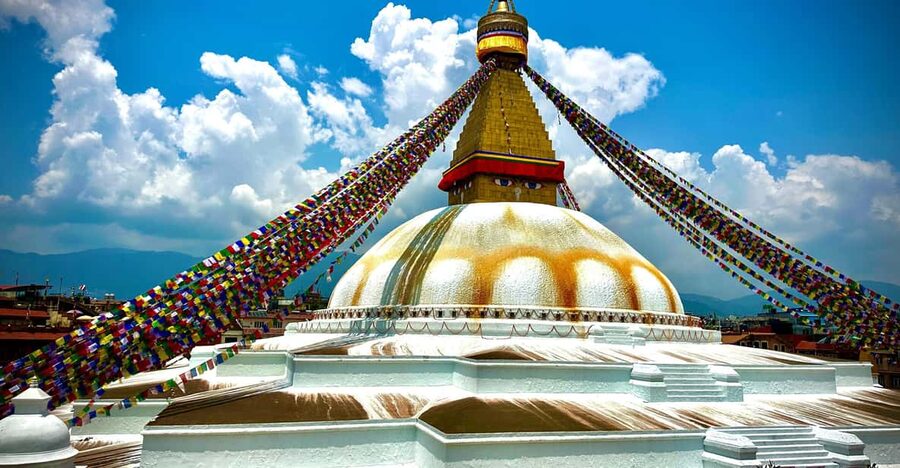
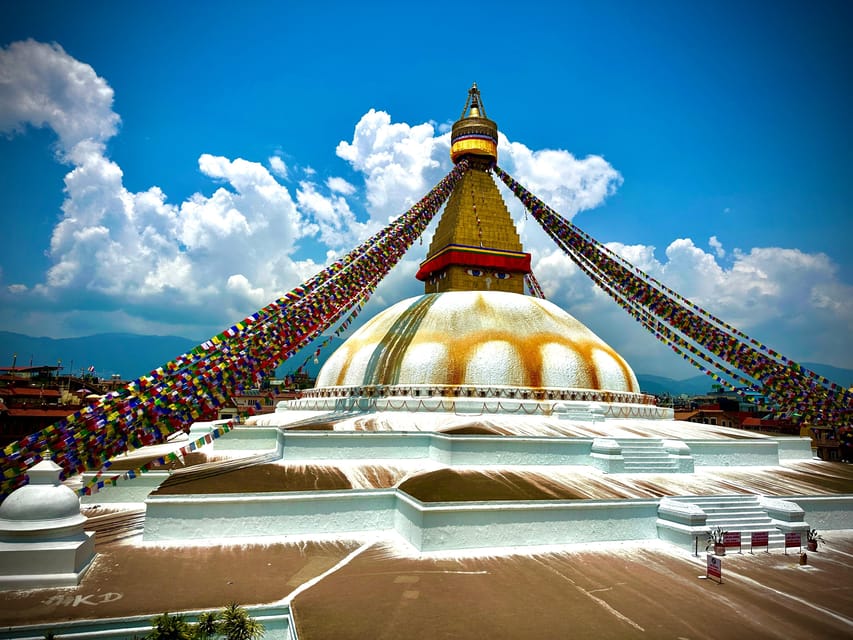
Boudhanath is a large mandala-shaped Buddhist monument surrounded by a circular route for devotees. The steady movement around the stupa, prayer practices, and surrounding religious atmosphere make this a fitting final stop. After a day of palaces and temple carvings, Boudhanath gives you a different kind of experience, one centered on repetition, prayer, and community worship.
An hour is enough to walk around the stupa, hear the guide’s explanation, take photographs, and pause for a moment. I would resist treating this as just another picture stop. Walk at a respectful pace and watch how people use the site. The meaning comes from the ritual movement as much as from the structure itself.
Because Boudhanath is last, fatigue may be a factor. Still, the later timing can help the stop feel like a calm finish after the crowded sequence of historic squares. From here, the van returns to Kathmandu in about 30 minutes.
What the $64 price really covers
At $64 per person, the tour offers a useful package if you want one vehicle, one guide, and hotel pickup rather than arranging seven sites yourself. Transportation across Kathmandu Valley can be awkward for first-time visitors, and the licensed English-speaking guide gives you cultural context that is difficult to gain from plaques alone.
The price does not include heritage-site entrance tickets, food, or personal expenses. That means the final cost will be higher than $64, and you should budget for the admission fees separately. No ticket prices are provided here, so ask the operator for the current total before you go.
The private group format improves the value for couples, families with older children, or small groups who want to ask questions. It also gives you a better chance of discussing specific interests with the guide. Children under 10 are not suitable for this activity, and the tour is also not designed for pregnant women, wheelchair users, or people prone to motion sickness.
The vehicle is practical, but you spend a considerable part of the day in it. If traffic is heavy, the eight-hour claim may be especially optimistic. The detailed stop and driving schedule totals approximately 11.5 hours, so I would confirm the actual departure and return times.
Guide quality and the human side of the tour
The clearest strength of this experience is the guide service. Manuel’s booking was handled with care and flexibility, while Karma was praised for explaining Kathmandu’s culture and history, answering questions, and adapting the day to personal interests. Pooja was also described as bringing the sites to life with stories that connect older customs to present-day Nepal.
Those details matter because this route can otherwise become a blur of stupas, palace roofs, and carved figures. You need someone who can tell you what you are looking at and why it matters. When your guide calls you before pickup, use that chance to mention your priorities, such as architecture, Hindu ritual, Buddhist practice, photography, or royal history.
The tour is in English, and the reported score is five out of five from three verified bookings. That is a small sample, so I would treat it as encouraging rather than conclusive. Still, the praise is consistent: personal attention, clear explanations, and a willingness to answer questions.
Practical advice for making the day work
Wear comfortable shoes. The tour includes walking and stair climbing at several sites, and the historic squares are not presented as wheelchair accessible.
Bring your passport or another form of ID, as requested. Carry water and keep some cash available for food, personal purchases, and site tickets. Food is not included, and no meal stop is specified, so ask the guide how the day handles meals before departure.
The tour includes pickup and drop-off in Kathmandu. Wait in your hotel lobby, since the driver or guide will call to confirm the details. The activity offers free cancellation up to 24 hours in advance and reserve-now, pay-later booking, which helps if your Nepal plans are still moving around.
Avoid alcohol and drugs, and note that party groups are not allowed. People with motion sickness should think carefully about the amount of van travel. The route includes several drives of 20 to 40 minutes, and traffic can make them feel longer.
Should you book this Kathmandu heritage circuit?
Book it if you want a broad first look at Kathmandu Valley and prefer a guide to explain what you are seeing. The mix is excellent: panoramic views at Swayambhunath, royal architecture in three Durbar Squares, a smaller inscription-rich temple at Changu Narayan, Hindu ritual at Pashupatinath, and Buddhist worship at Boudhanath.
I would especially recommend it to first-time visitors with only one full day for cultural sightseeing, couples or small groups who value private transport, and anyone who wants to ask plenty of questions. Karma and Pooja are names to request if the operator can confirm guide availability.
Think twice if you prefer slow travel. Seven UNESCO sites in one day means highlights rather than close study, and the published timing needs clarification. Ask about the true start and finish time, entrance-fee costs, meal arrangements, and how much flexibility the private group has at Pashupatinath or Bhaktapur.
For the right traveler, $64 is a fair starting price for transport and a licensed guide, provided you add the ticket costs and accept a very full day. This is a practical way to get your bearings in Kathmandu, not a substitute for lingering in each historic quarter.
FAQ
How long does the Kathmandu UNESCO sites tour last?
The activity is advertised as eight hours. However, the individual driving and sightseeing times listed for the day add up to roughly 11.5 hours, so confirm the actual schedule before booking.
Which UNESCO-listed sites are included?
The route includes Swayambhunath Temple, Kathmandu Durbar Square, Patan Durbar Square, Bhaktapur Durbar Square, Changu Narayan Temple, Pashupatinath Temple, and Boudhanath Stupa.
Is hotel pickup included?
Yes. Hotel pickup and drop-off in Kathmandu are included. The driver or guide will call to confirm the pickup details, and you should wait in your hotel lobby.
Is transportation included?
Yes. Transportation by van is included in the tour price.
Is a guide included?
Yes. A licensed, live English-speaking guide is included. The private group format allows you to ask questions and discuss your interests during the day.
Are entrance tickets included?
No. Tickets to the heritage sites are not included. Food and personal expenses are also separate.
What should I bring?
Bring your passport or another form of identification. Comfortable footwear is also useful because the activity includes walking and stair climbing.
Is the tour suitable for wheelchair users?
No. The activity is not suitable for wheelchair users and may not suit people with mobility issues because of the walking and stairs.
Can I cancel the booking?
Yes. You can cancel up to 24 hours in advance for a full refund. The activity also allows you to reserve now and pay later.
Recently added around Kathmandu
- Kathmandu : Swambhunath & Durbar Square Guided Half Day Tour★ 3.3 · 3 reviews
- Private Day Tour in Kathmandu Valley Rim with Bhaktapur Sightseeing★ 5.0 · 3 reviews
- From Kathmandu / Pokhara / Chitwan: River Rafting – 1 Day★ 4.6 · 3 reviews
- Nepali Cooking training & Cultural Homestay Experience★ 5.0 · 3 reviews
- Private 3-Hour Nagarkot Sunset Tour from Kathmandu★ 3.5 · 3 reviews
- From Kathmandu: Everest Base Camp Landing Helicopter Tour★ 5.0 · 3 reviews
- 4 UNESSCO World heritage sites of Kathmandu-private tour★ 5.0 · 3 reviews
- Kailashnath Mahadev, Panauti and Namo Buddha Monastery Sightseeing★ 5.0 · 3 reviews
Kathmandu UNESCO Heritage Tours, compared.
Private Kathmandu Sightseeing Tour | UNESCO World Heritage sites
Read our review →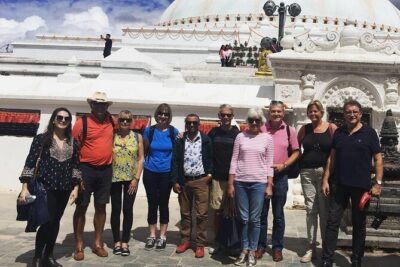
Full Day 7 UNESCO Tour with Lunch – Private/Group
Read our review →
Full Day Top 4 UNESCO Tour with Lunch – Private/Group
Read our review →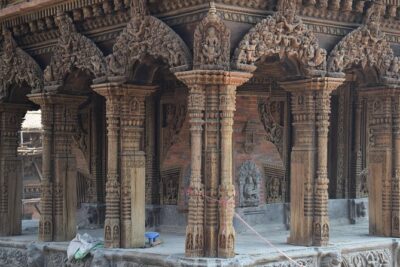
Full-Day 7 UNESCO Tour with Lunch – Private/Group
Read our review →
Kathmandu Private Sightseeing Tour | UNESCO World Heritage Sites
Read our review →Browse the lists this tour appears in