
Reviewed · NAGARKOT SUNRISE TOURS
Kathmandu: Chisapani Nagarkot 3-Days 2-Nights Trek
The best part of this trek is the way it gives you a taste of Nepal’s hills without sending you into thin air. You hike from Sundarijal to Chisapani, Nagarkot, and Changu Narayan, passing forests, villages, farms, and mountain viewpoints while staying at relatively modest elevations.
I like the private guide setup and the easy hotel transfers at both ends. Guides such as Dipak Karki, Govinda Pathak, and Ramesh have earned strong praise for their care, humor, trail knowledge, and flexible pacing. I also like the mix of scenery: Himalayan ridges, working villages, terraced fields, and old temples.
The catch is that this is a real hike, not a gentle stroll. Day two can reach about 25 kilometers, and the first morning brings plenty of uphill stairs. Mountain views also depend on clear weather, with monsoon conditions especially unpredictable.
In This Review
- Key points at a glance
- Why this short trek works so well from Kathmandu
- Day 1: Sundarijal to Chisapani through Shivapuri forest
- Day 2: Chisapani to Nagarkot across ridges and farmland
- Day 3: Sunrise, Telkot, and Changu Narayan
- The guide can make or break the experience
- Weather, views, and the best time to go
- What the $190 price really covers
- Who should book this trek?
- Should you book the Chisapani and Nagarkot trek?
- FAQ
- How long is the Chisapani Nagarkot trek?
- Where does the trek start?
- Where does the trek finish?
- What is the highest point on the route?
- Can I see the Himalayas on this trek?
- What accommodation is included?
- Are lunch and dinner included?
- Is a porter included?
- Is transport included?
- What should I bring?
Key points at a glance
- Start with a steep climb from Sundarijal: The first day follows a water pipe into Shivapuri National Park before reaching Mulkharka and Chisapani.
- Sleep at two different hill stations: Chisapani offers mountain sunset views, while Nagarkot is the more comfortable overnight stop with an attached bathroom.
- Expect a long second day: The route from Chisapani to Nagarkot takes six to seven hours and may cover roughly 25 kilometers.
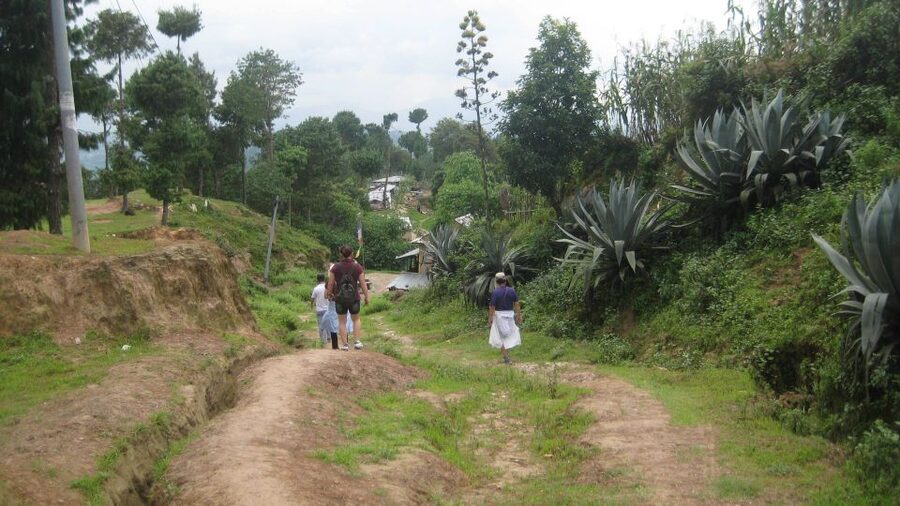
- See village life, not just mountain scenery: Tamang settlements, farms, terraced fields, and small roadside communities give the trek its local character.
- Finish at a 323 AD temple: The trail ends at Changu Narayan, followed by a private drive back to your Kathmandu hotel.
- Pack for changing weather: Bring hiking shoes, warm clothing, a windbreaker, rain gear, and toilet paper for the first lodge.
Why this short trek works so well from Kathmandu
This route is a smart choice if you want mountain views but do not have time for a week or more on the trail. You start close to Kathmandu, sleep in hill towns, and finish at one of the valley’s oldest temples. There is no flight to catch and no high mountain pass to cross.
The highest point is Nagarkot at about 2,175 meters. Chisapani sits at roughly 2,165 meters, while the route begins at Sundarijal at 1,460 meters and ends at Changu Narayan at 1,541 meters. Those elevations still bring cool mornings and steep walking, but they are far less demanding than Nepal’s high-altitude routes.
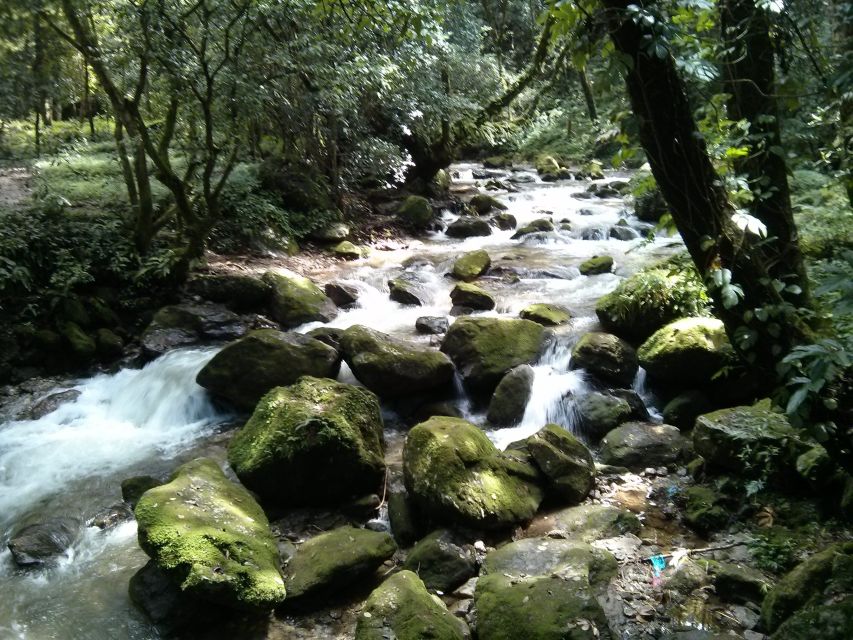
I especially like the variety packed into three days. You are not simply walking through the same type of scenery. The trail shifts from forest to village paths, from farmland to ridge roads, and from mountain viewpoints to temple courtyards.
The $190 price includes a private guide, private transport to and from the trail, two nights of lodging, breakfast, permits, and taxes. Lunch and dinner cost extra, as does a porter if you need one. For a solo hiker, the price may feel high, since there is no group with whom to share the private guide and vehicle. For two or more people, the arrangement offers better value.
More Nagarkot sunrise mornings:
- Nagarkot Sunrise View and Day Hiking from Kathmandu
★ 5.0 · 471 reviews - Private Bhaktapur and Nagarkot Day Tour From Kathmandu
★ 5.0 · 305 reviews - Kathmandu: Nagarkot Sunrise View & Morning Hike with Lunch
★ 4.9 · 188 reviews
Day 1: Sundarijal to Chisapani through Shivapuri forest
Your guide picks you up at your Kathmandu Valley hotel, provided it is inside the ring road. The private drive to Sundarijal takes about an hour, putting you at the trailhead with no need to work out local transport first thing in the morning.
The hike begins beside a large water pipe running down from the Sundarijal Reservoir. The route soon enters Shivapuri National Park and turns uphill. This opening section is the day’s main physical test, with a long series of steps and sustained climbing.
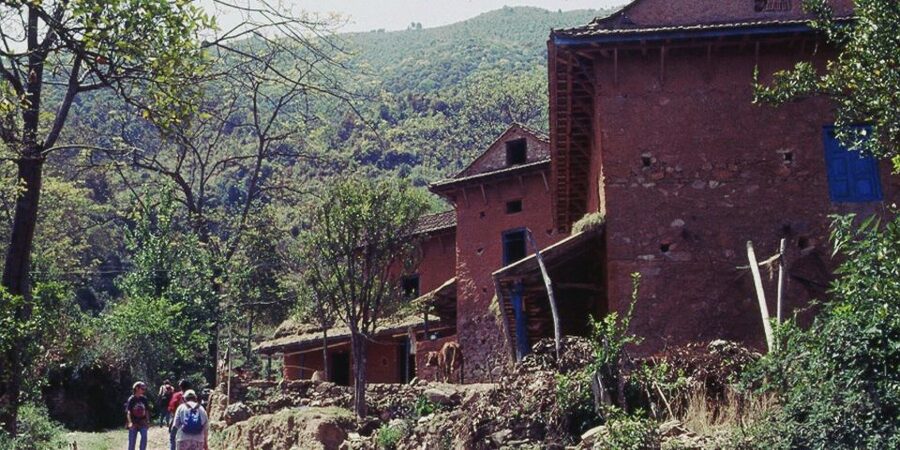
You then reach Mularkha Village and continue through a Tamang village before making your way toward Chisapani. The cultural details here are modest but worthwhile. You see homes, farm plots, and everyday village life rather than a staged cultural show.
Allow five to six hours for the hike. The distance is manageable for anyone used to regular walking, but the climbing makes the first day harder than the numbers suggest. Start with water, keep your pace steady, and avoid treating the first hour as a race.
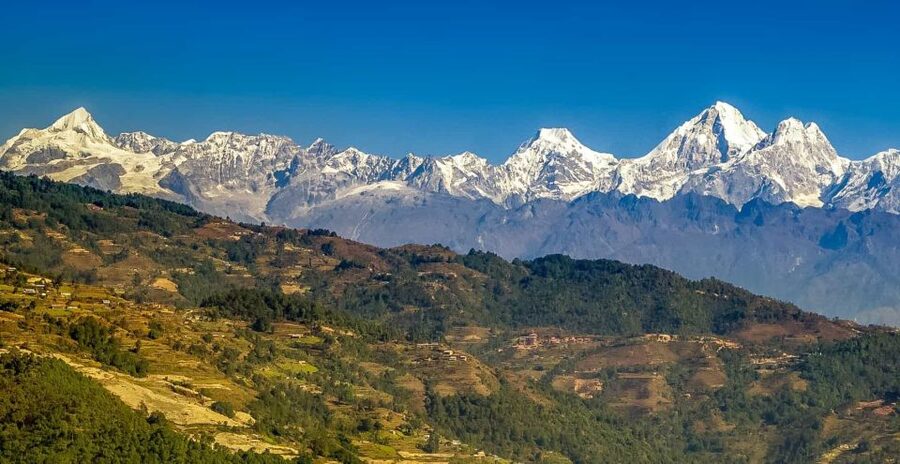
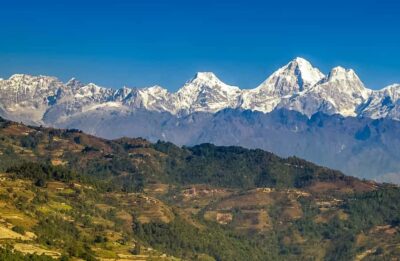
Chisapani is the reward at the end of the climb. At about 2,165 meters, it is known for broad Himalayan views when the air is clear, including Langtang Himal. Sunset can be beautiful, though clouds may block the ridges. You spend the night at a basic lodge with breakfast included.
The lodge is the main weak spot of the trip. Conditions can vary, and one recent experience found the room unprepared and short of toilet paper. Bring your own small supply. This is a simple mountain stay, not a polished city hotel.
Day 2: Chisapani to Nagarkot across ridges and farmland
Day two is the longest and, for many people, the most rewarding. After breakfast, the path climbs through forest before descending toward Jhule and Chauki Bhanjyang. The repeated pattern of climbing and descending requires more stamina than a simple uphill trail.
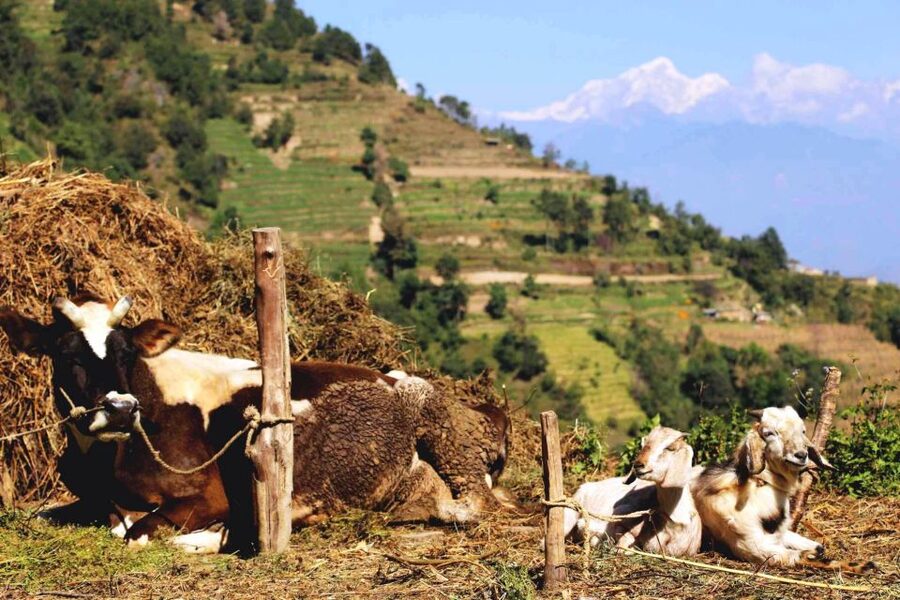
From there, the route passes villages and terraced fields before reaching Kattike Bhanjyang. These farm terraces are a good reminder that the hills around Kathmandu are lived-in working areas, not empty wilderness. You will see a quieter side of Nepal than the busy streets of the capital.
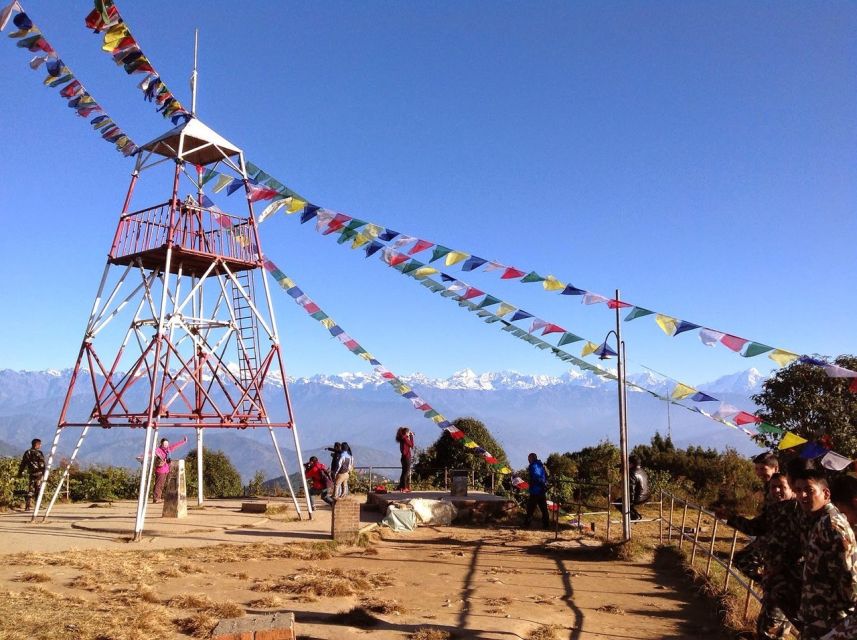
The final section climbs from Kattike Bhanjyang to Nagarkot. By this point, your legs may be tired, and the climb can feel long. The payoff is Nagarkot’s hilltop position and its broad outlook toward the Himalayas, including Langtang and other ranges when the sky cooperates.
The official walking time is six to seven hours, but one account put the day at around 25 kilometers. That is a substantial day on foot. Ask your guide about the expected distance and pace before setting out, especially if you are new to multi-day hiking.
Nagarkot accommodation is generally a step up from Chisapani. Breakfast is included, and the room comes with an attached bathroom. Food is available at the hotel, though lunch and dinner are not part of the $190 package. Carry some snacks so you are not relying only on meal stops.
Nagarkot itself is a popular viewpoint, so it may feel less remote than Chisapani. That is not necessarily a bad thing. After a long day, a more comfortable room and private bathroom are welcome. The town also gives you the best chance to enjoy an early sunrise without a long morning climb.
Day 3: Sunrise, Telkot, and Changu Narayan
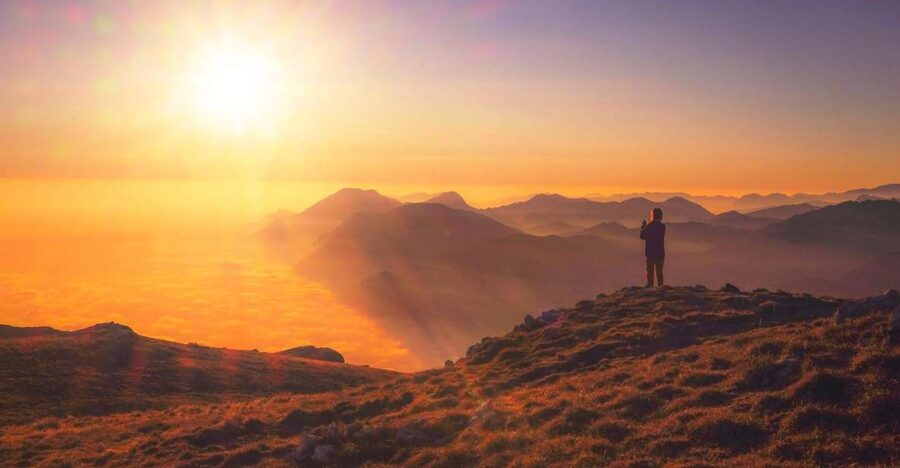
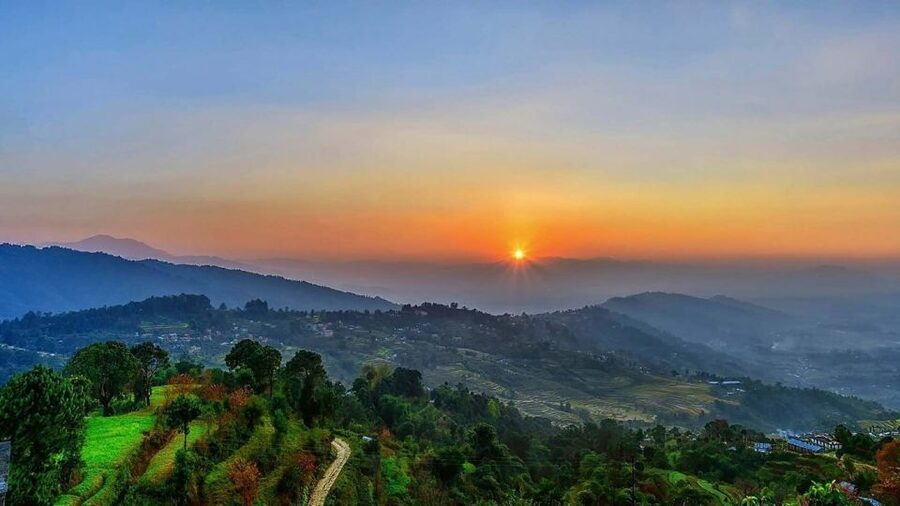
The final morning starts early. You wake before breakfast to watch the sunrise over the Himalayas. Clear weather is essential. When the sky is open, the changing light on the mountain ridges is the trip’s big visual moment. If cloud covers the peaks, you still get a hilltop morning, but not the full mountain show.
After breakfast, you hike downhill toward Changu Narayan, passing through Telkot. This is the easiest walking day, taking about three to four hours. The descent still requires care, especially if rain has made the trail slippery, but it is less demanding than the first two days.
Along the way, you get a bird’s-eye view toward Bhaktapur and Kathmandu. This helps you understand the valley’s setting: dense urban areas below, cultivated hills around them, and forested ridges rising beyond.
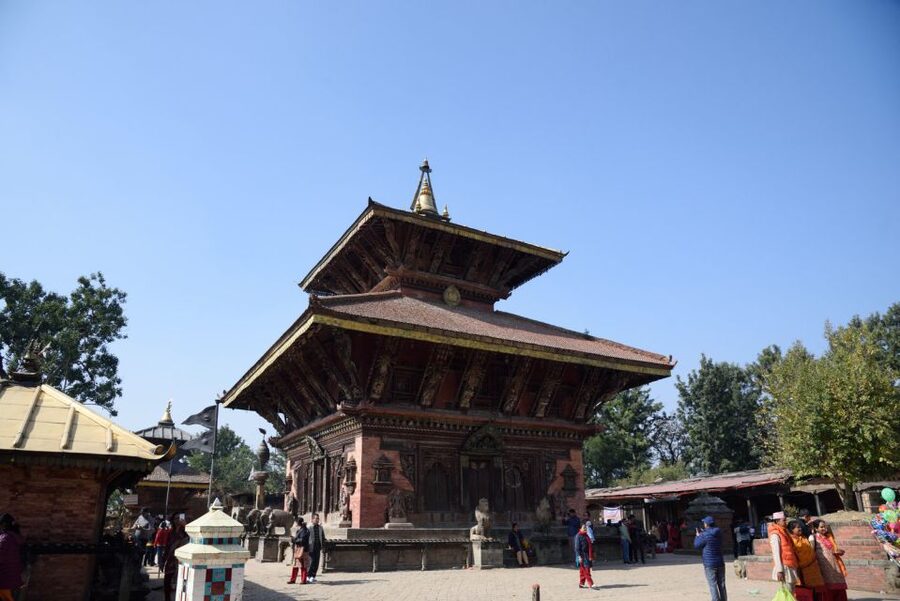
The trail ends at Changu Narayan Temple, described here as dating to 323 AD. It is an important historical stop and a fitting finish because the trek ends with culture rather than another mountain viewpoint. You meet your vehicle at Changu Narayan and drive for about an hour back to your Kathmandu hotel.
If heavy rain makes the last section unsafe or unpleasant, the guide can help adjust the plan. One guide arranged a ride back to Kathmandu after a group stopped partway through the final day. That kind of flexibility matters on a private trek.
More treks starting in Kathmandu:
- Everest Base Camp Trek – 14 Days
★ 5.0 · 1,499 reviews - Everest Base Camp Trekking
★ 5.0 · 485 reviews - Annapurna Circuit Trek with Tilicho Lake
★ 5.0 · 368 reviews - Everest Base Camp Trekking – 13 Day
★ 5.0 · 365 reviews
The guide can make or break the experience
The guide is central to this trip. You are walking for several hours each day, often on uneven paths, so a guide who manages pace and morale is worth far more than a printed route description.
Several guides have received especially strong praise. Dipak Karki, also called Mr. Dip by some clients, has been described as friendly, funny, attentive, and good at explaining Nepal, the route, and local culture. Govinda Pathak has been praised for his easy manner, mountain and nature knowledge, and help with the pace. Ramesh has been singled out for clear English, trail guidance, and support for solo women.
You do not necessarily choose your guide when booking, so treat these names as examples rather than a guarantee. The important point is the guide style this trip needs: someone who can keep you moving on long days, explain what you are seeing, and change the plan if weather turns bad.
A private guide also gives you more control than a large group trek. You can discuss breaks, walking speed, and how much time to spend at a viewpoint. That is particularly useful if you are traveling alone or have limited hiking experience.
Weather, views, and the best time to go
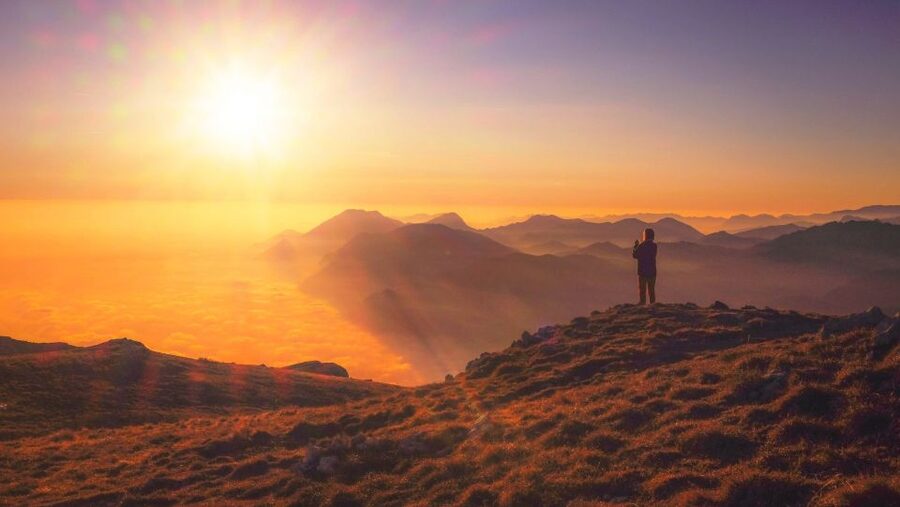
The Himalayan views are weather dependent. Clear autumn days usually offer the best chance of seeing the distant ranges, and October is a popular time for mountain visibility. Spring can also work well, with March providing a pleasant setting for hill walking.
Monsoon season brings a gamble. The trek can still be beautiful in June, July, August, and September, but rain may hide the mountains and make paths muddy. One June departure had sunshine and excellent views despite the season. Another September outing was highly successful, while a later October trip lost much of its mountain scenery to bad weather.
The lesson is simple: do not book this route only for a guaranteed Himalayan panorama. Book it for the full combination of forest, villages, farms, hill towns, and temple scenery. The mountains are the bonus, not the only reason to go.
Pack a windbreaker, rain gear, hiking shoes, and warm clothing. Temperatures at Chisapani and Nagarkot can feel much cooler than in Kathmandu, particularly early in the morning. Toilet paper is also worth packing for the first lodge.
What the $190 price really covers
At $190 per person, this is not the cheapest way to walk around Kathmandu Valley. The cost becomes easier to justify when you consider what is included: hotel pickup, private transport to Sundarijal, private transport from Changu Narayan, a licensed English-speaking guide, national park and hiking permits, two nights of accommodation, breakfasts, and taxes.
The private vehicle is useful at both ends. Sundarijal is not your Kathmandu hotel, and Changu Narayan is not a convenient place to finish and search for a taxi with tired legs. Having transport waiting at each endpoint removes two practical problems.
The package does not include lunch, dinner, drinks, or a porter. You should budget separately for meals and decide before departure if you need help carrying your bag. Since there are only three days of walking, many fit hikers can manage with a light pack, but the first two days are long.
A solo booking is likely to feel expensive because the guide and vehicle costs are not spread across a large group. If convenience, privacy, and flexible pacing matter to you, the price is reasonable. If your main goal is the lowest possible cost, a group departure or independent arrangement may appeal more, though that is not what this package offers.
Who should book this trek?
This route suits you if you want a short introduction to Nepalese hiking, have three days available, and prefer lower elevations. It works especially well before or after time in Kathmandu, since both the start and finish connect directly with the city.
You should be comfortable walking for five to seven hours and handling stairs, uphill sections, and long descents. The trek is not technical, but it is not effortless. Day two is the key test.
It is also a good fit for solo hikers who want support without joining a large group. The private guide setup can help with navigation, communication, pacing, and weather decisions. Solo women may find the organized format reassuring, based on the positive experience described with guide Ramesh.
You may want a different trip if you require luxury lodging, dislike early starts, or need guaranteed mountain views. Chisapani accommodation is basic, and cloud can cover the Himalayas for the entire trek.
Booking is flexible, with free cancellation up to 24 hours before departure and an option to reserve now and pay later. Pickup is available inside the Kathmandu Valley ring road. Starting times depend on availability.
Should you book the Chisapani and Nagarkot trek?
I would book this trek if you want a compact, active break from Kathmandu and understand that weather controls the mountain views. The route gives you three distinct days, two hilltop nights, village scenery, a sunrise start, and a historic temple finish.
Go in with realistic expectations: bring rain gear, prepare for stairs and a very long second day, and do not expect the first lodge to match the Nagarkot hotel. In exchange, you get a private guide, private transport, and a genuine taste of Nepal’s middle hills for $190 per person.
For clear mountain views, aim for a more reliable dry-season window. For quieter trails and lower prices, monsoon travel can work if you are willing to accept rain and clouds. Either way, this is a strong choice for a first Nepal trek that fits around a short Kathmandu visit.
FAQ
How long is the Chisapani Nagarkot trek?
The trek lasts three days and two nights. Hiking takes about five to six hours on day one, six to seven hours on day two, and three to four hours on day three.
Where does the trek start?
The trek starts at Sundarijal, about a one-hour private drive from Kathmandu.
Where does the trek finish?
The walking route finishes at Changu Narayan Temple. From there, a private vehicle takes you back to your Kathmandu hotel in about one hour.
What is the highest point on the route?
Nagarkot is the highest listed point at about 2,175 meters. Chisapani is about 2,165 meters.
Can I see the Himalayas on this trek?
You can see Himalayan ranges including Langtang Himal if the weather is clear. Clouds and rain can block the views, especially during the monsoon season.
What accommodation is included?
The package includes the best available lodge or guest house in Chisapani with breakfast, plus Nagarkot accommodation with breakfast and an attached bathroom.
Are lunch and dinner included?
No. Lunch, dinner, food, and drinks are not included in the listed price.
Is a porter included?
No. A porter is available only if needed and is not included in the package.
Is transport included?
Yes. Private transport is included from your Kathmandu hotel to Sundarijal and from Changu Narayan back to your Kathmandu hotel.
What should I bring?
Bring hiking shoes, warm clothing, a windbreaker, and rain gear. Toilet paper is also a useful addition for the Chisapani lodge.
Recently added around Kathmandu
- Kathmandu : Swambhunath & Durbar Square Guided Half Day Tour★ 3.3 · 3 reviews
- Private Day Tour in Kathmandu Valley Rim with Bhaktapur Sightseeing★ 5.0 · 3 reviews
- From Kathmandu / Pokhara / Chitwan: River Rafting – 1 Day★ 4.6 · 3 reviews
- Nepali Cooking training & Cultural Homestay Experience★ 5.0 · 3 reviews
- Private 3-Hour Nagarkot Sunset Tour from Kathmandu★ 3.5 · 3 reviews
- From Kathmandu: Everest Base Camp Landing Helicopter Tour★ 5.0 · 3 reviews
- 4 UNESSCO World heritage sites of Kathmandu-private tour★ 5.0 · 3 reviews
- From Kathmandu Budget: 15 Day Everest Base Camp Trek★ 5.0 · 3 reviews
Nagarkot Sunrise Tours, compared.
Nagarkot Sunrise View and Day Hiking from Kathmandu
Read our review →
Private Bhaktapur and Nagarkot Day Tour From Kathmandu
Read our review →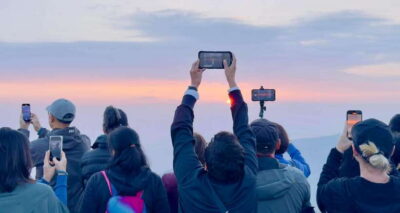
Nagarkot Sunrise and Hike Tour to Changu Narayan
Read our review →
Nagarkot Sunrise & Hike to Changu Narayan Day Tour from Kathmandu
Read our review →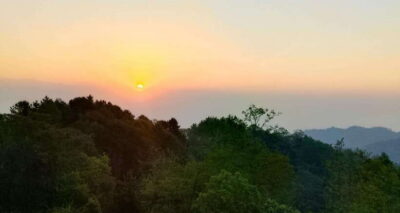
Nagarkot Sunrise & Hike with Lunch -Private/Group
Read our review →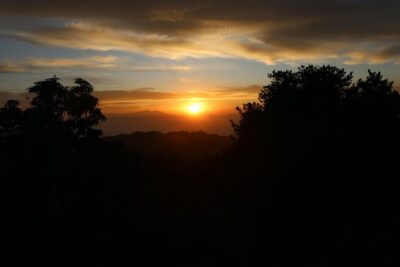
Nagarkot Sunrise Trip & Day Hike with Lunch from Kathmandu
Read our review →Browse the lists this tour appears in