
Reviewed · KATHMANDU
Life and spirituality tour of Kathmandu
Kathmandu’s spiritual life is not kept behind museum glass. It unfolds in temple courtyards, prayer rituals, cremation ghats, artisan workshops, and streets where Hindu and Buddhist traditions share the same city. This private tour connects four major sites while explaining how belief shapes ordinary life in Nepal.
I like the private car and hotel pickup, which saves you from sorting out Kathmandu traffic. I also like the guides’ strength with difficult subjects: Indra, Ripu, Rabi, and Rudi are praised for making Hindu and Buddhist ideas clear without turning the day into a lecture. The main consideration is pace. Four important sites in 6 to 8 hours makes for a full day, and entrance fees, lunch, and tips cost extra.
In This Review
- Key points to know before booking
- Why this Kathmandu tour feels different
- Kathmandu Durbar Square: old courtyards and living practice
- Patan Durbar Square: the city of fine art
- Pashupatinath Temple: Hindu ritual beside the river
- Boudhanath Stupa: Kathmandu’s Little Tibet
- The guides are the heart of the experience
- Timing, transport, and physical demands
- What the $55 price really buys you
- Who should book this experience
- Should you book the Life and Spirituality Tour of Kathmandu?
- FAQ
- How long does the Life and Spirituality Tour of Kathmandu last?
- What places are included in the tour?
- Is hotel pickup available?
- Are entrance fees included?
- Is this a private tour?
- Is the tour wheelchair and stroller accessible?
- Can I cancel for a full refund?
Key points to know before booking
- Four major heritage sites in one day: Visit Kathmandu Durbar Square, Patan Durbar Square, Pashupatinath Temple, and Boudhanath Stupa.
- Private sightseeing: Only your group takes part, so you can ask questions and adjust the pace when possible.
- Spiritual life comes first: The focus is on Hindu and Buddhist practice, not just taking photographs of monuments.
- Hotel pickup in Kathmandu: Transport is provided in an air-conditioned private vehicle, with bottled water included.
- Budget for added costs: The $55 price does not include entrance fees, lunch, or tips.
- Accessible format: The tour is listed as wheelchair and stroller accessible, with most people able to participate.
Why this Kathmandu tour feels different
Many city tours rush from one famous building to the next. This one uses Kathmandu’s landmarks to explain how people worship, work, mourn, make art, and move through the city. That gives the day a clear purpose.
At Kathmandu Durbar Square and Patan, you look at carved windows, courtyards, shrines, and old civic spaces. At Pashupatinath, you see Hindu ritual in active use. At Boudhanath, Tibetan Buddhist practice shapes the entire neighborhood. The contrast between the sites is the point.
I especially value the private format. You are not trying to hear a guide over a large group, and you can ask why a particular shrine matters or how Hindu and Buddhist customs overlap. The guide can also spend more time on the subjects that interest you, although the full route leaves little room for a slow, unplanned day.
The tour is offered at about $55 per person. That is a reasonable price for a private vehicle, hotel pickup, bottled water, and a full day with a dedicated guide. It becomes better value if you are sharing the vehicle with family or friends, since group discounts may be available.
Still, do not mistake $55 for the total cost. Entrance fees are extra at Pashupatinath and Boudhanath, and the tour does not include lunch or tips. Kathmandu Durbar Square and Patan are listed with free admission in the schedule, but you should still confirm current site charges when booking because fees can change.
Other Kathmandu days people book alongside this one:
- Everest Base Camp Trek – 14 Days
★ 5.0 · 1,499 reviews - Private Kathmandu Sightseeing Tour | UNESCO World Heritage sites
★ 5.0 · 756 reviews - Everest Base Camp Helicopter Tour landing at Everest View Hotel
★ 5.0 · 668 reviews
Kathmandu Durbar Square: old courtyards and living practice
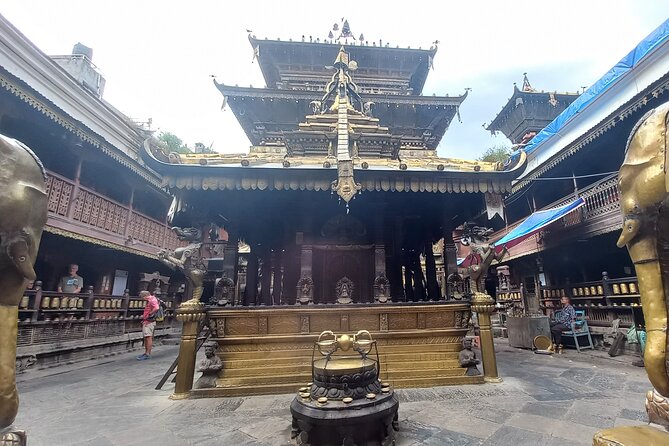
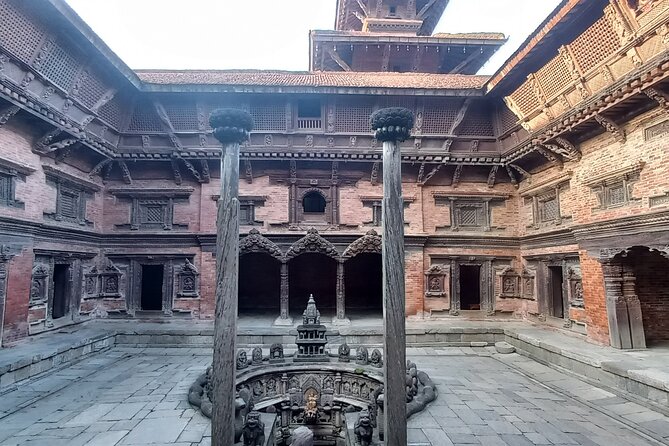
The day begins at Kathmandu Durbar Square, with about two hours set aside for walking through old Kathmandu. The focus is not limited to the main plaza. You are taken through courtyards and smaller spaces that reveal medieval religious and social customs.
This is where a good guide matters. The square contains layered symbols, architectural details, and shrines that can look confusing when you first arrive. A guide such as Indra can help connect the layout and Vastu design principles with the way people used these spaces.
You may spend time looking at wood carving, temple forms, and the relationship between public squares and private courtyards. The useful question is not simply what is old, but what role the place has played in community life.
The two-hour allocation is sensible. It gives you time to walk and ask questions without treating the square as a quick photo stop. You should wear practical shoes, since the experience includes walking through older parts of the city rather than remaining in the vehicle.
Patan Durbar Square: the city of fine art
From Kathmandu, the tour drives to Patan, also called Lalitpur. Patan is known for its art and craft traditions, and the visit gives the day a welcome change of tone after Kathmandu Durbar Square.
The city’s metalwork, wood carving, and traditional arts once circulated beyond Nepal, reaching India, Tibet, and China during the medieval period. The important detail for you is that Patan’s artistic identity is not presented as something locked in the past. Many residents still work as artisans.
Allow about two hours here. You will have time to see the square, examine architectural details, and learn how religious art connects to local livelihoods. This is one of the strongest parts of the route for anyone interested in craft, design, or the way a historic city continues to function.
Patan also helps explain the shared ground between Hindu and Buddhist traditions. Shrines and artistic forms can reflect both faiths, and a calm guide can clarify distinctions that are easy to miss. Rabi is praised for a relaxed manner and broad understanding of Buddhist and Hindu traditions, qualities that fit this part of the day well.
The drawback is that Kathmandu and Patan both involve heritage architecture and old urban streets. If you mainly want mountain views or a quiet rural setting, this is not that kind of excursion. It is a close look at city life, belief, and built culture.
Pashupatinath Temple: Hindu ritual beside the river
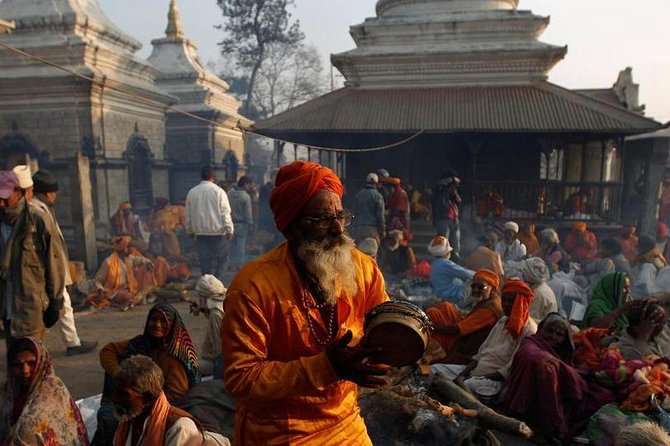
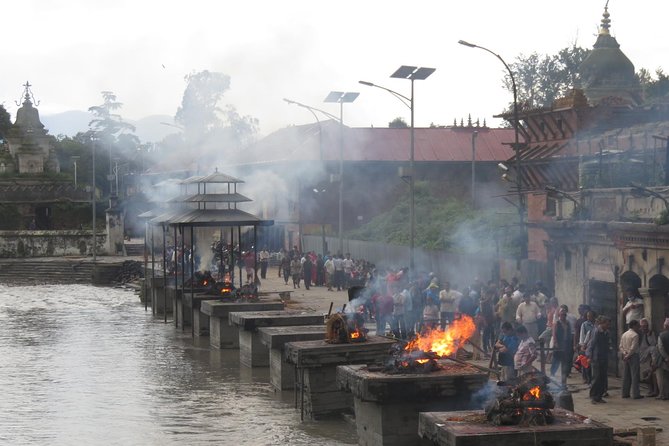
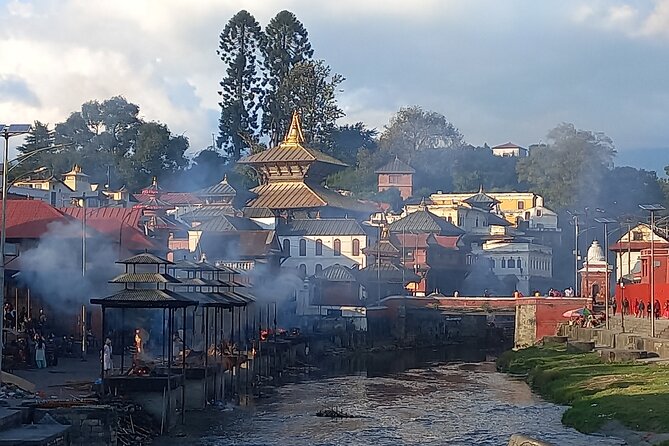
Pashupatinath receives about one hour, and it is the most intense stop on the route. The temple complex is dedicated to Shiva and offers a direct look at Hindu religious life, including ascetics, astrologers, devotees, and open cremation rituals.
This is not a polished sightseeing site. It is an active religious complex where people come to worship and families carry out deeply personal ceremonies. You should approach with respect, follow your guide’s advice, and remember that photography may not be appropriate in every situation.
The guide’s role here is particularly important. Hindu practice includes symbols, rituals, and ideas that can be difficult to understand from a distance. The tour is designed to explain what you are seeing and how Shiva worship fits into Nepal’s spiritual life, rather than leaving you to guess.
One hour can give you a meaningful introduction, but it is not a slow study of the entire complex. The schedule is full, so the visit is best for a first encounter. If Pashupatinath is your main reason for coming to Kathmandu, you may want additional time on another day.
This stop may also feel emotionally heavy. Open cremation is part of the experience, and the tour does not hide that reality. Some people will find the directness valuable; others may prefer a gentler itinerary. Knowing this in advance helps you decide honestly.
A completely different sort of day in Kathmandu:
- Half day cooking class in Thamel kathmandu
★ 5.0 · 607 reviews - Everest Base Camp Trekking
★ 5.0 · 485 reviews - Nagarkot Sunrise View and Day Hiking from Kathmandu
★ 5.0 · 471 reviews - Kathmandu: Full Day 7 UNESCO Tour with Lunch – Private/Group
★ 5.0 · 415 reviews
Boudhanath Stupa: Kathmandu’s Little Tibet
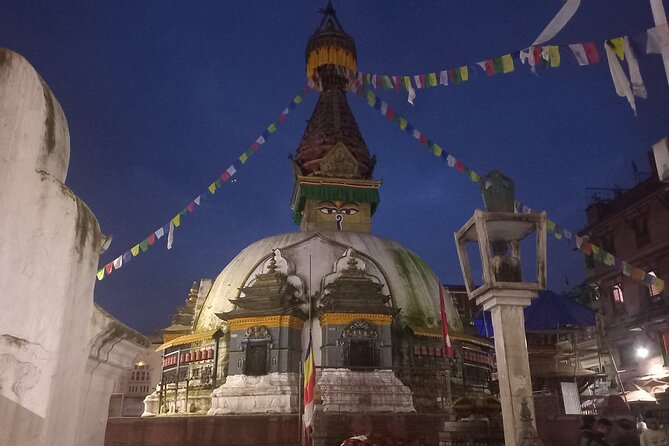
The final stop is Boudhanath, a major Buddhist center often called Little Tibet of Kathmandu. The area contains about 60 Tibetan Buddhist monasteries and draws pilgrims from Himalayan communities.
The great stupa gives the day a different rhythm. After the activity of Pashupatinath, Boudhanath offers a chance to focus on Buddhist practice, pilgrimage, and the meaning of the stupa itself. Your guide can explain the prayer traditions and the role of the surrounding monasteries.
About one hour is planned here. That is enough for an introduction and a walk around the stupa area, but again, it is not a long retreat or a detailed monastery study. If you are especially interested in Tibetan Buddhism, use your time to ask focused questions.
The stop also rounds out the central idea of the tour. Kathmandu is not a city with one single religious identity. Hindu and Buddhist customs exist side by side, and the route lets you compare the atmosphere, symbols, and forms of worship at both Pashupatinath and Boudhanath.
The guides are the heart of the experience
The strongest thread through this tour is the guide’s ability to explain complex ideas in plain language. Ripu is described as articulate and especially good at making spiritual concepts understandable. Rabi is noted for a calm, friendly approach and strong command of the sites and traditions.
Indra is praised for answering questions across Nepali life, culture, and spirituality. Rudi is described as professional and well informed about Buddhism, Hinduism, and the city’s sights. Guide assignments can vary, so you should not assume one particular person will lead your tour, but these names show the level of subject knowledge the operator aims to provide.
The private setup makes this more than a standard sightseeing circuit. You can ask about the differences between Hindu and Buddhist worship, the meaning of a structure, or the customs you see in the street. If you are quiet and simply want photographs, you will still see the main sites, but you will get more from the day if you take part in the conversation.
The guides also appear willing to adapt. One guide accommodated a shortened schedule after a booking error, which suggests some flexibility. Do not count on removing a full stop without affecting the route, but tell your guide early if you have a time limit.
Timing, transport, and physical demands
Plan on 6 to 8 hours. The listed schedule gives two hours each at Kathmandu Durbar Square and Patan, followed by one hour at Pashupatinath and one hour at Boudhanath. Driving and pickup time account for the remaining part of the day.
Hotel collection is available in Kathmandu, and the private air-conditioned vehicle is a real advantage. Traffic can make city transfers slow, so having transport arranged keeps the day simpler. Bottled water is included, but lunch is not.
The tour is listed as wheelchair and stroller accessible, and most people can participate. That is useful information for families and people with mobility needs. Since the route includes old squares, courtyards, and walking areas, you should share any specific mobility concerns at booking so the operator can discuss the practical route with you.
The hours shown for the operating period are 9:15 AM to 5:15 PM, Monday through Sunday. Confirmation is provided at booking. Free cancellation is available if you cancel at least 24 hours before the start time. Cancellations or changes inside that window are not refunded or accepted.
What the $55 price really buys you

At $55 per person, this is not the cheapest way to see Kathmandu if you only want transportation between landmarks. It is a stronger deal if you want interpretation, a private vehicle, hotel pickup, and the freedom to ask questions throughout the day.
The price also makes sense for a solo visitor who would otherwise need to arrange separate taxis and guides. For couples, families, or small groups, the private arrangement can offer better comfort and control than a large shared excursion. Group discounts may improve the value further.
Your extra budget should cover entrance fees, lunch, and tips. The tour includes the vehicle, bottled water, and guide, but not all fees and taxes. Ask for the current admission costs before you go so the final amount does not surprise you.
Who should book this experience
I would choose this tour if you have one full day in Kathmandu and want more than a checklist of temples. It suits you especially well if you are interested in:
- Hindu and Buddhist practice
- Local history and architecture
- Traditional craft in Patan
- Questions about spiritual life in Nepal
- Private touring rather than a large group
- A guided introduction to four major heritage sites
It is also a good fit if you want hotel pickup and prefer not to negotiate city transport on your own.
I would think twice if you dislike full sightseeing days, find active religious ceremonies uncomfortable, or want long periods of free time. Pashupatinath can be confronting, and the four-stop schedule leaves limited room for wandering without a plan.
Should you book the Life and Spirituality Tour of Kathmandu?
Book it if you want a thoughtful first look at Kathmandu through its religious life. The route is well chosen: Kathmandu Durbar Square introduces old urban culture, Patan shows the strength of local art, Pashupatinath presents Hindu practice directly, and Boudhanath brings in Tibetan Buddhist tradition.
The main reason to book is the guide. The experience depends less on simply seeing the monuments than on having someone who can explain what they mean. Indra, Ripu, Rabi, and Rudi are all highlighted for clear explanations, patience, and a friendly manner.
The route is full, and the extra entrance fees and lunch costs should be part of your budget. With those points in mind, the $55 price offers good value for a private, guide-led day, particularly when shared among a small group. I would recommend it for a first day in Kathmandu, especially if understanding local spiritual life matters as much to you as seeing the sights.
FAQ
How long does the Life and Spirituality Tour of Kathmandu last?
The tour lasts approximately 6 to 8 hours. The planned visits include two hours at Kathmandu Durbar Square, two hours at Patan Durbar Square, one hour at Pashupatinath Temple, and one hour at Boudhanath Stupa.
What places are included in the tour?
The route includes Kathmandu Durbar Square, Patan Durbar Square, Pashupatinath Temple, and Boudhanath Stupa.
Is hotel pickup available?
Yes. You can be collected from your hotel in Kathmandu in a private, air-conditioned vehicle.
Are entrance fees included?
No. Entrance fees are extra. Lunch, tips, and all fees and taxes are also excluded from the listed price.
Is this a private tour?
Yes. Only your group participates in the private tour or activity.
Is the tour wheelchair and stroller accessible?
Yes. The experience is listed as wheelchair and stroller accessible, and most people can participate.
Can I cancel for a full refund?
You can cancel at least 24 hours before the experience start time for a full refund. Cancellations or changes made less than 24 hours before the start time are not accepted for a refund.
Recently added around Kathmandu
- Kathmandu : Swambhunath & Durbar Square Guided Half Day Tour★ 3.3 · 3 reviews
- Private Day Tour in Kathmandu Valley Rim with Bhaktapur Sightseeing★ 5.0 · 3 reviews
- From Kathmandu / Pokhara / Chitwan: River Rafting – 1 Day★ 4.6 · 3 reviews
- Nepali Cooking training & Cultural Homestay Experience★ 5.0 · 3 reviews
- Private 3-Hour Nagarkot Sunset Tour from Kathmandu★ 3.5 · 3 reviews
- From Kathmandu: Everest Base Camp Landing Helicopter Tour★ 5.0 · 3 reviews
- 4 UNESSCO World heritage sites of Kathmandu-private tour★ 5.0 · 3 reviews
- Kailashnath Mahadev, Panauti and Namo Buddha Monastery Sightseeing★ 5.0 · 3 reviews