
Reviewed · MANASLU CIRCUIT TREKS
Manaslu Trekking
The Manaslu Circuit takes you around Mount Manaslu, the world’s eighth-highest mountain, on a demanding route that trades big crowds for quiet villages, Buddhist culture, suspension bridges, and long days on foot. I like the gradual change from warm river valleys to high alpine country, and I like that permits, meals, porters, and mountain lodging are handled in one package. The main drawback is the physical demand: six-hour trekking days, steep stairs, rough paths, and a high pass make this a poor fit if you only have moderate fitness.
I also like the two-night stay around Samagaun, which gives you time to rest and see more of the high country instead of rushing through it. The Kathmandu sightseeing adds useful cultural context before the trek begins. Just note that the supplied route description has a few unclear place names and repeated wording, so I would ask World Himalaya Treks to confirm the exact overnight stops before paying.
In This Review
- Key points at a glance
- Why the Manaslu Circuit feels different
- Kathmandu begins with temples and preparation
- Days 3 to 5 follow the Budhi Gandaki
- From Deng to Namrung, the culture changes
- Two nights in Samagaun are well placed
- Samdo and the climb to Larkya Pass
- Forests return on the way to Chamje
- What the $1,900 price covers
- Who should book this trek
- Practical details before you book
- Should you book the Manaslu Circuit Trek?
- FAQ
- How long does the Manaslu Trekking experience last?
- What is the price per person?
- Is airport pickup included?
- What meals are included?
- Are trekking permits included?
- Is accommodation included?
- Are guides and porters included?
- Is travel insurance included?
- Is this a private tour?
Key points at a glance
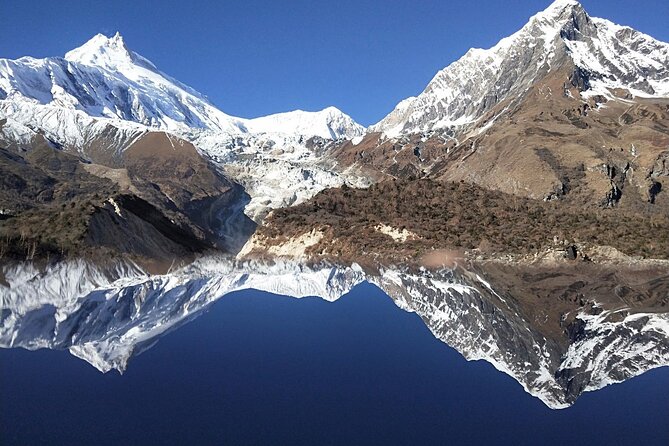
- A full circuit around 8,163-meter Manaslu: The route moves from low river valleys through Gurung villages and Buddhist settlements to high mountain country.
- Larkya Pass is the great test: The itinerary includes the pass crossing, with tundra, juniper, panoramic mountain views, and a descent to Bimthang.
- Two nights in Samagaun: This is the best built-in pause for seeing the village and monastery while adjusting to higher ground.
- A private trip with support: Only your group participates, with an experienced guide and one porter for every two people.
- Most major trek costs are included: Permits, TIMS, park fees, lodging, three daily meals, porter costs, and airport transfers are covered.
- Kathmandu sightseeing comes first: Pashupatinath, Boudhanath, and Swayambhunath give you three very different introductions to Nepal.
Why the Manaslu Circuit feels different
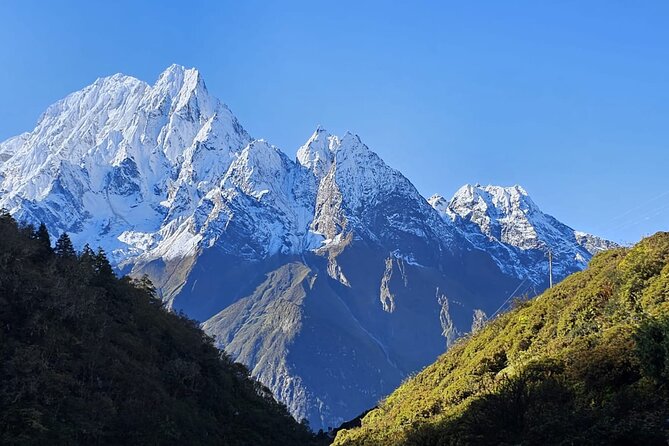
The Manaslu Circuit is not a short mountain walk with a few scenic stops. It is a long crossing of Nepal’s central Himalaya, following the Budhi Gandaki River and then turning toward high villages and the Larkya Pass.
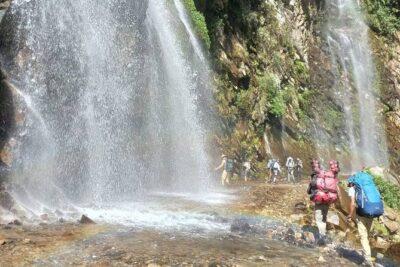
That changing scenery is the route’s greatest strength. Early days bring sal forests, rice terraces, waterfalls, hot springs, and humid river valleys. Later, the path enters bamboo and rhododendron woods, then opens into dry, Buddhist-influenced country with views of Manaslu and Peak 29.
The route is also less commercialized than the Annapurna and Everest regions. That does not mean untouched wilderness. You still sleep in teahouses or mountain lodges and follow a known trekking path. It does mean the experience is more focused on walking, village life, and mountain scenery than on a string of busy tourist stops.
You need a special permit for the Manaslu region, and this package includes the necessary trekking permit, national park entry fees, and TIMS card. That matters because arranging the paperwork yourself can be a nuisance, especially when the route passes through controlled areas.
More Manaslu circuit treks:
- Manaslu Circuit Trek (15 Days)
★ 5.0 · 50 reviews - 16 Day Private Manaslu Circuit Trek from Kathmandu
★ 5.0 · 42 reviews - Manaslu Circuit Trek 13 Days
★ 5.0 · 30 reviews
Kathmandu begins with temples and preparation
Day one is a soft landing. A representative meets you at Tribhuvan International Airport, transfers you to your hotel, and gives you time to recover from the journey. In the evening, you attend a welcome dinner at a Nepalese restaurant and receive a trip briefing.
That briefing is useful here. You can check your equipment, meet the trekking staff, and ask about the pace before leaving the city. The package includes three-star deluxe twin-share accommodation in Kathmandu, with breakfast according to the itinerary.
Day two covers three major cultural sites. Pashupatinath Temple introduces you to one of Nepal’s most important Hindu pilgrimage areas. Boudhanath Stupa offers a calmer Buddhist setting, with prayer flags, a large white dome, and a broad circle of monasteries and shops around it.
Swayambhunath, often called the Monkey Temple, sits on a hill above Kathmandu Valley. The white stupa and painted eyes are the visual highlight, but the climb also gives you a useful view over the city. A professional city guide accompanies the sightseeing, and the day includes time to visit a local market and prepare for the trek.
The city portion is not filler. After a long flight, it lets you settle in before the harder days begin. You should still expect a full day of activity, traffic, crowds, and plenty of stairs.
Days 3 to 5 follow the Budhi Gandaki
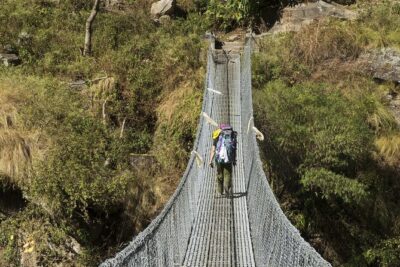
The trek begins in the lower Budhi Gandaki valley. On the first walking day, you pass through sal forest, climb above large river rapids, and follow a rough trail toward Labubesi. Waterfalls, rice terraces, rocky ridges, and suspension bridges keep the scenery changing.
You finish at Machha Khola after about six hours. The path is not flat or easy, even at this lower elevation. It rises and drops repeatedly, and some sections cling to the side of a cliff. You will want sturdy footwear and a steady pace rather than a race to the lodge.
The next day takes you toward Jagat. Khorlabesi and Tatopani bring a small hot spring, followed by more ridge climbing, suspension bridges, landslide crossings, and long flights of stone steps. The route reaches Dobhan and Tharo Bharyang before climbing toward Jagat.
Jagat is an important point on the route, but the walk there is the real attraction. You get a close look at how the trail uses the river valley, with bridges and stairways replacing broad roads. The six-hour estimate is reasonable as a planning figure, but rough footing and stops can make the day feel longer.
Day five passes through Sirdibas and Philim, a large Gurung village. The path crosses millet fields before entering a steep gorge with very few settlements. You cross the Budhi Gandaki several times and pass bamboo forest before reaching Deng.
This is one of the most varied parts of the circuit. It has farming country, forest, open river views, and a more enclosed gorge. The five-hour estimate is shorter than several other days, giving you a little breathing room before the route turns higher and colder.
From Deng to Namrung, the culture changes
Day six enters a Buddhist-influenced section of the trek. The route reaches Ghap and continues toward Namrung, with bamboo and rhododendron forest along the way.
The place names in the supplied schedule are not perfectly consistent. One line identifies Namrung as the stop, then mentions an overnight at Gamp. Another day refers to Manaslu Base Camp while describing the climb to Namrung. I would ask the operator to provide a clean day-by-day route sheet, including every overnight village, before departure.
That small paperwork issue does not change the appeal of the route. This is where the circuit begins to feel more distinctly Himalayan and Buddhist. Forest trails give way to more open views, and the villages become a stronger part of the experience than the lower valley settlements.
By day seven, you enter the Nupri region and continue through high country toward Manaslu views. The itinerary describes a climb through bamboo and rhododendron forests to Namrung, then onward toward camp. You should expect a six-hour walking day and a steady rise in elevation.
More treks starting in Kathmandu:
- Everest Base Camp Trek – 14 Days
★ 5.0 · 1,499 reviews - Everest Base Camp Trekking
★ 5.0 · 485 reviews - Nagarkot Sunrise View and Day Hiking from Kathmandu
★ 5.0 · 471 reviews - Annapurna Circuit Trek with Tilicho Lake
★ 5.0 · 368 reviews
Two nights in Samagaun are well placed
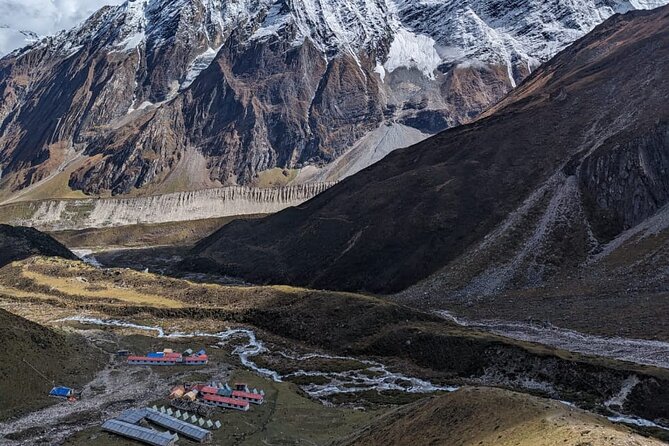
Day eight follows the river toward Samagaun, with views of Peak 29 and Mount Manaslu. Samagaun is one of the major villages on the circuit, and arriving here is a turning point. The valley feels broader and more exposed, while the mountains become the main event.
The two-night stay is one of the smartest parts of this plan. Day nine is set aside for exploring the village and monastery, with more mountain views. You are not simply stopping for sleep and moving on. You get time to walk at a slower pace, look around, and let your body adjust before the route climbs farther.
No formal medical advice is included in the tour details, so you should discuss altitude concerns with a qualified professional before booking. The itinerary does provide a rest day, but it does not remove the need for preparation. You still need to judge how your body responds and follow your guide’s instructions.
The accommodation is in a teahouse or mountain lodge. This is practical mountain lodging, not a resort stay. The package promises neat, clean accommodation, but you should expect simple rooms and basic facilities as you move farther from Kathmandu.
Samdo and the climb to Larkya Pass
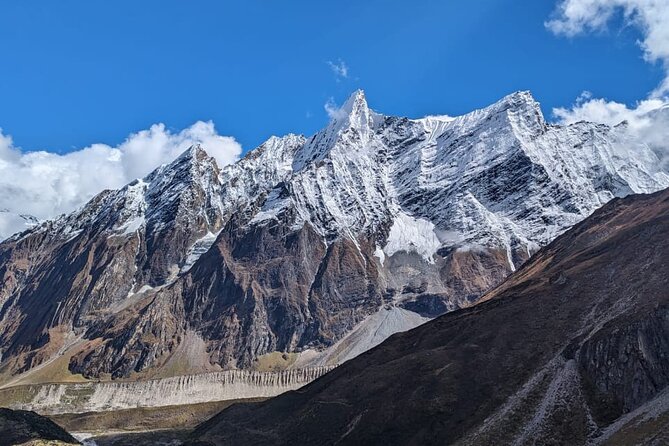
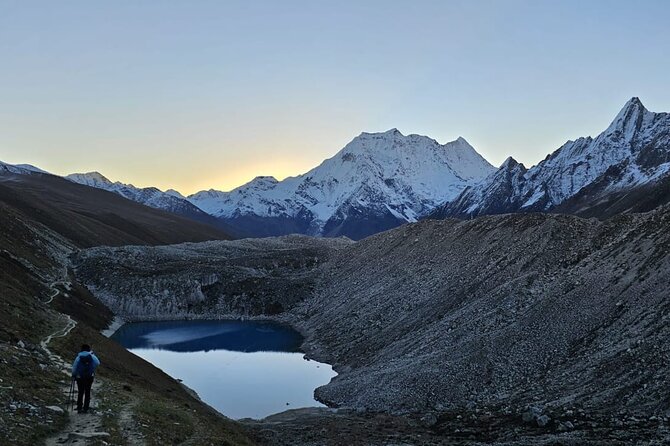
Day ten follows the Budhi Gandaki toward Samdo. This is a six-hour day in increasingly high country. The route is less about forests and farmland now, and more about open mountain views, dry ground, and the long approach to the pass.
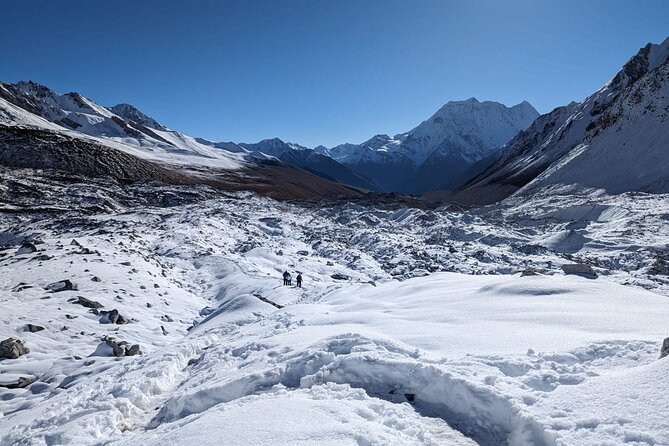
Day eleven begins the ascent toward Larkya Bhanjyang, with tundra and juniper along the route. The name refers to the pass area, and this is the point where the trek becomes most serious. The air is thinner, the trail is higher, and the weather can have a larger effect on your walking day.
The itinerary allows roughly six hours for this stage, but the pace depends on conditions and the group. You should not treat that number as a guarantee. A good guide will keep the group together and manage the day according to the terrain.
Day twelve reaches the summit of the pass, followed by a descent to Bimthang. The reward is a broad mountain panorama, but the pass crossing is the hardest part of the trip. It requires stamina, careful footing, and patience. Descending after the high point can be just as demanding on tired legs.
This is where the tour’s included porter support matters. One porter is provided for every two people, and porter expenses, insurance, trekking boots, and a jacket are included for the porters as required. You still need to carry a day pack with essentials, but you do not need to haul your full duffel over the pass.
Forests return on the way to Chamje
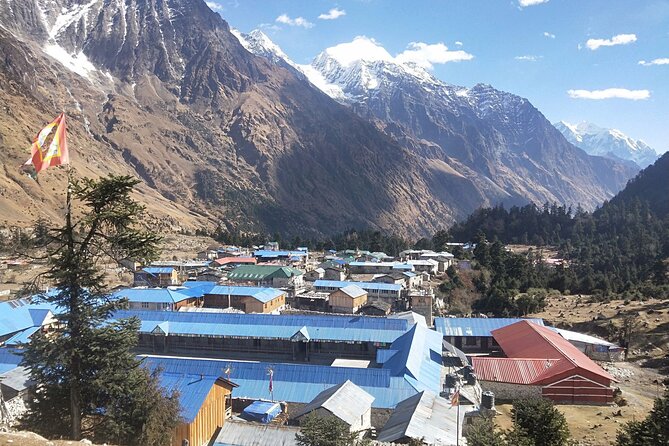
After Bimthang, the route descends through forest toward Tilje. Day thirteen includes a Bhimtang Lake viewpoint and about five hours of walking. The change from barren high country to trees is welcome, though the descent can be hard on knees.
The schedule has a repeated sentence for this day, but the main plan is clear: descend through forest, reach the viewpoint, and continue toward Tilje. Ask the operator to confirm the exact overnight location if the viewpoint is important to you.
Day fourteen continues through scrub forest to Chamje. It is another six-hour walking day, but the mood has changed since the pass. You are heading lower, and the route once again follows greener valleys and settled areas.
Day fifteen uses a five-hour drive to return to Kathmandu through the countryside. After so many days on foot, a road journey and hotel bed will feel welcome. The drive may not be glamorous, but it gives you a needed recovery period before departure.
Days sixteen and seventeen leave time in Kathmandu. You can rest, explore Thamel, shop for last-minute items, or simply enjoy a slow breakfast after the trek. On the final day, the company transfers you to the airport.
What the $1,900 price covers
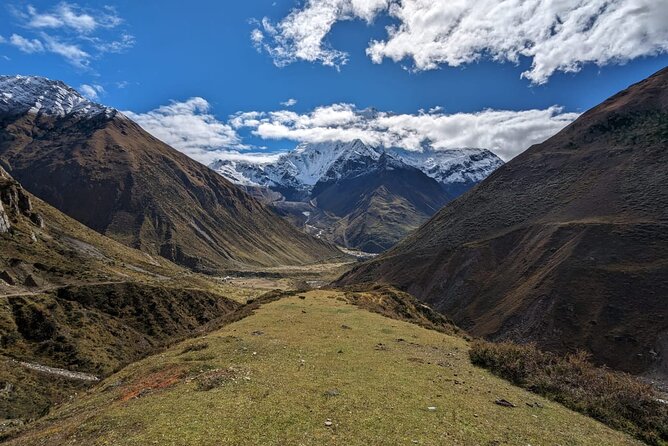
At $1,900 per person, this is not a bargain basement trek, but the package covers many expenses that can add up quickly. You receive airport pickup and drop-off, Kathmandu hotels with breakfast, guided sightseeing, trekking accommodation, full-board meals, permits, park fees, TIMS, a guide, porters, porter insurance, a duffel bag, a T-shirt, and a first-aid medical kit.
During the trek, breakfast, lunch, and dinner are included. That makes budgeting easier, especially in remote areas where food costs can rise. The price also includes government and local taxes.
You pay separately for beverages, personal expenses, tips, and travel insurance. Travel insurance is especially important to arrange yourself because it is not included in the package. The tour also offers group discounts, but the amount is not stated, so ask for the current price before assuming you will qualify.
The private format adds value if you want your own group rather than a mixed departure. Only your group participates, which can make pacing and rest stops easier to manage. It may cost more than joining a large group, but the price includes a substantial amount of staff and equipment support.
Who should book this trek
I would recommend this trek to someone who wants a serious Himalayan route with cultural stops and fewer crowds than Annapurna or Everest. You should be comfortable walking for about five to six hours on repeated days, climbing stone stairs, crossing rough ground, and handling a high pass.
The trek suits you if you value logistics handled in advance. Permits, meals, porters, Kathmandu sightseeing, and transfers are already built into the plan. It also suits a small family group of strong walkers or friends who want a private departure.
I would not choose it for a first-ever mountain holiday unless you have a solid fitness base and understand the demands of high-altitude trekking. The phrase moderate physical fitness appears in the tour details, but the route itself is more demanding than a casual walking holiday. Do not let the comfortable Kathmandu hotel or included meals fool you. The mountains set the pace.
Practical details before you book
Confirmation is provided at booking, and the meeting point is World Himalaya Treks and Expeditions on Saat Ghumti Marg in Kathmandu. Airport pickup is included, so you should not need to make your own way there on arrival.
The experience is listed as available from February 15, 2024, through May 28, 2026, with opening hours shown for Monday from 9:15 AM to 7:15 PM. Since weather and mountain conditions can affect high routes, confirm your exact departure date and operating arrangements directly with the provider.
The cancellation policy allows a full refund if you cancel at least six days in advance. That is useful flexibility, but it does not replace travel insurance. Tips for guides and porters are not included, though they are accepted in Nepal.
The overall rating is 4.8 from five ratings. That is a strong signal, though the sample is small. I would place more weight on the clear inclusions, private format, route design, and operator answers to your questions about the unclear overnight details.
Should you book the Manaslu Circuit Trek?
Book it if you want a demanding, well-supported circuit around an 8,163-meter peak, with Buddhist villages, river valleys, high mountain views, and the Larkya Pass as the main challenge. The $1,900 cost is reasonable for a 17-day package that includes permits, meals, lodging, porters, guides, airport transfers, and Kathmandu sightseeing.
Think twice if you want easy walking, flexible independent travel, or hotel comfort throughout. Before booking, ask for the confirmed route, the precise overnight villages, the equipment supplied to porters, and the current group-discount terms. If the operator answers those points clearly, this is a strong choice for a private and demanding Nepal trekking experience.
FAQ
How long does the Manaslu Trekking experience last?
The experience lasts approximately 17 days, including arrival and departure arrangements, Kathmandu sightseeing, the trek, the return drive, and leisure time in Kathmandu.
What is the price per person?
The listed price is $1,900 per person. Group discounts are offered, but the discount amount is not specified.
Is airport pickup included?
Yes. Airport pickup and drop-off are included, and a representative meets you on arrival at Tribhuvan International Airport.
What meals are included?
Breakfast, lunch, and dinner are included during the trek. Kathmandu accommodation includes breakfast as described in the itinerary. Beverages are not included.
Are trekking permits included?
Yes. The package includes the necessary trekking permit, national park entry fees, and the TIMS card.
Is accommodation included?
Yes. You receive three-star deluxe twin-share accommodation in Kathmandu and teahouse or mountain lodge accommodation during the trek.
Are guides and porters included?
Yes. An experienced guide and porters are included. The plan provides one porter for every two people, along with porter expenses and insurance.
Is travel insurance included?
No. You must arrange and pay for your own travel insurance.
Is this a private tour?
Yes. Only your group participates in the activity.
Recently added around Kathmandu
- Kathmandu : Swambhunath & Durbar Square Guided Half Day Tour★ 3.3 · 3 reviews
- Private Day Tour in Kathmandu Valley Rim with Bhaktapur Sightseeing★ 5.0 · 3 reviews
- From Kathmandu / Pokhara / Chitwan: River Rafting – 1 Day★ 4.6 · 3 reviews
- Nepali Cooking training & Cultural Homestay Experience★ 5.0 · 3 reviews
- Private 3-Hour Nagarkot Sunset Tour from Kathmandu★ 3.5 · 3 reviews
- From Kathmandu: Everest Base Camp Landing Helicopter Tour★ 5.0 · 3 reviews
- 4 UNESSCO World heritage sites of Kathmandu-private tour★ 5.0 · 3 reviews
- From Kathmandu Budget: 15 Day Everest Base Camp Trek★ 5.0 · 3 reviews
Manaslu Circuit Treks, compared.
16 Day Private Manaslu Circuit Trek from Kathmandu
Read our review →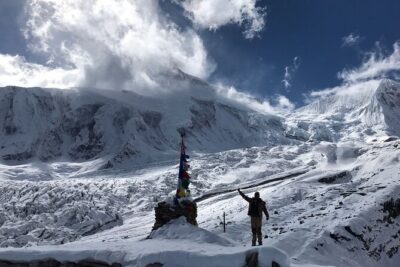
10 Days Manaslu Circuit Trek in Larke La Pass
Read our review →
Manaslu Circuit Trek 8th Highest in the World
Read our review →
Manaslu Circuit Trek to the Beauty of 8th Highest Mountain
Read our review →Browse the lists this tour appears in