
Reviewed · KATHMANDU
Shamanism Tour in Nepal – One-to-one Consultation with Sharmans
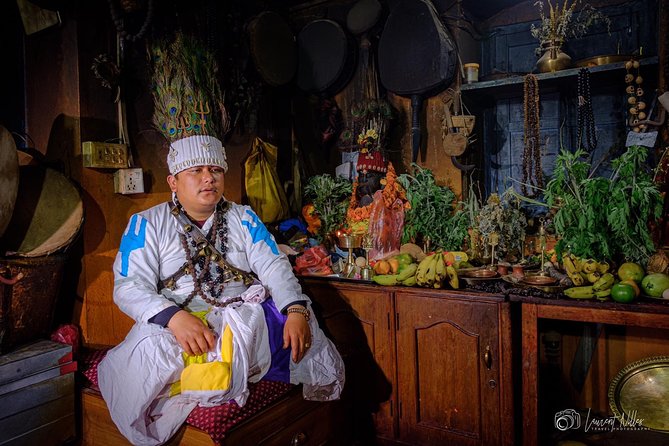
A short walk from Thamel takes you to a working Himalayan Bon Shaman temple, where spiritual counseling, divination, training, and healing take place under one roof. This is not a staged dance performance. You may see local ceremonies in progress before your own private session, which gives the visit a more genuine cultural setting.
I like two things here. First, Siddhartha gives you a clear explanation before the consultation, including what the shaman can and cannot do. Second, the one-to-one format gives you quiet time with the shaman rather than a group demonstration. The main caution is simple: manage your expectations. The session may not address every part of your past, present, and future, and it can feel brief if the shaman finds no negative energy.
In This Review
- Key points to know before you go
- A working shaman center near Thamel
- Siddhartha’s introduction sets the tone
- Watching ceremonies before your consultation
- What happens in the private consultation
- A woman shaman and a less theatrical experience
- The role of ritual healing
- Is $40 good value in Kathmandu?
- Practical details that shape the visit
- Who will get the most from this experience?
- Should you book the Himalayan Bon Shamanism tour?
- FAQ
- Where does the Shamanism Tour in Nepal take place?
- How long does the experience last?
- Is the consultation private?
- Is a guide or translator included?
- What does the $40 price include?
- Should I take a bath before visiting the temple?
- Can women visit the temple at any time?
Key points to know before you go
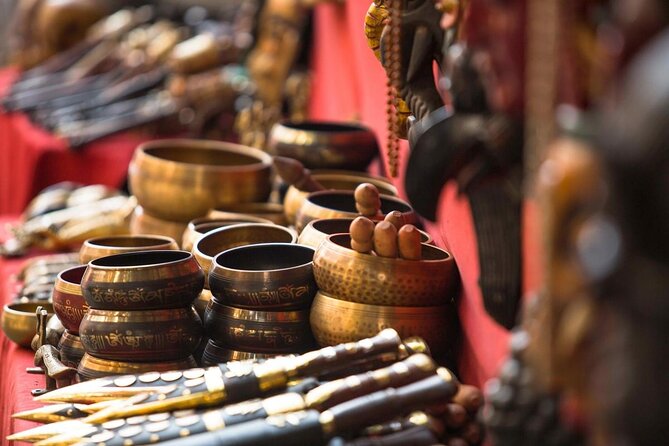
- A working temple near Thamel: The center is within walking distance of Kathmandu’s main tourist district, yet it is used for local ceremonies, training, and treatment.
- Siddhartha provides the bridge: He explains the beliefs and process, then translates during your consultation.
- Private spiritual session: Your group receives a one-to-one consultation rather than sitting through a large public talk.
- Observation comes first: You are encouraged to watch ceremonies or consultations already taking place so you know what to expect.
- The session may be shorter than expected: The advertised visit lasts about one to one and a half hours, but some consultations have taken about 30 minutes.
- Bring an open but practical mind: The experience can be moving and thought-provoking, but it is not a medical diagnosis or a guaranteed fortune-telling session.
A working shaman center near Thamel
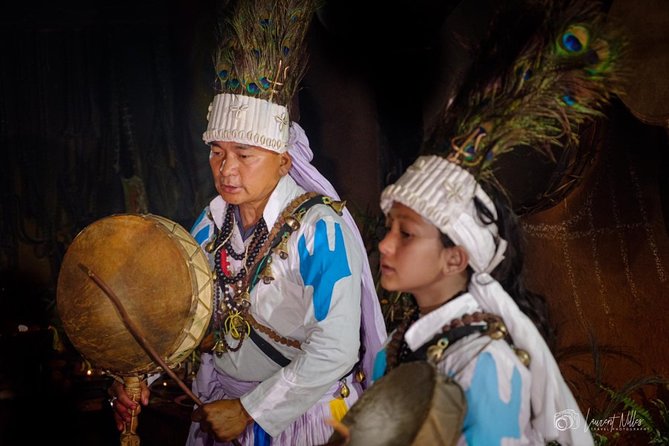
The tour begins at P8F3+WX in Kathmandu, near public transportation and within walking distance of Thamel. The center is both a temple and a place where shamans train and work with people seeking spiritual guidance.
That setting matters. You are not being taken to a theatrical venue built only for tourists. The center may be busy with local visitors, ceremonies, or other forms of ritual activity. The atmosphere can therefore feel less polished and less predictable than a standard sightseeing stop. For many people, that is the point.
You may want to allow a little patience at the start. A spiritual center does not operate like a museum with a fixed sequence of displays. The guide may first explain the setting and ask you to observe how the shaman works with local people. This observation helps you understand the tone of the visit and prepare for your own consultation.
The building itself is not described as a major monument, and the value is not in grand architecture. The interest comes from seeing a living practice in its own setting. If you are looking for temples, mountain views, or a long historical tour, this will not fill that role. If you want to see how one traditional spiritual practice is carried on in Kathmandu, it offers something quite different.
Other Kathmandu days people book alongside this one:
- Everest Base Camp Trek – 14 Days
★ 5.0 · 1,499 reviews - Private Kathmandu Sightseeing Tour | UNESCO World Heritage sites
★ 5.0 · 756 reviews - Everest Base Camp Helicopter Tour landing at Everest View Hotel
★ 5.0 · 668 reviews
Siddhartha’s introduction sets the tone
Siddhartha is the guide and translator associated with this experience. His role is important because the consultation may involve ideas about energy, spirits, divination, healing, faith, and meditation that do not translate neatly into a quick tourist explanation.
Before you meet the shaman, Siddhartha explains the basic background of Himalayan Bon Shamanism and the purpose of the visit. He also explains what the shaman can and cannot do. That briefing is one of the most useful parts of the experience because it keeps the session from becoming a mystery show.
You should listen closely to the limits he describes. The tour presents shamans as traditional counselors and healers, sometimes comparing them with early psychologists or psychotherapists. Still, the consultation is spiritual in nature. It should not replace medical care, mental health treatment, or professional advice about a serious problem.
Siddhartha also translates the questions and answers during the private session. This is more than a practical convenience. Without a translator, you could miss the meaning of a ritual, misunderstand a question, or mistake a symbolic statement for a firm prediction. His explanations help you place the experience in a cultural context rather than treating every gesture as a literal promise.
Watching ceremonies before your consultation
The suggested first step is to watch the shaman consult and heal local people. Depending on the day, you may see several ceremonies or rituals taking place before your private appointment.
This is where the visit can feel most immediate. You are seeing a center in use, not just hearing a short lecture about shamanism. At the same time, you should respect the privacy and concentration of people receiving help. Observe quietly and follow Siddhartha’s instructions about where to stand and what you may photograph, if photography comes up.
The ceremonies may also help you decide how comfortable you feel. Some visitors find ritual healing soothing and fascinating. Others may feel uncertain when the language of negative spirits and energy becomes part of the session. It is fine to remain curious without accepting every spiritual explanation as fact.
The experience does not promise that every ceremony will look like the photographs used to promote it. One consultation may involve a shaman in traditional clothing, while another may involve a woman in ordinary clothes who performs a ritual and blessing. Dress can vary, and the lack of ceremonial clothing may disappoint you if you expect a highly visual performance.
That difference is worth knowing in advance. The important question is not how theatrical the shaman looks, but how comfortable you are with a working religious practice that may appear informal from the outside.
What happens in the private consultation
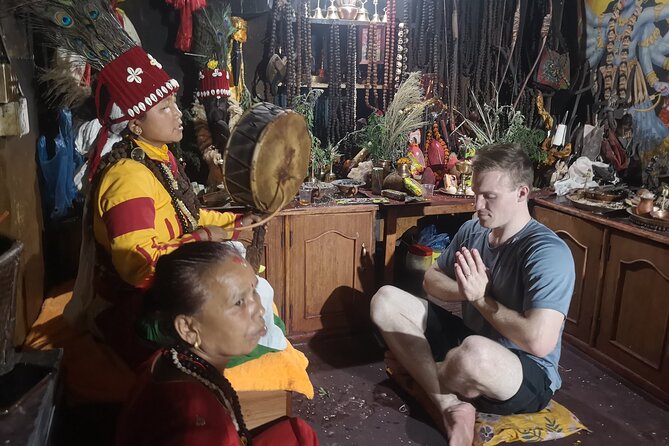
After the introduction and observation, you meet the shaman for a one-to-one consultation. Your own group participates, so you do not share the session with unrelated bookers.
The consultation centers on divination and an assessment of the energy or spirits surrounding you. The shaman may perform a healing ritual, offer a blessing, discuss worries, or address what is perceived as negative energy. Some people experience this as a form of reflection and meditation. Others approach it mainly as an opportunity to learn about Nepalese spiritual practice.
The promotional wording suggests that you will learn about your health, past, present, and future, and that negative spirits may be removed. In practice, you should not assume that every topic will be covered. The focus may remain on what the shaman senses during the consultation.
A key point is that positive energy may not be disturbed. If the shaman does not detect negative energy or a troubling spirit, the session may involve little ritual activity. The explanation given for this is that trying to interfere with peaceful energy could create an unwanted result or take time to settle. If you are hoping for a detailed prediction, this can feel limited.
That is also why the session may last closer to 30 minutes than the full one-hour-to-one-and-a-half-hour estimate. The overall activity includes walking, explanation, observation, translation, and consultation. The private ritual itself is not guaranteed to fill the entire time.
If the shaman says something that feels accurate, you may find the moment striking. Keep your judgment switched on, but allow yourself to reflect on why the statement affects you. The most useful result may not be a prediction. It may be the chance to think carefully about a concern you have been carrying.
A completely different sort of day in Kathmandu:
- Half day cooking class in Thamel kathmandu
★ 5.0 · 607 reviews - Everest Base Camp Trekking
★ 5.0 · 485 reviews - Nagarkot Sunrise View and Day Hiking from Kathmandu
★ 5.0 · 471 reviews - Kathmandu: Full Day 7 UNESCO Tour with Lunch – Private/Group
★ 5.0 · 415 reviews
A woman shaman and a less theatrical experience
A woman may conduct your consultation. That has been a welcome detail for people interested in seeing the place as a real religious center rather than a fixed male-led performance.
You may also meet a shaman wearing everyday clothes. This is a practical reminder that spiritual specialists do not always dress in ceremonial clothing while working. If you arrive expecting elaborate costumes, drums, or a large public ritual, the setting may seem understated.
I see this as a strength for cultural learning, but it can be a weakness for someone buying a visual attraction. The experience is about the consultation and the beliefs behind it, not about a guaranteed spectacle. Some of the most interesting moments may be quiet ones: a translation, a blessing, a pause during divination, or an explanation of why the shaman chooses not to disturb positive energy.
The role of ritual healing
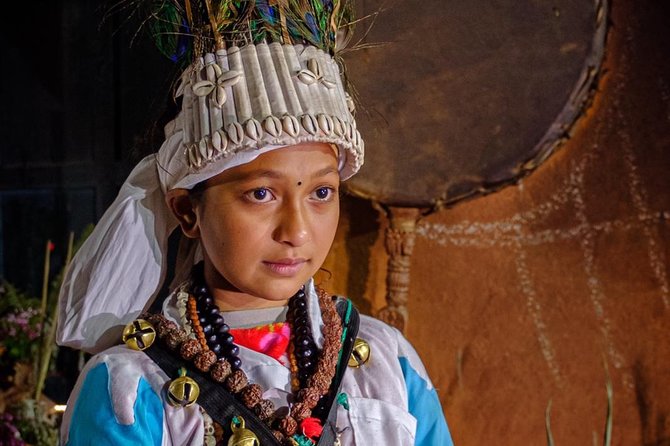
The healing part of the visit can include ritual actions intended to remove negative spirits or restore balance. The guide explains what is happening, and the shaman may offer a blessing or another traditional treatment.
You need to decide how you relate to that language. If you are comfortable entering a spiritual setting for cultural study and personal reflection, the ritual can feel meaningful. If you want a scientifically tested treatment, this is the wrong service.
The tour’s comparison between shamanism and natural psychological healing points to one possible benefit: focused attention. You have time to consider your fears, hopes, or worries while another person listens and interprets the situation through a traditional belief system. That can be useful as reflection, even if you do not accept the supernatural explanation.
Do not treat the session as a health screening. The description refers to health, but the experience does not provide a medical examination. If you have a physical or mental health concern, speak with an appropriate licensed professional in addition to any spiritual practice.
Is $40 good value in Kathmandu?
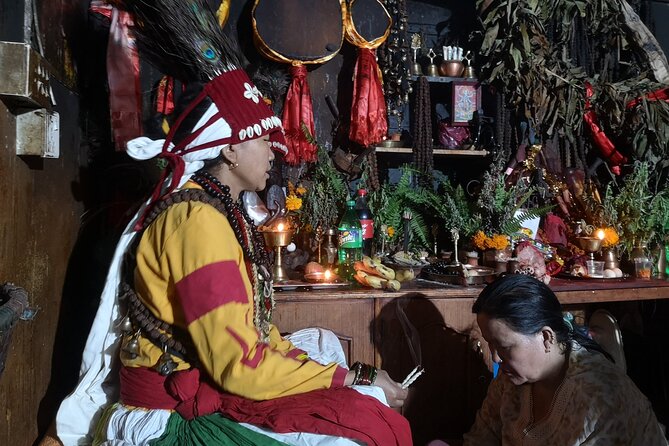
The price is $40 per person. That includes the private consultation, bottled water, and a guide who translates. It does not include a donation to the healing center, a tip for the guide, food, or other items not listed.
For a one-hour-to-one-and-a-half-hour private cultural visit near Thamel, the price is reasonable if you value personal explanation and access to a working center. You are paying for the guide’s time, translation, organization, and the private meeting, not only for the ritual itself.
The value drops if you judge the outing by minutes of direct consultation. Some sessions can be brief, especially when the shaman does not identify negative energy. A visitor who expects detailed fortune-telling, a full account of past health problems, or a dramatic spirit-removal ceremony may feel the cost is high for what takes place.
The separate donation is another cost to remember. The amount is not specified, so ask Siddhartha or the center about local practice before the healing begins. You should also budget a tip if the guide’s explanation and translation are helpful.
Compared with a standard sightseeing ticket, this is a specialized purchase. I would choose it for the cultural access, the private format, and the chance to ask questions through a translator. I would skip it if you want a predictable, tightly timed attraction with a guaranteed set of rituals.
Practical details that shape the visit
The activity ends back at the meeting point. Since the temple is near Thamel and public transportation, it is fairly easy to fit into a day of sightseeing. Its short duration also makes it possible to schedule around other plans, though you should avoid putting a major timed activity immediately afterward.
A bath before visiting the shaman temple is suggested. Treat this as a matter of respect and preparation rather than a complicated requirement. Wear clothing that feels comfortable and suitable for a religious setting.
Women are asked not to visit the shaman or temple during the first four days of their period, according to the tradition presented for this experience. If that applies to your schedule, check the timing before booking.
The activity uses a mobile ticket, and confirmation is received at booking. It is a private activity for your group, and most people can participate. Meals are not provided, but bottled water is included.
The experience cannot be refunded or changed after booking. That makes it especially important to confirm your date, meeting point, and personal comfort with the subject before paying.
Who will get the most from this experience?
I would recommend this to you if you have a genuine interest in Nepalese religion, spiritual practice, and the way traditional beliefs operate in daily life. It also suits people who enjoy personal reflection and do not need every activity to provide a photograph or a clear-cut answer.
It may be a good first-day activity in Kathmandu because Siddhartha’s introduction can help you understand one part of Nepalese culture before you see more temples and religious sites. Several people have also used it early in their visit, when a calm, unusual cultural encounter feels like a useful way to get oriented.
You should think twice if you are booking only because the words health, future, or negative spirits sound like a promise. The consultation may be insightful, but it is not guaranteed to discuss your past or predict your future in detail. You should also reconsider if you dislike religious ceremonies or feel uncomfortable watching other people receive spiritual treatment.
The experience has received a 4.6 rating from 42 ratings, with 90 percent recommending it. That matches the main pattern: strong approval for Siddhartha’s explanation, translation, and the unusual setting, along with reservations about price, clothing, and the short or limited consultation.
Should you book the Himalayan Bon Shamanism tour?
Book it if you want a private cultural encounter and can approach shamanism with curiosity rather than a demand for proof or prediction. Siddhartha’s guidance, the nearby working center, and the chance to observe ceremonies make this more substantial than a simple fortune-telling stop.
Skip it if you want a formal temple tour, a medical consultation, or a guaranteed ritual that will cover your entire past, present, and future. At $40, the experience is worth it for the access and explanation, but only if the subject itself interests you.
My practical advice is to arrive clean, respectful, and open-minded. Listen to the guide’s explanation of what the shaman can and cannot do. Then let the consultation be what it is: a brief meeting with a traditional spiritual practitioner, and a chance to consider Nepalese beliefs from inside a real local setting.
FAQ
Where does the Shamanism Tour in Nepal take place?
The shaman temple and healing center is in Kathmandu, within walking distance of Thamel. The meeting point is P8F3+WX, Kathmandu 44600, Nepal.
How long does the experience last?
The advertised duration is about one hour to one hour and 30 minutes. The consultation itself may be shorter, with some sessions lasting about 30 minutes.
Is the consultation private?
Yes. This is a private activity, and only your own group participates in the tour and consultation.
Is a guide or translator included?
Yes. A guide and translator are included. Siddhartha provides an introduction to shamanism and helps translate during the consultation.
What does the $40 price include?
The price includes the one-to-one consultation, bottled water, and the guide or translator. It does not include a donation to the healing center, a tip, meals, or items not listed.
Should I take a bath before visiting the temple?
Taking a bath before visiting is suggested as part of preparing for the shaman temple. The experience information presents this as a recommendation.
Can women visit the temple at any time?
The tradition presented for this activity asks women not to visit the shaman or temple during the first four days of their period. Check your timing before booking if this may affect your visit.
Recently added around Kathmandu
- Kathmandu : Swambhunath & Durbar Square Guided Half Day Tour★ 3.3 · 3 reviews
- Private Day Tour in Kathmandu Valley Rim with Bhaktapur Sightseeing★ 5.0 · 3 reviews
- From Kathmandu / Pokhara / Chitwan: River Rafting – 1 Day★ 4.6 · 3 reviews
- Nepali Cooking training & Cultural Homestay Experience★ 5.0 · 3 reviews
- Private 3-Hour Nagarkot Sunset Tour from Kathmandu★ 3.5 · 3 reviews
- From Kathmandu: Everest Base Camp Landing Helicopter Tour★ 5.0 · 3 reviews
- 4 UNESSCO World heritage sites of Kathmandu-private tour★ 5.0 · 3 reviews
- Kailashnath Mahadev, Panauti and Namo Buddha Monastery Sightseeing★ 5.0 · 3 reviews