
Reviewed · KATHMANDU
8 Days Tour in Nepal (Accommodation at 5 Star Hotel)
Kathmandu’s ancient shrines, Chitwan’s jungle, and Pokhara’s lake and mountain views make this eight-day Nepal tour a smart first look at the country. You move through three very different settings without having to build the route yourself.
I like the strong mix of culture and nature, and I like that the plan includes both a jeep safari and a canoe ride in Chitwan. The main consideration is the road travel. Nepal’s highways can make the journeys from Kathmandu to Chitwan and Chitwan to Pokhara slow and tiring, and private transportation is not included in the $1,400 price.
In This Review
- Key points to know before booking
- What the $1,400 package really covers
- Day 1: Airport pickup and a first walk through Thamel
- Day 2: Four major sights in Kathmandu Valley
- Boudhanath Stupa
- Patan Durbar Square
- Pashupatinath Temple
- Swayambhunath
- Day 3: The long road to Chitwan National Park
- Day 4: Canoeing, jungle walking, and a jeep safari
- Canoeing on the Rapti River
- Jungle walking
- Elephant center and Tharu village
- Open-top jeep safari
- Day 5: From Chitwan to Pokhara and Phewa Lake
- Day 6: Sarangkot sunrise and Pokhara’s southern sights
- Devi’s Fall and Gupteswar Gupha
- World Peace Pagoda
- Day 7: Returning to Kathmandu and using free time
- Day 8: Airport transfer
- Guides, drivers, and the level of local support
- Who should book this Nepal circuit?
- Final verdict: a comfortable first taste of Nepal
- FAQ
- How long is the Nepal tour?
- What destinations are included?
- Is airport pickup offered?
- Is private transportation included?
- What meals are included?
- How many people can join the tour?
- What is the cancellation policy?
Key points to know before booking
- Three major destinations in eight days: Kathmandu, Chitwan National Park, and Pokhara form a clear route with no wasted side trips.
- Two kinds of Chitwan safari: You get a canoe outing on the Rapti River and a longer open-top jeep safari through the park.
- Five-star hotel accommodation: The package is designed for comfort, though you should confirm the exact hotel names before paying.
- A full Kathmandu sightseeing day: Boudhanath, Patan Durbar Square, Pashupatinath, and Swayambhunath cover the valley’s major religious sites.
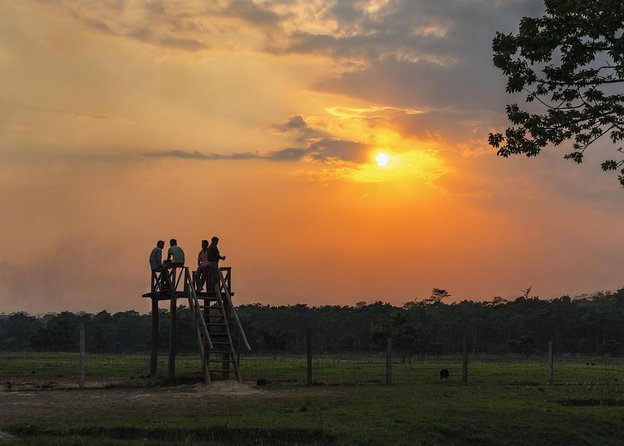
- Sunrise at Sarangkot: This is your best scheduled chance to see the Annapurna and Manaslu regions, along with Pokhara Valley.
- Local help throughout the route: The company is The Great Adventure Treks & Expedition, and past arrangements have involved owner Mani, guide Sanjaya, and drivers including Binod and Ram.
What the $1,400 package really covers
At $1,400 per person, this is not a bare-bones Nepal circuit. The price is tied to five-star hotel accommodation, airport pickup, selected meals, sightseeing, park activities, and local tour support. Six breakfasts, two dinners, and two lunches are included, so you have some meals covered but should not assume the package is all-inclusive.
The value depends heavily on the hotel standard and transport setup. Five-star lodging can make a real difference after long road journeys, early morning starts, and dusty sightseeing days. Still, the details provided do not name the hotels, so I would ask for the property names, room plan, and meal arrangements before booking.
Private transportation is specifically listed as not included. That matters here because the route involves several long drives. The package offers pickup, and the company arranges local support, but you should confirm whether road transfers are shared, paid separately, or handled by another transport arrangement.
The group can reach a maximum of 30 people. That is a manageable size for a coach-style circuit, but it will not feel like a private trip. If you want more control over photo stops, departure times, or time at each temple, ask about a smaller group or a private vehicle and the extra cost.
Other Kathmandu days people book alongside this one:
- Everest Base Camp Trek – 14 Days
★ 5.0 · 1,499 reviews - Private Kathmandu Sightseeing Tour | UNESCO World Heritage sites
★ 5.0 · 756 reviews - Everest Base Camp Helicopter Tour landing at Everest View Hotel
★ 5.0 · 668 reviews
Day 1: Airport pickup and a first walk through Thamel
Your first day begins with pickup at Tribhuvan International Airport and a drive to the hotel. The schedule then leaves about two hours for nearby exploring, with Thamel and Durbarmarg within walking distance of the hotel area.
Thamel is a useful first stop because you can get your bearings without committing to a long sightseeing program. You might find shops, restaurants, travel offices, and busy streets, while Durbarmarg offers a more polished commercial feel and views of the Narayanhiti Palace area.
The short first day is welcome after an international flight. Do not expect a major attraction program here. This is a practical arrival day, and its success will depend on your flight time, airport traffic, and how quickly you settle in.
Day 2: Four major sights in Kathmandu Valley
Day 2 is the tour’s most intense cultural day. You visit Boudhanath Stupa, Patan Durbar Square, Pashupatinath Temple, and Swayambhunath, with roughly seven hours of sightseeing in total.
Boudhanath Stupa
The large white dome of Boudhanath is ringed by colorful Buddhist prayer flags and religious buildings. The site gives you a strong sense of Tibetan Buddhist practice, and its open shape makes it easy to appreciate from several angles.
You have about an hour here. That is enough for a first visit, though you may want more time if you enjoy watching the steady movement around the stupa or examining the smaller shrines and details around the main dome.
A completely different sort of day in Kathmandu:
- Half day cooking class in Thamel kathmandu
★ 5.0 · 607 reviews - Everest Base Camp Trekking
★ 5.0 · 485 reviews - Nagarkot Sunrise View and Day Hiking from Kathmandu
★ 5.0 · 471 reviews - Kathmandu: Full Day 7 UNESCO Tour with Lunch – Private/Group
★ 5.0 · 415 reviews
Patan Durbar Square
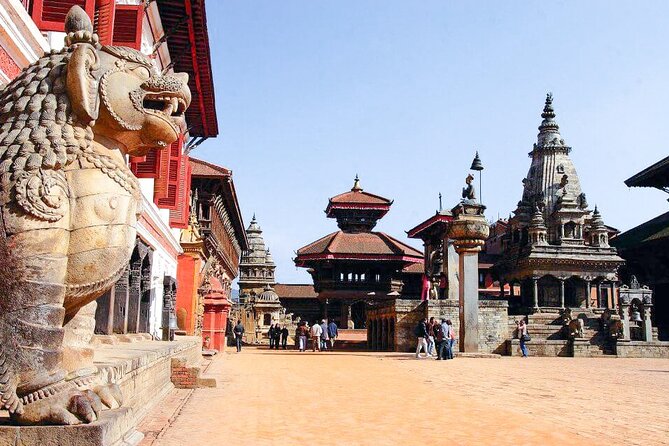
Patan offers some of the finest traditional architecture in the Kathmandu Valley. In a compact area, you can see numerous Hindu temples, courtyards called bahals, Krishna Temple, the Golden Temple, Mahabauddha Temple, Hiranya Varna Mahavihar, the Golden Window, and Patan Museum.
Two hours gives you a useful introduction but keeps the day moving. The area rewards a guide who can explain what you are seeing, since the courtyards and temple details can otherwise blur together. This is one place where local interpretation adds real value.
Pashupatinath Temple
Pashupatinath is a large religious complex beside the sacred Bagmati River. It includes Hindu temples, ashrams, images, and inscriptions built up over many centuries.
Your guide leads you through the complex, but access to individual areas can depend on religious rules. The importance of the place is clear even when you cannot enter every structure. Allow two hours, and expect a site that feels active and devotional rather than arranged for sightseeing alone.
Swayambhunath
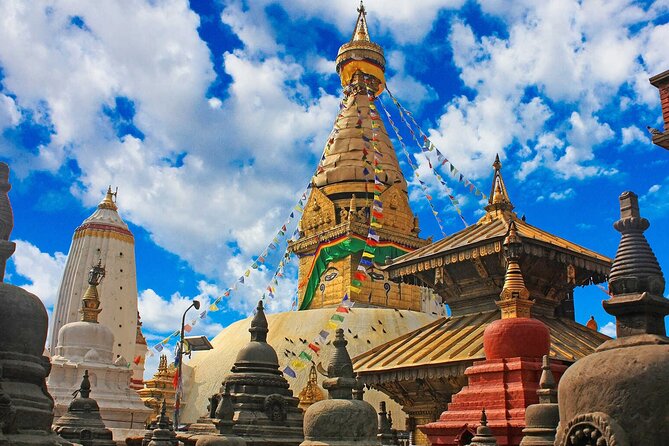
Swayambhunath sits on a hill and is known for Buddhist statues, chaityas, temples, and religious images. From the top, you can look across Kathmandu and see Boudhanath Stupa in the distance.
The two-hour visit includes time for the hilltop setting, but remember that the site involves an uphill approach and steps. It is a good final stop because the view helps you understand the broad shape of Kathmandu after a day spent among individual monuments.
Day 3: The long road to Chitwan National Park
After leaving Kathmandu Valley, the road passes through hills, with mountain views possible when weather and visibility cooperate. The drive itself is part of the experience, but it is also one of the tour’s least predictable parts.
Road conditions and traffic can affect the day, so keep your plans flexible. The itinerary does not give a travel duration, and that is useful to remember when judging the pace of the tour. You are changing regions, not simply taking a short transfer.
After reaching Chitwan, you rest before a Rapti Riverside walk, sunset viewing, and a Tharu cultural show. This gentle first afternoon gives you a chance to adjust before the more active wildlife program on Day 4.
The Tharu cultural element is important because Chitwan is not only a park. The nearby Tharu community has its own way of life, and the village visit and cultural show help connect the park to the people who live around it.
Day 4: Canoeing, jungle walking, and a jeep safari
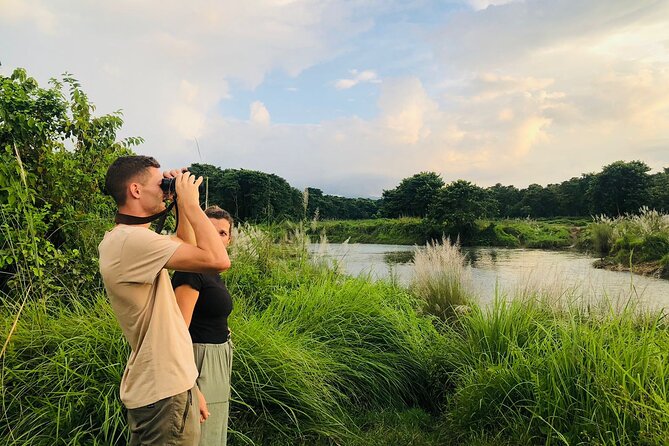
Day 4 is the tour’s fullest outdoor day. It combines a 45-minute canoe trip on the Rapti River, a three-hour jungle walk, a visit to an elephant breeding and training center, a Tharu village visit, and a four-hour jeep safari.
Canoeing on the Rapti River
The canoe outing gives you a low, quiet view of the riverbank. Crocodiles and other wildlife may be visible from the water, though wildlife sightings can never be guaranteed.
This is a good contrast to the jeep safari. The river moves at a slower pace, and you get a closer look at the water and its edges. Follow your guide’s instructions carefully, especially when animals are nearby.
Jungle walking
The jungle walk takes you through the forest that forms the home of Chitwan’s wildlife. Walking gives you a different sense of the park than riding in a vehicle, since you notice tracks, plants, sounds, and movement at ground level.
It is also the activity that calls for the most attention. You are in a wild setting, not a zoo, so stay with the guide and follow local safety rules. The provided schedule allows three hours, making this more than a quick stroll.
Elephant center and Tharu village
The visit to the elephant breeding and training center lasts about an hour. The itinerary presents it as a stop after the jungle walk, so you can expect a short visit rather than a full educational program.
You also spend about 30 minutes in a Tharu village. That is brief, but it gives you a direct look at local daily life and creates a useful human connection to the Chitwan area.
Open-top jeep safari
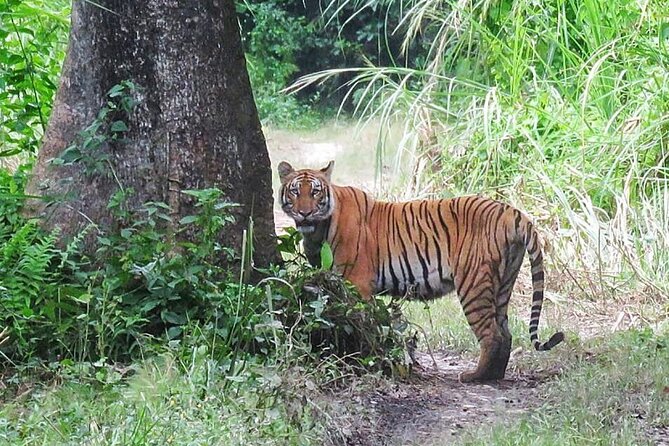
The four-hour jeep safari is the biggest wildlife block of the trip. An open-top vehicle lets you look out in all directions and gives you a good chance to photograph animals and forest scenery.
The safari is exciting, but it is not a promise of rare animal sightings. Weather, timing, and luck all matter. I would judge this part by the quality of the park setting and the guide’s approach, not by expecting a checklist of animals.
Day 5: From Chitwan to Pokhara and Phewa Lake
The drive to Pokhara crosses or follows routes near the Trisuli, Marsyangdi, and Daraudi rivers. These river views break up the journey and show how much the scenery changes as you travel toward the lake city.
Again, this is a transfer day, not a full sightseeing day. Once you arrive, the itinerary focuses on Phewa Lake, where you have about two hours for boating and lakeside time.
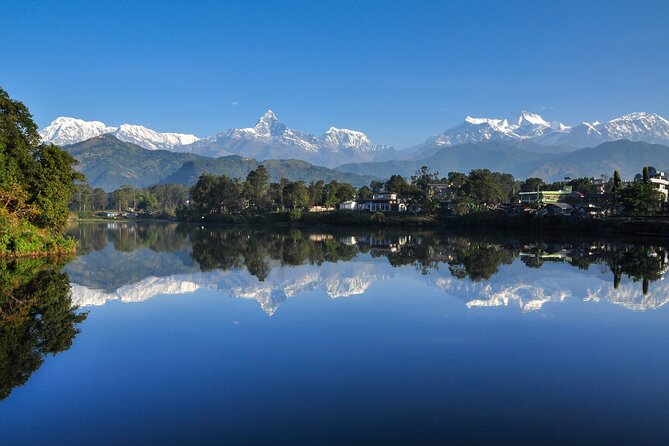
Phewa Tal is one of Pokhara’s defining sights. Boating gives you a calm first look at the city and surrounding hills after the road journey. The timing is sensible: instead of rushing into several attractions, you get a simple outdoor afternoon.
Day 6: Sarangkot sunrise and Pokhara’s southern sights
Day 6 begins early at Sarangkot, a hilltop viewpoint above Pokhara. On a clear morning, you may see the Annapurna and Manaslu mountain regions as well as Pokhara Valley.
Sunrise is always weather dependent, so keep expectations measured. Even without a clear mountain view, the high viewpoint and changing morning light can make the early start worthwhile. Bring warm clothing if needed, since the schedule does not specify conditions or equipment.
Devi’s Fall and Gupteswar Gupha
Devi’s Fall is linked to Phewa Lake. Water passes into a narrow gorge before flowing toward the Seti River, making this a short but distinctive stop.
The visit lasts about 30 minutes, which is enough for a look and photographs. Nearby Gupteswar Gupha gives you an hour underground in a cave described as Nepal’s longest, measuring 2,950 meters and dating in discovery to the 16th century.
These two stops work well together. One is about moving water and open space, the other about a confined natural setting. Wear sensible footwear, since cave surfaces can be uneven, though the tour information does not provide further access details.
World Peace Pagoda
The World Peace Pagoda requires a short hike from the city. At the top, the white pagoda provides a broad view over Phewa Lake and the surrounding area.
Two hours gives you time for the walk, the monument, and the view without turning the visit into a major trek. This is a fitting final Pokhara stop because it brings together the lake, hills, and quiet hillside setting that define the city.
Day 7: Returning to Kathmandu and using free time
The return to Kathmandu leaves some time for Durbarmarg. This area is known for clubs, pubs, massage centers, shopping, and views of the Narayanhiti Palace area.
The schedule is light after another road transfer. You can use the hour for a final walk, shopping, or a meal, but the plan does not include a major guided attraction. That flexibility is useful if earlier road delays have shifted the schedule.
Day 8: Airport transfer
On departure day, staff take you to Tribhuvan International Airport according to your flight time. Since airport traffic and check-in needs vary, confirm the pickup hour with the local team rather than relying only on the general start time of 9:15 a.m.
The airport transfer is a practical ending. It means you do not have to arrange your own final ride, but you should still keep your passport, flight details, and valuables with you rather than in checked luggage.
Guides, drivers, and the level of local support
The company is The Great Adventure Treks & Expedition, also described as offering private day tours. The owner, Mani, has handled itinerary changes and communication for some visitors, which suggests that flexibility is part of the company’s working style.
Guide Sanjaya and drivers Binod and Ram have also been involved in Nepal tours arranged by the company. Names do not guarantee who will lead your specific departure, so ask in advance if a particular guide or driver matters to you.
This is a useful question because the route needs more than a driver who knows the roads. Kathmandu’s religious sites, Chitwan’s wildlife rules, and the timing at Sarangkot all benefit from clear local coordination.
Who should book this Nepal circuit?
I would recommend this tour to a first-time visitor who wants a broad introduction without planning every transfer, hotel, and activity. It suits people who want temples, wildlife, boating, caves, and mountain views in one trip.
It is also a good fit for families and small groups seeking a comfort-focused route. Most people can participate, service animals are allowed, and the tour runs with up to 30 people.
I would think twice if you dislike long road journeys or prefer slow travel. The schedule covers a lot, and the Chitwan and Pokhara transfers can take energy away from sightseeing. Trekkers may also find the program too gentle, since it offers viewpoints and short hikes rather than a sustained mountain walk.
You can cancel for a full refund if you do so at least three full days before the local start time. Later cancellations and changes are not accepted, and poor weather can lead to a different date or a full refund.
Final verdict: a comfortable first taste of Nepal
This eight-day route gives you a well-chosen sample of Nepal. Kathmandu supplies the temples and living faith, Chitwan adds wildlife and village culture, and Pokhara brings boating, sunrise, caves, and mountain scenery.
The package offers good value if the promised five-star hotels and ground arrangements match your expectations. Before booking, confirm the exact hotels, how private transportation is handled, the number of road hours, and whether the listed meals cover the days you care about most.
Book it if you want a guided introduction with a strong mix of culture and nature. Skip it if you want a private, unhurried trip or a serious trekking holiday.
FAQ
How long is the Nepal tour?
The tour lasts approximately eight days, beginning with airport pickup in Kathmandu and ending with a transfer to Tribhuvan International Airport.
What destinations are included?
The route includes Kathmandu, Chitwan National Park, and Pokhara, with a return to Kathmandu before departure.
Is airport pickup offered?
Yes. Pickup is offered on arrival at Tribhuvan International Airport, and staff take you back to the airport on the departure day according to your flight time.
Is private transportation included?
No. Private transportation is listed as not included, so you should confirm how transfers between Kathmandu, Chitwan, and Pokhara are arranged and priced.
What meals are included?
The package includes six breakfasts, two dinners, and two lunches.
How many people can join the tour?
The maximum group size is 30 people.
What is the cancellation policy?
You can receive a full refund if you cancel at least three full days before the experience start time. Cancellations or changes made less than three full days in advance are not accepted, and poor weather may result in a different date or a full refund.
Recently added around Kathmandu
- Kathmandu : Swambhunath & Durbar Square Guided Half Day Tour★ 3.3 · 3 reviews
- Private Day Tour in Kathmandu Valley Rim with Bhaktapur Sightseeing★ 5.0 · 3 reviews
- From Kathmandu / Pokhara / Chitwan: River Rafting – 1 Day★ 4.6 · 3 reviews
- Nepali Cooking training & Cultural Homestay Experience★ 5.0 · 3 reviews
- Private 3-Hour Nagarkot Sunset Tour from Kathmandu★ 3.5 · 3 reviews
- From Kathmandu: Everest Base Camp Landing Helicopter Tour★ 5.0 · 3 reviews
- 4 UNESSCO World heritage sites of Kathmandu-private tour★ 5.0 · 3 reviews
- From Kathmandu Budget: 15 Day Everest Base Camp Trek★ 5.0 · 3 reviews