
Reviewed · KATHMANDU
Buddhist Pilgrimage Tour In Nepal
Kathmandu’s Buddhist story comes into focus at Boudhanath Stupa, Kopan Monastery, and Swayambhunath, three places that show how closely Nepal’s Buddhist and Hindu traditions live side by side. I like that this is a small-group tour capped at 10 people, and I like having private ground transport rather than trying to connect these hilltop and city sites on your own.
The strongest part is the English-speaking guide, who can answer questions about both Buddhism and Nepalese culture. The main drawback is the price: $150 per person for roughly one day is a serious spend, especially since meals and accommodation are not included. You are paying for convenience, transport, and interpretation rather than a long list of included extras.
In This Review
- Key points to know before booking
- Three Buddhist sites in one Kathmandu day
- Starting at Boudhanath Stupa
- A quieter hour at Kopan Monastery
- Swayambhunath and the Thamel lunch stop
- What the $150 price really covers
- Why the guide matters more than the vehicle
- Timing, comfort, and the rhythm of the day
- Who will get the most from this pilgrimage
- Booking, cancellation, and practical details
- Should you book this Kathmandu Buddhist tour?
- FAQ
- Where does the Buddhist Pilgrimage Tour in Nepal take place?
- What time does the tour start?
- Where does the tour end?
- Which places does the tour visit?
- How long do you spend at Boudhanath Stupa?
- How long do you spend at Kopan Monastery?
- Is transportation included?
- Is lunch included in the $150 price?
- Can I cancel for a full refund?
Key points to know before booking
- Boudhanath opens the day with one of the world’s largest stupas and a major Buddhist center.
- Kopan Monastery follows as a place connected with the Gelug tradition of Tibetan Buddhism.
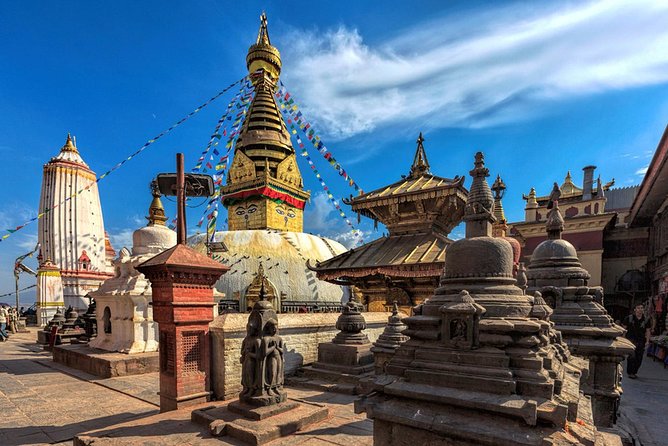
- Swayambhunath adds a second side of Kathmandu, with its famous hilltop temple complex and Monkey Temple nickname.
- Private transport and a maximum of 10 people make the day easier than arranging separate visits.
- Lunch in Thamel is arranged at The Ship Restaurant and Bar, but the meal itself is not listed as included.
- The $150 price includes a guide, vehicle, staff costs, insurance, and taxes, but not visa fees, meals, tips, or accommodation.
Three Buddhist sites in one Kathmandu day
This tour gives you a clear introduction to Buddhism in Nepal without asking you to plan a complicated route across Kathmandu Valley. You start at 9:15 am, meet the guide and driver at the stated Kathmandu meeting point, and travel in a private comfortable vehicle.
The route covers three major pilgrimage sites. That matters because each stop offers a different setting and mood. Boudhanath is a large urban stupa and active Buddhist center. Kopan is a monastery associated with Tibetan Buddhist practice. Swayambhunath is a hilltop religious complex that links Buddhist devotion with Kathmandu’s wider religious life.
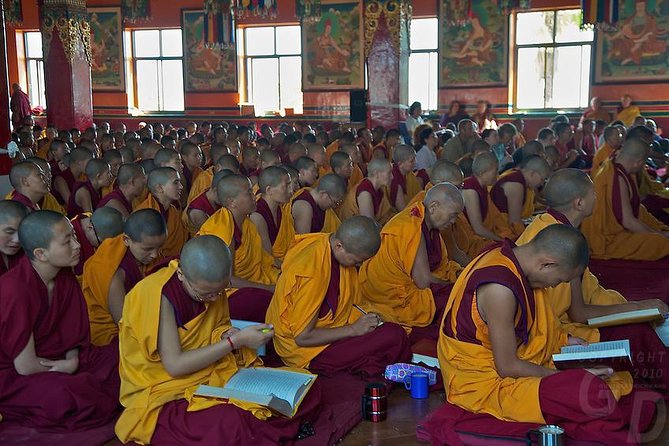
The tour is described as a pilgrimage experience, so it is not simply a sightseeing circuit. You are expected to pay attention to religious customs, listen to explanations, and approach the sites with respect. The promise of chanting mantras alongside holy monks gives the day a spiritual aim, though the exact nature and timing of any chanting are not specified.
Other Kathmandu days people book alongside this one:
- Everest Base Camp Trek – 14 Days
★ 5.0 · 1,499 reviews - Private Kathmandu Sightseeing Tour | UNESCO World Heritage sites
★ 5.0 · 756 reviews - Everest Base Camp Helicopter Tour landing at Everest View Hotel
★ 5.0 · 668 reviews
Starting at Boudhanath Stupa
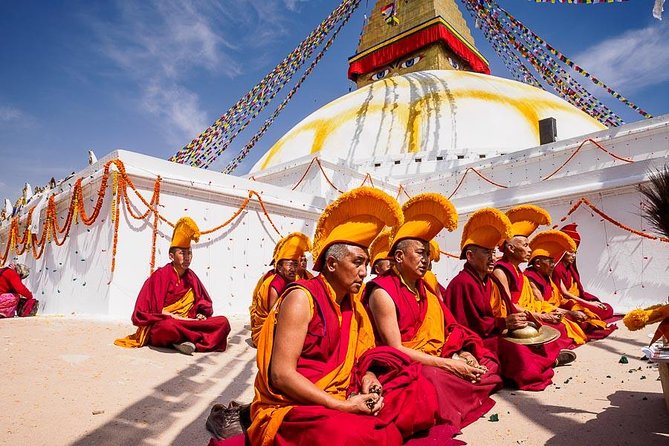
Your first stop is Boudhanath Stupa, about four miles from central Kathmandu. You have one hour here, with admission included.
Boudhanath is one of the largest stupas in the world and one of Kathmandu’s main Buddhist centers. The size of the structure helps explain why it is such an important first stop. Rather than beginning with a small shrine or a short cultural explanation, you start with a major symbol of Nepalese Buddhism.
Your guide can help you understand the basic meaning of the stupa and the role it plays in local religious life. This is especially useful if Buddhist architecture and rituals are new to you. You will get more from the visit if you listen for the difference between a site built mainly for tourists and a place that still functions as a center of worship.
One hour is enough for an introduction, but it is not generous. If you like to sit quietly, study architectural details, or take your time with photographs, the schedule may feel brisk. The benefit is that the tour protects the rest of your day and still gives Boudhanath a proper place in the route.
The tour’s central theme is Nepal’s mixture of religions. That theme is easy to miss if you visit Boudhanath only as a photo stop. Ask your guide how Buddhist practice fits into a country where most people are Hindu. The supplied details specifically emphasize this blend, and it is one of the most useful questions you can bring with you.
A quieter hour at Kopan Monastery
After Boudhanath, the vehicle crosses Kathmandu’s daytime traffic to Kopan Monastery. The journey may take patience, since the description specifically flags daytime traffic, but private transport means you do not need to navigate the route yourself.
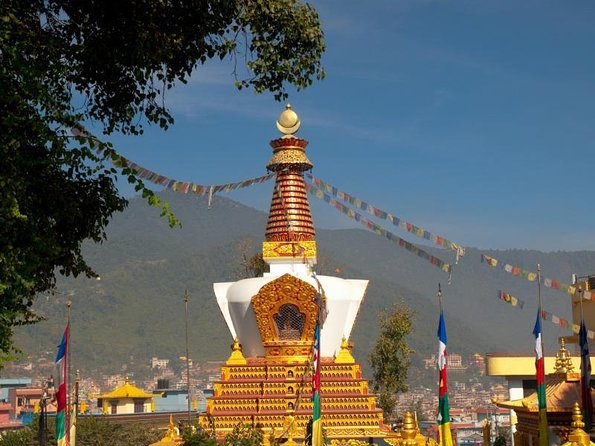
Kopan Monastery is identified with the Gelug tradition of Tibetan Buddhism. For you, that means the stop offers a chance to connect the broad idea of Buddhism in Nepal with a particular Tibetan Buddhist tradition. Your guide’s role is important here. Without context, a monastery visit can seem like a quick look at buildings. With a good explanation, you can better understand why the site matters.
You have about one hour at Kopan. That is long enough for a focused visit, but again, this is not a retreat or an extended meditation program. The tour is designed to introduce the place as part of a wider pilgrimage route.
The promise of inner peace is best treated as an invitation, not a guarantee. Kathmandu is a busy city, and the drive between stops can be noisy and slow. Still, the contrast between the city traffic and a monastery setting may give this part of the day its strongest sense of pause.
If you want a tour that explains basic Buddhist ideas in plain English, this stop should be valuable. One of the most praised features of the experience is the guide’s ability to answer questions about culture and Buddhism. That is more useful than a memorized speech. You can ask about the Gelug tradition, the purpose of the monastery, or how religious life fits into daily Nepalese culture.
Swayambhunath and the Thamel lunch stop
The itinerary includes Swayambhunath, also widely called the Monkey Temple, as the third major Buddhist site. The schedule places a stop in Thamel for lunch after Kopan and then lists Swayambhunath as the final site. The supplied timing for this section is unclear, so you should confirm the exact order and amount of time at Swayambhunath when booking or meeting your guide.
Swayambhunath is an important part of the day because it gives you another setting for Buddhist worship. Boudhanath is a large stupa in the city. Kopan is a monastery. Swayambhunath adds a hilltop temple complex to the comparison, helping you see that Buddhist pilgrimage in Kathmandu does not take just one form.
The nickname Monkey Temple is familiar, but the religious importance is the reason to visit. The site is presented here as a major Buddhist pilgrimage place, not simply an amusing stop for animal photos. Keep your attention on the architecture, worship, and views as well as the nickname.
Lunch is arranged at The Ship Restaurant and Bar in Thamel, with a table reserved for you. Traditional Nepalese dal-bhat, described as a lentil-based meal with rice and accompanying foods, is mentioned as the planned dish. The meal is not included in the tour price, so budget separately for it.
This lunch break gives you a practical pause between religious sites. Thamel also makes logistical sense because it is a central area for eating and regrouping. Still, the stop changes the tone of the day. If your main goal is quiet spiritual reflection, a restaurant and bar in a popular central district may feel like a sharp return to ordinary city life.
A completely different sort of day in Kathmandu:
- Half day cooking class in Thamel kathmandu
★ 5.0 · 607 reviews - Everest Base Camp Trekking
★ 5.0 · 485 reviews - Nagarkot Sunrise View and Day Hiking from Kathmandu
★ 5.0 · 471 reviews - Kathmandu: Full Day 7 UNESCO Tour with Lunch – Private/Group
★ 5.0 · 415 reviews
What the $150 price really covers
At $150 per person, this is not a bargain day tour based on admissions alone. The value comes from having a private vehicle, a professional English-speaking guide, and a planned route linking three significant sites.
The tour includes all ground transportation in private comfortable vehicles. Staff salary, insurance, and government and local taxes are also included. Admission tickets for the listed sites are included as well, so you are not constantly reaching for extra cash at each entrance.
The group limit is 10 people. That is small enough to make questions practical, though the word private refers to the vehicle and arrangement rather than necessarily meaning a one-person tour. Group discounts are available, which may improve the price for couples, families, or friends booking together.
The cost does not include meals, accommodation in Kathmandu, Nepal’s visa fee, tips, or optional activities during free time. You also need to bring accurate US dollar cash and two passport photographs for the visa requirement mentioned in the tour information. That visa note is not a tour expense, but it is worth handling before the morning pickup.
I would judge the price this way: if you value a guide who can explain Buddhism clearly and want a vehicle taking you between several sites, the fee can make sense. If you only need transportation and a few entrance tickets, you may find the cost high.
Why the guide matters more than the vehicle
The vehicle gets you from place to place, but the guide determines how much you understand. Buddhism has its own vocabulary, symbols, customs, and traditions. A short explanation at the right moment can turn a striking building into a meaningful religious site.
The guide is described as fully trained, professional, and English speaking. The strongest praise for the experience focuses on the guide’s ability to answer questions about both culture and Buddhism. That makes this a good choice for you if you prefer conversation and explanation rather than a silent transfer between attractions.
No guide’s personal name is provided, so I cannot recommend a particular individual. You can still improve the day by arriving with a few questions ready. Ask how Nepal’s Hindu majority and Buddhist communities influence one another, what makes the Gelug tradition distinctive, and how each site is used by people who come to worship.
A small group helps here. With no more than 10 people, the guide has a better chance of hearing your questions than on a large coach tour. It also keeps the vehicle experience more manageable during Kathmandu’s daytime traffic.
Timing, comfort, and the rhythm of the day
The experience lasts approximately one day, with a 9:15 am start. The listed visits give one hour to Boudhanath and one hour to Kopan. The exact duration at Swayambhunath is not clear in the supplied schedule, so treat the day as a guided introduction rather than a minute-by-minute program.
Private transport is a real advantage in Kathmandu. You do not have to arrange separate rides to Boudhanath, Kopan, and Swayambhunath, and the driver remains part of the planned service. The route still cannot escape city traffic, and the itinerary openly notes the daytime crossing to Kopan.
Most people can participate, and the tour is near public transportation. Those details suggest a broadly accessible sightseeing day, but they do not provide specific information about stairs, slopes, or mobility equipment at the religious sites. If those points matter to you, ask the provider before paying.
Wear clothing suitable for religious places and bring what you need for a full day out. The supplied information does not list a dress code or equipment checklist, so I would avoid assuming that every personal item is provided. Your guide can tell you what is appropriate at each site.
Who will get the most from this pilgrimage
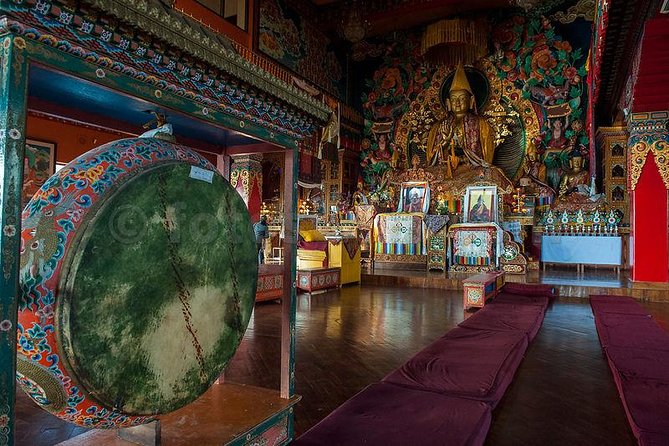
I would recommend this tour to a first-time visitor who wants a structured introduction to Buddhist Kathmandu. It suits you if you want the main sites covered in one day and prefer a guide who can explain what you are seeing.
It is also a good fit if you are curious about the meeting of Hindu and Buddhist traditions in Nepal. The route is not limited to one monastery. It gives you three different places to compare, with the guide helping connect them.
Families and small groups may benefit from the group discount and vehicle arrangement. The maximum of 10 people keeps the format smaller than a standard bus excursion.
I would be more cautious if you want a long meditation retreat, extensive free time, or a fully inclusive day with meals. This is a sightseeing and learning tour with a spiritual focus, not a residential monastery program. The one-hour limits at the first two sites also mean you will need to accept a fairly controlled pace.
Booking, cancellation, and practical details
Confirmation is provided when you book, and the activity ends back at the meeting point. The tour is booked, on average, 18 days ahead, so reserving early is sensible if your Kathmandu dates are fixed.
Mobile tickets are available. Free cancellation applies when you cancel at least 24 hours before the local start time. Cancellations or changes made less than 24 hours before the experience are not accepted for a refund.
The tour is operated by Third Rock Adventures. Tips are not included, and neither are services not specifically listed in the included section. Read that list closely, especially if you are comparing this with a cheaper transport-only option.
Should you book this Kathmandu Buddhist tour?
Book it if you want three major Buddhist sites, private transport, and a guide who can handle questions about Nepalese culture and Buddhism. The route is efficient, the group is limited to 10, and admissions and taxes are covered.
Think twice if $150 feels high for a one-day outing or if you want a slow, contemplative retreat. Meals are extra, traffic can affect the pace, and the time at each site is limited.
For a first look at Buddhist Kathmandu, I think the tour makes its best case through its guide and its carefully chosen route. Go with realistic expectations: you are buying context and convenience, not an all-inclusive spiritual transformation. The experience has a 5/5 rating from 27 ratings and a 100 percent recommendation record, which fits its clearest strength, a well-supported introduction to three important religious places.
FAQ
Where does the Buddhist Pilgrimage Tour in Nepal take place?
The tour takes place in Kathmandu and visits Buddhist pilgrimage sites in Kathmandu Valley.
What time does the tour start?
The stated start time is 9:15 am.
Where does the tour end?
The activity ends back at the meeting point in Kathmandu.
Which places does the tour visit?
The route includes Boudhanath Stupa, Kopan Monastery, and Swayambhunath, also called the Monkey Temple.
How long do you spend at Boudhanath Stupa?
The listed visit time at Boudhanath Stupa is one hour.
How long do you spend at Kopan Monastery?
The listed visit time at Kopan Monastery is one hour.
Is transportation included?
Yes. The tour includes ground transportation in private comfortable vehicles.
Is lunch included in the $150 price?
No. Lunch and other meals are not included. A table is reserved at The Ship Restaurant and Bar in Thamel, where dal-bhat is planned.
Can I cancel for a full refund?
Yes, if you cancel at least 24 hours before the experience start time. Cancellations or changes made less than 24 hours before the local start time are not accepted for a refund.
Recently added around Kathmandu
- Kathmandu : Swambhunath & Durbar Square Guided Half Day Tour★ 3.3 · 3 reviews
- Private Day Tour in Kathmandu Valley Rim with Bhaktapur Sightseeing★ 5.0 · 3 reviews
- From Kathmandu / Pokhara / Chitwan: River Rafting – 1 Day★ 4.6 · 3 reviews
- Nepali Cooking training & Cultural Homestay Experience★ 5.0 · 3 reviews
- Private 3-Hour Nagarkot Sunset Tour from Kathmandu★ 3.5 · 3 reviews
- From Kathmandu: Everest Base Camp Landing Helicopter Tour★ 5.0 · 3 reviews
- 4 UNESSCO World heritage sites of Kathmandu-private tour★ 5.0 · 3 reviews
- From Kathmandu Budget: 15 Day Everest Base Camp Trek★ 5.0 · 3 reviews