

Reviewed · PATAN TOURS
Folklore and Everyday Life in Ancient Patan
Patan reveals itself best away from its grand palace square. On this two to two-and-a-half-hour walk, you follow narrow lanes and shared courtyards into the daily world of Newar neighborhoods, where monasteries, ancestral shrines, resting platforms, and tea shops still shape the town.
I like two things in particular: the tour explains how Newar Buddhist and Tantric Hindu practices affect ordinary life, and it takes you to places you would be unlikely to find on your own. Guide Sandip is praised for his humor, patience, and clear explanations, with Pinhua also involved on at least one walk.
The main drawback is simple: Patan Durbar Square is not included. That is deliberate, not an oversight, but you should allow extra time and money if you want to visit the palace complex and museum afterward.
In This Review
- Key points to know before you book
- Why this Patan walk takes you beyond the postcard view
- Starting at Patan Dhoka at 10:00 am
- Pimbahal: where courtyards carry spiritual meaning
- Nyakhachowk: old houses, falchaa, and ancestral shrines
- Nag Bahal: art shaped by contact with the outside world
- Swotha Square: tea shops and a practical ending
- What the guide adds to the experience
- Is $65 a fair price?
- Who should book this walk?
- Timing, weather, and booking details
- Should you book Folklore and Everyday Life in Ancient Patan?
- FAQ
- Where does the tour begin?
- What time does the tour start?
- Where does the tour end?
- How long does the experience last?
- Is Patan Durbar Square included?
- Is the Patan Durbar Square museum included?
- What is included in the price?
- Are hotel pickup and drop-off included?
- How many people can join the tour?
- Can I cancel for a full refund?
Key points to know before you book
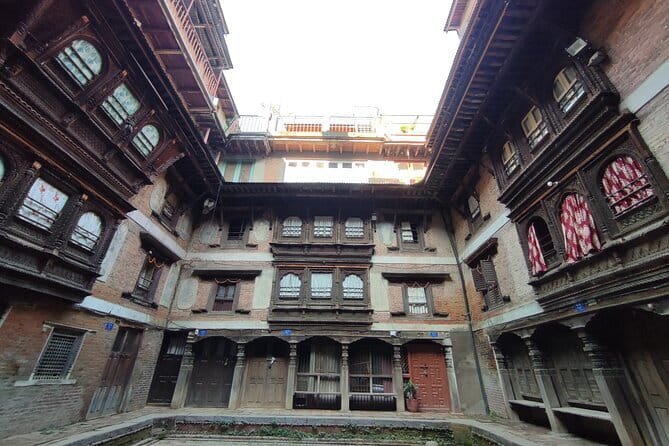
- Pimbahal begins with living tradition: See how a traditional courtyard settlement connects spiritual practice, community life, and local design.
- Nyakhachowk rewards close attention: Look for falchaa resting places, ancestral shrines, and carefully made vernacular houses.
- Nag Bahal links Patan to the wider world: The discussion includes Greek and Hellenistic influence in Buddhist and Hindu art.
- Swotha Square is a useful finish: You end near temples, shrines, tea shops, and Patan Durbar Square.
- The group is capped at 10 people: That matters in lanes and courtyards where a large group would feel awkward.
- The $65 price buys interpretation, not admission: The guide is the main value, while palace tickets, transport, food, and hotel pickup are extra.
Why this Patan walk takes you beyond the postcard view
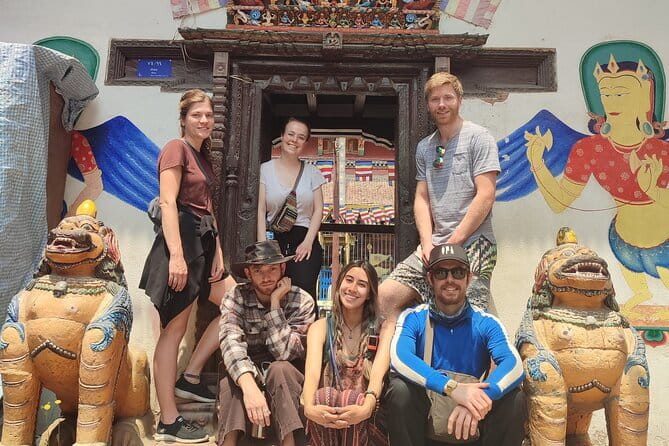
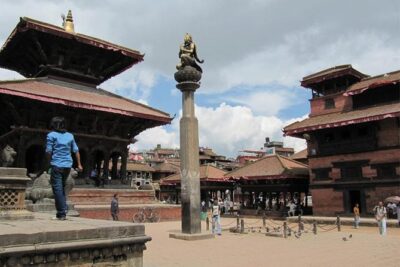
Patan, also called Lalitpur, is often reduced to its famous Durbar Square. That square deserves a visit, especially for its palace museum and temple architecture, but it tells only part of the story.
This walk begins outside the main square and follows the old town around it. That choice gives the experience a different purpose. Instead of concentrating on royal buildings, you look at the streets and courtyards where religious customs, family memory, craft traditions, and modern life meet.
I like this approach because it gives you a way to understand what you are seeing. A shrine is not just a pretty object. A monastery is not simply an old building. A courtyard can be a social space, a sacred place, and a practical part of the neighborhood all at once.
The guide also connects past customs with the choices of young Nepalis today. The focus is Kathmandu Valley society, with attention to Newar identity, Newar Buddhism, Tantric Hinduism, folklore, and the way older customs continue alongside modern values.
You will not spend the entire walk looking at major monuments. Some of the best moments may be small: a carved detail, a resting shelter, a shrine tucked beside a home, or a local courtyard that you would otherwise pass without understanding.
More of Patan:
- Bhaktapur & Patan Durbar Square Day Tours
★ 5.0 · 122 reviews - Kathmandu: Private Patan and Bhaktapur Sightseeing Tour
★ 4.7 · 64 reviews - Patan and Bhaktapur City Full Day Tour
★ 5.0 · 24 reviews
Starting at Patan Dhoka at 10:00 am
The meeting point is Patan Dhoka, on Patandhoka Road in Lalitpur. The start time is 10:00 am, and the guide meets you at the entrance to the old town.
This is a walking experience from the beginning. Pickup and drop-off are not included, so you need to make your own way to Patan Dhoka. The location is near public transportation, which makes the meeting point practical if you are already staying in Kathmandu or Lalitpur.
The group maximum is 10 people. That is a sensible limit for old Patan. Narrow streets and compact courtyards are easier to manage with a small party, and you have a better chance to hear the guide when the conversation turns to religion, folklore, or small architectural details.
The total duration is approximately two hours to two hours and 30 minutes. The listed stops add up to about 90 minutes, but the full walk includes movement between courtyards, the opening orientation, and time spent discussing what you encounter.
Wear comfortable shoes. This is not a strenuous mountain walk, but you will be on foot through old streets and courtyards for the full experience.
Pimbahal: where courtyards carry spiritual meaning
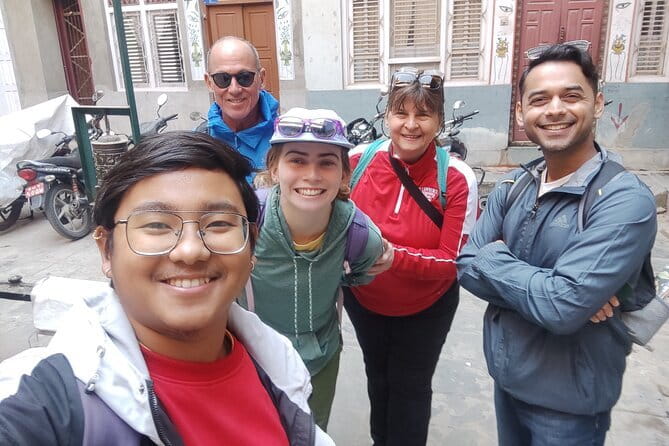
The first main stop is Pimbahal, reached through traditional courtyard spaces. Here the guide explains how old urban settlements in Patan combine practical design with spiritual ideas and local knowledge.
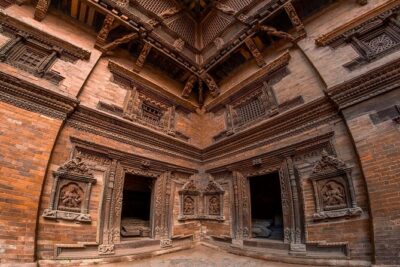
This is an important start because courtyards are easy to overlook. You may see them as open spaces between homes, but the tour encourages you to notice their wider role. They can connect houses, shrines, monasteries, and neighborhood activity in a compact setting.
Pimbahal opens onto a Newar Buddhist monastery dating back to the past. The exact founding date is not provided, but its age and setting help show how religious institutions fit into the structure of old Patan.
The stop is free, and no admission ticket is listed. The value here comes from explanation. Without a guide, you might admire the monastery’s setting and move on. With context, you can begin to understand how religion is part of the town’s daily arrangement rather than something separated from ordinary life.
The guide’s task is not only to identify buildings. It is to explain beliefs and customs in a way that connects them to the neighborhood around you. That makes Pimbahal a strong opening for anyone interested in society, faith, or urban design.
Nyakhachowk: old houses, falchaa, and ancestral shrines
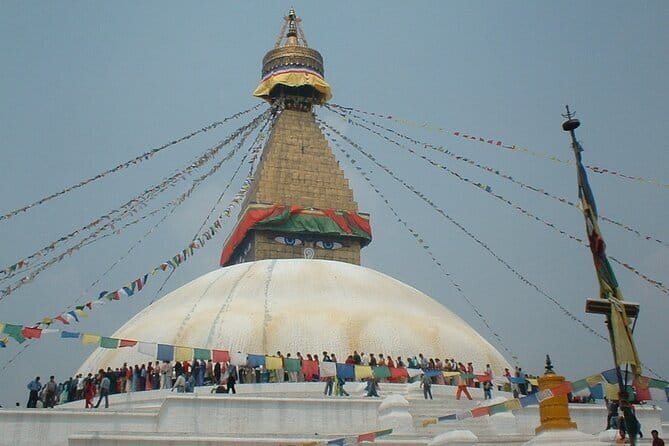
From Pimbahal, you take a smaller path toward Nyakhachowk. This section is especially useful if you enjoy details that large sightseeing routes often miss.
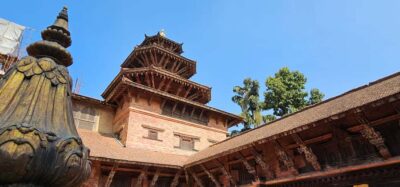
The route includes traditional falchaa, or resting areas, along with ancestral shrines and vernacular houses. These features help you read the old town at street level. You are not only looking at temples. You are seeing the structures and customs that support neighborhood life.
Nyakhachowk contains one of the area’s important monasteries. The supplied information does not identify it by name or give a full architectural history, so the guide’s explanation will be especially valuable here.
I would pay close attention to the relationship between the buildings. In old Patan, a courtyard can bring together domestic, religious, and communal uses. That arrangement says a lot about how the city developed and how older patterns remain visible.
This is also the point where the walk may feel least like a standard sightseeing circuit. You are moving through local spaces rather than following a line of grand monuments. Be respectful. Keep voices low in religious areas, ask before photographing people, and follow the guide’s lead around shrines and monastery spaces.
Nyakhachowk lasts about 30 minutes, with no admission charge listed. That makes it one of the better parts of the tour for travelers who want interpretation rather than ticketed attractions.
A completely different sort of day in Kathmandu:
- Everest Base Camp Trek – 14 Days
★ 5.0 · 1,499 reviews - Private Kathmandu Sightseeing Tour | UNESCO World Heritage sites
★ 5.0 · 756 reviews - Everest Base Camp Helicopter Tour landing at Everest View Hotel
★ 5.0 · 668 reviews - Half day cooking class in Thamel kathmandu
★ 5.0 · 607 reviews
Nag Bahal: art shaped by contact with the outside world

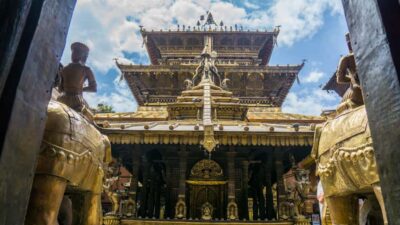
Nag Bahal is one of the largest courtyards in old Patan. The walk uses this setting to discuss how outside contact, including globalization in earlier periods, affected local art.
One of the more unusual subjects is the Greek influence and Hellenistic impression visible in Buddhist and Hindu iconography. This is a useful reminder that South Asian art did not develop in isolation. Forms, ideas, and visual styles moved across long distances and were adapted by local artists.
You should not expect a museum-style lecture with a long list of dates and labels. The stop lasts about 15 minutes, so the discussion is likely to focus on selected details and broad connections. If you enjoy art, ask the guide to point out the features that show this influence.
Nag Bahal also gives the tour a wider frame. Pimbahal and Nyakhachowk focus closely on courtyards, monasteries, and local customs. Nag Bahal adds the story of exchange and adaptation. Together, the stops show Patan as both a local community and a place connected to wider cultural movements.
Admission is free according to the tour details. Again, the guide’s interpretation is the key reason to include it.
Swotha Square: tea shops and a practical ending
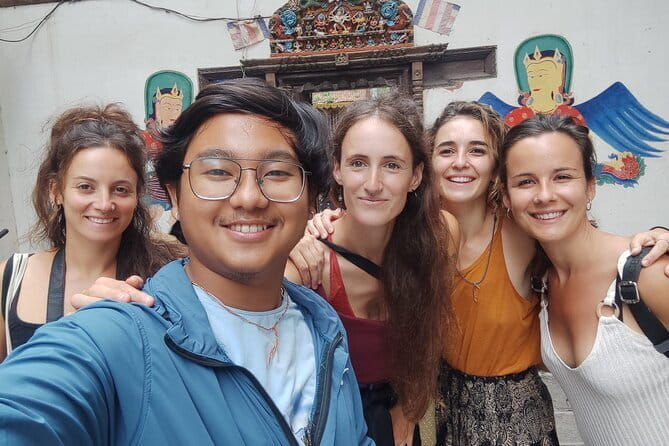
The walk ends at Swotha Square, a pleasant area with temples, shrines, and tea shops. After the close lanes and courtyard spaces, the square gives you a natural place to pause and take stock of what you have seen.
The end point is useful for independent sightseeing. Swotha Square is only a couple of minutes from Patan Durbar Square, the old palace complex. You can continue there on your own after the tour, subject to the separate admission fee.
This arrangement works well if you want both experiences in one morning. The walking tour gives you local context first, then you can visit the major palace site with a better sense of how it fits into Patan.
The palace museum is specifically recommended in the tour information. It is not part of the $65 price, so plan for an extra ticket. You should also allow enough time if you want to explore the palace buildings and museum properly rather than rushing through after the walk.
Swotha Square itself takes about 15 minutes on the stated route. It is less a final attraction than a useful handoff between the local old town and the formal monument zone.
What the guide adds to the experience
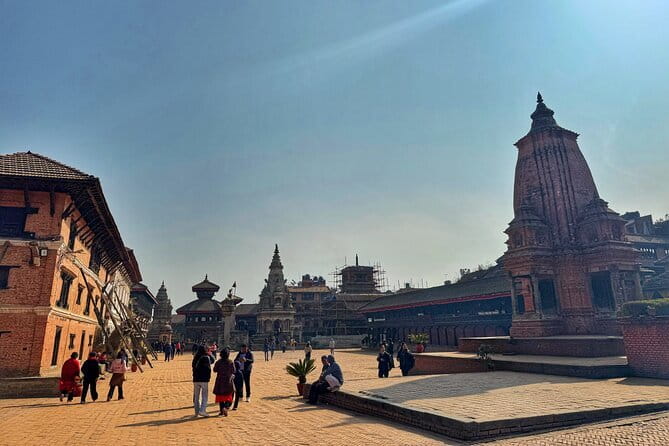
The guide is the heart of this tour. Sandip is repeatedly praised for his humor, attentiveness, and ability to explain local culture, Hinduism, Buddhism, traditions, and folklore. Those qualities matter here because the route is made up of places that can be easy to miss or misunderstand.
A guide can point out why a courtyard matters, explain the role of a monastery, and connect a small carved object to a larger religious or social practice. The walk also benefits from a relaxed style. Sandip is described as easygoing and funny, which can make serious subjects such as Tantric Hinduism and Buddhist practice easier to approach.
Pinhua is also named as part of at least one experience. If both guides lead your walk, you may have the benefit of more than one local perspective, though the exact guide arrangement is not specified.
The strongest praise centers on access to places people would not know to seek out alone. That is the central selling point. You are paying for someone who knows where to turn and how to explain what is there.
Is $65 a fair price?
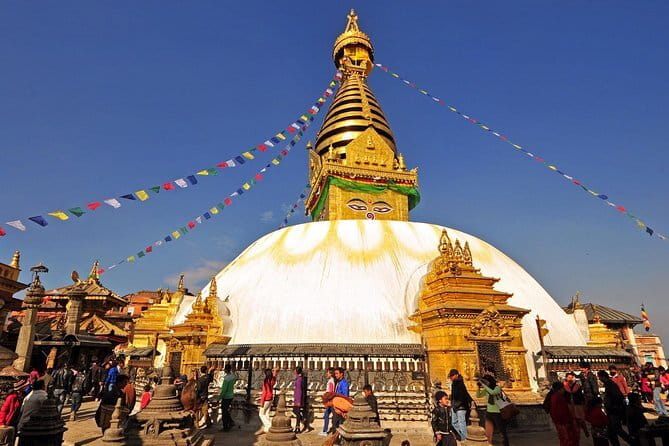
At $65, this is not a bargain-priced stroll. The tour lasts only about two to two-and-a-half hours, and the price includes the local guide but not transport, food, or admission to Patan Durbar Square.
Still, the value depends on what you want. If you only need a route through Patan, you can walk around the old town independently for less. If you want to understand Newar religious life, local folklore, courtyard design, and the meaning behind details that are easy to overlook, the guide provides the main benefit.
The group limit of 10 helps support that price. A small group is better suited to narrow lanes and quiet religious courtyards than a large coach-style outing. It also gives you a better chance to ask questions.
I would consider the tour good value for a first visit to Patan, especially if you plan to visit the palace square separately. It is less compelling for someone focused only on major monuments or someone who prefers to explore without a fixed route.
Who should book this walk?
This experience suits you if you enjoy local history, religion, architecture, folklore, and social customs. It is also a good choice if you have already seen major sights in Kathmandu and want a closer look at how an old neighborhood functions.
You do not need specialist knowledge of Buddhism or Hinduism. The purpose is to explain these traditions in an accessible way, while showing how they remain part of modern Nepali life.
The tour may also suit families and older visitors who prefer a short, guided city walk. Most people can participate, and service animals are allowed. The experience is not described as wheelchair-specific, so you should confirm your own access needs before booking.
You may want a different plan if your main goal is Patan Durbar Square. Since the square and museum are deliberately excluded, you would need to add them independently. The tour works best when you see it as a companion to the palace complex, not a replacement for it.
Timing, weather, and booking details
The fixed start time is 10:00 am. Since the experience requires good weather, poor conditions can lead to a different date or a full refund.
You receive confirmation at booking, and the ticket is mobile. Free cancellation is available if you cancel at least 24 hours before the start time. Cancellations or changes made inside that window are not refunded or accepted.
There is no hotel pickup or drop-off. Plan your route to Patan Dhoka before the morning start, and remember that you will finish at Swotha Square rather than return to the meeting point.
Should you book Folklore and Everyday Life in Ancient Patan?
Book it if you want Patan explained through its courtyards, monasteries, shrines, and living customs rather than seen only through its royal buildings. Sandip’s strong reputation for humor and clear local insight adds real value, and the small group size fits the setting.
Skip it if you want a ticketed tour of Patan Durbar Square itself, or if you prefer to wander without a guide. For most first-time visitors with an interest in culture, the best plan is to take this walk in the morning, then continue to the palace square and museum on your own.
FAQ
Where does the tour begin?
The tour begins at Patan Dhoka on Patandhoka Road, Lalitpur 44600, Nepal.
What time does the tour start?
The stated start time is 10:00 am.
Where does the tour end?
The walk ends at Swotha Square, Lalitpur 44600, Nepal.
How long does the experience last?
The approximate duration is two hours to two hours and 30 minutes.
Is Patan Durbar Square included?
No. Patan Durbar Square is not included. You can visit it independently after the walk, and it requires a separate admission fee.
Is the Patan Durbar Square museum included?
No. The museum is outside the tour and requires its own admission ticket.
What is included in the price?
An experienced local guide is included.
Are hotel pickup and drop-off included?
No. Pickup and drop-off are not included, so you must arrange your own transportation to Patan Dhoka and from Swotha Square.
How many people can join the tour?
The experience has a maximum group size of 10 people.
Can I cancel for a full refund?
Yes, if you cancel at least 24 hours before the experience start time. Cancellations made less than 24 hours before the start time are not refunded. If poor weather causes the tour to be canceled, you will be offered another date or a full refund.
Recently added around Kathmandu
- Kathmandu : Swambhunath & Durbar Square Guided Half Day Tour★ 3.3 · 3 reviews
- Private Day Tour in Kathmandu Valley Rim with Bhaktapur Sightseeing★ 5.0 · 3 reviews
- From Kathmandu / Pokhara / Chitwan: River Rafting – 1 Day★ 4.6 · 3 reviews
- Nepali Cooking training & Cultural Homestay Experience★ 5.0 · 3 reviews
- Private 3-Hour Nagarkot Sunset Tour from Kathmandu★ 3.5 · 3 reviews
- From Kathmandu: Everest Base Camp Landing Helicopter Tour★ 5.0 · 3 reviews
- 4 UNESSCO World heritage sites of Kathmandu-private tour★ 5.0 · 3 reviews
- From Kathmandu Budget: 15 Day Everest Base Camp Trek★ 5.0 · 3 reviews
Patan Tours, compared.
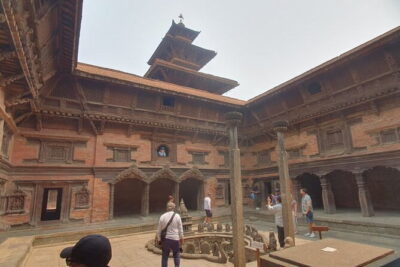
Kathmandu and Patan Heritage and Living Goddess Experience Tour
Read our review →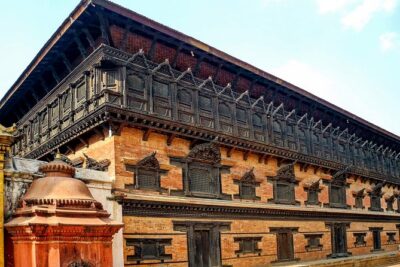
Patan & Bhaktapur Durbar Square Tour with Lunch – Private/Group
Read our review →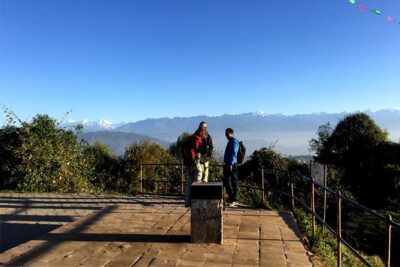
Nagarkot Sunrise, Bhaktapur and Patan Durbar Square Tour in Kathmandu
Read our review →Browse the lists this tour appears in