
Reviewed · KATHMANDU
Full Day Guided Tour in Kathmandu
Kathmandu’s greatest cultural sights are spread across the valley, and this tour links four of them in one outing: Patan Durbar Square, Pashupatinath, Boudhanath, and Swayambhunath. You move from royal courtyards to Hindu shrines, a major Buddhist pilgrimage site, and a hilltop stupa with city views.
I like the practical hotel pickup and the licensed guide, especially when you are still finding your way around Kathmandu. I also like the mix of places: each stop shows a different side of Nepal. The main drawback is the pace. Four major sites in roughly four to six hours leaves limited time for lingering, and the advertised $5 price does not include the separate $20 sightseeing admission fee.
In This Review
- Four Kathmandu sights, one compact day
- Why these four sights make sense together
- Patan Durbar Square and the art of the Newar cities
- Pashupatinath, where faith and daily life meet
- Boudhanath and the rhythm of the prayer route
- Swayambhunath, the Monkey Temple on the hill
- What the guide and vehicle add
- The real cost and value of the $5 price
- Pace, group size, and practical fit
- What to know before visiting sacred places
- Should you book this Kathmandu tour?
- FAQ
- How long does the Kathmandu tour last?
- What time does the tour start?
- Is hotel pickup included?
- What type of transportation is provided?
- Are attraction admission fees included?
- How many people can join the tour?
- Is a guide included?
- Can I cancel for a full refund?
Four Kathmandu sights, one compact day
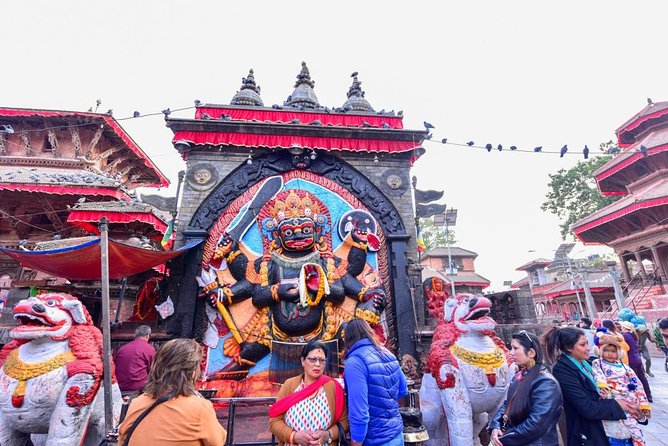
- Patan’s carved courtyards: See palace squares, temples, and fine Newar wood and metalwork in one of the valley’s great historic centers.
- Pashupatinath beside the river: Watch Hindu rituals from respectful viewing areas and learn why this temple complex matters so deeply to worshippers.
- Boudhanath’s great white dome: Walk the prayer route, turn prayer wheels, and experience one of Nepal’s most important Tibetan Buddhist sites.
- Swayambhunath’s hilltop setting: Climb toward the stupa among monkeys and look across Kathmandu Valley.
- Hotel pickup and guided transport: A car, jeep, or van is provided according to group size, with a maximum of 15 people.
- A low advertised price with an extra fee: The tour price is $5 per person, while attraction admission is listed separately at $20 per person.
Why these four sights make sense together
This is a strong first look at Kathmandu because the stops are not four versions of the same thing. Patan introduces the valley’s royal and artistic traditions. Pashupatinath brings you into living Hindu practice. Boudhanath shifts the mood to Tibetan Buddhism, and Swayambhunath adds a hilltop setting with sweeping views.
That variety gives the day a clear shape. You are not simply checking off monuments. You are seeing how several faiths, artistic traditions, and old city centers fit within Kathmandu Valley.
The schedule begins at 9:15 a.m. and is planned for about four to six hours. That makes the tour useful after an arrival day or before a later flight, but you should not expect a slow, detailed study of every shrine. Traffic and crowds can affect the timing, too, so keep your plans afterward flexible.
A few more Kathmandu tours worth comparing
- Kathmandu: Full Day 7 UNESCO Tour with Lunch – Private/Group
★ 5.0 · 415 reviews - Kathmandu: Full Day Top 4 UNESCO Tour with Lunch – Private/Group
★ 5.0 · 269 reviews - Kathmandu: Full-Day 7 UNESCO Tour with Lunch – Private/Group
★ 4.9 · 247 reviews
Patan Durbar Square and the art of the Newar cities
Patan Durbar Square is the longest stop, with about two hours set aside. That is sensible. The square contains old palaces, courtyards, temples, and intricate carvings, and it rewards a guide who can explain what you are seeing rather than simply point toward a roofline.
Patan was one of the great royal centers of the Kathmandu Valley. Its appeal is less about one single building than the way the square brings together palace architecture, religious spaces, and highly skilled Newar craftsmanship. Look closely at the carved wooden windows, metal figures, temple roofs, and details around the courtyards.
A guide can help you notice the difference between a royal space and a working religious site. You may also see ceremonies taking place, depending on the day and local activity. That possibility is valuable, but it also means you need to behave carefully. Stay clear of worshippers, follow instructions about photography, and do not treat a ceremony as a performance arranged for tourists.
Two hours sounds generous, but it can pass quickly. If you like architectural detail, you may want more time here than the schedule allows. If your main goal is to get a broad sense of Kathmandu Valley culture, the allotted time should give you a useful introduction.
Admission is not included. The listed attraction fee is $20 per person for the sightseeing portion of the day, so factor that into the low headline price before booking.
Pashupatinath, where faith and daily life meet
The tour allows about one hour at Pashupatinath Temple. This is one of the most important Hindu temple complexes in Nepal, set beside the Bagmati River. It is also a place where sacred ritual and ordinary movement share the same space.
You may see people praying, making offerings, or taking part in religious customs. Flames may be visible along the river during cremation ceremonies. This is the point in the day where your guide’s judgment matters most. Pashupatinath is not simply a monument to inspect. It remains an active place of worship and mourning.
Use a quiet voice, ask before taking photographs, and follow local rules about where you may walk. Your guide can explain what is happening without turning private religious moments into sightseeing theater.
One hour provides a concise introduction, but it is not enough for every corner of the complex. That is not necessarily a flaw. Pashupatinath can feel intense, and a shorter visit may suit you if you want context without spending a long period beside the river.
The temple is especially meaningful for visitors interested in Hindu traditions, sacred architecture, and the way religious life remains part of the city. It may be less comfortable for anyone expecting a polished museum-style attraction.
Boudhanath and the rhythm of the prayer route
The next stop is Boudhanath Stupa, with about one hour planned. Its huge white dome and watchful eyes make it one of Kathmandu’s most recognizable sights, but the real pleasure comes from walking around it and observing the steady rhythm of prayer.
You can circle the stupa, spin prayer wheels, and watch people offer prayers. The experience is active rather than static. The clockwise route, the movement of pilgrims, the painted symbols, and the sound of chanting all give the place a calm but purposeful energy.
The tour description also includes a chance to meet monks and learn more about Buddhist practice. The exact format is not specified, so treat this as a possible part of the visit rather than a guaranteed private teaching session. Your guide can still provide useful explanations as you walk.
Boudhanath is a good counterpoint to Pashupatinath. At the Hindu temple, the river and cremation grounds shape the visit. At Boudhanath, the circular walking route and the enormous stupa shape yours.
An hour is enough to walk around the main area and get a feel for the site. You will have less time for sitting, shopping, or exploring nearby streets. If Boudhanath is your main interest, you may prefer to return independently for a longer visit.
A completely different sort of day in Kathmandu:
- Everest Base Camp Trek – 14 Days
★ 5.0 · 1,499 reviews - Private Kathmandu Sightseeing Tour | UNESCO World Heritage sites
★ 5.0 · 756 reviews - Everest Base Camp Helicopter Tour landing at Everest View Hotel
★ 5.0 · 668 reviews - Half day cooking class in Thamel kathmandu
★ 5.0 · 607 reviews
Swayambhunath, the Monkey Temple on the hill
The final stop is Swayambhunath, commonly called the Monkey Temple. It sits on a hill above Kathmandu and is reached by stairs. Monkeys are part of the setting, so keep food and loose belongings secure and give the animals space.
The hilltop location gives this stop a different feel from the enclosed courtyards and riverfront spaces earlier in the day. You can see the stupa, take in the city views, and hear stories about one of Kathmandu’s best-known religious sites.
The tour allows about one hour here. That should cover the principal area, but the climb and the many small shrines can make the visit feel rushed if you want to stop often. Wear shoes that are comfortable on stairs, and be ready for a more physical finish.
A back route is mentioned as part of the experience, allowing you to see less obvious areas and hear additional stories. Since the exact route is not described, do not assume it is a private entrance or a shortcut that avoids all stairs. The useful point is that a guide may show you more than the first staircase and main viewpoint.
Swayambhunath is a fitting last stop because it combines religion, local stories, animals, and a broad view over Kathmandu. It gives the day a little breathing room after the more concentrated visits at Patan and Pashupatinath.
What the guide and vehicle add
The tour includes a government-licensed guide, purified drinking water, hotel pickup, hotel drop-off, and transportation by car, jeep, or van based on the number of people. The group limit is 15, so this is not necessarily a private tour. Ask about the group arrangement if having a private guide and vehicle matters to you.
The vehicle is useful because the four sights are spread around the valley. You avoid arranging separate taxis and negotiating each ride, and you can spend the travel time asking questions about the next stop.
Guide quality will shape the day. The information available highlights Jaya, who accommodated a request for a slightly later start and kept a comfortable pace. That suggests some flexibility, though you should not assume every guide or departure will offer the same adjustment.
A good guide is particularly important at Pashupatinath and during ceremonies at Patan. At Boudhanath and Swayambhunath, the guide can also point out customs and stories that are easy to miss when you are focused only on taking photographs.
The real cost and value of the $5 price
At $5 per person, the advertised tour price is unusually low for a guided sightseeing day with transport and hotel pickup. But the separate $20 admission charge changes the calculation. You should think of the experience as costing at least $25 per person before food, drinks, tips, and personal expenses.
That can still be good value. You are paying for a vehicle, a licensed guide, hotel transfers, purified water, government taxes, and office service charges. The cost is most attractive if you want an efficient orientation to Kathmandu and do not want to arrange transport between four major sites.
The value is weaker if you want long visits, private touring, or extensive time for shopping and meals. The day is built around seeing the main sights, not around lingering at one location.
Food and drinks are not included. Carrying water is sensible even though purified drinking water is provided, especially if you find the stairs at Swayambhunath tiring. Tips and personal expenses are also separate.
Pace, group size, and practical fit
The experience is listed as a full-day tour, but the actual sightseeing period is about four to six hours. That distinction matters. You get a compact cultural circuit rather than an all-day program with long meal breaks and unhurried exploration.
The 9:15 a.m. start gives you a clear morning departure. Pickup is offered from your hotel, but the supplied information does not specify an exact pickup radius or a detailed schedule for each neighborhood. Confirm your hotel location and pickup details when you book.
Most people can participate, and service animals are allowed. The tour is also near public transportation, though the included pickup means you may not need to use it.
I would choose this tour if you have limited time in Kathmandu, want an overview of several major sites, or prefer having a guide explain religious customs. It also suits first-time visitors who do not want to spend their first day working out transport across the valley.
I would choose a slower arrangement if you are especially interested in photography, architecture, religious study, or long periods of quiet observation. Four important places in one short outing will always involve tradeoffs.
What to know before visiting sacred places
Dress and act with care at Pashupatinath and the Buddhist sites. Religious ceremonies may be taking place, and the people around you are not there as part of a staged attraction.
Listen closely when the guide explains where to stand and what you may photograph. At Patan, ceremonies may be visible. At Pashupatinath, cremation rituals may be taking place. At Boudhanath, people may be praying as they walk. A respectful attitude will make the experience better for you and for the people who use these places every day.
Swayambhunath brings a different practical concern: monkeys. The information describes cheeky monkeys around the temple, so do not tease them or wave food near them. Keep the hilltop visit focused on the shrine and views rather than treating the animals as props.
Should you book this Kathmandu tour?
Book it if you want a low-cost, guided introduction to four major Kathmandu Valley sights, with hotel pickup and transport handled for you. The range of places is excellent, and the combination of Patan, Pashupatinath, Boudhanath, and Swayambhunath gives you a useful first picture of Nepal’s art, faith, and daily traditions.
Before paying, budget for the separate $20 admission fee and understand that the four to six-hour schedule will be brisk. If you can accept that pace, this is a practical choice for a first visit, a short stay, or a day when you want someone else to manage the route.
FAQ
How long does the Kathmandu tour last?
The tour lasts approximately four to six hours. The listed visits are about two hours at Patan Durbar Square and one hour each at Pashupatinath, Boudhanath, and Swayambhunath.
What time does the tour start?
The listed start time is 9:15 a.m.
Is hotel pickup included?
Yes. Pickup from and drop-off to your hotel are included.
What type of transportation is provided?
Transportation is provided by car, jeep, or van according to the number of people in the group.
Are attraction admission fees included?
No. Admission is listed separately at $20 per person. Food, drinks, tips, gratuities, and personal expenses are also not included.
How many people can join the tour?
The maximum group size is 15 people.
Is a guide included?
Yes. A government-licensed tour guide is included. Guide Jaya is specifically associated with accommodating a slightly later start and maintaining a comfortable pace.
Can I cancel for a full refund?
Yes, if you cancel at least 24 hours before the experience start time. Cancellations or changes made less than 24 hours before the start are not refunded or accepted. If poor weather causes the tour to be canceled, you will be offered another date or a full refund.
Recently added around Kathmandu
- Kathmandu : Swambhunath & Durbar Square Guided Half Day Tour★ 3.3 · 3 reviews
- Private Day Tour in Kathmandu Valley Rim with Bhaktapur Sightseeing★ 5.0 · 3 reviews
- From Kathmandu / Pokhara / Chitwan: River Rafting – 1 Day★ 4.6 · 3 reviews
- Nepali Cooking training & Cultural Homestay Experience★ 5.0 · 3 reviews
- Private 3-Hour Nagarkot Sunset Tour from Kathmandu★ 3.5 · 3 reviews
- From Kathmandu: Everest Base Camp Landing Helicopter Tour★ 5.0 · 3 reviews
- 4 UNESSCO World heritage sites of Kathmandu-private tour★ 5.0 · 3 reviews
- From Kathmandu Budget: 15 Day Everest Base Camp Trek★ 5.0 · 3 reviews