
Reviewed · KATHMANDU UNESCO HERITAGE TOURS
Full Day Kathmandu Tour – 5 UNESCO World Heritage Sites
Kathmandu packs an astonishing amount into a small area, and this tour gives you a quick route through five UNESCO World Heritage Sites in one day. You move from Buddhist hilltop shrines to royal squares, a giant stupa, and Nepal’s most important Hindu temple.
I like the private transportation and the chance to see very different parts of Kathmandu without arranging several taxis. I also like the local touches mentioned in the tour experience, including momo, lassi, and a walk around Freak Street with guides such as Ajit, Shiva, Ganesh, Ramesh, and Ram.
The tradeoff is pace. Four to six hours is tight for five major sites, and the $40 price does not include the listed monument fees, which are stated as worth $30, or lunch. You get a useful first look, not a slow, museum-by-museum visit.
In This Review
- Five Kathmandu sights in one fast, useful circuit
- Why this Kathmandu day tour works
- Swayambhunath, Kathmandu’s hilltop Monkey Temple
- Patan Durbar Square and concentrated Newari design
- Boudhanath, the great Buddhist stupa
- Pashupatinath beside the Bagmati River
- Kathmandu Durbar Square and the Kumari Temple
- The guide can shape the quality of the day
- Timing, transport, and the real value of $40
- Who should book this Kathmandu tour?
- Final call: a strong first look, with extra costs
- FAQ
- How much does the Kathmandu UNESCO sites tour cost?
- How long does the tour last?
- What time does the tour begin?
- Which UNESCO World Heritage Sites are included?
- Is transportation included?
- How large can the group be?
- What happens if bad weather cancels the tour?
Five Kathmandu sights in one fast, useful circuit
- Swayambhunath begins the day with hilltop views, Buddhist prayer sites, and the famous monkeys.
- Patan Durbar Square gathers Newari temples and an ancient royal palace in a compact area.
- Boudhanath gives you the broadest Buddhist setting, centered on a huge white dome.
- Pashupatinath brings you to Nepal’s major Hindu pilgrimage complex beside the Bagmati River.
- Kathmandu Durbar Square includes the Kumari Temple and the old royal center of the capital.
- Private transport and a guide make a demanding sightseeing list practical, but entry fees and lunch cost extra.
Why this Kathmandu day tour works
Kathmandu is not a city where the main sights sit neatly along one pedestrian street. Its monuments are spread across the valley, and traffic can make even short journeys slow. A guided vehicle circuit takes care of the basic movement between them, leaving you to focus on what you are seeing.
The tour is advertised at $40, with a start time of 9:15 am and a maximum group size of 15. That is a fair base price for private transportation and an experienced guide, especially if you are short on time or have just one open day before or after a trek.
But calculate the full cost before booking. Lunch is not included, and the supplied details list monument entrance fees worth $30 as an extra. In other words, the headline price is not the final sightseeing budget.
The schedule is also worth reading carefully. The experience is described as a full-day Kathmandu tour, but the actual duration is approximately four to six hours. That can be enough for an introduction, yet it leaves little room for long museum visits, extended worship, or unplanned stops.
More of the valley’s UNESCO heritage sites:
- Private Kathmandu Sightseeing Tour | UNESCO World Heritage sites
★ 5.0 · 756 reviews - Kathmandu: Full Day 7 UNESCO Tour with Lunch – Private/Group
★ 5.0 · 415 reviews - Kathmandu: Full Day Top 4 UNESCO Tour with Lunch – Private/Group
★ 5.0 · 269 reviews
Swayambhunath, Kathmandu’s hilltop Monkey Temple
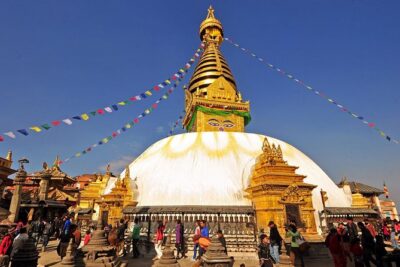
Swayambhunath is a strong place to begin because it immediately shows you the way Hinduism and Buddhism overlap in Nepal. The site is known as the Monkey Temple, and its hilltop position gives the visit a sense of height and space that the city streets often lack.
The central stupa is one of Nepal’s oldest Buddhist chaityas. Local legend says it appeared spontaneously when Kathmandu Valley was formed from a primordial lake more than 2,000 years ago. Treat that as sacred tradition rather than a date stamped on a museum label, but it helps explain why this is such an important religious place.
Expect a cluster of chaityas, stupas, and other religious features rather than one single building to inspect. Your guide can help explain the symbols and the shared Hindu and Buddhist setting, which matters here. Without context, the site can look like a busy collection of shrines. With context, its layered meaning becomes easier to follow.
The hilltop location is one of the best parts of the stop. The supplied material specifically highlights the setting, and I would give yourself a moment to look beyond the religious structures. The city view is a useful reminder that Kathmandu’s sacred places are woven into ordinary urban life.
The main caution is the time limit. Thirty minutes is listed for each stop, and Swayambhunath deserves longer if you want to look carefully, take photographs, and absorb the atmosphere. If you are using this tour as your first introduction to Kathmandu, ask your guide which features matter most.
Patan Durbar Square and concentrated Newari design
Patan Durbar Square is the architectural highlight for many people. The former royal palace is surrounded by a tight concentration of temples built in the Newari style, with carved details and tiered forms that reward close attention.
This is not simply a large open plaza with one famous monument. The appeal comes from the way the palace and temples sit together. The square gives you a short lesson in the power of the old Patan court, while the surrounding buildings show how much skill went into traditional Newari construction.
The tour information notes that reconstruction increased sharply after the earthquake period. That is useful context as you look around. Some buildings may show careful restoration, while others may still reveal the effects of damage and repair. A guide can help you separate original features from newer work.
A museum inside the Durbar Square is also mentioned in the experience. If it is open and your timing allows, this can add meaning to the architecture outside. The tour officially allows about 30 minutes, so you may need to choose between a quick look at the museum and more time in the square.
One appealing detail from the guiding experience is the possibility of pairing Patan with local food. Momo, Nepal’s filled dumplings, were enjoyed during a Patan visit, and local lassi was recommended around Indra Chowk. Lunch is not included, so these food stops are best treated as optional suggestions rather than promised parts of the tour.
Boudhanath, the great Buddhist stupa
Boudhanath changes the mood of the day. Swayambhunath feels like a hilltop shrine above the city, while Boudhanath is organized around a vast stupa and its circular setting. The huge white dome and the Buddhist pyramid above it make this one of Kathmandu’s easiest monuments to recognize.
The supplied description dates the stupa to around the 14th century and also connects it with the period after Buddha’s passing. Dates and origin stories around sacred monuments can vary, so listen for the guide’s explanation rather than trying to force every tradition into one precise timeline.
The structure is the main event. Look for the dome, the upper pyramid, and the painted eyes associated with the stupa. Even with only 30 minutes, you can understand the basic form and see how the monument organizes the surrounding religious area.
Boudhanath is a particularly good stop for anyone interested in Buddhist architecture. The scale gives you a clearer sense of how a stupa functions as a sacred focal point, rather than merely as a decorative tower. You also get a useful contrast with the smaller chaityas around Swayambhunath.
Entrance is not included, and the itinerary lists admission as an extra. Keep that in mind when comparing this tour with a higher-priced option that may bundle fees. The $40 price looks less attractive if you assumed every ticket was covered.
More history walks in Kathmandu:
- UNESCO Seven World Heritage Tour in Kathmandu
★ 5.0 · 253 reviews - Kathmandu Private Sightseeing Tour | UNESCO World Heritage Sites
★ 5.0 · 109 reviews - Kathmandu: Full Day Private Top 4 UNESCO Heritage Tour W/Lunch.
★ 5.0 · 86 reviews - Kathmandu World Heritage Tour
★ 5.0 · 74 reviews
Pashupatinath beside the Bagmati River
Pashupatinath is Nepal’s most important Hindu temple complex and the seat of the country’s national deity. It sits beside the Bagmati River and is described as the largest Hindu temple site in Nepal and India, making it one of the day’s most significant stops.
This is a sprawling collection of religious buildings rather than a single quick photo stop. The complex is valued as a pilgrimage place, and that religious role should shape how you behave there. Dress and conduct should be respectful, and your guide is the right person to ask where you may go and what you may photograph.
The Bagmati setting adds to the meaning of the visit. The river is not just a scenic backdrop. It is part of the religious life of the complex, and a guide can explain why the site matters to Hindu worshippers.
This stop may be especially powerful if you want to understand Nepal beyond palace architecture and Buddhist monuments. It gives the itinerary a living religious dimension. At the same time, the experience can feel more demanding than a standard historic square because it is an active place of worship, not a quiet exhibition.
The supplied itinerary does not give Pashupatinath a numbered stop or a separate visit time, even though it is one of the five principal sites. Confirm the exact order and time allocation when you book. The tour description clearly intends to include it, but the timing may be compressed.
Kathmandu Durbar Square and the Kumari Temple
Kathmandu Durbar Square brings you back to the capital’s old royal center. The stated visit includes the Kumari Temple, an important detail because it gives the stop a specific focus instead of leaving you with a broad, vague palace-square visit.
The square is one of the places where Kathmandu’s political and religious worlds meet. You can expect palace buildings, temples, and traditional urban architecture gathered in a historic center. The visit works best when your guide points out what you are seeing and explains the role of the Kumari Temple.
As with Patan, the square is not only about taking in a grand view. Look closely at the details, especially the temple forms and carved woodwork. The tour’s short schedule means you will probably get an orientation rather than a long architectural study.
The experience material also connects Kathmandu Durbar Square with Freak Street and local food. Ajit guided a visit that included local food and lassi around Indra Chowk, so you may be able to request similar suggestions. These extras are not guaranteed in the formal itinerary, but they show how the tour can become more personal when you tell your guide what interests you.
The guide can shape the quality of the day
The guide matters a great deal on a compressed cultural tour. Five sites can blur together if you only receive names and dates. A good explanation helps you see the difference between a Buddhist stupa, a Hindu temple complex, and a royal Newari square.
The guiding team has included Ram, Shiva, Ramesh, Ajit, and Ganesh. Individual assignments may vary, so do not book on the assumption that one particular person will lead your day unless the company confirms it.
Specific strengths connected with the guiding service include clear explanations at Pashupatinath, detailed city interpretation, food suggestions, and help connecting the monuments to Kathmandu’s wider culture. Ganesh was described as explaining the city in detail, while Shiva guided a Patan visit and then continued through Kathmandu. Those are useful qualities to look for: not just transportation, but interpretation.
Tell the guide early if you care most about architecture, religion, photography, food, or local history. With only 30 minutes listed at several sites, priorities help the day feel less rushed.
Timing, transport, and the real value of $40
The tour starts at 9:15 am and lasts approximately four to six hours. Pickup is offered, and private transportation is included. The maximum group size is 15, which is small enough for a guide to manage, though it is not the same as a private tour for one person or one family.
The vehicle is useful because the five sites are spread around Kathmandu Valley. You avoid the work of negotiating separate rides and figuring out the order yourself. That practical benefit may be worth as much as the commentary, particularly on a first day in the city.
Still, do not expect a leisurely pace. The listed 30-minute periods at Boudhanath, Patan, Swayambhunath, and Kathmandu Durbar Square add up quickly, before driving time and Pashupatinath are considered. The tour gives you breadth, not depth.
At $40, the experience is best value for a first visit, a short stay, or a day between larger Nepal journeys. It is less suited to you if you want long time at each monument, extensive museum visits, or an unhurried food walk. Add the stated $30 in entrance fees and the cost of lunch when planning your budget.
Who should book this Kathmandu tour?
I would choose this tour if you have one free day and want a well-organized introduction to the valley’s main cultural sites. It also makes sense after an Everest Base Camp trek or another Nepal trip, when you want to use a spare Kathmandu day without planning a complicated route.
It suits first-time visitors who value an English-speaking-style guided explanation, private transport, and a broad overview. It can also work for small groups, since group discounts are offered and the maximum size is 15.
I would not choose it as your only Kathmandu sightseeing plan if you want to study Patan’s museum, spend extended time at Boudhanath, or linger at Pashupatinath. In that case, use this as an orientation and return to your favorite site later.
Booking requires care because the experience is non-refundable and cannot be changed for any reason. The tour requires good weather. If poor weather causes cancellation, you are offered another date or a full refund, but a personal cancellation does not qualify for a refund.
Final call: a strong first look, with extra costs
Book this tour if your priority is seeing the five major UNESCO sites efficiently, with transport and a guide handled for you. The mix is excellent: Swayambhunath for Buddhist tradition and views, Patan for Newari architecture, Boudhanath for monumental Buddhist design, Pashupatinath for Hindu pilgrimage, and Kathmandu Durbar Square for the capital’s royal center.
Go in knowing what you are buying. The $40 is a base price, the day is fast, entrance fees are extra, and lunch is on you. If you accept those limits, this is a practical way to get your bearings and decide which Kathmandu sites deserve a second, slower visit.
FAQ
How much does the Kathmandu UNESCO sites tour cost?
The tour price is $40. Monument entrance fees worth $30 and lunch are not included.
How long does the tour last?
The experience lasts approximately four to six hours.
What time does the tour begin?
The stated start time is 9:15 am.
Which UNESCO World Heritage Sites are included?
The tour includes Swayambhunath Stupa, Boudhanath Stupa, Pashupatinath Temple, Patan Durbar Square, and Kathmandu Durbar Square.
Is transportation included?
Yes. Private transportation and an experienced tour guide are included, and pickup is offered.
How large can the group be?
The activity has a maximum of 15 participants. Group discounts are offered.
What happens if bad weather cancels the tour?
If poor weather causes cancellation, you are offered a different date or a full refund. The experience itself is otherwise non-refundable and cannot be changed for any reason.
More Full-Day in Kathmandu
- Kathmandu: Full-Day 7 UNESCO Tour with Lunch – Private/Group
★ 4.9 · 247 reviews - Kathmandu: Full Day 7 UNESCO Tour with Lunch – Private/Group
★ 5.0 · 101 reviews - Kathmandu: Full Day Top 4 UNESCO Tour with Lunch – Private/Group
★ 5.0 · 67 reviews - Kathmandu Heritage Tour (Full Day)
★ 5.0 · 63 reviews
Recently added around Kathmandu
- Kathmandu : Swambhunath & Durbar Square Guided Half Day Tour★ 3.3 · 3 reviews
- Private Day Tour in Kathmandu Valley Rim with Bhaktapur Sightseeing★ 5.0 · 3 reviews
- From Kathmandu / Pokhara / Chitwan: River Rafting – 1 Day★ 4.6 · 3 reviews
- Nepali Cooking training & Cultural Homestay Experience★ 5.0 · 3 reviews
- Private 3-Hour Nagarkot Sunset Tour from Kathmandu★ 3.5 · 3 reviews
- From Kathmandu: Everest Base Camp Landing Helicopter Tour★ 5.0 · 3 reviews
- 4 UNESSCO World heritage sites of Kathmandu-private tour★ 5.0 · 3 reviews
- From Kathmandu Budget: 15 Day Everest Base Camp Trek★ 5.0 · 3 reviews
Kathmandu UNESCO Heritage Tours, compared.
Private Kathmandu Sightseeing Tour | UNESCO World Heritage sites
Read our review →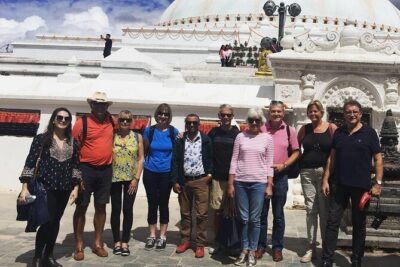
Full Day 7 UNESCO Tour with Lunch – Private/Group
Read our review →
Full Day Top 4 UNESCO Tour with Lunch – Private/Group
Read our review →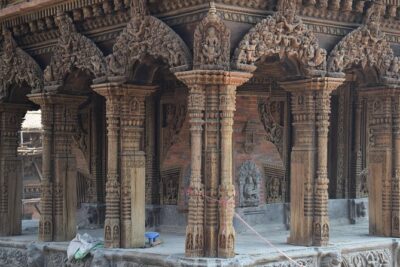
Full-Day 7 UNESCO Tour with Lunch – Private/Group
Read our review →
Kathmandu Private Sightseeing Tour | UNESCO World Heritage Sites
Read our review →Browse the lists this tour appears in