
Reviewed · KATHMANDU
Full Day Ticket Access around Kathmandu Valley
Kathmandu’s major sacred sites are spread across the valley, and this seven-hour private tour links four of the most important in one day. You move from the hilltop stupa of Swayambhunath to the Newar architecture of Patan, then on to Boudhanath and Pashupatinath, with an English-speaking cultural guide to explain what you are seeing.
I like the private transportation, which saves you from arranging several separate rides, and I like the cultural focus. Guide Manish is praised for his clear, passionate explanations of Nepalese religion and society. The $40 price is attractive, but you should add the stated $20 per-person monument fee before comparing the total cost with other tours.
In This Review
- Key points at a glance
- Four important Kathmandu sites in one practical route
- Swayambhunath, the hilltop Monkey Temple
- Patan Durbar Square and Newar craftsmanship
- Boudhanath and the rhythm of the kora
- Pashupatinath beside the Bagmati River
- What the $40 price really includes
- Timing, comfort, and the pace of the day
- Who will get the most from this experience
- Booking, cancellation, and the final decision
- FAQ
- What sites are included in the tour?
- How long does the experience last?
- Is transportation included?
- Is a guide included?
- Are monument entrance fees included in the $40 price?
- What happens if bad weather cancels the tour?
Key points at a glance
- Four major sites in one day: See Swayambhunath, Patan Durbar Square, Boudhanath, and Pashupatinath.
- A guide-led cultural experience: Expect explanations of Nepalese traditions, Buddhist practice, Hindu worship, and local life.
- Private transport included: Pickup is offered, with a listed 9:30 am start.
- About seven hours: Each stop receives between one and two hours, with the longest visits at the three main heritage sites.
- Budget $60 per person: The $40 tour price does not include the stated $20 monument entrance charge.
- Good for first-time visitors: The route gives you a useful introduction to Kathmandu Valley’s religious and architectural landmarks.
Four important Kathmandu sites in one practical route
This tour is built for you if you want a broad first look at Kathmandu without spending several days working out local transport. It covers Buddhist and Hindu places of worship, a former royal square, and a Newar cultural center.
The route also gives the day a useful rhythm. You begin on a hill, move through an old city square, visit one of the world’s largest spherical stupas, and finish beside the Bagmati River at one of Nepal’s most sacred Hindu temples.
The experience is not simply a ride between monuments. Its value depends heavily on the guide. The company describes the guide as a cultural specialist, and Manish is specifically praised for explaining Nepal’s religions and customs with energy. If you enjoy asking questions and want more than quick photographs, that human element matters.
The tour begins at 9:30 am and lasts about seven hours. That is enough time for a solid introduction, but not enough for a slow, unhurried study of every shrine, courtyard, or museum. You should think of it as a focused overview rather than a complete study of Kathmandu Valley.
A few more Kathmandu tours worth comparing
- Kathmandu: Full Day 7 UNESCO Tour with Lunch – Private/Group
★ 5.0 · 415 reviews - Kathmandu: Full Day Top 4 UNESCO Tour with Lunch – Private/Group
★ 5.0 · 269 reviews - Kathmandu: Full-Day 7 UNESCO Tour with Lunch – Private/Group
★ 4.9 · 247 reviews
Swayambhunath, the hilltop Monkey Temple
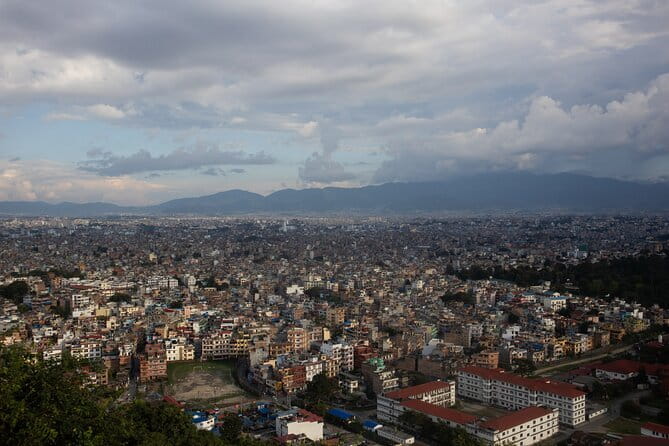
Your first stop is Swoyambhu Mahachaitya, better known as Swayambhunath or the Monkey Temple. The stupa sits on a forested hill and is described as more than 3,000 years old. It is one of the most important Buddhist sites connected with Nepali Buddhism.
The setting is part of the appeal. From the hill, you get a broad view over Kathmandu, while the trees and religious structures create a calmer setting than the city streets below. The name Monkey Temple comes from the monkeys associated with the site, though the religious importance is much greater than the nickname suggests.
You have two hours here, which is a generous portion of the schedule. That gives your guide time to explain the stupa, the role of Buddhism in Nepal, and the way worship takes place around the site. You can also pause to take in the hilltop setting instead of treating the stop as a rushed photo break.
Pay attention to the difference between seeing a stupa as an architectural object and understanding how it is used. The tour’s cultural focus should help you read the place as an active religious center, not only as an old monument.
The practical drawback is that a hilltop site can require more physical effort than a flat city square. The provided information does not specify the exact walking route, stair count, or facilities, so you should be ready for some uphill access and time on foot. Service animals are allowed, and the activity states that most people can participate.
Patan Durbar Square and Newar craftsmanship
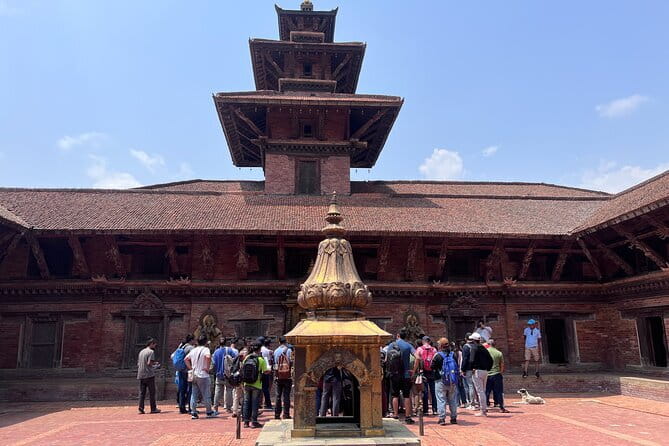
After Swayambhunath, the tour crosses the Bagmati River into Patan, the ancient Newar kingdom. Patan Durbar Square is a UNESCO World Heritage Site and is especially known for its metal-casting and wood-carving traditions.
This is the stop for architecture and craft. Within one compact plaza, you can see layers of royal and religious design in a setting shaped by Newar artisans. The square helps explain why Kathmandu Valley is not simply a collection of temples. It is also a place where local guilds, religious communities, and royal courts shaped one another over many centuries.
Two hours here gives you time to look closely. Your guide can point out details you might otherwise miss, such as carved woodwork, metal images, and the relationship between the square’s buildings and religious practice. This is where a cultural guide adds real value, since the visual details can be easy to overlook when you do not know what they represent.
Patan also offers a useful contrast with Swayambhunath. The first stop is a hilltop Buddhist center. Patan is an urban historic district where art, royal power, and daily religious life meet in a tighter space.
The square may be the busiest portion of the day simply because it contains so much to see in a small area, though the supplied details do not promise crowd levels. The tour also does not state whether museum entry is covered. Since the booking information lists a $20 monument fee paid by the guest, confirm how that charge applies to your visits before departure.
Boudhanath and the rhythm of the kora
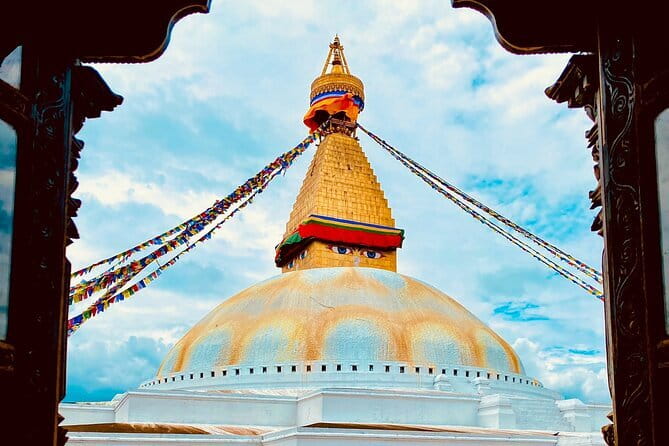
The third stop is Boudhanath Stupa, described as one of the world’s largest spherical stupas and the spiritual center of Kathmandu’s Tibetan community. The two-hour visit gives you time to walk around the stupa and take part in the traditional kora, or circumambulation.
This stop feels different from Patan. At Boudhanath, the main experience is not only looking at a monument. It is watching the movement of worship around it. You may see crimson-robed monks, smell juniper incense from rooftop monasteries, and observe people making their way around the stupa in a devotional circuit.
A guide can help you understand the customs without turning them into a display for outsiders. Follow the direction of the kora and keep a respectful distance from people at prayer. This is a working religious center, so your behavior matters more than getting the perfect picture.
Two hours is useful here because Boudhanath rewards a slower pace. You can walk the circuit, listen to your guide, and notice how monasteries and religious activity shape the area around the stupa. If you try to hurry through, you will lose much of what makes the visit distinct.
The tour description mentions an English in-person guide and English audio. That suggests the company can provide explanations in English, but it does not spell out whether audio equipment is used throughout the day or only in certain places. Ask at booking if that detail matters to you.
A completely different sort of day in Kathmandu:
- Everest Base Camp Trek – 14 Days
★ 5.0 · 1,499 reviews - Private Kathmandu Sightseeing Tour | UNESCO World Heritage sites
★ 5.0 · 756 reviews - Everest Base Camp Helicopter Tour landing at Everest View Hotel
★ 5.0 · 668 reviews - Half day cooking class in Thamel kathmandu
★ 5.0 · 607 reviews
Pashupatinath beside the Bagmati River
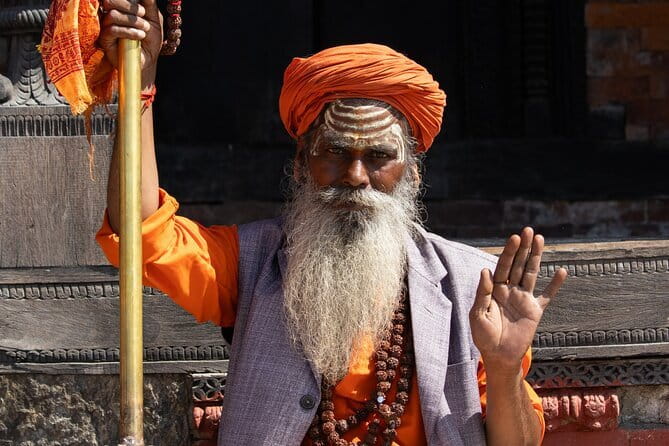
The final stop is Pashupatinath Temple, an ancient sacred site on the bank of the Bagmati River. You have one hour here, less than at the other three locations, so expect a concentrated visit.
Pashupatinath is important for understanding Hindu practice in Nepal, especially ideas about the separation of the body and soul and the passage between life and death. The site presents a different religious world from Swayambhunath and Boudhanath, and that contrast is one of the tour’s strengths.
Your guide’s role is especially important here. Religious customs connected with death and cremation can be unfamiliar or sensitive. Clear explanations help you understand what you are seeing while keeping the visit respectful. Listen carefully, avoid treating personal ceremonies as entertainment, and follow any instructions given at the site.
The one-hour schedule is enough for an introduction, but you should not expect to explore every part of the temple complex. Pashupatinath is a place where the meaning of the site matters as much as its buildings, and a short visit can feel dense with information.
As with the other monuments, the cost information needs attention. The individual stops are shown with admission ticket free in the schedule, but the booking details separately state that monument entry fees are paid by the guest and total $20 per person. Treat the $20 as an additional required budget item unless the operator confirms otherwise.
What the $40 price really includes
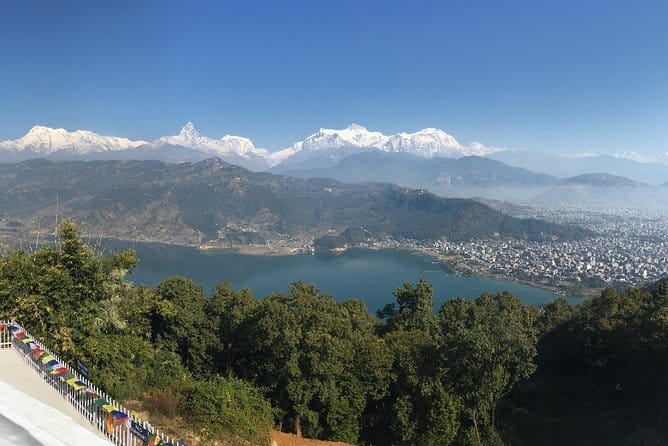
The advertised price is $40 per person. For that amount, you receive private transportation and a highly experienced cultural guide, with English listed for both in-person and audio support.
The price looks strong if you value convenience. Four major sites in Kathmandu Valley would require several journeys if arranged independently, and private transport gives you a more direct way to cover them in one day. Pickup is offered, which can make the morning easier, though the exact pickup area is not stated.
Once the additional $20 monument fee is included, the expected total becomes $60 per person. That is still a reasonable figure for a full day with transport and a dedicated guide, but it is not a $40 all-in sightseeing day. Check the final payment details so the extra charge does not catch you by surprise.
The company describes the experience as the cheapest day sightseeing option, but price claims are difficult to compare without details about group size, vehicle type, and what other operators include. I would judge the value by the guide and transport rather than the headline price alone.
The strongest evidence in the supplied information is the praise for Manish. He is described as having a great grasp of Nepalese country and religions, with an exciting and passionate manner. That is exactly the sort of guide you want on a day that crosses Buddhist, Hindu, royal, and Newar cultural ground.
Timing, comfort, and the pace of the day
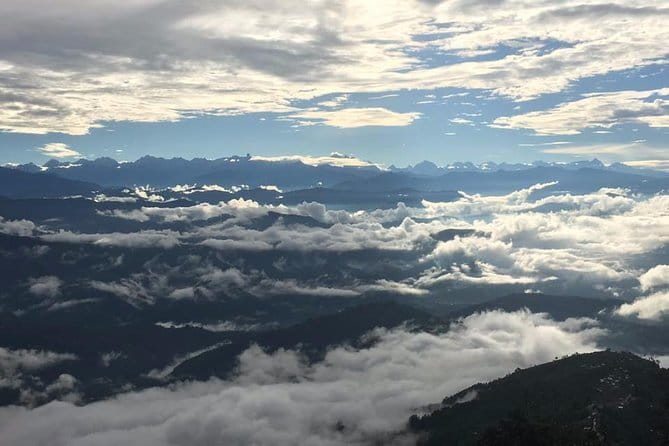
The listed start time is 9:30 am, and the total duration is about seven hours. The scheduled visits add up to seven hours: two hours at Swayambhunath, two at Patan, two at Boudhanath, and one at Pashupatinath.
That makes the schedule easy to understand. You receive equal time at the first three major stops, then a shorter final visit. Private transport should help connect the sites, but the information does not provide travel times or traffic allowances. Kathmandu traffic can affect any fixed schedule, so keep your plans after the tour flexible.
You will be walking at religious sites and historic squares. Wear practical shoes and clothing suitable for visiting temples, though the supplied details do not provide a formal dress code. Bring water and allow yourself enough time to move at the pace of the group or guide.
The experience says most people can participate and that service animals are allowed. It is near public transportation, although the tour itself includes private transport. No specific information is provided about wheelchair access, stairs, vehicle size, or restroom arrangements, so ask the operator if any of those details are important for you.
The tour requires good weather. If poor weather cancels the activity, you are offered another date or a full refund. That policy is useful for a day built around outdoor courtyards, hilltop views, and walking between religious sites.
Who will get the most from this experience
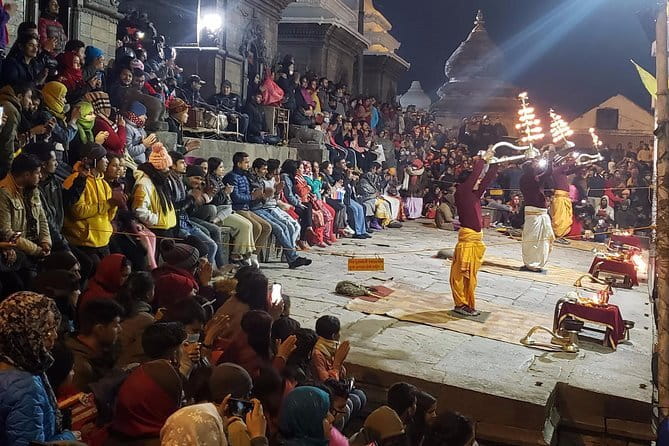
I would choose this tour for a first visit to Kathmandu when you want the main cultural landmarks covered in one organized day. It suits you if you prefer explanations from a guide rather than simply arriving at monuments with a driver.
It is also a good fit if you want to compare Nepal’s religious traditions. Swayambhunath and Boudhanath show two important Buddhist settings, while Pashupatinath introduces Hindu worship and customs. Patan adds the artistic and political story of the Newar kingdom.
You may prefer a slower, more specialized tour if you have several days in the valley and want long visits at each site. The seven-hour schedule is efficient, but the short stop at Pashupatinath and the fixed two-hour periods elsewhere leave limited room for spontaneous changes.
This is less suitable if your main aim is shopping, food, nightlife, or mountain scenery. The day is centered on sacred sites, art, architecture, and cultural explanation. It offers a broad introduction to Kathmandu, not a general city tour.
Booking, cancellation, and the final decision
Confirmation is provided when you book. Free cancellation is available up to 24 hours before the 9:30 am start for a full refund. Changes or cancellations made within 24 hours are not accepted or refunded.
I would book this tour if you want an efficient cultural orientation, value private transportation, and are comfortable budgeting $60 per person after the stated monument fee. The four-stop route gives you a clear sense of how varied Kathmandu Valley can be in a single day.
I would pause before booking if you need detailed accessibility information, dislike fixed schedules, or want every entrance cost included in the advertised price. Ask specifically about pickup, the $20 admission charge, and whether Manish will be your guide.
For a first day in Kathmandu, this is a sensible choice. The sites are important, the route is well balanced, and the guide’s role can turn a string of monuments into a meaningful introduction to Nepalese culture.
FAQ
What sites are included in the tour?
The tour visits Swayambhunath, also called the Monkey Temple, Patan Durbar Square, Boudhanath Stupa, and Pashupatinath Temple.
How long does the experience last?
The experience lasts about seven hours, beginning at 9:30 am.
Is transportation included?
Yes. Private transportation is included, and pickup is offered.
Is a guide included?
Yes. A highly experienced cultural guide is included. English is listed for in-person guiding and audio support. Guide Manish is specifically associated with the positive description provided for the experience.
Are monument entrance fees included in the $40 price?
No. The booking details state that guests pay a $20 per-person monument entrance fee separately. The individual stop descriptions also show admission ticket free, so confirm the exact application of this charge with the operator before booking.
What happens if bad weather cancels the tour?
If poor weather causes cancellation, you will be offered a different date or a full refund. You can also cancel at least 24 hours before the start time for a full refund.
Recently added around Kathmandu
- Kathmandu : Swambhunath & Durbar Square Guided Half Day Tour★ 3.3 · 3 reviews
- Private Day Tour in Kathmandu Valley Rim with Bhaktapur Sightseeing★ 5.0 · 3 reviews
- From Kathmandu / Pokhara / Chitwan: River Rafting – 1 Day★ 4.6 · 3 reviews
- Nepali Cooking training & Cultural Homestay Experience★ 5.0 · 3 reviews
- Private 3-Hour Nagarkot Sunset Tour from Kathmandu★ 3.5 · 3 reviews
- From Kathmandu: Everest Base Camp Landing Helicopter Tour★ 5.0 · 3 reviews
- 4 UNESSCO World heritage sites of Kathmandu-private tour★ 5.0 · 3 reviews
- From Kathmandu Budget: 15 Day Everest Base Camp Trek★ 5.0 · 3 reviews