
Reviewed · KATHMANDU
Island Peak Climbing | Summit 6,189m with Expert Guides
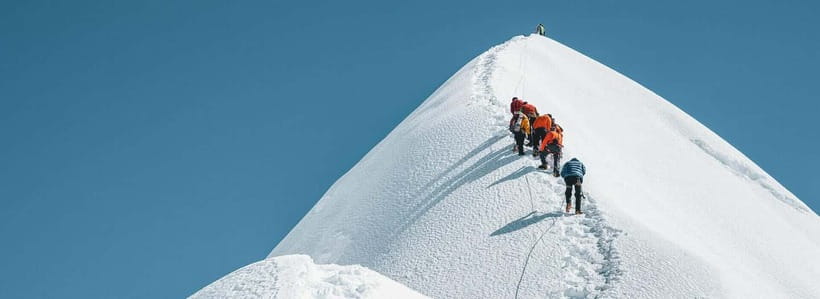
Island Peak is a serious Himalayan climb wrapped in a classic Everest-region trek. You walk past suspension bridges, Sherpa villages, Tengboche Monastery, and giant peaks before tackling a 6,189-meter summit with ropes, ice tools, and an experienced climbing guide.
I like the built-in acclimatization plan, which gives you time in Namche and Dingboche before the summit push. I also like the practical support: one porter for every two clients, three meals a day, group climbing gear, and a guide with at least 20 Island Peak summits. The main catch is cost clarity. At $1,699, you still need to add Lukla flights, the climbing permit, insurance, tips, and personal mountain expenses.
In This Review
- Key points before you book
- Why Island Peak is a smart first Himalayan climb
- Kathmandu to Phakding: a gentle start at 1,338 to 2,800 meters
- Namche Bazaar and the first real altitude test
- Tengboche and Dingboche: monastery views and thinner air
- Chhukung and Island Peak Base Camp
- Summit day at 6,189 meters
- The return through Namche and Lukla
- What the $1,699 price really covers
- Who should book this climb
- Practical details that can save trouble
- Should you book Island Peak with Accessible Adventure?
- FAQ
- How high is Island Peak?
- How long does the experience last?
- Are Kathmandu to Lukla flights included?
- Is the Island Peak climbing permit included?
- What accommodation is provided?
- Are meals included?
- Is climbing equipment provided?
- Is there a guide and porter?
- What happens if the summit attempt is delayed?
Key points before you book
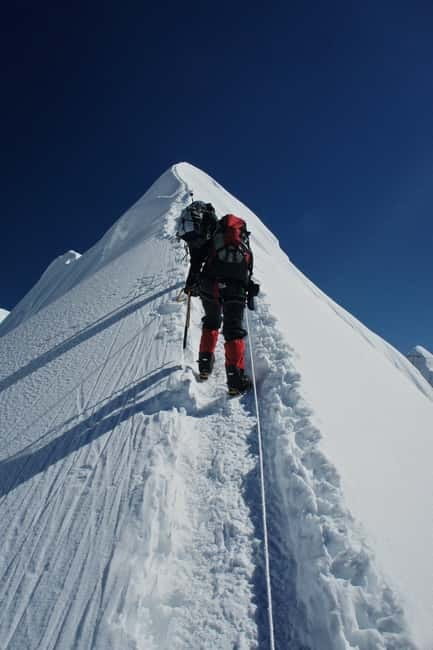
- The summit reaches 6,189 meters: This is not just a high-altitude walk. You need fitness, cold-weather gear, and comfort with basic climbing equipment.
- The route follows the Everest trail: Namche, Tengboche, Dingboche, and Chhukung bring famous mountain views and Sherpa culture before the climb.
- Training takes place at base camp: You receive glacier walking and pre-climb instruction before summit day.
- The package includes useful support: Meals, lodges, tents, a porter ratio of one for two clients, permits, group gear, and transfers are covered.
- The summit attempt has a spare day: Day 10 is held open for weather or acclimatization problems.
- Several major costs are extra: Lukla flights are listed at $440 round trip, and the Island Peak permit is listed as either $350 or $175, so confirm the current amount before paying.
Why Island Peak is a smart first Himalayan climb
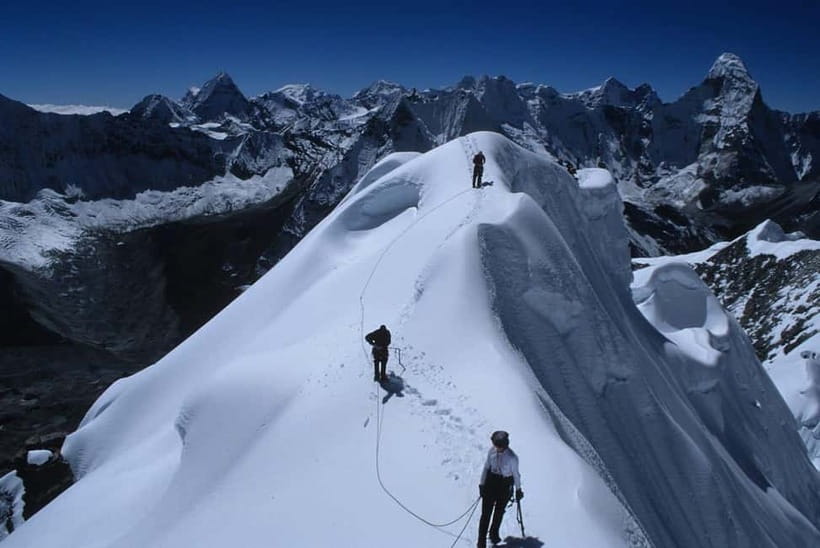
Island Peak, also called Imja Tse, gives you a proper introduction to Himalayan mountaineering without requiring a long expedition schedule. The route combines a well-known trekking corridor with a final climb that requires glacier training, rope work, and a summit day of eight to ten hours.
That combination is the appeal. You are not spending two weeks only on technical climbing. Most of the trip is a classic Everest-region trek, with time to adjust to altitude and settle into the walking rhythm.
You should still treat the summit as a serious goal, not a guaranteed finish. The highest point is 6,189 meters, and the itinerary includes nearly 1,000 meters of gain on summit day, followed by the descent to base camp. Weather, altitude, snow conditions, and your own health can all change the plan.
The climbing guide is required to have more than 20 Island Peak summits. The company also provides a government-licensed English-speaking trekking guide, porters, and a separate climbing guide for the ascent. One of the strongest details from the available feedback is the guide team’s technical background, including experience on demanding peaks such as Ama Dablam. That matters most when conditions become difficult and decisions need to be made quickly.
Other Kathmandu days people book alongside this one:
- Everest Base Camp Trek – 14 Days
★ 5.0 · 1,499 reviews - Private Kathmandu Sightseeing Tour | UNESCO World Heritage sites
★ 5.0 · 756 reviews - Everest Base Camp Helicopter Tour landing at Everest View Hotel
★ 5.0 · 668 reviews
Kathmandu to Phakding: a gentle start at 1,338 to 2,800 meters
Your first day is in Kathmandu, at 1,338 meters. Airport and hotel transfers are arranged in a private vehicle, and two nights in a deluxe Kathmandu Suite Home or a similar hotel are included.
This first stop gives you time to arrive, handle practical matters, and prepare your kit. You should use it to check your passport, cash, flashlight, climbing gear, and insurance documents. Nepal Tourist Visas can be obtained upon arrival at Tribhuwan International Airport.
On day two, you fly for about 35 minutes to Lukla and walk three to four hours to Phakding. The distance is about eight kilometers, with the route listed as a descent of roughly 300 meters. The short first walk is useful after a flight and lets you start at a manageable pace.
Lukla flights can be affected by weather. During the busiest periods, flights may operate from Ramechhap Airport rather than Kathmandu, so allow flexibility around transport to the airfield. This is one reason the contingency day later in the schedule is valuable, though it may not solve every flight delay.
Namche Bazaar and the first real altitude test
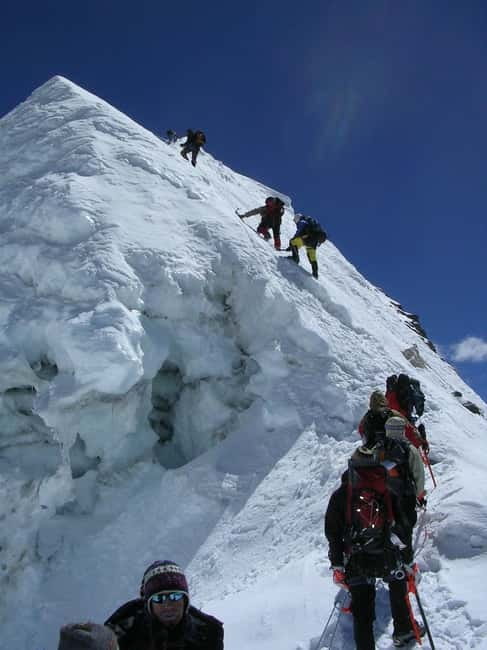
Day three brings a five to six-hour walk to Namche Bazaar, at 3,438 meters. You cover about 10 kilometers and gain around 600 meters. Suspension bridges add interest to the route, and the first mountain views include Thamserku and Everest.
Namche is more than a stopping point. It is the main trade and service center on this part of the route, and it gives you a useful break before the trail climbs higher. The program includes an acclimatization day here, with optional two to three-hour hikes and panoramic views toward Everest and Ama Dablam.
The details of that day are simple but important. You remain at 3,438 meters while taking a short walk of roughly three to five kilometers, with about 100 meters of ascent and descent. That is a sensible place to begin adjusting before the route moves above 4,000 meters.
You should not rush this stage. Headaches, poor sleep, and a reduced appetite can appear even when you are fit. The schedule gives you a chance to report problems early rather than discovering them near base camp.
Tengboche and Dingboche: monastery views and thinner air
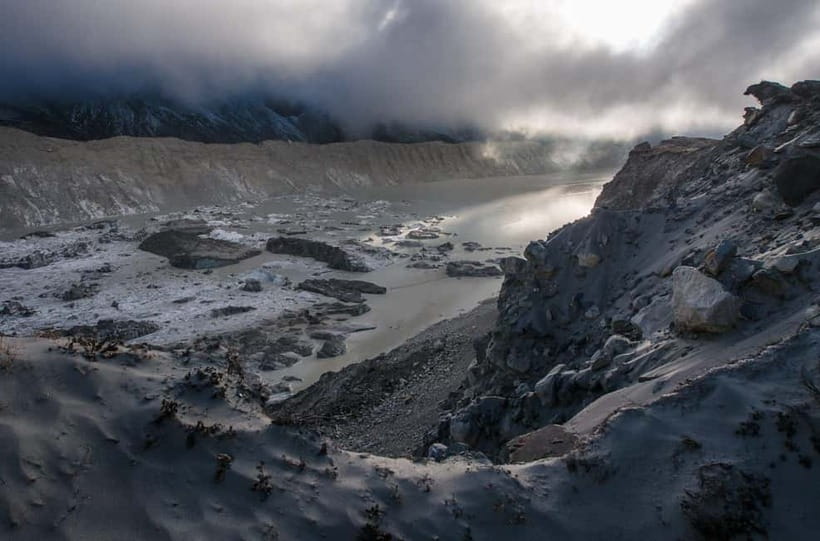
The walk to Tengboche takes five to six hours and gains about 430 meters, bringing you to 3,870 meters. The major cultural stop is Tengboche Monastery, with Everest, Lhotse, and Ama Dablam visible from the area.
This section is where the trip gains its strongest Sherpa character. You are passing through mountain villages rather than simply moving between camps. The monastery is a meaningful stop, but the wider value is the chance to see how communities along the Everest route support life, homes, lodges, and trade at high altitude.
The next day takes you to Dingboche, at 4,360 meters. The walk lasts five to six hours and covers about 10 kilometers, with an ascent of roughly 490 meters. The route passes through broad mountain valleys, with Lhotse and Ama Dablam dominating the views.
At Dingboche, the altitude becomes a central part of the experience. You may still feel strong on the trail, but the thinner air makes every uphill section slower. Your guide and porter support are especially useful here because carrying less allows you to save energy for the climb.
A completely different sort of day in Kathmandu:
- Half day cooking class in Thamel kathmandu
★ 5.0 · 607 reviews - Everest Base Camp Trekking
★ 5.0 · 485 reviews - Nagarkot Sunrise View and Day Hiking from Kathmandu
★ 5.0 · 471 reviews - Kathmandu: Full Day 7 UNESCO Tour with Lunch – Private/Group
★ 5.0 · 415 reviews
Chhukung and Island Peak Base Camp
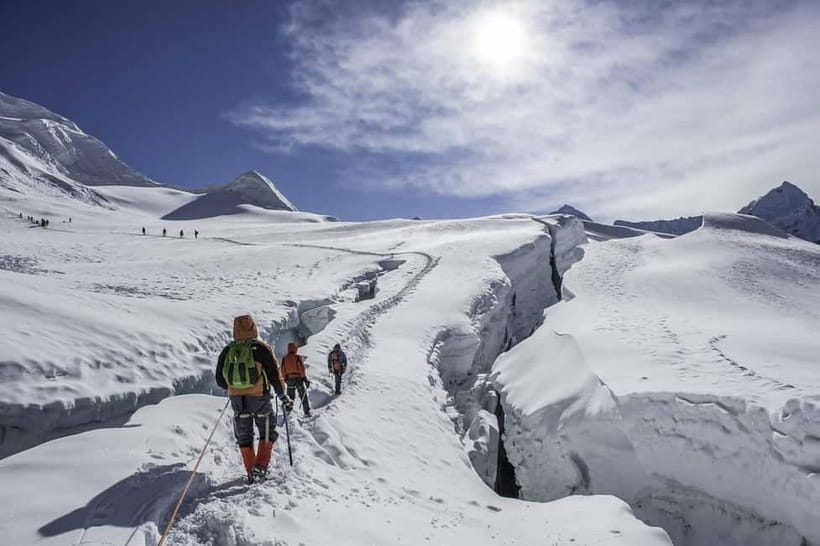
The route from Dingboche to Chhukung takes three to four hours and covers about six kilometers. At 4,730 meters, Chhukung is a high alpine settlement and the last major staging area before Island Peak Base Camp.
The walk is shorter than earlier days, but altitude changes the effort. You gain about 370 meters, and the views now focus on Lhotse and Island Peak. The peak becomes less of a distant shape and more of a practical objective.
Day eight continues to Island Peak Base Camp, at 5,200 meters. The walk takes three to four hours over about five kilometers, with another 470 meters of ascent. You can expect views of Island Peak and Lhotse, along with a clear shift from lodge-based trekking to tented mountain accommodation.
The pre-climb session is one of the most useful inclusions. You receive glacier walking training and preparation for the ascent before summit day. Group equipment includes ropes, ice screws, snow bars, ice hammers, tents, and kitchen equipment.
The supplied information does not specify the exact training syllabus or the personal gear you must rent or bring. Ask for that list before departure. You should know if you need your own harness, crampons, helmet, mountaineering boots, or clothing suitable for summit conditions.
Summit day at 6,189 meters
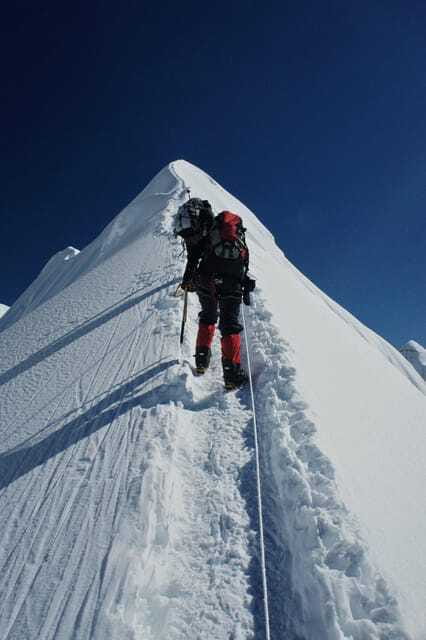
Summit day is planned as an eight to ten-hour effort, covering about 10 kilometers and gaining nearly 989 meters before returning to base camp. The listed mountain views include Island Peak, Everest, and Makalu.
The schedule is demanding because the climb begins at a high camp and the entire effort takes place in thin air. You need to follow the guide’s pace, drink as advised, and speak up early if you feel unwell. A strong trekking pace at 3,000 meters does not automatically predict success at 6,000 meters.
The technical level is also different from the earlier walk. This is where glacier instruction and group climbing equipment become important. The climbing guide’s experience, listed as at least 20 Island Peak summits, is a meaningful part of the price. The company also includes NMA service and royalty charges, the Sagarmatha Pollution Control Committee fee, and a $500 garbage deposit.
That garbage deposit is listed as included in the package, but you should confirm how it is handled and refunded, if applicable. The same applies to the climbing permit, since the price information gives two figures, $350 and $175. Get the current permit rate in writing.
The plan allows a contingency day after summit day. This can be used for a second summit attempt or to absorb delays caused by weather and route conditions. It is a good feature, but it is not a promise that a summit will be possible.
The return through Namche and Lukla
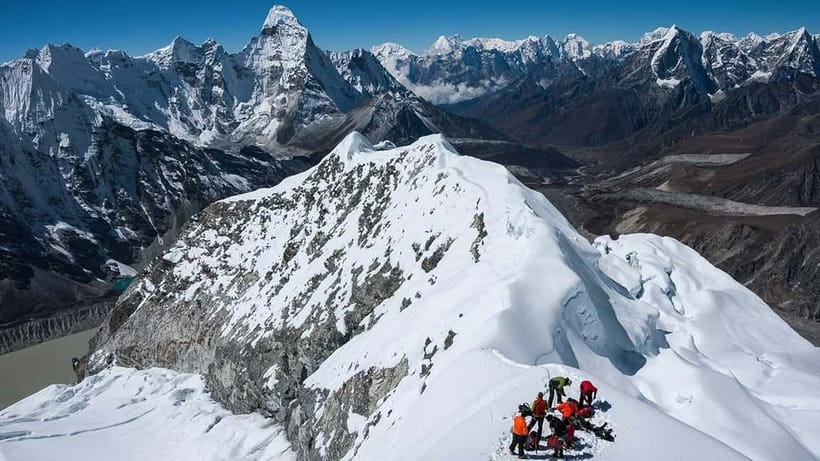
After the climb, the route turns back toward Namche Bazaar. The itinerary describes a five to six-hour descent from Chhukung to Namche, covering about 18 kilometers and dropping around 1,292 meters.
That is a long day after a summit attempt. The descent is easier on your lungs but can be tiring on knees and feet. Confirm the exact overnight point with the operator, since the published plan places the post-summit return in a way that may involve moving from base camp through Chhukung before continuing down.
The following day takes six to seven hours to Lukla, covering about 19 kilometers and descending to 2,800 meters. It is the final walking day, with views toward Ama Dablam and Everest.
The last night in the mountain region can feel both satisfying and abrupt. You have moved from high camp and ice equipment back toward villages and an airstrip in a short time. Keep a little flexibility in your schedule because Lukla flights depend on weather and operating conditions.
On day 13, you fly for about 35 minutes back to Kathmandu. Day 14 is departure. Airport and hotel transfers are included according to the itinerary, but your international flights are not.
What the $1,699 price really covers
The base price is reasonable only if you compare it with the support included, not with the headline figure alone. You receive two Kathmandu hotel nights, local transfers, trekking lodges, tented accommodation, three meals a day during the trek, guides, porter services, national park and local municipality fees, SPCC fees, group climbing equipment, and 24-hour company support.
The porter arrangement is one porter for every two clients. Their food, accommodation, salary, equipment, and insurance are included. Solo clients should pay close attention here, since a porter supplement is listed for a single participant.
Important extra costs include:
- Round-trip Kathmandu to Lukla flights, listed at $440 per person
- Island Peak climbing permit, listed as $350 or $175
- Climbing guide insurance, listed at $100
- Travel insurance for you, which must cover high-altitude trekking and climbing
- Tips for guides, porters, and drivers
- Wi-Fi, charging, hot water, showers, drinks, laundry, and phone calls
- Personal climbing gear and other expenses not specifically included
You also receive a free duffle bag, sleeping bag, and down jacket according to the practical notes. Confirm the condition, size, and warmth rating of borrowed equipment before leaving Kathmandu.
For a private group, the price buys more than transport and meals. It buys organization in a setting where airport changes, weather, altitude, and gear problems can quickly become serious. The strong points reported about this operator include smooth organization, friendly and professional Sherpa and porter support, and help with local problems at Lukla airport.
One porter, Mijan, was singled out for giving extra assistance beyond his formal duties. You should still budget for tips rather than treating good service as part of the base fare.
Who should book this climb
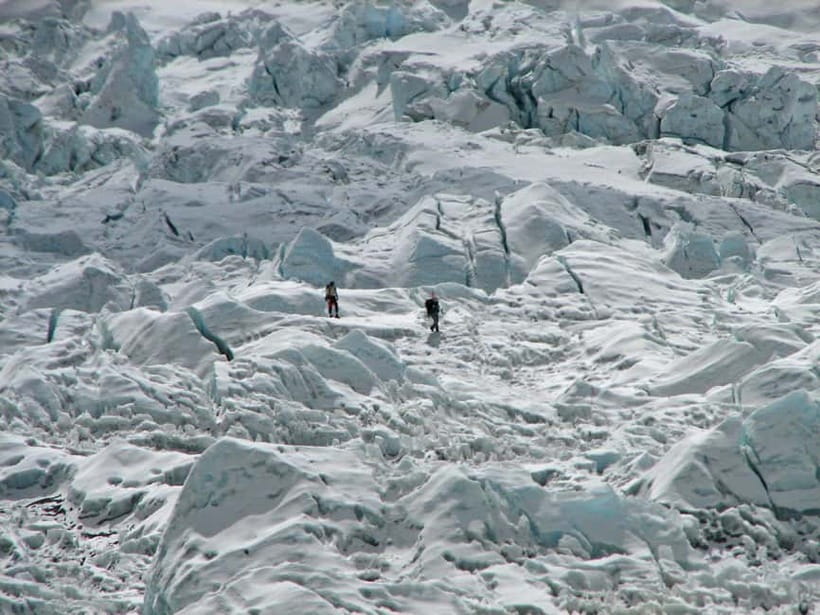
I would recommend this trip to a fit adult who wants a first serious Himalayan climbing experience and values a guided structure. You need to manage long walking days, steep altitude gain, cold conditions, and the possibility that the summit plan may change.
It is not suitable for children under 14, pregnant women, wheelchair users, or people over 95. Those limits are only a starting point. Your medical condition, previous altitude experience, and ability to walk for up to 10 hours matter more than a simple age cutoff.
The private-group format may suit you if you want direct support and a trip organized around your own group. It also means you should ask about group size, porter arrangements, and the exact personal gear list before booking.
This is not a casual Everest-viewing holiday. The Everest-region trek is accessible in sections, but Island Peak requires training and a higher tolerance for discomfort. If you want a scenic trek with no technical summit attempt, choose a simpler Everest route instead.
Practical details that can save trouble
Bring your passport, cash, flashlight, and personal climbing gear. Drones are not allowed.
Travel insurance must cover high-altitude trekking and climbing, not just standard medical care or trip cancellation. The company can assist with contacting your insurer for helicopter rescue, but you are responsible for having valid coverage and understanding how payment and evacuation claims work.
Expect extra charges for hot water, hot showers, cold drinks, alcohol, phone calls, Wi-Fi, and charging. Cash is important because mountain services may not accept cards consistently, and the package specifically advises bringing it.
The free cancellation period is up to 24 hours before the start time, and you can reserve now and pay later. Those terms help with planning, but they do not remove the need to arrange insurance, flights, permits, and appropriate equipment early.
Should you book Island Peak with Accessible Adventure?
Book it if you want the Everest region, Sherpa village life, a properly planned acclimatization schedule, and a supported attempt on a 6,189-meter peak. The package earns its value through guides, porters, meals, permits, group equipment, training, and a spare summit day.
Before paying, confirm the Island Peak permit amount, Lukla flight arrangements, personal gear requirements, solo porter cost, and the exact post-summit route. If those details are clear and you are ready for a demanding climb, this is a well-supported way to step beyond trekking and into Himalayan mountaineering.
FAQ
How high is Island Peak?
Island Peak reaches 6,189 meters, or 20,306 feet.
How long does the experience last?
The full program lasts 14 days, from arrival in Kathmandu through departure.
Are Kathmandu to Lukla flights included?
No. Round-trip flights are listed separately at $440 per person.
Is the Island Peak climbing permit included?
No. The permit is listed as an extra cost. The supplied price information gives both $350 and $175, so confirm the current amount with the operator.
What accommodation is provided?
You receive two nights in a deluxe Kathmandu Suite Home or a similar hotel. During the trek, you stay in the best available local lodges and in tents near Island Peak Base Camp.
Are meals included?
Breakfast, lunch, and dinner are included during the trek. Personal drinks, alcohol, hot water, hot showers, and cold drinks cost extra.
Is climbing equipment provided?
Group equipment is provided, including ropes, ice screws, snow bars, ice hammers, tents, and kitchen equipment. You must bring personal trekking and climbing gear, and you should confirm the exact required list before departure.
Is there a guide and porter?
Yes. A government-licensed English-speaking guide is included, along with a climbing guide for the ascent who has at least 20 Island Peak summits. One porter is provided for every two clients. Solo clients pay an additional porter charge.
What happens if the summit attempt is delayed?
Day 10 is reserved as a contingency day for a summit attempt or delays. Weather and mountain conditions can still prevent a successful climb.
Recently added around Kathmandu
- Kathmandu : Swambhunath & Durbar Square Guided Half Day Tour★ 3.3 · 3 reviews
- Private Day Tour in Kathmandu Valley Rim with Bhaktapur Sightseeing★ 5.0 · 3 reviews
- From Kathmandu / Pokhara / Chitwan: River Rafting – 1 Day★ 4.6 · 3 reviews
- Nepali Cooking training & Cultural Homestay Experience★ 5.0 · 3 reviews
- Private 3-Hour Nagarkot Sunset Tour from Kathmandu★ 3.5 · 3 reviews
- From Kathmandu: Everest Base Camp Landing Helicopter Tour★ 5.0 · 3 reviews
- 4 UNESSCO World heritage sites of Kathmandu-private tour★ 5.0 · 3 reviews
- From Kathmandu Budget: 15 Day Everest Base Camp Trek★ 5.0 · 3 reviews