
Reviewed · KATHMANDU
Jeep Trip to Upper Mustang
Upper Mustang is one of Nepal’s rare places where the road itself is part of the attraction. A private 4WD carries you through the Kali Gandaki valley, past whitewashed villages, old Buddhist monasteries, cliff caves, and the walled city of Lo Manthang. You get the region’s stark beauty and Tibetan culture without committing to a long trek.
I like the private vehicle and the way this trip combines major sights with practical support: airport transfers, domestic transport, permits, accommodation, meals, and an English-speaking guide are arranged. I also like the chance to see places such as Kagbeni, Marpha, Chhoser, and the ancient Shija Jhong caves in one carefully planned journey.
The main drawback is the road. Past Beni, much of the route is rough, dusty, and slow. The schedule also contains a small routing point to confirm before paying: one day describes a flight from Jomsom to Pokhara, while the following day lists another drive to Pokhara. Ask the operator to clarify the final transport plan.
In This Review
- Key points to know before booking
- Why Upper Mustang works so well by jeep
- Kathmandu begins with temples and preparation
- Kathmandu to Pokhara brings a greener Nepal
- Beni and the Kali Gandaki River mark the change
- Marpha adds orchards and village life
- Kagbeni is the gateway to restricted Mustang
- Lo Manthang rewards the long road
- Chhoser brings caves and archaeology
- The return to Jomsom completes the circuit
- Pokhara offers a softer landing
- The final Kathmandu day is for shopping
- What the $2,200 price really covers
- Who should book this jeep trip
- Should you book it?
- FAQ
- How long does the Upper Mustang Jeep tour last?
- What is included in the tour price?
- How many meals are included?
- Is this a private tour?
- What places do you visit in Upper Mustang?
- Is transportation included?
- What is the cancellation policy?
Key points to know before booking
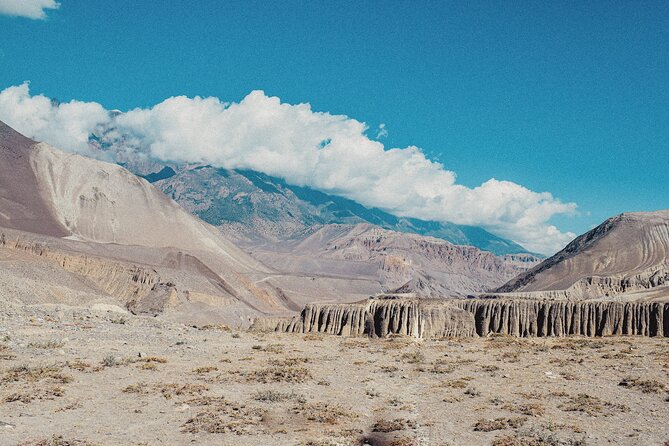
- Lo Manthang is the cultural center: Explore the former walled capital, narrow lanes, traditional buildings, and old monasteries.
- The Kali Gandaki route is rugged: The road beyond Beni becomes off-road, so expect jolts, dust, and long stretches in the jeep.
- The $500 restricted-area permit is included: This is a major part of the tour’s value and helps explain the high price.
- Chhoser adds something unusual: Sky caves and the 3,000-year-old Shija Jhong cave bring archaeology and mystery to the trip.
- It is a private tour: Only your own group participates, with group discounts available.
- Meals and permits reduce planning work: Thirteen breakfasts, ten lunches, ten dinners, the Annapurna permit, and TIMS are included.
Why Upper Mustang works so well by jeep
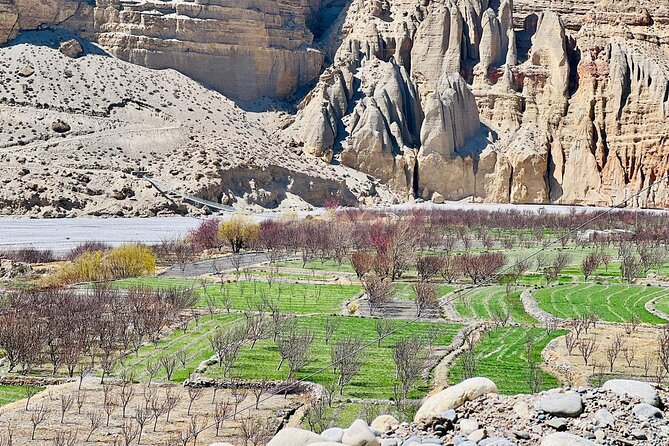
Upper Mustang feels far removed from the greener, busier parts of Nepal. You travel into a high, dry region shaped by wind, cliffs, bare hills, and old Tibetan Buddhist traditions. A jeep makes this possible for people who want access to remote villages and monasteries but do not want to carry a pack or spend two weeks walking.
The vehicle also gives you flexibility for stops. You can pause beside the Kali Gandaki River, take photographs of stupas and rock formations, and visit villages that would be difficult to reach on foot in the same amount of time. Still, comfort is relative. This is not a smooth sightseeing drive. The 4WD, described as a Land Cruiser or Mahindra Scorpio, is useful because the road can be rough, but the ride may still be tiring.
The tour lasts about 14 days and is designed for a private group. That matters in a place where daily conditions, road delays, and weather can affect the pace. You are not tied to the needs of a large coach group, though your exact flexibility depends on the driver and guide.
Other Kathmandu days people book alongside this one:
- Everest Base Camp Trek – 14 Days
★ 5.0 · 1,499 reviews - Private Kathmandu Sightseeing Tour | UNESCO World Heritage sites
★ 5.0 · 756 reviews - Everest Base Camp Helicopter Tour landing at Everest View Hotel
★ 5.0 · 668 reviews
Kathmandu begins with temples and preparation
Your first day starts with an airport pickup and transfer to your hotel in Kathmandu. The plan includes a private vehicle and a meeting about the journey in the evening. This gives you a chance to ask about permits, road conditions, luggage, and the days at altitude before heading west.
The second day covers several important religious and historic sites. Swayambhunath, often called the Monkey Temple, gives you a broad introduction to Kathmandu’s Buddhist and Hindu traditions. Patan Durbar Square adds carved courtyards and traditional Newari architecture, while Pashupatinath Temple and Boudhanath Stupa show two very different sides of the valley’s spiritual life.
Admission tickets for the Kathmandu sightseeing stops are not included, so carry some local currency for those costs. The day is also fairly full, with several hours of touring and transfers. I would treat it as both sightseeing and orientation rather than a slow morning before the mountains.
Kathmandu to Pokhara brings a greener Nepal
On day three, you drive from Kathmandu to Pokhara, a journey listed at roughly six hours. The route gives you a useful contrast with Upper Mustang: greener hills, rivers, farms, villages, and more settled countryside appear along the way.
Pokhara is the staging point for the mountain section. You stay overnight around Lakeside, which gives you a chance to rest before the road becomes more demanding. Lunch and dinner in Pokhara are not generally included, so budget for those meals separately.
The drive can take longer than the stated time if traffic or road conditions slow things down. Since this is a road-based holiday, it is wise to think of the listed durations as estimates, not promises.
Beni and the Kali Gandaki River mark the change
The fourth day takes you west toward Beni on paved road before following the Kali Gandaki River on an off-road section. This is where the character of the journey changes. The road is rougher, the valleys feel more remote, and the vehicle becomes more than simple transport.
The Kali Gandaki corridor is one of the trip’s strongest natural features. You pass between high mountains and dry slopes, with villages and river crossings breaking up the drive. The views can include the Annapurna and Dhaulagiri ranges, though cloud and weather will decide how much you actually see.
Pack a small day bag inside the jeep. Keep water, sun protection, snacks, medication, and a warm layer within reach. The tour supplies a first-aid kit, but personal medication and basic comfort items remain your responsibility.
A completely different sort of day in Kathmandu:
- Half day cooking class in Thamel kathmandu
★ 5.0 · 607 reviews - Everest Base Camp Trekking
★ 5.0 · 485 reviews - Nagarkot Sunrise View and Day Hiking from Kathmandu
★ 5.0 · 471 reviews - Kathmandu: Full Day 7 UNESCO Tour with Lunch – Private/Group
★ 5.0 · 415 reviews
Marpha adds orchards and village life
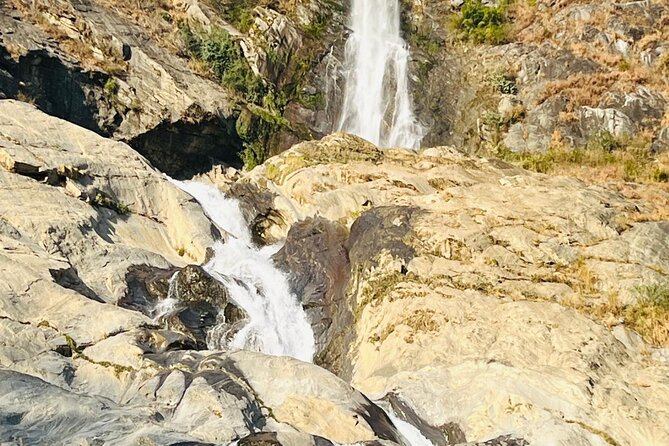
The route continues through Kalopani and Ghasa before reaching Marpha. This village is known for apple farming, and it offers a welcome change from the harsher cliffs and exposed road. You also have time around Jomsom’s local market, then continue toward Kagbeni.
Marpha is a good example of why this trip is more than a long transfer to Lo Manthang. You see working villages, farms, local markets, and Buddhist sites rather than only stopping at major viewpoints. The pace still involves several hours in the vehicle, but these short visits break up the journey.
The accommodation is described as comfortable hotels, lodges, or guesthouses depending on the stop. Along the route, guesthouses are simple but generally described as clean. Do not expect city-hotel service in Upper Mustang. The value comes from having a bed, meals, and a planned route in a remote area.
Kagbeni is the gateway to restricted Mustang
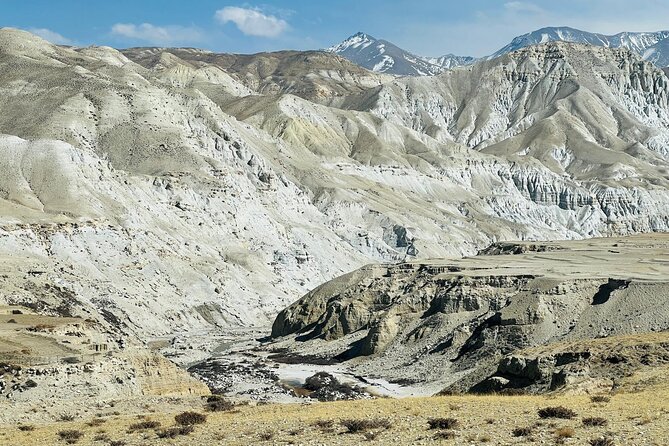
Kagbeni is one of the most important stops on the trip. You visit its monastery and Buddhist school before your guide checks the special Upper Mustang permit. After that, you officially continue into the restricted region.
The permit is included in the tour price and costs $500 on its own. That single fee changes the value calculation considerably. The tour is expensive at $2,200 per person, but much of the cost is tied to restricted-area access, private 4WD transport, domestic arrangements, lodging, food, staff, and permits.
Kagbeni also serves as a useful cultural transition. You are leaving the more familiar lower Mustang route and entering a region where Tibetan customs, monasteries, village design, and dry mountain scenery become the focus.
Lo Manthang rewards the long road
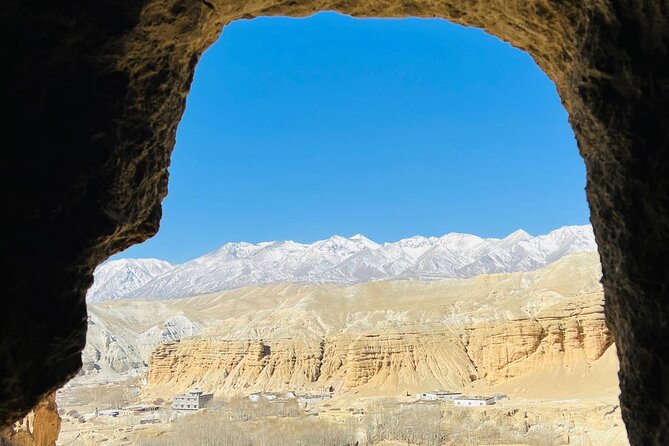
The approach to Lo Manthang is one of the central reasons to book this trip. You visit important monasteries including Lo Gekar Ghar Gompa, Charang Monastery, and Jampa Gompa, described as the oldest monastery on the route. Each stop adds a different piece to the area’s religious and architectural character.
Lo Manthang itself is a former capital and a walled city with narrow alleys and traditional buildings. The scale is intimate. You are not visiting a grand city with a long list of polished attractions. You are looking at a living settlement where the street plan, homes, courtyards, and monasteries help explain how people adapted to a remote Himalayan setting.
The jeep is especially useful here because it lets you reach Lo Manthang without turning the entire holiday into a walking expedition. You will still walk around the town and monastery sites, so comfortable shoes matter, but the vehicle handles the long distances between settlements.
Chhoser brings caves and archaeology
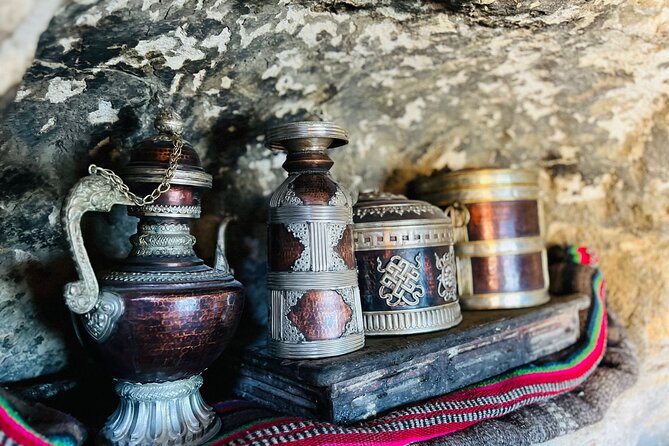
The next two days focus on the Mustang region around Namgyal Gompa, Chhoser, and its cave sites. The sky caves are among the most unusual sights on the route. They are cut into steep rock faces, and their origins and use have drawn archaeological attention.
The Shija Jhong cave is described as dating back more than 3,000 years. That does not mean every detail of its past will be explained during your visit, but it gives the stop real weight. You are seeing evidence of people who lived, stored goods, worshipped, or sought shelter in a place that still feels difficult to reach.
These days are important because they slow the trip down. Instead of driving into Lo Manthang, taking a quick look, and leaving, you get time to explore nearby sites. The two itinerary entries cover similar areas, so ask the operator what the separate days will include. A clear plan will help you know how much time is set aside for caves, monasteries, villages, and rest.
The return to Jomsom completes the circuit
Day ten takes you back toward Jomsom through villages, the Kali Gandaki River corridor, Buddhist stupas, and monasteries. The return drive gives you a second look at the region from a different direction, though it can also feel long after several days on rough roads.
Jomsom’s market is a useful final stop in Mustang. You can walk around in the evening and shift back toward the rhythm of a larger local center. The guesthouse stay here is part of the practical design of the route.
The next transport detail deserves confirmation. The itinerary says you fly early from Jomsom to Pokhara, then take a Pokhara sightseeing tour in the afternoon. The following day lists an eight-hour drive to Pokhara, which appears inconsistent because you have already returned there. Ask if day twelve is meant to be a drive from another stop, a backup plan, or a repeated transfer.
Pokhara offers a softer landing
Pokhara sightseeing is scheduled after the return from the Mustang region. The plan refers to highlights around the city, though it does not list every attraction. After the hard road days, this gives you a gentler afternoon and a chance to enjoy the city’s more relaxed setting.
The trip includes breakfast, lunch, and dinner on some of the Pokhara and mountain days, but meals in Kathmandu and Pokhara are not fully covered across the whole itinerary. Read the meal schedule closely and keep extra money for drinks, bottled or mineral water, and meals listed as your own responsibility.
Water is specifically not included during the mountain section. You can buy drinks along the way, but availability may vary. Carry a reusable bottle and ask the guide about boiled water or other safe options before leaving each morning.
The final Kathmandu day is for shopping
The thirteenth day leaves free time in Thamel for shopping. This is useful after a long route because you can buy souvenirs, walking gear, food, or small gifts without squeezing shopping into the first busy days.
Thamel is also a good place to keep the final day light. The journey has involved early starts, long drives, and changing road conditions. A quiet day gives you room to rest before the airport transfer.
The final day includes a private vehicle drop-off at Tribhuvan International Airport. Airport transfers are included as scheduled, but an extra night is not included if an early arrival, late departure, bad weather, or an early return changes your plans.
What the $2,200 price really covers
At $2,200 per person, this is not a low-cost Nepal road trip. It becomes more reasonable when you count the special permit, private 4WD, domestic airport transfers, Annapurna Conservation Area permit, TIMS card, accommodation, guide, taxes, and most meals.
Included food is listed as 13 breakfasts, 10 lunches, and 10 dinners. International and domestic airport transfers are also included, as are medical supplies through a first-aid kit. Kathmandu sightseeing uses a professional English-speaking guide.
You still pay separately for beverages, alcoholic drinks, mineral water, boiled water during the mountain portion, personal equipment, personal expenses, tips, and some meals in Kathmandu and Pokhara. If you want a private route through Upper Mustang with less planning work, the price can offer solid value. If you are comfortable arranging permits, vehicles, hotels, and meals yourself, you may find the package less attractive.
Who should book this jeep trip
I would recommend it to you if you want Upper Mustang’s monasteries, caves, villages, and scenery but do not want a trekking itinerary. It also suits private groups that value having their own vehicle and a planned support system.
It is a better fit for people who can tolerate rough roads and long drives. The tour is described as suitable for most participants, but the schedule is active and the terrain is remote. Anyone with health concerns should discuss the route and altitude with a medical professional before booking.
The operator, World Himalaya Treks & Expeditions, has received strong praise for clean guesthouses, friendly drivers, organized service, and support from staff including Thakur, Mr. Dhital, and Shailesh. Before departure, confirm who will guide your specific group, what vehicle will be used, and how the Jomsom to Pokhara return is arranged.
Cancellation terms are strict close to departure. You receive a full refund if you cancel at least six full days ahead, 50 percent if you cancel two to six days ahead, and no refund within two days. Poor weather or failure to meet the minimum group requirement may lead to a different date or a full refund.
Should you book it?
Book this tour if remote culture and scenery matter more than smooth roads. The combination of Lo Manthang, Chhoser’s caves, Kagbeni, Marpha, monasteries, and the Kali Gandaki route is hard to match in a short, vehicle-based holiday.
I would not book without first confirming the day eleven and day twelve transport details, meal schedule, vehicle model, and exact accommodation standards. Once those points are clear, this is a practical way to reach Upper Mustang with the permit work and most major logistics handled for you.
FAQ
How long does the Upper Mustang Jeep tour last?
The tour lasts approximately 14 days, beginning with airport pickup in Kathmandu and ending with an airport drop-off.
What is included in the tour price?
The price includes scheduled international and domestic airport transfers, Kathmandu sightseeing with an English-speaking guide, the $500 Upper Mustang restricted-area permit, Annapurna Conservation Area permit, TIMS card, taxes, a first-aid kit, accommodation, and the meals listed in the itinerary.
How many meals are included?
The tour includes 13 breakfasts, 10 lunches, and 10 dinners. Meals in Kathmandu and Pokhara are not fully included, and drinks and water are extra.
Is this a private tour?
Yes. Only your own group participates in the activity. Group discounts are offered.
What places do you visit in Upper Mustang?
The route includes Kagbeni, Lo Manthang, Charang, monasteries such as Namgyal Gompa and Jampa Gompa, Chhoser’s sky caves, and the Shija Jhong cave. It also passes through villages and sites along the Kali Gandaki River.
Is transportation included?
Yes. The trip includes private vehicle transfers and 4WD transport in the mountain region. The itinerary refers to a Land Cruiser or Mahindra Scorpio and includes domestic transport, but you should confirm the exact return arrangement from Jomsom to Pokhara.
What is the cancellation policy?
You receive a full refund when canceling at least six full days before the start time. Cancellations made two to six full days ahead receive a 50 percent refund, while cancellations within two days are not refunded. Poor weather or failure to meet the minimum number of participants may result in a different date or a full refund.
Recently added around Kathmandu
- Kathmandu : Swambhunath & Durbar Square Guided Half Day Tour★ 3.3 · 3 reviews
- Private Day Tour in Kathmandu Valley Rim with Bhaktapur Sightseeing★ 5.0 · 3 reviews
- From Kathmandu / Pokhara / Chitwan: River Rafting – 1 Day★ 4.6 · 3 reviews
- Nepali Cooking training & Cultural Homestay Experience★ 5.0 · 3 reviews
- Private 3-Hour Nagarkot Sunset Tour from Kathmandu★ 3.5 · 3 reviews
- From Kathmandu: Everest Base Camp Landing Helicopter Tour★ 5.0 · 3 reviews
- 4 UNESSCO World heritage sites of Kathmandu-private tour★ 5.0 · 3 reviews
- From Kathmandu Budget: 15 Day Everest Base Camp Trek★ 5.0 · 3 reviews