
Reviewed · KATHMANDU UNESCO HERITAGE TOURS
Kathmandu Bhaktapur Patan Authentic Local Tour +7 UNESCO WH Sites
Bhaktapur’s Juju Dhau, Patan’s hand-carved idols, and Kathmandu’s old market lanes give this tour its real appeal. You are not simply ticking off palace squares. You are invited into the working traditions of the Kathmandu Valley, with a native Newar guide such as Nirajan, who comes from Bhaktapur, explaining what you are seeing.
I like the careful mix of famous sights and smaller local stops, especially the pottery lesson and Juju Dhau session. I also like that private transport, entrance fees, and an experienced local leader are included. The drawback is the pace: three packed days cover a lot, and the advertised seven UNESCO sites need clarification because Changu Narayan is not named in the schedule.
In This Review
- Key points at a glance
- Why the local sessions matter more than another palace photo
- Day one: Bhaktapur beyond the Durbar Square entrance
- Siddha Pokhari and Pottery Square
- Bhaktapur Durbar Square and smaller shrines
- Dattatreya and Navadurga
- Day two: Patan’s courtyards, fountains, and Buddhist monasteries
- Pimbahal and the old water system
- Golden Temple and Kumbheshwor Temple
- Patan Durbar Square and the Golden Fountain
- Mahaboudha and Rudravarna Mahavihar
- Day three: Kathmandu markets, stupas, and sacred riverbanks
- Kathmandu Durbar Square and Swayambhunath
- Budhanilkantha and Boudhanath
- Pashupatinath and the optional evening
- What the $385 price includes, and what it does not
- The UNESCO claim needs one practical question
- Who will get the most from this three-day route
- Should you book it?
- FAQ
- How long is the Kathmandu, Bhaktapur, and Patan tour?
- Is this a private tour?
- Is transportation included?
- Are entrance fees included?
- Are meals included?
- Is accommodation included?
- Can I cancel for a full refund?
- Does the tour include an evening in Thamel or Jhamsikhel?
Key points at a glance
- Juju Dhau in Bhaktapur: Watch the famous sweet yogurt being prepared, then try local Newari dishes.
- Working craft traditions: See pottery in Pottery Square, woodwork in Patan, and religious idol carving.
- Three historic cities: Bhaktapur, Patan, and Kathmandu each reveal a different side of the valley.
- Private touring: Your group travels by air-conditioned vehicle with a local guide and included entrance fees.
- Seven UNESCO sites advertised: The schedule includes the main heritage zones, but ask the operator to confirm the exact seven.
- Flexible final evening: Thamel and Jhamsikhel nightlife can be added after the main sightseeing, though food and drinks cost extra.
Why the local sessions matter more than another palace photo
The Kathmandu Valley is full of temples, shrines, courtyards, and palace windows. After a day or two, even a beautiful pagoda can begin to blur into the next one.
This tour tries to prevent that by showing you how local traditions are still made and practiced. In Bhaktapur, you watch a live Juju Dhau preparation session. In Pottery Square, you see the place where pottery remains part of daily work. In Patan, you look for traditional woodwork and religious idol hand-carving.
That difference matters. A guide can tell you that a shrine is centuries old, but watching a craftsperson shape an object gives the old city a present tense. You see that Bhaktapur and Patan are not museum sets. They are living towns under pressure from traffic, construction, and modern life.
The tour is private, so your group alone participates. That should make it easier to ask questions, pause at a shrine, or spend more time at a workshop than you could on a large coach outing. The start time is 9:15 a.m., and each day is built around walking, short drives, and frequent stops.
More of the valley’s UNESCO heritage sites:
- Private Kathmandu Sightseeing Tour | UNESCO World Heritage sites
★ 5.0 · 756 reviews - Kathmandu: Full Day 7 UNESCO Tour with Lunch – Private/Group
★ 5.0 · 415 reviews - Kathmandu: Full Day Top 4 UNESCO Tour with Lunch – Private/Group
★ 5.0 · 269 reviews
Day one: Bhaktapur beyond the Durbar Square entrance
Bhaktapur gets the first full day, and that is a sound choice. The old city has enough courtyards, temples, lanes, and craft activity to fill a day without rushing through it.
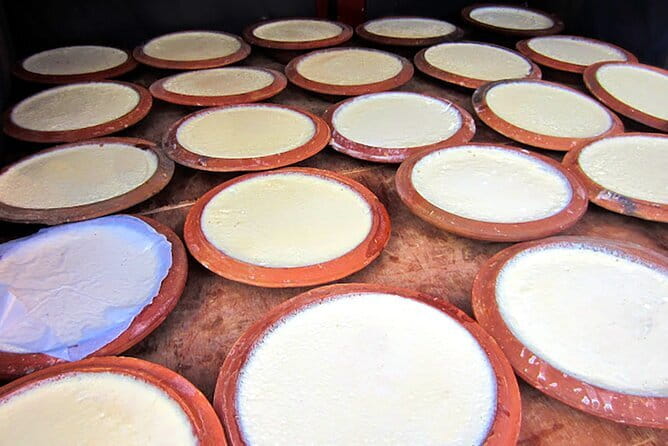
The Juju Dhau session comes first and lasts about two hours. Juju Dhau is the famous local yogurt of Bhaktapur, and the demonstration gives you a food connection before the monuments begin. Food tasting later is optional, and the guide can advise you on traditional Newari dishes.
This is one of the strongest parts of the program. You are not only told what to eat. You see part of the preparation and then have a chance to connect the dish with the town that made it famous.
Siddha Pokhari and Pottery Square
Siddha Pokhari, a historic pond near the entrance to Bhaktapur Durbar Square, provides a quieter opening. You spend about 30 minutes there before heading toward Pottery Square.
Pottery Square is a practical, hands-on stop. The visit lasts about an hour, and the schedule includes a pottery lesson or demonstration. Expect a working public square rather than a polished craft showroom. That means the setting may feel more genuine, but it may also be less tidy and less predictable than a formal museum.
From here, the route passes Barahi Agam Ghar before reaching Bhaktapur Durbar Square. This short walk helps you see how the old city connects its shrines and courtyards instead of treating each monument as an isolated stop.
Bhaktapur Durbar Square and smaller shrines
Bhaktapur Durbar Square is the major architectural stop of the day. The former palace area became a UNESCO World Heritage site in 1979, and the visit lasts about an hour.
I would pay attention to the scale of the square, the palace buildings, and the carved details rather than trying to memorize every date. The guide’s local perspective should help explain how the square fits into Bhaktapur’s wider Newar culture.
The route then moves to Chandeshwori Temple in Tibukchhen Tole. This three-story pagoda shrine is smaller than the main square, but that is part of its value. You get a look at neighborhood religious life instead of only seeing major monuments built for kings.
Afterward, you have the option of tasting local food in the community. Since meals are not included, this is also where your spending can rise above the tour price. Ask your guide for the best way to sample Newari food without ordering more than you want.
More of Bhaktapur:
- Private Bhaktapur and Nagarkot Day Tour From Kathmandu
★ 5.0 · 305 reviews - Day Trip to Bhaktapur and Panauti from Kathmandu
★ 5.0 · 184 reviews - Bhaktapur & Patan Durbar Square Day Tours
★ 5.0 · 122 reviews - Nagarkot Sunrise & Bhaktapur UNESCO Heritage Private Tour
★ 5.0 · 66 reviews
Dattatreya and Navadurga
Dattatreya Temple dates to the 14th century, according to the tour information, and is reached via Khacha Pokhari after a monastery visit. The stop lasts about 30 minutes.
The final visit is to a Navadurga temple on the edge of the Bhaktapur area. These temples are associated with protecting the city, and the route through them follows a particular order during religious observances.
This final stretch is useful for understanding that Bhaktapur is more than its postcard square. It also adds a possible challenge: the day contains many religious sites, so comfortable walking shoes and a willingness to move at a steady pace will help.
Day two: Patan’s courtyards, fountains, and Buddhist monasteries
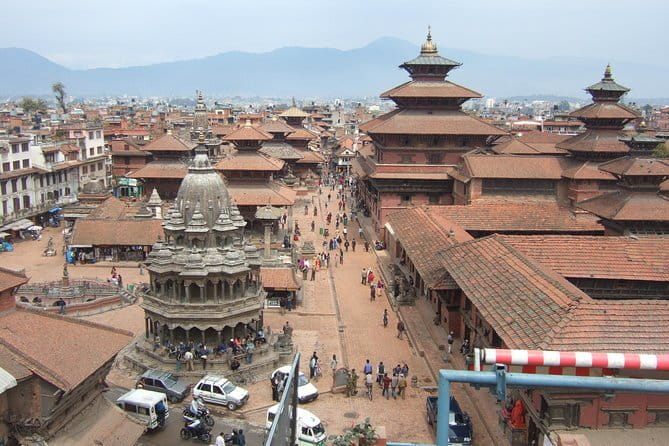
Patan, also called Lalitpur, gets an even fuller day, with ten listed stops. Patan was an important Newar city and served as the Malla dynasty capital from the 14th century until 1768.
The route begins at Patan Dhoka, the old gateway to the city. From there, you walk through areas where Buddhist courtyards, Hindu temples, water fountains, and artisan workshops sit close together.
Pimbahal and the old water system
Pimbahal Stupa is about 650 meters from Patan Durbar Square. The stop includes the stupa and Jagamadu Pond, and takes about an hour.
This is a useful early stop because it shifts your attention away from royal buildings. You see a Buddhist site tied to pilgrimage and a historic pond that helped shape local settlement.
Next comes Nagbahal Hiti, also known as Elhānani Hiti. It is described as an ancient drinking fountain dating to the 8th century and remains connected with cultural events.
Old stone water spouts are easy to overlook when you are focused on temple roofs. I would not skip this stop. It helps explain the practical systems that made dense historic towns possible.
Golden Temple and Kumbheshwor Temple
The Golden Temple, or Hiranya Varna Mahavihar, is a Newar Buddhist monastery built in 1409. The name does not mean that the entire building is made of gold. It is a nickname tied to the appearance and tradition of the monastery.
You have about an hour here. The courtyard setting and detailed decoration reward a slower visit, though the area can feel compact when several groups arrive at once.
Kumbheshwor Temple follows, with about 30 minutes on site. Its documented history reaches back to the late 14th century. This is another example of the tour’s useful contrast: Patan’s Buddhist monasteries and Hindu temples are close neighbors, and your route lets you compare their forms and functions.
Patan Durbar Square and the Golden Fountain
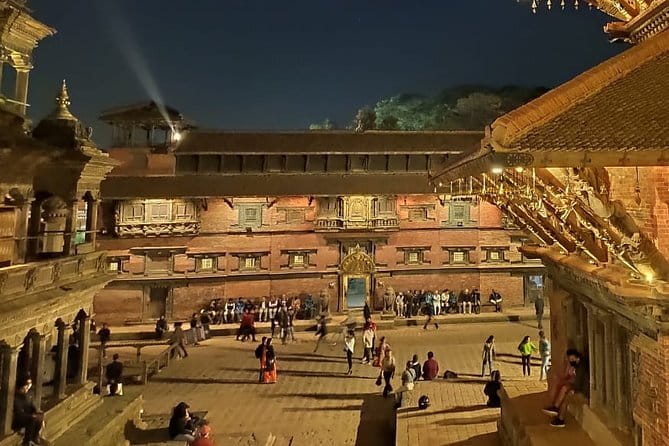
Patan Durbar Square is the day’s central landmark. The former royal palace is surrounded by a dense collection of temples, and you have about an hour to explore.
The square is visually crowded, so a guide is especially helpful here. You will want to look at the carved windows, metalwork, shrines, and palace courtyards rather than simply take a quick photograph and move on.
The route then reaches an ancient Golden Fountain, a site studied by Nepalese art expert Gautama Vajracharya. The visit is scheduled for about an hour, which suggests a closer look than a brief roadside stop.
Mahaboudha and Rudravarna Mahavihar
Mahaboudha Temple was built in the 14th century. Its clay-brick structure and terra-cotta decoration give it a different appearance from the valley’s more familiar pagoda temples.
Rudravarna Mahavihar, also called Oku Bahal, is a Newar Buddhist monastery with three courtyards. You have about 30 minutes there, enough to see the basic layout and details without turning the stop into a long lecture.
The final hour takes you through old Patan alleys and past woodwork made by Shilpakar families. This is where the tour’s craft focus becomes especially clear. You may see carved architectural details in their original setting rather than behind glass.
Patan’s long day is rewarding, but it is also the most demanding one on paper. Ten stops mean regular walking, repeated temple visits, and plenty of information. If you prefer a slow, unhurried day, ask if the route can be adjusted.
Day three: Kathmandu markets, stupas, and sacred riverbanks
The final day begins in Thamel and heads through Asan Tole, a major local shopping area, toward Newroad Gate and Kathmandu Durbar Square.
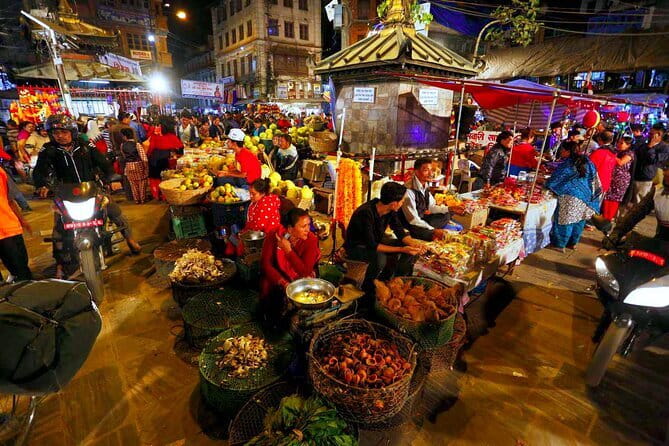
This is the most urban part of the tour. The narrow alleys and market streets offer a sharper look at everyday Kathmandu than a direct vehicle ride to the monuments would. You can browse around Nepal’s oldest market area, and the route gives you time to notice shops, religious corners, and street movement along the way.
Kathmandu Durbar Square and Swayambhunath
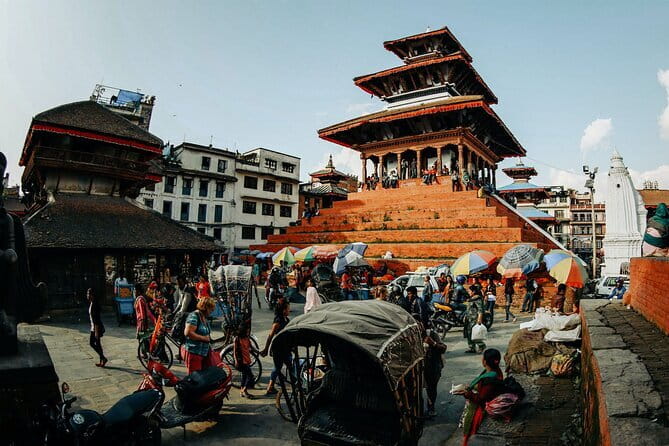
Kathmandu Durbar Square receives about two hours. It is one of the valley’s main historic palace areas and an important part of Kathmandu’s heritage story.
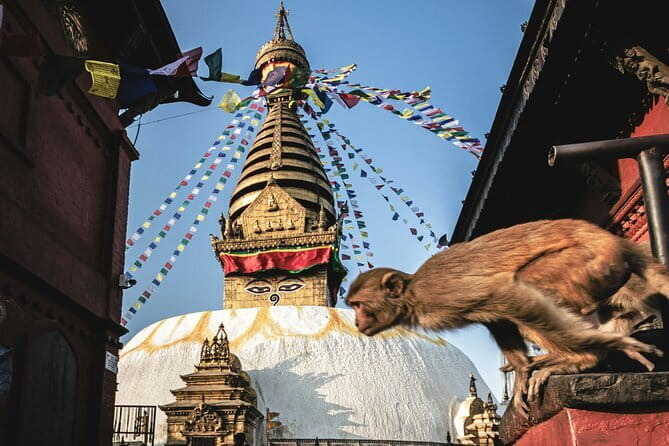
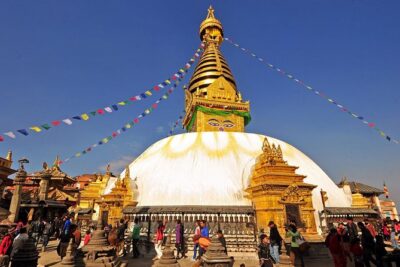
The longer visit is welcome because there is more to see than the central square. The route then continues to Swayambhunath, the hilltop Buddhist stupa often associated with the valley’s architectural and religious identity. The scheduled visit lasts about an hour.
The combination works well: Kathmandu Durbar Square shows royal and urban life, while Swayambhunath offers a major Buddhist site and a different physical setting. The itinerary does not provide a stair count or walking grade, so ask your guide about the easiest access if that matters to you.
Budhanilkantha and Boudhanath
Budhanilkantha Temple, also called Jal Narayan Temple, is a peaceful Hindu site in the Kathmandu Valley. The visit takes about 30 minutes.
Next comes Boudhanath, listed in the program as Buddha Stupa. The stupa is associated with Tibetan Buddhism, and its earliest construction is linked in the description to the period after AD 600. You have about two hours here, which is enough time to walk around the stupa and take in the surrounding religious setting.
I like the placement of Boudhanath late in the tour. By this point, you have already seen Newar Hindu and Buddhist sites in Bhaktapur and Patan, so you can better compare the traditions rather than treat each place as a separate photo stop.
Pashupatinath and the optional evening
Pashupatinath Temple sits along the Bagmati River on the eastern side of Kathmandu. The planned visit takes about two hours.
This is a major place of worship, so your guide’s explanation and respectful behavior matter. The program gives you time to walk around the complex rather than simply view it from the vehicle.
After the main tour, you can choose an escorted evening around Thamel and Jhamsikhel. The advertised access includes restaurants, pubs, clubs, and streets, with up to five hours available. This is not included in the tour price, and food and drinks are extra, so think of it as an optional add-on rather than part of the core sightseeing program.
What the $385 price includes, and what it does not
At $385 per person, this is not a budget walking tour. The value depends on how much you want handled for you and how much you care about local interpretation.
The price includes private transportation, an air-conditioned vehicle, entrance fees, environment management fees for listed attractions, a certified local tour leader, taxes, and one bottle of water per day. You also avoid the cost and effort of arranging separate transport between three cities and several outlying sites.
Food and accommodation are not included. You can select from several accommodation brands and luxury options, but those choices are separate from the $385. You should also plan for gratuities for service staff.
I see the strongest value in the guide and transport. If you only want the main squares, you can spend less by visiting them independently. If you want the Juju Dhau preparation, craft sessions, smaller shrines, local food advice, and a private route through old neighborhoods, the comparison changes.
The private format also matters for families or couples who do not want to follow a fixed large-group pace. Group discounts may be available, but the amount is not specified.
The UNESCO claim needs one practical question
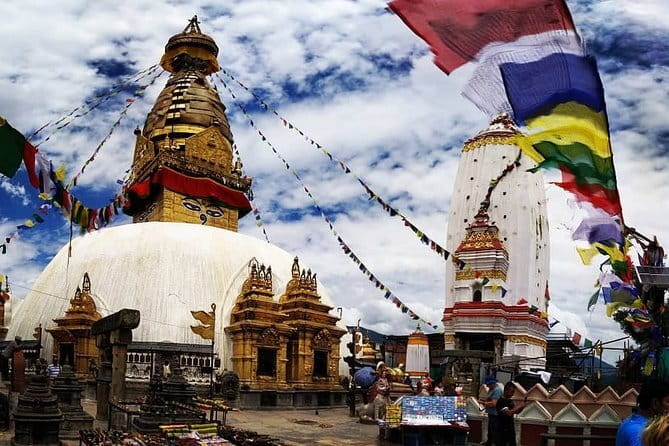
The tour title promises all seven UNESCO World Heritage sites in the Kathmandu Valley. The named schedule clearly includes Kathmandu Durbar Square, Swayambhunath, Boudhanath, Pashupatinath, Bhaktapur Durbar Square, and Patan Durbar Square.
Several other stops are historic and important, but they are not automatically separate UNESCO sites. Changu Narayan is not named in the three-day schedule provided here. I would ask Himalayan Adventure Therapy to confirm exactly which seven sites are included before booking, especially if the UNESCO count is your main reason for choosing this tour.
That is not a reason to dismiss the experience. It is a simple planning check. The local craft and food sessions are a major part of the tour’s value, even apart from the heritage-site count.
Who will get the most from this three-day route
I would choose this for you if you want more than a quick introduction to Kathmandu. It suits people who enjoy walking through old neighborhoods, asking questions, trying local food, and seeing traditional work in progress.
It is also a strong fit after a trek. Several people who took similar trips combined the valley tour with the Annapurna Circuit or Manaslu Circuit, using the three days to understand the culture of Nepal’s historic cities after time in the mountains.
You should think twice if you want lots of free time, nightlife, or a relaxed schedule. The itinerary is full, and many stops involve temples, courtyards, and lanes on foot. You may also find the repeated religious sites less appealing if your main interest is scenery rather than architecture and culture.
Confirmation is provided at booking. Pickup is offered, public toilets are available, and most people can participate. Service animals are allowed. Since this is a private activity, only your group takes part.
Should you book it?
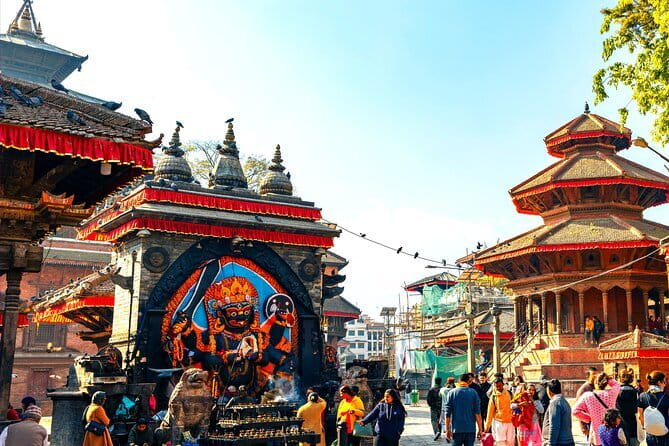
Book this tour if you want Bhaktapur, Patan, and Kathmandu explained by a native local expert, with real attention to food, pottery, woodwork, and neighborhood shrines. The strongest parts are the Juju Dhau session, Pottery Square, Patan’s artisan lanes, and the chance to move beyond the standard monument circuit.
Before paying, confirm the exact seven UNESCO sites, what pickup covers, and which accommodation option fits your budget. If you want a polished, private introduction with transport and entrance fees organized, $385 can be fair value. If you prefer independent wandering and only need the major squares, build your own route instead.
FAQ
How long is the Kathmandu, Bhaktapur, and Patan tour?
The experience lasts approximately three days. The listed start time is 9:15 a.m.
Is this a private tour?
Yes. Only your group participates in the activity.
Is transportation included?
Yes. Private transportation in an air-conditioned vehicle is included.
Are entrance fees included?
Yes. Entrance fees and environment management fees for the attractions named in the schedule are included.
Are meals included?
No. Food is not included, though the guide will advise you about local dishes and food experiences.
Is accommodation included?
No. Accommodation is separate. You can select from multiple hotel brands and luxury options.
Can I cancel for a full refund?
Yes, if you cancel at least 24 hours before the experience start time. Cancellations made less than 24 hours before the start time are not refunded.
Does the tour include an evening in Thamel or Jhamsikhel?
You may choose an escorted evening in Thamel and Jhamsikhel after the main sightseeing. The evening can include restaurants, pubs, clubs, and streets, but food, drinks, and related spending are not included.
More of Patan
- Kathmandu: Private Patan and Bhaktapur Sightseeing Tour
★ 4.7 · 64 reviews - Patan and Bhaktapur City Full Day Tour
★ 5.0 · 24 reviews - City tour of Bhaktapur and Patan Durbar Square
★ 4.5 · 20 reviews - Patan Heritage Tour – Private/Small Group
★ 5.0 · 14 reviews
Recently added around Kathmandu
- Kathmandu : Swambhunath & Durbar Square Guided Half Day Tour★ 3.3 · 3 reviews
- Private Day Tour in Kathmandu Valley Rim with Bhaktapur Sightseeing★ 5.0 · 3 reviews
- From Kathmandu / Pokhara / Chitwan: River Rafting – 1 Day★ 4.6 · 3 reviews
- Nepali Cooking training & Cultural Homestay Experience★ 5.0 · 3 reviews
- Private 3-Hour Nagarkot Sunset Tour from Kathmandu★ 3.5 · 3 reviews
- From Kathmandu: Everest Base Camp Landing Helicopter Tour★ 5.0 · 3 reviews
- 4 UNESSCO World heritage sites of Kathmandu-private tour★ 5.0 · 3 reviews
- Kailashnath Mahadev, Panauti and Namo Buddha Monastery Sightseeing★ 5.0 · 3 reviews
Kathmandu UNESCO Heritage Tours, compared.
Private Kathmandu Sightseeing Tour | UNESCO World Heritage sites
Read our review →
Full Day 7 UNESCO Tour with Lunch – Private/Group
Read our review →
Full Day Top 4 UNESCO Tour with Lunch – Private/Group
Read our review →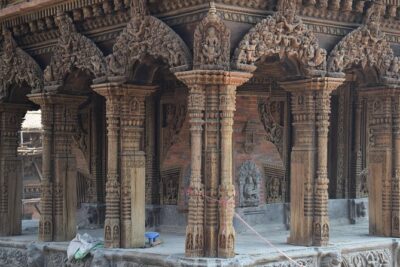
Full-Day 7 UNESCO Tour with Lunch – Private/Group
Read our review →
Kathmandu Private Sightseeing Tour | UNESCO World Heritage Sites
Read our review →Browse the lists this tour appears in