
Reviewed · KATHMANDU UNESCO HERITAGE TOURS
Kathmandu city tour – 4 UNESCO World Heritage Sites
Kathmandu packs four UNESCO-listed sites into a surprisingly short city tour: a former royal square, a hilltop Buddhist stupa, a huge Tibetan Buddhist center, and Nepal’s most important Hindu temple. You move between them by air-conditioned car or van, which matters in a city where traffic can turn a short hop into a slow one.
I like the hotel pickup and drop-off, and I like having a guide to explain how Hindu and Buddhist traditions share the same city. The small maximum of 10 people keeps the outing more personal. The main catch is cost: $75 covers transport and guiding, but you still pay NPR 2,650 per person for monument entry, plus your own food and drinks.
In This Review
- Key points to know before booking
- Four UNESCO sites, one useful introduction to Kathmandu
- Pashupatinath and the Bagmati River
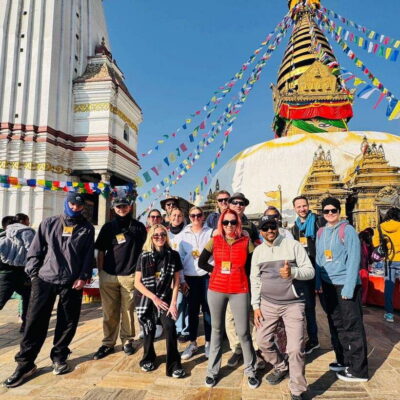
- Boudhanath’s enormous white stupa
- Swayambhunath, the Monkey Temple
- Kathmandu Durbar Square and Hanuman Dhoka
- How the four stops fit together
- What the $75 price really covers
- Pickup, timing, and comfort
- Who will get the most from this tour
- Weather, cancellation, and small practical matters
- Should you book this Kathmandu city tour?
- FAQ
- How long does the Kathmandu city tour last?
- Which four sites are included?
- Is hotel pickup included?
- Is transportation included?
- Is a professional guide included?
- Are monument entry fees included in the price?
- Is lunch included?
- How many people can join the tour?
- What happens if the weather is poor or I need to cancel?
Key points to know before booking
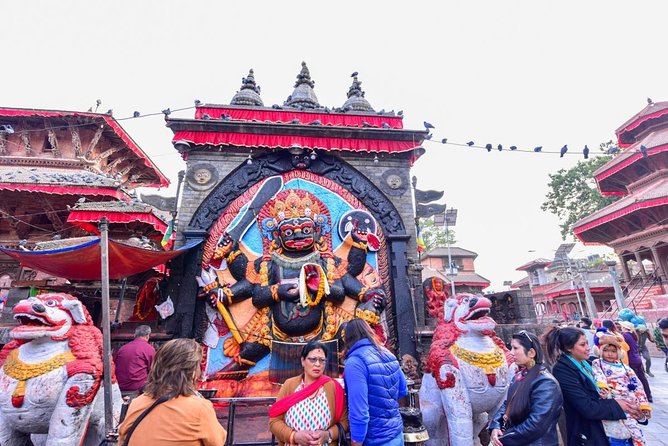
- Four major Kathmandu sights in one half-day: You visit Kathmandu Durbar Square, Swayambhunath, Boudhanath, and Pashupatinath.
- A flexible pace with guide Kedar: A past booking describes a four-hour visit paced around the guest’s wishes, useful if you want to linger or keep moving.
- Air-conditioned transport is included: Hotel pickup, drop-off, driver, and vehicle make the route easier than arranging separate taxis.
- Entry fees are extra: Budget NPR 2,650 per person, paid locally in Nepalese currency.
- A compact group: The maximum is 10 people, so this is smaller than a large coach outing.
- Plan for a meal break: Food and drinks are not included, and the Boudhanath portion includes a lunch break.
Four UNESCO sites, one useful introduction to Kathmandu
This tour works because the four stops show different sides of Kathmandu without sending you far beyond the city. You begin with royal Nepal, move into Buddhist sacred spaces, and finish with Pashupatinath, where Hindu devotion remains central to daily life.
The sites are not interchangeable. Kathmandu Durbar Square is about palaces, courtyards, temples, and the old seat of royal power. Swayambhunath gives you a hilltop Buddhist shrine and broad city views. Boudhanath presents a major Buddhist center with a very different mood, while Pashupatinath is a living Hindu temple complex beside the Bagmati River.
The route takes about four to six hours, though one booking was completed in roughly four hours. That range gives you a useful clue: this is a highlights tour, not a slow architectural study. If you want to examine every carving or spend long periods at prayer sites, you will need to keep an eye on the clock.
More of the valley’s UNESCO heritage sites:
- Private Kathmandu Sightseeing Tour | UNESCO World Heritage sites
★ 5.0 · 756 reviews - Kathmandu: Full Day 7 UNESCO Tour with Lunch – Private/Group
★ 5.0 · 415 reviews - Kathmandu: Full Day Top 4 UNESCO Tour with Lunch – Private/Group
★ 5.0 · 269 reviews
Pashupatinath and the Bagmati River
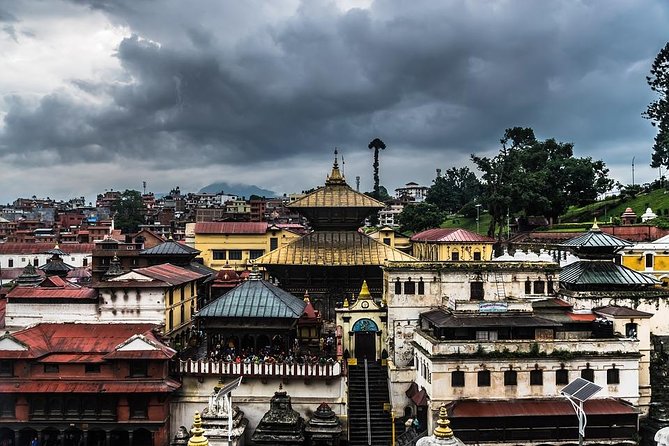
Pashupatinath is listed as a one-hour visit and is located about 5 kilometers east of central Kathmandu, on the bank of the Bagmati River. It is Nepal’s most important Hindu temple site and one of the places where the city’s religious life feels most immediate.
A guide helps here because the complex is more than one photogenic temple. You can expect a sacred setting shaped by Hindu worship, temple courtyards, shrines, and the riverbank. The central temple has rules about who may enter, so your visit is about seeing the wider complex and understanding its place in Nepali culture as much as entering a particular building.
Dress and behavior deserve care. Keep your clothing respectful, follow signs and local instructions, and ask before photographing people or religious activity. A guide can help you avoid the common mistake of treating an active place of worship like an ordinary sightseeing stop.
The one-hour allocation is sensible for a first look, but it can feel brief if you are interested in Hindu architecture or ritual. Pashupatinath is also a place where the pace may naturally slow down. Give yourself room to observe rather than rushing from one structure to the next.
Boudhanath’s enormous white stupa
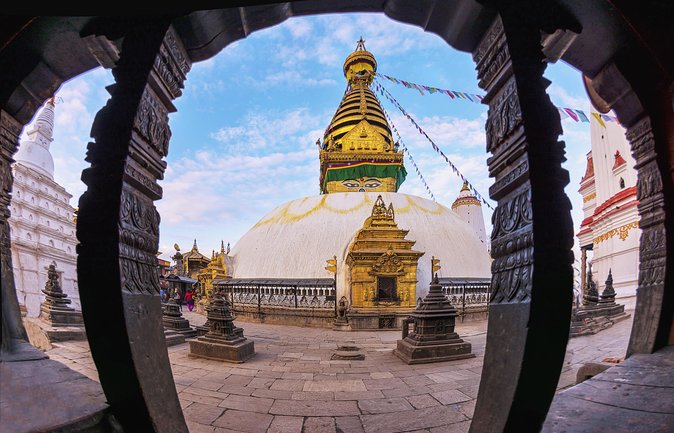
From Pashupatinath, the route continues toward Boudhanath, also called Bouddhanath. This stop gets about two hours and includes a lunch break, making it the longest portion of the day.
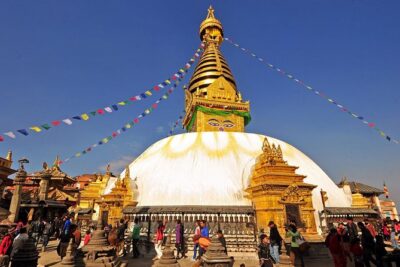
Boudhanath is one of Kathmandu’s most recognizable Buddhist sites. Its large white dome and painted eyes create a strong visual center, but the surrounding religious life is just as important. You have time to walk around the stupa, watch pilgrims and worshippers, visit the surrounding area, and pause for a meal.
This is the stop where the tour feels least hurried. Use the extra time to look upward at the structure, notice the prayer flags and decorative details, and pay attention to the way the area functions as a Buddhist center rather than simply a monument.
Food is not included, so lunch is your responsibility. That gives you choice, but it also means the $75 price is not the full cost of the day. If you are trying to keep spending predictable, plan for the NPR 2,650 entry charge and a separate meal budget.
Boudhanath may be the easiest place to enjoy at your own pace. The large central form helps you get oriented, and the two-hour allocation gives you a little breathing room after the shorter temple visit.
Swayambhunath, the Monkey Temple
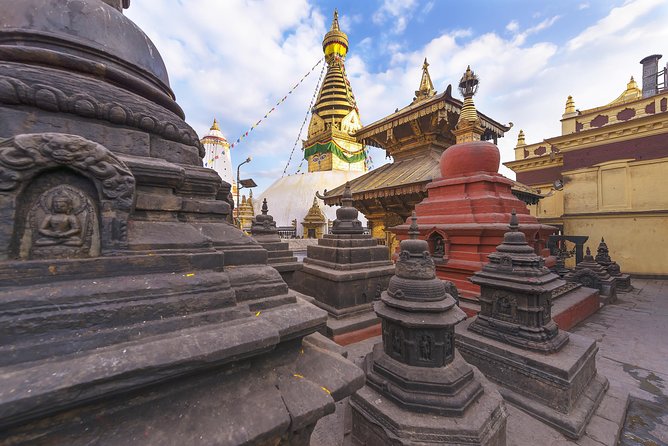
Swayambhunath, often called the Monkey Temple, is scheduled for about an hour. It sits west of central Kathmandu and is known for its Buddhist stupa and hilltop position.
The name gives you one practical expectation: monkeys are part of the scene. Keep belongings secure and follow your guide’s advice around them. The site combines religious importance with a high viewpoint over Kathmandu, so it offers a change of pace from the dense courtyards and enclosed temple spaces elsewhere in the city.
An hour is enough for a focused visit, though access involves the hilltop setting. The tour does not state how much walking or stair climbing your exact route will include, so ask the guide at the start if you have concerns. Most people can participate, but the city’s historic religious sites are not designed like modern museums.
I especially like Swayambhunath as part of this four-site combination because it gives you a sense of Kathmandu from above. Pashupatinath and Boudhanath show religious life at ground level. Swayambhunath adds a broader view of the city and a different Buddhist setting.
More history walks in Kathmandu:
- UNESCO Seven World Heritage Tour in Kathmandu
★ 5.0 · 253 reviews - Kathmandu Private Sightseeing Tour | UNESCO World Heritage Sites
★ 5.0 · 109 reviews - Kathmandu: Full Day Private Top 4 UNESCO Heritage Tour W/Lunch.
★ 5.0 · 86 reviews - Kathmandu World Heritage Tour
★ 5.0 · 74 reviews
Kathmandu Durbar Square and Hanuman Dhoka
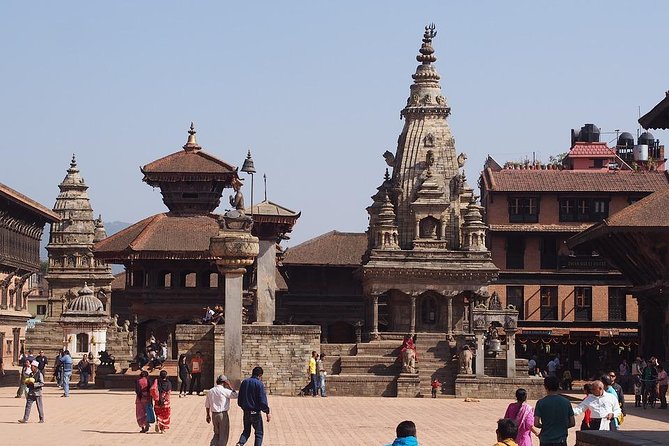
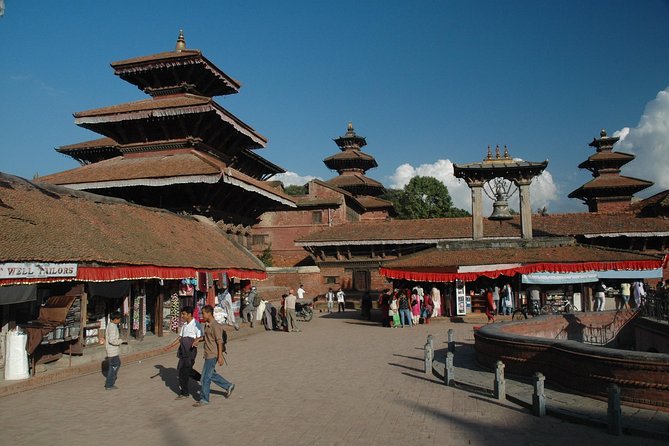
Kathmandu Durbar Square, also known as Hanuman Dhoka, receives about 90 minutes. It sits in the center of the city and was once a royal palace and courtyard complex.
This is the stop for old royal Nepal. You move among temples, courtyards, palace buildings, and carved architectural details that show how political power and religion once occupied the same space. The square also remains part of city life, so it is not an isolated historical park.
The main advantage of visiting with a guide is context. Without help, a large square full of shrines and buildings can become a blur of similar-looking details. A guide can point out what belonged to the royal complex, explain the purpose of courtyards, and help you separate the major structures from the smaller religious sites.
The 90-minute visit gives you a solid introduction. It is not enough for a slow inspection of every building, particularly if you are interested in architecture or photography. You will need to choose what catches your attention and keep moving when the group is ready.
Kathmandu Durbar Square is also the place most likely to remind you that these are living parts of the city, not just preserved monuments. Expect activity around the historic buildings. That adds energy, but it can also make the stop feel less calm than Boudhanath or Swayambhunath.
How the four stops fit together
The order may be adjusted by the guide, traffic, and the day’s timing, but the four-site plan creates a clear story:
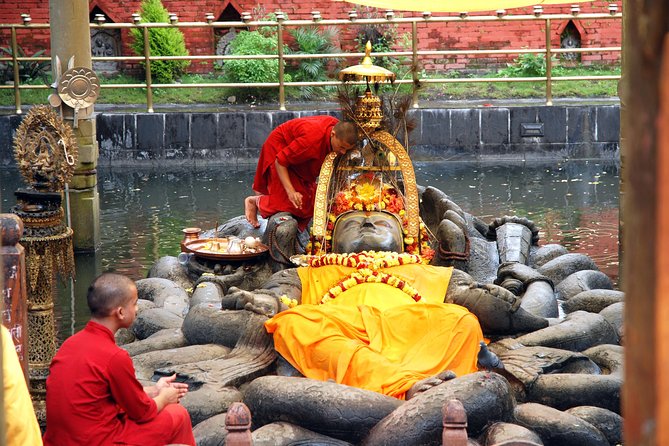
- Pashupatinath introduces Hindu worship and the Bagmati River.
- Boudhanath shows the scale and importance of Tibetan Buddhist practice.
- Swayambhunath adds a hilltop Buddhist shrine and city views.
- Kathmandu Durbar Square connects religion with royal power and urban life.
The descriptions of the stops place Pashupatinath first, followed by Boudhanath, Swayambhunath, and Kathmandu Durbar Square, though the published stop sequence lists all four in a different order. I would treat the order as flexible rather than promise a fixed progression.
That flexibility is useful. Traffic in Kathmandu can be unpredictable, and the guide may make sensible changes to keep the day moving. The important point is that all four sites are included, not the exact order in which you see them.
What the $75 price really covers
At $75 per person, this is not the cheapest way to visit Kathmandu’s monuments. You can reduce costs by arranging your own transport and entering sites independently. The value here comes from combining a vehicle, a driver, hotel transfers, and a professional guide into one compact outing.
That package is most useful if you have limited time, have just arrived in Kathmandu, or would rather not negotiate several rides across a busy city. It also reduces the risk of wasting part of your day figuring out the route between sites.
Remember the additional monument charge: NPR 2,650 per person, paid locally and directly to the monuments in local currency. Food and drinks are also excluded, as are tips for the guide and driver. These extras do not make the tour poor value, but they do make the advertised price only part of your day’s budget.
The tour has a maximum of 10 people. That is small enough to ask questions and adjust the pace more easily than on a large bus. One booking with guide Kedar took about four hours and followed the guest’s preferred pace, a useful sign for anyone who wants some control over how long to spend at each site.
Pickup, timing, and comfort
Hotel pickup and drop-off are included. The experience begins in the morning after breakfast, so you should be ready at your hotel rather than planning a late start.
The air-conditioned car or van is a practical advantage. Kathmandu’s streets can be tiring, and the four sites are spread across different parts of the city. Having a driver handle the transfers lets you save energy for the monuments themselves.
The total duration is approximate, from four to six hours. Treat that as a half-day block rather than a precise appointment. The duration can depend on traffic, how long you spend at each site, and the lunch break at Boudhanath.
This is a mobile-ticket experience, and confirmation is provided at booking. Public transportation is nearby, but you do not need it for the included route because private vehicle transport is part of the package.
Who will get the most from this tour
I would recommend this outing to first-time visitors who want a clear introduction to Kathmandu in a single morning or half-day. It is also a good fit if you have a short stay and want to cover the city’s major religious and royal sites before moving on to other parts of Nepal.
It suits people who prefer explanation over wandering without context. The guide can connect the monuments to Hindu and Buddhist practice, royal history, and the city’s continuing religious life.
It is less suitable if you want a quiet, unhurried day at one or two sites. Four major locations in four to six hours means frequent transitions. You will see a lot, but you will not have unlimited time at any one place.
The tour also requires some tolerance for walking around historic religious sites. The information provided says most people can participate, but it does not give detailed accessibility information. If you have mobility needs, confirm the practical arrangements before booking.
Weather, cancellation, and small practical matters
The experience requires good weather. If poor weather causes cancellation, you are offered another date or a full refund. You can also cancel for a full refund if you do so at least 24 hours before the start time.
Changes or cancellations made less than 24 hours before the start are not accepted, and the amount paid is not refunded. Cutoff times use local time in Kathmandu, so check the clock carefully if you are changing plans from another country.
Bring a little local currency for the NPR 2,650 monument fee. Since meals and drinks are not included, plan for the Boudhanath lunch break rather than assuming the tour price covers it.
A respectful attitude matters as much as a camera. You are visiting active Hindu and Buddhist sites, so listen to the guide, follow local rules, and ask before taking close photographs of people or ceremonies.
Should you book this Kathmandu city tour?
Book it if you want four major Kathmandu sights in one organized half-day, with hotel transport and a guide who can adjust the pace. The strongest reason to choose it is efficiency: you get royal courtyards, two major Buddhist sites, and Pashupatinath without arranging separate rides.
At $75, plus NPR 2,650 in entry fees and your meal, it is best viewed as a convenience purchase rather than a bargain ticket. I would choose it for a first visit, a short stay, or a morning when I want reliable transport and useful cultural context.
Skip it if you prefer to spend a full day at fewer sites or want to control every minute yourself. For most first-time visitors with limited time, though, the combination of four UNESCO sites, a small group, hotel pickup, and flexible pacing makes this a practical introduction to Kathmandu.
FAQ
How long does the Kathmandu city tour last?
The tour lasts approximately four to six hours. One booking was completed in about four hours, and the pace can be adjusted according to your preferences.
Which four sites are included?
The tour visits Kathmandu Durbar Square, Swayambhunath, Boudhanath Stupa, and Pashupatinath Temple.
Is hotel pickup included?
Yes. Hotel pickup and drop-off are included in the experience.
Is transportation included?
Yes. An air-conditioned car or van with a driver is included.
Is a professional guide included?
Yes. A professional tour guide is included. Guide Kedar is named in one booking detail, but a specific guide is not guaranteed for every departure.
Are monument entry fees included in the price?
No. Monument entry fees are paid locally in Nepalese currency and cost NPR 2,650 per person.
Is lunch included?
No. Food and drinks are not included. The Boudhanath portion includes a lunch break.
How many people can join the tour?
The maximum group size is 10 people.
What happens if the weather is poor or I need to cancel?
The experience requires good weather. If it is canceled due to poor weather, you can choose another date or receive a full refund. You can cancel at least 24 hours before the start time for a full refund.
Recently added around Kathmandu
- Kathmandu : Swambhunath & Durbar Square Guided Half Day Tour★ 3.3 · 3 reviews
- Private Day Tour in Kathmandu Valley Rim with Bhaktapur Sightseeing★ 5.0 · 3 reviews
- From Kathmandu / Pokhara / Chitwan: River Rafting – 1 Day★ 4.6 · 3 reviews
- Nepali Cooking training & Cultural Homestay Experience★ 5.0 · 3 reviews
- Private 3-Hour Nagarkot Sunset Tour from Kathmandu★ 3.5 · 3 reviews
- From Kathmandu: Everest Base Camp Landing Helicopter Tour★ 5.0 · 3 reviews
- 4 UNESSCO World heritage sites of Kathmandu-private tour★ 5.0 · 3 reviews
- From Kathmandu Budget: 15 Day Everest Base Camp Trek★ 5.0 · 3 reviews
Kathmandu UNESCO Heritage Tours, compared.
Private Kathmandu Sightseeing Tour | UNESCO World Heritage sites
Read our review →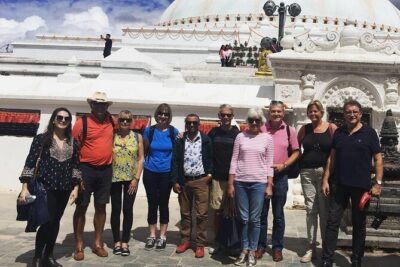
Full Day 7 UNESCO Tour with Lunch – Private/Group
Read our review →
Full Day Top 4 UNESCO Tour with Lunch – Private/Group
Read our review →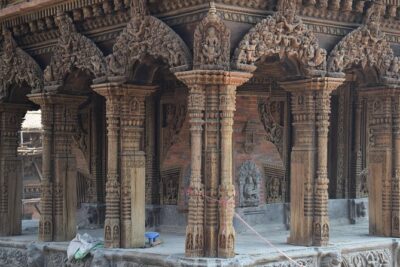
Full-Day 7 UNESCO Tour with Lunch – Private/Group
Read our review →
Kathmandu Private Sightseeing Tour | UNESCO World Heritage Sites
Read our review →Browse the lists this tour appears in