
Reviewed · KATHMANDU UNESCO HERITAGE TOURS
Kathmandu: Guided -Day Tour of World Heritage Sites
Kathmandu’s greatest sights are scattered across a crowded valley, so a private car and local guide can save you a good deal of time and guesswork. This tour brings together Pashupatinath, Boudhanath, Patan Durbar Square, and Swayambhunath, four of the valley’s most important cultural sites.
I like the easy hotel pickup and the chance to have the route explained as you go, rather than simply being dropped at monuments. I also like the private format, which gives you room to ask questions or adjust the pace. The main drawback is that a single day packs in a lot, and sightseeing entry fees, meals, and drinks are extra.
In This Review
- Key points at a glance
- Why this one-day Kathmandu tour works
- Pashupatinath and the Bagmati River
- Boudhanath, a giant Buddhist prayer circle
- Patan Durbar Square and Newar craftsmanship
- Swayambhunath and the Monkey Temple viewpoint
- The pace, car, and guide make the difference
- What the $37 price really covers
- Small details that will improve your day
- Who should book this Kathmandu day tour?
- Should you book it?
- FAQ
- How long does the Kathmandu heritage tour last?
- What sites are included?
- Is hotel pickup included?
- Is transportation private?
- Which languages can the guide speak?
- Are entrance fees included in the $37 price?
- What should I bring?
- Can I cancel the booking?
- Are drones allowed?
Key points at a glance
- Four major heritage sites in one day: The route covers Pashupatinath, Boudhanath, Patan Durbar Square, and Swayambhunath, although the short overview names only three.
- Private transport included: A private car and hotel pickup make it easier to reach sites spread across Kathmandu Valley.
- Strong guide support: Past bookings have included guides named Ramesh and Sujan, with Tirtha often handling the driving.
- Hindu and Buddhist traditions side by side: You move from a major Shiva temple and cremation area to some of Nepal’s most important Buddhist stupas.
- Good first-day orientation: The tour gives you a useful map of Kathmandu before you explore individual neighborhoods on your own.
- Budget-friendly, with extra costs: The $37 price includes the car, guide, transfers, tax, and service charge, but not entrance tickets or food.
Why this one-day Kathmandu tour works
Kathmandu Valley is not one compact sightseeing district. It includes three historic cities, Kathmandu, Patan, and Bhaktapur, along with temples, courtyards, monasteries, shrines, and stupas spread through a large urban area. If you try to see the main sites alone in a single day, navigation and traffic can eat up much of your time.
This tour takes a practical approach. You meet your driver at your hotel, ride between the sights in a private car, and have a guide explain what you are seeing. That matters in Kathmandu, where a carved doorway or a small shrine can carry religious meaning that is easy to miss if you only take photographs.
The advertised material focuses on three sites, but the detailed route and past experiences include four UNESCO-related landmarks, adding Patan Durbar Square. You should confirm the exact stops when booking, especially if Patan is essential to your plans.
The price is $37 per person. For a private day with hotel transport and an English-speaking guide, that is a useful value, particularly if two or more people share the vehicle. You still need to budget for entrance fees, food, drinks, and personal expenses. The price is not an all-inclusive sightseeing pass.
More of the valley’s UNESCO heritage sites:
- Private Kathmandu Sightseeing Tour | UNESCO World Heritage sites
★ 5.0 · 756 reviews - Kathmandu: Full Day 7 UNESCO Tour with Lunch – Private/Group
★ 5.0 · 415 reviews - Kathmandu: Full Day Top 4 UNESCO Tour with Lunch – Private/Group
★ 5.0 · 269 reviews
Pashupatinath and the Bagmati River
Pashupatinath is one of the most important Hindu temple complexes in Nepal. It sits beside the Bagmati River and is dedicated to Shiva, known here as Pashupati, Lord of the Animals. The main two-story temple uses the pagoda style common in Nepal, with a tiered roof and detailed woodwork.
The site entered the UNESCO World Heritage list in 1979. Its religious importance is not simply historical. Hindu pilgrims continue to come here, and the riverfront ghats are used for cremation ceremonies. That can be a powerful and serious part of the visit, but it is not a staged show. You should dress modestly, follow your guide’s instructions, and treat ceremonies and mourners with care.
Your time here includes walking, a guided visit, a photo stop, and a scenic drive as part of the wider route. The complex is large enough that you may see a mix of shrines, courtyards, sadhus, worshippers, and river views. Non-Hindu visitors may not be allowed into the main temple itself, but the surrounding complex still offers much to see.
I find Pashupatinath most valuable when the guide explains how the site functions today, rather than presenting it as an old monument. Guides such as Ramesh and Sujan have been praised for explaining local customs, religious practices, and personal observations in clear English. Your assigned guide may be different, but the tour is designed around that kind of explanation.
The setting can also be confronting. The Bagmati is sacred, but parts of the riverfront may look worn and polluted. That contrast is part of understanding modern Kathmandu, not a flaw to be hidden.
Boudhanath, a giant Buddhist prayer circle
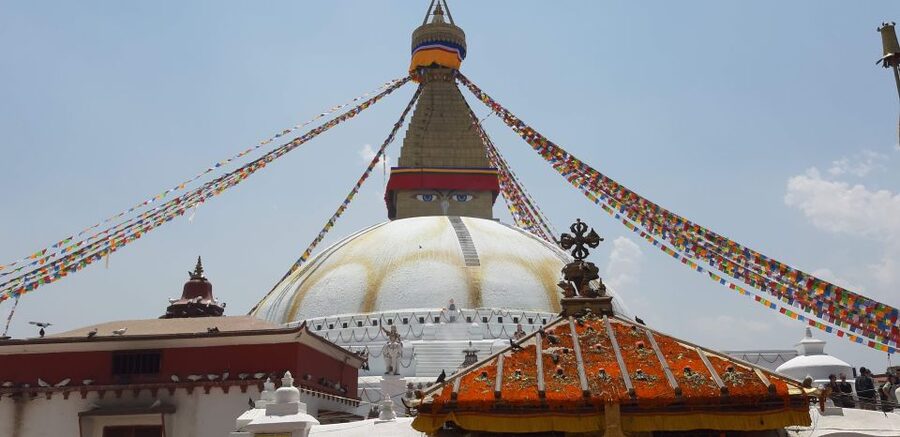
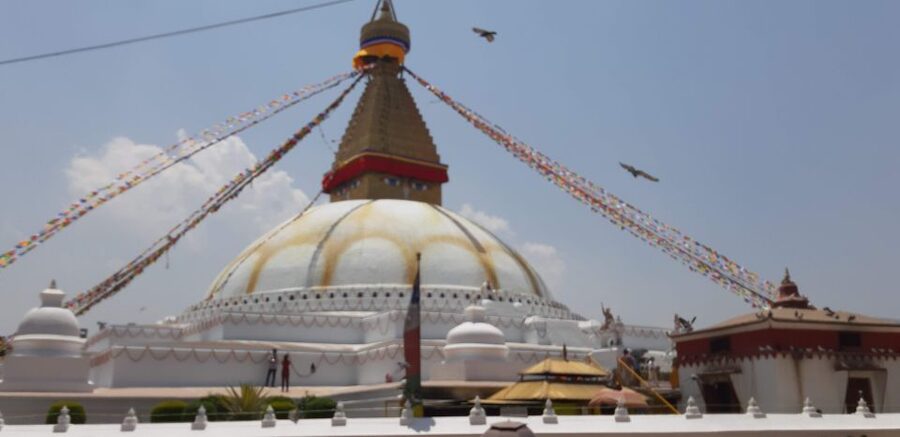
Boudhanath Stupa is one of the largest stupas in the world. Its broad white dome, painted eyes, gilded details, and high central tower dominate the surrounding neighborhood. The stupa is roughly 100 meters in diameter and about 40 meters high, according to the tour information.
Boudhanath is important to both Buddhists and Hindus, and it remains an active religious center. The best way to approach it is to walk clockwise around the base, following the traditional direction of Buddhist prayer. You will see prayer wheels, shops, monasteries, and people making ritual circuits.
Here, your guide can help you read the symbols. The painted eyes are often called the Buddha’s eyes, while the shape of the stupa represents layers of Buddhist thought and the path toward awakening. Exact explanations can vary by tradition, so I appreciate having someone available to answer questions rather than relying on a quick caption.
The stupa is also a good place to pause. After the more intense experience at Pashupatinath, Boudhanath offers a broad open courtyard and a slower rhythm. You can focus on the architecture, watch devotional activity, or simply take in the scale of the monument.
Do not expect a quiet museum visit. Boudhanath is part of a living neighborhood, and the surrounding streets may be busy. The private car helps you get there without worrying about local directions, but traffic can still affect the timing.
Patan Durbar Square and Newar craftsmanship
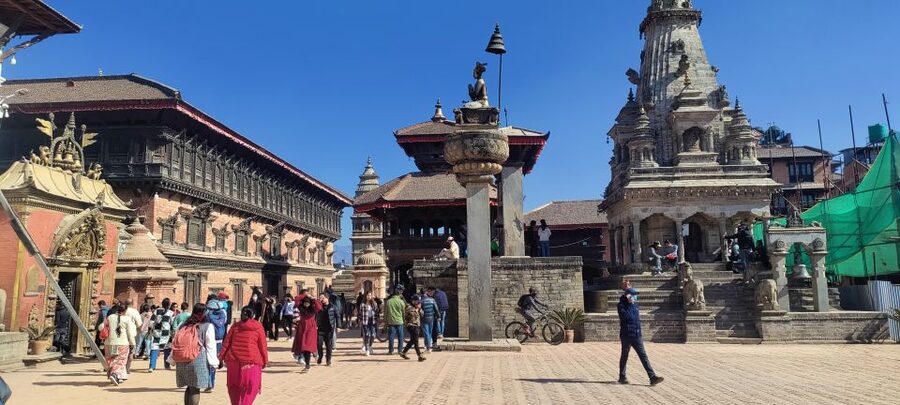
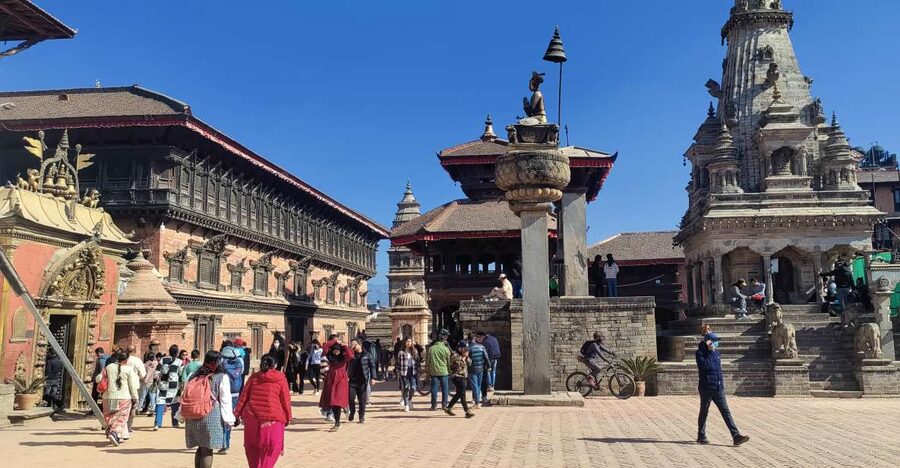
Patan, also called Lalitpur, is the oldest of the three main cities in Kathmandu Valley. Its Durbar Square is a compact collection of temples, palaces, courtyards, stone carvings, and wooden details. If you care about architecture, this may be the most rewarding stop of the day.
Patan is especially known for Newar artistic traditions. Look closely at the carved window frames, temple struts, metalwork, and layered roofs. The square shows how a royal center could also be a place of worship and daily community life.
The word Durbar means palace, and the square grew around the former royal complex. You will see monuments in different states of repair, with the effects of the 2015 earthquake still visible in parts of Kathmandu Valley. That mixture of restored buildings, working shrines, and damaged structures gives the visit a real sense of place.
A guide is useful here because the square can feel like a maze of similar courtyards. With help, you can tell a palace facade from a temple, understand which shrines are active, and spot small carvings that are easy to pass without noticing.
Patan also adds an important artistic counterpoint to the large stupas. Boudhanath is about scale and ritual movement. Patan is about close-up detail. I would not rush through it, but a one-day tour means your time here may be limited.
More history walks in Kathmandu:
- UNESCO Seven World Heritage Tour in Kathmandu
★ 5.0 · 253 reviews - Kathmandu Private Sightseeing Tour | UNESCO World Heritage Sites
★ 5.0 · 109 reviews - Kathmandu: Full Day Private Top 4 UNESCO Heritage Tour W/Lunch.
★ 5.0 · 86 reviews - Kathmandu World Heritage Tour
★ 5.0 · 74 reviews
Swayambhunath and the Monkey Temple viewpoint
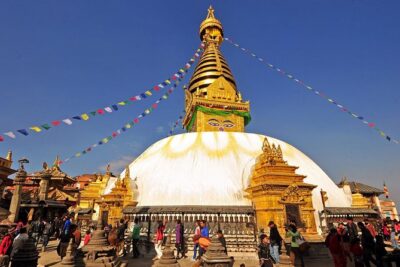
Swayambhunath sits on a hill in the northwest part of Kathmandu Valley. Foreign visitors often call it the Monkey Temple, thanks to the monkeys living around the complex. The official name, Swayambhunath, refers to the self-arisen nature of the sacred site.
The stupa is reached by climbing steps on the hill, although the exact effort depends on which approach your guide and driver use. Bring comfortable shoes and water. The climb is one reason this stop feels different from Boudhanath, where the main experience is a level walk around the stupa.
Swayambhunath is believed to be more than 2,000 years old and is tied to the story that Kathmandu Valley was once a lake. The hilltop setting gives you one of the best broad views across Kathmandu Valley. On a clear day, you can look over the city and understand just how closely the historic sites are woven into modern urban life.
The monkeys are entertaining, but do not let them distract you from the religious setting. Keep food and loose items secure, and follow local guidance. The hill has a strong mix of Buddhist and Hindu symbols, making it a useful final stop after the day’s other sites.
I like ending here because the view helps connect the separate visits. After seeing temples, palace courtyards, and stupas at ground level, you can look back over the valley and understand why the region is often described as an open museum of art and architecture.
The pace, car, and guide make the difference
The tour is described as a one-day experience, with the detailed itinerary showing about 5.5 hours for the main sightseeing portion. In practical terms, you should keep most of the day available. Four major sites, walking, traffic, photo stops, and entrance arrangements can make the schedule feel full.
A private car is more useful here than it might be in a compact European old town. Kathmandu’s sights are spread through a sprawling city, and moving between them without local help can take time. The car also gives you a place to sit between visits, which is welcome after temple steps and stone courtyards.
The driving has received particular praise, with Tirtha named several times as a punctual and safe driver. Safety is important in Kathmandu traffic, where roads can be crowded and driving conditions may feel unfamiliar. Still, a driver cannot remove all delays, so I would avoid scheduling a flight or another fixed appointment immediately after the tour.
The guide is just as important as the car. Ramesh has been singled out for friendly explanations and flexibility, while Sujan has been praised for making local culture easier to understand. Hindi and Nepali are also offered along with English, so you can choose the language that suits your group.
The private format is especially useful for solo visitors. One solo woman described feeling safe and appreciated the ability to adjust the day around her interests. That does not mean every request can be guaranteed, but it does suggest that the arrangement is more personal than a large coach tour.
What the $37 price really covers
At $37 per person, this tour is priced as an affordable private sightseeing service rather than a fully packaged cultural day. You receive hotel pickup and drop-off, a private car, an English-speaking guide, and government tax and service charges.
You pay separately for:
- Sightseeing entrance fees
- Food and drinks
- Personal expenses
That distinction matters. The headline price may not be your final total if you enter every paid monument or stop for a meal. Carry some local currency or another accepted payment method, though the exact payment arrangements are not specified here.
The value is strongest if you are short on time, new to Kathmandu, or traveling with a small group. Two people sharing a private car receive more comfort and attention than they would from a basic transport-only option. Solo visitors still get convenience, but the per-person price may feel less of a bargain once entry tickets are added.
The tour also offers free cancellation up to 24 hours before departure and a reserve-now, pay-later option. Those terms help if your Nepal plans are still changing.
Small details that will improve your day
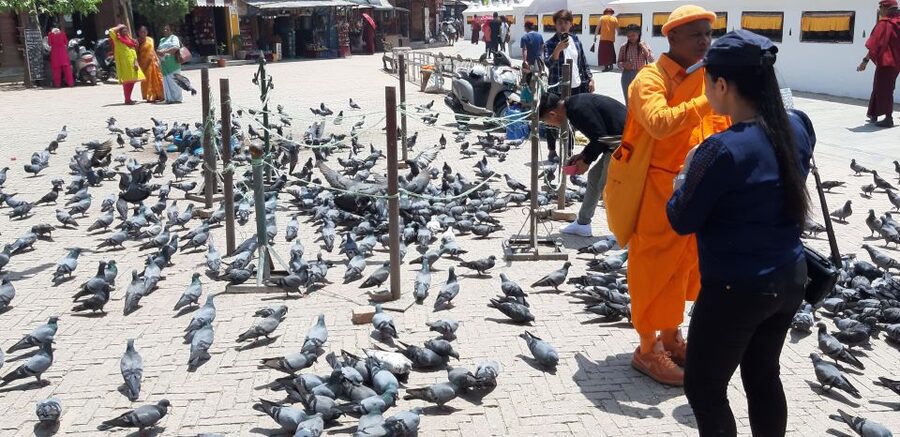
Wear comfortable shoes. You will walk through temple grounds, squares, and stupa areas, and Swayambhunath includes a hilltop setting.
Bring water, your passport or another ID card, and a respectful attitude toward active religious sites. The passport requirement is specifically listed, so do not assume a hotel card will be enough.
Drones, alcohol, and drugs are not allowed. Modest clothing is the sensible choice at Pashupatinath and other sacred sites, even though a detailed dress code is not provided.
Start ready at your hotel at the agreed time. Pickup is included from Kathmandu, with Hotel Nepalaya in Thamel listed among the pickup and drop-off options. The available information does not give a fixed start time, so you need to check availability when choosing your date.
The tour operates with a live guide in English, Hindi, or Nepali. If you want a particular language or have a strong interest in architecture, Hindu practice, Buddhism, photography, or local history, tell the operator before the day begins.
Who should book this Kathmandu day tour?
I would choose this tour if I had only one full day in Kathmandu and wanted a clear introduction to the valley’s major religious and architectural sites. It is also a good fit if you prefer a private car, need hotel pickup, or do not want to work out the city’s geography on your own.
It suits solo visitors who value a little extra support, couples, families, and small groups. The ability to ask questions and adjust the pace is more useful than it sounds, especially when one person wants more time for photographs or temple details.
I would hesitate if you dislike busy schedules or want to spend a full morning at one monument. Four sites in one day provide breadth rather than long, unhurried visits. I would also confirm the Patan stop before booking, since the short overview names three landmarks while the fuller route includes four.
Should you book it?
Book it if your priority is to get your bearings fast and see the main UNESCO-related sights with private transport. The combination of hotel pickup, local guidance, and a $37 starting price gives you a practical first look at Kathmandu Valley without arranging four separate visits.
Go in with realistic expectations. You will not have unlimited time at every temple, entry fees are extra, and traffic can stretch the day. But with a strong guide such as Ramesh or Sujan, and a careful driver such as Tirtha when available, this is a sensible way to meet Kathmandu’s sacred sites, royal architecture, and wide valley views in one focused day.
FAQ
How long does the Kathmandu heritage tour last?
It is sold as a one-day tour. The detailed sightseeing portion is listed as about 5.5 hours, but you should keep the day open because the route includes several stops, walking, and drives across Kathmandu Valley.
What sites are included?
The detailed tour information includes Pashupatinath Temple, Boudhanath Stupa, Patan Durbar Square, and Swayambhunath, also called the Monkey Temple. The short overview names Pashupatinath, Boudhanath, and Swayambhunath, so confirm the exact route if Patan is important to you.
Is hotel pickup included?
Yes. Hotel pickup and drop-off are included, and you meet your driver at your hotel at the tour start time. Hotel Nepalaya in Thamel is one of the listed pickup locations.
Is transportation private?
Yes. A private car is included for the tour.
Which languages can the guide speak?
Live guiding is available in English, Hindi, and Nepali.
Are entrance fees included in the $37 price?
No. Sightseeing entry fees are not included. Food, drinks, and personal expenses are also separate.
What should I bring?
Bring your passport or another ID card, comfortable shoes, and water.
Can I cancel the booking?
You can cancel up to 24 hours in advance for a full refund. A reserve-now, pay-later option is also available.
Are drones allowed?
No. Drones, alcohol, and drugs are not allowed on the activity.
Recently added around Kathmandu
- Kathmandu : Swambhunath & Durbar Square Guided Half Day Tour★ 3.3 · 3 reviews
- Private Day Tour in Kathmandu Valley Rim with Bhaktapur Sightseeing★ 5.0 · 3 reviews
- From Kathmandu / Pokhara / Chitwan: River Rafting – 1 Day★ 4.6 · 3 reviews
- Nepali Cooking training & Cultural Homestay Experience★ 5.0 · 3 reviews
- Private 3-Hour Nagarkot Sunset Tour from Kathmandu★ 3.5 · 3 reviews
- From Kathmandu: Everest Base Camp Landing Helicopter Tour★ 5.0 · 3 reviews
- 4 UNESSCO World heritage sites of Kathmandu-private tour★ 5.0 · 3 reviews
- From Kathmandu Budget: 15 Day Everest Base Camp Trek★ 5.0 · 3 reviews
Kathmandu UNESCO Heritage Tours, compared.
Private Kathmandu Sightseeing Tour | UNESCO World Heritage sites
Read our review →
Full Day 7 UNESCO Tour with Lunch – Private/Group
Read our review →
Full Day Top 4 UNESCO Tour with Lunch – Private/Group
Read our review →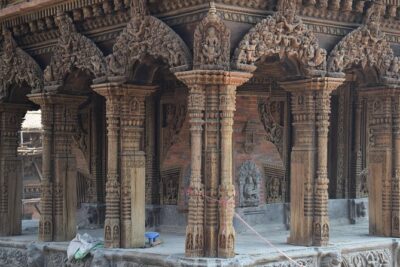
Full-Day 7 UNESCO Tour with Lunch – Private/Group
Read our review →
Kathmandu Private Sightseeing Tour | UNESCO World Heritage Sites
Read our review →Browse the lists this tour appears in