
Reviewed · KATHMANDU UNESCO HERITAGE TOURS
Kathmandu Top 4 or 2 UNESCO World Heritage Sites Day Tour
Kathmandu’s biggest cultural sights are scattered across the valley, and this private tour links them by car in one full morning and afternoon. You can move from Hindu cremation ghats at Pashupatinath to Tibetan Buddhist prayer wheels at Boudhanath, then on to hilltop Swayambhunath and the carved courtyards of Patan.
I like the hotel pickup and private format, which saves you from sorting out Kathmandu’s traffic and lets you ask questions at your own pace. I also like the visits to a thangka painting school and singing bowl center, since they add working craft traditions to the usual monument tour. The main consideration is pace: four major sites in five to seven hours leave little room for lingering.
In This Review
- Key points to know before booking
- What this Kathmandu day tour is really designed to do
- Pashupatinath, where worship and cremation meet
- Boudhanath and the great white stupa
- Swayambhunath and the climb above Kathmandu
- Patan Durbar Square and Newari craftsmanship
- Thangka painting and singing bowls
- Why private transportation is worth the price
- How to make the five to seven hours work
- Who should book this experience
- Should you book the Kathmandu UNESCO sites tour?
- FAQ
- How long does the Kathmandu UNESCO sites tour last?
- Which UNESCO sites can I visit?
- Can I visit only two sites?
- Is hotel pickup included?
- Is this a private tour?
- Is a guide included?
- Are entrance fees included in the tour price?
- Is transportation included?
- Are food and drinks included?
- Are the thangka painting school and singing bowl center included?
- Can most people participate?
- Can I cancel for a full refund?
Key points to know before booking
- Four major UNESCO sites in one day: Pashupatinath, Boudhanath, Swayambhunath, and Patan Durbar Square are covered by private car.
- A shorter two-site option: You can choose two sites and pay a lower entry fee, useful for a tight schedule.
- Private guide and vehicle: Pickup and drop-off at your hotel make this easier than arranging separate taxis.
- Prakash is a frequently named guide: He is praised for clear explanations, flexibility, and a calm approach in heavy city traffic.
- Craft demonstrations add variety: Thangka painting and singing bowls show living traditions, not only old buildings.
- Budget for entrance fees: Transportation, guide service, water, and craft visits are included, but UNESCO site admission is extra.
What this Kathmandu day tour is really designed to do
This is a sightseeing shortcut through the Kathmandu Valley. You are not simply checking off monuments. You are seeing how Hindu worship, Tibetan Buddhism, Newari architecture, royal power, death rituals, and traditional arts fit together in a small but culturally dense area.
The private setup matters. Your driver meets you at your hotel, and the same vehicle carries you between sites. That is useful in Kathmandu, where distance on a map does not always tell you how long a road journey will take. The tour lasts about five to seven hours, depending on traffic, your chosen sites, and how long you spend at each stop.
The listed four-stop version gives you about six hours of sightseeing time: roughly two hours each at Pashupatinath and Swayambhunath, plus one hour at Boudhanath and one hour in Patan. Those times are estimates, not strict appointments. A good guide can adjust the order or shorten a stop if you prefer a brisk overview.
Your guide is an important part of the experience. Prakash is frequently singled out for explaining history, religion, and local customs in an approachable way. He is also praised for adapting the day to personal interests, which is one of the strongest reasons to choose a private tour rather than a large group outing.
More of the valley’s UNESCO heritage sites:
- Private Kathmandu Sightseeing Tour | UNESCO World Heritage sites
★ 5.0 · 756 reviews - Kathmandu: Full Day 7 UNESCO Tour with Lunch – Private/Group
★ 5.0 · 415 reviews - Kathmandu: Full Day Top 4 UNESCO Tour with Lunch – Private/Group
★ 5.0 · 269 reviews
Pashupatinath, where worship and cremation meet
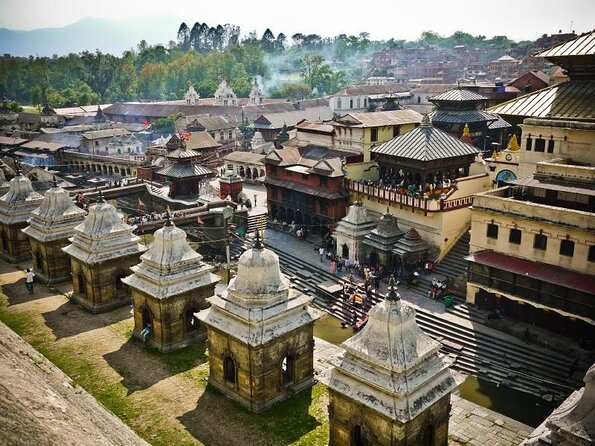
Pashupatinath is devoted to Shiva and sits beside the holy Bagmati River in the eastern Kathmandu Valley. It is one of Nepal’s most important Hindu temples, and the riverfront gives the visit a serious, solemn character.
The central temple is especially sacred to Hindus, so access to the main interior is restricted. Your guide helps you understand what you are seeing from the permitted areas and points out the broader temple complex, shrines, river, and cremation ghats.
This is not a polished museum visit. It is an active religious place. You may see worship, mourning, or an open cremation ceremony. That can be a powerful part of the day, but it also calls for restraint. Listen to your guide about where to stand and when photography is inappropriate. A cremation is a family ritual, not a performance arranged for sightseers.
Two hours here can feel justified because the complex includes more than one shrine or viewpoint. It also gives you time to absorb the setting rather than rushing through a single temple courtyard. If death rituals make you uncomfortable, tell the guide early and ask for a focus on the architecture and religious meaning instead.
Pashupatinath is often the stop that changes the tone of the day. After the noise and traffic outside, the riverfront brings you close to a part of Nepalese life that is direct and unfiltered. I would keep this visit even if you choose the shorter two-site option, provided you are prepared for its emotional weight.
Boudhanath and the great white stupa
Boudhanath offers a very different mood. The large stupa is surrounded by monasteries and has a strong Tibetan cultural influence. Prayer flags, painted details, devotional movement, and the circular route around the monument make this one of Kathmandu’s most recognizable religious sites.
The one-hour visit is enough for an introduction. Your guide can explain the stupa’s form, the role of the surrounding monasteries, and the Tibetan Buddhist traditions visible around the main structure. You should expect time to walk around the base and take in the details rather than a long monastery study.
This is a good place to ask questions about Buddhist symbols. The painted eyes, prayer wheels, flags, and repeated clockwise movement can seem confusing when you first arrive. A guide turns those details into a readable picture of how the site is used.
Boudhanath is also one of the easiest stops to enjoy at your own pace. You can concentrate on the stupa, ask for a short explanation, and then take photographs or watch the steady religious activity. The one drawback is that an hour can pass quickly, particularly if you want to visit a monastery or spend time examining the surrounding art.
If the two-site tour includes Boudhanath, pair it with Pashupatinath for a useful contrast. One shows major Hindu practice beside the river, while the other presents a center of Tibetan Buddhist life. Together, they give you more religious context than two palace squares would.
Swayambhunath and the climb above Kathmandu
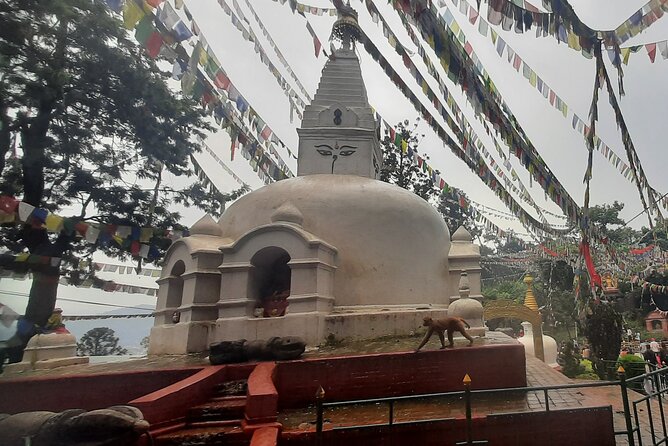
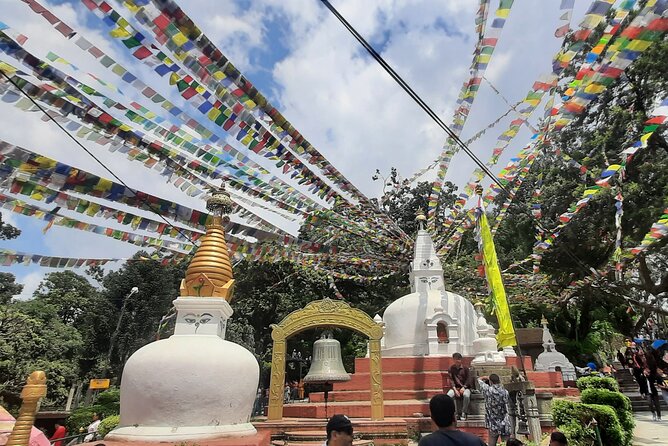
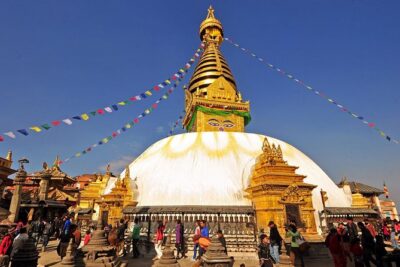
Swayambhunath, often called the Monkey Temple, sits on a hill above the city. The main stupa is reached by a long stairway, so this is the most physically demanding stop in the four-site plan.
The climb is part of the experience, but it is also the clearest practical issue to consider before booking. The tour information says most people can participate, yet the stairs may still be tiring. If you have concerns, discuss them with the provider before setting out. The private format makes it easier to adjust the pace, but it does not remove the climb.
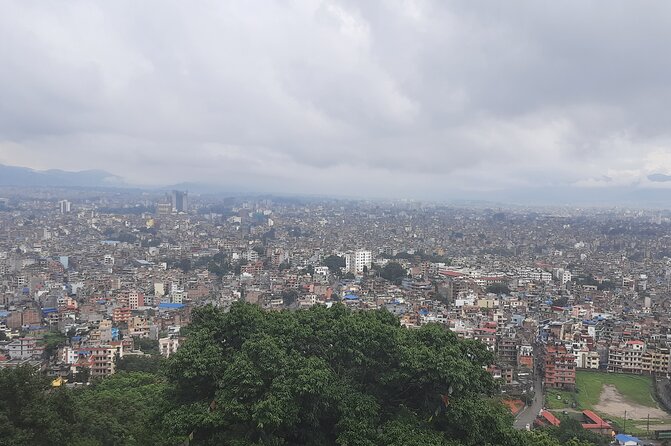
At the top, the stupa and hilltop setting provide a different view of Kathmandu than the low-lying temple sites. The visit combines religious architecture with a sense of height and distance from the city streets. Monkeys are part of the site’s familiar nickname, so keep a sensible eye on personal belongings around them.
The suggested two hours allows time for the ascent, the monument, and the descent. It also gives the guide space to explain the symbolism rather than sending you straight back to the car. I would not rush this stop. If you are choosing only two sites, Swayambhunath is a strong choice for the hilltop setting and Buddhist design, though less suitable if stairs are a serious problem.
More history walks in Kathmandu:
- UNESCO Seven World Heritage Tour in Kathmandu
★ 5.0 · 253 reviews - Kathmandu Private Sightseeing Tour | UNESCO World Heritage Sites
★ 5.0 · 109 reviews - Kathmandu: Full Day Private Top 4 UNESCO Heritage Tour W/Lunch.
★ 5.0 · 86 reviews - Kathmandu World Heritage Tour
★ 5.0 · 74 reviews
Patan Durbar Square and Newari craftsmanship
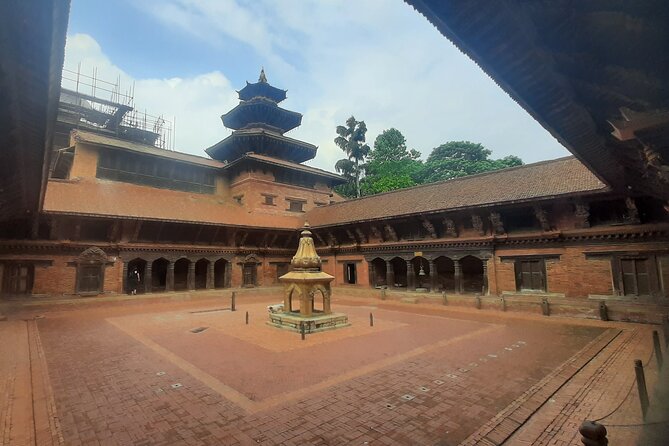
Patan Durbar Square is the architectural centerpiece of the tour. Its buildings reflect Newari design at its height during the Malla period, when rulers supported skilled work in brick, timber, stone, and metal.
The square is not just one building. Your guide can help you read the palace courtyards, temples, carved windows, and layered decorative details as parts of a larger royal and religious center. Without that context, it is easy to see a collection of handsome façades and miss how the square functioned.
The one-hour stop is a good introduction, though it will feel short if you want to inspect every carving or add nearby sights. This is the place where a private guide’s flexibility helps. You can ask to spend more time on architecture, local history, or the connection between Patan’s monuments and the valley’s craft traditions.
Patan also prepares you for the thangka painting visit. The square shows historic craftsmanship in its temples and palaces, while the art school shows how a traditional form is taught and practiced today. That link gives the day a stronger sense of continuity.
Thangka painting and singing bowls
The tour includes a visit to a thangka painting school and a healing and singing bowl demonstration center. These stops are not UNESCO monuments, but they help explain the artistic and devotional traditions behind the sites.
Thangka painting is a precise Buddhist art form, and a school visit gives you a look at the process rather than only finished work in a shop. The experience includes behind-the-scenes access, so you can ask about the techniques and training involved. The supplied details do not promise a hands-on lesson, so expect observation and explanation rather than a class unless your guide says otherwise.
The singing bowl center adds a different kind of demonstration. You can hear how the bowls are used and learn about their place in local craft and healing practices. The word healing is part of the center’s description, but you should treat this as a cultural demonstration, not a medical service.
These visits may include opportunities to buy handicrafts. That can be useful if you want a souvenir connected to Nepalese art, but do not feel obliged to purchase anything. The strongest value here is the extra cultural context. If you are mainly interested in monuments, tell your guide that you want these visits kept brief.
Why private transportation is worth the price
The tour costs $40 per person before entrance fees. For the four-site option, admission is listed as $20 per person. The two-site option has a $10 admission fee, so your basic total is about $60 per person for four sites or $50 per person for two, before food and tips.
That price is not the same as paying only for a guide. It includes transport according to the itinerary, hotel pickup and drop-off, a professional guide, bottled water, and the two traditional arts visits. In Kathmandu, private transport has real value because it removes the need to negotiate separate rides between widely separated sites.
The value improves if you are traveling with several people, since group discounts are offered. A private tour also means your group is the only group participating, so you are not waiting for strangers who want different amounts of time at each stop.
The price is less attractive if you only want a quick look at one monument or prefer to explore slowly on foot. It is also important to add the entry fee to your budget. The advertised tour price does not cover the four UNESCO site admissions.
Food is not included. Bottled water is provided, with one bottle per person. Tips for the guide and driver are also separate and optional according to your judgment.
How to make the five to seven hours work
Start by deciding if you want the full four-site route or only two sites. Four sites give you the broadest picture of the valley, but the day will feel active. Two sites allow more breathing room and reduce the admission cost.
If you want maximum cultural range, I would choose Pashupatinath, Boudhanath, Swayambhunath, and Patan. If you are short on time, choose based on interest:
- Choose Pashupatinath for Hindu worship, riverfront rituals, and cremation traditions.
- Choose Boudhanath for Tibetan Buddhist culture and the great stupa.
- Choose Swayambhunath for the hilltop setting and Buddhist symbolism.
- Choose Patan for Newari architecture and royal courtyards.
Ask the provider about the exact order when you book. Traffic can affect the day, and the five to seven hour estimate leaves room for variation. Since the activity offers hotel pickup and drop-off, provide a clear hotel location and confirm the meeting details after booking.
Wear shoes suitable for walking and stairs, particularly for Swayambhunath. Dress and behave respectfully at religious sites, and follow your guide’s advice about photography around ceremonies.
Who should book this experience
I would recommend this tour to a first-time visitor with one free day in Kathmandu, especially if you want the main heritage sites without arranging your own vehicle. It also suits solo visitors and small groups who value conversation with a guide and the ability to change the pace.
It is a good fit for people who want both famous monuments and working cultural traditions. The thangka school and singing bowl demonstration give the tour more range than a simple drive between four squares.
You may want another plan if you dislike organized sightseeing, have difficulty with long stairways, or want to spend an entire day at just one site. The tour is efficient, not slow. Pashupatinath and Swayambhunath each receive about two hours, while Boudhanath and Patan receive about one hour, so serious photographers or architecture specialists may want more time.
The activity is private, and confirmation is provided at booking. It is near public transportation, though you do not need to arrange public transport if you use the included pickup. Free cancellation is available up to 24 hours before the start time. Changes or cancellations inside that window are not accepted for a refund.
Should you book the Kathmandu UNESCO sites tour?
Book it if you want an organized, private introduction to Kathmandu Valley’s four main UNESCO sites and you value a guide who can explain religious customs and architecture as you go. Prakash is a name associated with especially flexible and clear guiding, and the private format gives you a good chance to request him if availability permits.
Choose the two-site version if your schedule is tight or you prefer a less hurried day. Choose all four if this is your main Kathmandu sightseeing day and you are comfortable with the Swayambhunath climb, the emotional setting at Pashupatinath, and extra admission costs.
At $40 before entry fees, the tour offers fair value for private transport, guiding, hotel service, water, and craft visits. Its real strength is not simply the number of monuments. It is the contrast between Hindu and Buddhist worship, royal Newari design, and living artistic traditions, all tied together by one local guide.
FAQ
How long does the Kathmandu UNESCO sites tour last?
The tour lasts approximately five to seven hours.
Which UNESCO sites can I visit?
The four-site option includes Pashupatinath Temple, Boudhanath Stupa, Swayambhunath, and Patan Durbar Square.
Can I visit only two sites?
Yes. A two-site option is available, with a lower UNESCO entrance fee.
Is hotel pickup included?
Yes. Hotel pickup and drop-off are included, and the driver meets you at your hotel door.
Is this a private tour?
Yes. Only your group participates in the private activity.
Is a guide included?
Yes. A professional guide is included. Prakash is one guide associated with the experience.
Are entrance fees included in the tour price?
No. Entrance fees are separate. The listed fee is $20 per person for four UNESCO sites or $10 per person for two sites.
Is transportation included?
Yes. Transportation according to the itinerary is included.
Are food and drinks included?
Food is not included. One bottle of water per person is provided.
Are the thangka painting school and singing bowl center included?
Yes. Visits to a thangka painting school and a healing and singing bowl demonstration center are included.
Can most people participate?
The activity information says most people can participate. Swayambhunath includes a long stairway to the hilltop stupa, so consider your comfort with stairs before booking.
Can I cancel for a full refund?
Yes, if you cancel at least 24 hours before the experience start time. Cancellations or changes made less than 24 hours in advance are not accepted for a refund.
Recently added around Kathmandu
- Kathmandu : Swambhunath & Durbar Square Guided Half Day Tour★ 3.3 · 3 reviews
- Private Day Tour in Kathmandu Valley Rim with Bhaktapur Sightseeing★ 5.0 · 3 reviews
- From Kathmandu / Pokhara / Chitwan: River Rafting – 1 Day★ 4.6 · 3 reviews
- Nepali Cooking training & Cultural Homestay Experience★ 5.0 · 3 reviews
- Private 3-Hour Nagarkot Sunset Tour from Kathmandu★ 3.5 · 3 reviews
- From Kathmandu: Everest Base Camp Landing Helicopter Tour★ 5.0 · 3 reviews
- 4 UNESSCO World heritage sites of Kathmandu-private tour★ 5.0 · 3 reviews
- From Kathmandu Budget: 15 Day Everest Base Camp Trek★ 5.0 · 3 reviews
Kathmandu UNESCO Heritage Tours, compared.
Private Kathmandu Sightseeing Tour | UNESCO World Heritage sites
Read our review →
Full Day 7 UNESCO Tour with Lunch – Private/Group
Read our review →
Full Day Top 4 UNESCO Tour with Lunch – Private/Group
Read our review →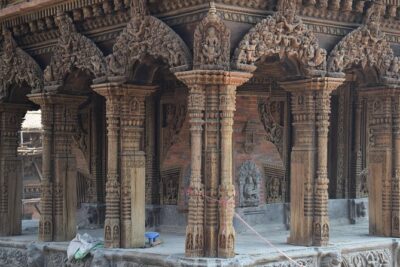
Full-Day 7 UNESCO Tour with Lunch – Private/Group
Read our review →
Kathmandu Private Sightseeing Tour | UNESCO World Heritage Sites
Read our review →Browse the lists this tour appears in