
Reviewed · KATHMANDU UNESCO HERITAGE TOURS
Kathmandu UNESCO World Heritage Tour
Kathmandu’s seven UNESCO sites in one day is a bold plan. You move from royal squares and medieval brickwork to Hindu cremation ghats, a great Buddhist stupa, and a hilltop shrine with wide city views. Deepak Kushwaha arranges the day with multilingual guides, including the highly praised guide Rabina.
I like the strong cultural range, especially the shift from Patan’s fine metalwork to Pashupatinath’s active rituals and Boudhanath’s Buddhist calm. I also like the chance to work with a guide such as Deepak, whose friendly, personal approach can turn a fast sightseeing day into something easier to understand.
The main drawback is the pace. Seven stops in about nine hours leaves little room for a long meal or unhurried wandering, and the $99 price does not include admission tickets, lunch, or an air-conditioned vehicle. Confirm transport and entry costs before you pay.
In This Review
- Key points at a glance
- A full day across Kathmandu Valley
- Kathmandu Durbar Square, the royal opening act
- Patan Durbar Square and its fine craftsmanship
- Bhaktapur’s medieval courtyards and temples
- Changu Narayan, the quieter temple stop
- Pashupatinath and Kathmandu’s active Hindu faith
- Boudhanath Stupa and Buddhist life
- Swayambhunath for the best city view
- What $99 really buys you
- The guide can shape the entire day
- Who should book this Kathmandu tour?
- Booking, cancellation, and practical details
- Should you book the Kathmandu UNESCO World Heritage Tour?
- FAQ
- How long does the Kathmandu UNESCO World Heritage Tour last?
- Which places are included?
- Where does the tour start and end?
- Is hotel pickup available?
- Are admission tickets included?
- Is transportation included?
- Is lunch included?
- What is the cancellation policy?
Key points at a glance
- Seven major heritage sites in one day: Kathmandu Durbar Square, Patan, Bhaktapur, Changu Narayan, Pashupatinath, Boudhanath, and Swayambhunath are all included.
- Guides may be male or female and multilingual: Deepak organizes the experience, and Rabina is named as one possible female guide.
- The day covers several faiths: You see Hindu temples, Buddhist monuments, royal courtyards, and active local religious life.
- Each listed stop allows about one hour: That keeps the route moving but makes the schedule demanding.
- Admission fees are extra: Tickets are not included at any of the seven sites.
- The meeting point is Kaiser Library: The tour returns there at the end, with pickup offered according to the tour details.
A full day across Kathmandu Valley
This tour tries to answer a common first-visit problem: how do you see the valley’s key monuments when your time is short? Instead of focusing on one city square, it links three old royal centers with four major religious sites.
That breadth is the attraction. Kathmandu Durbar Square gives you the former royal setting, Patan brings intricate Newar artistry, and Bhaktapur offers a more medieval-feeling group of temples and courtyards. Changu Narayan adds an older, quieter temple setting, while Pashupatinath, Boudhanath, and Swayambhunath show the living religious traditions that still shape daily life.
You should think of this as an introduction, not a slow study of every monument. Each stop is listed at one hour, and traffic between sites can make the schedule feel even tighter. Still, a good guide can help you decide what deserves your attention and explain why a carved doorway, shrine, ceremony, or courtyard matters.
The tour lasts about nine hours and starts at Kaiser Library on Kanti Path. It ends back at the same meeting point. Pickup is offered, but the supplied details do not explain the pickup area or vehicle arrangement, so I would confirm that before setting out.
More of the valley’s UNESCO heritage sites:
- Private Kathmandu Sightseeing Tour | UNESCO World Heritage sites
★ 5.0 · 756 reviews - Kathmandu: Full Day 7 UNESCO Tour with Lunch – Private/Group
★ 5.0 · 415 reviews - Kathmandu: Full Day Top 4 UNESCO Tour with Lunch – Private/Group
★ 5.0 · 269 reviews
Kathmandu Durbar Square, the royal opening act
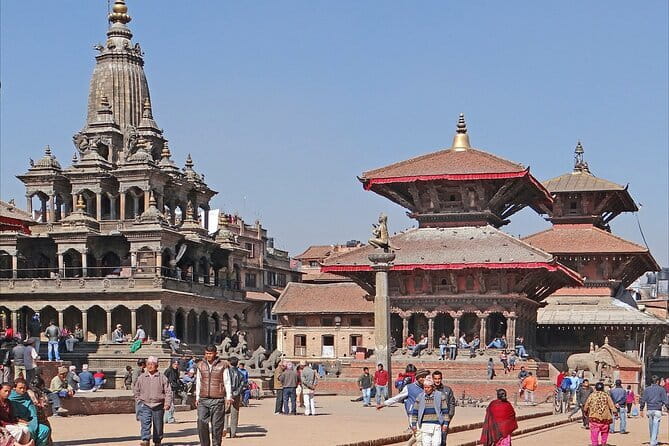
Kathmandu Durbar Square is a fitting first stop because it introduces the valley’s royal and religious architecture in one place. You can expect a guided walk through an old royal complex filled with temples, courtyards, and carved details.
The value here is context. Without guidance, the square can look like a collection of handsome buildings. With a guide, you can better connect the palace setting, religious shrines, local traditions, and the long story of Kathmandu’s rulers.
Allow one hour. That is enough for an overview and key explanations, but not enough to inspect every corner at leisure. The admission ticket is not included, so budget for a separate entry charge.
I would start by listening closely to the guide’s orientation, then use the remaining time for photographs and close looks at the woodwork. Kathmandu Durbar Square is likely to be one of the busier parts of the day, so a clear meeting instruction matters if the group separates.
Patan Durbar Square and its fine craftsmanship
Patan Durbar Square shifts the focus toward artistic detail. The itinerary highlights ancient temples, palaces, courtyards, and the Mahabouddha Temple, giving you a chance to see the careful brick, stone, and metalwork associated with Patan.
This is a good place to ask your guide about craftsmanship rather than simply moving from one monument to the next. The tour promises explanations of historical and cultural importance, and Patan is where that kind of help can make a real difference. Look closely at the repeated patterns, statues, and small architectural details that are easy to miss from a distance.
Again, the planned visit is one hour and entry is extra. If you care most about architecture and detail, you may wish the schedule allowed more time here. The upside is that Patan gives the day a strong art and design component before the route moves on.
Guides Deepak and Rabina are both associated with an informative, approachable style. Rabina is specifically praised for explaining Nepal’s history while allowing free time at each location. That balance is useful at Patan, where you need both explanation and a few quiet minutes to look.
Bhaktapur’s medieval courtyards and temples
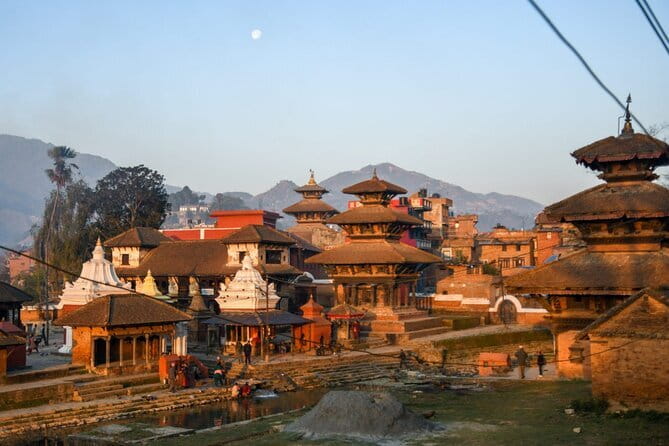
Bhaktapur Durbar Square is the third royal center, and its appeal is different again. The tour points to medieval temples, palaces, statues, the Vatsala Temple, and the iconic Nyatapola Temple.
One hour will give you a taste of Bhaktapur’s design and atmosphere, but this is another stop where the schedule can feel short. The site rewards slow walking and close attention to carved figures, temple levels, courtyards, and the relationship between public space and worship.
I like the progression from Kathmandu to Patan to Bhaktapur because it lets you compare the three old centers instead of treating them as interchangeable ruins. Your guide can help explain the differences in setting and artistry, making the route feel like a connected story.
The practical catch is that all three Durbar Square entries are separate expenses. Add those tickets to the advertised $99 before deciding if the package fits your budget.
More history walks in Kathmandu:
- UNESCO Seven World Heritage Tour in Kathmandu
★ 5.0 · 253 reviews - Kathmandu Private Sightseeing Tour | UNESCO World Heritage Sites
★ 5.0 · 109 reviews - Kathmandu: Full Day Private Top 4 UNESCO Heritage Tour W/Lunch.
★ 5.0 · 86 reviews - Kathmandu World Heritage Tour
★ 5.0 · 74 reviews
Changu Narayan, the quieter temple stop
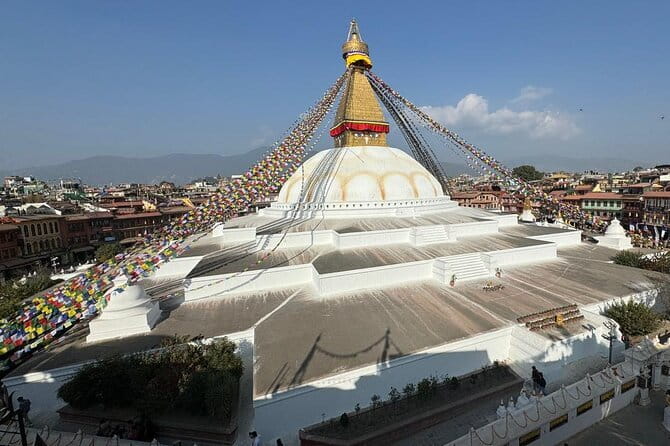
Changu Narayan Temple offers a change of pace. It is described as Nepal’s oldest Hindu temple and is known for ancient architecture, carvings, and a more peaceful setting than the major squares.
That quieter character matters after three concentrated heritage stops. You may find this visit easier to appreciate because the focus is narrower: one historic temple and its surrounding details rather than a large royal complex.
The scheduled hour should work well for a guided look. The guide’s role is especially useful here, since the significance of older carvings and Hindu imagery may not be obvious at first glance.
Entry is not included. The supplied details do not state how long the drive takes from Bhaktapur or how much walking is required, so anyone with mobility concerns should ask the operator before booking. The general note says most people can participate, but it does not promise a fully step-free route.
Pashupatinath and Kathmandu’s active Hindu faith
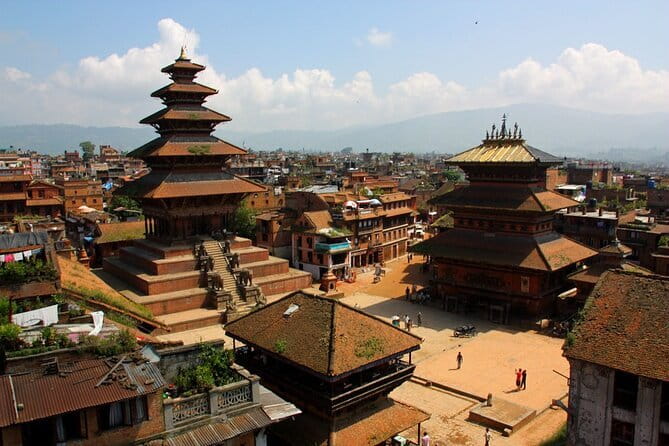
Pashupatinath Temple is one of the most important spiritual stops on the route. The tour emphasizes its Hindu importance, sacred setting, traditional ceremonies, and rituals.
This is not simply a monument to photograph. It is an active religious place, and your guide can help you understand what you are seeing and how to behave respectfully. You should follow instructions about photography, personal space, and where non-Hindu visitors may go.
The one-hour visit is enough for an introduction, but the emotional weight of the site may make it feel like one of the day’s most memorable stops. The advertised experience aims to show local traditions rather than presenting the temple as a silent museum.
Entry fees are extra, and the tour does not include meals. If you need a substantial lunch during the day, plan that with the operator in advance. A long meal could be difficult within a nine-hour route covering seven sites.
Boudhanath Stupa and Buddhist life
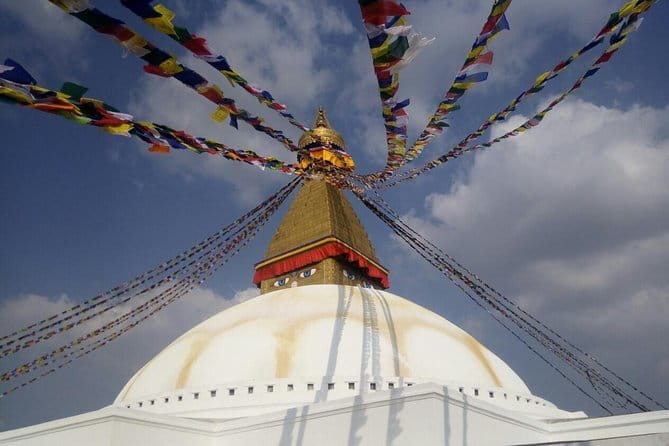
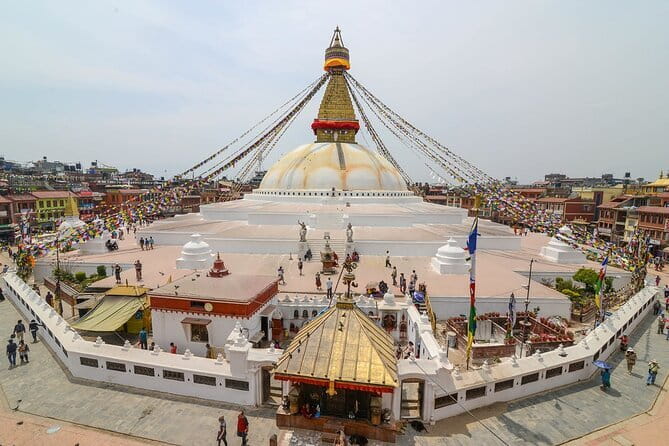
Boudhanath Stupa brings a different religious atmosphere. The itinerary presents it as one of Nepal’s major Buddhist monuments and promises a walk around the colossal stupa, with explanations of its history, architecture, and spiritual role.
This is a place where your guide can explain what the structure means, how people use the space, and why the surrounding streets matter. The tour specifically highlights the local traditions around Boudhanath, so expect more than a quick photograph from outside.
One hour gives you time to walk around the stupa and take in its design, though you may want longer if you enjoy watching daily religious activity. The route’s broad mix of Hindu and Buddhist sites is one of its best features.
As with every other stop, admission is not included. Keep your pace realistic. By this point, you will already have seen several major sites, and the combination of walking, traffic, heat, or crowds may make a short rest useful.
Swayambhunath for the best city view
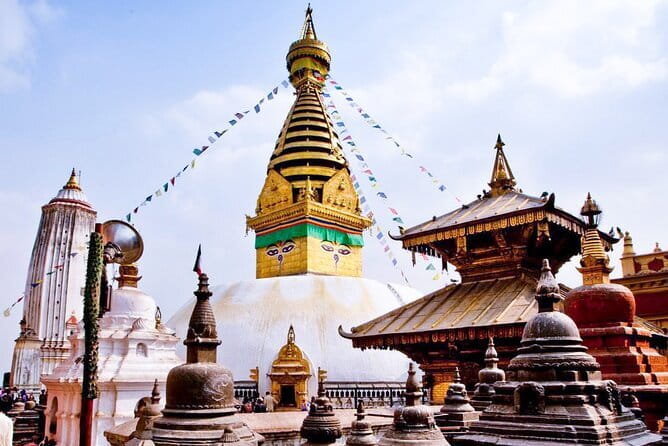
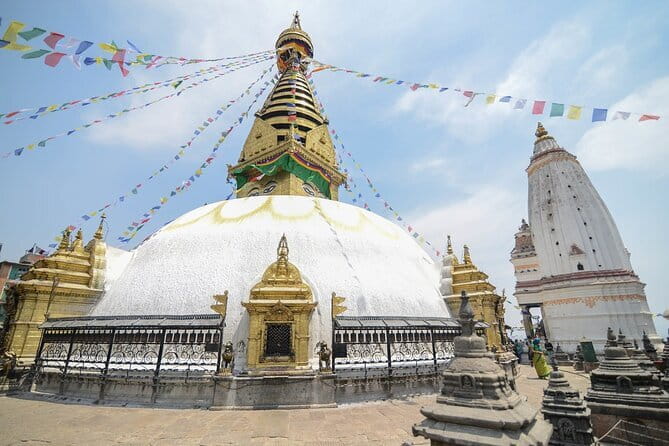
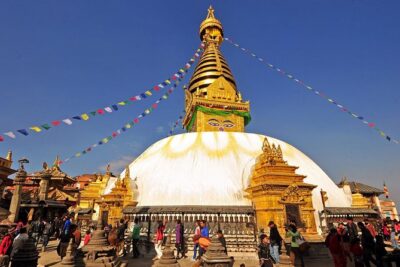
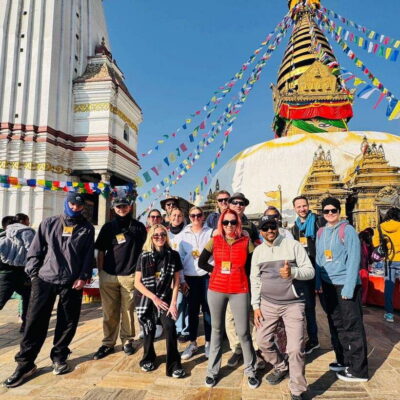
Swayambhunath, also called Swayambhunath Mahachaitya, closes the sightseeing route from a hill above Kathmandu. Its stupa, religious art, and panoramic views give the day a strong final image.
The hilltop position is both the reward and the practical concern. The supplied information does not specify the number of steps or the exact access route, but you should expect some uphill movement. Ask the operator if you need a clearer account of the walking involved.
I like ending here because the view helps you place the many districts and monuments you have visited during the day. After seeing temples and courtyards at street level, you get a broader sense of Kathmandu’s size and setting.
One hour is enough for the main view and a guided explanation, though a longer stay would be pleasant if the light is good. Entry is extra, and the tour returns to Kaiser Library after the final stop.
What $99 really buys you
At $99 per person, the core purchase is access to a full-day route with a multilingual male or female guide. The price is easiest to justify if you have limited time and want one person to connect seven major sites into a single cultural story.
The fee does not include lunch, dinner, tips, personal expenses, admission tickets, or an air-conditioned vehicle. Those exclusions are important. The final cost can be noticeably higher once you add seven separate site entries and food.
The transport detail needs special attention. Pickup is offered, but the included list does not mention an air-conditioned vehicle, and the meeting point is Kaiser Library. Ask these questions before booking:
- Is transportation included from Kaiser Library between all seven sites?
- Is pickup available from your accommodation?
- Are entry tickets paid individually at each site?
- Will the vehicle have air conditioning?
- How large will the group be on your date?
The tour can have up to 100 participants. That is a high maximum for an experience described as offering personalized attention. A smaller group may feel more flexible, while a large group could make it harder to hear the guide or keep the schedule. The operator may not fill the full capacity, but you should ask if group size matters to you.
The guide can shape the entire day
The strongest part of this experience is likely to be the guide. Deepak Kushwaha organizes the tour, and the available feedback repeatedly highlights his warmth, clear explanations, help with local places and food, and ability to make the day feel personal.
Rabina is named as a female guide and is praised for her history knowledge and for leaving room to enjoy each location independently. That is worth noting if you prefer a female guide or want to request one. The tour offers male and female multilingual guides, but a specific guide cannot be guaranteed from the details provided.
A good guide matters here because the route contains many similar-looking courtyards, shrines, and carved figures. The best use of your time is to ask direct questions: what is this building used for, which details should I notice, and what behavior is respectful at this site?
Tips and gratuities are not included. If your guide gives you a useful, attentive day, plan for a separate tip.
Who should book this Kathmandu tour?
I would recommend it to a first-time visitor who wants a broad introduction to Kathmandu Valley and has only one free day. It also suits anyone who prefers a guide to handle the order of visits and explain religious customs.
It is a particularly good match for you if you care about:
- Seeing all seven listed UNESCO sites in a single outing
- Comparing Kathmandu, Patan, and Bhaktapur
- Learning about both Hindu and Buddhist traditions
- Having a multilingual guide
- Getting panoramic views from Swayambhunath
- Visiting with a guide who may offer personal help with cultural questions
I would hesitate if you want long, quiet visits, leisurely meals, or time for shopping and independent exploration. Seven one-hour stops make this an efficient survey, not a relaxed walking tour.
You should also think carefully about the ticket and vehicle costs. The $99 price is not the full day’s expense, and the lack of a stated air-conditioned vehicle may matter in warm weather or heavy traffic.
Booking, cancellation, and practical details
Confirmation is provided when you book. The tour is near public transportation, and the general participation note says most people can take part.
Free cancellation is available if you cancel at least 24 hours before the start time. Cancel within 24 hours, or make changes during that period, and you will not receive a refund. Cut-off times use Kathmandu local time.
The tour is booked on average 13 days ahead, so reserving early is sensible if you need a particular date or hope to request a specific guide. Start at Kaiser Library unless pickup arrangements are confirmed separately.
Should you book the Kathmandu UNESCO World Heritage Tour?
Book it if your priority is coverage. For $99, before tickets and other extras, you get a carefully connected day across seven major sites, plus the help of a multilingual guide who can explain architecture, faith, ritual, and local customs.
The route’s weakness is also its defining feature: it tries to do a great deal. If you accept a brisk day and confirm the transport, group size, guide preference, and extra entrance fees, this is a practical first look at Kathmandu’s heritage.
FAQ
How long does the Kathmandu UNESCO World Heritage Tour last?
The tour lasts approximately nine hours.
Which places are included?
The route includes Kathmandu Durbar Square, Patan Durbar Square, Bhaktapur Durbar Square, Changu Narayan Temple, Pashupatinath Temple, Boudhanath Stupa, and Swayambhunath.
Where does the tour start and end?
It starts at Kaiser Library, P878+H4G, Kanti Path, Kathmandu 44600, Nepal, and ends back at the meeting point.
Is hotel pickup available?
Pickup is offered, but the provided details do not specify the pickup area or exact arrangement. Confirm this with the operator before booking.
Are admission tickets included?
No. Admission tickets are not included for any of the seven listed stops.
Is transportation included?
An air-conditioned vehicle is not included. The details do not fully explain the transportation arrangement between stops, so confirm how transport works before booking.
Is lunch included?
No. Lunch, dinner, personal expenses, and tips or gratuities are not included.
What is the cancellation policy?
You receive a full refund if you cancel at least 24 hours before the experience start time. Cancellations or changes made within 24 hours are not accepted for a refund.
Recently added around Kathmandu
- Kathmandu : Swambhunath & Durbar Square Guided Half Day Tour★ 3.3 · 3 reviews
- Private Day Tour in Kathmandu Valley Rim with Bhaktapur Sightseeing★ 5.0 · 3 reviews
- From Kathmandu / Pokhara / Chitwan: River Rafting – 1 Day★ 4.6 · 3 reviews
- Nepali Cooking training & Cultural Homestay Experience★ 5.0 · 3 reviews
- Private 3-Hour Nagarkot Sunset Tour from Kathmandu★ 3.5 · 3 reviews
- From Kathmandu: Everest Base Camp Landing Helicopter Tour★ 5.0 · 3 reviews
- 4 UNESSCO World heritage sites of Kathmandu-private tour★ 5.0 · 3 reviews
- From Kathmandu Budget: 15 Day Everest Base Camp Trek★ 5.0 · 3 reviews
Kathmandu UNESCO Heritage Tours, compared.
Private Kathmandu Sightseeing Tour | UNESCO World Heritage sites
Read our review →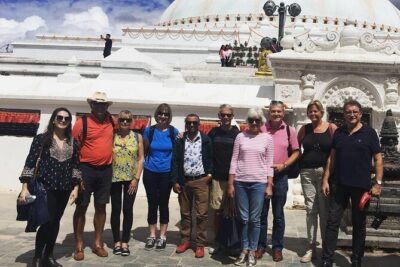
Full Day 7 UNESCO Tour with Lunch – Private/Group
Read our review →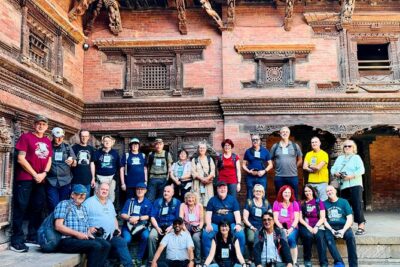
Full Day Top 4 UNESCO Tour with Lunch – Private/Group
Read our review →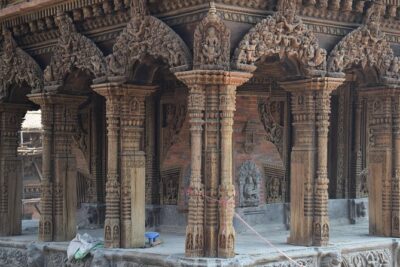
Full-Day 7 UNESCO Tour with Lunch – Private/Group
Read our review →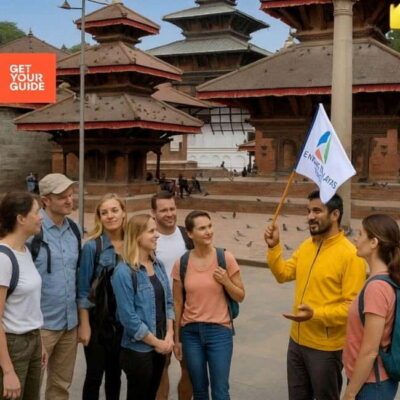
Kathmandu Private Sightseeing Tour | UNESCO World Heritage Sites
Read our review →Browse the lists this tour appears in