
Reviewed · KATHMANDU
Mera Peak Climbing
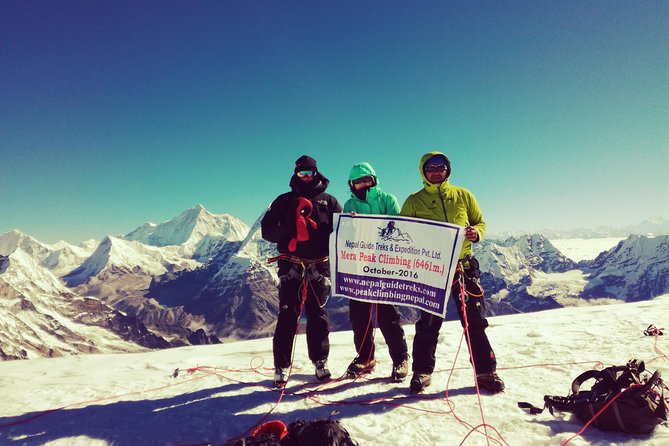
Mera Peak gives you a serious Himalayan summit without the scale or cost of an Everest expedition. At 6,476 meters, it is Nepal’s highest permitted trekking peak south of Everest, with a long approach through the wild Hinku and Hongu valleys and a final climb that calls for strong fitness, patience, and proper altitude care.
I like two things here: the wide view of five 8,000-meter peaks, and the mix of tea-house stays with camping rather than a fully fixed hotel-style route. You also get a close look at Sherpa highland life, not just a summit photograph.
The main drawback is the altitude. This is not a standard trek with a little snow at the end. Weather, route closures, illness, and delays can change the plan, so you need flexibility and the good sense to turn around if your body is not coping.
In This Review
- Key points before you book
- What an 18-day Mera Peak trip really involves
- Kathmandu is your practical starting point
- The Hinku and Hongu valleys are the heart of the route
- The summit day is a serious test
- Altitude care matters more than summit ambition
- Tea houses, tents, and what your $3,000 covers
- Why the small group limit helps
- Weather can rewrite the plan
- Who should book Mera Peak
- Should you book this climb?
- FAQ
- How long does the Mera Peak climb last?
- Where does the trip begin?
- What accommodation is included?
- Is the Mera Peak permit included?
- Is climbing equipment provided?
- What is the cancellation policy?
Key points before you book
- Mera Peak reaches 6,476 meters, making this a proper high-altitude climb rather than an easy walking holiday.
- Everest, Lhotse, Makalu, Cho Oyu, and Kanchenjunga may appear in the great mountain panorama from the upper route.
- Hinku and Hongu valleys offer a quieter setting than Nepal’s busiest trekking corridors.
- Tea houses and camping are combined, giving you both basic local lodging and more remote nights outdoors.
- Climbing permits, guides, food, accommodation, and necessary climbing gear are included, but personal climbing equipment is not.
- The group is limited to 15 people, and the minimum age is 18.
What an 18-day Mera Peak trip really involves
The advertised duration is about 18 days, although the booking information also shows an extra two hours and five minutes in the approximate duration field. In practical terms, plan for an 18-day Himalayan program, not a quick weekend add-on from Kathmandu.
The only formal stop named in the schedule is Nepal Guide Treks and Expedition, with the trip beginning at Tribhuvan International Airport in Kathmandu. The supplied information does not provide a day-by-day list of villages, camps, or summit dates. That matters. Before paying, ask for the current detailed route and the planned acclimatization days.
You can expect the trip to move from Kathmandu toward the Mera Peak region, then through the Hinku and Hongu valleys before the climbing stage. The approach is part of the experience, not empty time before the summit. You gain altitude gradually, walk through remote mountain country, and spend time among highland Sherpa communities.
The exact sequence can shift. Weather and snow have already forced changes on related trips, including a planned Mera Peak, Amphu Laptsa Pass, and Island Peak route that could not continue over the pass after heavy snowstorms in late October. A flexible plan is not a weakness here. It is part of safe Himalayan travel.
Other Kathmandu days people book alongside this one:
- Everest Base Camp Trek – 14 Days
★ 5.0 · 1,499 reviews - Private Kathmandu Sightseeing Tour | UNESCO World Heritage sites
★ 5.0 · 756 reviews - Everest Base Camp Helicopter Tour landing at Everest View Hotel
★ 5.0 · 668 reviews
Kathmandu is your practical starting point
Four nights in Kathmandu are included on a bed-and-breakfast basis. That gives you time to arrive, rest, prepare, and deal with the practical side of a high-altitude trip before heading into the mountains.
I would use these nights carefully. Check your boots, clothing, gloves, headlamp, pack, and personal climbing kit. The company says it provides necessary climbing gear, but it also excludes personal climbing equipment, so you need a precise gear list before departure.
Kathmandu is also where you should raise health concerns with your guide. Tell the team about past altitude problems, medication, or any condition that could affect the climb. The operator’s own guidance says to consult a doctor if one is available, which is sensible advice for a trip at this elevation.
Pickup is offered, and the meeting point is Tribhuvan Airport. The stated operating hours are Monday through Sunday, 9:45 AM to 6:15 PM, for the period shown from November 21, 2022 through December 9, 2026. Confirm your arrival details directly, especially if your flight lands outside those hours.
The Hinku and Hongu valleys are the heart of the route
The Hinku and Hongu valleys are described as wild, beautiful, and uninhabited in parts. That gives you a different feel from a route built mainly around busy lodges and famous viewpoints.
You will see why the approach takes time. Remote valleys need supplies, porters, camps, and careful movement. The mix of tea houses and camping lets the route use local accommodation where it exists, then shift to tents in quieter or more isolated areas.
That combination is a real strength for people who want more than a polished trekking circuit. Tea houses bring warmth, food, and contact with local communities. Camping gives you a closer connection to the mountain setting, but it also means fewer comforts and more dependence on the crew.
The cultural side is not an extra performance added for the itinerary. The route passes through areas associated with highland Sherpa communities, so you have a chance to see how mountain life shapes homes, food, work, and travel. Keep your expectations grounded. This is a climbing trip first, not a dedicated cultural tour.
The summit day is a serious test
Mera Peak is often grouped with trekking peaks, but that label can sound easier than it is. You still need to handle very high altitude, cold conditions, long hours, and climbing gear. A strong physical fitness level is required, and the minimum age is 18.
The summit reward is the view. From the Mera Peak area, the mountain panorama can include Everest at 8,848 meters, Cho Oyu at 8,201 meters, Makalu at 8,485 meters, Kanchenjunga at 8,586 meters, and Lhotse at 8,516 meters, along with other Himalayan summits.
You should not treat that view as guaranteed. Cloud, wind, snow, and your own condition can all affect what you see and how far you go. Several accounts connected with this operation describe weather delays, difficult conditions, and summit attempts that required careful decisions.
The strongest sign of good guiding is not simply getting people to the top. It is knowing when to adjust the route, slow down, or stop. On one climb, the team helped make a decision about a participant’s health rather than pushing blindly. That is exactly the attitude you want above 6,000 meters.
Guides associated with past departures include Dandee, Dende, Sonam Sherpa, Samdu, Ming-ma, and Gelchen Sherpa. Do not assume one of these people will lead your departure. Ask for the name, climbing background, language ability, and group role of your assigned guide before you go.
A completely different sort of day in Kathmandu:
- Half day cooking class in Thamel kathmandu
★ 5.0 · 607 reviews - Everest Base Camp Trekking
★ 5.0 · 485 reviews - Nagarkot Sunrise View and Day Hiking from Kathmandu
★ 5.0 · 471 reviews - Kathmandu: Full Day 7 UNESCO Tour with Lunch – Private/Group
★ 5.0 · 415 reviews
Altitude care matters more than summit ambition
The supplied safety advice is basic but important. Drink about two to three liters of lukewarm water each day, avoid alcohol and smoking, eat light food with plenty of calories, and consider ginger and garlic in meals.
You should tell your guide quickly if you develop symptoms of altitude sickness. Mild symptoms may improve if you stay put, rest, sleep, and drink enough water. If you do not improve after acclimatizing, begin descending. If the condition is serious, descend immediately.
Diamox is listed in the advice, but medication decisions belong with a qualified medical professional. Do not use a pill as permission to ignore worsening symptoms.
A Gamow bag, a high-pressure inflatable bag used to restore oxygen level and air pressure, is also mentioned. Ask in advance if the organizer carries one and what emergency equipment is available. The company says necessary climbing gear is included, but the information does not list every item or confirm every altitude-safety device.
This is where good preparation pays off. You cannot train yourself to remove altitude risk, but you can arrive fit, hydrated, properly equipped, and willing to follow your guide’s judgment.
Tea houses, tents, and what your $3,000 covers
The price is $3,000 per person. That is a substantial amount, but it covers more than a basic walking tour. Included are four Kathmandu nights with breakfast, Mera Peak permits, tea-house and camping accommodation during the trek, food, an experienced trekking and climbing guide, and necessary climbing gear.
That package has real value because permits, mountain logistics, food, porters or support staff, camps, and technical equipment can quickly add up in Nepal. The combined lodging plan also reflects the route’s remote character rather than forcing every night into a lodge.
Still, read the exclusions closely. International airfare and departure tax are not included. Personal expenses, personal climbing gear, and tips for guides and porters are also extra.
The phrase necessary climbing gear needs clarification. Ask if that means crampons, harness, helmet, ice axe, ropes, and other shared or technical items, and ask what you must bring yourself. Do not wait until Kathmandu to discover that a key personal item is excluded.
Food is included during the trek, but the information does not spell out menus or meal arrangements. If you have allergies, dietary restrictions, or a strong preference for certain foods, discuss them before booking.
Why the small group limit helps
The maximum group size is 15. That is not a private climb, but it is small enough to make communication easier than in a large commercial group.
A smaller group can move more smoothly, especially when weather or health problems force a change. It also gives the guide a better chance to notice how people are walking, eating, sleeping, and coping with altitude.
The trade-off is that you still travel on a group schedule. A strong climber may need to slow down, while someone struggling may affect the whole team. Ask how the company handles different ability levels, spare days, and a summit attempt when one person cannot continue.
Past departures included solo participants, including a solo woman in her twenties who wanted help with safety and logistics. That does not guarantee every group will feel the same, but the operation is set up to handle people who arrive alone.
Weather can rewrite the plan
The mountain does not care about your international flight home. Snowstorms and route conditions can close passes, delay movement, or stop a summit attempt.
One planned route had to abandon Amphu Laptsa Pass after heavy snow in late October, yet the team adjusted the plan and continued to support the climb. Other accounts describe bad weather and delays before a successful summit.
That tells you to protect the trip with spare time. The package itself is about 18 days, but no extra days are listed. Ask what happens if a flight, route, or summit schedule is delayed, and make sure your international itinerary is not too tight.
A good Mera Peak trip is not measured only by reaching the top. It is also measured by how calmly the team handles a closed route, poor weather, stomach illness, or a change in personal condition.
Who should book Mera Peak
I would consider this trip if you have strong fitness, a real interest in mountaineering, and enough patience for a long approach. It suits adults who want their first 6,000-meter Himalayan peak with organized guides and support rather than trying to arrange every permit, camp, and climbing detail alone.
It is less suitable if you want a relaxed lodge trek, dislike cold nights, or need a fixed schedule with no route changes. You should also think carefully if you have no experience with sustained physical effort. A trekking peak still demands preparation.
You do not need to chase the summit at any cost. The best reason to book is the chance to move through a remote region, learn how high altitude affects you, and attempt a major Himalayan peak with a team that has shown willingness to change plans when conditions demand it.
The operator is rated at five out of five from 33 submitted ratings, with 100 percent recommending it. More useful than the number itself is the repeated praise for communication, guide support, logistics, and problem-solving. Prakash Devkota is described as responsive before and during trips, often using WhatsApp to share information and help arrange plans before and after the climb.
Should you book this climb?
Book it if the $3,000 price fits your budget and you want a serious, guided Himalayan climb with permits, food, accommodation, and core climbing support included. The remote valleys, Sherpa culture, and views of five 8,000-meter mountains give the trip more substance than a simple summit chase.
Before booking, get the full day-by-day itinerary, the current equipment list, the assigned guide’s name, the emergency plan, and the policy for weather delays. If those answers are clear and you accept that the summit is never guaranteed, this is a strong choice for a fit adult seeking a first high-altitude peak.
FAQ
How long does the Mera Peak climb last?
The experience is listed as approximately 18 days, with the booking information showing a duration of 18 days, 2 hours, and 5 minutes.
Where does the trip begin?
The meeting point is Tribhuvan International Airport in Kathmandu, Nepal. Pickup is offered.
What accommodation is included?
The package includes four nights in Kathmandu with a bed-and-breakfast plan. During the trek, accommodation combines tea houses and camping.
Is the Mera Peak permit included?
Yes. Climbing permits for Mera Peak are included in the price.
Is climbing equipment provided?
The company states that all necessary climbing gear is included, but personal climbing gear is excluded. Ask for a detailed equipment list before departure.
What is the cancellation policy?
You can cancel at least 24 hours before the experience start time for a full refund. Cancellations or changes made less than 24 hours before the start time are not accepted for a refund.
Recently added around Kathmandu
- Kathmandu : Swambhunath & Durbar Square Guided Half Day Tour★ 3.3 · 3 reviews
- Private Day Tour in Kathmandu Valley Rim with Bhaktapur Sightseeing★ 5.0 · 3 reviews
- From Kathmandu / Pokhara / Chitwan: River Rafting – 1 Day★ 4.6 · 3 reviews
- Nepali Cooking training & Cultural Homestay Experience★ 5.0 · 3 reviews
- Private 3-Hour Nagarkot Sunset Tour from Kathmandu★ 3.5 · 3 reviews
- From Kathmandu: Everest Base Camp Landing Helicopter Tour★ 5.0 · 3 reviews
- 4 UNESSCO World heritage sites of Kathmandu-private tour★ 5.0 · 3 reviews
- From Kathmandu Budget: 15 Day Everest Base Camp Trek★ 5.0 · 3 reviews