
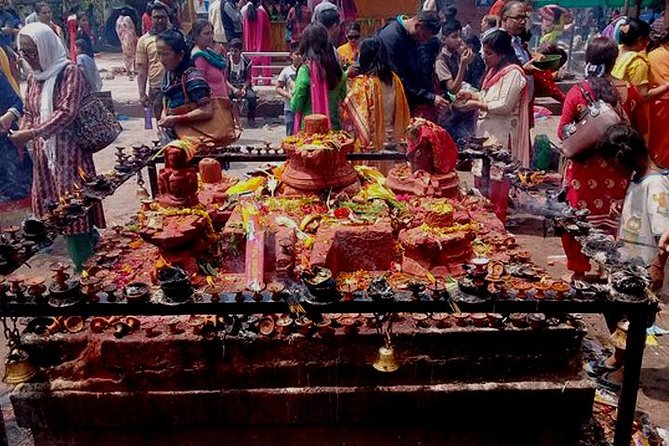
Reviewed · KATHMANDU
Private Half Day Budhanilkantha Tour
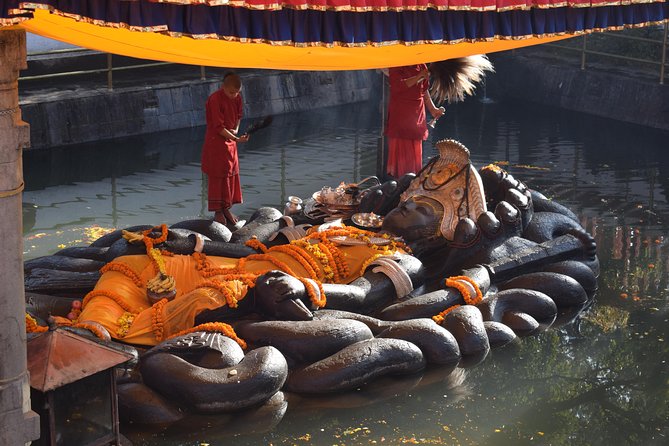
The star of this short outing is a 5-meter black-stone Vishnu statue reclining on the coils of the cosmic serpent Shesha. It appears to float in a pond, a striking sight made even more intriguing by the old mystery of how such a huge stone reached the Kathmandu Valley.
I like the private format, which gives you room to ask about Hindu symbols and local worship without keeping pace with a large group. I also like the easy timing: two to three hours leaves most of your day free. The main drawback is that pickup is limited to hotels inside the Ring Road, including Bouddha, and $45 per person can feel high for a brief visit if you are traveling alone.
In This Review
- Key points to know before you book
- Why Budhanilkantha is worth a half-day
- The first look at the 5-meter Sleeping Vishnu
- A living Hindu temple, not a museum display
- What the private guide adds
- Pickup, transport, and the two to three-hour schedule
- Is $45 per person a good value?
- Dress, manners, and what to expect on site
- Who will enjoy this temple visit most?
- My call on the Budhanilkantha half-day tour
- FAQ
- How long does the Budhanilkantha tour last?
- What is the main sight at Budhanilkantha Temple?
- Is the Vishnu statue carved from one stone?
- Does the statue really appear to float?
- Is hotel pickup included?
- Is transportation private?
- Is admission included?
- Are food and drinks included?
- What should I wear?
- Can I cancel for a full refund?
Key points to know before you book
- The Sleeping Vishnu statue is carved from one block of black basalt, not assembled from separate pieces.
- Your visit takes place at a working Hindu pilgrimage site, not a quiet museum or staged attraction.
- Private transport and hotel pickup are included within the stated Kathmandu pickup area.
- A guide adds the most value here, explaining Vishnu, Shesha, the sacred pond, and the statue’s unusual origin.
- The tour lasts about two to three hours, making it easy to fit around another Kathmandu activity.
- Smart casual dress is expected, and admission is included in the tour price.
Why Budhanilkantha is worth a half-day
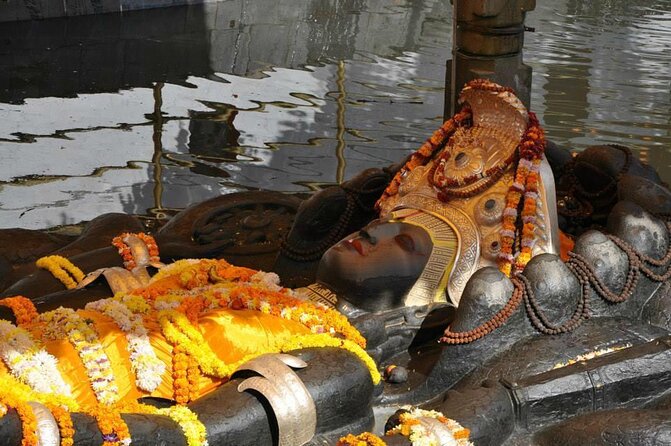
Budhanilkantha sits at the foothills of the Shivapuri hills on the northern edge of Kathmandu. The setting feels calmer than the city center, and the temple gives you a different view of Nepal’s religious life than the better-known squares and stupas.
The reason to come is the reclining Vishnu, often called Sleeping Vishnu or Narayanan. He rests on the many coils of Shesha, the cosmic serpent, in a sacred pool that represents the cosmic ocean. The statue is about 5 meters long and carved from one massive block of dark stone.
That single fact gives the site its sense of wonder. You are not looking at a small shrine with a familiar image. You are looking at a huge, finely formed figure that seems to float just above the water. Its construction and transport remain part of local legend, since no clear answer explains how the stone arrived in the valley more than a thousand years ago.
I find the mystery useful, but I would not make the trip only for an archaeological answer. The real value is the combination of scale, belief, and daily use. Pilgrims come to perform puja, make offerings, and pay respects. You are seeing a living place of worship, so the mood can shift from quiet observation to active devotion.
A few more Kathmandu tours worth comparing
- Private Kathmandu Sightseeing Tour | UNESCO World Heritage sites
★ 5.0 · 756 reviews - Kathmandu: Full Day 7 UNESCO Tour with Lunch – Private/Group
★ 5.0 · 415 reviews - Private Bhaktapur and Nagarkot Day Tour From Kathmandu
★ 5.0 · 305 reviews
The first look at the 5-meter Sleeping Vishnu
The visit begins at Budhanilkantha Temple, where your guide leads you toward the pond and the statue. The initial view is the strongest moment of the tour. Vishnu lies horizontally across the water, his head supported by the serpent and his body framed by the dark pool.
The carving’s details matter. Shesha is not just a bed or decorative background. In Hindu belief, the serpent is tied to the cosmic order surrounding Vishnu. The pond represents the primordial ocean, giving the whole scene a sense of Vishnu resting before creation.
A guide is particularly useful here because the image can be hard to read at first. You may see a reclining figure, a snake, and a pool. With explanation, the arrangement becomes a religious story in stone. Ask about the symbolism of Vishnu’s pose, the serpent, and the water. The private setting gives you time for those questions.
Admission is included, so you do not need to budget for a separate entrance fee. The listed visit time is about 30 minutes for the first stop, followed by a longer period at the temple for closer explanation and observation. In practice, the total outing is planned as a short half-day visit rather than a rushed photo stop.
A living Hindu temple, not a museum display
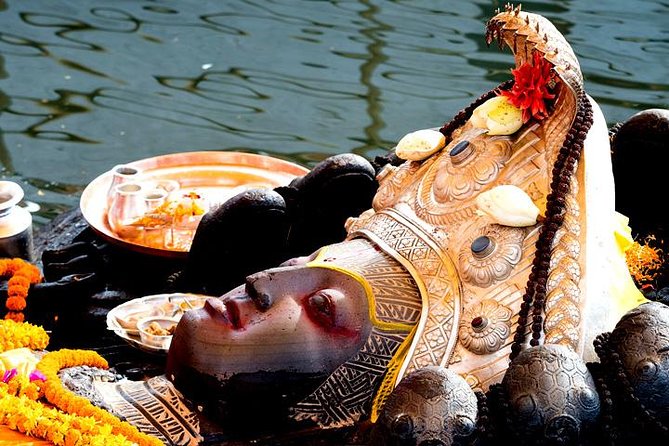
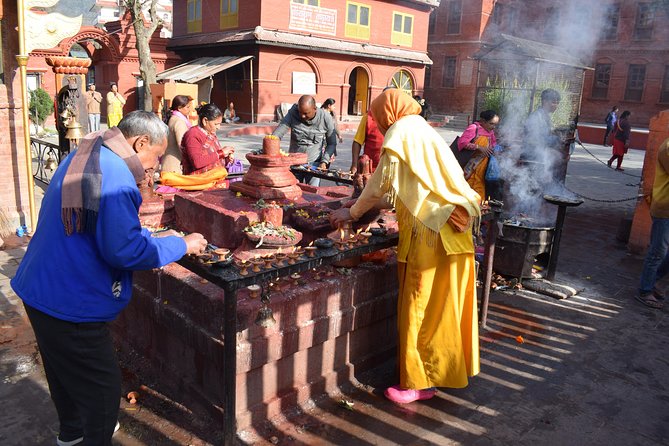
Budhanilkantha is important because worship continues here. You may see pilgrims performing daily rituals and puja around the temple. That changes how you should approach the visit. Keep your voice low, dress respectfully, and follow your guide’s advice about where to stand.
The site is not presented as a polished UNESCO monument with a fixed visitor route. Its appeal is that it remains part of local religious life. You may find the surroundings less visually grand than Kathmandu’s major temple squares, but that is also the point. This is an off-route stop where the focus rests on one powerful image and the people who come to honor it.
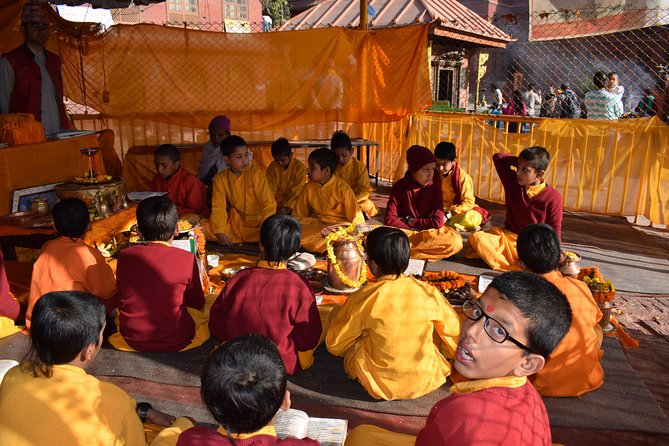
One visitor had the chance to experience a Hindu service at a Krishna temple during the outing. That kind of moment depends on timing and local activity, so you should not book the tour expecting a service. Still, it shows why a private guide can help. Religious practice is easier to understand when someone can explain what is happening without interrupting it.
The temple’s calm mood is another reason to choose this visit. You are close to Kathmandu, but the northern edge of the city offers a break from the tighter streets and heavy sightseeing schedule. Do not expect a full village tour or a long walk through rural Nepal. This is a focused temple visit with a peaceful setting.
What the private guide adds
The guide is the main reason to choose this experience instead of arranging a taxi and visiting on your own. The statue is impressive without help, but the stories and symbols turn it into a more meaningful stop.
A good guide can explain the origins of the Sleeping Vishnu image, the role of Narayanan, and why the statue is unusual among Hindu sites. You can also ask practical questions about the rituals you see. Since the activity is private, the guide’s attention belongs to you and your group.
Ananta has been praised for arriving early for pickup and for giving clear explanations during the visit. If he is available, you can ask for him when arranging your booking. The important point is not the name alone. It is the benefit of having a guide who respects the religious setting and can explain the statues and their significance in good English.
Private touring also helps with pace. You can spend more time at the pond if the statue holds your attention, or move on sooner if you have another appointment. A large group often has to follow a fixed rhythm. Here, you can ask a few questions, take in the site, and continue with your day.
A completely different sort of day in Kathmandu:
- Everest Base Camp Trek – 14 Days
★ 5.0 · 1,499 reviews - Everest Base Camp Helicopter Tour landing at Everest View Hotel
★ 5.0 · 668 reviews - Half day cooking class in Thamel kathmandu
★ 5.0 · 607 reviews - Everest Base Camp Trekking
★ 5.0 · 485 reviews
Pickup, transport, and the two to three-hour schedule
Hotel pickup and drop-off are included for locations inside the Ring Road, including the Bouddha area. Transport is by private vehicle, which saves you from arranging a taxi and haggling over the fare. Confirm your hotel location before booking if you are staying farther out.
The tour lasts approximately two to three hours. That makes it useful on a busy Kathmandu itinerary. You can schedule it around a morning walk, a museum visit, lunch, or an afternoon in another part of the city. Because the time is short, it also works well near the beginning or end of a stay when you want one more cultural stop without giving up an entire day.
The tour is not designed for someone seeking a long excursion into the hills. You will visit the temple and its immediate setting, then return. That limited scope is a strength if you want an easy outing, but a weakness if you prefer a full day of villages, hiking, and several monuments.
The experience is listed near public transportation, though the included private vehicle is more convenient for most people staying within the pickup zone. You avoid spending part of your morning finding the correct bus or negotiating a local ride. For a short tour, that saved time has real value.
Is $45 per person a good value?
At $45 per person, this is not the cheapest way to see one Kathmandu temple. If you are alone and comfortable arranging transport, you might view the price as high for a two to three-hour outing.
The calculation changes for two or more people. You receive a private vehicle, hotel pickup and drop-off within the covered area, a professional guide, admission, and local taxes. Group discounts are available, though the exact discount is not specified. For a small group, the cost buys convenience and personal attention rather than just entrance to the temple.
I would also compare the price with the time you save. Kathmandu traffic can make short trips frustrating, and a private transfer removes much of that uncertainty. You are paying to reach an unusual religious site, understand what you are seeing, and return without spending half the day on transport planning.
The value is strongest for first-time visitors who want context. It is weaker for repeat visitors who already know Hindu iconography and can reach Budhanilkantha easily. If the statue is a priority and your schedule is tight, the private format is sensible. If you are seeking the lowest possible cost, this may not be your best choice.
Dress, manners, and what to expect on site
Smart casual clothing is the stated dress code. Choose respectful clothing that covers you comfortably, especially since this is an active Hindu pilgrimage site. Avoid treating the temple as a simple photo backdrop.
You may see worshippers carrying out rituals during your visit. Watch first, then follow your guide’s directions. Ask before photographing people or ritual moments, and keep your attention on the religious setting rather than trying to force a picture.
Most people can participate in this activity, and the outing is described as easy. The provided information does not give detailed accessibility specifications, so anyone with mobility concerns should confirm the exact temple conditions before booking. The private format may allow the guide to adjust the pace, but that should be arranged in advance.
Food and drinks are not included. Since the tour is short, this is not a major problem, but plan breakfast or lunch around it. Do not expect a meal stop to be part of the experience.
Who will enjoy this temple visit most?
I would choose this tour if you have an interest in Nepali culture, Hindu beliefs, and unusual religious art. The Sleeping Vishnu statue offers a strong subject for anyone who likes places where legend and daily worship meet.
It also suits you if you want a quieter alternative to Kathmandu’s busiest sightseeing stops. The temple is away from the main tourist circuit, and the visit does not require a full day. Couples, families, and small groups can all benefit from the private vehicle and flexible pace.
This is less suitable if you want grand architecture, a long guided walk, or a large collection of monuments. The attraction is concentrated in one major statue and its sacred setting. You should come ready to look closely and listen, not expecting an endless list of sights.
The tour can also serve as a gentle introduction to Hindu imagery before you visit other temples in Nepal. Once you understand Vishnu’s role and the symbolism of Shesha, other statues and shrines may make more sense. The guide’s explanation can give you a useful framework for the rest of your time in Kathmandu.
My call on the Budhanilkantha half-day tour
I would book this if you want a short, private cultural outing with a clear focus. The Sleeping Vishnu statue is genuinely unusual, and the chance to see it in an active place of worship gives the visit more weight than a quick monument stop.
Book it with realistic expectations. You are paying $45 per person for convenience, transport, admission, and a guide, not for a full day of sightseeing. Confirm that your hotel lies inside the Ring Road pickup area, dress respectfully, and ask whether Ananta is available if his clear English explanations and early pickup appeal to you.
For solo visitors on a tight budget, the price may be hard to justify. For couples or small groups who want an easy morning away from central Kathmandu, it is a fair and practical choice. Free cancellation is available up to 24 hours before the start time, which gives you some flexibility if your plans change.
FAQ
How long does the Budhanilkantha tour last?
The tour takes approximately two to three hours, including the visit to Budhanilkantha Temple and private transfers within the stated service area.
What is the main sight at Budhanilkantha Temple?
The main sight is a 5-meter statue of Lord Vishnu, also called Narayanan, reclining on the coils of the cosmic serpent Shesha in a sacred pond.
Is the Vishnu statue carved from one stone?
Yes. The statue is carved from a single block of black basalt stone.
Does the statue really appear to float?
Yes. The reclining Vishnu image appears to float in the sacred pool, which represents the cosmic ocean.
Is hotel pickup included?
Yes. Hotel pickup and drop-off are included for hotels inside Kathmandu’s Ring Road, including the Bouddha area.
Is transportation private?
Yes. Transport is provided by private vehicle, and only your group participates in the activity.
Is admission included?
Yes. Admission to the temple is included in the tour price.
Are food and drinks included?
No. Food and drinks are not included.
What should I wear?
The stated dress code is smart casual. Since this is an active Hindu place of worship, respectful clothing is appropriate.
Can I cancel for a full refund?
Yes. You can cancel at least 24 hours before the experience start time for a full refund. Cancellations or changes made within 24 hours are not accepted for a refund.
Recently added around Kathmandu
- Kathmandu : Swambhunath & Durbar Square Guided Half Day Tour★ 3.3 · 3 reviews
- Private Day Tour in Kathmandu Valley Rim with Bhaktapur Sightseeing★ 5.0 · 3 reviews
- From Kathmandu / Pokhara / Chitwan: River Rafting – 1 Day★ 4.6 · 3 reviews
- Nepali Cooking training & Cultural Homestay Experience★ 5.0 · 3 reviews
- Private 3-Hour Nagarkot Sunset Tour from Kathmandu★ 3.5 · 3 reviews
- From Kathmandu: Everest Base Camp Landing Helicopter Tour★ 5.0 · 3 reviews
- 4 UNESSCO World heritage sites of Kathmandu-private tour★ 5.0 · 3 reviews
- From Kathmandu Budget: 15 Day Everest Base Camp Trek★ 5.0 · 3 reviews