
Reviewed · KATHMANDU
Rainbow Mo:Mo
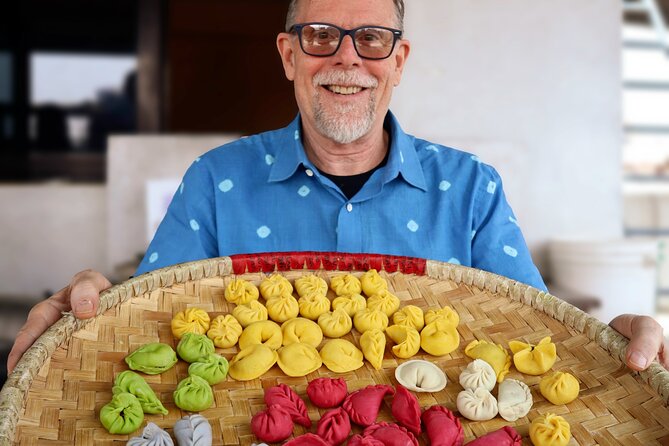
Kathmandu’s Rainbow Mo:Mo class turns a familiar Nepalese dumpling into a playful food lesson and a celebration of queer identity. You shape dough coloured with beetroot, spinach, carrot, and butterfly pea, then learn how a careful pinch gives each momo its form. I like the hands-on work and the chance to meet a local queer-led provider, Queermandu | Gay Tours Nepal.
I also like the flexible feel of this small class. One booking included only one participant, yet guide Prajeet collected the guest from the hotel lobby and Aayam still provided a personal lesson. The main consideration is that the $44 price is high for a two-hour cooking activity, especially if you are judging it only by the amount of food. You are paying for the instruction, setting, and queer-forward focus as much as for the momos.
In This Review
- Key points about Rainbow Mo:Mo
- Starting at the Garden of Dreams in Kathmandu
- Turning vegetables into colourful momo dough
- Learning the pinch that makes a momo
- Steamed and fried momos on the same plate
- A queer-forward class with a clear point of view
- What the guides add to the experience
- Is $44 a fair price for two hours?
- Timing, transport, and practical details
- Who will enjoy Rainbow Mo:Mo most?
- Should you book Rainbow Mo:Mo?
- FAQ
- Where does Rainbow Mo:Mo begin?
- Where does the activity end?
- How long does the momo-making class last?
- What are the opening hours?
- What ingredients are used to colour the momos?
- How many people can join the class?
- Can I cancel for a refund?
Key points about Rainbow Mo:Mo
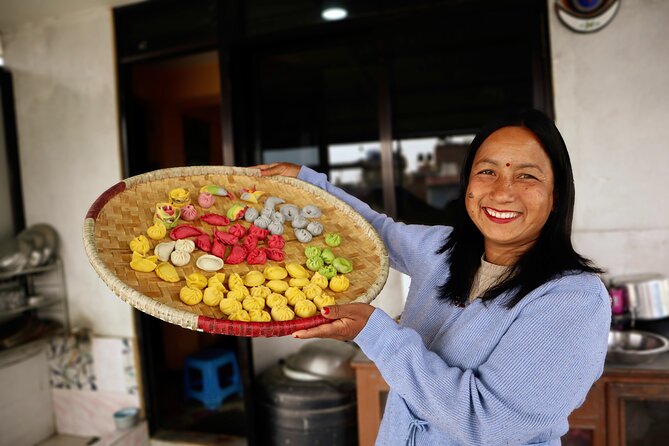
- Naturally coloured dough: Beetroot, spinach, carrot, and butterfly pea create the colours without relying on artificial dye.
- Momo shaping is the main skill: You roll, fill, and pinch the dumplings, with the class comparing the final shaping to careful cosmetic work.
- Steamed and fried servings: You get to enjoy the finished momos prepared in two different ways.
- Queer-led Kathmandu experience: Queermandu | Gay Tours Nepal gives the class a clear focus on diversity and acceptance.
- Small maximum group: The class accepts no more than 15 people, and it may sometimes run with just one participant.
- Easy central meeting point: The class starts and ends at the Garden of Dreams on Tridevi Sadak.
Starting at the Garden of Dreams in Kathmandu
The class begins at the Garden of Dreams, Tridevi Sadak, Kathmandu 44600. This gives you a clear central meeting point rather than an address that is difficult to find or far from the city center. If you arrange pickup, the supplied details show that Prajeet has collected a participant from a hotel lobby and arrived on time.
That pickup detail matters if you are still finding your way around Kathmandu. Confirm the pickup arrangement when you book, since the listed starting point remains the Garden of Dreams. If you make your own way there, plan to be ready for the scheduled start rather than arriving at the last minute.
The advertised operating window runs daily from 9:15 AM to 4:15 PM, for dates from November 3, 2024 through November 25, 2026. The activity lasts about two hours and returns you to the meeting point. That makes it a manageable morning or afternoon plan, with time left for sightseeing, shopping, or a meal elsewhere in Kathmandu.
Other Kathmandu days people book alongside this one:
- Everest Base Camp Trek – 14 Days
★ 5.0 · 1,499 reviews - Private Kathmandu Sightseeing Tour | UNESCO World Heritage sites
★ 5.0 · 756 reviews - Everest Base Camp Helicopter Tour landing at Everest View Hotel
★ 5.0 · 668 reviews
Turning vegetables into colourful momo dough
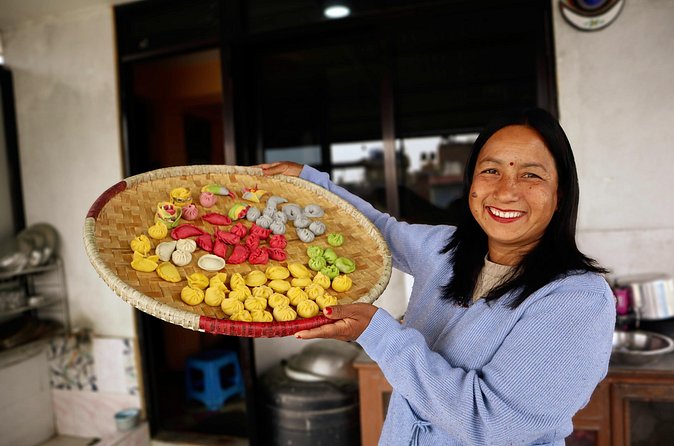
The first special feature is the dough itself. Instead of plain white wrappers, the class uses beetroot, spinach, carrot, and butterfly pea to give the momos their colour. Beetroot brings pink, spinach adds green, carrot offers orange, and butterfly pea is used for blue.
This is not just decoration. You get a simple lesson in how everyday ingredients can change the look of a familiar dish. The colours give the shaping process a creative edge, and they make the finished plate more memorable than a standard dumpling lesson.
The information available does not specify the exact fillings or a full recipe, so you should not expect a detailed menu in advance. The focus is clearly on making and shaping the momo wrappers, then enjoying the completed dumplings. If you have allergies or strict dietary needs, ask about the ingredients before booking rather than assuming the colour sources tell you everything about the meal.
The natural colour idea also fits the class’s larger message. The food is presented as a celebration of difference, with each colour contributing to one shared plate. That connection between cooking and inclusion is what separates this from a routine cooking demonstration.
Learning the pinch that makes a momo
Momo making looks easy until you try to close one neatly. The class centers on rolling and shaping the dough, then pinching the edges into a finished dumpling. The playful teaching line compares the process to putting Botox in the face before pinching, pinch, pinch, pinch. It is a humorous way to describe a task that needs patience and a light touch.
You can expect to work with your hands rather than simply watching someone else cook. The point is to take part, make your own shapes, and see how small changes in pressure affect the final result. Some dumplings may look more polished than others. That is part of the fun, and the colourful dough makes even imperfect attempts look intentional.
A good cooking class should leave you with a skill you can try again. Here, the useful takeaway is the basic rhythm of working with momo dough: handle it, shape it, add the filling, and close it with repeated pinches. The supplied details do not promise that you will receive a printed recipe or a complete lesson in Nepalese cooking, so think of this as a focused momo workshop rather than a full culinary course.
A private-feeling class may be possible even when you do not book a private tour. The maximum is 15 people, but one reported session had only one participant. That can make the instruction more personal, though group size can vary by date.
Steamed and fried momos on the same plate
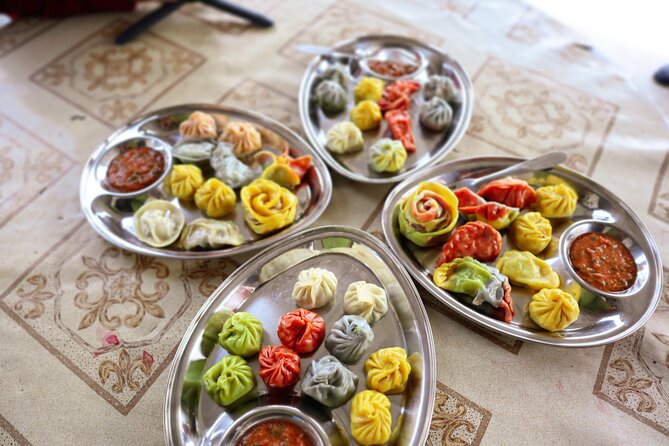
The finished momos are served both steamed and fried. This is a useful comparison because the cooking method changes the experience of the same dumpling. Steaming keeps the wrapper softer, while frying gives it a firmer, crispier finish.
The available information does not specify the sauces, side dishes, fillings, or portion size. I would therefore book this for the making process and the cultural setting, not as a guaranteed replacement for a large lunch. You may want to keep your meal plans flexible until you know how much food is served.
Still, tasting both versions adds value to a short class. You are not just making a colourful object for photographs. You get to eat the result and notice how the dumpling changes after steaming or frying. For a first introduction to momos, that makes the lesson more complete.
A completely different sort of day in Kathmandu:
- Half day cooking class in Thamel kathmandu
★ 5.0 · 607 reviews - Everest Base Camp Trekking
★ 5.0 · 485 reviews - Nagarkot Sunrise View and Day Hiking from Kathmandu
★ 5.0 · 471 reviews - Kathmandu: Full Day 7 UNESCO Tour with Lunch – Private/Group
★ 5.0 · 415 reviews
A queer-forward class with a clear point of view
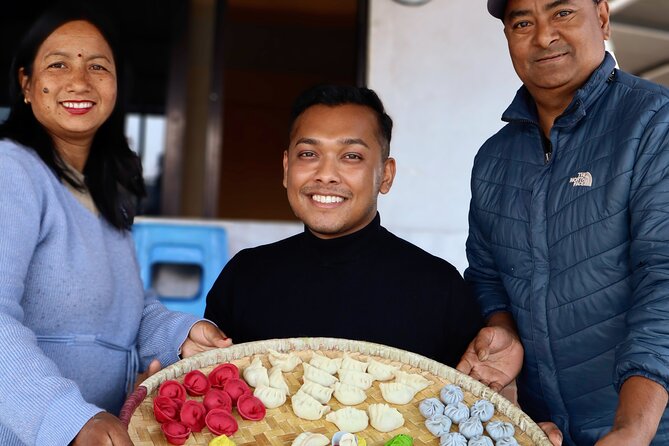
Rainbow Mo:Mo is designed as more than a cooking lesson. Queermandu | Gay Tours Nepal places queer identity, inclusion, and acceptance at the center of the activity. The colourful food supports that idea without making the class feel separate from the everyday pleasure of eating momos.
That focus may be the main reason to choose this class over a standard dumpling workshop. You are supporting a provider that presents Nepal through a queer-forward lens, while taking part in an activity that encourages laughter and shared work. The class is open to people who want a food experience connected to diversity, not just a technical recipe lesson.
The tone is deliberately playful. The language around the colours and the pinching technique is campy and humorous, so this may suit you if you enjoy a class with personality. If you prefer a quiet, formal cooking demonstration, the style could feel less natural.
Because the activity is limited to 15 people, it should not have the scale of a large commercial workshop. Yet the actual number on your date may be much smaller. The solo booking described in the supplied material shows that the class can still go ahead in a personal format, with Aayam teaching the momo technique and Prajeet helping with the pickup.
What the guides add to the experience
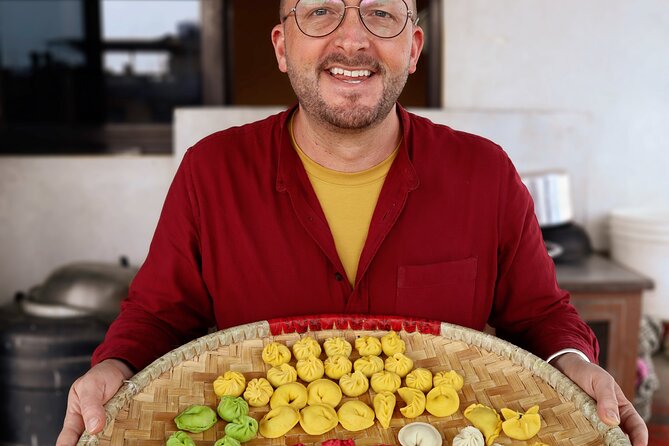
Aayam is identified as the person who teaches the momo making, while Prajeet handled hotel-lobby pickup for one participant. Those roles give the experience a useful human shape. You are not simply handed ingredients and left to copy a video. There is a named instructor for the food work and a named contact connected with getting you to the activity.
The available details do not provide a full biography for either guide, so I would not assume a particular background or language ability beyond what is stated. What you can reasonably expect is practical help with the class and, when arranged, assistance getting from your hotel to the meeting point.
The personal nature of the reported solo session is worth keeping in mind. A one-person booking can sometimes feel awkward if the provider treats it like a canceled group, but here the supplied account describes it as fun and personal. That is a strong sign for solo visitors who want an activity with direct instruction.
At the same time, group composition cannot be predicted. You may join a small group or have a more individual lesson. If meeting other people is important to you, ask about the expected group size for your date.
Is $44 a fair price for two hours?
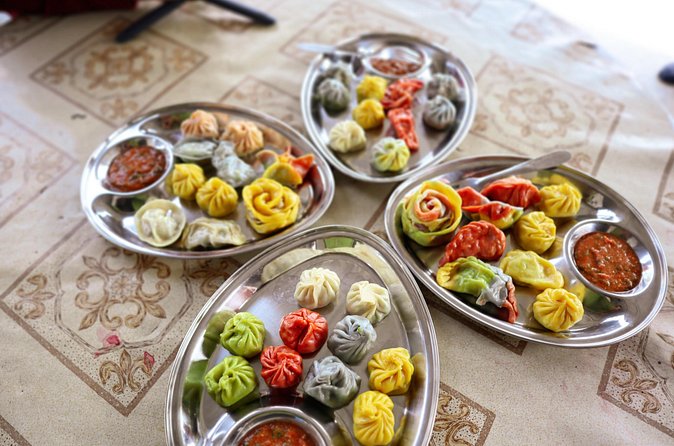
At $44 per person, Rainbow Mo:Mo is not the cheapest way to eat momos in Kathmandu. Nepal is full of affordable food, and you can find dumplings for far less than the cost of this activity. The fair comparison is not a plate at a restaurant. It is the value of two hours of instruction, hands-on preparation, pickup when offered, and a queer-led setting.
I think the price makes the most sense for you if the social and cultural purpose matters as much as the meal. You receive a focused activity with named guides, naturally coloured ingredients, two cooking styles, and a chance to support Queermandu. That package has more value than food alone.
The price is harder to justify if you mainly want to eat a large portion of momos or learn a broad range of Nepalese dishes. The class description does not promise a full meal, a recipe book, or instruction in several dishes. In that case, a restaurant meal plus a cheaper activity may suit your budget better.
The small-group limit improves the value when the class is not full. Individual attention can help you learn the pinching technique without waiting behind a large crowd. Since one session had only one participant, solo visitors should not assume that a low booking count will make the class less worthwhile.
Timing, transport, and practical details
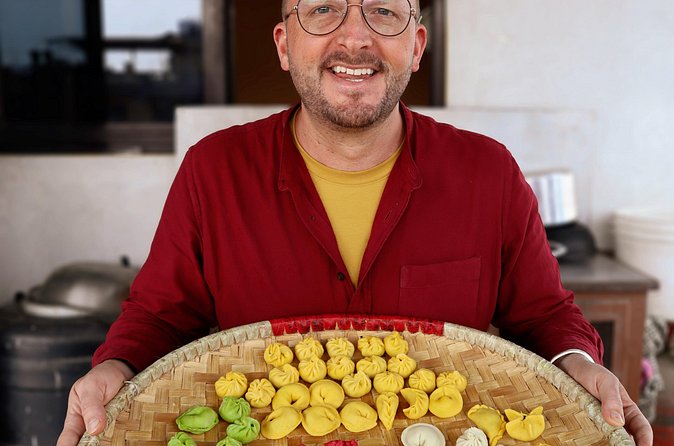
You can book a start time within the stated daily hours of 9:15 AM to 4:15 PM. Since the activity lasts about two hours and ends at the Garden of Dreams, it fits well between other Kathmandu plans. A morning session leaves your afternoon open, while an afternoon class can provide a break from sightseeing.
Pickup is offered, but the meeting point remains important. Confirm how pickup works and where you should wait, especially if you are staying outside the immediate Garden of Dreams area. The available information confirms hotel-lobby pickup in at least one case, but it does not give a fixed pickup zone or transfer time.
The activity accepts mobile tickets, and confirmation is provided at booking. Service animals are allowed, and the meeting area is near public transportation. Those details make the class relatively easy to fit into a city day, though the information does not specify the cooking venue’s full accessibility features.
You can cancel for a full refund if you do so at least 24 hours before the local start time. Changes made inside that 24-hour window are not accepted, and a late cancellation is not refunded. The class also needs a minimum number of participants. If that minimum is not reached and the provider cancels, you are offered another date or experience, or a full refund.
Who will enjoy Rainbow Mo:Mo most?
I would recommend this class to solo visitors, couples, and small groups who want food preparation with a strong social message. It is especially suitable if you are curious about queer-led experiences in Kathmandu and enjoy taking part rather than sitting through a demonstration.
It also works well for people who like photography and presentation. The pink, green, orange, and blue dough makes the cooking process visually distinctive, though the real value is in shaping and tasting the momos.
You may want to choose another activity if you need a long, technical cooking course, a guaranteed private group, or a clearly defined full meal. The details here support a two-hour momo-making session, not a full survey of Nepalese cuisine.
For solo visitors, the possibility of a very small group is a plus. You can receive direct help from Aayam and avoid feeling lost in a crowded class. For social visitors, the maximum of 15 people keeps the activity from becoming a large production, but you should ask ahead if you want to know how many people are booked.
Should you book Rainbow Mo:Mo?
Book it if you want colourful hands-on cooking with a queer-forward purpose and you are comfortable paying for the experience rather than only the food. The natural colours, steamed and fried results, central Garden of Dreams meeting point, and personal instruction from Aayam give the class a clear identity.
I would be more cautious if your budget is tight or your main goal is a filling meal. At $44, this is a special-interest activity, not a bargain food stop. For the right visitor, though, the chance to pinch your own rainbow momos and support Queermandu makes the cost easier to understand.
FAQ
Where does Rainbow Mo:Mo begin?
The class begins at the Garden of Dreams on Tridevi Sadak, Kathmandu 44600, Nepal.
Where does the activity end?
The activity ends back at the Garden of Dreams meeting point.
How long does the momo-making class last?
The class lasts approximately two hours.
What are the opening hours?
The activity operates Monday through Sunday from 9:15 AM to 4:15 PM for the listed dates from November 3, 2024 through November 25, 2026.
What ingredients are used to colour the momos?
The class uses beetroot, spinach, carrot, and butterfly pea to create the dough colours.
How many people can join the class?
The maximum group size is 15 people.
Can I cancel for a refund?
Yes. You can cancel at least 24 hours before the local start time for a full refund. Cancellations or changes made less than 24 hours before the start time are not accepted for a refund.
Recently added around Kathmandu
- Kathmandu : Swambhunath & Durbar Square Guided Half Day Tour★ 3.3 · 3 reviews
- Private Day Tour in Kathmandu Valley Rim with Bhaktapur Sightseeing★ 5.0 · 3 reviews
- From Kathmandu / Pokhara / Chitwan: River Rafting – 1 Day★ 4.6 · 3 reviews
- Nepali Cooking training & Cultural Homestay Experience★ 5.0 · 3 reviews
- Private 3-Hour Nagarkot Sunset Tour from Kathmandu★ 3.5 · 3 reviews
- From Kathmandu: Everest Base Camp Landing Helicopter Tour★ 5.0 · 3 reviews
- 4 UNESSCO World heritage sites of Kathmandu-private tour★ 5.0 · 3 reviews
- From Kathmandu Budget: 15 Day Everest Base Camp Trek★ 5.0 · 3 reviews