
Reviewed · KATHMANDU UNESCO HERITAGE TOURS
Seven World Heritage Day Tour in Kathmandu Nepal
Kathmandu Valley’s seven UNESCO monument zones in one day is a bold plan, but this tour makes it possible with a private vehicle and hotel pickup. You move from hilltop stupa to royal square, from a living goddess courtyard to major Hindu and Buddhist pilgrimage sites, without arranging each ride yourself. Guides such as Shanti Karki and Pankaj have earned special praise for clear explanations and flexible pacing.
I like the wide cultural range and the chance to see both famous sites and quieter corners such as Changu Narayan. I also like that a guide can adjust the day: one guest noted that Pankaj reduced stair climbing and slowed the pace when needed. The main drawback is simple: ten to twelve hours is a long day, and entrance fees, food, and drinks are extra.
In This Review
- Key points to know before booking
- Seven UNESCO sites, one very full Kathmandu day
- Swayambhunath and Amideva Buddha Park
- Kathmandu Durbar Square and the Kumari courtyard
- Patan Durbar Square, Krishna Temple, and the Golden Temple
- Bhaktapur Durbar Square and the City of Devotees
- Changu Narayan, the quieter UNESCO stop
- Pashupatinath and Boudhanath after the royal squares
- What the $65 price really covers
- Timing, pace, and comfort
- Who will enjoy this tour most
- Should you book the Seven World Heritage Day Tour?
- FAQ
- How long does the Seven World Heritage Day Tour last?
- How much does the tour cost?
- Is hotel pickup included?
- Is transportation private?
- Are entrance fees included?
- Are food and drinks included?
- Which UNESCO sites are included?
- Does the tour include Patan Museum?
- Can I choose a start time?
- What is the cancellation policy?
Key points to know before booking
- Seven UNESCO monument zones in one day: Swayambhunath, Kathmandu Durbar Square, Patan Durbar Square, Bhaktapur Durbar Square, Changu Narayan, Pashupatinath, and Boudhanath.
- Private transport keeps the schedule workable: Your group travels by private vehicle between sites, with pickup and drop-off inside Kathmandu’s Ring Road.
- The day includes far more than seven stops: You also visit Kumari Chowk, the Golden Temple, Patan Museum, Nyatapola Temple, Dattatraya Temple, the 55 Window Palace, and Siddha Pokhari.
- Guides add the real value: Shanti Karki and Pankaj are two guides specifically praised for detailed explanations and considerate pacing.
- Budget for separate admission: The $65 price covers transport and guiding, but entrance fees at the heritage sites are not included.
- Best for a short Kathmandu stay: It is an efficient first look, though it is too full for anyone wanting long, unhurried visits at every monument.
Seven UNESCO sites, one very full Kathmandu day
The key thing to understand is that this is not a slow walking tour of one historic district. It is a valley-wide circuit covering major Buddhist, Hindu, and Newari sites, with a private vehicle linking the stops.
The tour lasts about ten to twelve hours. That sounds intense because it is. Still, the vehicle matters. You are not trying to cover the whole valley on foot, and the guide handles the route while you focus on the monuments.
The itinerary includes seven UNESCO monument zones, though the UNESCO designation applies to a larger historic area called the Kathmandu Valley World Heritage property. You see the seven major zones through a series of squares, temples, stupas, courtyards, and museum visits.
I would treat the day as an introduction rather than a final word on Kathmandu. You get a strong sense of the valley’s art and religious life, but each site could easily fill a separate half-day.
More of the valley’s UNESCO heritage sites:
- Private Kathmandu Sightseeing Tour | UNESCO World Heritage sites
★ 5.0 · 756 reviews - Kathmandu: Full Day 7 UNESCO Tour with Lunch – Private/Group
★ 5.0 · 415 reviews - Kathmandu: Full Day Top 4 UNESCO Tour with Lunch – Private/Group
★ 5.0 · 269 reviews
Swayambhunath and Amideva Buddha Park
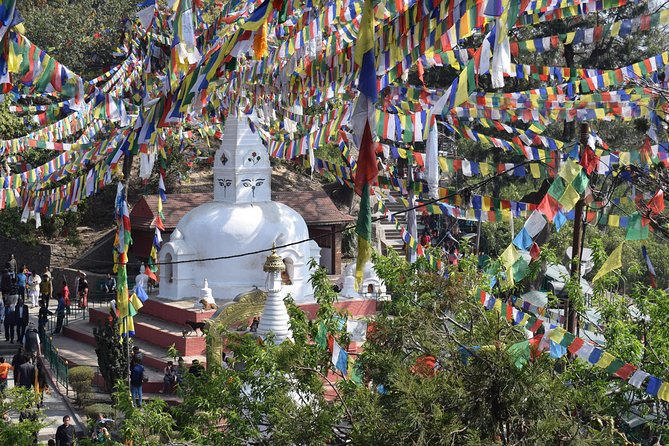
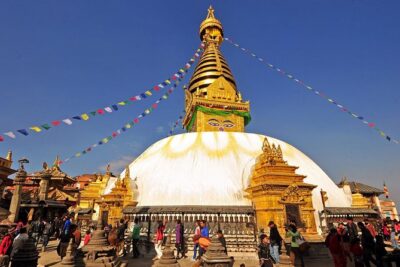
Swayambhunath, often called the Monkey Temple, begins the day with a Buddhist pilgrimage site on a hill. The tour information notes two entrances: one involves an inclined walk to the top, while the other offers a different approach. The stop lasts about an hour, and admission is separate.
This is a useful first stop because it gives you a major Buddhist site before the royal squares and Hindu temples take over the schedule. The hill setting also makes Swayambhunath feel distinct from the tightly packed urban courtyards later in the day.
Stair and slope levels matter here. The itinerary does not promise a step-free visit, so tell your guide at the start if you need to limit climbing. Pankaj was specifically praised for slowing down and reducing stairs for one participant, which suggests that a private tour can be adapted more easily than a fixed group outing.
After Swayambhunath, you spend about 30 minutes at Amideva Buddha Park. Large Shakyamuni Buddha statues form the center of the park, with smaller religious and architectural features around them. Admission is free.
This is a short, focused stop. You will not spend hours here, but it gives the morning a calm visual change before Kathmandu Durbar Square.
Kathmandu Durbar Square and the Kumari courtyard
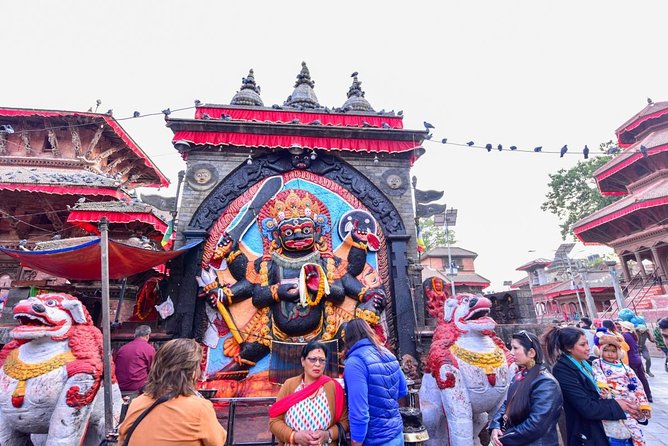
Kathmandu Durbar Square brings you into the former royal center of the capital. The square contains historic buildings and traditional architecture, though some structures remain under construction. Plan on about an hour here, with admission separate.
The value of a guide becomes clear in a place like this. A square filled with pagodas, palace buildings, carved wood, and shrines can blur together if you only take photographs. A guide can explain what you are seeing and connect the architecture to the city’s royal and religious life.
One brief stop is Kumari Chowk, a red-brick courtyard with three levels. It is associated with the Kumari, the living goddess, a Newari girl selected for the role until puberty. The scheduled visit lasts only five minutes, so you should think of it as a quick look at the courtyard, not a long cultural presentation.
That short timing is typical of the day. You see the essential setting, then return to the vehicle and continue.
Patan Durbar Square, Krishna Temple, and the Golden Temple
Patan Durbar Square, in Lalitpur, is one of the day’s strongest stops. The historic Malla palace courtyard is known for Newari architecture, crimson brick paving, and finely worked temples. You have about an hour here, not counting the nearby sites.
The Krishna Temple deserves its own attention. Its stone construction differs from the brick and timber forms seen elsewhere, and the temple has 21 shrines with carvings connected to the Ramayana and Mahabharata. A large bell is also part of the setting.
The itinerary then leads north to Hiranya Varna Mahavihar, better known as the Golden Temple. This 12th-century pagoda-style Buddhist temple has bronze figures and silver and gold decoration. The visit lasts about 15 minutes, with admission separate.
Fifteen minutes is enough to see the courtyard and architectural detail, but not enough to linger over every image and carving. I would stay close to the guide here. The Golden Temple is compact, and the best details can be easy to miss when the schedule is moving.
Patan Museum follows for about 30 minutes. Inside Keshav Narayan Chowk, the museum presents records of earlier life and displays artifacts connected with the area. This is a smart inclusion because it gives context to the objects and buildings you see outside.
Patan is where the day may feel most rewarding for anyone interested in Newari design. You get a royal square, a stone Hindu temple, a Buddhist courtyard, and a museum in one compact section.
More history walks in Kathmandu:
- UNESCO Seven World Heritage Tour in Kathmandu
★ 5.0 · 253 reviews - Kathmandu Private Sightseeing Tour | UNESCO World Heritage Sites
★ 5.0 · 109 reviews - Kathmandu: Full Day Private Top 4 UNESCO Heritage Tour W/Lunch.
★ 5.0 · 86 reviews - Kathmandu World Heritage Tour
★ 5.0 · 74 reviews
Bhaktapur Durbar Square and the City of Devotees
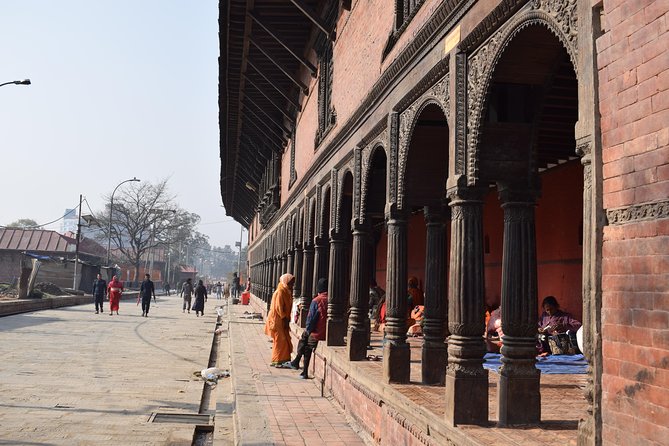
Bhaktapur receives the longest single visit, about two hours. That extra time is welcome. The city is known for Newari culture and architecture, and the square includes several major structures rather than one central monument.
The itinerary includes Nyatapola Temple, a five-level pagoda more than 30 meters tall. Its sculpted roof levels make it one of the most striking buildings in the square. You have about ten minutes here, so the guide’s explanation can help you understand the temple’s design without using up the time reserved for the wider square.
Dattatraya Temple is in Dattatraya Square. Local belief connects its construction with the trunk of a single tree, and the temple’s large scale makes that detail especially memorable. The stop lasts about 15 minutes.
The 55 Window Palace is another quick visit. Its name refers to the exactly 55 carved windows in the palace, which is arranged around linked courtyards. You have about 15 minutes to see it.
Siddha Pokhari provides a different setting. This human-made pond measures 171 meters long and three meters deep, and it is used as a place for local people to relax. The stop lasts around 15 minutes.
Bhaktapur is the point where you most need to watch the clock. Two hours gives you a useful look, but the square has enough detail to occupy much longer. I would avoid spending too much time shopping or stopping for an extended meal if seeing all seven UNESCO sites is your priority.
Changu Narayan, the quieter UNESCO stop
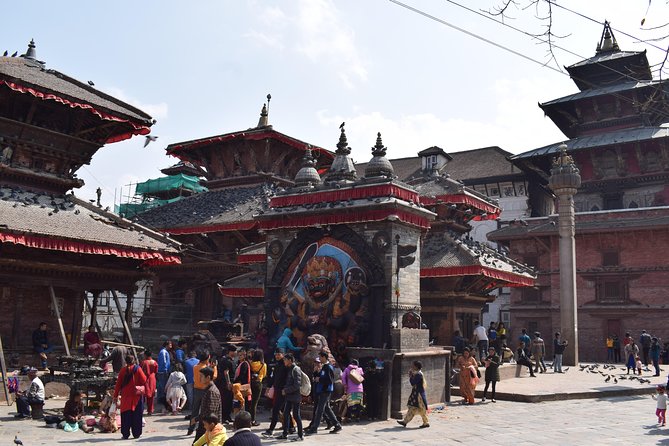
Changu Narayan is described as the least visited of the seven UNESCO sites on this route. The village setting and traditional Newari carving work give it a different feel from the grand urban squares.
The stop lasts about 30 minutes, and admission is separate. That is enough for a clear introduction, but it leaves little room for a long wander. The site is especially useful if you want to see traditional craftsmanship and a less central part of the valley.
Changu Narayan also tests the value of the private vehicle. It is not simply another square in central Kathmandu, so including it in a self-planned day would require more transport planning. Here, it is part of the same route.
I would not expect Changu Narayan to feel as polished or packed with major buildings as Bhaktapur. That is part of its appeal. The stop adds variety rather than another version of the same palace courtyard.
Pashupatinath and Boudhanath after the royal squares
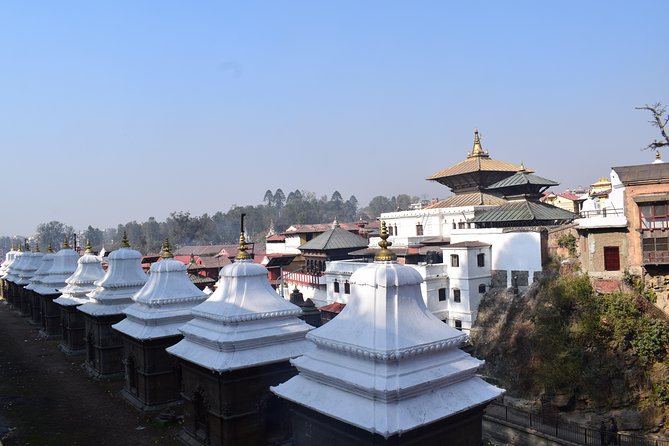
Pashupatinath Temple shifts the day into a major Hindu pilgrimage complex. The area includes more than 500 temples and shrines across 0.64 hectares, making it much larger in scope than a single courtyard. The visit lasts about an hour, with admission separate.
This is one of the most important religious places in Nepal, and the scale helps explain its importance. You are seeing a functioning temple complex, not only a historic monument preserved for sightseeing. Dress and behavior should be respectful, and your guide can help you understand which parts of the complex are appropriate for your visit.
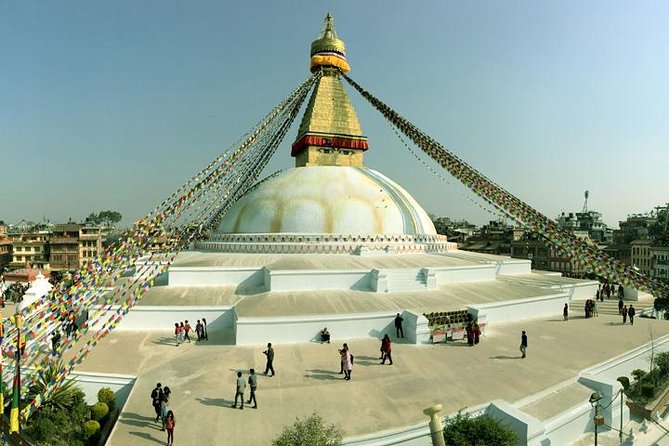
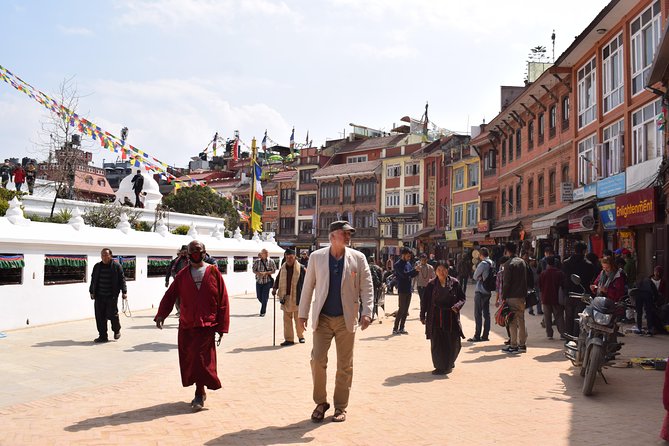
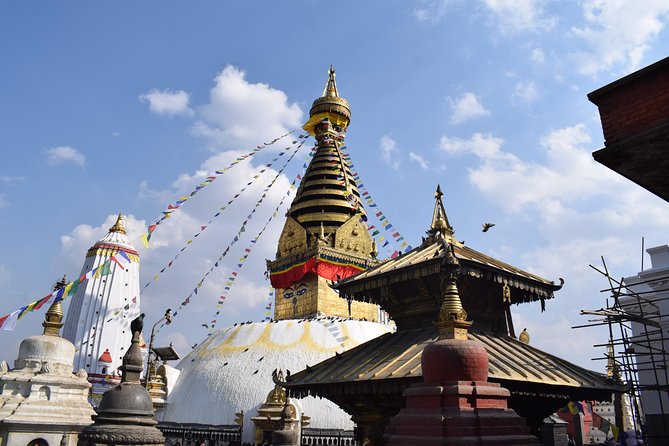
Boudhanath Stupa closes the tour with a major Buddhist pilgrimage site. The stupa is 36 meters tall, and more than 50 gompas are located around it. You have about an hour here, with admission separate.
Boudhanath feels different from Swayambhunath. Swayambhunath rises on a hill and combines pilgrimage with a hilltop setting. Boudhanath is organized around a large circular stupa and the religious life around its base. Seeing both in one day helps you compare two important Buddhist centers.
Ending at Boudhanath is practical because it gives the final hour to a single major site rather than a string of tiny stops. Still, by this point you will have already seen a lot. If you are tired, focus on the central stupa and the guide’s explanation rather than trying to inspect every nearby building.
What the $65 price really covers
At $65 per person, the value depends on how much of the valley you want to cover. The price includes hotel pickup and drop-off inside the Ring Road, transport by private vehicle, and a professional guide.
It does not include food, drinks, or entrance fees at the heritage sites. That distinction matters. The advertised price is not your final spending total, especially if you enter every paid site.
Even with those extra costs, the tour can make financial sense for a short stay. You are paying for a full day of transport, route planning, and interpretation across several separated areas. A private vehicle also means your group is not sharing the day with strangers, and the guide can respond to your pace.
The value is weaker if you already have several days in Kathmandu and enjoy arranging local transport yourself. In that case, you could spread the sites over multiple days and spend more time at each one.
This tour earns its price through efficiency. It is less about finding the cheapest way to see one monument and more about turning a difficult valley-wide plan into one organized day.
Timing, pace, and comfort
You can choose from multiple morning start times, which helps you fit the tour around your schedule. The exact start time affects how the day feels, but all options lead to a long outing.
Hotel pickup and drop-off are included for locations inside the Ring Road. If your hotel is outside that area, confirm the arrangement before booking, since the stated pickup coverage is limited.
The tour is private, so only your group participates. That is a major advantage here. A 10 to 12-hour schedule can become frustrating in a large group, especially when one person wants to stop for photographs and another wants to move on. In a private vehicle, the guide has more room to adjust.
I would wear comfortable shoes and bring water, even though food and drinks are not included. The itinerary involves courtyards, temple approaches, hill access, and several hours of walking spread across the day. The supplied information does not give a precise accessibility rating, so ask about the route if stairs or slopes are a concern.
Who will enjoy this tour most
I would recommend this day to you if Kathmandu is a short stop on a larger Nepal trip and you want the valley’s main cultural sites in one sweep. It also suits first-time visitors who prefer a guide to explain the difference between Buddhist stupas, Hindu temples, royal squares, museums, and Newari courtyards.
It is a good fit for history and architecture fans, but you do not need specialist knowledge to enjoy it. The route gives you enough variety to keep the day from feeling like 12 versions of the same temple.
It may not suit you if you dislike early starts, long sightseeing days, or short visits. The schedule is action packed by design. You will see more, but you will not have unlimited time at any one place.
The private format also helps couples, families, and small groups with different walking speeds. Shanti Karki and Pankaj are names associated with particularly strong guiding on this experience, though your assigned guide may be someone else.
Should you book the Seven World Heritage Day Tour?
Book it if your Kathmandu schedule is tight and you want the seven UNESCO sites handled in one day. The combination of private transport, hotel pickup, and guide-led visits gives you a practical way to cover a large area without spending your limited time arranging rides.
I especially like the mix of headline sites such as Pashupatinath and Boudhanath with smaller stops such as the Golden Temple, Siddha Pokhari, and Changu Narayan. Just budget for admissions and meals, and accept that the day will feel full.
If you have three or more open days in the valley, I would split the route. If you have one serious sightseeing day, this is a strong choice, provided you are ready for a long, active schedule.
FAQ
How long does the Seven World Heritage Day Tour last?
The tour lasts approximately 10 to 12 hours.
How much does the tour cost?
The listed price is $65 per person.
Is hotel pickup included?
Yes. Hotel pickup and drop-off are included for hotels inside Kathmandu’s Ring Road.
Is transportation private?
Yes. Transport is provided by private vehicle, and only your group participates in the activity.
Are entrance fees included?
No. Entrance fees at the heritage sites are not included and are paid separately according to the sites you enter.
Are food and drinks included?
No. Food and drinks are not included, but you can buy them at each site.
Which UNESCO sites are included?
The route visits Swayambhunath, Kathmandu Durbar Square, Patan Durbar Square, Bhaktapur Durbar Square, Changu Narayan Temple, Pashupatinath Temple, and Boudhanath Stupa.
Does the tour include Patan Museum?
Yes. The visit to Patan Museum lasts about 30 minutes.
Can I choose a start time?
Yes. Multiple morning start times are available.
What is the cancellation policy?
You can cancel at least 24 hours before the local start time for a full refund. Cancellations or changes made within 24 hours are not accepted for a refund.
Recently added around Kathmandu
- Kathmandu : Swambhunath & Durbar Square Guided Half Day Tour★ 3.3 · 3 reviews
- Private Day Tour in Kathmandu Valley Rim with Bhaktapur Sightseeing★ 5.0 · 3 reviews
- From Kathmandu / Pokhara / Chitwan: River Rafting – 1 Day★ 4.6 · 3 reviews
- Nepali Cooking training & Cultural Homestay Experience★ 5.0 · 3 reviews
- Private 3-Hour Nagarkot Sunset Tour from Kathmandu★ 3.5 · 3 reviews
- From Kathmandu: Everest Base Camp Landing Helicopter Tour★ 5.0 · 3 reviews
- 4 UNESSCO World heritage sites of Kathmandu-private tour★ 5.0 · 3 reviews
- From Kathmandu Budget: 15 Day Everest Base Camp Trek★ 5.0 · 3 reviews
Kathmandu UNESCO Heritage Tours, compared.
Private Kathmandu Sightseeing Tour | UNESCO World Heritage sites
Read our review →
Full Day 7 UNESCO Tour with Lunch – Private/Group
Read our review →
Full Day Top 4 UNESCO Tour with Lunch – Private/Group
Read our review →
Full-Day 7 UNESCO Tour with Lunch – Private/Group
Read our review →
Kathmandu Private Sightseeing Tour | UNESCO World Heritage Sites
Read our review →Browse the lists this tour appears in