
Reviewed · KATHMANDU
Spiritual Nepal: Expert insight into Multifaith Journey
Boudhanath’s huge white dome and Pashupatinath’s riverside shrines give you two very different views of Nepalese faith in one compact outing. You can turn prayer wheels with local Buddhists, watch Sadhus at work, and see the evening Arati light offering at the Bagmati River.
I like the thoughtful contrast between Buddhist and Hindu practice, and I like the small-group format, capped at 12 people. Guides including Rozit, Bini, Subash, and Bidhya have been praised for answering questions and adapting to individual interests. The main drawback is time: Kathmandu traffic can make four hours feel tight, and the Sadhu and palm-reading encounters cost extra.
In This Review
- Key points to know before you go
- Two sides of Kathmandu spirituality
- Boudhanath and the rhythm of the Kora
- Walking or driving to Pashupatinath
- Pashupatinath, Sadhus, and the Bagmati ghats
- The Bagmati River Arati
- What the private format adds
- Dress, manners, and practical preparation
- The limits of a four-hour schedule
- Who should book Spiritual Nepal?
- FAQ
- How long does the Spiritual Nepal tour last?
- Where does the tour start?
- Where does the tour finish?
- Which sites are included?
- Is transportation included?
- Is an English-speaking guide included?
- Is the tour private?
- Are Sadhu payments and palm readings included?
- What should I wear?
- Can children join the tour?
Key points to know before you go
- Two UNESCO sites in four hours: Boudhanath and Pashupatinath offer very different religious experiences without requiring a full day.
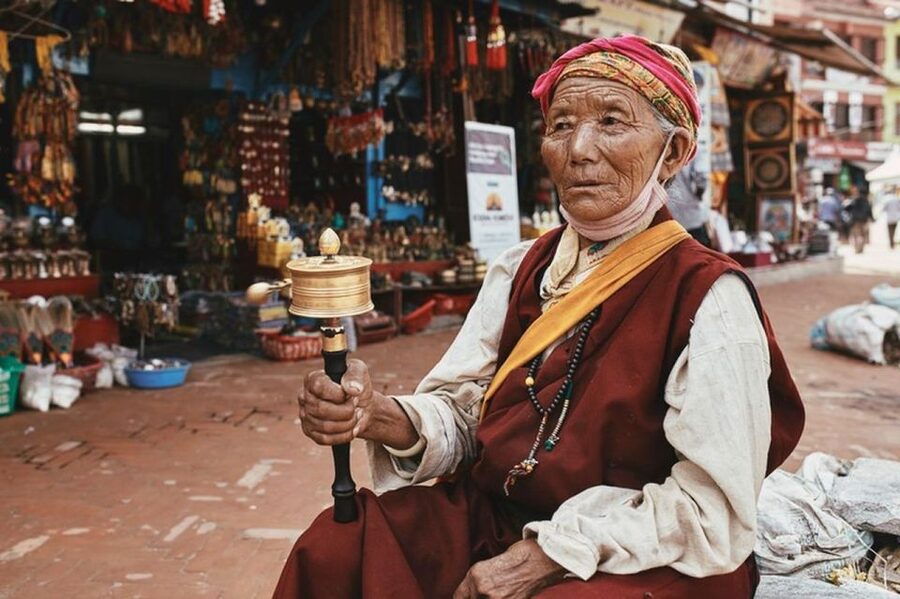
- A hands-on Buddhist ritual: You can rotate prayer wheels and walk the Kora around Boudhanath’s white dome with local worshippers.
- A serious Hindu riverside setting: Pashupatinath includes Sadhu encounters, cremation ghats, and the Bagmati River Arati.
- Personal guiding matters: The private-group format allows guides such as Rozit, Bini, Subash, and Bidhya to answer questions and adjust the pace.
- Extra costs are easy to overlook: Palm readings, Sadhu photos or conversations, alms, and butter lamps are not included.
- Modest clothing is essential: Cover your shoulders and knees, and men should plan on long trousers for religious sites.
Two sides of Kathmandu spirituality
This four-hour walk is less about checking off monuments and more about seeing how religion shapes daily life in Kathmandu. Boudhanath presents Tibetan Buddhist devotion in a calm circular rhythm. Pashupatinath brings you to one of the most important Hindu pilgrimage sites in Nepal, where worship, death, ritual, and public life meet beside the Bagmati River.
That contrast gives the experience its purpose. You are not seeing two similar temples. You are moving from the turning of prayer wheels and the quiet repetition of the Kora to the more intense sights and sounds of Hindu worship at Pashupatinath.
The tour begins at Hotel Marshyangdi, then goes to Boudhanath by arranged transportation. After roughly two hours there, you either walk about 15 minutes or drive to Pashupatinath. The final two hours are spent around the temple before transport returns you to the endpoint.
The stated price is $150 per person. That is not a budget outing, especially for a four-hour activity, but it includes an English-speaking Nepali guide, admission to both UNESCO Heritage Sites, and transportation from the meeting point to Boudhanath and from Pashupatinath to the endpoint. The value rests mainly in the guide. Without context, the religious customs and ceremonies can be hard to read, and the right guide can turn a quick visit into something far more useful.
Other Kathmandu days people book alongside this one:
- Everest Base Camp Trek – 14 Days
★ 5.0 · 1,499 reviews - Private Kathmandu Sightseeing Tour | UNESCO World Heritage sites
★ 5.0 · 756 reviews - Everest Base Camp Helicopter Tour landing at Everest View Hotel
★ 5.0 · 668 reviews
Boudhanath and the rhythm of the Kora
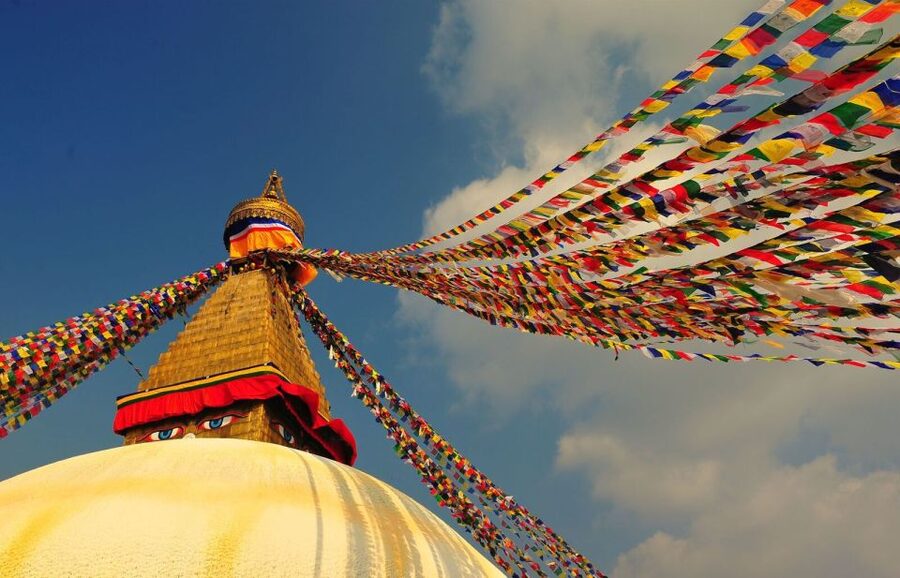
Boudhanath is the gentle opening to the tour. Its large white spherical dome rises above the surrounding square, topped by the familiar painted eyes that look in the four directions. You will spend about two hours here, enough time to see the stupa properly rather than simply stop for a photograph.
Your guide introduces the meaning of the site and helps you take part in the local pattern of worship. You can rotate the prayer wheels positioned around the stupa, then walk the Kora, the clockwise circuit around the dome. This is simple to do, but it is more meaningful when you understand that the movement is an act of devotion rather than a sightseeing lap.
The Kora also gives you a practical way to observe the site. Monks, local Buddhists, visitors, and shopkeepers share the same circular route. You can watch the prayer wheels turn, hear the repeated rhythm of foot traffic, and see how the stupa functions as part of an active community rather than as a silent old monument.
The two-hour stop leaves room for questions. Ask your guide about the prayer wheels, the stupa’s design, and the role of Buddhism in Nepalese life. One particularly useful feature of a private group is the chance to slow down when a ritual catches your attention instead of following a fixed large-group script.
You may also choose to offer butter lamps at Boudhanath. This is optional and costs extra, so you should not feel pressured to take part. If you do, your guide can explain the custom and help you understand what you are doing.
One German participant had a flexible version of the outing that included a rooftop meal with a view of the stupa and a stop at a traditional mandala painting school. Treat those as possible additions rather than guaranteed parts of the four-hour plan. Traffic and timing may leave no room for them.
Walking or driving to Pashupatinath
The transfer between the two sites is short on paper. The tour describes a walk of about 15 minutes or a drive, while the total walking distance for the experience is approximately 2 kilometers. That makes this manageable for most people who are comfortable on foot, but you should still wear shoes suited to uneven or crowded paths.
The choice between walking and driving may depend on traffic and the guide’s plan. Kathmandu traffic can be slow, and one participant found the schedule rushed because of it. If attending Arati is especially important to you, tell your guide early and stay close to the group during transfers.
This is not a food tour, and no meals or drinks are included. You may find an optional food stop in a flexible private visit, but you should not count on it. Bring water and eat before the tour if you need a proper meal during the four-hour period.
Pashupatinath, Sadhus, and the Bagmati ghats
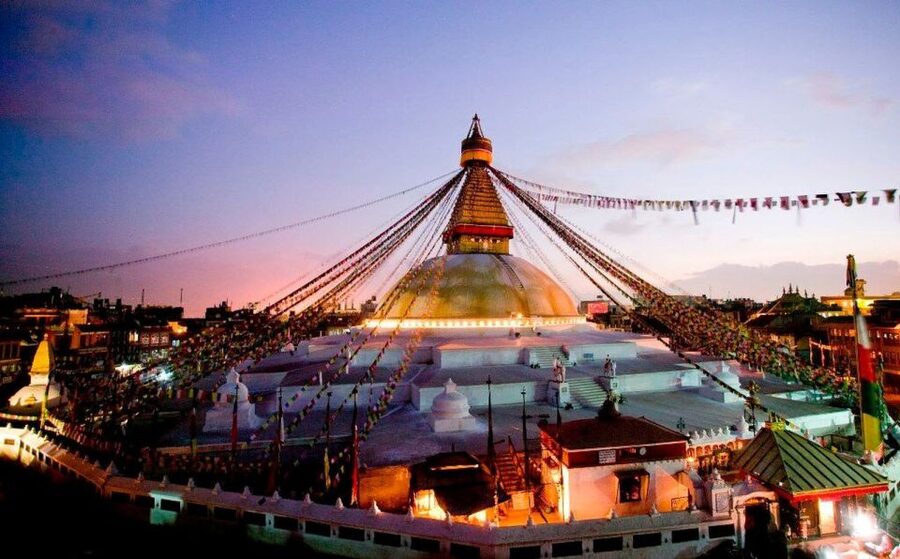
Pashupatinath is the more intense half of the experience. It is Nepal’s largest Hindu pilgrimage site, and the tour takes you into a setting where religious practice is closely tied to the cycle of life and death.
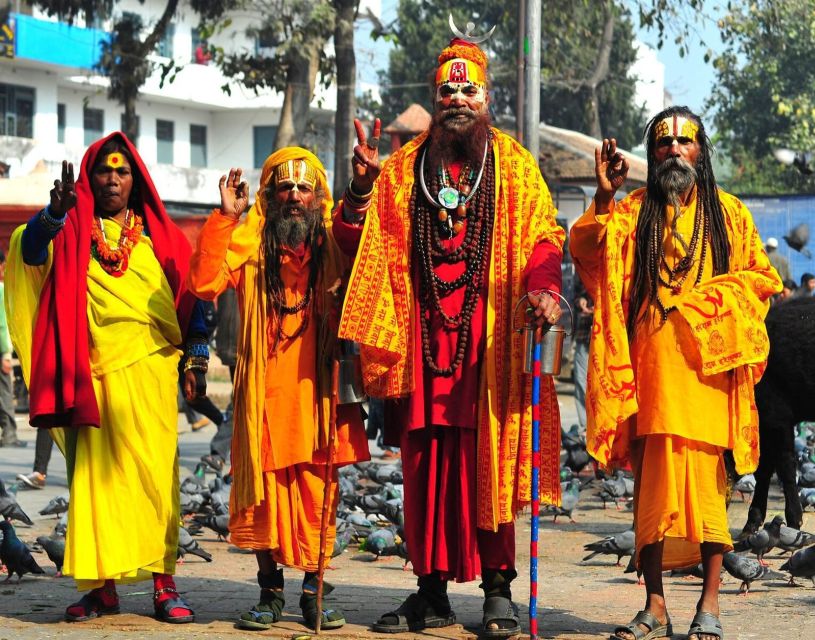
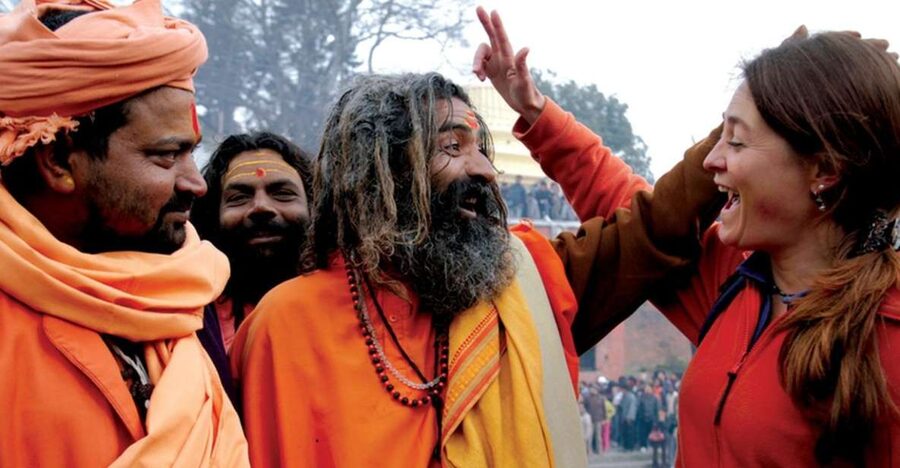
You will see Sadhus, Hindu holy men who live a religious life apart from ordinary household routines. The point is not simply to take their photograph. Your guide can help you understand what you are seeing, and you can offer alms if you want to support a Sadhu and ask about his life.
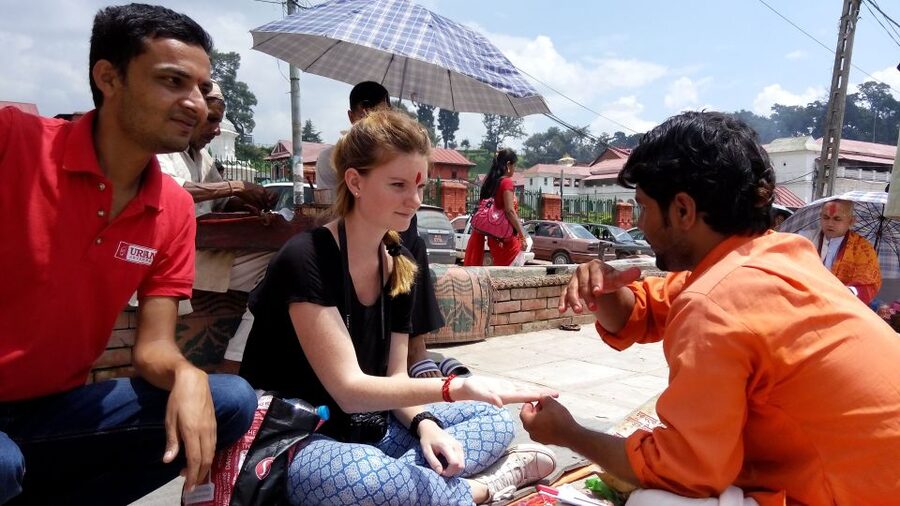
Alms are not included. The local information gives an approximate cost of $7.50 for photographs or interaction with Sadhus. It is wise to confirm the amount with your guide before handing over money. The guide can also help negotiate with Sadhus and palm readers, which is useful in a setting where expectations about payment may not be obvious.
You can also have your palm read by a local reader. The fee varies from about $7.50 to $9 per person. This is a light, optional addition rather than a central part of the religious visit. If you are curious, it can offer a personal and memorable encounter. If not, you can spend the time asking your guide about the customs around you.
The cremation ghats beside the Bagmati River require a respectful attitude. You may witness cremation ceremonies as part of the visit, but this is not a performance staged for visitors. Keep your voice low, follow your guide’s instructions, and do not treat grieving families as photo subjects.
This part may be uncomfortable for some people, particularly children or anyone unprepared to see public funeral rites. The tour is child-friendly, and children under six can join free, but parents should decide if the cremation setting suits their child. The experience is valuable precisely because it presents death as part of public religious life, but it deserves care and restraint.
A completely different sort of day in Kathmandu:
- Half day cooking class in Thamel kathmandu
★ 5.0 · 607 reviews - Everest Base Camp Trekking
★ 5.0 · 485 reviews - Nagarkot Sunrise View and Day Hiking from Kathmandu
★ 5.0 · 471 reviews - Kathmandu: Full Day 7 UNESCO Tour with Lunch – Private/Group
★ 5.0 · 415 reviews
The Bagmati River Arati
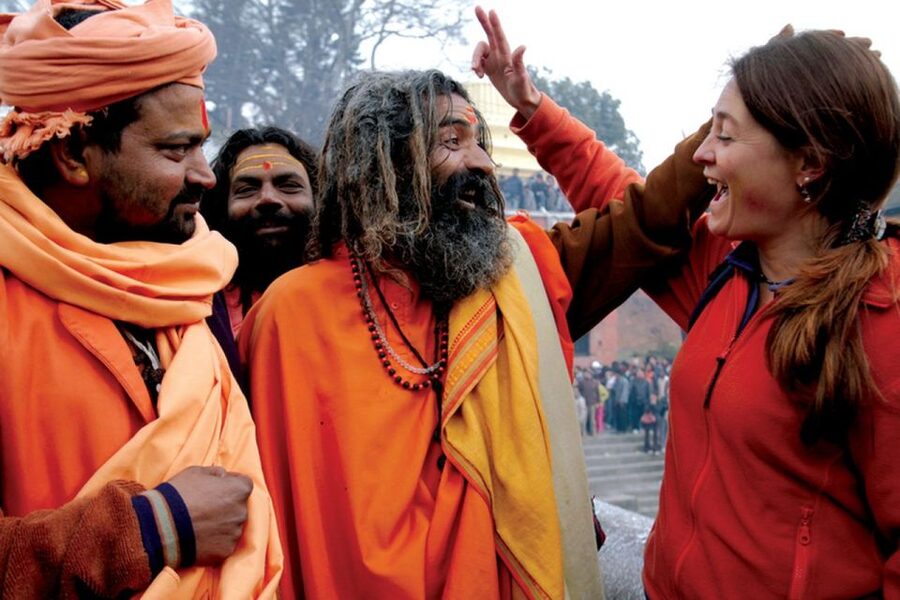
The Arati is the visual high point of the Pashupatinath visit. Local worshippers offer light to Lord Pashupatinath in a ceremony beside the river. Lamps, movement, and devotional music create a very different mood from the quiet circuit around Boudhanath.
The timing matters. The tour includes the Arati, but traffic and crowd movement can affect how much time you have to find a good position. Stay close to your guide and group, especially around the river and temple approaches. The area can be crowded, and it is easy to lose sight of people while watching the ceremony.
I would not treat Arati as a quick photo stop. Watch how worshippers respond, listen to your guide’s explanation, and notice the connection between the river, the temple, and the ceremony. This is where the tour’s two faith traditions come together in your understanding, even though the rituals themselves remain distinct.
The order and exact timing can vary. The plan allows about two hours at Pashupatinath, including the Sadhu encounters, cremation ghats, local customs, and Arati. If you want a long palm reading or extended conversation with a Sadhu, you may need to choose between that and lingering at the ceremony.
What the private format adds
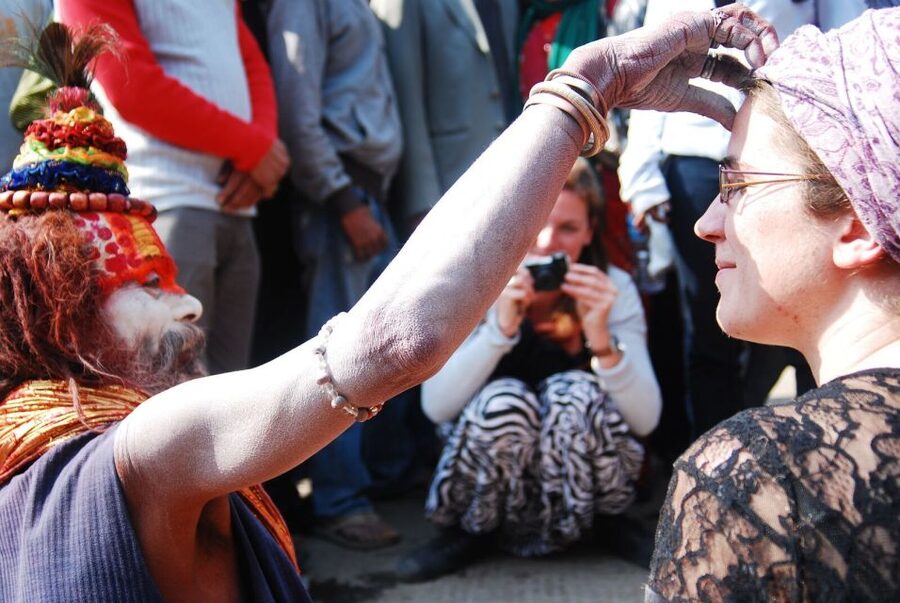
The activity is described as a private group, with a maximum of 12 people. That is a useful size for religious sites, where you need to hear explanations without blocking paths or losing the guide.
A small group also gives you room to ask direct questions. Several guides have received strong praise for personal care and clear explanations. Rozit was singled out for excellent guiding, Bini for answering questions and meeting individual needs, Subash for making complex subjects accessible, and Bidhya for her attention and strong command of the subject.
The experience can be especially good if you are not religious. You do not need to share the beliefs being explained. One participant found the tour worthwhile without being spiritual or highly religious because it clarified the role of Buddhism and Hinduism in Nepalese life.
The guide’s role is important at Pashupatinath. You need help understanding when to observe quietly, how to approach a Sadhu, and what fees may apply. One participant felt the Sadhu portion required too much personal effort, so I would be direct with your guide. Say that you want to learn more about Sadhu life, rather than assuming the encounter will happen on its own.
Dress, manners, and practical preparation
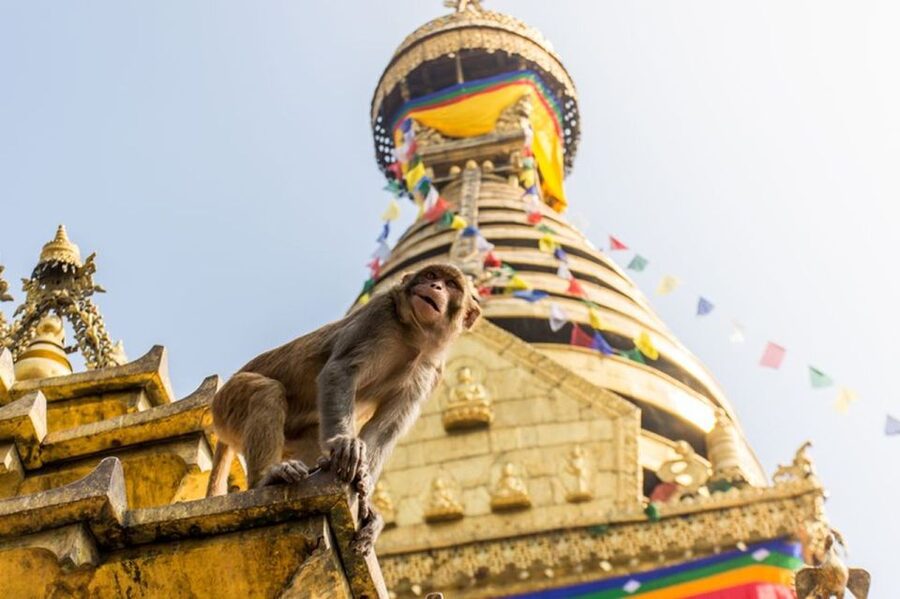
Religious sites in Nepal call for conservative clothing. Cover your shoulders and knees. Men should wear long trousers, and women should carry a long skirt or sarong if their clothing does not provide enough coverage.
Wear comfortable shoes and prepare for about 2 kilometers of walking. You may walk between the sites, though a vehicle can be used. Keep your guide’s phone number or meeting instructions accessible, and stay with the group around Pashupatinath.
The tour is in English and includes a live English-speaking Nepali guide. Food and drinks are not included. Plan for optional expenses if you want butter lamps, a palm reading, or a paid Sadhu photograph or conversation.
The provider describes the tour as carbon neutral and operated by a B Corp certified company that aims to use travel for social good. The local-impact details also explain where optional payments go: butter lamps support local practice, palm-reading fees support local readers, and Sadhu payments help people who otherwise have limited access to tourist income. You should still ask about prices before agreeing to anything.
Free cancellation is available up to 24 hours before the start, and you can reserve now and pay later. Starting times depend on availability, so check the schedule before planning the rest of your Kathmandu day.
The limits of a four-hour schedule
Four hours is enough to get a clear introduction to both sites, but it is not enough for a slow study of either one. Boudhanath receives about two hours, and Pashupatinath receives about two hours. Traffic, crowd movement, and the timing of Arati can compress those blocks.
I would book this as an introduction, not as a full day of religious study. If you want long conversations, extended photography, a meal with a view, or a painting-school visit, you may need a separate plan.
The compact schedule is also its strength. You can fit two major sites into one morning or afternoon without spending a full day in a vehicle. For a first visit to Kathmandu, that balance can be useful, especially if you want cultural context but still have time for other parts of the city.
Who should book Spiritual Nepal?
Book this if you want more than monument photographs and are willing to approach religious life with respect. It suits curious first-time visitors, people interested in Buddhism and Hinduism, families with older children, and anyone who prefers a guide-led introduction to unfamiliar customs.
It is also a good match if you value personal attention. The smaller group means you can ask questions, discuss what you are seeing, and ask for help with optional encounters.
Think twice if you dislike seeing cremation rites, do not want to pay for optional local interactions, or prefer a slow, unstructured visit. The price is high for four hours, and the schedule can feel rushed when Kathmandu traffic is heavy.
I would book it for the guide and the cultural explanation, not simply for admission to two sites. If your guide is as attentive as Rozit, Bini, Subash, or Bidhya, the cost can make sense. Go prepared, dress modestly, budget for optional fees, and tell the guide what you most want to understand.
FAQ
How long does the Spiritual Nepal tour last?
The tour lasts four hours, with approximately two hours at Boudhanath and two hours at Pashupatinath.
Where does the tour start?
The meeting point is Hotel Marshyangdi.
Where does the tour finish?
The experience returns you to Hotel Marshyangdi.
Which sites are included?
The tour includes Boudhanath Stupa and Pashupatinath Temple, both UNESCO Heritage Sites.
Is transportation included?
Transportation is included from the meeting point to Boudhanath and from Pashupatinath Temple to the endpoint. The transfer between the two sites may be a walk of about 15 minutes or a drive.
Is an English-speaking guide included?
Yes. The tour includes a live English-speaking Nepali guide.
Is the tour private?
Yes. It is offered as a private group, with attention designed for a group of up to 12 people.
Are Sadhu payments and palm readings included?
No. Alms to Sadhus and monks, palm-reader fees, Sadhu photographs or interaction, and butter lamps are extra. Palm readings generally cost about $7.50 to $9 per person, and Sadhu photos or interaction are listed at about $7.50.
What should I wear?
Wear modest clothing that covers your shoulders and knees. Men often need long trousers at religious sites, and women should bring a long skirt or sarong if needed.
Can children join the tour?
Yes. The tour is child-friendly, and children under six may join free of charge. Parents should consider whether the cremation ceremonies at Pashupatinath are suitable for their child.
Recently added around Kathmandu
- Kathmandu : Swambhunath & Durbar Square Guided Half Day Tour★ 3.3 · 3 reviews
- Private Day Tour in Kathmandu Valley Rim with Bhaktapur Sightseeing★ 5.0 · 3 reviews
- From Kathmandu / Pokhara / Chitwan: River Rafting – 1 Day★ 4.6 · 3 reviews
- Nepali Cooking training & Cultural Homestay Experience★ 5.0 · 3 reviews
- Private 3-Hour Nagarkot Sunset Tour from Kathmandu★ 3.5 · 3 reviews
- From Kathmandu: Everest Base Camp Landing Helicopter Tour★ 5.0 · 3 reviews
- 4 UNESSCO World heritage sites of Kathmandu-private tour★ 5.0 · 3 reviews
- From Kathmandu Budget: 15 Day Everest Base Camp Trek★ 5.0 · 3 reviews