
Reviewed · KATHMANDU
Temples and Stupas Tour in Kathmandu Valley
Kathmandu’s most important sacred sites are spread across the valley, and this seven-hour small-group tour links three of them without leaving you to bargain with taxi drivers. You’ll move from Hindu cremation ghats at Pashupatinath to the former royal court at Patan and then to the great Buddhist stupa at Boudhanath.
I like two things here: the strong mix of Hindu, Buddhist, and royal Nepal, and the group limit of 10 people, which gives a guide room to answer questions. I also like that air-conditioned transport is included, a real help when traffic turns a short drive into a slow one.
The main catch is cost clarity. The $34 price covers the guide and vehicle, but not entrance tickets, food, drinks, taxes, or hotel pickup and drop-off. Some people have paid about 2,000 Nepalese rupees in admission fees at two sites, so budget for extras.
In This Review
- Key points to know before booking
- Why these three Kathmandu sights belong together
- Pashupatinath: Hindu worship beside the cremation ghats
- Patan Durbar Square: Newari art and the Malla kings
- Boudhanath: a great Buddhist stupa and a shared sacred place
- The guide can make or break the day
- What the $34 price really covers
- Timing, group size, and the pace of the day
- Who should book this Kathmandu tour?
- Should you book it?
- FAQ
- How long does the tour last?
- What time does the tour begin?
- Where do I meet the group?
- Where does the tour end?
- Which sights are included?
- Are entrance fees included?
- Is transport included?
- Is hotel pickup and drop-off included?
- How many people can join the tour?
- Can I cancel for a full refund?
Key points to know before booking
- Three UNESCO-listed sights in one day: Pashupatinath, Patan Durbar Square, and Boudhanath each show a different side of Kathmandu Valley.
- Pashupatinath is a working religious site: You may see Hindu holy men and, depending on the day, an open-air cremation along the river.
- Patan gives you the royal and artistic story: The square is filled with Newari architecture, temples, courtyards, and former Malla royal buildings.
- Boudhanath offers a calmer finish: The huge Buddhist stupa is a place of prayer, ritual, and shared respect among Buddhist and Hindu worshippers.
- Small groups make the guide matter: Guides named Deepa and Kalpana have received especially warm praise for teaching local culture and answering questions.
- Plan for a 9 a.m. start: You meet at Royal Mountain Travel on Lal Durbar Marg and return to that same meeting point.
Why these three Kathmandu sights belong together
This is not simply a checklist of temples. The route gives you three useful keys to Kathmandu Valley.
Pashupatinath shows Nepal as a Hindu pilgrimage center, where religion is part of daily life and death is treated as a public ritual rather than hidden away. Patan shows the power and artistic skill of the old Newari kingdoms. Boudhanath brings you into Nepal’s Buddhist world, centered on one of the largest and most important stupas in the country.
That range is the tour’s main strength. If you visited only a palace square, you might see beautiful woodcarving without understanding the religious life around it. If you visited only the temples, you would miss the royal history that shaped the valley. Put together, the three stops give you a much fuller introduction.
The schedule allows roughly two hours at each site. That is enough time for a guided visit without turning the day into a race, although traffic and the pace of the group can affect how much time you spend walking, listening, and taking photographs.
Other Kathmandu days people book alongside this one:
- Everest Base Camp Trek – 14 Days
★ 5.0 · 1,499 reviews - Private Kathmandu Sightseeing Tour | UNESCO World Heritage sites
★ 5.0 · 756 reviews - Everest Base Camp Helicopter Tour landing at Everest View Hotel
★ 5.0 · 668 reviews
Pashupatinath: Hindu worship beside the cremation ghats
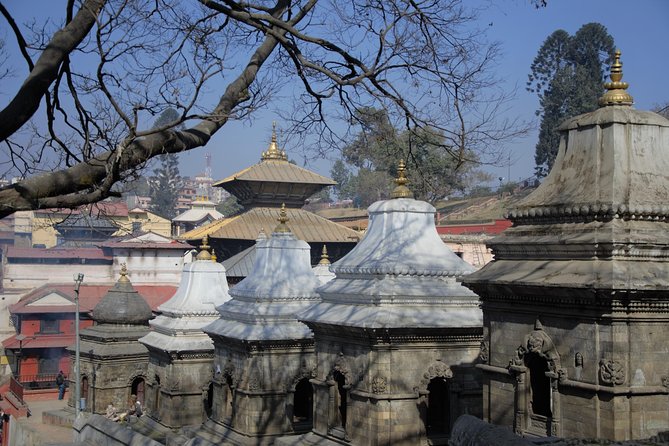
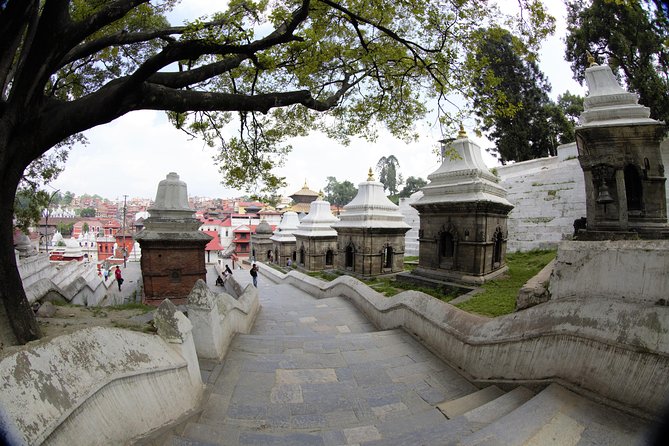
The day begins with Pashupatinath Temple, dedicated to Shiva in his form as Pashupatinath, or Lord of Animals. It is one of Nepal’s most important Hindu sites and a final destination for Hindu devotees from Nepal and beyond.
This is the most emotionally intense stop. The temple complex sits beside the Bagmati River, where cremation ceremonies take place. You might see Hindu holy men, known for their striking appearance, and you might witness a cremation. That possibility is central to understanding the site, but it also means you should approach with quiet respect.
The guide’s role matters here. A good explanation can help you understand what you are seeing without turning a private religious ceremony into a spectacle. Ask questions about the temple’s connection to Shiva, the meaning of the river, and the customs surrounding cremation. The supplied experience does not promise that a ceremony will be taking place, so treat it as a possibility, not a scheduled performance.
Two hours is a sensible allowance. Pashupatinath is more than one building, and the visit is likely to involve moving around the temple grounds and river area. The main Hindu temple itself has access restrictions for non-Hindus, so your guide can help explain what you may see from the permitted areas. The tour description does not spell out exact access arrangements, so ask on the day if a particular shrine or building is important to you.
This stop may be difficult for some people. If you prefer religious sites without visible funerary rites, Pashupatinath can feel confronting. If you are open to seeing how faith, family, and death meet in public space, it can be the most meaningful part of the day.
Patan Durbar Square: Newari art and the Malla kings
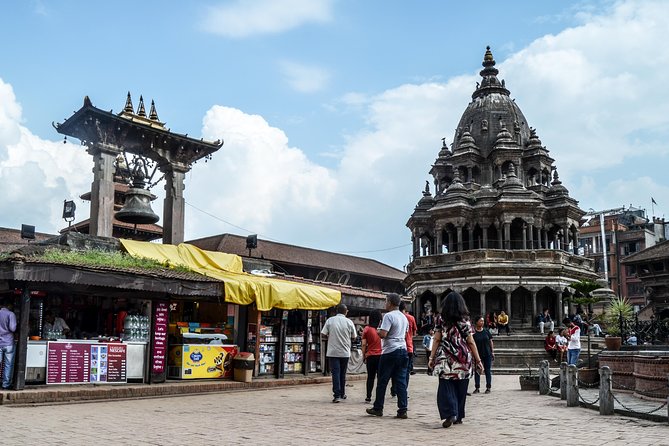
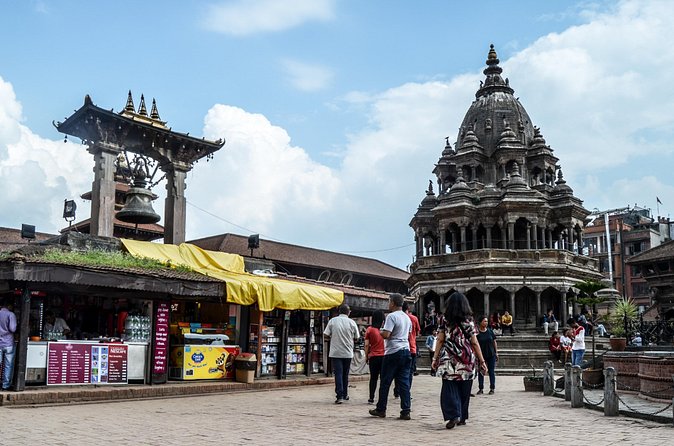
The second stop is Patan Durbar Square, in the heart of Lalitpur. Often called Patan, Lalitpur was once a separate royal center, and its square preserves the work of the Malla kings and the Newari craftsmen who served them.
This is the tour’s best stop for architecture. Look for carved wooden windows, brick facades, pagoda-style temples, courtyards, and carefully worked metal and stone details. The square is not just a collection of pretty buildings. It was a royal and religious center, so the layout connects palace spaces with temples and public life.
Your guide can make the details easier to read. Without context, you may notice a roofline or carved doorway but miss why it matters. With an explanation of the Malla period, Newari design, and the role of the palace, the square becomes a story about power, devotion, and craftsmanship.
The tour allows about two hours here, which should give you time to walk through the main area and pause for photographs. The provided details do not promise entry to every museum, palace room, or temple, and admission fees are not included. If you have a particular interior in mind, confirm with the guide before counting on it.
Patan also gives you a useful break from the solemn mood of Pashupatinath. You are still among active religious buildings, but the focus shifts toward sculpture, royal ceremony, and the visual language of the valley’s old cities.
Boudhanath: a great Buddhist stupa and a shared sacred place
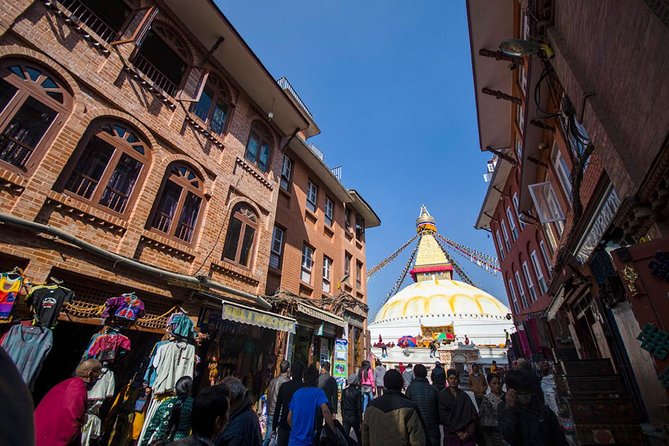
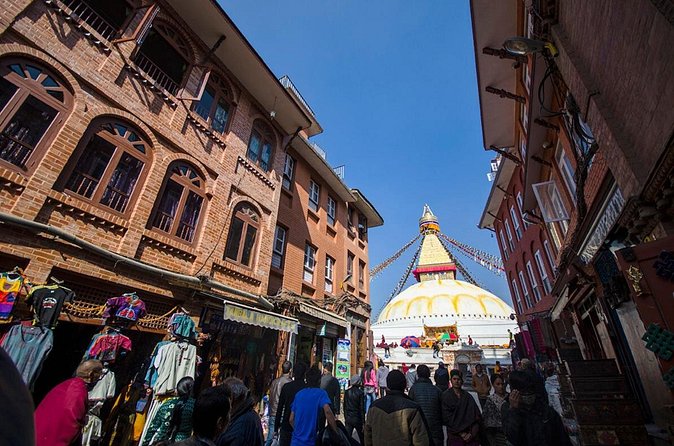
The final stop is Boudhanath Stupa, one of Nepal’s holiest Buddhist sites. Its large white mound, square base, golden details, and watchful Buddha eyes create a strong visual finish to the day.
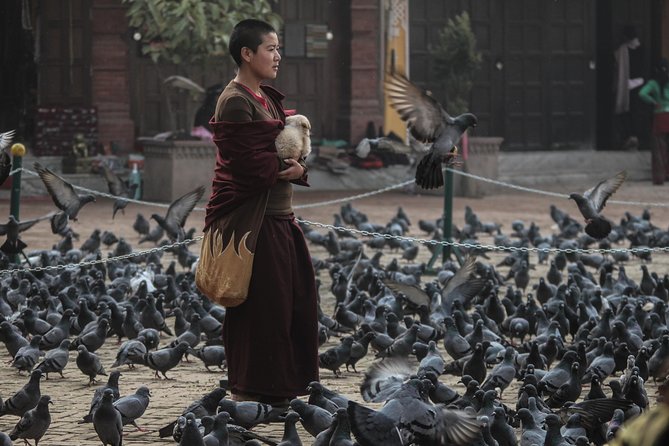
Boudhanath is not a quiet museum piece. It is a place of prayer and movement, with people paying respect around the stupa. The site also matters beyond Buddhist communities. Hindus in Nepal pay their respects here as well, which gives the monument a wider place in the country’s religious life.
Use your two hours to notice how the site works as a sacred space. The stupa is designed to be walked around, and the act of circling it is part of the experience. Your guide should explain the symbolism of the structure and the customs you see, including why people move around it and how prayer fits into the visit.
Boudhanath is also a good place to ask broader questions. How do Hindu and Buddhist traditions overlap in Nepal? Why are stupas built in this form? What role does Boudhanath play for local worshippers? The strongest guides on this tour, including Deepa and Kalpana, have been praised for answering questions about local culture rather than giving only a short list of dates and names.
The supplied details do not include a meal or refreshments, so do not assume lunch is part of the price. One especially positive account describes a guide continuing to answer questions during lunch, but the tour itself lists food and drinks as extra. Plan your own meal budget and timing.
A completely different sort of day in Kathmandu:
- Half day cooking class in Thamel kathmandu
★ 5.0 · 607 reviews - Everest Base Camp Trekking
★ 5.0 · 485 reviews - Nagarkot Sunrise View and Day Hiking from Kathmandu
★ 5.0 · 471 reviews - Kathmandu: Full Day 7 UNESCO Tour with Lunch – Private/Group
★ 5.0 · 415 reviews
The guide can make or break the day
Because transport between the sites is included, the guide is the main source of value. The best version of this tour is not just a ride between three monuments. It is a day of explanation, comparison, and questions.
Deepa has been praised for making the day pleasant and well organized. Kalpana has been singled out for her extensive knowledge of local culture and willingness to answer questions. Another guide was described as teaching throughout the day, even during lunch. These details suggest that the company has produced some very strong guiding experiences.
Still, guide quality can vary. One account describes long stretches in the vehicle with the guide and driver speaking Nepali to each other, leaving the passenger without information between stops. That is the clearest warning attached to the tour. If the guide is not explaining the valley as you move through it, the transport becomes dead time.
You can improve your odds by asking questions early. Tell the guide what interests you, such as religion, architecture, cremation customs, earthquakes, royal history, or daily life. A small group of no more than 10 people makes that practical.
What the $34 price really covers
At $34 per person, the tour is priced as a transport-and-guiding service rather than an all-inclusive sightseeing day. You receive an English-speaking guide and air-conditioned transport matched to the group size.
That is useful in Kathmandu, where three separate taxi rides can mean repeated haggling, uncertain fares, and time spent finding the next vehicle. The tour also removes the need to plan the order of the sites yourself.
The price does not include entrance tickets, food, drinks, taxes, or hotel pickup and drop-off. Admission fees are also not included for children aged 10 and above. A practical budget is about 2,000 Nepalese rupees for entrance fees at two stops, based on the costs associated with this experience, but confirm the current amounts before you go.
You meet at 9 a.m. at Royal Mountain Travel, Lal Durbar Marg, Kathmandu 44601. The tour ends back at the same meeting point. A guide once arranged a hotel drop-off even though it was not required, but you should not plan on that service. If you need hotel transport, ask before booking.
The tour accepts mobile tickets, is near public transportation, and is suitable for most participants. The supplied details do not provide a specific vehicle accessibility statement, so contact the operator if you have mobility requirements.
Timing, group size, and the pace of the day
Seven hours is a useful length for a first look at Kathmandu Valley. You get enough time to see the major points without committing to a full-day excursion from the city.
The three two-hour blocks sound even, but the sites feel different. Pashupatinath may require a slower, more respectful pace. Patan rewards close attention to carvings and buildings. Boudhanath invites a more relaxed walk around the stupa. The schedule gives structure, but it should not be treated as a guarantee that every minute will be spent inside the monuments.
Traffic is the wild card. The tour includes air-conditioned transport, but air conditioning does not make Kathmandu traffic move faster. The group size of up to 10 is small enough to be manageable, though larger than a private tour. If you want complete control over stops, meal breaks, and departure times, a private arrangement may suit you better.
For most people, the set route is the advantage. You can focus on the places instead of working out how to connect them.
Who should book this Kathmandu tour?
I would choose this tour for a first visit to Kathmandu when you want the main religious and royal sights in one organized day. It suits you especially well if you want an English-speaking guide, prefer not to negotiate taxis, and like having cultural context as you go.
It is also a good fit for people who want a small group rather than a large coach. The maximum of 10 participants should make it easier to hear the guide and ask questions.
You may want another option if you need hotel pickup, want entrance fees bundled into the price, or dislike fixed schedules. You should also think carefully about Pashupatinath if cremation scenes could be upsetting.
The booking policy is forgiving if your plans are firm but your schedule is not. You can cancel for a full refund up to 24 hours before the local start time. A late flight delay is more complicated, so contact the operator as soon as possible if you expect to miss the 9 a.m. meeting.
Should you book it?
Book this tour if you want a practical introduction to Kathmandu’s three major sacred and historic centers, with transport and a guide handled for you. The strongest guides, particularly Deepa and Kalpana, can turn the day into a clear lesson in Nepalese religion, architecture, and royal history.
Do not book it expecting every expense to be covered or every drive to include commentary. Bring money for entrance fees and food, confirm the meeting point, and ask questions from the start. For $34, the route offers good value when the guiding is active and informative. Its success depends less on luxury than on the person explaining what you are seeing.
FAQ
How long does the tour last?
The tour lasts approximately seven hours, with about two hours planned at each of the three main stops.
What time does the tour begin?
The tour starts at 9:00 a.m.
Where do I meet the group?
You meet at Royal Mountain Travel on Lal Durbar Marg, Kathmandu 44601, Nepal.
Where does the tour end?
The activity ends back at the meeting point.
Which sights are included?
The tour visits Pashupatinath Temple, Patan Durbar Square, and Boudhanath Stupa. All three are listed as UNESCO World Heritage sites.
Are entrance fees included?
No. Admission fees are not included. Children aged 10 and above are also charged an entrance fee.
Is transport included?
Yes. Air-conditioned transport is included, with the vehicle chosen according to group size.
Is hotel pickup and drop-off included?
No. Hotel pickup and drop-off are not included. The tour begins and ends at the stated meeting point.
How many people can join the tour?
The group can have a maximum of 10 participants.
Can I cancel for a full refund?
Yes. You can cancel at least 24 hours before the local start time for a full refund. Cancellations or changes made less than 24 hours before the start are not accepted for a refund.
Recently added around Kathmandu
- Kathmandu : Swambhunath & Durbar Square Guided Half Day Tour★ 3.3 · 3 reviews
- Private Day Tour in Kathmandu Valley Rim with Bhaktapur Sightseeing★ 5.0 · 3 reviews
- From Kathmandu / Pokhara / Chitwan: River Rafting – 1 Day★ 4.6 · 3 reviews
- Nepali Cooking training & Cultural Homestay Experience★ 5.0 · 3 reviews
- Private 3-Hour Nagarkot Sunset Tour from Kathmandu★ 3.5 · 3 reviews
- From Kathmandu: Everest Base Camp Landing Helicopter Tour★ 5.0 · 3 reviews
- 4 UNESSCO World heritage sites of Kathmandu-private tour★ 5.0 · 3 reviews
- From Kathmandu Budget: 15 Day Everest Base Camp Trek★ 5.0 · 3 reviews