
Reviewed · EVEREST BASE CAMP TREKS
12 Days Everest Base Camp Trek
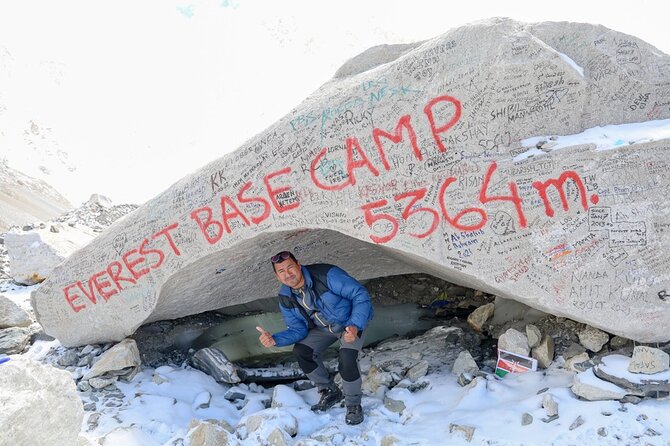
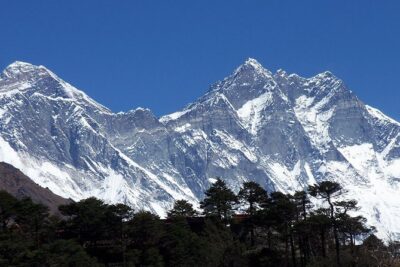
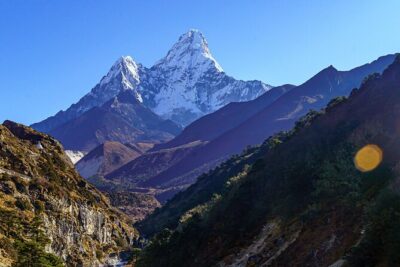
The real prize here is not only reaching Everest Base Camp at 5,364 meters. It is the slow approach through Sherpa villages, suspension bridges, rhododendron woods, and the wide Khumbu valleys, followed by sunrise from Kala Patthar at about 5,545 meters. You also follow the Dudhkoshi, or Milk River, for the first part of the walk.
I like the two acclimatization days, which give your body a fair chance to adjust, and I like that the $605 price includes domestic flights, meals, lodges, permits, a guide, and shared porter support. The main caution is altitude: the route is presented as suitable for beginners and seniors with moderate fitness, but Base Camp and Kala Patthar are still very high places. You need to take the pace and acclimatization seriously.
In This Review
- Key points before you book
- What the $605 price really covers
- Kathmandu to Lukla: the short flight that starts everything
- Phakding to Namche Bazaar, seven hours of real work
- The Everest View Point acclimatization walk
- Tengboche and the monastery at sunrise
- Dingboche at more than 4,400 meters
- Lobuche and the approach to the glacier
- Everest Base Camp from Lobuche and Gorakshep
- Kala Patthar sunrise, the best viewpoint of the trek
- The long return to Lukla
- Food, lodges, equipment, and group size
- Who should book this Everest Base Camp trek?
- Should you book it?
- FAQ
- How long does the Everest Base Camp Trek take?
- What is the highest point on the route?
- Are flights from Kathmandu to Lukla included?
- Are meals included during the trek?
- What accommodation is provided?
- Is a guide and porter included?
- What fitness level is required?
Key points before you book
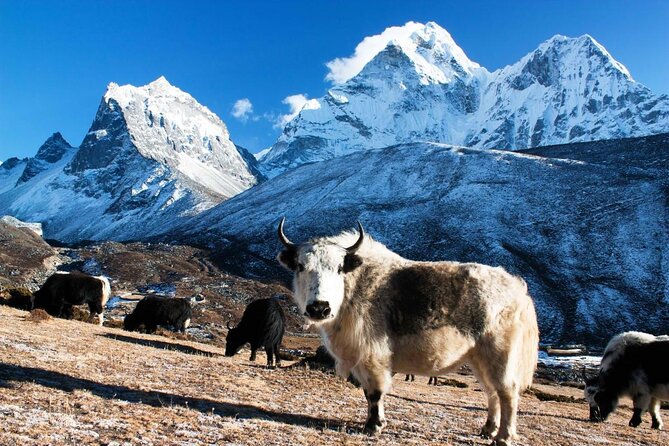
- Kala Patthar is the visual high point: The early hike gives you one of the best planned views of Mount Everest on the trip.
- The itinerary builds in rest: Namche and Dingboche both include acclimatization time rather than rushing straight uphill.
- The package covers major costs: Flights from Kathmandu to Lukla and back, meals, permits, lodge rooms, guide service, and a porter for every two trekkers are included.
- The trail has real variety: You move from river valleys and forest to stone villages, glacial ground, and high mountain viewpoints.
- The group limit is 20: That is small enough for a guided group experience, though the actual group size can vary.
- The guide team matters: Past trips have featured guides and leaders such as Gopal, Bikram, Rajesh Magar, and Narayan Ntc, with special praise for care, flexibility, and high-altitude support.
What the $605 price really covers
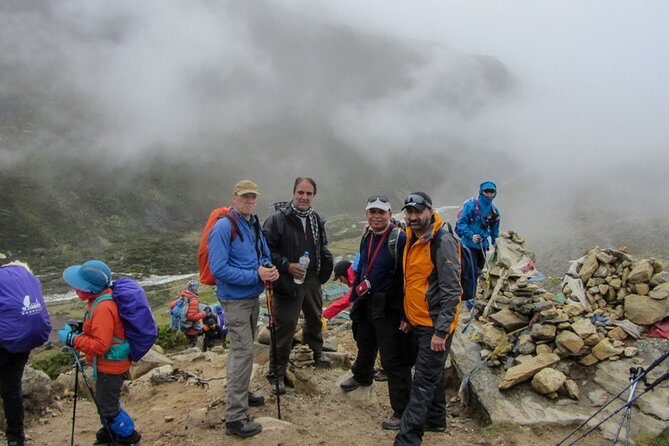
At $605 per person, this trek offers solid value for a 12-day Everest Base Camp package. You are not paying only for walking. The price includes the two domestic flights between Kathmandu and Lukla, airport pickup and drop-off by private or shared vehicle, three meals a day during the trek, twin-sharing lodge accommodation, a licensed guide, and a porter for each pair of trekkers.
The package also covers the Sagarmatha National Park entry permit, TIMS Card fee, local government tax, a trekking map, trekking hat, duffel bag, trekking pole, first aid kit, and an oximeter for checking pulse, oxygen saturation, and heart rate. Staff accident insurance is included as well.
That list matters because small costs can build up on a mountain trek. Here, the large structural costs are handled before you set out. You still pay for personal travel insurance, snacks, drinks, personal equipment, tips, and anything not specifically included.
The room arrangement is best available twin sharing, so do not book this expecting a private room throughout. The same applies to transport: airport transfers may be private or shared. If you want more privacy or a different room arrangement, confirm that before paying.
The trip has an average booking lead time of 38 days. That gives you a useful planning target for flights, insurance, clothing, and fitness preparation. Confirmation is received at booking, and free cancellation is available up to 24 hours before the local start time. Inside that 24-hour window, refunds are not available.
More ways to trek to Everest Base Camp:
- Everest Base Camp Trek – 14 Days
★ 5.0 · 1,499 reviews - Everest Base Camp Helicopter Tour landing at Everest View Hotel
★ 5.0 · 668 reviews - Everest Base Camp Trekking
★ 5.0 · 485 reviews
Kathmandu to Lukla: the short flight that starts everything
The experience begins at Tribhuvan Airport in Kathmandu. The flight to Tenzing-Hillary Airport at Lukla takes about 45 minutes, but it feels like a clear change of scene. The route gives you an early look at the Himalayan setting before your boots touch the trail.
From Lukla, the route descends toward Phakding for about four hours of walking. This is a sensible first day. You are starting to move, but you are not yet facing the hardest climbs of the trek.
The trail follows the Dudhkoshi River and passes through villages where daily life is closely tied to the walking route. The river is a constant companion for roughly the first three days, and its pale, fast-moving water gives the opening section a steady rhythm.
Phakding is important less for a major landmark than for the way it eases you into the trek. You get your first taste of lodge accommodation, village paths, bridges, and mountain walking without immediately being pushed to extreme altitude.
Phakding to Namche Bazaar, seven hours of real work
Day two is one of the first serious tests. The walk from Phakding to Namche Bazaar takes about seven hours, with repeated crossings of the Dudhkoshi and several high steel suspension bridges.
This is a long day, and you should not treat it as a simple continuation of day one. The route gains height and asks you to manage your energy. The reward is Namche Bazaar, the best-known trading center in the Khumbu and a natural place to pause before going higher.
Namche is not just a stop on a map. It is where the trek begins to feel properly Himalayan. The surrounding slopes, village paths, and mountain views give you a stronger sense of the region than the lower river section.
The itinerary allows a full acclimatization day after reaching Namche. I consider this one of the most valuable parts of the plan. You may feel fine at first, but altitude effects do not always appear in a predictable way. A rest day gives you time to adjust before the route climbs above 4,000 meters.
The Everest View Point acclimatization walk
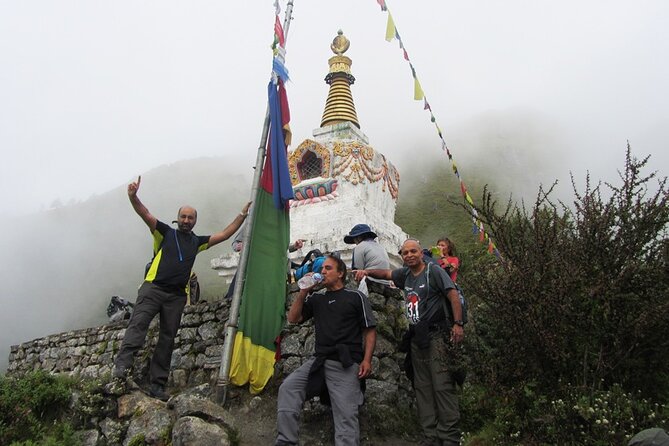
The Namche acclimatization day includes a hike to the Everest View Hotel by way of the Syangboche airstrip. The walk takes around two hours, followed by time to rest and take tea.
This is a smart design for an acclimatization day. You are not spending the whole day lying in a lodge, but you are also not taking on another demanding stage. A short hike to a higher point and a return to Namche lets you see more without using up too much energy.
The viewpoint is also useful emotionally. Everest Base Camp is still several days away, so an early mountain view can give you a sense of what the route is leading toward. You should still remember that the first view is not the same as reaching Base Camp. The best mountain scenery changes as the trek climbs.
The schedule says you spend about a day and a half recovering in Namche before continuing. That slower rhythm is particularly useful for first-time high-altitude trekkers.
More treks starting in Kathmandu:
- Nagarkot Sunrise View and Day Hiking from Kathmandu
★ 5.0 · 471 reviews - Annapurna Circuit Trek with Tilicho Lake
★ 5.0 · 368 reviews - Everest Base Camp Trekking – 13 Day
★ 5.0 · 365 reviews - Everest Base Camp Trek -14 Days
★ 5.0 · 321 reviews
Tengboche and the monastery at sunrise
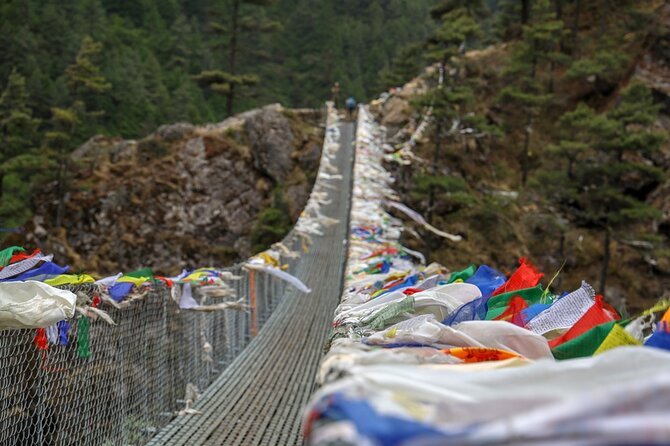
From Namche, the trail heads toward Tyangboche, usually written as Tengboche, in about five hours. The day begins with a steep climb, followed by a more moderate stretch.
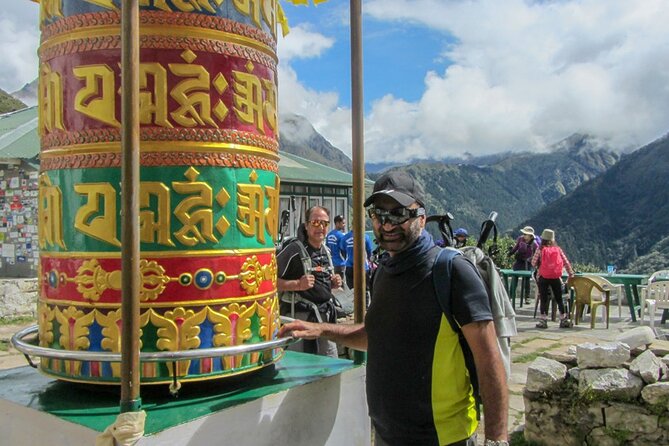
Tengboche Monastery is one of the cultural highlights of the route. The next morning, you are encouraged to wake early for sunrise over the monastery and surrounding peaks. That early start is worth keeping in mind when judging the itinerary. This is not a trip built around sleeping late and walking only in the afternoon.
After breakfast, the trail descends through rhododendron forest to Deboche at 3,320 meters. The route then continues toward Dingboche, with the full day taking about six hours.
I like this section because it combines mountain scenery with a clear sense of place. You are not simply crossing empty high ground. You pass through Sherpa settlements and see how the route connects villages, monasteries, bridges, and lodges.
The downhill stretch after Tengboche is welcome, but it does not make the day effortless. Descents can be tiring in their own way, especially after several walking days.
Dingboche at more than 4,400 meters
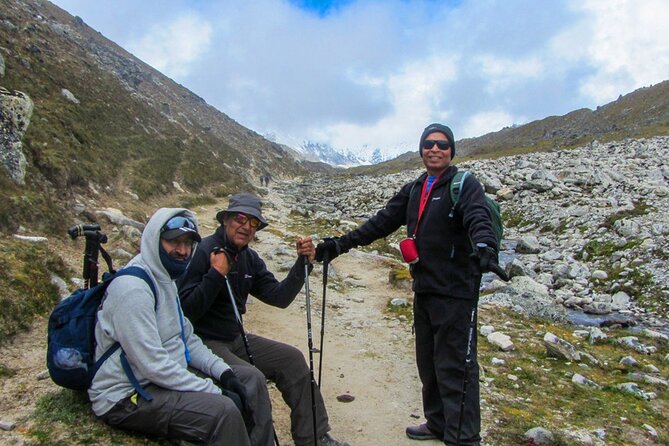
Dingboche is another major adjustment point. The itinerary gives you a rest and acclimatization day after the climb to more than 4,400 meters, with a leisurely hike toward a nearby hill called Nagarjuna.
The Nagarjuna walk takes about three hours. It is meant to help your body adjust while giving you wider views of the surrounding peaks. This is also a good place to follow your guide’s judgment. The trip includes a high-altitude trained guide, an oximeter, and a first aid kit, so the support system is built around monitoring and practical care.
The key thing for you is not to confuse enthusiasm with readiness. A trekker can be fit and still need time at altitude. The route gives you that time, but you must use it properly. Walk steadily, drink as advised by your guide, and say something if you feel unwell. The itinerary is fixed on paper, but high-altitude trekking always depends on how your body responds.
The provider has used guides including Gopal, Bikram, Rajesh Magar, and Narayan Ntc on different trips. The strongest pattern in the guide feedback is personal attention. Gopal has been praised for identifying distant mountains and suggesting good ways to spend acclimatization days. Bikram has adjusted early starts and walking speed to suit a faster trekker. Those details suggest that guide communication can make a major difference.
Lobuche and the approach to the glacier
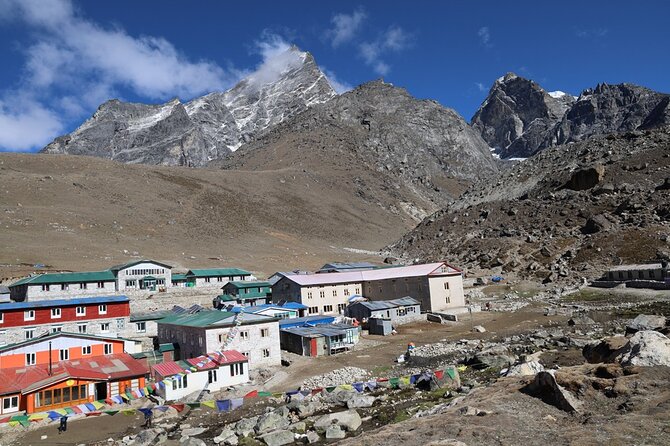
After Dingboche, you head through a broad valley beneath Cholatse and Tawache peaks toward Lobuche. The walk takes about six hours.
This section feels more exposed and more demanding than the lower trail. The forest becomes less central, and the route takes on a harder, rockier character. You are now close enough to the major goal that every day feels purposeful, but you still need to preserve energy.
Lobuche is a staging point for the final approach. It is not the finish line, and treating it as one can lead to a difficult next day. You have already gained a great deal of height, so a measured pace remains more useful than a fast one.
The guide and porter arrangement helps here. One porter is provided for two trekkers, allowing you to carry a lighter personal load. You still need to pack sensibly, since you remain responsible for your personal gear and clothing.
Everest Base Camp from Lobuche and Gorakshep
Day eight takes you from Lobuche to Gorakshep in about three hours. The trail becomes rocky as it follows the Khumbu Glacier, passing the International Pyramid Laboratory.
From Gorakshep, you continue beside the glacier for roughly four more hours to Everest Base Camp and back. The route includes downhill and uphill sections on uneven ground, so the time estimate should not be mistaken for an easy walk.
Reaching Base Camp is the emotional center of the trek. You can stop, take in the glacier and surrounding mountains, and mark the moment properly. The route gives you time for that rather than treating Base Camp as a quick photograph before rushing away.
One detail matters: Base Camp is not the best promised point for seeing the full face of Mount Everest. The itinerary saves the major Everest viewpoint for Kala Patthar, which is why the next morning is so important.
Kala Patthar sunrise, the best viewpoint of the trek
The early hike to Kala Patthar is the hardest and most rewarding part of the trip for many people. The trail is steep and rocky, and the full outing is listed at about eight hours.
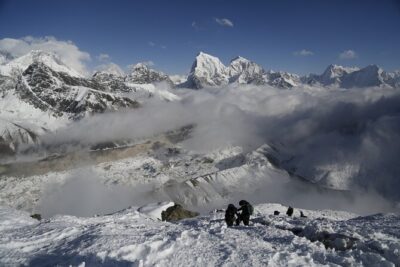
You start very early for sunrise over Mount Everest. At roughly 5,545 meters, Kala Patthar is higher than Base Camp and demands more from your body. The effort is worthwhile because this is the point planned for the broadest, clearest view of Everest.
I would not treat this as an optional extra unless your guide advises otherwise. The timing is designed around the light, and the mountain views are the payoff for the slow approach from Lukla. You should also be honest about your condition. The summit is not worth pushing through serious altitude symptoms.
After Kala Patthar, the route turns back toward Namche. The return day is about six hours and feels easier in part because the elevation drops. You follow the same general route back toward Panche and the lower valley, but going downhill does not erase the accumulated fatigue.
The long return to Lukla
From Namche, the trek descends through forest and remote villages, crossing more bridges and streams on the way to Lukla. The day takes about seven hours and retraces the route through Monjo and Phakding.
The return can feel quieter than the approach. You now recognize sections of the trail, and the lower altitude may make breathing easier. At the same time, tired legs can make familiar descents surprisingly demanding.
This is where the trip’s practical support earns its keep. A guide can help set the pace, and the porter arrangement means you are not carrying every item for all 12 days. Staff accident insurance is included, but personal travel insurance is not, so you need to arrange your own policy before departure.
The final flight from Lukla to Kathmandu takes about 35 minutes. After the airport transfer to your hotel, the remaining day is free. That gives you a little breathing room after the trek rather than ending the trip with another scheduled activity.
Food, lodges, equipment, and group size
Three meals per day are included for the 11 nights or trekking days covered by the package: 11 breakfasts, 11 lunches, and 11 dinners. Drinks, snacks, and personal purchases are extra, so budget for those separately.
Accommodation is in the best available twin-sharing lodge room. This suits you if you want a practical base at the end of each walking day and do not need hotel-style privacy. The description does not promise a fixed lodge brand or private room, so ask the provider if room arrangements are a major concern.
The equipment support is useful but limited. You receive a trekking map, hat, duffel bag, and trekking pole. Personal trekking gear remains your responsibility. That means you should not assume boots, warm clothing, or other specialist items are supplied.
The group maximum is 20 people. That is a reasonable ceiling for a guided mountain trip, but it is not the same as a private trek. The package can also provide a walkie-talkie for group trekkers, which may help the guide team keep in contact.
Who should book this Everest Base Camp trek?
I would suggest this itinerary to you if you want the classic Everest Base Camp route in a clearly organized 12-day plan. It suits people who value included meals, permits, flights, a licensed guide, and porter support more than complete independence.
It can also work for a first high-altitude trekker with moderate physical fitness. The route is described as suitable for beginners and seniors, but that should be read alongside the altitude figures, not instead of them. You need to be ready for long days of six to eight hours and rough, steep sections.
I would be more cautious if you want short walking days, private accommodation, or a flexible itinerary with several spare days. The route is tightly scheduled, and the included flight connections leave little room in the stated 12-day plan for major changes.
Past guide teams have shown useful flexibility. One organized a faster schedule for a quick walker, while another adjusted plans when a trekker struggled above 5,000 meters on a longer route. That kind of judgment is valuable, but you should still ask questions before booking about your own pace, group size, and what happens if you cannot continue as planned.
Should you book it?
Book this trek if your goal is the classic Everest Base Camp experience and you want the main costs bundled into one moderate-price package. The strongest features are the two acclimatization periods, the early Kala Patthar viewpoint, the included Lukla flights, and guide and porter support.
Think twice if you are not prepared for high altitude, twin-sharing lodges, long walking days, and extra spending on gear, drinks, insurance, and tips. At $605, the package offers a lot, but it is still a demanding mountain trek, not a relaxed sightseeing holiday.
For a first EBC attempt, I find the structure sensible: river valley first, Namche adjustment, Tengboche and Dingboche, then Lobuche, Base Camp, Kala Patthar, and the return. If you arrive fit, respect the rest days, and communicate clearly with your guide, this is a practical way to take on one of Nepal’s best-known routes.
FAQ
How long does the Everest Base Camp Trek take?
The trek lasts approximately 12 days, beginning and ending in Kathmandu. The plan includes flights between Kathmandu and Lukla, 10 days of walking and acclimatization stages in the Khumbu, and the return flight.
What is the highest point on the route?
Kala Patthar is the highest listed point, at about 5,545 meters. Everest Base Camp is at approximately 5,364 meters.
Are flights from Kathmandu to Lukla included?
Yes. The package includes domestic flights from Kathmandu to Lukla and back to Kathmandu.
Are meals included during the trek?
Yes. Breakfast, lunch, and dinner are included during the trek, with 11 breakfasts, 11 lunches, and 11 dinners provided. Snacks, drinks, and personal expenses are not included.
What accommodation is provided?
You receive the best available twin-sharing lodge accommodation during the trek. Private rooms are not specified as part of the package.
Is a guide and porter included?
Yes. The package includes one Government Licensed and High-Altitude Trained Guide, plus one porter for every two trekkers. A walkie-talkie is available for group trekkers.
What fitness level is required?
The activity states that you should have a moderate physical fitness level. You should also be ready for walking days of about three to eight hours, steep and rocky sections, and high altitude above 5,000 meters.
Recently added around Kathmandu
- Kathmandu : Swambhunath & Durbar Square Guided Half Day Tour★ 3.3 · 3 reviews
- Private Day Tour in Kathmandu Valley Rim with Bhaktapur Sightseeing★ 5.0 · 3 reviews
- From Kathmandu / Pokhara / Chitwan: River Rafting – 1 Day★ 4.6 · 3 reviews
- Nepali Cooking training & Cultural Homestay Experience★ 5.0 · 3 reviews
- Private 3-Hour Nagarkot Sunset Tour from Kathmandu★ 3.5 · 3 reviews
- From Kathmandu: Everest Base Camp Landing Helicopter Tour★ 5.0 · 3 reviews
- 4 UNESSCO World heritage sites of Kathmandu-private tour★ 5.0 · 3 reviews
- Kailashnath Mahadev, Panauti and Namo Buddha Monastery Sightseeing★ 5.0 · 3 reviews
Everest Base Camp Treks, compared.
Everest Base Camp Helicopter Tour landing at Everest View Hotel
Read our review →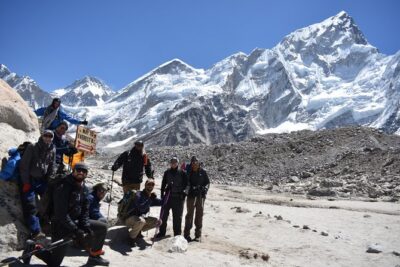
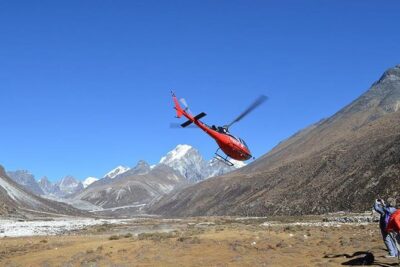
Everest Base Camp Helicopter Tour landing at Hotel Everest View
Read our review →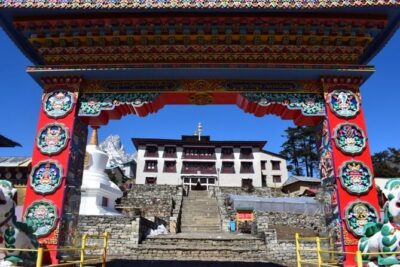
Browse the lists this tour appears in