
Reviewed · EVEREST BASE CAMP TREKS
Everest Base Camp Trek
The thrilling part begins before you reach the trail: the short flight into Lukla, a mountain airstrip known for its demanding approach. From there, you walk through Sherpa villages, pine forests, river valleys, glaciers, and high-altitude passes until Everest Base Camp and Kalapatthar come into view.
I like the private small-group format, since your guide can adjust the walking pace instead of pushing everyone into a fixed march. I also like the practical inclusions: porters carry the main gear, and a sleeping bag, down jacket, duffle bag, permits, meals, and domestic flights are covered.
The main caution is altitude. This is not a scenic stroll, and the highest days combine thin air with steep trails and rough glacier paths. The weather can also cancel Lukla flights, so the spare Kathmandu day is useful rather than wasted time.
In This Review
- Key points to know before you book
- What the $1,408 price really covers
- Kathmandu arrival and the short flight to Lukla
- Phakding to Namche Bazaar and the first rest day
- Tengboche, Pangboche, and Sherpa country
- Dughla, Lobuche, and the road to Base Camp
- Kalapatthar before sunrise
- The return through Tengboche and Phakding
- Returning to Kathmandu without rushing home
- Guide quality and the small-group advantage
- Who should book this Everest trek?
- Should you book it?
- FAQ
- How long does the Everest Base Camp trek last?
- What is included in the price?
- Are meals included?
- Is this a private tour?
- Do porters carry the trekking gear?
- Are the Kathmandu and Lukla flights included?
- Is travel insurance included?
- What happens if bad weather cancels the experience?
Key points to know before you book
- Lukla flights begin the real adventure: The 30-minute flight offers striking Himalayan views, but weather can cause delays or cancellations.
- Two acclimatization days are built in: Hikes near Khumjung, Khunde, the Everest View Hotel, Thame, Nagarkhang Peak, or the national park help break up the climb.
- Porters carry the heavy load: Your guide organizes the route, while porters handle trek gear and receive meals, lodging, salary, and insurance.
- Kalapatthar is the big viewpoint: An early morning climb brings the best chance of seeing Everest and surrounding peaks in clear light.
- The price covers more than the walk: At $1,408 per person, you get flights, permits, accommodation, many meals, gear, transport, and staff support.
- You need a weather buffer: The plan includes a free Kathmandu day before departure, mainly to protect against Lukla flight problems.
What the $1,408 price really covers
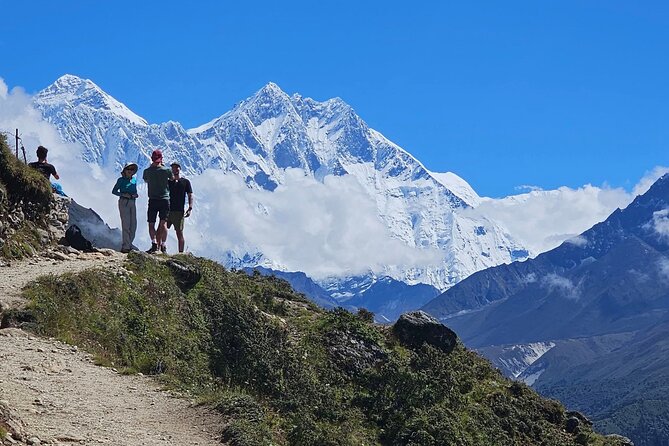
At $1,408 per person, this trek is priced as a bundled Himalayan trip rather than a simple guided hike. You are paying for the route, but also for the paperwork, staff, flights, gear, transfers, and the support needed to function at altitude.
The package includes private airport transfers before and after the trek, Kathmandu to Lukla and Lukla to Kathmandu airline tickets, the guide’s flight, Everest National Park entry, and TIMS registration. It also covers an English-speaking government-licensed guide trained through Nepal’s tourism ministry.
The porter arrangement matters. Your main load is carried by experienced Sherpa helpers, whose meals, accommodation, salary, and insurance are included. Groups larger than six receive an assistant guide, also with meals, accommodation, salary, and insurance covered.
You also receive a four-season sleeping bag, down jacket, and duffle bag for the trek. These items must be returned afterward, but they reduce the amount of specialized equipment you need to buy or pack from home. A first-aid medical kit travels with the guide.
Meals are covered for 14 breakfasts, 11 lunches, and 12 dinners. That is useful, though not every meal during the full 15-day schedule is included. Personal costs, such as drinks, hot showers, phone use, laundry, snacks, and bar bills, are extra.
International airfare, Nepal visa fees, travel insurance, medical insurance, and emergency evacuation are also excluded. That last point deserves attention. You should arrange suitable insurance before leaving home, including cover for high-altitude trekking and evacuation if your policy requires it.
More ways to trek to Everest Base Camp:
- Everest Base Camp Trek – 14 Days
★ 5.0 · 1,499 reviews - Everest Base Camp Helicopter Tour landing at Everest View Hotel
★ 5.0 · 668 reviews - Everest Base Camp Trekking
★ 5.0 · 485 reviews
Kathmandu arrival and the short flight to Lukla
Day one is deliberately easy. An airport representative meets you with a name card, transfers you to your hotel, and gives you time to settle into Kathmandu. The listed airport welcome lasts about 30 minutes, but the real value is having someone meet you after an international flight and manage the first transfer.
On day two, the flight to Lukla takes about 30 minutes. The route is famous for its mountain setting and demanding landing, so the flight itself becomes part of the story. Try for a window seat if you can, since the mountain views are a major reason this short hop feels memorable.
The itinerary then takes you to Phakding for the first night on the trail. This opening walking day is relatively gentle, a useful introduction before the route becomes steeper and the air gets thinner.
You should keep your schedule flexible here. Lukla flights are vulnerable to poor weather, and cancellations or delays are specifically noted as a possibility. The later free day in Kathmandu is designed to absorb this problem, but a delay can still affect your plans.
Phakding to Namche Bazaar and the first rest day
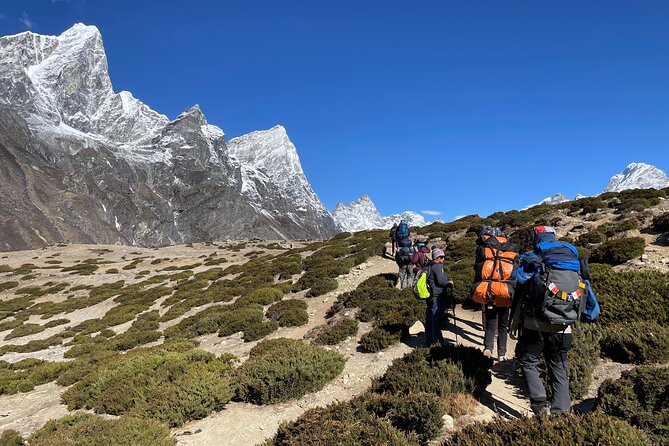
From Phakding, the route passes through Monjo and Jorsalle, where lunch is planned before you continue toward the Hillary Bridge. Pine forests and suspension bridges give this section a strong sense of place, but the trail becomes steep after the bridge.
Namche Bazaar is the important early stop, even though the day-by-day outline does not name it clearly in every heading. It is the main acclimatization point on the route and the base for the first rest day.
Day four is set aside for acclimatization rather than simply sitting indoors. Your guide may offer a hike toward Khumjung and Khunde, the Everest View Hotel, Thame, or the national park headquarters. The exact option depends on the group and conditions.
This is one of the strongest parts of the plan. A rest day with a short climb helps you adjust better than rushing upward every day. It also gives you a first look at Sherpa villages and mountain views without carrying a full trekking load.
The private format is helpful here. The guide can choose an option that suits your pace, rather than treating the day as a single fixed outing for a large crowd.
Tengboche, Pangboche, and Sherpa country
After Namche, the trail rises toward the national park headquarters and Kyanjuma. You may stop for tea before descending to Phungi Thanga for lunch, then cross the Dudh Koshi River and climb again.
That up-and-down pattern can surprise you. A route heading toward Everest does not simply climb in a straight line. You lose height into river valleys, then regain it on the next ridge. The views improve, but so does the physical work.
The trail continues along the Imja Khola toward Pangboche at about 3,930 meters. Pangboche is associated with well-known Everest climbers and is home to experienced Sherpa families. This is a good stretch for noticing the human side of the route, not just counting peaks.
Day seven offers another acclimatization hike, this time toward Nagarkhang Peak at roughly 5,000 meters. The summit gives wide Himalayan views, but the altitude makes this a serious outing. Take the guide’s advice about pace and turning around. Reaching a viewpoint is less important than staying well enough to continue.
The program’s two acclimatization days are a real benefit, but they do not make the trek easy. They give your body more time to adjust. You still need a moderate level of fitness and the ability to handle long days on uneven trails.
More treks starting in Kathmandu:
- Nagarkot Sunrise View and Day Hiking from Kathmandu
★ 5.0 · 471 reviews - Annapurna Circuit Trek with Tilicho Lake
★ 5.0 · 368 reviews - Everest Base Camp Trekking – 13 Day
★ 5.0 · 365 reviews - Everest Base Camp Trek -14 Days
★ 5.0 · 321 reviews
Dughla, Lobuche, and the road to Base Camp
The trail climbs above Pheriche toward Dughla. After a quick lunch, you face a steep section to Dughla Pass, where the route becomes more demanding. From here, the combination of altitude, cold, and uneven ground changes the character of the trek.
The next section leads over glacier terrain toward Everest Base Camp. The approach may begin easily, but the trail gets harder once you start ascending across the glaciers. Low oxygen adds to the strain, so this is a day when steady pacing matters more than speed.
The route offers an unusual reward: you are not only walking toward a famous destination, you are crossing the kind of high mountain terrain that makes the Everest region so powerful. Glaciers, ice, rock, and towering peaks replace the greener valleys from earlier days.
Base Camp itself is the goal, but the viewpoint at Kalapatthar usually provides the more dramatic mountain scene. The itinerary places Base Camp on day nine and Kalapatthar on day ten, allowing you to experience both rather than choosing between them.
Expect the Base Camp day to feel hard. The trail difficulty and thin air are clearly part of the plan, and you should not assume the porter service removes the physical challenge. Your guide carries a first-aid kit and manages the route, but you remain responsible for listening to your body and communicating problems early.
Kalapatthar before sunrise
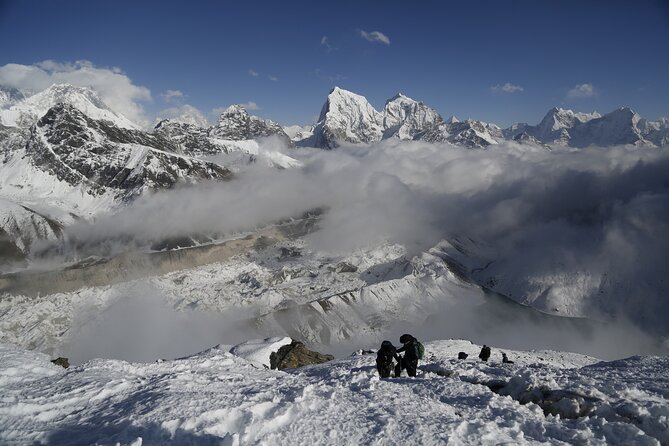
The day ten start is early, before sunrise. You climb Kalapatthar in the dark or near-dark, with the reward coming as the light reaches the Himalayan peaks.
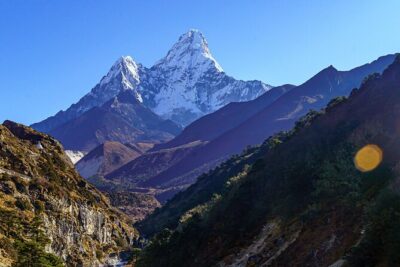
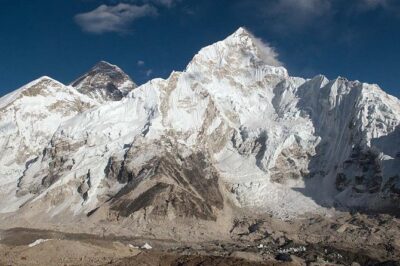
The climb is difficult, but this is the point where the effort pays off most clearly. Kalapatthar is known as the main viewpoint in the Khumbu Valley, with broad views of Everest and other major peaks. The early start is not just a scheduling choice. It gives you the best chance of seeing the mountains in clear morning light.
Bring patience for this climb. At high altitude, even a short slope can feel slow. The guide’s role matters here, especially in setting a sensible rhythm and keeping the group together.
After Kalapatthar, the route turns back. This is not a simple downhill stroll. The return includes steep descents and later climbs, so tired legs still have work to do.
The return through Tengboche and Phakding
Day eleven takes you through Debuche and Tengboche before a steep descent to Phungi Thanga. After lunch beside the Dudh Koshi River, you climb again toward Kyanjuma.
Tengboche is a memorable stop because it brings the route back through one of the best-known Sherpa villages in the region. The return journey also gives you a different view of familiar trails. Places that felt intimidating on the way up may seem more manageable, while the descents can be harder on your knees.
The following day drops toward Jorsalle and continues to Phakding for lunch before the final walk to Lukla. The schedule describes the walking portion as ending once you reach Lukla.
This is where the porters’ support becomes especially valuable. You still carry a day pack and walk every day, but your heaviest gear is handled for you. That lets you save energy for the trail, the altitude, and the early starts.
Returning to Kathmandu without rushing home
Day thirteen is set aside for the Lukla flight back to Kathmandu. The trip is short, but weather can again affect it. A right-side airplane seat is suggested for mountain views, though conditions and the aircraft layout may determine what you actually see.
Day fourteen is a free day in Kathmandu. You can use it for shopping, sightseeing, or simply recovering from the trek. More importantly, it provides a cushion if the Lukla flight was delayed earlier or if weather disrupts the return.
The final airport transfer is planned for about three hours before your international flight. Breakfast is included that morning. The airport has one terminal, and the private transfer is part of the package.
Guide quality and the small-group advantage
The strongest human element of this trip is the guide and porter team. The operator uses English-speaking, licensed guides, and the feedback associated with the company repeatedly highlights individual guides such as Lok, Khila, Lal, Hari, and Ossman.
The praise centers on practical care: keeping a steady pace, handling details, watching safety, answering questions, and adapting the trek to the group. That is exactly what you want at altitude. A guide who simply points down the trail is not enough.
Khila is especially associated with an individual approach and close attention to safety. Lok is praised for pace and organization, while Lal is described as reassuring and experienced. You should confirm your assigned guide before departure, since the itinerary does not guarantee one specific person.
A private small group also gives you more control than a large departure. The group size is not stated, but only your own party participates, and an assistant guide is included for groups over six. Ask for the exact group size and porter arrangement before booking.
Who should book this Everest trek?
I would consider this a good fit if you want the classic Everest Base Camp route but do not want to arrange every permit, flight, hotel, meal, and porter yourself. It suits people who value staff support and a planned acclimatization schedule.
You should be comfortable with a moderate level of physical activity and long days at altitude. The itinerary includes steep climbs, steep descents, glacier walking, and an early Kalapatthar ascent. Fitness helps, but no level of fitness removes the need for careful acclimatization.
This is less suitable if you need a fixed timetable with no weather risk. Lukla flights can be delayed or canceled, and the program depends on conditions beyond the operator’s control.
Cancellation terms are fairly useful if you plan ahead. Cancel at least six full days before the start for a full refund. A cancellation two to six full days ahead receives 50 percent, while cancellation less than two full days ahead is not refunded. If poor weather cancels the experience, you are offered another date or a full refund.
Should you book it?
Book this trek if you want a classic Everest route with the main practical pieces handled for you. The combination of private-group pacing, two acclimatization days, porter support, included gear, domestic flights, and a spare Kathmandu day gives the $1,408 price solid value.
Before paying, confirm the exact lodging standard, group size, assigned guide, and what happens if a flight delay extends your stay. Also arrange travel and evacuation insurance, since those costs are outside the package.
If the idea of glacier trails, thin air, early starts, and a demanding flight into Lukla sounds exciting rather than alarming, this is a well-organized way to reach Everest Base Camp. If you want a soft adventure with little physical strain, choose another Kathmandu excursion.
FAQ
How long does the Everest Base Camp trek last?
The experience is scheduled for approximately 15 days. It includes arrival and departure transfers, the trek, domestic flights, two acclimatization days, and a free Kathmandu day.
What is included in the price?
The price includes airport transfers, Kathmandu to Lukla and return flights, national park entry, TIMS registration, an English-speaking licensed guide, Sherpa porters, selected trekking gear, a first-aid kit, taxes, and specified meals.
Are meals included?
Yes. The package includes 14 breakfasts, 11 lunches, and 12 dinners. Drinks, snacks, hot showers, laundry, phone use, and other personal expenses cost extra.
Is this a private tour?
Yes. Only your group participates. An assistant guide is included when the group has more than six people.
Do porters carry the trekking gear?
Yes. Experienced Sherpa helpers carry the main gear. Their meals, accommodation, salary, and insurance are included.
Are the Kathmandu and Lukla flights included?
Yes. Domestic airline tickets between Kathmandu and Lukla are included for you and the guide.
Is travel insurance included?
No. International airfare, Nepal visa fees, travel insurance, medical insurance, and emergency evacuation are not included.
What happens if bad weather cancels the experience?
If poor weather causes cancellation, you are offered a different date or a full refund. Lukla flights may also face delays or cancellations, which is why the itinerary includes a spare day in Kathmandu.
Recently added around Kathmandu
- Kathmandu : Swambhunath & Durbar Square Guided Half Day Tour★ 3.3 · 3 reviews
- Private Day Tour in Kathmandu Valley Rim with Bhaktapur Sightseeing★ 5.0 · 3 reviews
- From Kathmandu / Pokhara / Chitwan: River Rafting – 1 Day★ 4.6 · 3 reviews
- Nepali Cooking training & Cultural Homestay Experience★ 5.0 · 3 reviews
- Private 3-Hour Nagarkot Sunset Tour from Kathmandu★ 3.5 · 3 reviews
- From Kathmandu: Everest Base Camp Landing Helicopter Tour★ 5.0 · 3 reviews
- 4 UNESSCO World heritage sites of Kathmandu-private tour★ 5.0 · 3 reviews
- From Kathmandu Budget: 15 Day Everest Base Camp Trek★ 5.0 · 3 reviews
Everest Base Camp Treks, compared.
Everest Base Camp Helicopter Tour landing at Everest View Hotel
Read our review →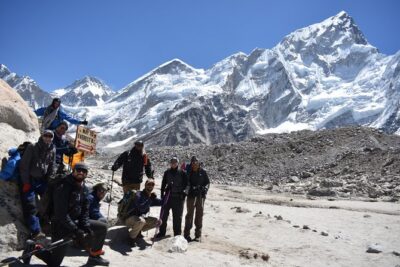
Everest Base Camp Helicopter Tour landing at Hotel Everest View
Read our review →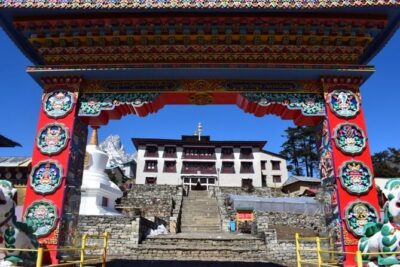
Everest Base Camp Trek with Helicopter Return from Gorakshep to Lukla
Read our review →Browse the lists this tour appears in