
Reviewed · EVEREST BASE CAMP TREKS
Everest Base Camp Trek and Kathmandu Tour: 15 Days
The big draw here is the route itself: a dramatic Lukla flight, Sherpa villages, the monastery at Tengboche, Khumbu Glacier, Everest Base Camp, and the high viewpoint of Kala Patthar at 5,644 meters. You get the mountain trek and a useful introduction to Kathmandu in one 15-day package.
I like the sensible acclimatization day in Namche Bazaar and the fact that a licensed guide, porter support, park permit, flights, hotels in Kathmandu, and most meals are bundled into the $1,799 price. I also like the small maximum group size of 15 people, which should make trail arrangements easier.
The main caution is altitude. This is not a sightseeing walk with a few steep bits. You climb above 5,000 meters, carry your own personal gear, and need good physical fitness. The itinerary also lists Kala Patthar on two consecutive days, so ask the operator to confirm the exact schedule before paying.
In This Review
- Key points to know before booking
- What the 15-day Everest route really offers
- Kathmandu begins with temples and living traditions
- Lukla to Namche brings the first hard miles
- Tengboche and Dingboche bring the best mountain views
- Lobuche and Gorak Shep mark the serious altitude zone
- Kala Patthar is the trip’s defining viewpoint
- The return to Lukla is easier on the lungs, not always the legs
- What is included, and what you still need to arrange
- Who should choose this Everest package
- Should you book the 15-day Everest Base Camp trek?
- FAQ
- How long is the Everest Base Camp and Kathmandu tour?
- What is the price of the tour?
- Is airport pickup included?
- Are flights to Lukla included?
- Is a trekking guide included?
- Is porter support included?
- Which Kathmandu sites are visited?
- Are meals included?
- What is not included in the price?
Key points to know before booking
- Lukla is part of the adventure: The mountain flight and its dramatic landing are built into the trip, though flights can be affected by weather.
- Namche provides an acclimatization day: This is an important pause before the trail gets harder.
- Four major Kathmandu sights are included: Swayambhunath, Patan Durbar Square, Pashupatinath, and Boudhanath.
- The high point is Kala Patthar: At 5,644 meters, it offers close views of Everest and nearby peaks.
- A porter carries shared baggage: The arrangement is one porter for every two people, while you bring your own trekking equipment.
- The package covers most core costs: Flights, permits, a licensed guide, three Kathmandu hotel nights, and 11 lunches and dinners are included.
What the 15-day Everest route really offers
This trip combines two very different Nepali experiences. In Kathmandu, you move between courtyards, shrines, cremation ghats, and Buddhist prayer sites. In the Khumbu, the days are ruled by trail distance, altitude, weather, and the next available mountain village.
That mix is valuable if you are making one visit to Nepal and want more than a trek alone. You will see the cultural side of the country before heading into the high mountains, then return to Kathmandu with a little time to recover and explore.
The price is $1,799 per person. That is a substantial sum, but it includes the expensive and complicated parts of an Everest trek: the return flight to Lukla, the Everest National Park permit, a licensed trekking guide, porter support, three nights of Kathmandu lodging with breakfast, and most meals during the trek.
You still need to budget for travel insurance, Nepalese visa costs, trekking equipment, drinks, and Kathmandu monument fees. The listed entrance fees for the UNESCO sites are about $20 per person. Alcohol and drinks are not included, apart from one cup of tea per day, so the final cost will rise if you buy beverages along the route.
More ways to trek to Everest Base Camp:
- Everest Base Camp Trek – 14 Days
★ 5.0 · 1,499 reviews - Everest Base Camp Helicopter Tour landing at Everest View Hotel
★ 5.0 · 668 reviews - Everest Base Camp Trekking
★ 5.0 · 485 reviews
Kathmandu begins with temples and living traditions
On arrival, a representative meets you at Tribhuvan International Airport and takes you to your hotel. The first day is deliberately light, with check-in and rest rather than a rushed program. That is a good start after an international flight.
Day two packs four important sites into one cultural circuit. At Swayambhunath, commonly called the Monkey Temple, you see a Buddhist hilltop complex and broad views over Kathmandu Valley. The visit lasts about an hour, so you should expect an introduction rather than a long, quiet study of the site.
Patan Durbar Square is the most detailed stop for architecture and artistic workmanship. Patan is known as the city of fine arts, and its temples and monuments give you a useful look at Newar design. The entrance ticket is not included, so keep cash available for the stated fee.
Pashupatinath is one of the most important Hindu temples in Nepal and is dedicated to Shiva. Nearby, the Bagmati River is associated with open Hindu cremation ceremonies. This is an active religious place, not a staged cultural show. You should behave quietly, follow local instructions, and understand that some areas may be restricted.
Boudhanath Stupa changes the mood again. It is a major Buddhist center, with a huge white dome and a strong sense of pilgrimage. The four stops make for a full day, and the admission fees are separate, but they provide useful context before you encounter the Buddhist and Hindu traditions of the mountain villages.
Lukla to Namche brings the first hard miles
Day three starts with the flight from Kathmandu or Ramechhap to Lukla, followed by the trek to Manjo. The flight is described as a roller-coaster mountain journey with a dramatic landing. That tells you something important: this is a small mountain airport experience, not a routine city-to-city hop.
The itinerary allows only about 30 minutes for the flight segment, but the actual day also includes the first trek. Flight timing can be a practical weak point on this route because the trip depends on mountain weather. The cancellation terms specifically allow a new date or full refund if poor weather cancels the experience, but you should still avoid scheduling an immediate international connection after the return flight.
From Manjo, the trail continues toward Namche Bazaar through woods of rhododendron, magnolia, and fir. You cross suspension bridges and gain altitude steadily. The day is listed at about four hours, although your pace, group size, trail conditions, and stops will affect the real duration.
Namche is one of the key places on the route because the trail becomes more demanding after it. Day five is an acclimatization day, with about two hours of activity. Do not treat this as wasted time. Your body needs a chance to adjust before the path rises toward Tengboche and Dingboche.
The village sits in a large bowl-shaped area and serves as a major stopping point in the Khumbu. The package does not spell out the exact acclimatization walk, so ask your guide what is planned. The guide makes a real difference here. One documented trip used an experienced mountain guide named Rajan, and the company has also been praised for attentive organization and dependable transfers. You can ask if Rajan is available when booking, rather than assuming he will lead your departure.
Tengboche and Dingboche bring the best mountain views
Day six follows the trail toward Tengboche. The path to Phunki is described as fairly easy, then climbs toward the village. Tengboche Monastery is the main attraction, and it is identified as the largest monastery in the Everest region.
This is one of the strongest cultural stops on the trek. You are not simply collecting mountain viewpoints. You are seeing a working religious center in a high Sherpa community, with the peaks forming a dramatic setting around it.
The day is listed at roughly six hours, making it one of the longer walking days so far. The earlier acclimatization day matters here. You may be fit enough for the distance, but altitude can make ordinary climbs feel slow.
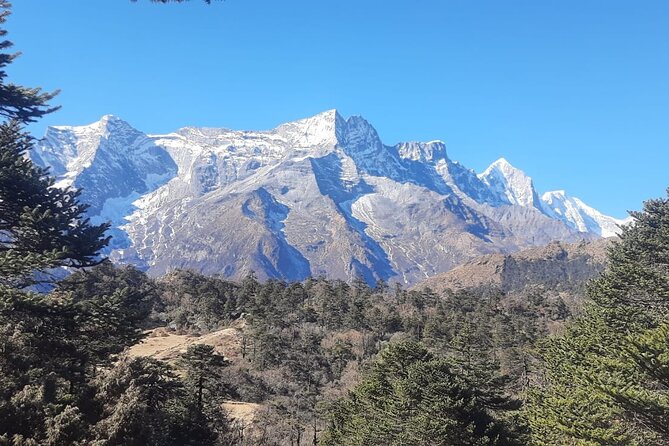
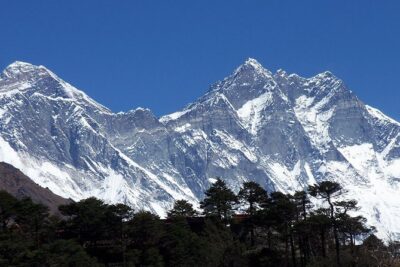
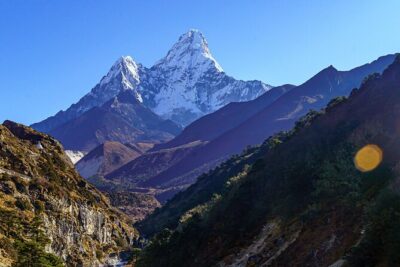
On day seven, the trail descends through birch and rhododendron forest before continuing toward Dingboche. The route provides views of Everest, Lhotse, and Ama Dablam. Ama Dablam is especially striking from this part of the Khumbu, but the itinerary wisely does not promise clear skies. Mountain views depend on weather and visibility.
The walk takes about five hours. You should now expect thinner air, colder conditions, and more attention to your pace. A good guide will help you keep a steady rhythm rather than pushing hard early in the day.
More treks starting in Kathmandu:
- Nagarkot Sunrise View and Day Hiking from Kathmandu
★ 5.0 · 471 reviews - Annapurna Circuit Trek with Tilicho Lake
★ 5.0 · 368 reviews - Everest Base Camp Trekking – 13 Day
★ 5.0 · 365 reviews - Everest Base Camp Trek -14 Days
★ 5.0 · 321 reviews
Lobuche and Gorak Shep mark the serious altitude zone
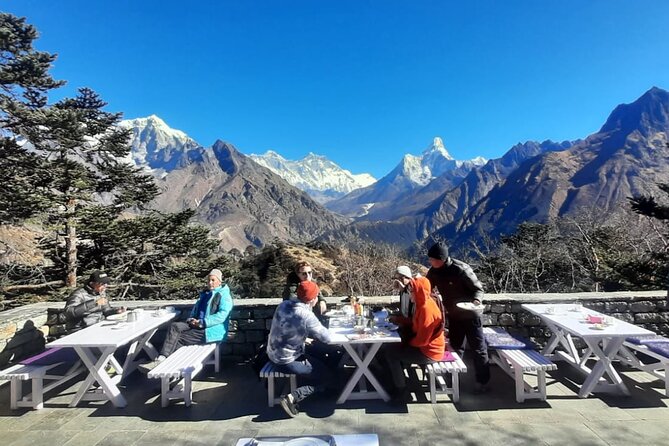
Day eight reaches Lobuche after a harder stretch. The route passes Dungla and climbs a steep hill, where memorial stupas honor climbers and local people who died in the mountains. These memorials add a sober note to the trek. Everest is beautiful, but it is also a place of real risk.
The five-hour day may look moderate on paper. At this height, the number of hours is only part of the story. The steep sections, cold air, rough footing, and reduced oxygen make the effort more demanding than a similar walk at sea level.
Day nine continues toward Gorak Shep and Everest Base Camp. The path includes glacier terrain and rough ground with repeated ascents and descents. The schedule gives about five hours, but this is a day when you should focus less on speed and more on staying comfortable and hydrated.
Khumbu Glacier and Khumbu Icefall are among the route’s major visual rewards. Base Camp itself is an important goal, but conditions there can vary. The itinerary promises the approach to Everest Base Camp and views of the surrounding mountains, not a fixed camp scene or a particular climbing season atmosphere.
You need to distinguish Everest Base Camp from the highest viewpoint on the route. Base Camp gives you the sense of the expedition route and the glacier environment. Kala Patthar gives the more direct high panorama of Everest and the Himalayan range.
Kala Patthar is the trip’s defining viewpoint
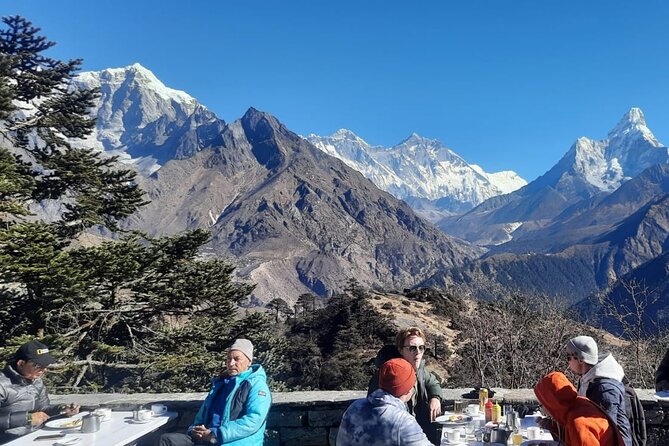
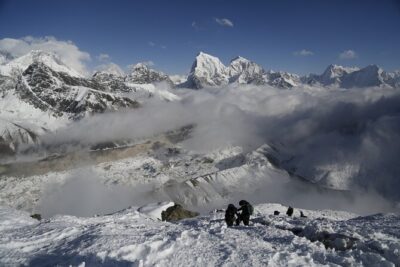
The itinerary describes a steep but manageable climb to Kala Patthar, with views of Lingtren, Khumbutse, and Changtse along the way. At 5,644 meters, this is a serious summit by any normal walking standard, even though it is a trekking peak rather than a technical climbing objective.
The summit view is the main visual payoff. You can expect close mountain views, including Everest and the surrounding Himalayan range when the weather cooperates. Sunrise is given special attention, with the peaks appearing golden as the sun rises behind the Everest massif.
There is an odd scheduling point here. Day 10 is labeled Everest Base Camp and describes the walk to Kala Patthar, while day 11 is labeled Pheriche and again describes a morning hike to Kala Patthar for sunrise. That may reflect a flexible mountain schedule or an editing error. Ask for clarification about where you sleep, when you visit Base Camp, and which morning is reserved for sunrise.
After the high point, the route descends toward Pheriche. This change is welcome because losing altitude usually makes walking and sleeping easier. Even so, the downhill sections can be hard on knees and ankles, especially after several days on uneven ground.
The return to Lukla is easier on the lungs, not always the legs
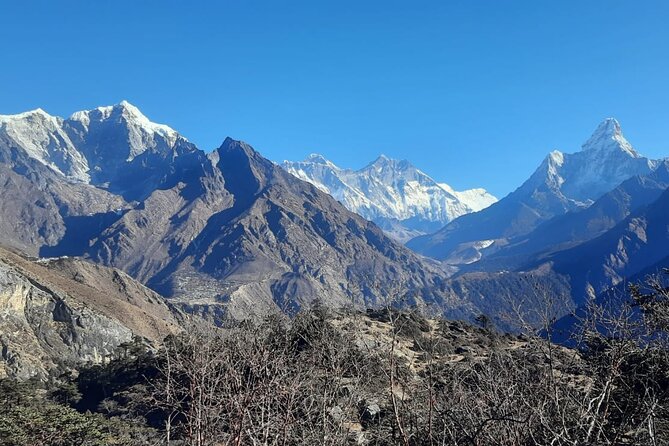
Day 12 returns to Namche Bazaar, with many ups and downs and a loss of nearly 2,000 feet in altitude. You cross the Dudh Koshi River and descend through rhododendron country. The trail is familiar in reverse, but it will not feel exactly the same after the high-altitude section.
Day 13 continues to Lukla. The route includes rocky paths, suspension bridges, and some surfaced walking near the end. The warmer air should feel welcome, and reaching Lukla marks the end of the mountain trek.
The return flight is scheduled early on day 14. After landing, you are taken back to the Kathmandu hotel, with free time to explore if your arrival and energy allow it. A farewell dinner is also mentioned. Since mountain flights can shift with weather, treat this free afternoon as a bonus rather than a firm sightseeing appointment.
Day 15 is airport departure day. The program advises arriving at least three hours before your scheduled flight, which is sensible for an international departure. Airport transfer is included.
What is included, and what you still need to arrange
The package includes airport arrival and departure transfers, the Everest National Park permit, and return flights between Kathmandu or Ramechhap and Lukla. It also includes a government-licensed trekking guide and one porter for every two people.
That porter arrangement reduces the load, but it does not mean you can bring unlimited luggage. You are still responsible for your own trekking equipment, and the program does not list gear rental. Ask for the baggage limit and a recommended packing list before departure.
Meals are listed as 13 breakfasts, 11 lunches, and 11 dinners. Three hotel nights in Kathmandu include breakfast. The meal count suggests that food is covered for most of the trekking portion, but drinks are not. Tea, bottled drinks, and alcohol can add up over two weeks.
Travel insurance is not included. For a high-altitude trek with weather-dependent flights, proper insurance is not a minor extra. Check that the policy covers trekking at the maximum altitude you will reach and flight delays or cancellations if those benefits matter to you.
The tour is intended for people with a moderate physical fitness level. That description should not be read as easy. You will walk for several hours on multiple days, climb to 5,644 meters, and manage steep, rocky, and glacier paths.
Who should choose this Everest package
I would consider this trip if you want a guided first Everest Base Camp trek and prefer to have the main transport and permits arranged in advance. It suits someone who wants Kathmandu’s major cultural sights included rather than treating the capital as a simple arrival point.
It is also a good fit for people who value practical support. A licensed guide can manage the route, a porter reduces your carrying load, and the group limit of 15 keeps the operation from becoming unwieldy. The company has been praised for punctual pickups, careful organization, and steady communication, which are useful qualities in a trip that involves flights, road transfers, and mountain lodging.
I would hesitate if you need a fully flexible cancellation policy. This booking is non-refundable and cannot be amended for any reason, except that poor weather or failure to meet the minimum group size can trigger a different date or a full refund. That is a strict condition.
I would also hesitate if you want a leisurely itinerary with short walks. The route is physically serious, and the high days around Lobuche, Gorak Shep, Base Camp, and Kala Patthar demand preparation.
Should you book the 15-day Everest Base Camp trek?
Book it if you want a solid, organized route with the major milestones in place: Lukla, Namche, Tengboche, Dingboche, Everest Base Camp, Kala Patthar, and four Kathmandu heritage sites. At $1,799, the inclusion of flights, permits, guide, porter, hotels, and most meals gives the price real value.
Before booking, get three points in writing: the exact Kala Patthar schedule, what trekking equipment you must bring, and the flight and baggage arrangements for Kathmandu or Ramechhap. If you are prepared for high altitude and accept the strict cancellation terms, this is a well-targeted package for reaching Everest Base Camp without having to arrange every moving part yourself.
FAQ
How long is the Everest Base Camp and Kathmandu tour?
The tour lasts approximately 15 days, including arrival and departure in Kathmandu, the trek from Lukla to the Everest region, the return to Lukla, and the flight back to Kathmandu.
What is the price of the tour?
The listed price is $1,799 per person.
Is airport pickup included?
Yes. Airport arrival and departure transfers are included.
Are flights to Lukla included?
Yes. The package includes a flight from Kathmandu or Ramechhap to Lukla and the return flight.
Is a trekking guide included?
Yes. A government-licensed trekking guide is included. One guide named in the tour’s service history is Rajan, but you should ask whether he is assigned to your departure.
Is porter support included?
Yes. One porter is provided for every two people to carry baggage.
Which Kathmandu sites are visited?
The Kathmandu program visits Swayambhunath, Patan Durbar Square, Pashupatinath Temple, and Boudhanath Stupa.
Are meals included?
Yes. The package lists 13 breakfasts, 11 lunches, and 11 dinners. Drinks and alcoholic beverages are not included, apart from one cup of tea per day.
What is not included in the price?
Travel insurance, trekking equipment, Nepal visa costs, Kathmandu UNESCO site entrance fees, and most drinks are not included. The stated entrance fees for the Kathmandu sites are $20 per person.
Recently added around Kathmandu
- Kathmandu : Swambhunath & Durbar Square Guided Half Day Tour★ 3.3 · 3 reviews
- Private Day Tour in Kathmandu Valley Rim with Bhaktapur Sightseeing★ 5.0 · 3 reviews
- From Kathmandu / Pokhara / Chitwan: River Rafting – 1 Day★ 4.6 · 3 reviews
- Nepali Cooking training & Cultural Homestay Experience★ 5.0 · 3 reviews
- Private 3-Hour Nagarkot Sunset Tour from Kathmandu★ 3.5 · 3 reviews
- From Kathmandu: Everest Base Camp Landing Helicopter Tour★ 5.0 · 3 reviews
- 4 UNESSCO World heritage sites of Kathmandu-private tour★ 5.0 · 3 reviews
- Kailashnath Mahadev, Panauti and Namo Buddha Monastery Sightseeing★ 5.0 · 3 reviews
Everest Base Camp Treks, compared.
Everest Base Camp Helicopter Tour landing at Everest View Hotel
Read our review →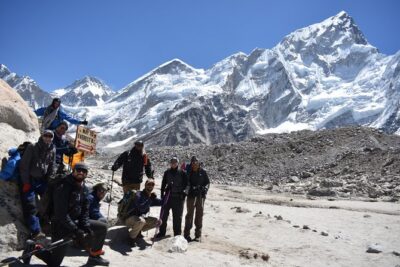
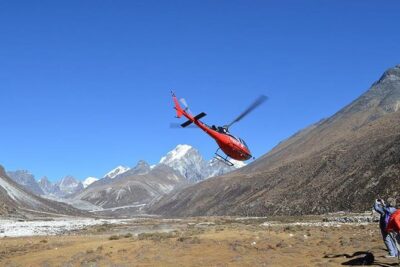
Everest Base Camp Helicopter Tour landing at Hotel Everest View
Read our review →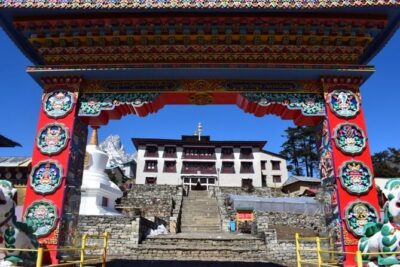
Browse the lists this tour appears in