
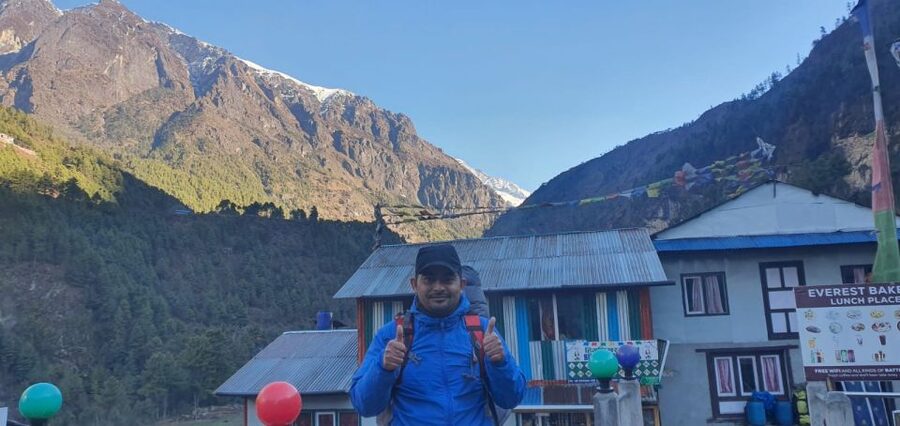
Reviewed · EVEREST BASE CAMP TREKS
Kathmandu: 14-Day Everest Base Camp with Kala Patthar Trek
The big draw here is simple: you walk beneath Everest, then climb Kala Patthar for one of the finest high views in the Khumbu. Along the way, you pass through Sherpa villages, spend time in Namche Bazaar, and face the famously short Lukla airstrip.
I like the careful acclimatization plan, with rest days at Namche Bazaar and Dingboche instead of rushing uphill. I also like the practical package: domestic flights, tea-house lodging, permits, guide support, and a sleeping bag and jacket if needed are included. The main concern is the price wording around porters and meals, so confirm exactly what your booking covers before you pay.
In This Review
- Key points at a glance
- What this 14-day Everest trek is really like
- Day 1: Kathmandu arrival and a useful first night
- Day 2: The Lukla flight and the walk to Phakding
- Day 3: Climbing toward Namche Bazaar
- Day 4: Acclimatization in Namche Bazaar
- Day 5: Namche to Tengboche
- Day 6: Tengboche to Dingboche
- Day 7: A second pause at Dingboche
- Day 8: Dingboche to Lobuche at 4,940 meters
- Day 9: Gorak Shep and Everest Base Camp
- Day 10: Kala Patthar and the descent to Pheriche
- Days 11 to 13: A gradual return to Kathmandu
- What the $1,296 price includes
- Guides, tea houses, and the human side of the route
- Who should book this trek
- Practical packing advice for the Khumbu
- Should you book the Everest Base Camp and Kala Patthar trek?
- FAQ
- How long does the Everest Base Camp and Kala Patthar trek last?
- Is the flight from Kathmandu to Lukla included?
- What language does the guide speak?
- Are meals included during the trek?
- Is accommodation included?
- Is travel insurance included?
Key points at a glance
- Lukla starts the adventure: The flight from Kathmandu takes you to 2,850 meters, where the trek begins almost at once.
- Namche and Dingboche rest days matter: These stops give your body time to adjust before the highest walking days.
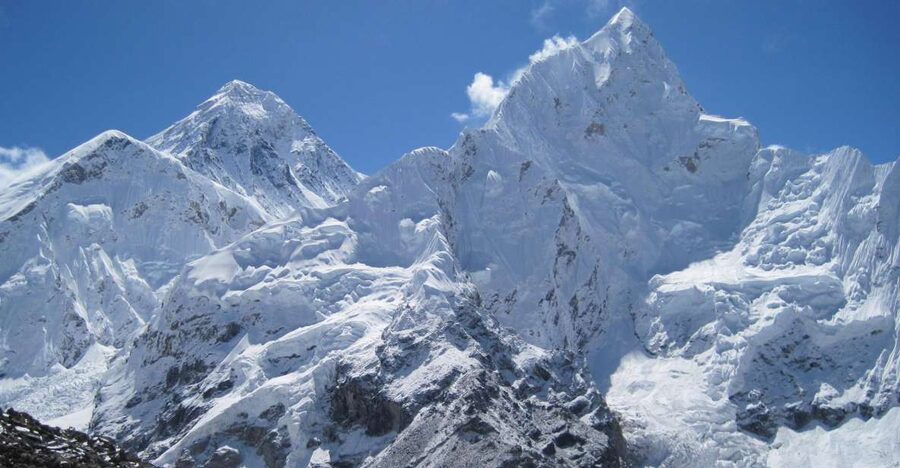
- Kala Patthar is the visual prize: At 5,545 meters, it gives you a sweeping view toward Everest, Lhotse, Nuptse, and Ama Dablam.
- The return is built into the plan: You do not simply reach Base Camp and rush back. Three descent days lead you toward Kathmandu.
- Sherpa culture is part of the route: Tea houses, villages, monasteries, and Namche Bazaar give the trek a human side beyond mountain views.
- Weather can change everything: Lukla flights may be canceled, so keep your schedule flexible and carry proper insurance.
What this 14-day Everest trek is really like
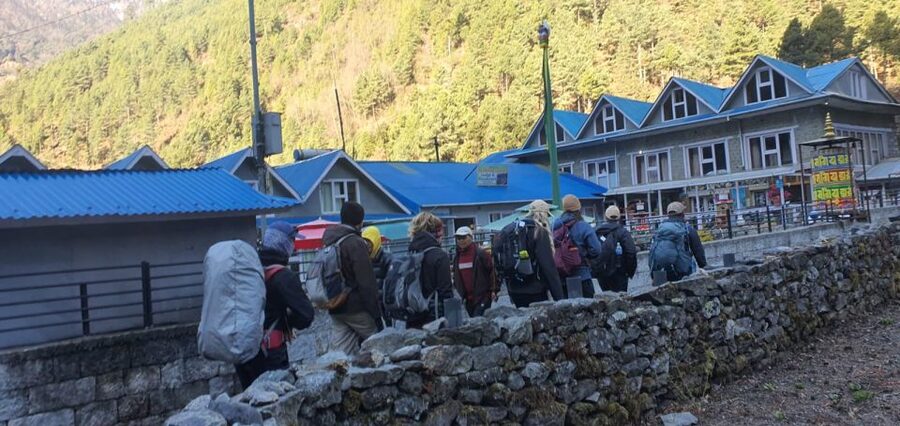
This is a serious high-altitude walk, not a sightseeing trip with a few easy hikes added. You spend several days above 3,000 meters, reach Everest Base Camp at 5,364 meters, and climb Kala Patthar to 5,545 meters.
The daily distances are manageable on paper, but altitude changes the equation. A short uphill stretch can feel demanding, especially near Lobuche and Gorak Shep. Your English-speaking guide is there to manage the pace, route, lodging, and practical problems. One guide named in the feedback is Anjan, while another guide, Padam, handled an alternate trek after bad weather stopped a Lukla flight. Guide assignments can vary, so ask for your guide’s name before departure.
The experience has earned a 4.2 rating from 21 reviews, with especially strong praise for the guides, organization, and support. That fits the structure of the trip. You are not left to arrange each lodge, permit, airport transfer, and flight on your own.
More ways to trek to Everest Base Camp:
- Everest Base Camp Trek – 14 Days
★ 5.0 · 1,499 reviews - Everest Base Camp Helicopter Tour landing at Everest View Hotel
★ 5.0 · 668 reviews - Everest Base Camp Trekking
★ 5.0 · 485 reviews
Day 1: Kathmandu arrival and a useful first night
Your trip begins with pickup at Tribhuvan International Airport and transfer to a standard hotel in Kathmandu. Two nights of accommodation in Kathmandu are included, with breakfast.
This first evening is less about sightseeing and more about getting organized. You will want to check your walking shoes, sort your layers, and make sure your insurance includes emergency medical evacuation. That last point is not optional for a trek at this altitude.
Kathmandu can be noisy and hectic, but the short city stay gives you a buffer before the mountain section. It also helps if your arrival is delayed. The package includes airport and hotel transfers, which removes one common source of confusion after a long flight.
Day 2: The Lukla flight and the walk to Phakding
The flight to Lukla is one of the memorable parts of the trip, even before you take your first mountain step. Lukla sits at 2,850 meters, and the airport is known for its demanding approach and short runway. Flights depend heavily on weather, so your plan needs some flexibility.
After landing, you begin walking toward Phakding at 2,640 meters. The listed walking time is four to five hours. This first day is a useful introduction to the pace of the trek, though it is not completely flat or effortless.
Phakding is a resting point rather than a major destination. The value of stopping here is practical: you avoid making the first walking day too long and give yourself a gentler start before the harder climb to Namche.
A key warning: flights to Lukla can be canceled. One booking had to be changed because poor weather kept aircraft grounded, even after the company tried for several days. An alternate Base Camp trek was arranged instead, but that kind of change is only helpful if your schedule allows it.
Day 3: Climbing toward Namche Bazaar
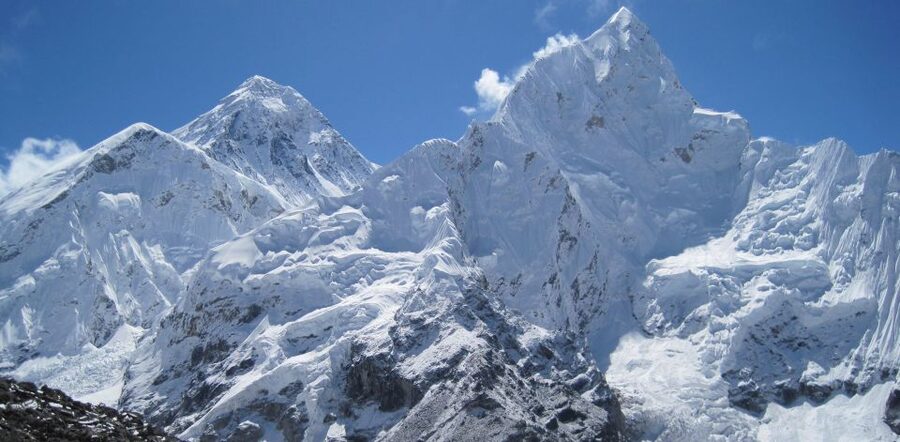
The walk from Phakding to Namche Bazaar takes six to seven hours and brings you to 3,440 meters. This is one of the first days when the altitude becomes impossible to ignore.
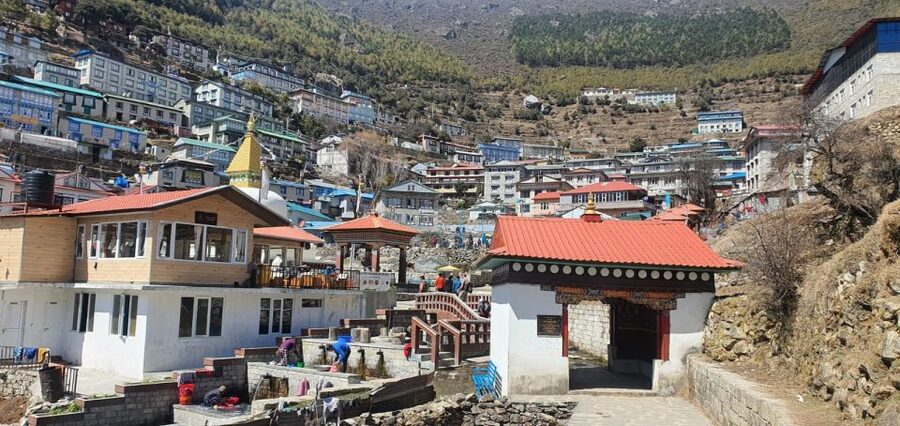
Namche is the Sherpa heartland of the route and one of the most important stops on the trek. It is a good place to slow down, check how your body is responding, and enjoy the social side of the Khumbu. The town is not just a sleep stop. It is the point where the trail begins to feel distinctly Himalayan.
The climb can be tiring, particularly if you are walking too fast. Let your guide set a steady pace. You will get more from the route by arriving in Namche with energy left for the acclimatization walk than by treating the day like a race.
More treks starting in Kathmandu:
- Nagarkot Sunrise View and Day Hiking from Kathmandu
★ 5.0 · 471 reviews - Annapurna Circuit Trek with Tilicho Lake
★ 5.0 · 368 reviews - Everest Base Camp Trekking – 13 Day
★ 5.0 · 365 reviews - Everest Base Camp Trek -14 Days
★ 5.0 · 321 reviews
Day 4: Acclimatization in Namche Bazaar
You spend a rest day in Namche, with a two to three-hour excursion included. Rest day does not mean lying in bed all day. A short walk helps your body adjust to the altitude, while the return to Namche lets you sleep at the same elevation.
This is one of the strongest parts of the itinerary. Fast itineraries may try to cut rest days, but that can make the later stages far less pleasant. Here, the extra time gives you a better chance of reaching Base Camp and Kala Patthar without having to turn around early.
Use this day to ask your guide about symptoms such as headache, nausea, unusual tiredness, or poor coordination. The guide’s role is not just to point out the path. Good judgment about altitude is central to the trip.
Day 5: Namche to Tengboche
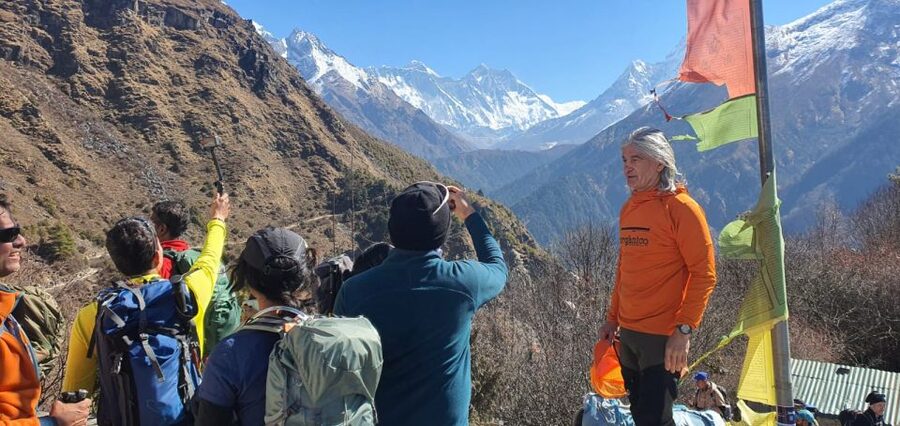
The route from Namche to Tengboche takes five to six hours and reaches 3,870 meters. The day brings a change in scenery and a more remote feel.
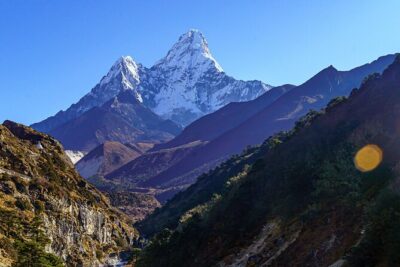
Tengboche is known for its monastery and its mountain setting. The views toward Ama Dablam are among the visual highlights of the approach to Everest. You also begin to feel the effects of several consecutive nights at altitude.
Tea-house accommodation keeps the trip grounded in local mountain life. Do not expect hotel comforts at every stop. You sleep in lodges and tea houses, and hot showers cost extra during the trek. Food and drinks are also paid for separately, so keep funds available for meals, snacks, and hot beverages.
Day 6: Tengboche to Dingboche
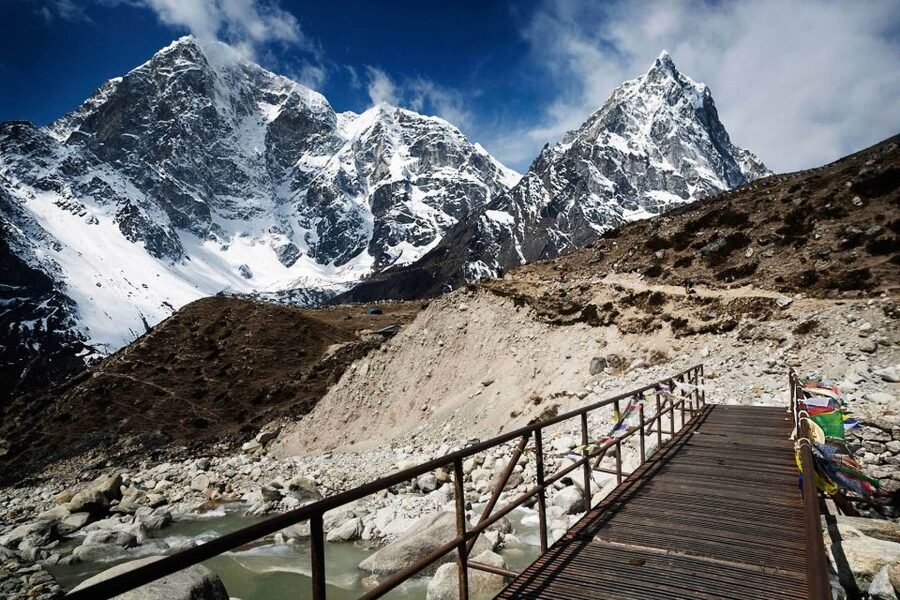
The six-hour walk to Dingboche reaches 4,410 meters. This is another major rise, and the cold and thin air can make the day feel longer than the clock suggests.
Dingboche is a broad stopping point in the high Khumbu and the base for another acclimatization day. The trek begins to shift from village walking to a more exposed, high-altitude route. You should now be using sunscreen, sunglasses, and a hat every day. Strong sun at altitude can catch you off guard even when the air feels cold.
The included jacket and sleeping bag can be useful, but check their condition and suitability before setting out. You should still pack warm personal layers. The supplied packing list focuses on basics such as two T-shirts, long pants, shorts, socks, trekking shoes, sunscreen, sunglasses, a hat, mosquito repellent, and toilet paper.
Day 7: A second pause at Dingboche
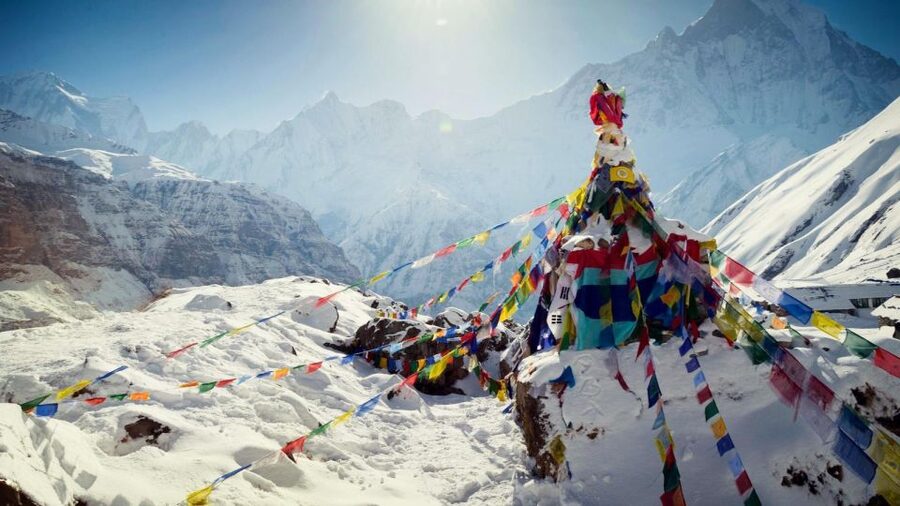
The second acclimatization day is well placed. You are high enough that a rest day becomes a safety measure, not a luxury.
The itinerary does not specify a particular excursion here, so your guide will determine how to use the day. You might take a short walk, rest, and prepare for the higher section ahead. The point is to avoid a sudden push from Dingboche to Lobuche without giving your body time to adjust.
This is also the right moment to look honestly at how you feel. The route gets harder from here. Tell your guide about symptoms rather than trying to hide them to keep the schedule.
Day 8: Dingboche to Lobuche at 4,940 meters
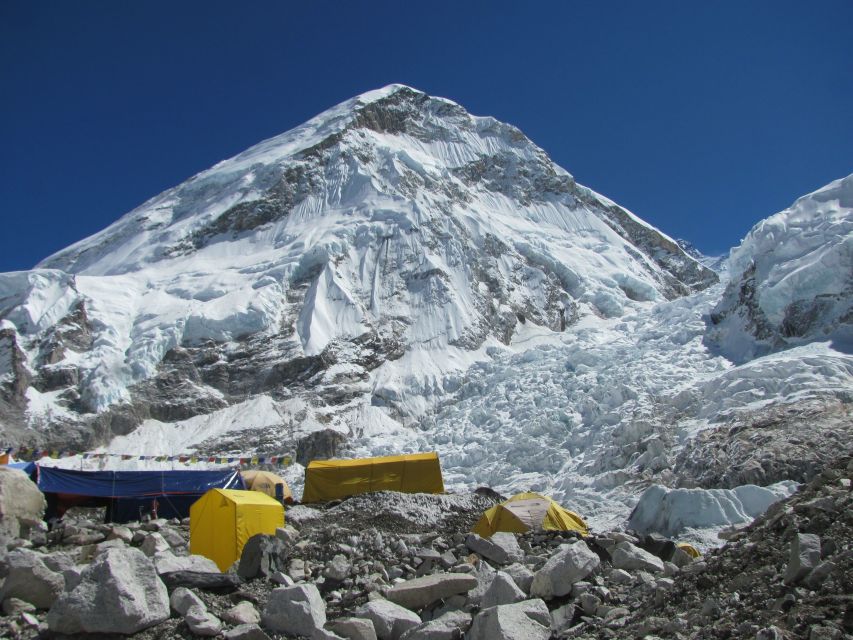
The walk to Lobuche takes five to six hours and reaches 4,940 meters. At this elevation, even ordinary tasks can require patience.
Lobuche is important because it puts you close to the Base Camp section. It is also a reminder that the trek is no longer a normal hill walk. You may find the cold, basic lodging, and limited comforts more noticeable here than in lower villages.
The best approach is to keep your routine simple. Drink what you can, eat enough, protect your hands and face, and keep your pack light. Since lunch and dinner are not included, the cost of this day depends partly on what you order in the tea house.
Day 9: Gorak Shep and Everest Base Camp
You walk from Lobuche to Gorak Shep at 5,170 meters, then continue to Everest Base Camp at 5,364 meters before returning to Gorak Shep. This is one of the longest and most demanding days of the trip.
The Base Camp walk is more about reaching a famous point than standing beneath a perfect summit view. Everest itself may not look as dramatic from Base Camp as it does from Kala Patthar, but the route carries a strong sense of achievement. You are walking through the same high Khumbu corridor used by mountaineering expeditions.
At this altitude, your pace will be slow. That is normal. Take food, water, sun protection, and warm clothing seriously. Returning to Gorak Shep after the Base Camp walk means you need enough energy for the way back, not just the outward journey.
Day 10: Kala Patthar and the descent to Pheriche
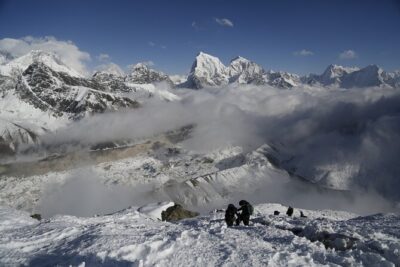
The early hike to Kala Patthar reaches 5,545 meters, the highest point on this itinerary. This is the day for the great mountain views, including Everest, Lhotse, Nuptse, and Ama Dablam.
Kala Patthar is often the visual high point because it gives you a better mountain panorama than Base Camp. The climb is steep and the altitude is extreme, so the pace will be slow. You then descend to Pheriche at 4,371 meters, a major drop that should feel welcome after the thin air above Gorak Shep.
This is a demanding combination of ascent and descent. If your body is struggling, speak clearly with your guide. Reaching the top is not worth ignoring serious altitude symptoms.
Days 11 to 13: A gradual return to Kathmandu
After Pheriche, you continue descending for three days before arriving in Kathmandu on day 13. The supplied plan does not list each overnight stop, but the structure gives you time to retrace the route rather than forcing the entire return into one exhausting push.
Descending is easier for breathing, but it still taxes your knees and feet. Trekking poles can help, though they are not listed among the included equipment. Keep your shoes dry and deal with hot spots on your feet as soon as they appear.
Back in Kathmandu, you spend a final evening before departure the next day. The contrast can be sharp: after tea houses, mountain paths, and simple meals, city traffic and hotel comforts may feel almost strange.
What the $1,296 price includes
At $1,296 per person, this is a substantial purchase, but the package covers several expensive and important parts of the route:
- Private airport pickup and drop-off
- Domestic airport transfers
- Two Kathmandu hotel nights with breakfast
- Kathmandu to Lukla and Lukla to Kathmandu flights
- Tea-house lodging during the trek
- National park permits and required paperwork
- An experienced English-speaking guide
- Guide and porter-related salary, food, accommodation, transportation, and insurance as described
- Use of a jacket, sleeping bag, and duffle bag if required
The value is strongest if you want one company to handle the major arrangements. The Lukla flights alone are an important part of the booking, and the permits and guide support save you from arranging several separate services.
Read the porter section carefully. The information says one porter is used for two people, while the exclusions also say porters are not included. That is unclear. Ask whether your price includes a porter, how much luggage the porter carries, and what happens if you are traveling alone.
Meals are another extra. Breakfast, lunch, and dinner during the trek are not included, nor are lunch and dinner in Kathmandu. Alcohol, soft drinks, and other drinks cost extra, as do hot showers. Add those costs to your budget before deciding that the headline price is the full cost.
Guides, tea houses, and the human side of the route
The strongest praise goes to the guides and the organization. Marc specifically valued a guide with very good English, while other bookings describe Hari as responsive and Anjan as attentive. Padam is also named as a guide who handled a weather-related change with care.
That matters on a trek where conditions can alter the plan. A guide who communicates clearly can make the difference between a stressful day and a manageable one. Still, service depends on the person assigned to your group, so ask about guide experience, group size, and porter arrangements.
Tea houses are basic but central to the experience. You get a roof, a bed, and a place to eat, but not a full-service hotel. One account found the showers surprisingly usable, though you should not count on hot water or long showers. At altitude, a warm sleeping bag and dry layers may matter more than bathroom comfort.
Who should book this trek
You should consider this trip if you want a structured Everest Base Camp route with an English-speaking guide, included flights, organized transfers, and built-in acclimatization days. It suits fit walkers who can handle long days and basic lodging without expecting luxury.
You should think twice if you dislike uncertain flight schedules, shared tea-house facilities, cold conditions, or paying separately for nearly all trek meals and drinks. It is not suitable for pregnant women, people with heart problems, or people with mobility impairments.
Travel insurance with emergency medical evacuation is required but not included. Do not treat this as ordinary trip insurance. The altitude and remote setting make proper cover one of the most important things you bring.
Practical packing advice for the Khumbu
The official list is short, but you should take each item seriously. Bring sunglasses, a hat, sunscreen, trekking shoes, socks, long pants, shorts, T-shirts, and insect repellent, along with toilet paper.
The included sleeping bag, jacket, and duffle bag can reduce what you need to buy, but confirm availability before departure. You should also keep essential personal items in your day bag in case your main luggage is carried separately.
Do not pack only for warm Kathmandu. The higher villages are cold, and the walk to Kala Patthar requires clothing that protects you from wind and strong sun. Your footwear is especially important. Break in your hiking shoes before the trip.
Should you book the Everest Base Camp and Kala Patthar trek?
I would choose this trek if you want a well-supported 14-day route rather than an independent walking trip. The itinerary gives you sensible acclimatization days, includes the major permits and flights, and adds the view from Kala Patthar instead of stopping at Base Camp alone.
I would book only after confirming the porter policy, meal costs, group size, and what happens if Lukla flights are canceled. If your schedule is tight, weather-related delays are a real concern.
For a strong walker who wants Everest, Sherpa villages, Namche Bazaar, and a practical guide-led plan, this is a good-value option at $1,296, provided you budget for meals, drinks, showers, insurance, and possible changes.
FAQ
How long does the Everest Base Camp and Kala Patthar trek last?
The trek lasts 14 days. You arrive in Kathmandu on day 1, return to Kathmandu on day 13, and depart the following day.
Is the flight from Kathmandu to Lukla included?
Yes. The package includes a Kathmandu to Lukla and Lukla to Kathmandu flight ticket, along with domestic airport transfers.
What language does the guide speak?
The tour provides a live English-speaking guide. Specific guides named in the trip information include Anjan and Padam, but your assigned guide may differ.
Are meals included during the trek?
No. Breakfast, lunch, and dinner during the trek are not included. Alcoholic and non-alcoholic drinks are also extra.
Is accommodation included?
Yes. Two standard hotel nights in Kathmandu with breakfast are included, along with lodge or tea-house accommodation during the trek.
Is travel insurance included?
No. You must arrange valid travel insurance that includes medical evacuation in an emergency.
Recently added around Kathmandu
- Kathmandu : Swambhunath & Durbar Square Guided Half Day Tour★ 3.3 · 3 reviews
- Private Day Tour in Kathmandu Valley Rim with Bhaktapur Sightseeing★ 5.0 · 3 reviews
- From Kathmandu / Pokhara / Chitwan: River Rafting – 1 Day★ 4.6 · 3 reviews
- Nepali Cooking training & Cultural Homestay Experience★ 5.0 · 3 reviews
- Private 3-Hour Nagarkot Sunset Tour from Kathmandu★ 3.5 · 3 reviews
- From Kathmandu: Everest Base Camp Landing Helicopter Tour★ 5.0 · 3 reviews
- 4 UNESSCO World heritage sites of Kathmandu-private tour★ 5.0 · 3 reviews
- Everest Helicopter Tour★ 5.0 · 3 reviews
Everest Base Camp Treks, compared.
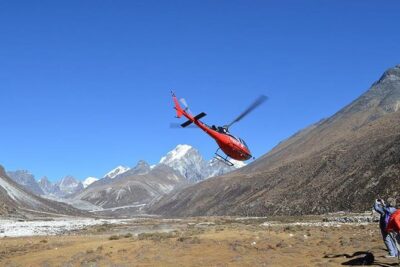
Everest Base Camp Helicopter Tour landing at Everest View Hotel
Read our review →
Everest Base Camp Helicopter Tour landing at Hotel Everest View
Read our review →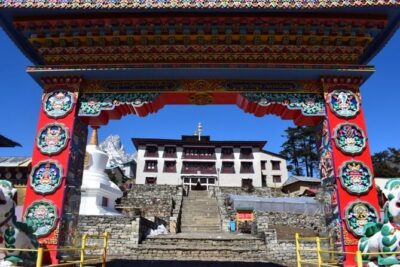
Browse the lists this tour appears in