
Reviewed · EVEREST BASE CAMP TREKS
12 Days Everest Base Camp Trek from Kathmandu
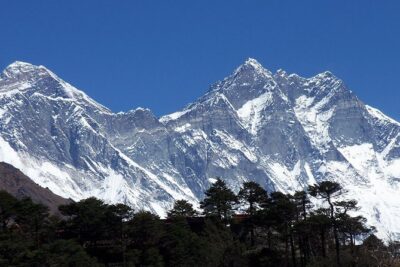
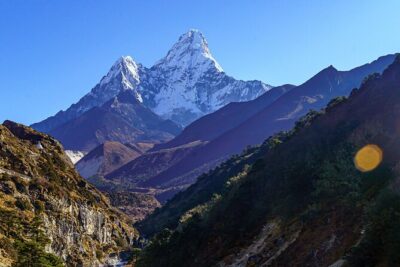
The best part of this 12-day Everest Base Camp trek is the steady change under your boots: rhododendron forest gives way to high, stark mountain country, while Sherpa villages and prayer-flagged passes keep the walk tied to local life. You fly from Kathmandu to Lukla, then follow the Dudh Koshi River toward Everest, Lhotse, Nuptse, Ama Dablam, and the high Khumbu.
I like the two built-in acclimatization days at Namche Bazaar and Dingboche. I also like that the $1,380 price includes the Lukla flights, guide, permits, guesthouse lodging, and hotel transfers. The main caution is simple: this is a demanding high-altitude trek, not a sightseeing stroll, and food costs about $25 per day on top of the tour price.
In This Review
- Key points to know before booking
- Why this 12-day route works
- Day 1: Lukla to Phakding beside the Dudh Koshi
- Day 2: Entering Sagarmatha National Park on the way to Namche
- Day 3: Acclimatizing above Namche Bazaar
- Day 4: Rhododendron forest and Tengboche Monastery
- Day 5: Dingboche through Pangboche and Orsho
- Day 6: Nagarjun Hill and a second altitude break
- Day 7: Dingboche to Lobuche and the high country
- Day 8: Gorak Shep and Everest Base Camp
- Day 9: Kala Patthar, then down to Pheriche
- Day 10: Back through Tengboche to Namche
- Day 11: Namche to Lukla
- Day 12: Fly to Kathmandu and finish with dinner
- What $1,380 includes, and what it does not
- The guide can make or break the trek
- Who should book this trek
- Should you book the Everest Base Camp trek?
- FAQ
- How long is the Everest Base Camp trek?
- What is included in the tour price?
- Are food and drinks included?
- Is this a private tour?
- Which major places are included on the route?
- Are there acclimatization days?
- How fit do I need to be?
Key points to know before booking
- Lukla flights are included: Your round-trip Kathmandu to Lukla airfare is part of the package, along with airport and hotel transfers.
- Two acclimatization stops help: You spend extra time at Namche Bazaar and Dingboche, with short hikes to higher viewpoints.
- Everest Base Camp is only part of the prize: The Kala Patthar hike on Day 9 offers the famous broad view of Everest and nearby peaks.
- Sherpa culture is built into the route: You pass through Namche, Tengboche, Pangboche, Orsho, and other mountain settlements, with time at Tengboche Monastery.
- Private means personal pacing: Only your group participates, with a government-licensed English-speaking trekking guide.
- Plan for extra costs: Meals and drinks are not included, and gratuities are optional.
Why this 12-day route works
This trek follows the classic approach to Everest Base Camp, beginning with the short but thrilling flight from Kathmandu to Lukla. From there, you walk for most of the trip, sleeping in guesthouses and gaining altitude in measured stages.
The route is well planned on paper. You reach Namche Bazaar on Day 2, spend another day there, climb to Dingboche by Day 5, and take another acclimatization day before heading higher. Those pauses matter because the air gets thinner quickly above Namche.
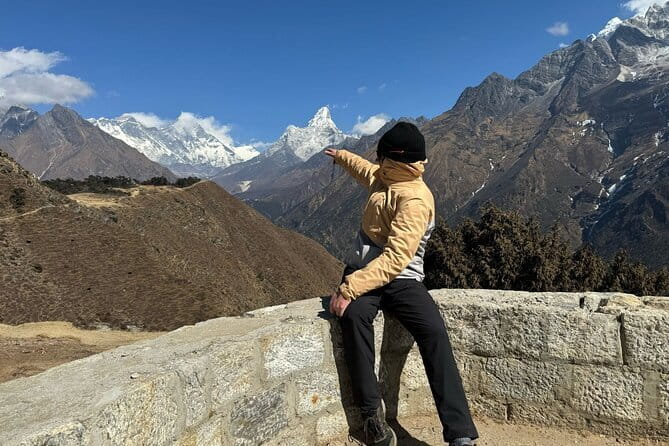
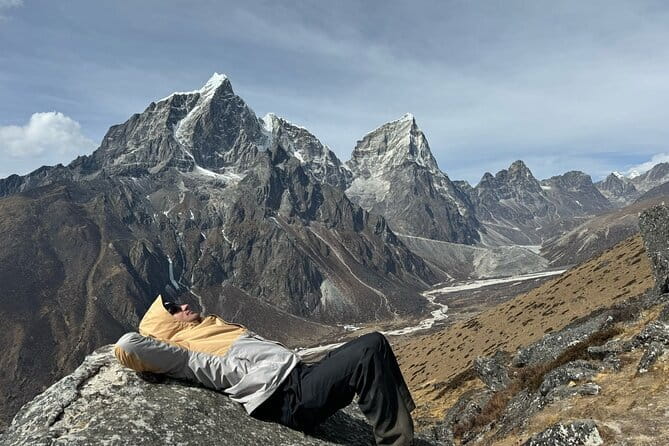
The route also gives you two different mountain rewards. Everest Base Camp is the emotional target, but Kala Patthar usually provides the wider photographic view. From there, you may see Everest, Lhotse, Ama Dablam, Nuptse, Thamserku, Pumori, and other Himalayan peaks listed in the itinerary.
The private format is useful if your group has mixed walking speeds or wants more time at monasteries and viewpoints. It does not remove the physical demands, but it can make the day feel less like a race.
More ways to trek to Everest Base Camp:
- Everest Base Camp Trek – 14 Days
★ 5.0 · 1,499 reviews - Everest Base Camp Helicopter Tour landing at Everest View Hotel
★ 5.0 · 668 reviews - Everest Base Camp Trekking
★ 5.0 · 485 reviews
Day 1: Lukla to Phakding beside the Dudh Koshi
Your morning begins with the flight from Kathmandu to Lukla. The flight is short and scenic, and Lukla is where you meet the trekking crew before walking toward Phakding.
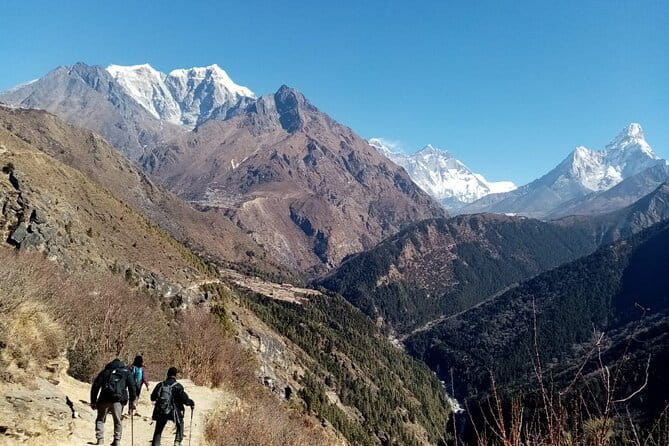
The trail follows the Dudh Koshi River and includes descents and gradual sections. The full walking day is listed at about six hours, though your exact pace will depend on your group and stops.
Phakding is a sensible first night because you begin walking without immediately sleeping at a much higher altitude. The route already gives you a taste of the region, with small villages, river crossings, and mountain scenery replacing Kathmandu’s traffic and noise.
Keep this first day easy. The temptation is to walk fast because the elevation gain feels modest, but saving energy from the start is one of the smartest things you can do.
Day 2: Entering Sagarmatha National Park on the way to Namche
The seven-hour walk from Phakding to Namche Bazaar is one of the first serious days. You pass through Monjo and enter Sagarmatha National Park, a protected area known for mountain wildlife and flowering plants.
The trail crosses streams and passes small villages before the climb toward Namche. The change in altitude is noticeable, and the final approach can feel long after a pleasant morning beside the river.
Namche Bazaar is the main gateway to the Everest region. It is more than a stopping point: you return here later on the way down, making it a useful place to settle into the rhythm of the trek.
I like this stage because you begin to see how the route works. Villages, suspension bridges, prayer flags, and steep hills become part of your daily routine. The drawback is that the day asks a lot from your legs before you have fully adjusted.
Day 3: Acclimatizing above Namche Bazaar
You stay another night in Namche, but this is not a day for doing nothing. The plan includes a short excursion toward Syangboche Airstrip or the Everest View Hotel, with about six hours listed for the day.
The point is to walk higher and return to sleep lower. That pattern gives your body time to adjust before the route climbs toward Tengboche and the upper Khumbu.
The viewpoint excursion also offers an early chance to see Everest and surrounding peaks. Weather can affect what you see, so treat the mountain views as a gift rather than a promise.
Namche is one of the best places to notice the Sherpa character of the route. You are not simply moving through empty wilderness. You are walking among established mountain communities with Buddhist customs, prayer wheels, and traditional villages.
More treks starting in Kathmandu:
- Nagarkot Sunrise View and Day Hiking from Kathmandu
★ 5.0 · 471 reviews - Annapurna Circuit Trek with Tilicho Lake
★ 5.0 · 368 reviews - Everest Base Camp Trekking – 13 Day
★ 5.0 · 365 reviews - Everest Base Camp Trek -14 Days
★ 5.0 · 321 reviews
Day 4: Rhododendron forest and Tengboche Monastery
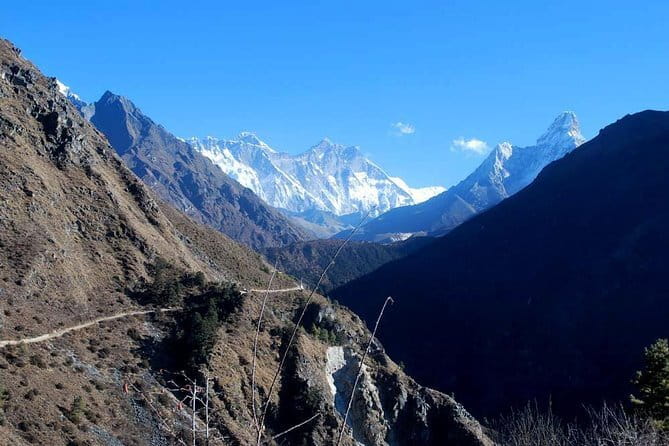
From Namche, the trail gradually climbs through dense rhododendron forest. The route crosses the Imja Khola before reaching Tengboche, with about six hours of walking planned.
Tengboche is one of the trip’s most memorable stops because of its monastery and mountain setting. The Tenboche Monastery is described as the oldest monastery in the Khumbu region, and you have time to explore it.
This is where the cultural side of the trek comes into focus. Prayer wheels, chortens, Buddhist rituals, and monastery architecture give meaning to the route beyond the goal of reaching Base Camp.
The terrain is still relatively welcoming here, with forest and village paths. Yet the altitude continues to rise, so you should not confuse a scenic day with an easy day. Walk steadily and let your guide manage the pace.
Day 5: Dingboche through Pangboche and Orsho
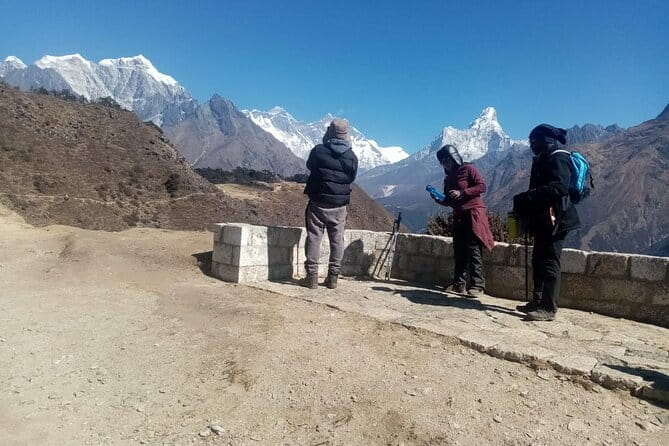
The trail toward Dingboche crosses more suspension bridges and passes settlements including Pangboche and Orsho. The day is listed at roughly six hours.
You also pass stupas, chortens, and other Buddhist markers. These details are easy to rush past when you are focused on the next climb, but they make the route feel connected to the people who live here.
Dingboche marks a clear shift toward higher, more exposed country. Forest becomes less dominant, and the views begin to open as the trail moves through the Imja Valley.
This is a good point to pay attention to your body. Headaches, unusual fatigue, poor sleep, or nausea should be reported to your guide. The package includes a normal emergency first aid kit with the guide, but it is still your responsibility to speak up early if you feel unwell.
Day 6: Nagarjun Hill and a second altitude break
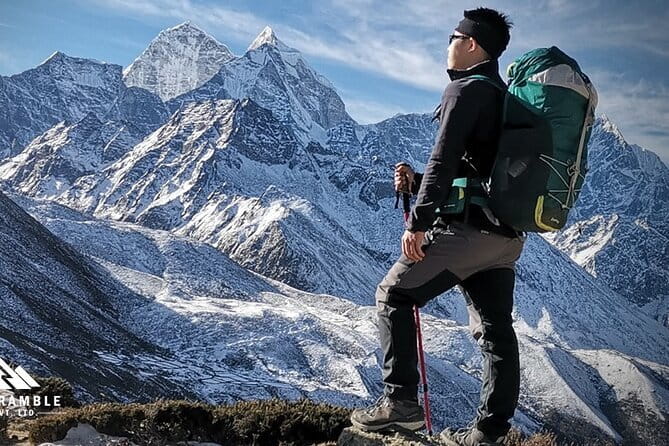
Day 6 is another acclimatization day in Dingboche. The planned hike goes to Nagarjun Hill, where you can see Everest, Lhotse, Ama Dablam, Nuptse, Thamserku, Pumori, and other peaks.
The listed walking time is about six hours, so this is not a lazy rest day. It is an active pause that helps your body adjust while giving you one of the route’s best chances for broad mountain views.
I especially like this design because the trek does not rush straight from Namche to Base Camp. A shorter itinerary might look attractive, but it would leave less room for altitude adjustment and could make the high days much harder.
Weather and visibility remain outside anyone’s control. You might find the mountain views clear, partly clouded, or hidden. The hike still has value because it lets you build strength for the difficult days ahead.
Day 7: Dingboche to Lobuche and the high country
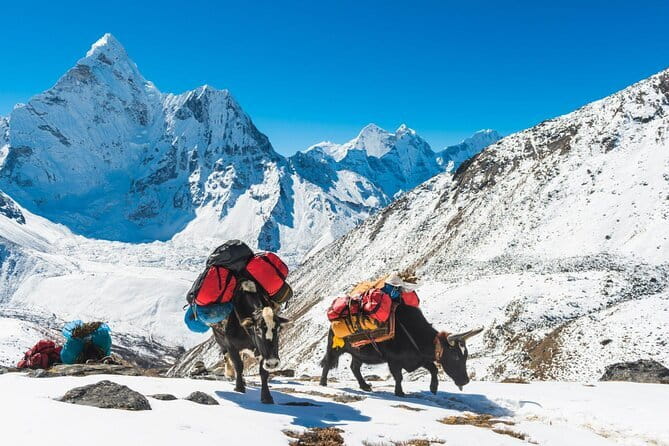
Leaving Dingboche, you gradually climb through smaller villages. The surrounding terrain changes again, with fewer trees and more sparsely scattered shrubs.
The six-hour walk ends at Lobuche, positioned at the foot of the high route toward Gorak Shep and Base Camp. By now, the air is thinner, the trail feels more rugged, and ordinary tasks such as climbing steps or packing your day bag can take more effort.
This is a quiet day compared with the excitement of Base Camp, but it is important. You are positioning yourself for the longest and most anticipated walking day.
Do not spend all your energy trying to walk quickly. At this altitude, a slow pace is not a sign of weakness. It is the practical way to keep moving.
Day 8: Gorak Shep and Everest Base Camp
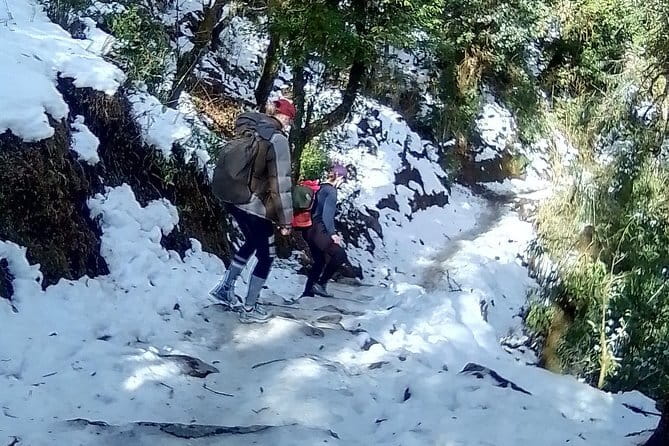
You start early for the walk to Everest Base Camp. The route passes through Gorak Shep, the last human settlement on the trail and the former base camp area.
The day is listed at about eight hours, making it one of the trek’s toughest stages. You walk out to Base Camp and then return, so the achievement requires both the push toward the destination and the strength to come back.
Everest Base Camp is an important landmark, but it is not the place with the broadest view of Everest itself. Base Camp sits among glaciers, moraine, and high peaks, while the next day’s Kala Patthar hike is designed for the classic mountain panorama.
You should expect a demanding surface underfoot and a slower pace at altitude. The reward is standing at one of the world’s best-known climbing starting points, surrounded by the Khumbu’s severe, beautiful high country.
Day 9: Kala Patthar, then down to Pheriche
The day begins with the climb to Kala Patthar, a famous viewpoint above Everest Base Camp. The route offers 360-degree views of Everest and nearby peaks, and the walk is listed at about seven hours.
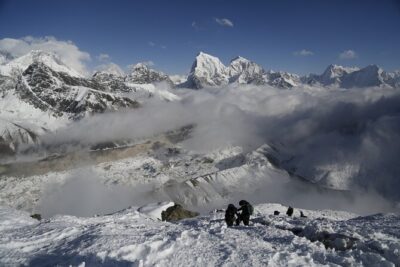
This may be the most visually important morning of the trek. From Kala Patthar, the arrangement of Everest, Lhotse, Nuptse, Pumori, Ama Dablam, and other peaks becomes easier to understand.
After the viewpoint, you descend toward Pheriche. The downhill direction helps, but it can still be hard on tired knees, particularly after the Base Camp push the previous day.
The itinerary places the viewpoint after Base Camp rather than before it. That means you reach the emotional goal first, then gain a final mountain panorama before beginning the long return.
Day 10: Back through Tengboche to Namche
After breakfast, you retrace the route through Tengboche and descend to Phungki Thanka before continuing toward Namche. The day takes about six hours.
The trail follows the Imja River and returns through forest and small villages. You may notice how different the route feels on the way down. The air is easier, the walking can be quicker, and familiar places give the trek a satisfying sense of progress.
Returning to Namche is also practical. It breaks the descent into manageable stages instead of forcing you to continue all the way to Lukla in one push.
This section may feel less dramatic than the high country, but I find it valuable because it reconnects you with trees, streams, and village life after the stark upper route.
Day 11: Namche to Lukla
The walk from Namche to Lukla takes about seven hours and retraces the trail through forest, streams, and small villages. You pass through Phakding before continuing to Lukla.
It is a long closing day on foot, but the direction is mostly downhill overall. The return gives you one last chance to notice details you missed while climbing, including suspension bridges, prayer flags, and the changing vegetation.
Lukla is your final night on the trail. You will want to keep some energy for the morning because the next day includes the flight back to Kathmandu.
Day 12: Fly to Kathmandu and finish with dinner
The return flight from Lukla to Kathmandu is listed at about five hours for the day, including the transfer back to your hotel. The flight itself is short, but the airport and ground transfers make this more than a simple hop.
The evening includes a farewell dinner, followed by time to prepare for departure. That final meal gives the group a chance to look back at the route, from the first river path at Phakding to the high ridges near Base Camp.
Flight schedules in mountain regions can be affected by conditions, though no extra policy details are provided here. Keep your final Kathmandu plans flexible if possible.
What $1,380 includes, and what it does not
At $1,380 per person, the package offers solid value if you want the main logistics handled. You receive hotel pickup and drop-off, round-trip Kathmandu to Lukla flights, a government-licensed English-speaking guide, trekking permits, official documents, guesthouse accommodation, and a private tour.
Those inclusions cover several costs that can be awkward to arrange separately. The flights are especially important because Lukla is the trailhead, and the permits and guide provide structure for a route where altitude and changing conditions matter.
Food and drinks are not included. The stated estimate is about $25 per day, so you should budget roughly $300 for 12 days, plus any gratuity you choose to give your guide or crew.
The package also does not promise luxury lodging. Guesthouse accommodation is included, which suits the practical nature of the trek but may feel basic after long walking days. If you need high comfort, ask for more detail before booking.
The guide can make or break the trek
A private trek puts the guide at the center of your experience. The named guides connected with this operation include Prakash, Milan, and Dev, with particular praise for their care, patience, safety advice, and local insight.
Prakash is described as keeping the group comfortable and in good spirits. Milan is associated with strong acclimatization advice, patience, and friendly guidance. Dev is noted for taking care of a family throughout the trek, including attention to accommodation, vehicles, and flights.
Guide assignments can vary, so do not assume you will receive a particular person unless the company confirms it. Still, the emphasis on guide support is a useful sign for anyone nervous about altitude or the route’s long walking days.
The tour is private, so only your group participates. That gives you more control than a large fixed group, though the guide still needs to set a safe pace and make sensible decisions in the mountains.
Who should book this trek
This experience suits you if reaching Everest Base Camp is a major personal goal and you want the core arrangements bundled together. It is also a good fit if you value Sherpa villages, monasteries, prayer wheels, and mountain scenery as much as the Base Camp sign itself.
You should have a strong physical fitness level. The daily walks range from about six to eight hours, and the highest days come after repeated altitude gains.
Families and private groups may appreciate the format, especially since one guide, Dev, is specifically associated with helping a family complete the route. Still, the trek remains challenging for every age group, and family members should be ready for the same altitude and walking demands.
This is less suitable if you want a relaxed Nepal holiday, extensive hotel comfort, or a short mountain excursion. The 12 days include flights, long walks, acclimatization hikes, and a demanding return.
Cancellation is flexible only up to three full days before the start time for a full refund. Inside that window, refunds and changes are not accepted, so check your plans carefully before the cutoff.
Should you book the Everest Base Camp trek?
I would consider booking this trek if you want a private, organized route with flights, permits, lodging, and a guide already arranged. The itinerary gives you the key places, two acclimatization breaks, a Base Camp day, and the Kala Patthar viewpoint.
The price is reasonable for those inclusions, but remember to add food, drinks, and any gratuity. Most important, choose it only if you are ready for sustained walking and high altitude.
Ask the provider to confirm your guide, accommodation details, flight arrangements, and what happens if weather affects the Lukla flights. If those answers suit you, this route offers a strong mix of mountain achievement, Sherpa culture, and practical support.
FAQ
How long is the Everest Base Camp trek?
The experience lasts approximately 12 days, including the flights from Kathmandu to Lukla and back, the trek, and hotel transfers.
What is included in the tour price?
The price includes hotel pickup and drop-off, a government-licensed English-speaking trekking guide, round-trip Kathmandu to Lukla flights, trekking permits, official documents, guesthouse accommodation, a private tour, and a normal emergency first aid kit with the guide.
Are food and drinks included?
No. Food and drinks are available for purchase and are estimated at about $25 per day.
Is this a private tour?
Yes. Only your group participates in the activity.
Which major places are included on the route?
The trek includes Phakding, Namche Bazaar, Tengboche, Dingboche, Lobuche, Everest Base Camp, Kala Patthar, Pheriche, Lukla, and Kathmandu.
Are there acclimatization days?
Yes. You spend an additional day in Namche Bazaar and another additional day in Dingboche. The plans include excursions toward Syangboche Airstrip or Everest View Hotel and a hike to Nagarjun Hill.
How fit do I need to be?
You should have a strong physical fitness level. The planned trekking days generally last about six to eight hours, with several days at high altitude.
Recently added around Kathmandu
- Kathmandu : Swambhunath & Durbar Square Guided Half Day Tour★ 3.3 · 3 reviews
- Private Day Tour in Kathmandu Valley Rim with Bhaktapur Sightseeing★ 5.0 · 3 reviews
- From Kathmandu / Pokhara / Chitwan: River Rafting – 1 Day★ 4.6 · 3 reviews
- Nepali Cooking training & Cultural Homestay Experience★ 5.0 · 3 reviews
- Private 3-Hour Nagarkot Sunset Tour from Kathmandu★ 3.5 · 3 reviews
- From Kathmandu: Everest Base Camp Landing Helicopter Tour★ 5.0 · 3 reviews
- 4 UNESSCO World heritage sites of Kathmandu-private tour★ 5.0 · 3 reviews
- From Kathmandu Budget: 15 Day Everest Base Camp Trek★ 5.0 · 3 reviews
Everest Base Camp Treks, compared.
Everest Base Camp Helicopter Tour landing at Everest View Hotel
Read our review →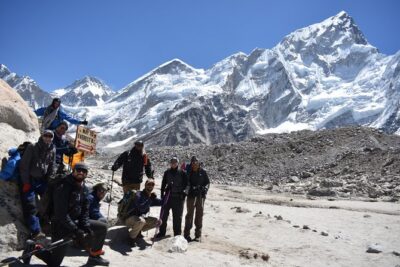
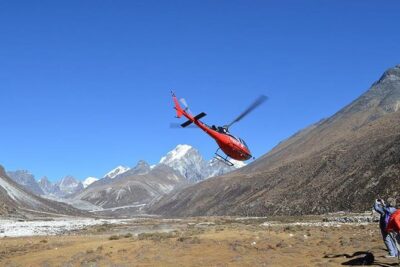
Everest Base Camp Helicopter Tour landing at Hotel Everest View
Read our review →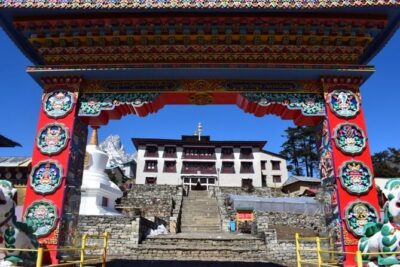
Browse the lists this tour appears in