
Reviewed · EVEREST BASE CAMP TREKS
14 Days Everest Base Camp Trekking
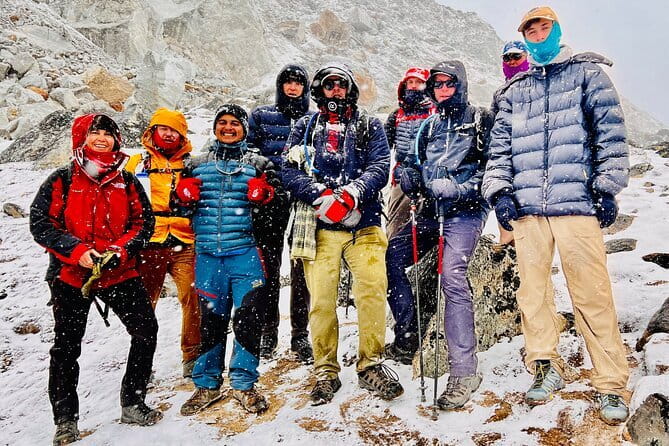
The great appeal here is the route itself: you walk from Lukla to Everest Base Camp, passing Sherpa villages, suspension bridges, rhododendron forests, monasteries, glaciers, and some of the world’s highest peaks. I like the two built-in acclimatization days, one in Namche Bazaar and one in Dingboche, and I like that flights, permits, porters, meals, and tea-house lodging are folded into the $1,420 price.
The main caution is the pace. Several trekking days are listed at around 10 hours, and the trail reaches 5,364 meters at Base Camp and 5,565 meters at Kala Patthar. You need strong physical fitness, travel insurance, and patience for mountain flights, weather changes, basic rooms, and extra costs such as hot showers, drinks, Kathmandu lodging, and tips.
In This Review
- Key points about the Everest Base Camp route
- Why this 14-day trek works
- Day 1: Arriving in Kathmandu
- Days 2 and 3: Lukla, Phakding, and Namche Bazaar
- Day 4: Acclimatizing around Namche Bazaar
- Day 5: Tengboche and the first major mountain views
- Day 6: Pangboche and Dingboche
- Day 7: Dingboche acclimatization
- Days 8 and 9: Lobuche, Gorakshep, and Everest Base Camp
- Day 10: Kala Patthar and the descent to Pheriche
- Days 11 and 12: Returning through Tengboche to Lukla
- Days 13 and 14: Flying back to Kathmandu and home
- Guides, porters, food, and tea-house life
- What the $1,420 price really covers
- Who should book this Everest Base Camp trek
- Should you book it?
- FAQ
- Where does the Everest Base Camp trek start?
- How long does the trek last?
- Is the Lukla flight included?
- Are meals included during the trek?
- Is Kathmandu accommodation included?
- Are permits included?
- Is a guide provided?
- Is porter support included?
- Do I need strong physical fitness?
- What is not included in the price?
Key points about the Everest Base Camp route
- Lukla flight included: Round-trip domestic flights and departure taxes are covered, saving you one of the larger practical costs.
- Two acclimatization stops: Rest days in Namche Bazaar and Dingboche help you adjust before the highest section.
- Kala Patthar adds the big view: The early morning climb reaches 5,565 meters and gives one of the finest outlooks toward Everest.
- Private group format: Only your own group takes part, with an English-speaking guide and one porter for every two trekkers.
- Tea-house travel: You stay in the best available twin-sharing lodges rather than camping, with breakfast, lunch, and dinner included on the trekking days.
- Good guide reports: Hari, Kapil, and Namo are named in the supplied feedback, with particular praise for care, pacing, organization, and support.
Why this 14-day trek works
Everest Base Camp is not a quick mountain walk. It is a long high-altitude route where the return journey matters almost as much as the approach. This program gives you 14 days from arrival in Kathmandu to departure, allowing time for flights, acclimatization, the Base Camp outing, and the return to Lukla.
I like that the trek follows the classic Khumbu route rather than trying to rush you to the glacier. You begin among lower valleys and forests, then move through Namche Bazaar, Tengboche, Dingboche, Lobuche, and Gorakshep. The scenery changes gradually, which makes the journey feel earned.
You also get a private experience. That matters on a trek because walking speed, rest stops, and responses to altitude can vary widely. Your group has one professional English-speaking guide, while porters are arranged at a ratio of one for every two trekkers.
The price is $1,420. For a 14-day program, that is a useful package if you want the main logistics handled in advance. It includes the Lukla flights, permits, accommodation during the trek, meals, guide services, porter support, ground transfers, a first-aid kit, a trekking map, and an achievement certificate.
It is not an all-inclusive holiday. Food and accommodation in Kathmandu are excluded and estimated at $45 per day. You also pay for international flights, the Nepal entry visa, drinks, snacks, hot showers, personal equipment, insurance, and gratuities. The visa can be obtained on arrival for $40 for 30 days.
More ways to trek to Everest Base Camp:
- Everest Base Camp Trek – 14 Days
★ 5.0 · 1,499 reviews - Everest Base Camp Helicopter Tour landing at Everest View Hotel
★ 5.0 · 668 reviews - Everest Base Camp Trekking
★ 5.0 · 485 reviews
Day 1: Arriving in Kathmandu
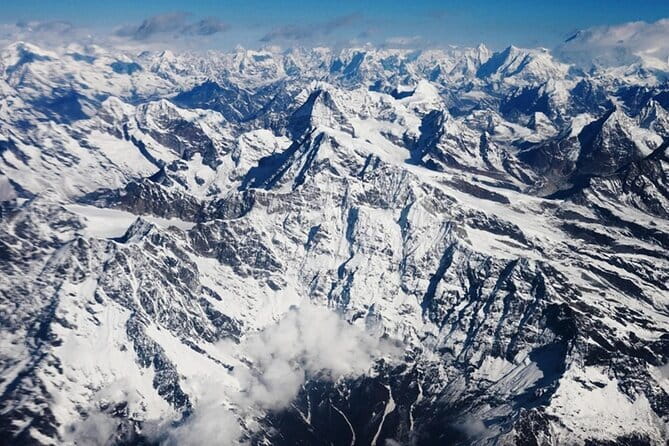
The first day begins with arrival at Tribhuvan International Airport. On a clear flight into Kathmandu, you may see a wide sweep of snow-capped peaks before landing, a memorable introduction to Nepal.
A private vehicle transfer from the airport to your hotel is included. The program does not give much detail about the first day beyond arrival and preparation, so use this time to settle in, check your equipment, and confirm the early start for the Lukla flight.
Kathmandu accommodation and meals are not included in the package. That is easy enough to arrange, but remember to add the stated $45 daily allowance to your budget.
Days 2 and 3: Lukla, Phakding, and Namche Bazaar
Day 2 starts with the flight to Lukla, where the runway sits on a steep mountain slope at about 2,850 meters. The flight is short, but it is a serious piece of the trip because the schedule can be affected by mountain conditions. The information supplied does not promise a backup transport plan, so flexibility is wise.
After meeting the trekking crew, you follow the Dudh Koshi Valley toward Phakding at about 2,656 meters. This first walking day introduces the route without immediately pushing you to a very high sleeping altitude.
Day 3 takes you from Phakding toward Namche Bazaar. You cross and recross the river on high suspension bridges, then pass through Monjo and enter Sagarmatha National Park. The park protects the Khumbu’s fragile mountain environment, and the route begins to feel more remote as the valley rises.
Namche Bazaar sits between ridges at roughly 3,440 meters. It has lodges, tea shops, and souvenir shops, making it an important rest and supply point. The day is listed at around 10 hours, so do not treat it as a casual village stroll. You will be walking uphill for much of the route.
Day 4: Acclimatizing around Namche Bazaar
The Namche rest day is one of the program’s strongest features. You do not simply sit indoors. The schedule includes a hike to an Everest viewpoint, allowing you to climb higher during the day and return to sleep lower.
That pattern is useful at altitude, though the exact length and elevation of the viewpoint walk are not stated. Namche itself gives you time to adjust to the air, explore the shops, and organize your belongings before the route becomes more demanding.
The early views begin to open here. You may see peaks of the Khumbu from the village and the surrounding trails, but the value of the day is as much about pacing as scenery. A rushed Everest Base Camp program often leaves too little room for acclimatization. This one gives Namche a full day.
More treks starting in Kathmandu:
- Nagarkot Sunrise View and Day Hiking from Kathmandu
★ 5.0 · 471 reviews - Annapurna Circuit Trek with Tilicho Lake
★ 5.0 · 368 reviews - Everest Base Camp Trekking – 13 Day
★ 5.0 · 365 reviews - Everest Base Camp Trek -14 Days
★ 5.0 · 321 reviews
Day 5: Tengboche and the first major mountain views
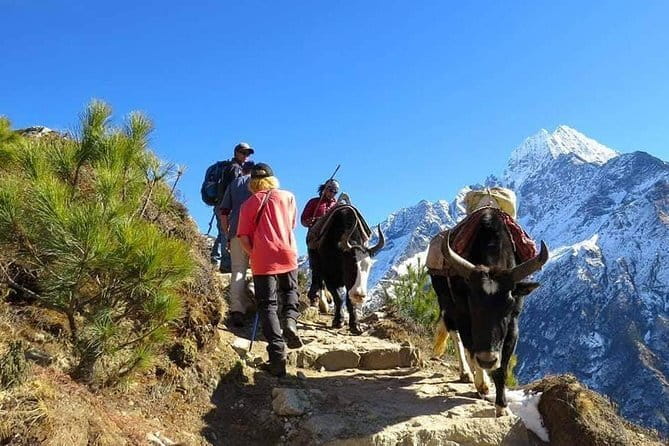
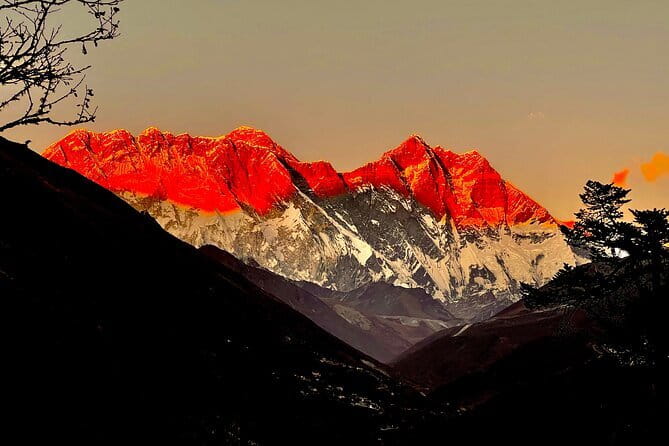
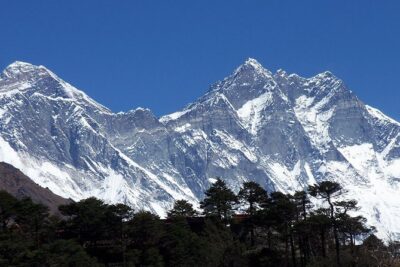
From Namche, the trail contours along the valley above the Dudh Kosi. This section is known for broad mountain views, including Everest, Lhotse, Nuptse, and Ama Dablam.
The route then heads toward Tengboche, written as Tyangboche in the schedule. The village is famous for its monastery and its open setting among the peaks. Even if you are focused on reaching the lodge, take time to notice the religious details, mani walls, and mountain backdrop.
The day is again listed at around 10 hours. The trail may feel deceptively manageable because the views are distracting. Keep a steady pace and listen to your guide, especially if you are carrying a daypack.
Day 6: Pangboche and Dingboche
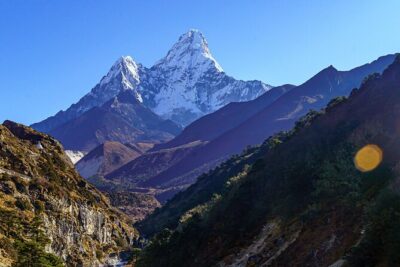
You descend through forest, cross the Imja Khola, and climb toward Pangboche at about 3,985 meters. The village faces Ama Dablam and includes a gompa and mani walls, giving you a strong sense of the local Sherpa setting.
From there, the route continues toward Dingboche. At this point, the forest thins and the scenery becomes more open and alpine. You are now sleeping high enough for altitude to matter, so the pace and the next rest day become important.
This is another long day, listed at around 10 hours. The distance, elevation gain, and thin air can make it harder than the numbers suggest. You should expect basic tea-house accommodation rather than hotel comfort, though the package promises the best available twin-sharing lodge rooms.
Day 7: Dingboche acclimatization
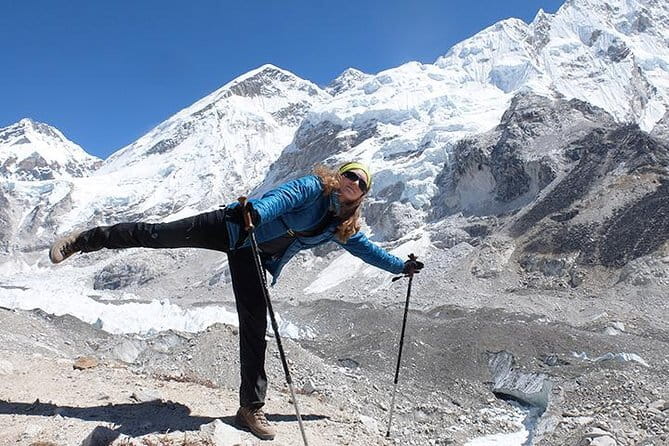
Dingboche provides the second full acclimatization day. The schedule includes an optional climb toward Nagarjun at about 5,100 meters, along with views toward Tshola Tsho Lake at around 4,510 meters and the steep walls of Cholatse and Taboche.
This is a valuable day because it prepares you for the higher settlements ahead. You climb during the day, then return to sleep in Dingboche. The exact activity chosen can depend on how you are feeling, your guide’s judgment, and the group’s condition.
The high point is not the goal. The goal is to adjust without overdoing it. If you have a headache, nausea, unusual fatigue, or other altitude problems, tell your guide rather than trying to prove a point. A good guide should watch your physical and mental condition closely, and the supplied feedback gives special emphasis to that kind of care.
Days 8 and 9: Lobuche, Gorakshep, and Everest Base Camp
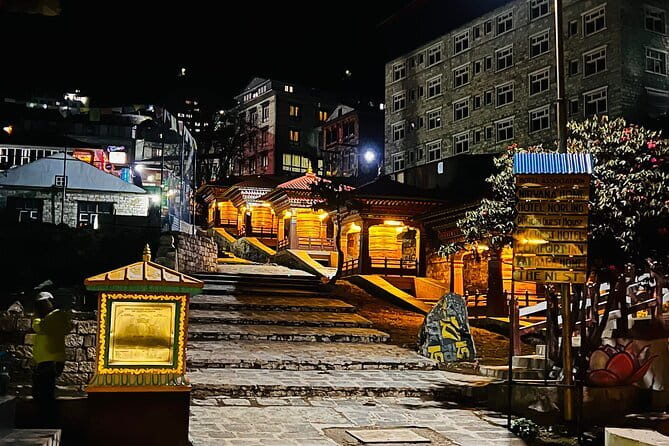
Day 8 follows the broad valley beneath Cholatse and Tawache. You then turn toward the Khumbu Glacier and climb steeply to Duglha at about 4,620 meters, a natural lunch stop.
From Duglha, the trail continues toward Lobuche. The surrounding scenery becomes harsher, colder, and more exposed. Trees have largely disappeared, and the route is shaped by rock, ice, and giant peaks. This is one of the sections where the trek’s physical demands become clear.
Day 9 takes you to Gorakshep at about 5,164 meters. The trail follows the Khumbu Glacier and rises over a tributary glacier, with views of the surrounding mountains. The schedule lists about one hour for the first section to Gorakshep, followed by a much longer outing to Base Camp.
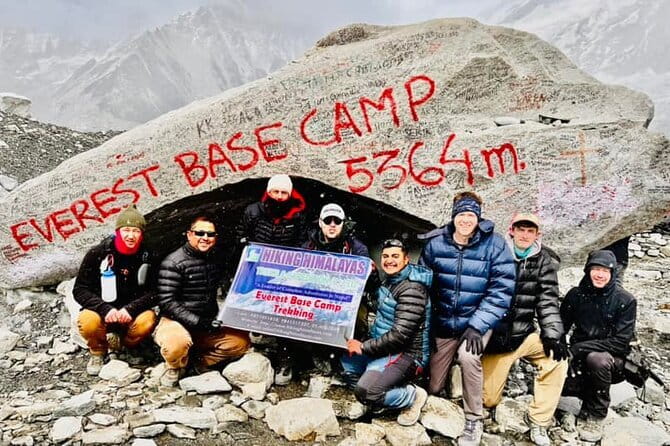
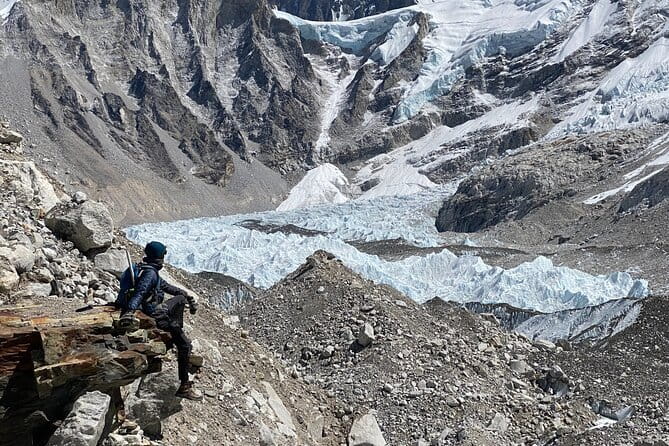
After lunch, you walk to Everest Base Camp at about 5,364 meters. The route crosses rough glacier terrain with ice pinnacles and crevasses. The full Base Camp outing is listed at around seven hours, so this is not a quick photo stop. It is a high, tiring day, particularly after several days of steady ascent.
The exact appearance of Base Camp changes with the season and climbing activity. The lasting reward is reaching the foot of the Khumbu Icefall and seeing the route used by expeditions attempting Everest. You return to Gorakshep afterward, likely tired but with the central goal completed.
Day 10: Kala Patthar and the descent to Pheriche
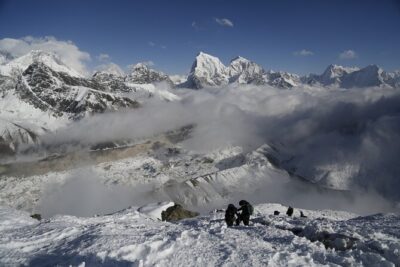
Day 10 begins early with the climb to Kala Patthar at about 5,565 meters. This is often the visual high point of the route because it gives a broad view toward Everest, Nuptse, Ama Dablam, Pumori, Lola, and Lhumbutse.
You should understand the difference between Base Camp and Kala Patthar. Base Camp puts you near the glacier and the Everest expedition route, while Kala Patthar is a viewpoint. If your main hope is a clear view of Everest’s summit, the viewpoint climb is especially important.
After Kala Patthar, the day is mostly downhill toward Duglha and Pheriche. Downhill walking is easier on the lungs but can be tough on knees and ankles. The day is listed at around 10 hours, so it remains a full trekking day despite the descent.
Days 11 and 12: Returning through Tengboche to Lukla
The route retraces the river valley toward Namche. You cross the river, then climb back through birch and rhododendron forest to Tengboche. The return offers a different rhythm from the ascent, with more oxygen and a sense that the hardest altitude work is behind you.
From the trail, the listed mountain views include Kwangde, Tawache, Everest, Nuptse, Lhotse, Ama Dablam, Kantega, and Thamserku. Clear weather will make a major difference, so keep your expectations flexible.
Day 12 follows the Dudh Kosi down to Lukla. The schedule lists around 10 hours, making this another substantial day even though the overall direction is downhill.
The final evening includes a celebration with the Sherpa guides and porters. That is a fitting close to the walking portion of the trip. You have shared the route, meals, accommodation, and hard miles with the crew, and this final gathering recognizes the work behind the trek.
Days 13 and 14: Flying back to Kathmandu and home
On Day 13, you head early to Lukla’s airstrip for the flight to Kathmandu. Once back in the capital, the rest of the day is free for shopping, packing, postcards, or other personal plans.
The package includes the airport and hotel ground transfers in private vehicles. Kathmandu lodging and meals remain your responsibility, so allow for those costs if you need a room before the international flight.
Day 14 includes transport to Tribhuvan International Airport for your flight home. The company also notes that you can extend the trip with activities such as a national park game drive, white-water rafting, a Tibet tour, or mountain biking, but those additions are not part of this $1,420 program.
Guides, porters, food, and tea-house life
You receive one certified English-speaking guide, with the guide’s food, accommodation, and insurance covered. One porter is provided for every two trekkers, and the porter’s food, lodging, and insurance are included as well.
The names Hari, Kapil, and Namo appear in the supplied customer comments. Hari is singled out for being cooperative and calm, while Kapil is praised for careful organization and support. A family group also traveled with Kapil and Namo, along with porters named Ram and Mongol.
These names do not guarantee who will lead your departure, so ask the company to confirm your guide before you go. The useful point is that the operation appears to use named local staff rather than leaving you to manage the route alone.
Breakfast, lunch, and dinner are included for the stated trekking days, along with seasonal fruit. Drinks, snacks, and hot showers are extra. A hot shower is listed at $5 per person, which is a small cost individually but can add up over two weeks.
What the $1,420 price really covers
The price offers good value if you want a standard guided trek with the major logistics arranged. Round-trip Kathmandu to Lukla flights, permits, twin-sharing lodge accommodation, guide and porter support, meals, airport transfers, taxes, and service charges form the core package.
You should still build a separate budget for:
- Kathmandu food and accommodation, listed at $45 per day
- Nepal’s $40 visa on arrival for 30 days
- International flights
- Travel insurance
- Personal trekking equipment
- Drinks, snacks, and hot showers
- Tips for guides, porters, and drivers
The absence of travel insurance is the most important gap. At this altitude and with domestic mountain flights involved, you should arrange suitable coverage before departure. The package includes a first-aid medical kit, but that is not a substitute for insurance.
Who should book this Everest Base Camp trek
This trip suits you if you want the classic Everest route, prefer tea houses to tents, and value having a private guide and porter team. It also works well if you want two scheduled acclimatization days instead of a rushed ascent.
You should be prepared for long walking days, basic lodging, high altitude, cold conditions, and possible changes to the flight schedule. The operator specifically requires strong physical fitness, and that warning should be taken seriously.
This is not the best choice if you want a relaxed holiday, luxury accommodation, or short walking days. It may also feel too tightly scheduled if you prefer extra days for weather delays or rest. The 14-day structure is efficient, but it leaves less spare time than a longer Everest Base Camp program.
The experience has a 4.8 rating from six submitted ratings, and the strongest praise centers on organization, guide care, comfortable tea houses, food, and sensible acclimatization. Those are exactly the areas that can make or break a high-altitude trek.
Should you book it?
I would consider this trek a solid-value choice for a fit hiker who wants the standard Everest Base Camp route with flights, meals, porters, permits, and lodging handled in one package.
Book it if the scheduled 14 days suit you, you are comfortable with long days, and you will arrange insurance and personal equipment separately. Before paying, confirm the guide’s name, the current Lukla flight arrangements, the exact Kathmandu hotel plan, and what happens if weather disrupts the flight.
The free cancellation rule is straightforward: you can receive a full refund if you cancel at least 24 hours before the local start time. Changes or cancellations inside that window are not accepted or refunded.
FAQ
Where does the Everest Base Camp trek start?
The experience begins at Tribhuvan International Airport in Kathmandu, Nepal. The listed meeting time is 6:15 am.
How long does the trek last?
The program lasts approximately 14 days, including arrival in Kathmandu, the trek from Lukla, the return flight, and departure from Nepal.
Is the Lukla flight included?
Yes. Round-trip flights between Kathmandu and Lukla are included, along with departure taxes.
Are meals included during the trek?
Yes. The package includes 13 breakfasts, 11 lunches, and 11 dinners, along with seasonal fruit during the trek.
Is Kathmandu accommodation included?
No. Food and accommodation in Kathmandu are excluded and listed at $45 per day.
Are permits included?
Yes. All required permits for the trek are included in the package.
Is a guide provided?
Yes. You receive one professional, certified English-speaking guide, with the guide’s food, accommodation, and insurance included.
Is porter support included?
Yes. One porter is provided for every two trekkers. The porter’s food, accommodation, and insurance are included.
Do I need strong physical fitness?
Yes. The additional information states that participants should have a strong physical fitness level. Several trekking days are listed at around 10 hours, and the route reaches high elevations.
What is not included in the price?
International airfare, travel insurance, Nepal’s entry visa, Kathmandu food and accommodation, drinks, snacks, hot showers, personal trekking equipment, and tips are not included.
Recently added around Kathmandu
- Kathmandu : Swambhunath & Durbar Square Guided Half Day Tour★ 3.3 · 3 reviews
- Private Day Tour in Kathmandu Valley Rim with Bhaktapur Sightseeing★ 5.0 · 3 reviews
- Nepali Cooking training & Cultural Homestay Experience★ 5.0 · 3 reviews
- Private 3-Hour Nagarkot Sunset Tour from Kathmandu★ 3.5 · 3 reviews
- From Kathmandu / Pokhara / Chitwan: River Rafting – 1 Day★ 4.6 · 3 reviews
- From Kathmandu: Everest Base Camp Landing Helicopter Tour★ 5.0 · 3 reviews
- 4 UNESSCO World heritage sites of Kathmandu-private tour★ 5.0 · 3 reviews
- From Kathmandu Budget: 15 Day Everest Base Camp Trek★ 5.0 · 3 reviews
Everest Base Camp Treks, compared.
Everest Base Camp Helicopter Tour landing at Everest View Hotel
Read our review →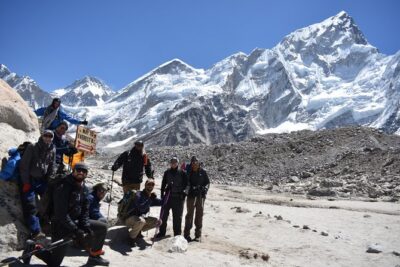
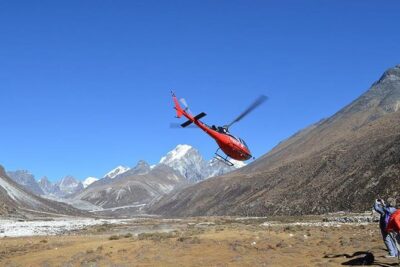
Everest Base Camp Helicopter Tour landing at Hotel Everest View
Read our review →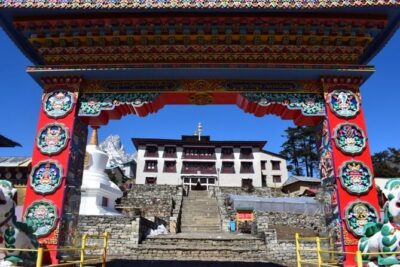
Browse the lists this tour appears in