
Reviewed · EVEREST BASE CAMP TREKS
14-Days Private Everest Base Camp Trek
Everest Base Camp is not a quick mountain outing. It is a two-week journey through Sherpa villages, Buddhist landmarks, suspension bridges, thin air, and some of the world’s most famous peaks. This private trek gives you a guide, a porter, lodging, meals, permits, and the key domestic flights for $1,600, which makes the package easy to understand and budget.
I like the planned acclimatization days in Namche Bazaar and Dingboche, and I like the practical support of airport transfers and porters. Guides such as Kalyan Gurung, Parkhidhan Tamang, Asman, and Romeo have received warm praise for pacing, safety, communication, and personal care, though your assigned guide may be different.
The main drawback is that this is still a demanding high-altitude trek. Altitude sickness can end the walk even with a good guide, and the itinerary contains a few unclear day descriptions, so I would confirm the exact route, lodging, and flight arrangements before paying.
In This Review
- Key points to know before booking
- What the $1,600 package really covers
- Days 1 and 2: Kathmandu welcome, then the flight to Lukla
- Days 3 and 4: Namche Bazaar and the first altitude pause
- Day 5: Forests and the monastery at Tengboche
- Days 6 and 7: Pangboche, Ama Dablam, and acclimatization in Dingboche
- Day 8: The high valley reaches Lobuche
- Day 9: Gorak Shep and Everest Base Camp
- Day 10: Kala Patthar and an itinerary detail to confirm
- Days 11 and 12: Returning through Tengboche, Namche, and Lukla
- Days 13 and 14: Flying back and closing the journey
- Guides, porters, and the private format
- Who should book this Everest Base Camp trek?
- Practical questions to settle before departure
- Should you book it?
- FAQ
- Where does the trek begin?
- Is accommodation included?
- Are meals included?
- Is a porter provided?
- Is travel insurance included?
- Can I cancel for a full refund?
Key points to know before booking
- Lukla is your mountain gateway: The 40-minute flight from Kathmandu begins the trek and is included with airport tax.
- Two acclimatization days are built in: Namche and Dingboche provide time to adjust instead of rushing higher.
- Porter support keeps your pack manageable: One porter is included for every two trekkers.
- Sherpa culture is part of the route: Expect monasteries, chortens, mani walls, prayer features, and villages such as Pangboche and Tengboche.
- Base Camp comes after Gorak Shep: You walk beside the Khumbu Glacier and across its lateral moraine before reaching the goal.
- The package covers the basics: Kathmandu hotels, tea houses, permits, meals listed in the program, guides, transfers, flights, and a farewell dinner are included.
What the $1,600 package really covers
At $1,600, this is a useful package for anyone who wants the major costs arranged in advance. You receive airport pickup and drop-off by private vehicle, two nights in a three-star Kathmandu hotel with breakfast, domestic flights between Kathmandu and Lukla, airport tax, trekking permits, entrance fees, a professional English-speaking guide, and a porter shared by two trekkers.
On the trail, accommodation is in lodges or tea houses. The package lists 12 breakfasts, 10 lunches, and 10 dinners, along with two Kathmandu hotel nights. That leaves little guesswork during the main walking days, although I would ask the operator to explain exactly which meals are covered on flight days and at which overnight stops.
The value is strongest if you are comparing this with arranging every piece yourself. A private guide can adjust the pace to your group, and porter support means you carry only your day bag rather than all your clothing and equipment. The price does not include personal expenses or travel insurance, so you still need money for drinks, snacks, charging, internet, tips, and any extra costs caused by delays or medical care.
Insurance deserves special attention. It is not included, and the package does not say that evacuation is covered. For a high-altitude trek, you should confirm that your policy covers trekking at the height reached on this route and emergency evacuation if needed.
More ways to trek to Everest Base Camp:
- Everest Base Camp Trek – 14 Days
★ 5.0 · 1,499 reviews - Everest Base Camp Helicopter Tour landing at Everest View Hotel
★ 5.0 · 668 reviews - Everest Base Camp Trekking
★ 5.0 · 485 reviews
Days 1 and 2: Kathmandu welcome, then the flight to Lukla
Day 1 is deliberately light. Staff meet you at Tribhuvan Airport, transfer you to the hotel, and explain the program. That personal welcome is useful after a long international flight, especially if this is your first visit to Nepal and you need help understanding the next morning’s plan.
The actual mountain walk begins on Day 2 with a scenic flight of about 40 minutes to Lukla and Tenzing Hillary Airport. Lukla is the practical starting point for the Everest Base Camp route. From there, you begin walking through the Khumbu region, with the first day listed at about five hours.
Do not treat the flight as a minor detail. Mountain weather can affect domestic flights, and the package says the experience requires good weather. Ask what happens if the flight is delayed and how the operator handles changes to the walking schedule. The cancellation terms allow a full refund if you cancel at least 24 hours before the start, while bad-weather cancellation may bring a new date or a full refund.
Days 3 and 4: Namche Bazaar and the first altitude pause
The route continues along the northern bank of the Dudh Koshi River. You cross several suspension bridges, including the Hillary Suspension Bridge, while moving toward Namche Bazaar. This section takes about six hours and begins to show why the trek is more than a simple walk to a viewpoint: river valleys, forest, bridges, and rising mountain walls all shape the day.
Namche is one of the key stops on the route. Day 4 is set aside for acclimatization, with about five hours of activity and several possible short walks. The program points to cafes, restaurants, gear shops, souvenir stores, and Wi-Fi-connected spots in town. That makes Namche a useful place to rest, check messages, and see how mountain trade supports the local villages.
The important point is not to fill every minute. Your body is adjusting to thinner air, so the best use of this day is a measured walk followed by rest. The program mentions a visit to the Hillary area and other hiking options, but the exact outing should be decided with your guide and based on how you feel.
Day 5: Forests and the monastery at Tengboche
From Namche, the trail rises and falls through forest toward Tengboche. The walking time is listed at about five hours, but the repeated climbs and descents can make this day feel harder than the number suggests.
Tengboche is special because of its Buddhist monastery and its setting among high Himalayan peaks. The route also offers a chance to look for wildlife such as musk deer, although sightings are never guaranteed. The forest sections provide a welcome change from exposed high-altitude ground, and the cultural features along the trail give the day a strong sense of place.
This is a good example of why a guide matters. The walk is not only about reaching the next lodge. Your guide can explain the monastery, chortens, prayer walls, and local customs, turning a hard day of walking into a more meaningful one.
More treks starting in Kathmandu:
- Nagarkot Sunrise View and Day Hiking from Kathmandu
★ 5.0 · 471 reviews - Annapurna Circuit Trek with Tilicho Lake
★ 5.0 · 368 reviews - Everest Base Camp Trekking – 13 Day
★ 5.0 · 365 reviews - Everest Base Camp Trek -14 Days
★ 5.0 · 321 reviews
Days 6 and 7: Pangboche, Ama Dablam, and acclimatization in Dingboche
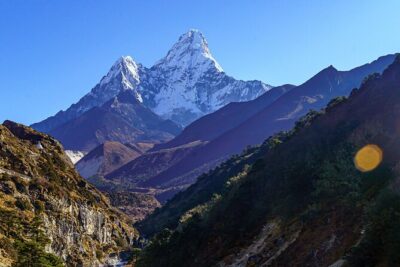
Day 6 leads to Dingboche, passing through small settlements and the village of Pangboche. The route includes chortens and mani walls, and the views of Ama Dablam are a major reward. The listed walking time is about five hours.
Dingboche is an agricultural village in the high valley, and it marks another clear change in altitude and terrain. The following day is used for acclimatization. The plan calls for a walk up the ridge above Dingboche, again for about five hours, before returning to the village.
I consider this one of the strongest parts of the schedule. The itinerary does not simply race upward from Lukla to Base Camp. It pauses in Namche and Dingboche, giving your body a better chance to adapt. Still, acclimatization does not remove the risk of altitude sickness. If you develop serious symptoms, tell your guide at once rather than trying to prove your toughness.
Past participants have particularly valued guides who changed the pace to match energy levels and handled medical concerns with care. Parkhidhan Tamang and Kalyan Gurung are names praised for those qualities, but you should request the name and experience of your own guide before departure.
Day 8: The high valley reaches Lobuche
The walk to Lobuche is described as about five hours, with broad Himalayan views from the start. The valley narrows near Dusa, and the route follows part of the first completed Everest expedition trail.
At this point, the scenery becomes more severe. Forest gives way to open, rocky ground, and the air feels thinner. A five-hour estimate is useful for planning, but you should expect the day to feel slow. At high altitude, steady steps and regular pauses matter more than speed.
Lobuche is a staging point for the final push toward Base Camp. The overnight stop helps divide the route into manageable sections, but it also means you are now close to the most physically demanding part of the trek.
Day 9: Gorak Shep and Everest Base Camp
This is the central day of the experience. You trek along the lateral moraine of the Khumbu Glacier, reach Gorak Shep, and continue toward Everest Base Camp. The full activity is listed at about five hours.
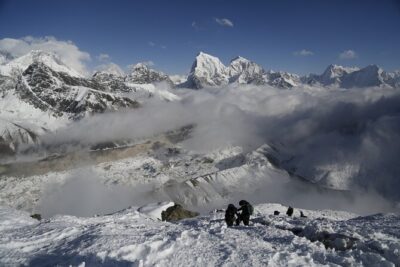
Gorak Shep is surrounded by snow-covered peaks and serves as the last major settlement before the Base Camp walk. From there, the route follows glacial ground toward the destination. The surface can be rough and tiring, and the altitude makes every step more demanding.
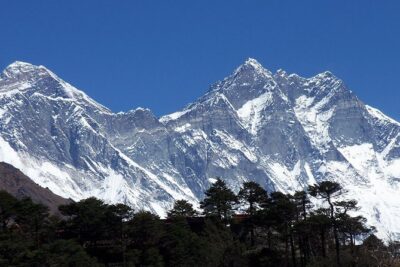
Reaching Base Camp is an achievement, but keep your expectations realistic. You are not climbing Mount Everest, and the famous summit itself is not the view from Base Camp. The reward is the route, the glacier, the expedition setting, and the feeling of arriving at one of the world’s best-known trekking destinations.
Your guide’s role is especially important here. The group needs to keep a sensible pace, monitor symptoms, and return to the overnight stop without wasting energy. The private format is helpful because your guide can focus on your group instead of a large mixed party.
Day 10: Kala Patthar and an itinerary detail to confirm
The schedule labels Day 10 as the Kala Patthar day, but the written description then refers to waking at Pheriche and descending toward Tengboche through rhododendron, juniper, and the Imja Khola bridge. Those details do not clearly match one another.
Kala Patthar is normally treated as a separate high viewpoint near Gorak Shep, while the description supplied here reads like a lower-altitude return day. I would ask the operator a direct question before booking: Is Kala Patthar included, and from which overnight stop will you reach it?
This matters because Kala Patthar is often a major reason people choose the Everest Base Camp route. If it is part of your plan, clarify the start time, overnight location, expected walking hours, and how the extra effort affects the descent. If it is not included, you should know that before you commit.
Days 11 and 12: Returning through Tengboche, Namche, and Lukla
The return route passes back toward Namche Bazaar and then Lukla. The supplied schedule repeats some location descriptions, so the exact overnight sequence should be confirmed. It describes a descent through rhododendron and juniper forests, across the Imja Khola bridge, and along the Dudh Koshi River.
Day 11 is listed at about five hours and connected with Namche Bazaar. Day 12 is also listed at about five hours and leads to Lukla, with the trail following the river, crossing suspension bridges, and passing forests and small villages.
The walk down is easier on your lungs but not always easy on your legs. Uneven ground and repeated downhill steps can be tiring after Base Camp. This is where the porter arrangement and private pacing remain useful. You may feel strong after reaching the goal, but the trek is not finished until you reach Lukla.
Days 13 and 14: Flying back and closing the journey
Day 13 brings the 40-minute flight from Lukla to Kathmandu. The program calls this the last day of trekking and frames the flight as time to appreciate what you have accomplished. It is a sensible end to the mountain portion, though, again, weather can affect Lukla flights.
Day 14 is a final Kathmandu day with a farewell dinner and a successful trek certificate from Glorious Eco Trek. The dinner gives you time to speak with the company about what worked well and what could be improved.
The two Kathmandu hotel nights are included in the package, but the schedule should be checked carefully because Day 1, Day 13, and Day 14 may involve different accommodation arrangements depending on flight timing. Ask for the hotel names and what happens if you are held in Lukla overnight.
Guides, porters, and the private format
This is a private activity, meaning only your group participates. That is valuable for a trek where people often differ sharply in pace, fitness, and response to altitude. You are not tied to a large party’s schedule, although the guide still has to balance your wishes with safety.
The operator supplies an English-speaking guide and one porter for every two trekkers. Pack thoughtfully. Give the porter the heavy items you do not need during the day, but keep water, warm layers, medication, documents, and essentials in your own daypack.
Several guide names appear in the company’s customer communication, including Asman, Parkhidhan Tamang, Kalyan Gurung, Romeo, Kaylen, Ram, and Akash. The strongest praise centers on friendly support, clear communication, daily briefings, safety, medical awareness, and adjusting the walking pace. Do not assume you will receive one of these guides, but do ask who is assigned to you and how much experience that person has on the EBC route.
Who should book this Everest Base Camp trek?
I would recommend this trip to a reasonably fit person who wants the classic Everest Base Camp route with the main logistics arranged. It suits you if you value a private guide, porter support, planned rest days, tea-house lodging, and airport assistance more than complete independence.
You should be comfortable walking for roughly five to six hours on multiple days and spending time at high altitude. The package itself says a moderate physical fitness level is needed, but that phrase should not make the trek sound easy. Fitness helps, yet altitude affects people unpredictably.
This may not suit you if you want luxury hotels throughout, a short walking holiday, or a fixed schedule that cannot change. It also may not suit you if you cannot arrange suitable travel insurance or if you are unwilling to turn back when your health requires it.
Practical questions to settle before departure
The package provides a strong outline, but I would clarify several details in writing:
- The exact hotel and tea-house names, when available
- Whether Kala Patthar is definitely included
- The correct overnight sequence for Days 10 through 12
- The plan for flight delays between Kathmandu and Lukla
- Which meals are included on each day
- Porter baggage limits
- The guide assigned to your group
- Insurance requirements and emergency procedures
Confirmation is provided at booking. Pickup is available at Tribhuvan Airport or your hotel, and the stated operating hours are Monday through Sunday, 7:00 AM to 7:00 PM. Service animals are allowed, and the meeting point is Tribhuvan Airport in Kathmandu.
Should you book it?
Book this trek if you want a guided, private route to Everest Base Camp at a price that covers the major practical costs. The Namche and Dingboche acclimatization days, porter support, airport transfers, included Lukla flights, and careful guide service make the package appealing.
Before booking, get the Kala Patthar question and the return-day sequence settled. If the operator gives you a clear day-by-day plan and you carry suitable insurance, this is a sensible choice for a first EBC trek. If you need a guaranteed flight schedule, high-end lodging, or a gentler walk, choose a different format.
FAQ
Where does the trek begin?
The experience begins with pickup at Tribhuvan Airport in Kathmandu. The mountain trek starts after an approximately 40-minute domestic flight to Lukla.
Is accommodation included?
Yes. The package includes two nights in a three-star hotel in Kathmandu with breakfast, plus lodge or tea-house accommodation during the trek.
Are meals included?
The program includes 12 breakfasts, 10 lunches, and 10 dinners. Ask the operator to confirm which meals are covered on flight days and at each overnight stop.
Is a porter provided?
Yes. One porter is arranged for every two trekkers. The porter carries heavy gear, while you should keep your daily essentials with you.
Is travel insurance included?
No. Personal expenses and travel insurance are not included. You need to arrange your own insurance.
Can I cancel for a full refund?
You can receive a full refund if you cancel at least 24 hours before the experience start time. Cancellations or changes made within 24 hours are not refunded or accepted, and weather or minimum-participant cancellations may result in a new date or a full refund.
Recently added around Kathmandu
- Kathmandu : Swambhunath & Durbar Square Guided Half Day Tour★ 3.3 · 3 reviews
- Private Day Tour in Kathmandu Valley Rim with Bhaktapur Sightseeing★ 5.0 · 3 reviews
- Private 3-Hour Nagarkot Sunset Tour from Kathmandu★ 3.5 · 3 reviews
- From Kathmandu / Pokhara / Chitwan: River Rafting – 1 Day★ 4.6 · 3 reviews
- Nepali Cooking training & Cultural Homestay Experience★ 5.0 · 3 reviews
- From Kathmandu: Everest Base Camp Landing Helicopter Tour★ 5.0 · 3 reviews
- 4 UNESSCO World heritage sites of Kathmandu-private tour★ 5.0 · 3 reviews
- From Kathmandu Budget: 15 Day Everest Base Camp Trek★ 5.0 · 3 reviews
Everest Base Camp Treks, compared.
Everest Base Camp Helicopter Tour landing at Everest View Hotel
Read our review →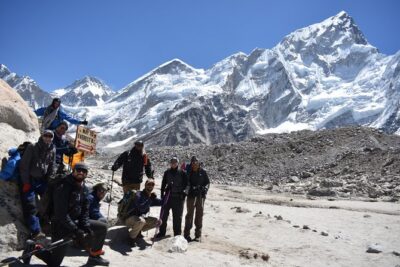
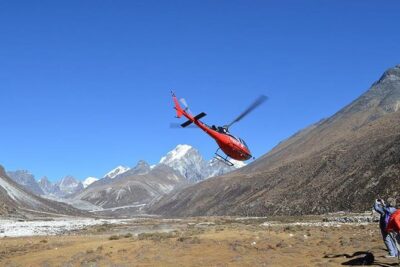
Everest Base Camp Helicopter Tour landing at Hotel Everest View
Read our review →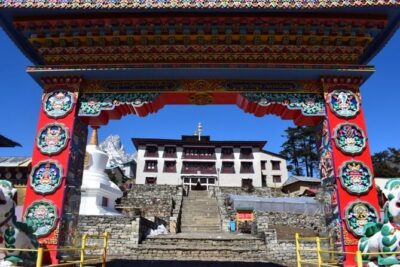
Browse the lists this tour appears in