
Reviewed · THAMEL TOURS
Cook and Eat: Cooking Class in Kathmandu near Thamel
Kathmandu’s best food lesson may begin before the stove is lit. This three-hour cooking class starts with tea or coffee, then takes you to a local market to see the ingredients behind familiar Nepali dishes. You choose three items from the menu and prepare them with a chef and helper.
I like the mix of market shopping and hands-on work. I also like the useful scale of the class: at $24 per person, you get ingredients, equipment, instruction, and the food you cook. The main consideration is that the group can reach 15 people, so you should ask to take an active role rather than simply watch.
- Choose three dishes: Options can include momos, thukpa, dal bhat, and yomari, depending on the menu.
- Visit a local market: A guide helps you see and select the ingredients before cooking begins.
- Learn with Chef Vikram and Kamal: The class has been described as professional, with clear English instruction.
- Eat what you prepare: The final meal is part of the experience, not an extra restaurant bill.
- Meet near Thamel: The class begins and ends at Shepherd Holidays on Yapikhya Marg.
- Small-group potential: The maximum is 15 people, though a smaller group may be possible on your date.
In This Review
- A Kathmandu Food Class That Starts at the Market
- Choosing Three Nepali Dishes
- Tea, Introductions, and the First Kitchen Briefing
- Shopping for Ingredients in a Local Market
- Cutting, Preparing, and Cooking With the Chef
- The Meal You Helped Make
- Leaving With Tea and a Recipe You Can Repeat
- What the $24 Price Really Covers
- Who Should Book This Kathmandu Cooking Class
- Practical Details Before You Go
- Should You Book It?
- FAQ
- How long does the Kathmandu cooking class last?
- Where does the cooking class begin?
- Where does the activity end?
- How many dishes can I choose?
- Are ingredients and cooking equipment included?
- Is the food I prepare included?
- What is the cancellation policy?
A Kathmandu Food Class That Starts at the Market
This class gives you more than a list of recipes. It connects the food on your plate with the ingredients, kitchen work, and everyday habits behind it. That makes it a useful choice if you want a short cultural activity near Thamel rather than another sightseeing stop.
The structure is simple. You arrive at Shepherd Holidays on Yapikhya Marg, Kathmandu 44600, receive tea or coffee, meet the staff, and select three dishes from the available menu. A guide then takes you to a local market to gather ingredients.
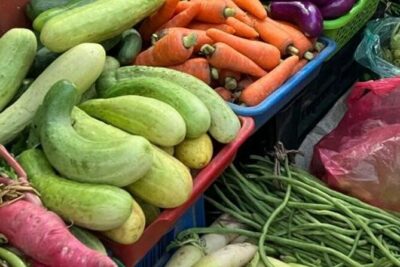
That market visit matters. You see what the chef needs before you see the finished dish, and you get a better sense of the fresh produce, spices, and staples used in Nepali cooking. The visit is not presented as a separate market tour, so keep your expectations focused on food preparation rather than a long shopping excursion.
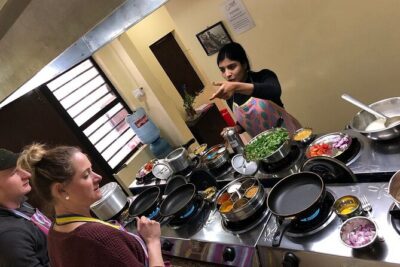
The class returns to the kitchen for cutting, mixing, and cooking. The instruction is provided by a chef and helper, with Chef Vikram and Kamal named as members of the cooking team. English instruction is available, which makes the process easier if you want to understand not just what to do, but why a step matters.
Choosing Three Nepali Dishes
The freedom to choose three dishes is one of the strongest parts of the experience. You can build a meal around familiar comfort food, try something you have not encountered before, or choose dishes that use different methods.
Examples from the available cooking experience include:
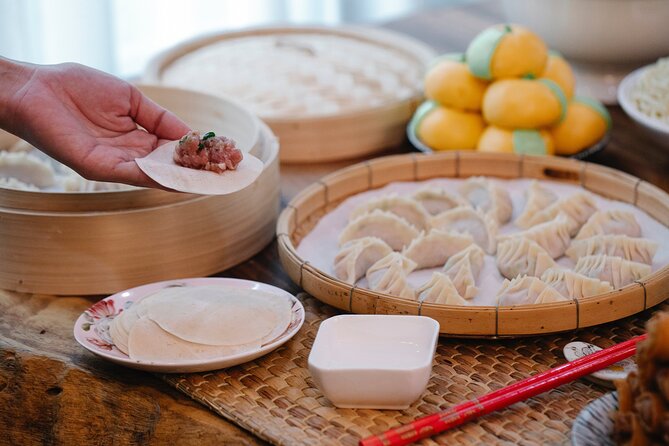
- Momos, the filled dumplings that are among Nepal’s most recognizable foods
- Thukpa, a warming noodle soup
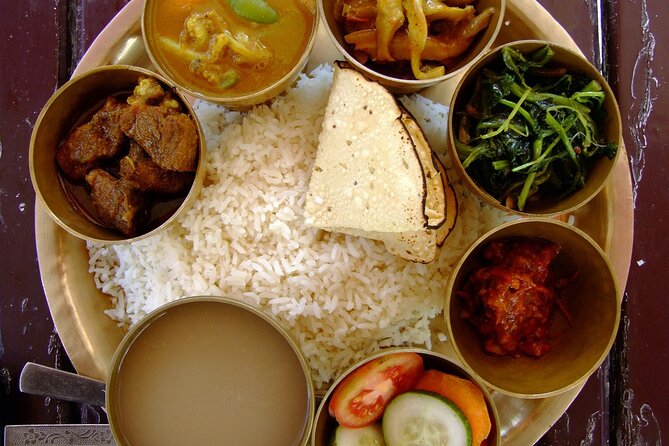
- Dal bhat, a staple meal built around lentils, rice, and accompanying flavors
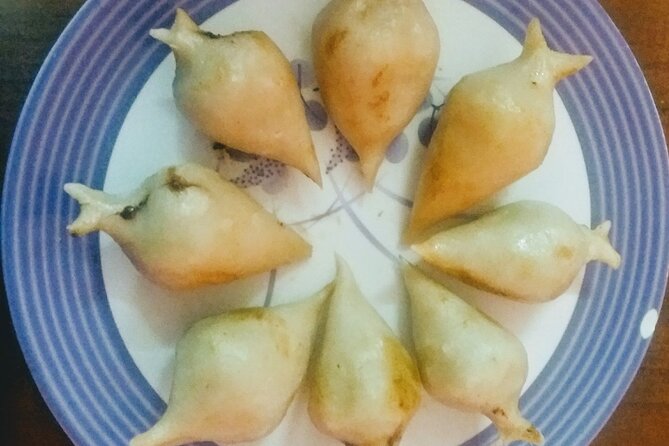
- Yomari, a traditional sweet preparation
The menu can change, so the exact choices are not guaranteed. Still, these examples show the range. Momos give you a hands-on shaping task and a dish you can try to repeat at home. Thukpa offers a different kind of work, with broth, noodles, and preparation. Dal bhat introduces a meal that is central to daily Nepali eating. Yomari gives you a chance to finish with something sweet.
I would choose three dishes that teach different skills instead of selecting three similar items. If momos are available, they are a practical pick because the method is easy to remember once you have made them. A participant who prepared momos in this class felt confident about making them at home, which is a useful sign for anyone who wants a recipe with life beyond the holiday.
The class is not just about eating popular dishes. It lets you compare the preparation of a snack, a soup, a main meal, and a sweet. Ask the chef which three items offer the best variety if you are unsure.
More Nepali cooking classes:
- Half day cooking class in Thamel kathmandu
★ 5.0 · 607 reviews - Kathmandu: Local Women-Led Nepali Cooking & Momo Class
★ 4.9 · 360 reviews - Kathmandu: Local Lead Nepali Cooking & Momo-Making Class
★ 5.0 · 212 reviews
Tea, Introductions, and the First Kitchen Briefing
Your first session begins with tea or coffee and an introduction to the staff. This is a small detail, but it sets the pace. You have time to meet the people leading the class before knives, chopping boards, and hot pans enter the picture.
Milk tea has been served at the start of the class. The information also lists tea or coffee before departure, while separately noting that beverages are not included. The clearest way to understand this is that the welcome and departure drinks may be part of the scheduled service, while additional drinks or personal purchases are not covered.
After introductions, you choose your three dishes. This is the moment to mention your interests, cooking experience, or any concern about taking part. The class is designed to be hands-on, but your level of participation can vary. In a larger group, you should speak up early if you want to do the cutting, shaping, stirring, or seasoning yourself.
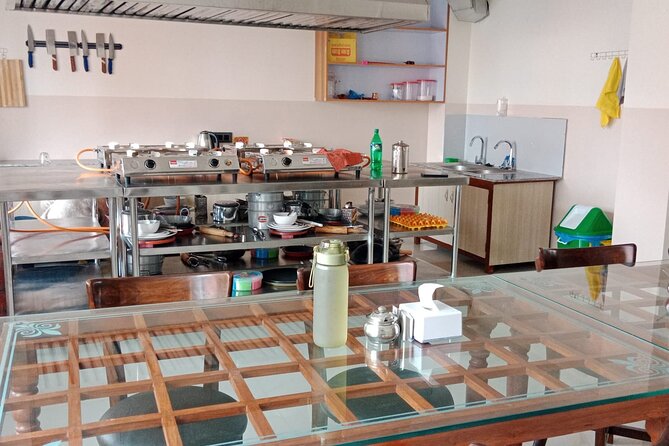
A clean kitchen and professional setting are part of the appeal. The class is not described as a rustic home visit, so you should book it for organized instruction rather than a private family meal in someone’s house.
Shopping for Ingredients in a Local Market
The guided market visit is the bridge between Kathmandu’s streets and the cooking lesson. Instead of receiving a tray of anonymous ingredients, you get to see where the preparation begins.
A guide accompanies you and helps collect what the class needs. This is valuable for first-time visitors because ingredient names and appearances can be unfamiliar. You can connect what you see at the market with what later appears on your cutting board.
Do not expect to spend the entire three hours at the market. The visit is one part of a four-stage class, followed by preparation, cooking, and eating. Its purpose is to support the lesson and introduce local food shopping, not to replace a dedicated market walk.
The market portion may appeal most to people who like context. If you only want to cook as quickly as possible, it adds a little time before the stove. I think that trade is worthwhile because the ingredients have more meaning once you have seen them in their normal setting.
Cutting, Preparing, and Cooking With the Chef
Back in the kitchen, the second session begins with cutting and ingredient preparation. This is where the class becomes active. You move from watching and selecting to handling the food yourself.
The chef leads the cooking, with a helper available during the process. Chef Vikram and Kamal have been identified with the class, and the instruction is given in clear English. That combination should help you follow the order of the work, especially when several dishes are being prepared at once.
The class is intended to teach a complete process. You do not simply mix one sauce or fold one dumpling and then leave. You work through preparation and cooking until the selected dishes are complete.
Still, the class size matters. The maximum is 15 people, and that is large enough for some tasks to become shared demonstrations. A group of three has also been possible, which would give you far more time with the chef. You cannot count on such a small group, but you can improve your experience by asking what you can do next instead of waiting quietly at the edge of the kitchen.
This is also the right time to ask practical questions. If you want to recreate a dish at home, ask about quantities, substitutions, and cooking order while the ingredients are in front of you. The value of a cooking class comes partly from the food you eat that day, but also from what you can remember later.
More around Thamel:
- Best Nepali Cooking Class in Thamel with Local Market Trip
★ 5.0 · 26 reviews - Kathmandu: Wood Carving Workshop with Local Artisan (Thamel)
★ 4.9 · 17 reviews - Private Pickup from Tribhuvan Airport to Thamel
★ 5.0 · 12 reviews - Half Day Cooking Class in Thamel with Local Market Visit
★ 4.5 · 6 reviews
The Meal You Helped Make
The third session is the payoff: the food is served, and you eat the dishes you prepared. Since the meal comes from your own work, you notice details that might pass unnoticed in a restaurant. You know which ingredients were combined, how the texture developed, and which step took the most care.
Momos are likely to be especially satisfying if they are among your choices. They involve shaping and can give you a clear result to judge. Thukpa and dal bhat offer a chance to see how a Nepali meal can be filling without relying on a complicated restaurant presentation. Yomari adds a different flavor and texture to the meal.
The experience includes the food and drink prepared during class. That makes the $24 price easier to assess: you are paying for a lesson, ingredients, kitchen use, staff time, and lunch or a substantial snack. It is not the cheapest way to eat in Kathmandu, but it is a fair price if you value the instruction and cultural setting.
Extra beverages and personal expenses are not included. Accommodation is also not included, though that is unlikely to matter for a three-hour activity. Private pickup and drop-off can be arranged for an additional charge.
Leaving With Tea and a Recipe You Can Repeat
Before departure, you receive tea or coffee and say goodbye to the staff. The class ends back at the meeting point, so you do not need to arrange a separate return location.
That return to the same place keeps the outing easy to fit into a day around Thamel. You can plan another activity afterward without having to coordinate a complicated transfer. Private vehicle service is available at extra cost if you need it, but the standard experience does not include pickup or drop-off.
The most useful souvenir may be a method rather than an object. Momos, in particular, are a good home-cooking target because you can remember the shaping process and adapt the filling. If you choose more complex dishes, take notes while the chef works and ask for clarification before you leave.
The setting appears suited to people who want order and guidance. You get a clean kitchen, equipment, ingredients, an instructor, and a helper. You are not expected to arrive with cooking tools or shop for the food on your own.
What the $24 Price Really Covers
At $24 per person, this is a reasonably priced cultural activity in Kathmandu. The cost includes all ingredients and equipment, instruction from the chef and helper, and the food and drink prepared during the class.
The strongest value comes if you participate fully. If you only watch, you are paying for a cooking demonstration and a meal. If you cut, shape, stir, ask questions, and repeat techniques, you are also paying for a skill you can carry home.
Group discounts are available, which may help families or friends booking together. The group limit is 15 people, so ask about the expected size if personal instruction is important to you. A smaller group will usually make it easier to choose tasks and ask detailed questions, though the exact group size is not guaranteed.
The price does not include additional beverages, personal expenses, accommodation, or private transportation. These exclusions are straightforward, but budget for them if you want a pickup or extra drinks.
Who Should Book This Kathmandu Cooking Class
I would recommend this class to you if food is one of the main ways you understand a place. The market visit gives you local context, while the kitchen work lets you take part instead of simply watching a chef perform.
It is also a good fit for first-time cooks. The class includes equipment and a helper, and the process is organized into clear stages. You do not need to assemble ingredients or plan the menu alone.
Families and small groups may appreciate the choice of three dishes and the group discount. Friends can divide the work, then sit down to eat together. Solo visitors can also join, though the maximum group size means you should not assume one-on-one attention.
You might skip it if your schedule is packed and you want a quick meal. Three hours is a meaningful part of the day, and the market visit plus preparation takes longer than simply ordering momos or dal bhat at a restaurant.
You should also think about the weather policy. The experience requires good weather, and if poor weather causes cancellation, you will be offered another date or a full refund. That policy is worth noting when planning around a short Kathmandu stay.
Practical Details Before You Go
The meeting point is Shepherd Holidays, Yapikhya Marg, Kathmandu 44600, Nepal. The activity ends at the same location. Confirmation is received when you book, and the experience accepts a maximum of 15 people.
Free cancellation is available if you cancel at least 24 hours before the local start time. Cancellations made less than 24 hours in advance are not refunded, and changes inside that window are not accepted.
The supplied details do not specify a fixed menu, start time, accessibility information, or dietary arrangements. If any of those affect your plans, ask Shepherd Holidays before booking rather than assuming the class can adjust them.
Should You Book It?
Book this experience if you want a practical introduction to Nepali food and like the idea of eating a meal you helped prepare. The best reasons are the market-to-kitchen format, the choice of three dishes, and the chance to learn from Chef Vikram and Kamal in a clean, organized setting.
The main limitation is group size. With up to 15 people, your hands-on time may depend on how actively you participate. At $24, the class offers good value when you treat it as both a lesson and a meal, but it is less compelling if you only want a restaurant lunch.
For a short Kathmandu stay, this is a smart choice for food-focused visitors who want more than a plate of momos and a quick explanation. Ask about the menu and expected group size, choose dishes with different techniques, and take part from the first chop to the final bite.
FAQ
How long does the Kathmandu cooking class last?
The experience lasts approximately three hours.
Where does the cooking class begin?
It begins at Shepherd Holidays, Yapikhya Marg, Kathmandu 44600, Nepal.
Where does the activity end?
The activity ends back at the meeting point.
How many dishes can I choose?
You can choose three items from the available menu.
Are ingredients and cooking equipment included?
Yes. Ingredients and all equipment needed to prepare the food are included.
Is the food I prepare included?
Yes. Food and drink prepared during the class are included. Additional beverages are not included.
What is the cancellation policy?
You can cancel for a full refund up to 24 hours before the experience’s start time. Cancellations or changes made less than 24 hours in advance are not accepted for a refund.
More Food in Kathmandu
- Kathmandu Food and Drink Walking Tour
★ 5.0 · 266 reviews - Kathmandu: Food and Drink Walking Tour
★ 4.9 · 119 reviews - Walking Street Food Tour in Kathmandu
★ 5.0 · 111 reviews - Secret Food Tour – Food Bites and Sights Kathmandu 14+ Testings
★ 5.0 · 82 reviews
More Cooking Classes in Kathmandu
- Local Women Lead Nepali Cooking Class
★ 5.0 · 125 reviews - The best Private Nepali Cooking Class in Kathmandu
★ 5.0 · 83 reviews - Kathmandu: Local Women-Lead Nepali Cooking & Momo Class
★ 4.9 · 45 reviews - Kathmandu: Local Lead Nepali Cooking & Momo Making Class
★ 4.9 · 40 reviews
Recently added around Kathmandu
- Kathmandu : Swambhunath & Durbar Square Guided Half Day Tour★ 3.3 · 3 reviews
- Private Day Tour in Kathmandu Valley Rim with Bhaktapur Sightseeing★ 5.0 · 3 reviews
- From Kathmandu / Pokhara / Chitwan: River Rafting – 1 Day★ 4.6 · 3 reviews
- Nepali Cooking training & Cultural Homestay Experience★ 5.0 · 3 reviews
- Private 3-Hour Nagarkot Sunset Tour from Kathmandu★ 3.5 · 3 reviews
- From Kathmandu: Everest Base Camp Landing Helicopter Tour★ 5.0 · 3 reviews
- 4 UNESSCO World heritage sites of Kathmandu-private tour★ 5.0 · 3 reviews
- From Kathmandu Budget: 15 Day Everest Base Camp Trek★ 5.0 · 3 reviews
Thamel Tours, compared.
Best Nepali Cooking Class in Thamel with Local Market Trip
Read our review →
Wood Carving Workshop with Local Artisan (Thamel)
Read our review →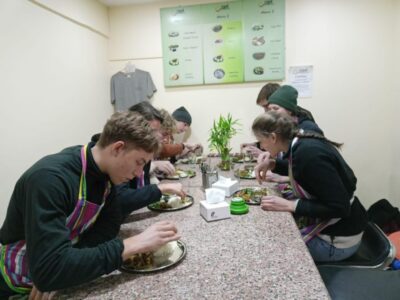
Half Day Cooking Class in Thamel with Local Market Visit
Read our review →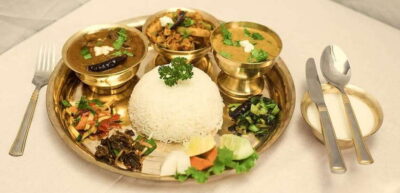
Taste Nepali Food & Drink- Walking Tour in Thamel
Read our review →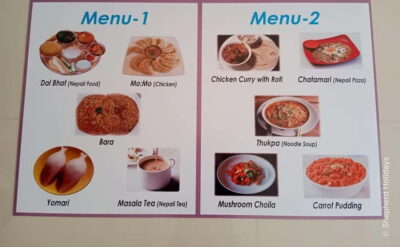
About 3-hour Cooking Class Experience near Thamel
Read our review →
Browse the lists this tour appears in