
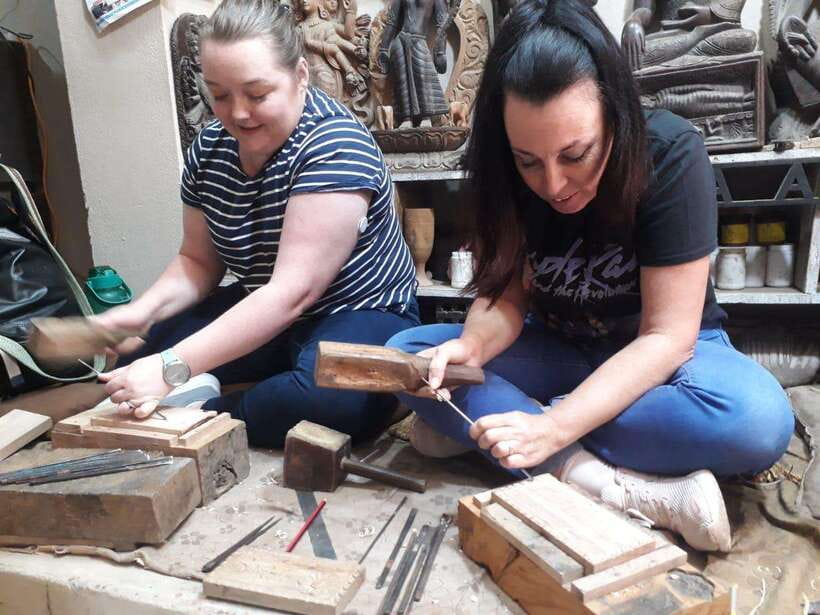
Reviewed · THAMEL TOURS
Kathmandu: Wood Carving Workshop with Local Artisan (Thamel)
Nepal’s old temples are famous for their carved windows, struts, and doors. This three-hour workshop lets you work with the same basic ideas on a smaller scale, using a wooden block, hand tools, and patient instruction from a local artisan. I like the small group limit of four, and I like that you finish with a real souvenir rather than a quick demonstration. The main drawback is that the history lesson may feel brief if you want a full study of Newar art.
I also like the friendly, personal setup. Artisan Hera and his wife have worked with beginners, including a ten-year-old child, and the instruction is encouraging rather than intimidating. Bring comfortable clothes and expect wood dust, repeated hand movements, and a final piece that shows your effort more than perfect professional polish.
In This Review
- Key points at a glance
- Why this small Thamel class feels different
- Starting with Nepal’s tools and wood
- Understanding the symbols before you carve
- Outlining the design on your wooden block
- Chiseling and detailing for the first time
- What you take home at the end
- A warm, personal class with Hera
- Is $42 a fair price?
- Who should book this workshop?
- My booking advice
- FAQ
- How long does the wood carving workshop last?
- Where does the activity take place?
- How much does the workshop cost?
- Is the class suitable for beginners?
- What language does the instructor speak?
- How many people can join the group?
- Are tools and materials included?
- Can I take home what I make?
Key points at a glance
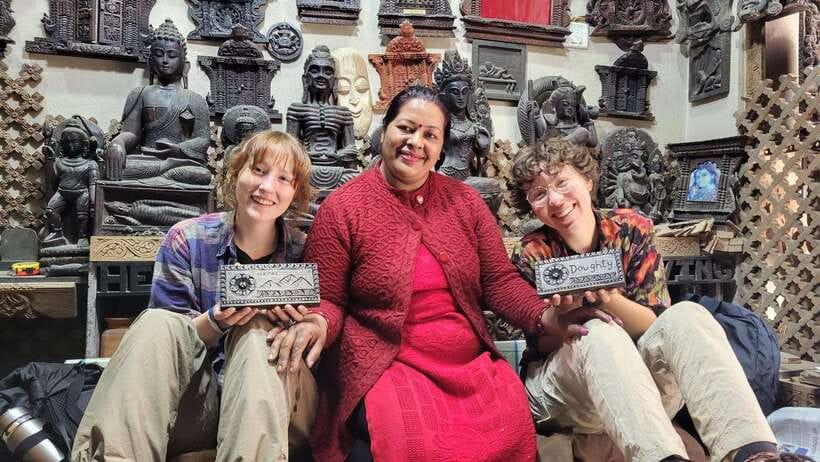
- A hands-on Thamel workshop: You spend the session carving instead of only watching a demonstration.
- Instruction from Hera: The artisan guides you through outlining, chiseling, and fine detailing.
- A personal souvenir: You take home the wooden artwork you create during the class.
- Newar craft traditions: Learn how lotus flowers, mandalas, deities, and mythical creatures shape Nepali designs.
- Small groups: With no more than four participants, you should have room to ask questions and get corrections.
- Good for beginners and families: The patient teaching has worked well for first-time carvers and a ten-year-old participant.
Why this small Thamel class feels different
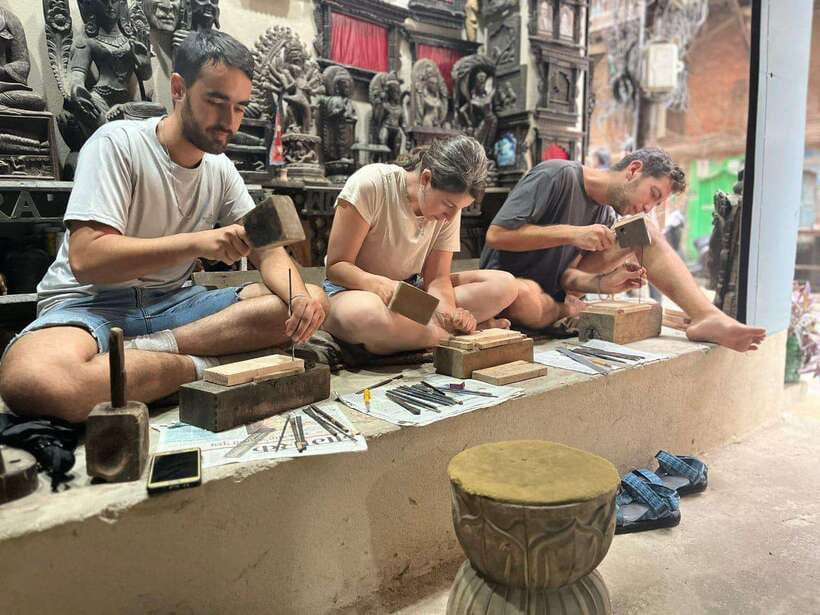
Many Kathmandu activities show you the city’s traditional arts from a distance. This one puts a chisel in your hand. You are not simply looking at an old temple window or buying a carved object in a shop. You are learning how a basic design is planned, cut, and refined.
The class takes place in a workshop setting in Thamel, a useful location if you are staying in the tourist center. The exact meeting instructions are not detailed, so confirm the meeting point and starting time before you go. The activity lasts three hours, long enough to learn several techniques without taking an entire day from your Kathmandu plans.
The group size matters. A maximum of four people gives the artisan a fair chance to watch how you hold the tool, correct your pressure, and show you where to remove wood. In a large class, carving can become a frustrating solo task. Here, the format is better suited to questions and steady guidance.
The class is conducted in English. You do not need previous carving experience. The basic approach is designed for beginners, and the instructor offers tips and corrections as you work.
More around Thamel:
- Half day cooking class in Thamel kathmandu
★ 5.0 · 607 reviews - Best Nepali Cooking Class in Thamel with Local Market Trip
★ 5.0 · 26 reviews - Private Pickup from Tribhuvan Airport to Thamel
★ 5.0 · 12 reviews
Starting with Nepal’s tools and wood
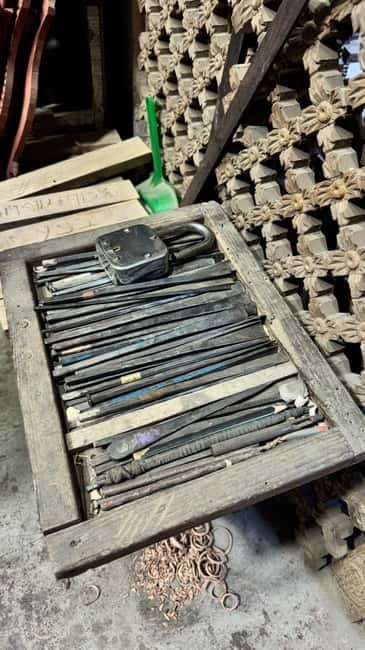
The session begins with an introduction to the tools and materials. You learn about traditional chisels, hammers, and the types of wood commonly used in Nepal, including sal and teak.
This opening matters because wood carving is not just a matter of pressing a sharp tool into timber. The shape of the chisel affects the cut. The angle of your hand affects the depth. Too much force can remove more wood than you intended, while too little may leave a weak or uneven line.
You should expect to work with a prepared wooden block rather than start with a large raw plank. That is a sensible choice for a three-hour class. It gives you more time to practice design and technique, and less time spent on basic preparation.
Pay attention to the demonstration before you begin. The most useful part may be the small practical correction: how to position the block, how to guide the chisel, or how to keep an outline clean. These are hard to learn from a shop-bought souvenir.
The tools and materials are included in the price. You do not need to bring carving equipment. Wear clothes you are comfortable working in, since this is a practical craft session rather than a tidy museum visit. Smoking is not allowed.
Understanding the symbols before you carve
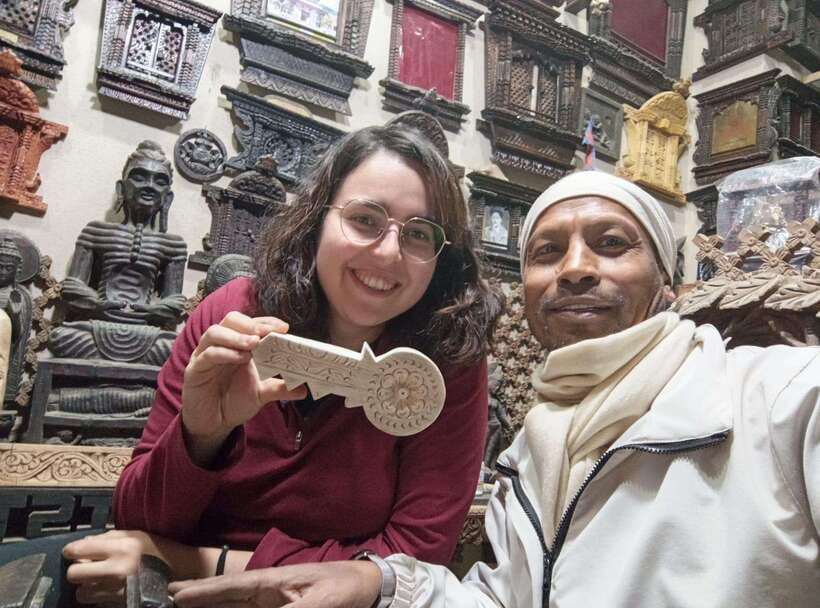
Nepali wood carving is closely tied to the architecture and religious traditions of the Kathmandu Valley. The craft dates to the Licchavi period, from the fourth to ninth centuries, and grew especially during the Malla dynasty, from the twelfth to eighteenth centuries.
The Newar community of the Kathmandu Valley preserved and developed this art. You can see its influence in places such as Kasthamandap, whose name means House of Wood, the 55-Window Palace in Bhaktapur, and the Peacock Window.
The workshop introduces the meaning behind common motifs. You might work with a lotus flower, a mandala, a deity, or a mythical creature. These are not random decorations. Hindu and Buddhist ideas shape the symbols, and the patterns can carry spiritual or cultural meaning.
This context adds value to the practical work. After the class, a small carved motif can mean more than a generic Nepal souvenir. You have some idea of the visual language behind it, and you have felt how much time and care go into even a modest design.
That said, set your expectations correctly. The class includes cultural stories and an introduction to the craft, but it is primarily a making session. If you want a long lecture on temple architecture or a detailed study of Newar iconography, this may feel too short. One participant particularly wanted more historical context. You can make the most of the session by asking direct questions while you work.
Outlining the design on your wooden block
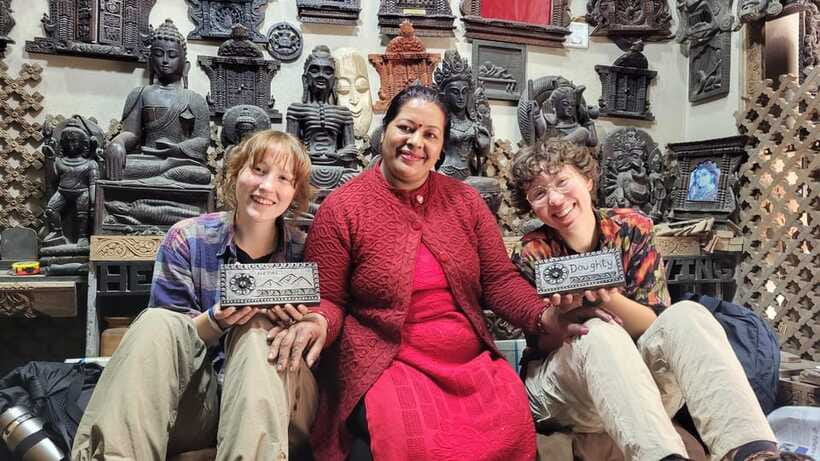
Once you understand the tools and design, you begin with the outline. This is the stage where your final piece starts to take shape, but it is also where patience pays off.
The instructor guides you through the design on a pre-cut block. You learn to mark the main lines before removing larger areas of wood. A clear outline gives you a map for the next steps and helps prevent accidental cuts outside the intended pattern.
For a first-time carver, this is a manageable introduction. You are not expected to produce a temple door or a museum-quality window. The aim is to learn the process and create a small decorative panel, figurine, or symbolic motif.
I like this format because the finished object has a personal connection. A carved piece from a shop may be more polished, but it will not show your first attempt at outlining and detailing. Your work may have a slightly uneven line or a rough edge. That is part of the story.
The instructor’s role is important here. Hera has been described as kind, funny, patient, and encouraging, including during a one-on-one session. If you are nervous about using the tools, that friendly approach should help you relax. You can ask for a correction before a small mistake turns into a large one.
More workshops and classes in Kathmandu:
- Kathmandu: Local Women-Led Nepali Cooking & Momo Class
★ 4.9 · 360 reviews - Kathmandu: Local Lead Nepali Cooking & Momo-Making Class
★ 5.0 · 212 reviews - Knife (Khukuri) Making Workshop- Forge of the Gurkhas
★ 5.0 · 143 reviews - Local Women Lead Nepali Cooking Class
★ 5.0 · 125 reviews
Chiseling and detailing for the first time
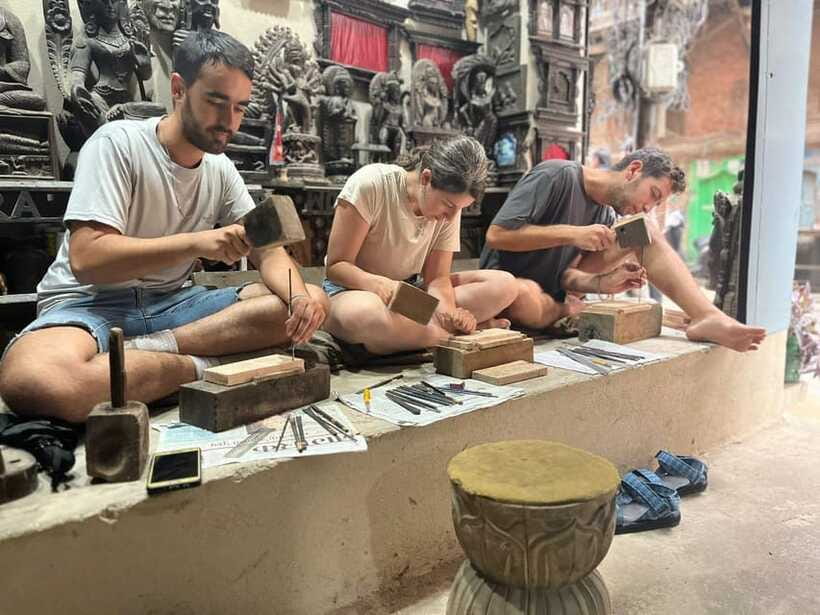
After the outline comes the main carving. You use the chisel to remove wood and give the design depth. The work is repetitive, but that is also the appeal. You have to slow down and pay attention to each cut.
The class covers outlining, chiseling, and detailing step by step. The instructor offers corrections as you progress. You may begin with broad cuts, then move toward smaller lines and surface details. The precise result will depend on your design, your pace, and how much experience you have with hand tools.
Do not compare your work with the intricate carvings seen on Kathmandu’s temples. Those buildings reflect generations of skill, careful planning, and years of practice. This workshop gives you a respectful introduction, not a shortcut to mastery.
The three-hour length is useful. A shorter session might leave you with only a quick demonstration. Here, you have time to practice and make mistakes. A longer course might suit a serious art student better, but three hours works well for a holiday activity.
You may find the physical side more demanding than expected. Carving requires concentration and repeated hand movements. The product is small, but the process is not effortless. Comfortable clothing is the only listed preparation, and you should arrive ready to work rather than expecting a passive cultural talk.
What you take home at the end
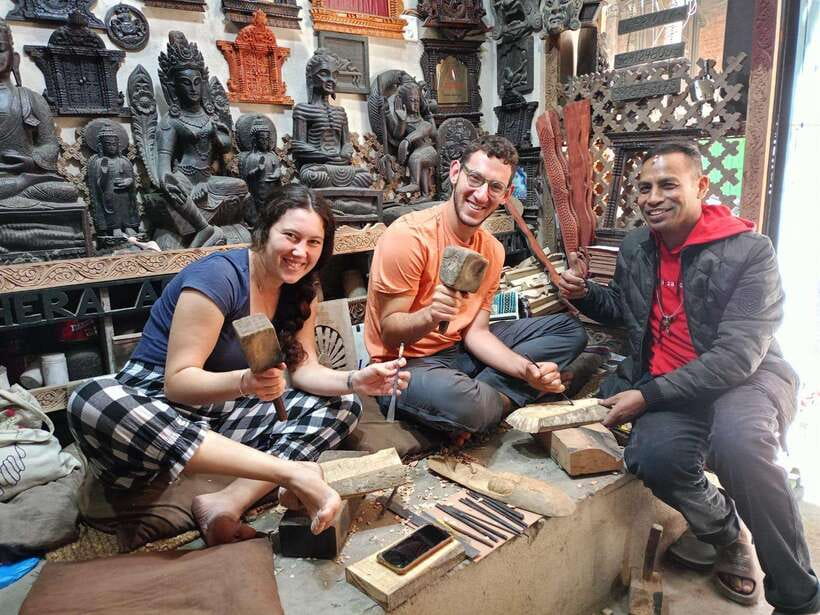
The strongest practical feature is simple: you leave with your own wooden piece. The finished object may be a decorative panel, a small figurine, or a symbolic motif, depending on the design used in the class.
This makes the activity a good alternative to ordinary souvenir shopping. You are not only taking home something connected to Nepal. You are taking home a record of a few hours spent learning a traditional skill.
The piece may not look perfectly professional, and that is worth saying plainly. Beginners should expect a handmade result. The value comes from the process, the instruction, and the connection to Nepali craft, not from producing an object that could be sold in a high-end gallery.
If you are packing light, consider the size of the finished work before booking. The activity promises a wooden piece to take home, but no exact dimensions are provided. You can ask the provider for more detail if luggage space is a concern.
A warm, personal class with Hera
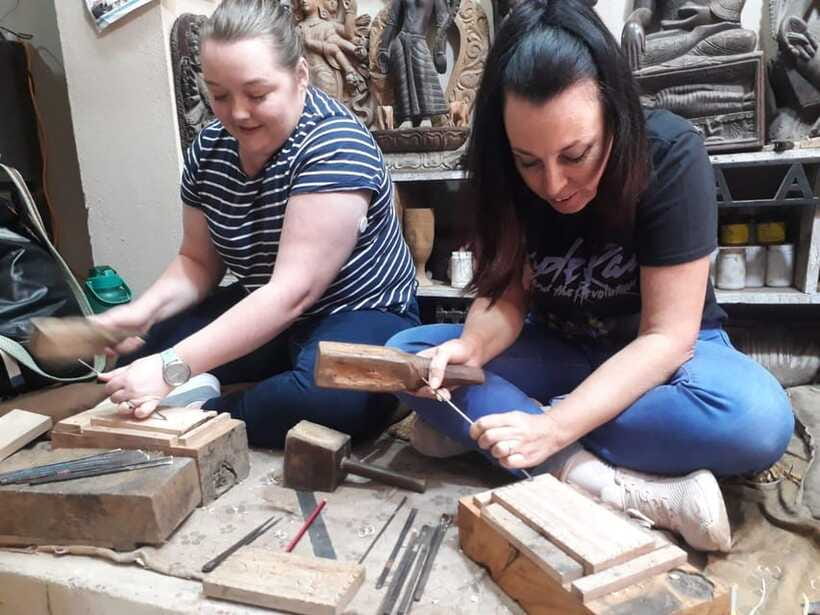
The teaching style appears to be one of the main strengths. Hera and his wife have been described as warm, kind, and funny, while Hera’s instruction has been called encouraging and helpful.
That tone matters in a craft class. A stern teacher can make a beginner afraid to try. A patient teacher lets you experiment, then steps in when you need help. The class seems especially suitable for people who want contact with a working local artisan rather than a polished group presentation.
The small group structure should support that personal approach. One participant booked during the off season and received a one-on-one class. That is not guaranteed, but it shows that the group can become even more personal when demand is low.
Families should take note. A ten-year-old participant completed the class with help from the guide, and the activity became a highlight of the family’s Nepal holiday. The information does not give a formal minimum age, so confirm suitability for younger children before booking. Still, the patient teaching makes this a reasonable option for a family with an older child who can follow tool-safety instructions.
Is $42 a fair price?
At $42 per person, the class is not the cheapest souvenir activity in Kathmandu. You are paying for three hours of instruction, a small group setting, all tools and materials, and the wooden piece you create.
I think the price makes the most sense if you value personal teaching. The small group limit means you are paying for access to an artisan, not simply admission to a room where you work alone. Government taxes and VAT are included, so the advertised price covers the listed essentials.
The value is also stronger for couples, friends, and families who want a shared activity. You can compare your designs, help each other stay patient, and leave with different objects. For a solo participant, the chance of a one-on-one class in the off season may make the price particularly appealing, though it cannot be promised.
The price is less compelling if your main goal is a finished decorative object. A shop purchase will usually be faster and may look more refined. Book this class for the learning and personal connection, with the souvenir as part of the reward.
Who should book this workshop?
I would recommend it to you if you like practical cultural activities and prefer making something to simply looking at monuments. It suits art enthusiasts, curious beginners, couples, families with older children, and anyone who wants a slower afternoon in Thamel.
It is also a good choice if you have already seen Kathmandu’s major temples and want another way to understand their details. Learning to cut a simple pattern can change how you look at carved windows and doors afterward.
You may want to skip it if you dislike repetitive handwork, have very limited time, or want a formal lecture on Nepali art. The class gives cultural background, but the main event is working with the tools.
The activity is conducted in English, and the group is limited to four participants. You should confirm the meeting point because the provided instructions are vague. Free cancellation is available up to 24 hours before the activity for a full refund, and you can reserve now and pay later, which helps if your Kathmandu schedule is still changing.
My booking advice
Book this workshop if you want a souvenir with a story and are willing to accept beginner-level results. The most praised qualities are the warm instruction, the patient guidance, and the pleasure of creating something personal.
Go in with modest expectations. You will not become a master carver in three hours, and the historical explanation may not satisfy a serious specialist. But you will learn the basic tools and cuts, hear about the cultural meaning of familiar motifs, and take home a piece made by your own hands.
For many visitors, that is a better memory than another purchased object. At $42, it is a fair choice for a focused, small-group craft session in Kathmandu.
FAQ
How long does the wood carving workshop last?
The workshop lasts three hours.
Where does the activity take place?
The class takes place in Thamel, Kathmandu, in Nepal’s Bagmati Zone.
How much does the workshop cost?
The listed price is $42 per person.
Is the class suitable for beginners?
Yes. The class is designed for all skill levels, including people with no previous wood carving experience.
What language does the instructor speak?
The instructor teaches in English.
How many people can join the group?
The group is limited to four participants.
Are tools and materials included?
Yes. All necessary tools and materials are provided.
Can I take home what I make?
Yes. You create a wooden piece during the class and take it home as a souvenir.
Recently added around Kathmandu
- Kathmandu : Swambhunath & Durbar Square Guided Half Day Tour★ 3.3 · 3 reviews
- Private Day Tour in Kathmandu Valley Rim with Bhaktapur Sightseeing★ 5.0 · 3 reviews
- From Kathmandu / Pokhara / Chitwan: River Rafting – 1 Day★ 4.6 · 3 reviews
- Nepali Cooking training & Cultural Homestay Experience★ 5.0 · 3 reviews
- Private 3-Hour Nagarkot Sunset Tour from Kathmandu★ 3.5 · 3 reviews
- From Kathmandu: Everest Base Camp Landing Helicopter Tour★ 5.0 · 3 reviews
- 4 UNESSCO World heritage sites of Kathmandu-private tour★ 5.0 · 3 reviews
- From Kathmandu Budget: 15 Day Everest Base Camp Trek★ 5.0 · 3 reviews
Thamel Tours, compared.


Best Nepali Cooking Class in Thamel with Local Market Trip
Read our review →
Half Day Cooking Class in Thamel with Local Market Visit
Read our review →
Taste Nepali Food & Drink- Walking Tour in Thamel
Read our review →
About 3-hour Cooking Class Experience near Thamel
Read our review →

Cook and Eat: Cooking Class in Kathmandu near Thamel
Read our review →Browse the lists this tour appears in