
Reviewed · EVEREST BASE CAMP TREKS
Everest Base Camp Trek
Everest Base Camp is the prize, but the real test begins long before you reach it. This 12-day trek from Kathmandu takes you through Lukla, Namche Bazaar, Tengboche, Dingboche, Lobuche, Gorakshep, and finally Base Camp, with a sunrise climb to Kala Patthar at 5,545 meters.
I like that permits, flights, guides, meals, and tea-house lodging are arranged in advance. I also like the two acclimatization days, one in Namche and one in Dingboche, since altitude is the serious business here. The main caution is that the package details are not fully consistent about porter service and Kathmandu hotels, so confirm those points before paying.
In This Review
- Key points to know before booking
- What $1,300 buys you on the Everest route
- Day 1: Lukla to Phakding begins with a short trek
- Day 2: Namche Bazaar brings the first hard climb
- Day 3: A useful acclimatization day in Namche
- Day 4: Tengboche adds monasteries and mountain views
- Day 5: Dingboche marks the high-country shift
- Day 6: The second rest day is more than a spare day
- Day 7: Lobuche brings the highest sleeping point so far
- Day 8: Gorakshep and Everest Base Camp
- Day 9: Kala Patthar is the visual high point
- Days 10 and 11: The return route is part of the experience
- Day 12: Lukla to Kathmandu and the practical finish
- Tea houses, food, gear, and daily costs
- Who should book this trek?
- Should you book the Everest Base Camp Trek?
- FAQ
- How long is the Everest Base Camp Trek?
- Where does the trek start?
- Is the flight from Kathmandu to Lukla included?
- Are meals included during the trek?
- Is accommodation included?
- Is a guide included?
- Is a porter included?
- Are permits and government fees included?
- Do I need travel insurance?
- What happens if bad weather cancels the trip?
Key points to know before booking
- Lukla flights are included: The round-trip Kathmandu to Lukla airfare and domestic airport tax are covered.
- Two acclimatization days matter: You spend rest days in Namche Bazaar and Dingboche, breaking up the steady climb.
- Kala Patthar is included: The route reaches 5,545 meters for one of the best high viewpoints in the program.
- The group is capped at 14: That is small enough for a more personal guided trek, while still keeping the price below a private expedition.
- A porter may cost extra: The detailed conditions list porter service at $20 per day, or $220 per person, despite the general description referring to guides and porters.
- The price needs a close look: At $1,300 per person, the package covers major trekking costs, but visa fees, insurance, drinks, tips, personal spending, and some Kathmandu expenses are extra.
What $1,300 buys you on the Everest route
At $1,300 per person, this is not a bare-bones walk arranged one piece at a time. The price includes domestic flights between Kathmandu and Lukla, private airport and hotel transfers, tea-house accommodation during the trek, three meals a day on trekking days, permits and government taxes, and the services of a guide.
The operator also supplies a sleeping bag, down jacket, duffle bag, and trekking map for use during the trip. That can save you from buying bulky equipment for a single Himalayan trek. You return the loaned items at the end.
The guide’s salary, meals, accommodation, transport, and insurance are included. Emergency helicopter arrangements are also listed, although the bill is to be handled by your travel insurance company. That makes travel insurance compulsory, not optional paperwork to sort out later.
The fine print deserves attention. The main description says guides and porters are included, but the detailed cost list says a porter is available for $20 per day, totaling $220 per person, if you need one. Ask exactly what your booking includes, how much luggage the guide can carry, and if porter service is shared or personal.
There is a second point to clarify. The summary says four nights in Kathmandu are included, but the detailed exclusions say hotel and food in Kathmandu are not included. I would get written confirmation about those four nights before booking. The trekking package itself is clear enough. The Kathmandu portion is not.
More ways to trek to Everest Base Camp:
- Everest Base Camp Trek – 14 Days
★ 5.0 · 1,499 reviews - Everest Base Camp Helicopter Tour landing at Everest View Hotel
★ 5.0 · 668 reviews - Everest Base Camp Trekking
★ 5.0 · 485 reviews
Day 1: Lukla to Phakding begins with a short trek
You meet at Tribhuvan International Airport in Kathmandu at 6:15 a.m. for the flight to Lukla, at 2,886 meters. From Lukla, the first walk to Phakding, at 2,610 meters, takes about four hours.
This is a sensible opening day. You are already at altitude, but the route descends and then follows an easier trail toward Phakding. Lunch and dinner are included, and you sleep in a tea house.
The Lukla flight is a major part of the experience, not just a transfer. It puts you directly into the Khumbu region and avoids several days of road travel. It also means weather can affect the schedule. The stated cancellation terms allow a new date or a full refund if poor weather forces the operator to cancel the experience, but day-to-day flight disruption remains something you should be prepared to discuss with the operator.
Day 2: Namche Bazaar brings the first hard climb
The six-hour walk from Phakding to Namche Bazaar reaches 3,440 meters. This is where the route begins to feel like a serious high-altitude trek.
Namche is a key stopping point in the Khumbu. It is also where you first need to pay close attention to how your body feels. The route gains height, and the schedule gives you a full day afterward to adjust.
This is a long day for anyone who is not used to walking uphill for hours. Take the pace set by your guide rather than trying to prove anything. Your meals and lodging are handled, so your job is simple: walk steadily, drink what you have budgeted for, and rest when needed.
Day 3: A useful acclimatization day in Namche
You spend Day 3 in Namche Bazaar rather than climbing higher. That pause is one of the strongest parts of the schedule.
A rest day does not necessarily mean staying in bed. Your guide will set the plan, but the purpose is to let your body adjust before the route climbs toward Tengboche and Dingboche. Namche is also a natural place to sort your bag, check your clothing, and make sure your loaned sleeping bag and down jacket are working for you.
The trek is listed as suitable for people with moderate physical fitness. That does not mean easy. You need to be comfortable walking for five to seven hours on repeated days, often at altitude, with no quick way to leave the route once you are high up.
More treks starting in Kathmandu:
- Nagarkot Sunrise View and Day Hiking from Kathmandu
★ 5.0 · 471 reviews - Annapurna Circuit Trek with Tilicho Lake
★ 5.0 · 368 reviews - Everest Base Camp Trekking – 13 Day
★ 5.0 · 365 reviews - Everest Base Camp Trek -14 Days
★ 5.0 · 321 reviews
Day 4: Tengboche adds monasteries and mountain views
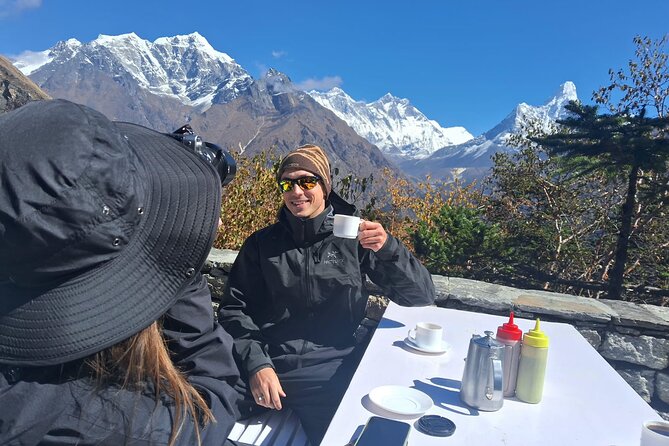
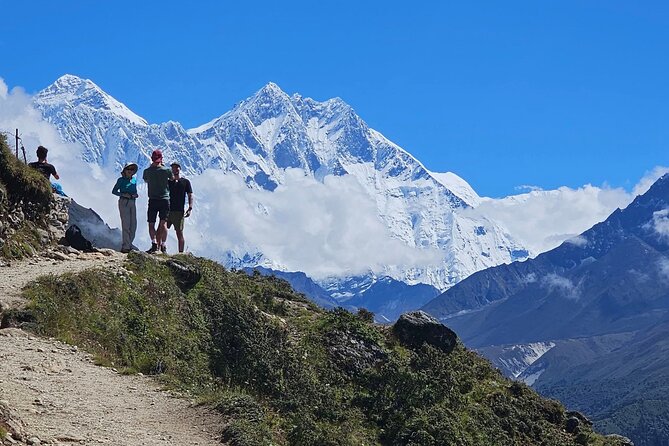
The trail from Namche to Tengboche takes about five hours and reaches 3,867 meters. Tengboche is one of the most memorable stops because of its mountain setting and Buddhist monastery.
This day is shorter than the Namche climb, but you are gaining altitude again. Keep your pace calm. A guided schedule works well here because the guide can watch the group and adjust the rhythm if someone is struggling.
The tea-house format is practical rather than luxurious. You get a bed and meals, but you should not expect hotel-style comfort. Hot showers, drinks, battery charging, chocolate, and other small extras are not included. Those costs can add up, so keep cash available.
Day 5: Dingboche marks the high-country shift
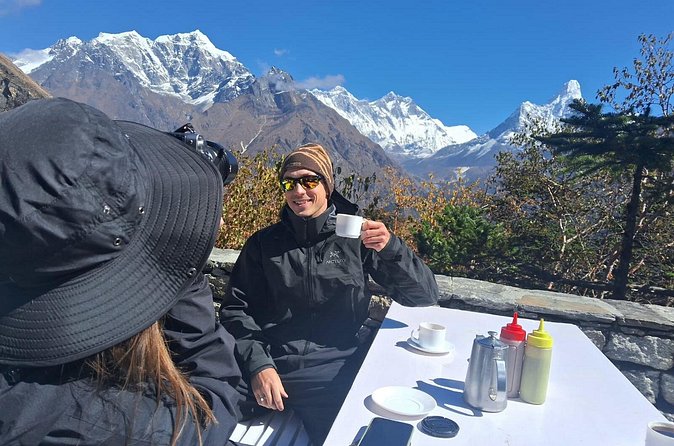
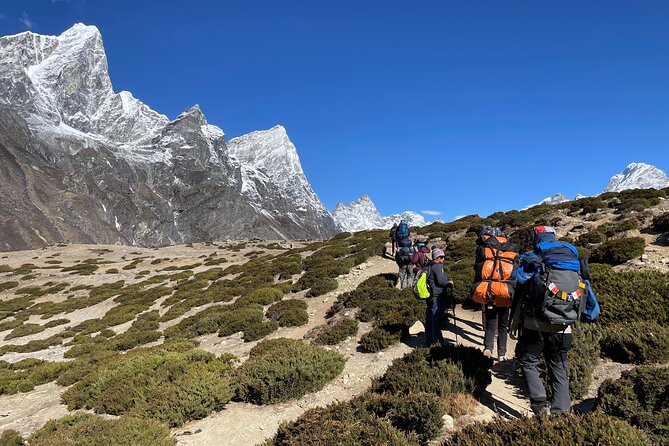
The five-hour walk from Tengboche to Dingboche reaches 4,260 meters. From here, the air is thinner and the route feels more exposed to the demands of altitude.
Dingboche is an important base for the second acclimatization pause. The itinerary does not rush straight from Namche to Base Camp, which is a good sign. The schedule gives you time to adjust at two separate heights instead of treating altitude as a minor detail.
Your breakfast, lunch, and dinner are included during the trek. Drinks are not, and the exclusions specifically mention drinking water. Plan to pay for water along the route or arrange your own purification method, if appropriate for your needs. The package does not state that bottled or treated water is provided.
Day 6: The second rest day is more than a spare day
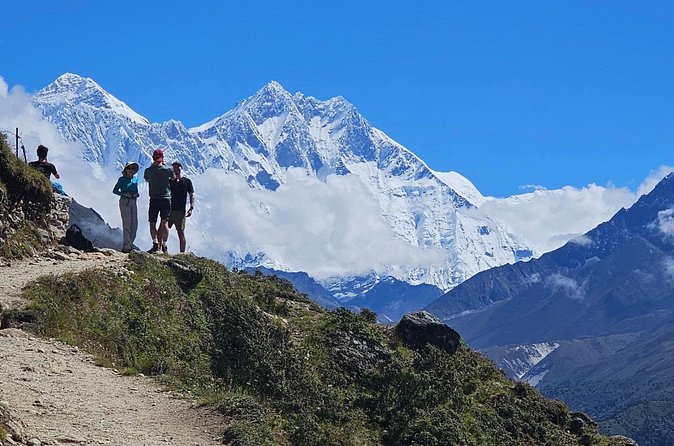
Day 6 is spent in Dingboche for acclimatization. At 4,260 meters, this is a useful pause before the trail climbs close to 5,000 meters.
I would treat this as a working rest day. Keep your kit organized, ask your guide what the next two days will involve, and avoid spending energy on unnecessary side plans. A second acclimatization day can make the difference between enjoying the approach to Base Camp and simply enduring it.
The guide is central to this part of the trip. The operator describes the guide as friendly and helpful, and the package includes the guide’s pay, meals, lodging, transport, and insurance. Guides named in past departures include Kiran, Dinish, and Arjun. Your assigned guide may differ, so ask for the name and experience of your guide before departure if that matters to you.
Day 7: Lobuche brings the highest sleeping point so far
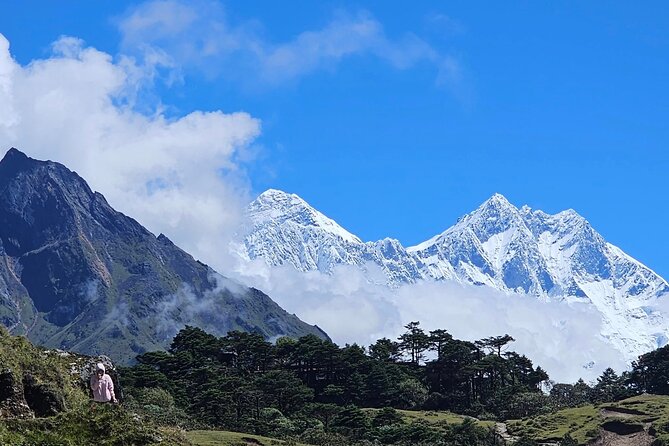
The trail from Dingboche to Lobuche takes about five hours and reaches 4,930 meters. This is a major step up from Dingboche, even though the walking time is moderate.
At this height, a slow pace is not a sign of weakness. It is the smart way to walk. You may find that every task takes longer, from putting on layers to eating a meal. The guide’s role becomes especially important because the group must move at a pace that works for different fitness levels.
The group maximum is 14 people. That is large enough to provide company and help spread the cost of a guide, but small enough that the guide should be able to keep track of individual needs better than on a large coach-style tour.
Day 8: Gorakshep and Everest Base Camp
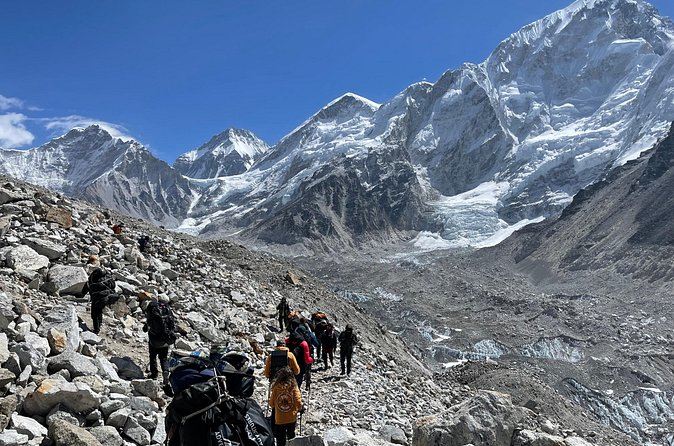
Day 8 is the main event. You walk from Lobuche to Everest Base Camp via Gorakshep, with six to seven hours on the trail.
Gorakshep is the staging point for the final approach. It is also where the altitude will feel most demanding. The route reaches Everest Base Camp, but the program does not include an overnight stay there. You return to Gorakshep for the night and continue with breakfast, lunch, and dinner included.
Base Camp is a powerful goal, but do not expect to walk into a permanent village of expedition tents. The experience is seasonal and conditions change. The value of this day is reaching the famous point on foot, under your own effort, with the guide handling route planning and logistics.
This is also the day to keep your expectations practical. The package names Mount Everest as the main stop, but it does not promise a particular view, weather condition, or expedition activity at Base Camp. The mountains decide what you see.
Day 9: Kala Patthar is the visual high point
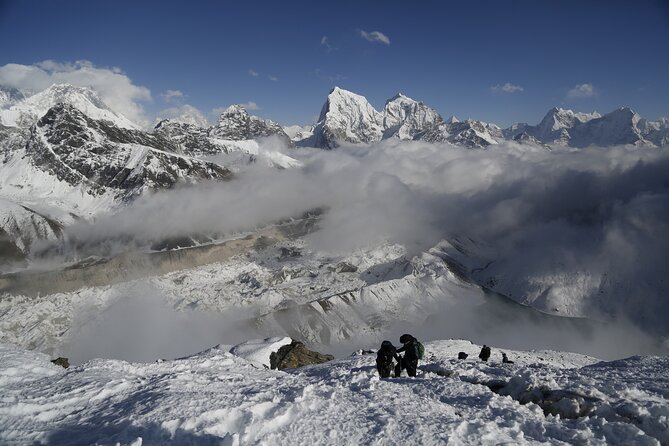
You start Day 9 by walking from Gorakshep to Kala Patthar, at 5,545 meters, then continue to Pheriche, at 4,243 meters. The total walking time is about seven hours.
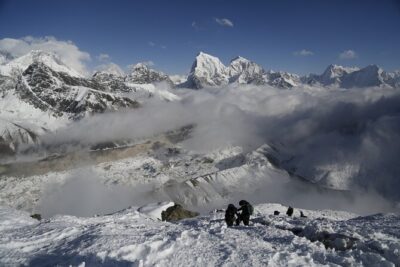
Kala Patthar is arguably the best viewpoint in the program. It provides the high lookout that many people hope for when they picture an Everest trek. The climb is physically demanding, especially after the previous day, but it gives the route a strong final mountain moment.
The descent to Pheriche is welcome, but it remains a full day. Do not confuse going downhill with being effortless. Knees and feet can be tired, and the trail still requires care.
Days 10 and 11: The return route is part of the experience
Day 10 takes you from Pheriche back to Namche Bazaar in about six hours. You retrace part of the route, but the change in direction gives familiar places a different feel.
Day 11 continues from Namche to Lukla, also taking about six hours. By now, you will have spent many days walking, so the final trekking day can feel both satisfying and tiring. Lukla is where you finish the overland portion and prepare for the flight back to Kathmandu.
The return route is not filler. It gives you time to absorb what you have done, and it also provides a buffer before the domestic flight. Still, the schedule is tight enough that flight disruption can affect the final transfer.
Day 12: Lukla to Kathmandu and the practical finish
You fly from Lukla back to Kathmandu and transfer to your hotel. Breakfast is included that day.
The package includes private domestic airport and hotel transfers, which is helpful after a long trek with a duffle bag and trekking equipment. International airfare and the airport departure tax are not included, so budget those separately.
The program lists approximately 12 days, but flights and mountain weather can affect timing. Do not schedule an important international connection immediately after the expected return unless you have checked the operator’s advice and allowed extra time.
Tea houses, food, gear, and daily costs
Tea-house accommodation is included throughout the trek. This gives you a bed and a place to eat, but the package does not promise private rooms, attached bathrooms, or hotel-level facilities.
Breakfast, lunch, and dinner are included during the trekking portion. Personal drinks, hot showers, battery charging, chocolate bars, and other treats cost extra. Those small comforts matter more as you climb, so a personal spending fund is sensible.
The loaned sleeping bag, down jacket, duffle bag, and trekking map are useful inclusions. Ask about sizes and condition before leaving Kathmandu. You should also confirm what personal luggage limit applies to the Lukla flight, since the supplied details do not state one.
The $40 Everest Base Camp entrance fee is listed separately. Nepal’s one-month entry visa is also extra and listed at $40, with two passport photos required. Tips for the guide and staff are not included.
Who should book this trek?
This program suits you if you want the Everest Base Camp route without arranging each flight, permit, meal, guide, and lodge yourself. It is also a good fit if you prefer a small group and want two planned acclimatization days.
You should have moderate physical fitness and be ready for repeated five to seven-hour walking days. The altitude is not a side issue. If you have medical concerns, the supplied information does not provide medical screening advice, so seek professional guidance before committing.
This is less suitable if you want flexible dates, luxury lodging, or a fully private itinerary. The cancellation policy is strict: the booking is non-refundable and cannot be changed for personal reasons. A different date or full refund is offered if the operator cancels because of poor weather or insufficient numbers.
Should you book the Everest Base Camp Trek?
Book it if you want a guided, cost-conscious route with the big logistics already arranged. The strongest features are the included Kathmandu to Lukla flights, tea-house accommodation, meals, equipment loan, permits, and two rest days for acclimatization.
Before you commit, get two points in writing: the exact porter arrangement and whether four Kathmandu hotel nights are included. Then add the visa, insurance, Base Camp entrance fee, tips, drinks, showers, charging, personal treats, and any porter cost to the advertised $1,300.
With those extras understood, this is a practical way to tackle a demanding Himalayan trek. The program gives you the route, support, and structure. You still supply the stamina, patience, and willingness to walk slowly when the mountain demands it.
FAQ
How long is the Everest Base Camp Trek?
The program lasts approximately 12 days, including flights from Kathmandu to Lukla and back.
Where does the trek start?
You start at Tribhuvan International Airport in Kathmandu, Nepal, at 6:15 a.m.
Is the flight from Kathmandu to Lukla included?
Yes. The package includes the Kathmandu to Lukla and Lukla to Kathmandu flights, along with the domestic airport tax.
Are meals included during the trek?
Yes. Breakfast, lunch, and dinner are included during the trekking portion.
Is accommodation included?
Tea-house or lodge accommodation during the trek is included. The supplied details also say four nights in Kathmandu are included, but the detailed exclusions say Kathmandu hotel and food are not included, so confirm this before booking.
Is a guide included?
Yes. An experienced guide is included, along with the guide’s salary, food, drinks, accommodation, transportation, and insurance.
Is a porter included?
The general description refers to guides and porters, but the detailed conditions list porter service as an additional cost of $20 per day, or $220 per person. Confirm the porter arrangement directly with the operator.
Are permits and government fees included?
Government taxes, VAT, service charges, and trekking paperwork are included. The Everest Base Camp entrance fee of $40 per person is listed separately.
Do I need travel insurance?
Yes. Travel insurance is compulsory. Emergency helicopter arrangements are listed, but the cost is to be paid by your insurance company.
What happens if bad weather cancels the trip?
If the experience is canceled because of poor weather, you will be offered another date or a full refund. If the minimum group size is not reached, you will be offered another date or experience, or a full refund. Personal cancellations are non-refundable.
Recently added around Kathmandu
- Kathmandu : Swambhunath & Durbar Square Guided Half Day Tour★ 3.3 · 3 reviews
- Private Day Tour in Kathmandu Valley Rim with Bhaktapur Sightseeing★ 5.0 · 3 reviews
- Private 3-Hour Nagarkot Sunset Tour from Kathmandu★ 3.5 · 3 reviews
- From Kathmandu / Pokhara / Chitwan: River Rafting – 1 Day★ 4.6 · 3 reviews
- Nepali Cooking training & Cultural Homestay Experience★ 5.0 · 3 reviews
- From Kathmandu: Everest Base Camp Landing Helicopter Tour★ 5.0 · 3 reviews
- 4 UNESSCO World heritage sites of Kathmandu-private tour★ 5.0 · 3 reviews
- From Kathmandu Budget: 15 Day Everest Base Camp Trek★ 5.0 · 3 reviews
Everest Base Camp Treks, compared.
Everest Base Camp Helicopter Tour landing at Everest View Hotel
Read our review →
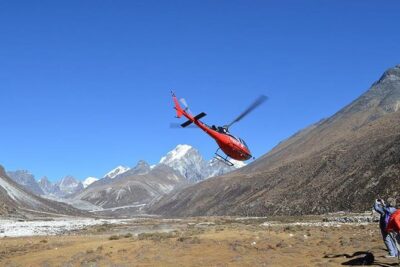
Everest Base Camp Helicopter Tour landing at Hotel Everest View
Read our review →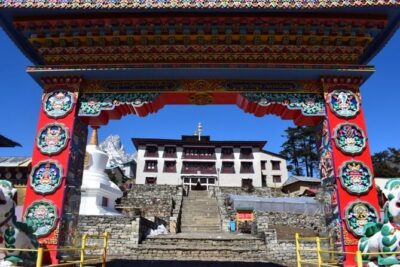
Browse the lists this tour appears in