
Reviewed · EVEREST BASE CAMP TREKS
Everest Base Camp Trek
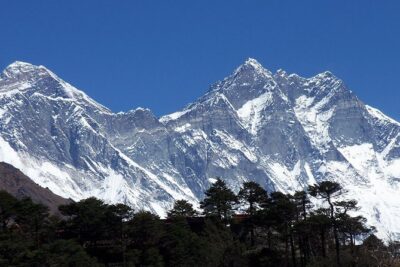
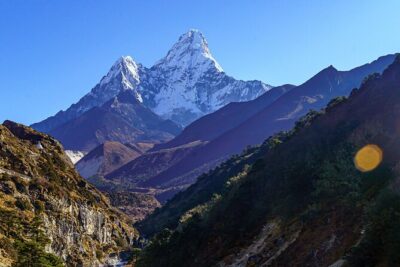
The big draw here is simple: you walk for days through the Everest region, then reach the foot of the world’s highest mountain. The route moves from green river valleys to high, cold villages, with views of Everest, Lhotse, Nuptse, Ama Dablam, and the Khumbu Glacier along the way. Kala Patthar provides the clearest mountain payoff, especially when early sunlight touches the snow.
I like the practical package. Your Lukla flights, trekking meals, permits, sleeping bag, down jacket, duffel bag, airport transfers, and 11 nights of mountain lodging are covered. I also like the support built into the trip. Guides such as Buddhi and Pawan have been praised for steady encouragement, while Anjan is listed as the Kathmandu arrival representative.
The main concern is the physical demand. This is a 14-day high-altitude trek, not a scenic stroll, and the itinerary includes long walking days, basic mountain accommodation, cold conditions, and flight schedules that can be disrupted by weather. Porter service, insurance, Kathmandu lodging, drinks, showers, laundry, and tips cost extra.
In This Review
- Key points to know before booking
- What the $1,799 price really covers
- Day 1: A soft landing in Kathmandu
- Day 2: The flight to Lukla and the trail to Phakding
- Day 3: Suspension bridges and the climb to Namche Bazaar
- Day 4: Acclimatization around Namche
- Day 5: Tengboche and its mountain setting
- Day 6: From Tengboche to Dingboche
- Day 7: A second acclimatization day near Dingboche
- Day 8: Along the Khumbu Glacier
- Day 9: Gorak Shep and Everest Base Camp
- Day 10: The early climb to Kala Patthar
- Day 11: A long descent through Pheriche and Pangboche
- Day 12: Returning to Lukla
- Day 13: Back to Kathmandu and a city stop
- Day 14: Airport transfer and departure
- The people and support behind the trek
- Who should book this Everest trek?
- Should you book it?
- FAQ
- How long is the Everest Base Camp Trek?
- What is included in the price?
- Is a hotel in Kathmandu included?
- Do I need travel and rescue insurance?
- Is porter service included?
- What fitness level is required?
- Can I cancel for a full refund?
Key points to know before booking
- Lukla is the true starting point: The trek begins with a domestic flight from Kathmandu, not a long road transfer.
- Namche and Dingboche provide acclimatization time: Rest days help break up the steady climb toward Everest Base Camp.
- Kala Patthar is the visual high point: The early morning climb offers wide views of Everest and surrounding peaks.
- The price includes major essentials: Flights, meals, permits, mountain gear, guide service, and trekking lodging are part of the package.
- Buddhi and Pawan are names to ask about: They have led recent trips, but your assigned guide should be confirmed before departure.
- You need insurance that covers rescue: Emergency helicopter arrangements are available, but your travel insurance company pays the bill.
What the $1,799 price really covers
At $1,799.27 per person, this trek is priced as a fairly complete package rather than a bare guiding service. The useful part is that several expensive and awkward pieces are already handled: both Kathmandu to Lukla flights, national park and local entrance fees, 12 breakfasts, 12 lunches, 11 dinners, 11 nights of trekking accommodation, airport pickup and drop-off, and a government-licensed mountain guide.
You also receive a sleeping bag, down jacket, duffel bag, medical kit, and three cups of hot tea during the trek. Those details matter in the Everest region, where renting or buying cold-weather gear at the last minute can be inconvenient and costly.
The package does not cover everything. You pay for your Kathmandu hotel, porter service, travel and rescue insurance, bottled water, hot water, showers, laundry, phone calls, battery charging, and tips. Extra costs can also arise from delayed or canceled flights, strikes, or changes outside the planned route.
I see good value here if you want one company to organize the moving parts. The price is less attractive if you already have your own gear, want to arrange flights independently, or expect all personal expenses to be included. Before paying, ask exactly how much luggage the porter can carry, how many people are in your private group, and which hotel is used in Kathmandu.
More ways to trek to Everest Base Camp:
- Everest Base Camp Trek – 14 Days
★ 5.0 · 1,499 reviews - Everest Base Camp Helicopter Tour landing at Everest View Hotel
★ 5.0 · 668 reviews - Everest Base Camp Trekking
★ 5.0 · 485 reviews
Day 1: A soft landing in Kathmandu
After you arrive at Tribhuvan International Airport, a representative from Nepal High Trek, listed as Anjan, meets you and takes you to the arranged hotel. The day includes dinner and a short welcome period.
The itinerary labels this stop Mount Everest, but this first day is really your Kathmandu arrival day. Do not expect to see the mountain from the city or begin trekking immediately. Use the time to check your equipment, organize your duffel, and make sure your insurance documents are accessible.
The airport transfer is included, which is useful after a long international flight. Kathmandu traffic can be tiring, so having someone meet you removes one small problem at the start.
Day 2: The flight to Lukla and the trail to Phakding
You transfer to Kathmandu’s domestic terminal for the morning flight to Lukla. Lukla is the gateway to the Everest Base Camp route, and the trip changes character as soon as you arrive. From here, walking replaces road travel.
The first trekking stretch leads toward Phakding. The itinerary gives this day a short walking period, which is sensible at the start. You are adjusting to the rhythm of carrying a daypack, walking on uneven paths, and paying attention to your breathing.
Weather matters here. The package includes both return flights, but it does not absorb every cost caused by delay or cancellation. Keep extra flexibility in your wider Nepal plans if possible.
Day 3: Suspension bridges and the climb to Namche Bazaar
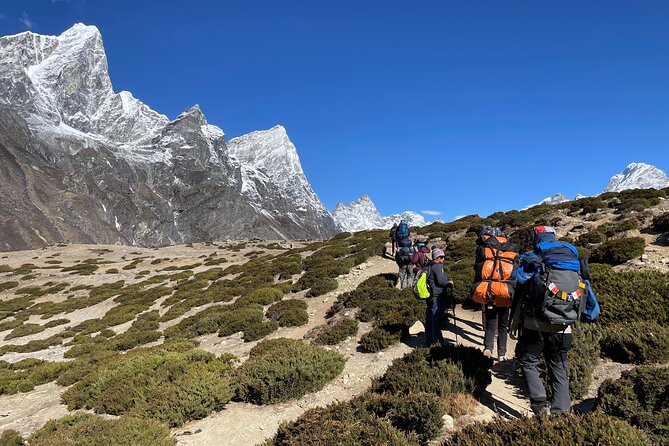
From Phakding, the route follows the Dudh Koshi River and crosses several suspension bridges before climbing toward Namche Bazaar. The river, steep hillsides, and views of Thamserku at 6,618 meters make this an attractive but demanding day.
The key word is slow. The trail rises steadily, and rushing now can make the next days harder. Your guide should set a pace that lets you keep walking without burning out early.
Namche is more than a stopping point. It is the main trading and service center on the route, with banks, ATMs, internet cafes, and places to eat and rest. Still, do not mistake those services for city comfort. Mountain supplies cost more, and hot showers or reliable charging may carry an extra fee.
More treks starting in Kathmandu:
- Nagarkot Sunrise View and Day Hiking from Kathmandu
★ 5.0 · 471 reviews - Annapurna Circuit Trek with Tilicho Lake
★ 5.0 · 368 reviews - Everest Base Camp Trekking – 13 Day
★ 5.0 · 365 reviews - Everest Base Camp Trek -14 Days
★ 5.0 · 321 reviews
Day 4: Acclimatization around Namche
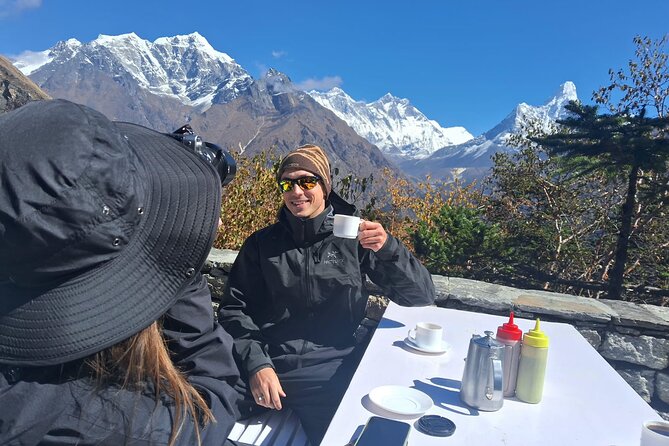
You spend the day around Namche rather than pushing higher. The listed plan includes time at the Irish Pub and exploration around the village, but the important purpose is acclimatization.
This is a valuable day, even if it feels like lost trekking time. Your body needs a chance to adjust before the route climbs toward Tengboche and Dingboche. A short walk, a view from above the village, and a relaxed afternoon can help more than forcing in extra distance.
Namche is also a good place to deal with practical needs. You may be able to use an ATM, connect to the internet, or buy small supplies, though the included package does not cover phone use, charging, or extra drinks.
Day 5: Tengboche and its mountain setting
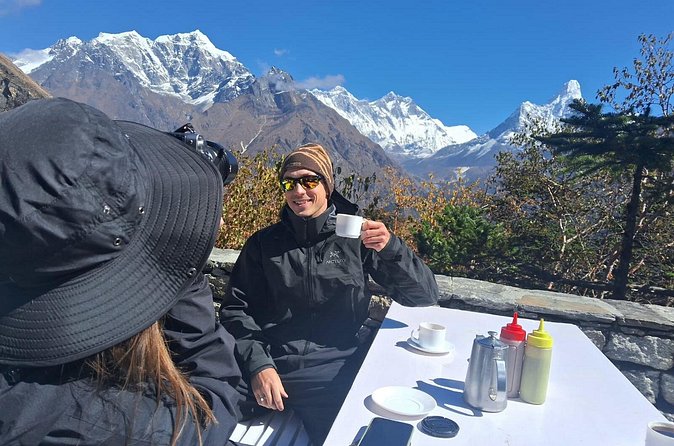
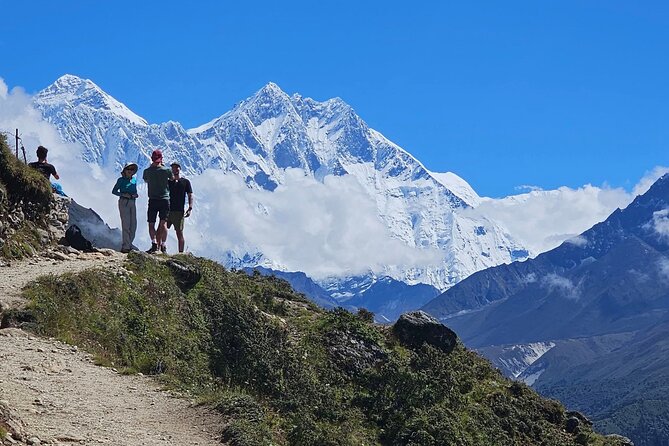
The trail leaves Namche and follows a route with views of Everest, Nuptse, Lhotse, and Ama Dablam. Tengboche Gompa is the main stop, and its setting gives the day a strong cultural as well as scenic quality.
Tengboche sits amid high mountain surroundings, with the monastery backed by snowy peaks. You have time for a short visit, photographs, and a look at the religious center that gives the village its identity.
The walking day is not described as especially long, but the rising elevation changes how it feels. Cold air, sun exposure, and dry conditions can sap your energy. Sunscreen is not optional here. One useful tip from the trek experience is to apply it every day, even when the air feels cold.
Day 6: From Tengboche to Dingboche
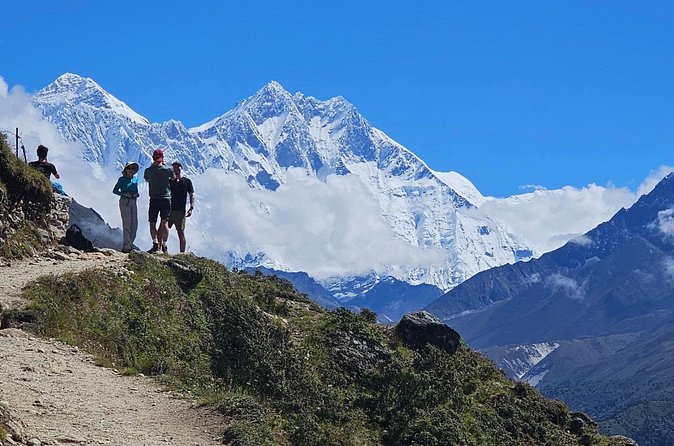
You begin with a short visit to Tengboche and its monasteries, then continue toward Dingboche. The route provides more mountain views, with white peaks forming the backdrop as the valley opens out.
Dingboche is an important point in the trek because the air is thinner and the route becomes more exposed. The listed walking time is about three hours, but altitude can make a moderate distance feel serious. Take the guide’s pace, drink regularly, and pay attention to how you feel.
This is one of the places where the guide’s role matters most. Buddhi, named on recent departures, has been singled out for care, support, and positive encouragement. That does not guarantee who will lead your group, so confirm your guide before setting out.
Day 7: A second acclimatization day near Dingboche
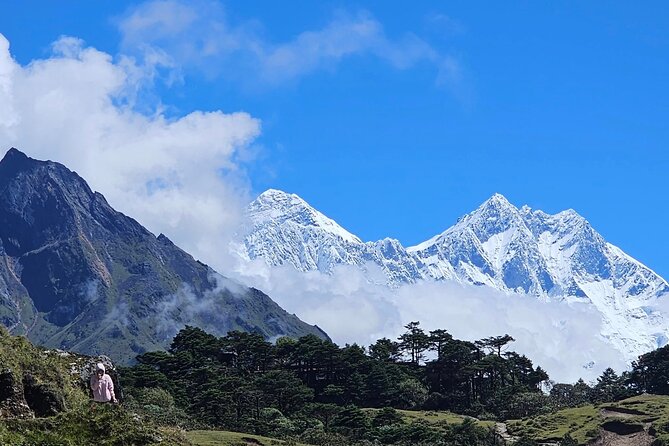
The second acclimatization day includes a short hike toward Chhukung through the Imja Khola valley. From the valley, you get views toward Lhotse and the surrounding mountains.
This day is a smart part of the schedule. You gain height during the walk, then return to Dingboche to sleep at the same elevation. That pattern is easier on your body than climbing higher every day without a pause.
Do not treat the hike as a casual sightseeing break. At this height, even a three-hour outing can leave you tired. The reward is a closer look at the high valley and a better chance to feel ready for Lobuche and Gorak Shep.
Day 8: Along the Khumbu Glacier
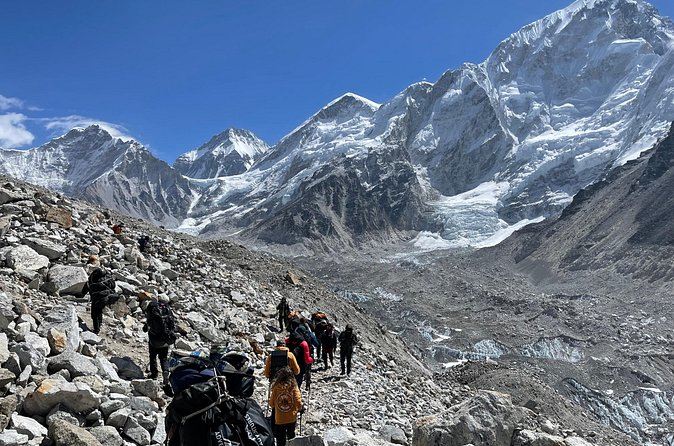
The route follows the lateral moraine of the Khumbu Glacier and passes stone memorials honoring climbers who died on nearby summits. This is a more serious section of the trek, both physically and emotionally.
The glacier zone has a stark, rough character. You are walking among rock, ice, and huge peaks rather than through the greener lower valleys. The memorials add a quiet reminder that the Everest region is not simply a postcard setting. The mountain demands respect.
The itinerary lists about two hours for the named Khumbu Glacier stop, followed by a climb toward Lobuche. Actual effort depends on the pace and trail conditions. Keep your daypack light and save energy for the final approach to Gorak Shep.
Day 9: Gorak Shep and Everest Base Camp
After breakfast, you walk to Gorak Shep, the last settlement before the base camp section. From there, the trail continues toward Everest Base Camp, with views of high peaks and the upper reaches of the Everest region.
Reaching base camp is the emotional center of the trip. The route takes you beside the Khumbu Glacier and into the area used by climbers preparing for Everest. You do not climb Mount Everest, and the famous summit is not always the most dramatic feature from base camp itself. The achievement is reaching this remote point under your own power.
The listed stop time at Everest Camp is only a few minutes, which should not be read as the full day’s effort. The walking time, altitude, terrain, photographs, and return to Gorak Shep make this a major day. You need to be comfortable walking for several hours at high altitude.
Day 10: The early climb to Kala Patthar
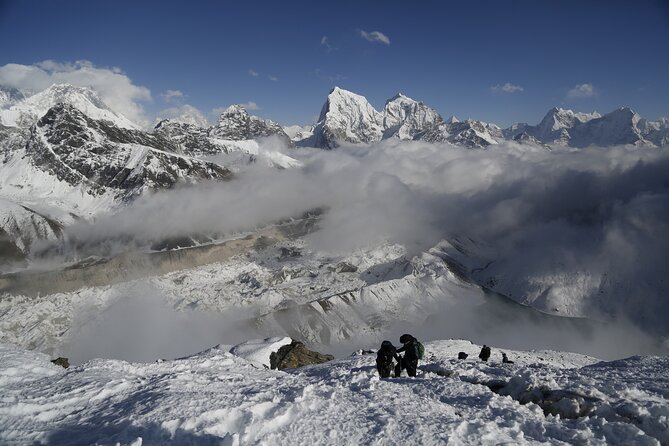
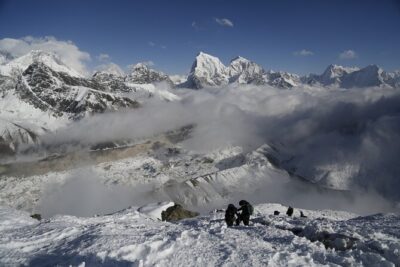
You start early for Kala Patthar, the best viewpoint in this itinerary. The climb takes several hours, and the reward is a broad view of Everest, Nuptse, Lhotse, and the surrounding white summits.
Sunrise is the reason for the early start. Light moves across the snow and can change the whole appearance of the peaks within minutes. Bring warm layers, protect your hands, and keep your camera or phone battery sheltered from the cold.
The day also includes time around Gorak Shep. This is the highest and most demanding part of the trek, so do not judge yourself harshly if the climb feels slow. The aim is to reach the viewpoint safely, not to race up it.
Day 11: A long descent through Pheriche and Pangboche
The return route passes through Pheriche, Orsho, and Pangboche, with the itinerary allowing about seven hours of walking. Going downhill is usually easier on your breathing, but it can be hard on knees and feet after the previous high-altitude days.
Pangboche offers a cultural stop at one of the area’s oldest monasteries. The itinerary also mentions a traditional story connected with the monastery and the yeti, including claimed scalp and bones. Treat that as local folklore, not established fact, but it adds color to the stop.
This is a good day to appreciate how the route changes as you lose height. The air should feel easier, and the villages take on a different rhythm than the stark upper valley. It is still a long day, so sturdy footwear and careful downhill pacing matter.
Day 12: Returning to Lukla
The route continues from Namche back toward Lukla, with about three hours listed for the day and free time in the Lukla valley after arrival. You spend the night at a guesthouse.
The short final walking day gives you room to recover and prepare for the flight back to Kathmandu. It can also be a useful chance to check that you have not left anything behind in your trekking bag or guesthouse room.
The itinerary’s timing may vary in practice, especially if earlier weather affects the flight schedule. Keep your attitude flexible. Lukla flights are one of the parts of this trip least suited to a rigid timetable.
Day 13: Back to Kathmandu and a city stop
You fly from Lukla to Kathmandu, then have time to explore the city. Kathmandu Durbar Square is listed as the main stop, with about two hours for a visit.
This provides a useful contrast to the trek. After days of villages, glaciers, and mountain paths, the square brings you back to Nepal’s urban and cultural side. The activity listing also refers to panoramic views around Kathmandu Valley, though the exact sightseeing plan may depend on your arrival time.
Your hotel in Kathmandu is not included, so arrange it before the trek or ask the company what options are available. The included airport transfer helps, but city accommodation remains your responsibility.
Day 14: Airport transfer and departure
After a final night in Kathmandu, you transfer to Tribhuvan International Airport. The plan calls for arriving three hours before your flight, followed by a small farewell program organized by Nepal High Trek and Expedition.
This is a tidy ending to a tightly scheduled trip. Your airport drop-off is included, but you should still leave room for traffic and airport procedures. The 14-day plan has little spare time, so avoid scheduling an important same-day connection unless you are comfortable with the risk.
The people and support behind the trek
The strongest theme in the available trip feedback is guide support. Buddhi is repeatedly praised for encouragement, care, and a calm approach during difficult stretches. Pawan is also named as a lead guide on an Everest Base Camp trip that used the Gokyo Lakes and Cho La route, although that is a different route from this standard itinerary.
That distinction matters. You should not assume the Gokyo and Cho La crossing is included here. This package follows the classic Lukla, Namche, Tengboche, Dingboche, Gorak Shep, and Kala Patthar pattern.
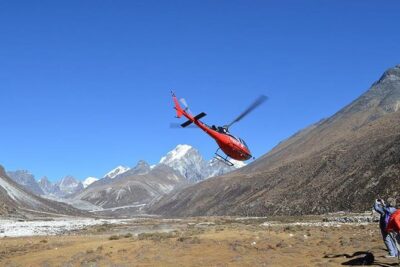
The company provides a government-licensed mountain guide from Kathmandu and a medical kit. An emergency helicopter arrangement is also listed, but your travel insurance company must pay for the rescue. Buy insurance that specifically covers high-altitude trekking and helicopter evacuation before you go.
Who should book this Everest trek?
I would choose this trip if you want the classic Everest Base Camp route with the main logistics bundled together. It suits people who can handle sustained walking, cold conditions, basic lodging, and a demanding high-altitude schedule.
It is less suitable if you want hotel comfort, private bathrooms, a relaxed pace, or guaranteed flight times. The itinerary is active from start to finish, and the high point near Kala Patthar requires strong physical fitness.
The private-tour format is useful if you want only your own group participating. It may also make it easier to discuss pace, rest, and practical needs with the guide. Still, ask how large your group will be, since private does not always mean solo.
Free cancellation is available up to 24 hours before the experience start time. If poor weather cancels the trip, you are offered another date or a full refund. Changes made within 24 hours are not accepted.
Should you book it?
Book this trek if reaching Everest Base Camp is your main goal and you value having flights, permits, meals, gear, transfers, and a licensed guide arranged in one package. The two acclimatization days, Kala Patthar climb, and strong guide support make the plan sensible for a first Everest Base Camp attempt.
Before booking, confirm the assigned guide, Kathmandu hotel arrangements, porter pricing, baggage limits, insurance requirements, and the plan for flight delays. If you accept the physical challenge and budget for the extras, this is a well-supported way to experience the Everest region without arranging every detail yourself.
FAQ
How long is the Everest Base Camp Trek?
The experience lasts approximately 14 days, including arrival and departure days in Kathmandu, flights to and from Lukla, the trek, and the return to the international airport.
What is included in the price?
The package includes both Kathmandu to Lukla flights, 11 nights of trekking accommodation, meals listed as breakfasts, lunches, and dinners, a licensed mountain guide, permits and entrance fees, a sleeping bag, down jacket, duffel bag, medical kit, three cups of hot tea during the trek, and airport pickup and drop-off.
Is a hotel in Kathmandu included?
No. Hotel accommodation in Kathmandu is not included in the tour price.
Do I need travel and rescue insurance?
Yes. Travel and rescue insurance is not included. Emergency helicopter service can be arranged, but the cost is paid by your travel insurance company.
Is porter service included?
No. Porter cost is listed separately, so you need to budget for it if you want porter support.
What fitness level is required?
The experience requires strong physical fitness. It includes walking through high-altitude terrain for multiple days, with a long day listed at about seven hours and an early climb to Kala Patthar.
Can I cancel for a full refund?
You can cancel at least 24 hours before the experience start time for a full refund. If poor weather causes the experience to be canceled, you are offered a different date or a full refund.
Recently added around Kathmandu
- Kathmandu : Swambhunath & Durbar Square Guided Half Day Tour★ 3.3 · 3 reviews
- Private Day Tour in Kathmandu Valley Rim with Bhaktapur Sightseeing★ 5.0 · 3 reviews
- Private 3-Hour Nagarkot Sunset Tour from Kathmandu★ 3.5 · 3 reviews
- From Kathmandu / Pokhara / Chitwan: River Rafting – 1 Day★ 4.6 · 3 reviews
- Nepali Cooking training & Cultural Homestay Experience★ 5.0 · 3 reviews
- From Kathmandu: Everest Base Camp Landing Helicopter Tour★ 5.0 · 3 reviews
- 4 UNESSCO World heritage sites of Kathmandu-private tour★ 5.0 · 3 reviews
- From Kathmandu Budget: 15 Day Everest Base Camp Trek★ 5.0 · 3 reviews
Everest Base Camp Treks, compared.
Everest Base Camp Helicopter Tour landing at Everest View Hotel
Read our review →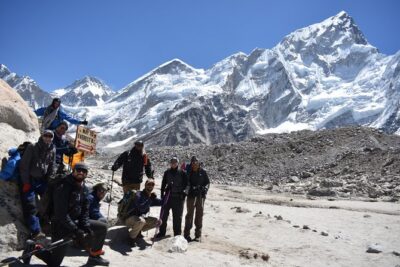
Everest Base Camp Helicopter Tour landing at Hotel Everest View
Read our review →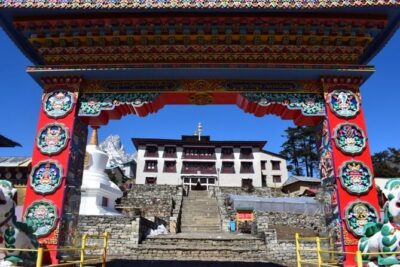
Browse the lists this tour appears in