
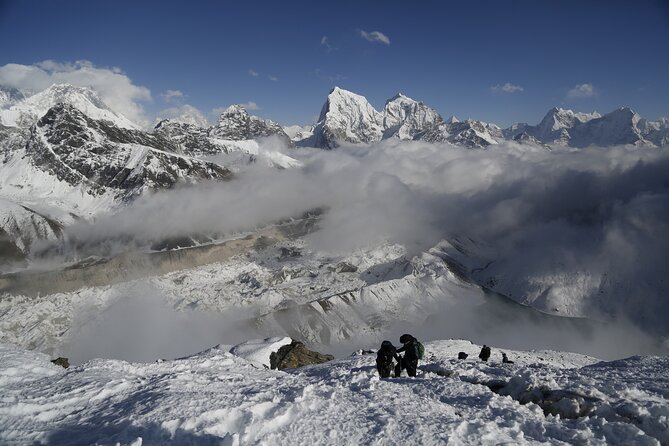
Reviewed · EVEREST BASE CAMP TREKS
Everest Base Camp Trek
Everest Base Camp is less about reaching a famous sign than earning your way through the Khumbu Valley. This 14-day trek takes you from Kathmandu to Lukla, then through Sherpa villages, Buddhist monasteries, high mountain passes, and thin air before reaching Base Camp at 5,364 meters.
I like the built-in acclimatization days at Namche Bazaar and Dingboche, and I like that porters carry the main luggage while you walk with a lighter day pack. Guides such as Pradip, also called Master Zi, and Laxman are praised for their care, local knowledge, humor, and ability to keep groups moving safely. The catch is simple: this is a serious high-altitude trek, not a scenic stroll, and Lukla flights can be delayed or canceled.
In This Review
- Key points to know before booking
- What the $1,500 Everest trek really includes
- Day 1: Kathmandu arrival and a soft landing
- Day 2: Lukla to Phakding
- Day 3: The long walk to Namche Bazaar
- Day 4: Acclimatization in Namche Bazaar
- Day 5: Namche to Tengboche
- Day 6: Tengboche to Dingboche
- Day 7: Dingboche acclimatization and the Chhukhung path
- Day 8: Dingboche to Lobuche
- Day 9: Gorak Shep and Everest Base Camp
- Day 10: Kala Patthar and the descent to Pheriche
- Days 11 and 12: Back through Namche to Lukla
- Days 13 and 14: Return to Kathmandu and departure
- Guides, porters, and group size
- What to pack and what costs extra
- Who should book this trek?
- Should you book the Everest Base Camp Trek?
- FAQ
- How long does the Everest Base Camp Trek take?
- What is the price per person?
- What is the highest point on the itinerary?
- Are flights between Kathmandu and Lukla included?
- Are meals included?
- Is accommodation included?
- Do porters carry the main luggage?
- What happens if a Lukla flight is canceled?
Key points to know before booking
- The highest walk is Kala Patthar at 5,545 meters, giving you a stronger Everest view than Base Camp itself.
- Two acclimatization days are included, one in Namche Bazaar and one in Dingboche.
- Tea-house lodging keeps the trip practical, but rooms and facilities become basic in the high villages.
- A porter carries luggage for every two people, leaving you with a day pack for water, sunscreen, clothing, and a camera.
- The $1,500 price covers major trek costs, including domestic flights, meals on trek, guides, porters, lodging, transfers, and TIMS fees.
- Lukla flight disruption is the main logistical risk, and a helicopter can cost at least $500 per person if you choose that option.
What the $1,500 Everest trek really includes
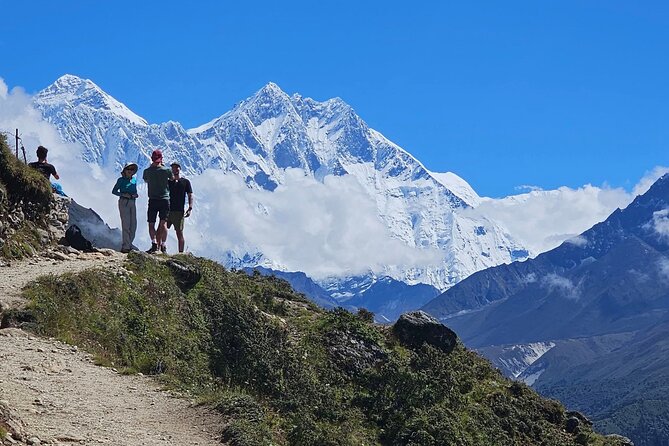
At $1,500 per person, this trek is priced as a guided package rather than a bare-bones route. Your fee covers airport pickup and drop-off, two nights in a standard three-star hotel in Kathmandu, tea-house lodging during the walk, flights between Kathmandu and Lukla, guides, porters, guide and porter expenses, TIMS card fees, a first-aid kit, taxes, service charges, and a duffle bag if needed.
Meals are also part of the value. The package lists 14 breakfasts, 11 lunches, and 11 dinners. Breakfast and dinner are taken at the lodge where you sleep, while your guide chooses a lunch stop along the trail. Drinks are not included, and you pay separately for alcoholic beverages, soft drinks, snacks, bottled or boiled water, showers, and battery charging.
I consider the price reasonable for a supported Everest Base Camp itinerary, especially because domestic flights and porter service are included. You are not simply paying for a room and a guide. You are paying for a local team, transport in a remote region, meal planning, luggage support, and help if the schedule goes wrong.
You should still budget extra money. Kathmandu meals are not included, and the operator estimates about $12 to $15 per day for hot drinks, snacks, showers, and similar expenses on the trek if you do not drink alcohol or shop. Tips are not compulsory, but the suggested amount is 10 to 15 percent of the total trek cost. Travel insurance is also your responsibility.
More ways to trek to Everest Base Camp:
- Everest Base Camp Trek – 14 Days
★ 5.0 · 1,499 reviews - Everest Base Camp Helicopter Tour landing at Everest View Hotel
★ 5.0 · 668 reviews - Everest Base Camp Trekking
★ 5.0 · 485 reviews
Day 1: Kathmandu arrival and a soft landing
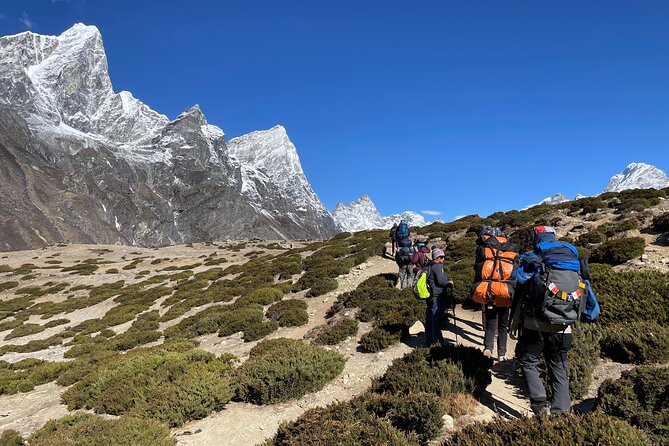
Your trip begins at Tribhuvan International Airport, where a representative meets you after customs and transfers you to the hotel. The airport transfer takes about an hour.
This first night matters because the next morning begins early. You should pass your international flight details to the operator so the meeting service works smoothly. If you arrange your own Kathmandu hotel, provide that address instead.
The Kathmandu hotel is described as a standard three-star property with attached bathrooms, air conditioning, and hot and cold showers. You have another Kathmandu night after the trek, which is useful if the return flight from Lukla runs on time and you want a shower, a proper meal, and a bed with fewer surprises.
Day 2: Lukla to Phakding
The early flight from Kathmandu to Lukla, at 2,886 meters, is your first major transition. After landing, you begin walking toward Phakding at 2,640 meters. The trek takes about four hours.
This is a sensible opening day. You are already above Kathmandu, but the walking distance is modest. The trail introduces you to the pace of the trip without sending you straight into a long uphill haul.
Your main luggage goes with the porters. For your own pack, carry water, sunscreen, a camera, a spare jacket, and items you may need during the day. Domestic flights allow 15 kilograms including your hand luggage, and excess weight costs extra. Pack carefully before leaving Kathmandu.
Day 3: The long walk to Namche Bazaar
From Phakding, you walk for about six hours to Namche Bazaar at 3,440 meters. This is the first demanding day, with the route gaining height and leading you into the main Khumbu trekking corridor.
Namche is not just an overnight stop. It is the center of the Sherpa community in the area, with lodges and shops serving people heading toward Everest and other high routes. After the quieter start at Phakding, Namche feels like a proper mountain town.
I like the fact that the schedule does not rush onward after arrival. At this altitude, patience is part of the route.
More treks starting in Kathmandu:
- Nagarkot Sunrise View and Day Hiking from Kathmandu
★ 5.0 · 471 reviews - Annapurna Circuit Trek with Tilicho Lake
★ 5.0 · 368 reviews - Everest Base Camp Trekking – 13 Day
★ 5.0 · 365 reviews - Everest Base Camp Trek -14 Days
★ 5.0 · 321 reviews
Day 4: Acclimatization in Namche Bazaar
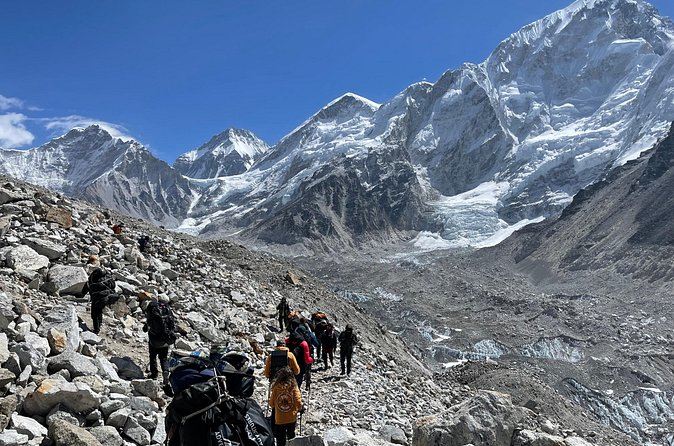
You spend a full day in Namche for acclimatization. The planned activity lasts about six hours, but the purpose is not to cover major distance. It is to give your body time to adjust before you climb higher.
This is one of the strongest parts of the schedule. High altitude affects people differently, and adding a rest day is far wiser than trying to force the entire route into fewer walking days. Use the day to follow your guide’s instructions, drink regularly, and keep your pace easy.
The itinerary labels this stop with an Irish Pub entry, but the useful detail is the Namche acclimatization day itself. Do not mistake a named stop for the main purpose of the day.
Day 5: Namche to Tengboche
The six-hour walk from Namche to Tengboche, also written as Tyangboche, reaches 3,867 meters. The village is known for its monastery and for views of the high peaks around the Khumbu region.
Tengboche brings a change in mood. The monastery gives the route a spiritual side, and the setting helps explain why this trek is more than a long mountain hike. You are passing through communities shaped by Buddhism, trade, mountaineering, and life at high altitude.
Lodging remains in local tea houses. These are clean and comfortable according to the supplied accommodation details, but you should expect basic conditions, especially as the route climbs. Twin-share rooms are standard. A single supplement is available for $200 on request.
Day 6: Tengboche to Dingboche
The trail continues to Dingboche at 4,260 meters, with around six hours of walking. At this point, the altitude becomes a constant part of the experience. A distance that might feel easy at home can require more stops and a slower rhythm here.
Dingboche is an important staging point before the highest section. The village sits in a broad high valley, and the stop gives you time to prepare for Lobuche, Gorak Shep, and Base Camp.
Your guide’s role becomes especially valuable now. Pradip is repeatedly praised for his calm manner, mountain experience, wildlife spotting, and ability to make the difficult days feel manageable. Laxman is also named as an experienced guide. The operator says groups can be as large as 15 people, so ask how many people are in your specific group and who will lead it.
Day 7: Dingboche acclimatization and the Chhukhung path
The second acclimatization day is spent at Dingboche. The schedule includes a walk along the Chhukhung path before returning to Dingboche, with about six hours of activity.
This is another smart pause. You are now at 4,260 meters, and the next stages climb much higher. The point is to move a little, not to exhaust yourself. I would treat this as a day to assess how your body is responding and to tell the guide about headaches, unusual tiredness, nausea, or other concerns.
The inclusion of two acclimatization days makes the 14-day schedule more sensible than a compressed trip. It does not remove altitude risk, but it gives you more room to adjust.
Day 8: Dingboche to Lobuche
You walk from Dingboche to Lobuche at 4,930 meters, taking about six hours. Lunch is planned at Dugla, at 4,595 meters, before the trail continues upward.
This is one of the hardest days because the air is thin and the surroundings become more exposed and rocky. The route is no longer a gentle village-to-village walk. You are approaching the high-altitude section where simple tasks take longer.
Lobuche is mainly a practical overnight stop. Expect tea-house lodging, limited services, and a cold night compared with Kathmandu. Electricity is available in some villages, and some places use solar power, but charging is not guaranteed. Bring spare batteries and expect to pay for charging when it is available.
Day 9: Gorak Shep and Everest Base Camp
The route from Lobuche to Everest Base Camp takes about six hours and passes through Gorak Shep at 5,140 meters. The trail is rocky and demanding, but this is the day most people picture when they think of the trek.
Base Camp sits at 5,364 meters. You reach the foothill area used by Everest expeditions, where the stories of climbing, sacrifice, hardship, and perseverance become more immediate. The experience is not a summit attempt, and you should not expect to climb Everest itself. You are walking to the expedition base and seeing the mountain environment from below.
Gorak Shep is a basic high-altitude stop, and the combination of cold, limited facilities, and thin air can make this night uncomfortable. That is part of the bargain for reaching Base Camp. Keep the evening quiet, follow your guide’s advice, and save energy for the next morning.
Day 10: Kala Patthar and the descent to Pheriche
You rise early for the climb to Kala Patthar at 5,545 meters, the highest point on this itinerary. Afterward, you descend to Pheriche at 4,243 meters. The full day is listed at about six hours.
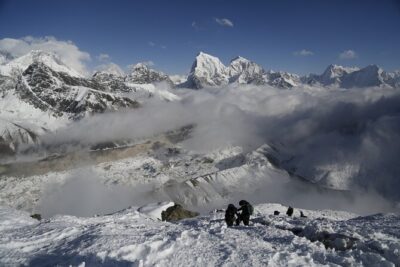
Kala Patthar is the photographic high point. Base Camp gives you the destination, but Kala Patthar provides the broad mountain view, including the Everest range. The early start means cold conditions, but it also gives you the best chance of clear views according to the normal purpose of this viewpoint.
The descent to Pheriche is welcome after the high point. You lose altitude, which can make the evening feel easier, but your legs will have worked hard. This is a day to keep your expectations realistic. Reaching the top does not mean the trek is finished.
Days 11 and 12: Back through Namche to Lukla
The schedule takes you from Pheriche back toward Namche Bazaar, with about six hours of walking. The day description also mentions Tengboche, so the practical route is a descent through the familiar monastery area before continuing toward Namche.
Day 12 continues from Namche to Lukla and takes about six hours. You return to the tea-house rhythm, but the direction feels different. You are no longer climbing toward a goal, and the lower altitude should help your breathing even though the trail still includes plenty of uneven ground.
At Lukla, you refresh and rest before the return flight. Keep your final day flexible. Lukla weather can disrupt the flight schedule, and the operator says canceled flights are moved to the following day subject to availability. A group may choose a helicopter, with a stated minimum cost of $500 per person depending on group size. That cost is yours, which is why insurance covering flight cancellation and at least $500 per day is strongly advised.
Days 13 and 14: Return to Kathmandu and departure
You take an early flight from Lukla to Kathmandu on Day 13. A representative meets you at Tribhuvan International Airport and transfers you to the hotel.
The extra night in Kathmandu gives the schedule a useful buffer, assuming the flight arrives as planned. It also prevents the trek from ending at the airport door. You have time to rest and handle personal expenses before departure.
On Day 14, the operator transfers you to Tribhuvan International Airport for your international flight. The airport transfer takes about an hour.
Guides, porters, and group size
The human support is one of the package’s strongest features. One porter is provided for every two people, and the package covers the porter’s salary, food, drinks, accommodation, transportation, and insurance. You carry only your day pack, which makes the long uphill sections more manageable.
Pradip receives especially strong praise for his friendly personality, mountain experience, wildlife spotting, and ability to explain the area. He is also called Master Zi in one account. Another account names Laxman and describes a guide with more than 22 years of mountain experience. Since guide assignments can vary, confirm your guide’s name and experience before departure.
The maximum group size is 15. That is small enough for organized support, but larger than a private trek. Ask about the exact group size, porter load limit, and how medical or pace concerns are handled.
What to pack and what costs extra
Your main luggage should be a trek bag for the porters, while anything not needed on the route can remain in a small lockable bag at the Kathmandu hotel’s locker room or safe deposit box. The operator says this storage is free.
Bring a practical day pack with:
- Water bottle and purification tablets
- Sunscreen
- Spare jacket
- Camera and spare batteries
- Basic personal items needed during the day
Normal water is available free in some places, and you can use purification tablets. Bottled and boiled water are also sold along the route. Alcoholic and nonalcoholic drinks are not included.
You may also pay for hot showers and battery charging in some villages. Power can be limited, especially at altitude, so do not rely on charging your phone or camera every night.
Who should book this trek?
I would recommend this trip to you if you want a structured Everest Base Camp experience with local guides, porters, meals, and tea-house lodging already arranged. It suits someone who values support and cultural contact but does not want a luxury expedition.
You need a strong level of physical fitness. The itinerary includes repeated six-hour walking days, steep altitude gain, rocky trails, and a maximum elevation of 5,545 meters. You should be comfortable with basic lodging and changing weather.
This is not the right choice if you need guaranteed flight times, private rooms without an added fee, included drinks, or a low-effort mountain holiday. It is also not a good fit if you plan to ignore altitude symptoms or rush the route.
Confirmation is provided at booking, and cancellation is free if you cancel at least 24 hours before the start time. Changes or cancellations inside that window are not accepted for a refund.
Should you book the Everest Base Camp Trek?
Book it if you want the classic Khumbu route with Namche Bazaar, Tengboche Monastery, Dingboche acclimatization, Everest Base Camp, and Kala Patthar in one organized trip. The price is solid for what is included, especially the flights, meals on trek, porters, transfers, and support team.
Before paying, confirm the exact guide, group size, flight disruption plan, insurance requirements, and what happens if weather removes a trekking day. If you accept basic tea houses, demanding altitude, and a little Himalayan uncertainty, Welcome Nepal Treks offers a practical way to reach Everest Base Camp without arranging every moving part yourself.
FAQ
How long does the Everest Base Camp Trek take?
The planned duration is 14 days, including arrival and departure in Kathmandu, the trek between Lukla and Base Camp, acclimatization days, and return travel.
What is the price per person?
The listed price is $1,500 per person.
What is the highest point on the itinerary?
Kala Patthar is the highest point, at 5,545 meters. Everest Base Camp is at 5,364 meters.
Are flights between Kathmandu and Lukla included?
Yes. The package includes flights from Kathmandu to Lukla and back to Kathmandu.
Are meals included?
Breakfast, lunch, and dinner are included during the trek according to the stated meal schedule. Lunch and dinner in Kathmandu are not included. Alcoholic and nonalcoholic drinks are also extra.
Is accommodation included?
Yes. The package includes two nights in a standard three-star hotel in Kathmandu and tea-house or lodge accommodation during the trek. Twin-share rooms are standard.
Do porters carry the main luggage?
Yes. One porter is provided for every two people. You carry a day pack with items such as water, sunscreen, a camera, and a spare jacket.
What happens if a Lukla flight is canceled?
The operator says the flight will be rescheduled for the following day, subject to availability. A helicopter may be arranged for a group, but the cost is your responsibility and is stated as a minimum of $500 per person depending on group size.
Recently added around Kathmandu
- Kathmandu : Swambhunath & Durbar Square Guided Half Day Tour★ 3.3 · 3 reviews
- Private Day Tour in Kathmandu Valley Rim with Bhaktapur Sightseeing★ 5.0 · 3 reviews
- Nepali Cooking training & Cultural Homestay Experience★ 5.0 · 3 reviews
- Private 3-Hour Nagarkot Sunset Tour from Kathmandu★ 3.5 · 3 reviews
- From Kathmandu / Pokhara / Chitwan: River Rafting – 1 Day★ 4.6 · 3 reviews
- From Kathmandu: Everest Base Camp Landing Helicopter Tour★ 5.0 · 3 reviews
- 4 UNESSCO World heritage sites of Kathmandu-private tour★ 5.0 · 3 reviews
- From Kathmandu Budget: 15 Day Everest Base Camp Trek★ 5.0 · 3 reviews
Everest Base Camp Treks, compared.
Everest Base Camp Helicopter Tour landing at Everest View Hotel
Read our review →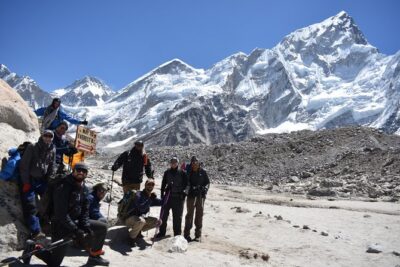
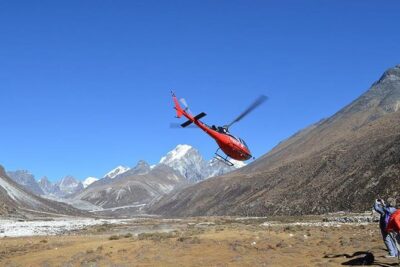
Everest Base Camp Helicopter Tour landing at Hotel Everest View
Read our review →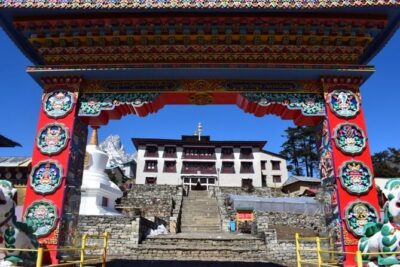
Browse the lists this tour appears in