
Reviewed · EVEREST BASE CAMP TREKS
Everest Base Camp Trek
The payoff comes high above the Khumbu Valley, where the trail reaches Everest Base Camp at 5,364 meters and then climbs Kala Patthar for the region’s finest mountain views. This is a serious trek, not a sightseeing stroll, but the route gives you forests, Buddhist monasteries, suspension bridges, Sherpa villages, glaciers, and the great peaks in a steady sequence.
I like the built-in acclimatization day in Namche Bazaar, and I like that the $2,500 price includes teahouse lodging, meals, guide service, porter support, transport, taxes, and airport transfers. The main concern is the altitude and the tight schedule. You reach very high ground in only a week, and the return flight from Lukla can make the final timing less flexible.
In This Review
- Key points
- Why the 12-day route works
- Day 1: Kathmandu to Lukla, then Phakding
- Day 2: Phakding to Namche Bazaar
- Day 3: Acclimatization in Namche Bazaar
- Day 4: Namche to Tengboche
- Day 5: Tengboche to Dingboche
- Day 6: Dingboche to Lobuche
- Day 7: Lobuche to Gorakshep and Everest Base Camp
- Day 8: Kala Patthar, then Lobuche
- Days 9 and 10: Returning through Tengboche and Namche
- Days 11 and 12: Monjo to Lukla and Kathmandu
- What the $2,500 price covers
- Guides, porters, and the private format
- The main risks to consider
- Who should book this trek
- Should you book it?
- FAQ
- Where does the Everest Base Camp Trek begin?
- How long is the trek?
- How long is the flight between Kathmandu and Lukla?
- What is the highest point on the itinerary?
- Is an acclimatization day included?
- Where do you stay during the trek?
- Are meals included?
- Is a guide included?
- Is porter service included?
- What does the price exclude?
Key points
- Kala Patthar at 5,545 meters: The early climb provides the clearest stated viewpoint for Everest, Nuptse, and the Khumbu Glacier.
- A real high-altitude trek: The route rises from Lukla to Gorakshep at 5,150 meters, with long days and steep sections.
- One acclimatization day in Namche: You can rest, visit the museum, shop, and take short hikes near Everest View Point.
- Culture along the trail: Tengboche Monastery, Buddhist stupas, prayer sites, villages, and old local traditions shape the journey.
- Useful inclusions: Three daily meals, hot soup at high elevations, a guide, one porter for every two trekkers, and private airport transfers are included.
- Private group format: Only your own group takes part, which can make the pace and daily support easier to manage.
Why the 12-day route works
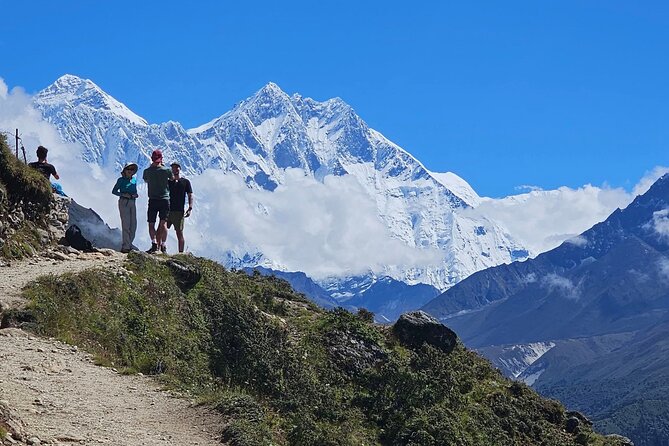
This itinerary follows the classic approach to Everest Base Camp from Kathmandu. You fly to Lukla, walk through Phakding and Namche Bazaar, cross the high Khumbu villages, spend time at Base Camp, climb Kala Patthar, and return by the same broad route.
The route is well arranged in one important way: Namche gets an acclimatization day. That pause matters because the trail rises from 2,650 meters at Phakding to 3,440 meters at Namche in the first two days. You are not simply pushed uphill without a break.
Still, this is a compact version of the trek. The highest sections come quickly, and several days include four to six hours of walking. The schedule uses standard trekking times, but weather, trail conditions, rest stops, and your own pace can affect the day.
The experience is private, so you do not share the activity with a larger organized group. That can be useful if you are traveling as a family or with a small circle of friends. One past account describes guide Ajay taking close care of a parent and daughter from Kathmandu airport through the return transfer, though you should confirm the name of your own assigned guide before booking.
More ways to trek to Everest Base Camp:
- Everest Base Camp Trek – 14 Days
★ 5.0 · 1,499 reviews - Everest Base Camp Helicopter Tour landing at Everest View Hotel
★ 5.0 · 668 reviews - Everest Base Camp Trekking
★ 5.0 · 485 reviews
Day 1: Kathmandu to Lukla, then Phakding
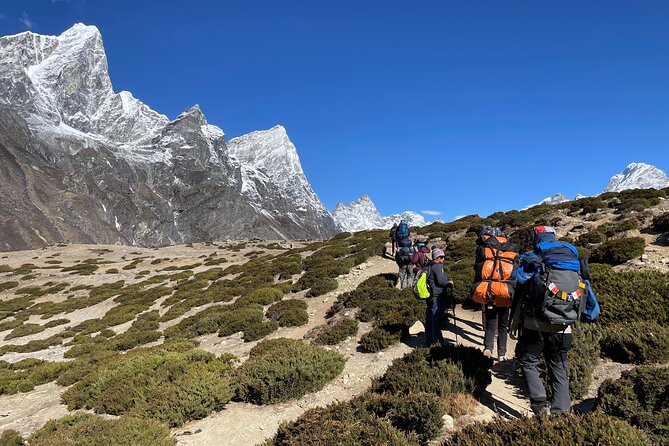
Your day begins early, with a listed meeting time of 5:15 a.m. at Tribhuvan Airport in Kathmandu. The flight to Lukla takes about 25 minutes, and the short journey gives you a first look at the Himalayan region before you begin walking.
Lukla is the practical gateway to the trek. After arrival and some time to look around, you walk for about three hours to Phakding, at 2,650 meters. The trail passes through forests, Buddhist monasteries, and local settlements. If conditions are clear, you might see Kanguru Peak.
This opening day is not especially long, but the early airport start and flight can make it feel full. Phakding is a sensible first overnight stop because it keeps the initial walking day moderate before the climb to Namche.
Day 2: Phakding to Namche Bazaar
The second day brings a longer walk of about six hours. You follow rivers, waterfalls, villages, and suspension bridges toward Namche Bazaar at 3,440 meters.
Lunch is planned around Monje or Jorsalle. The route enters Sagarmatha National Park, where the mountain setting becomes more pronounced and the trail begins to feel like a true high-altitude journey.
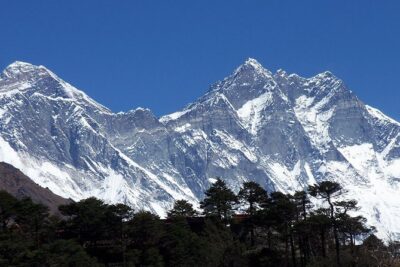
Near Namche, the trail reaches Top Danda, where you may get an early view of Mount Everest. Do not expect the full drama of Kala Patthar yet. The first sight is more of a preview, but it gives the day a fine finish.
Namche is a busy stop by Himalayan trekking standards, with shops, teahouses, and the Sagarmatha National Park museum. The final approach is uphill, so save energy rather than racing to town.
Day 3: Acclimatization in Namche Bazaar
This is a rest day from the main route, but it does not need to mean sitting indoors. The plan allows time to explore Namche and take nearby hikes to places such as Everest View Point, with possible views toward Kusum Kanguru, Taboche Peak, and Khonde Peak.
The museum offers useful context about Sagarmatha National Park and the area’s mountain culture. You can also shop for souvenirs in Namche, though personal purchases are not included in the tour price.
The most important value of this day is physical, not sightseeing. Your body gets more time to adjust before the route climbs above 4,000 meters. Use the day at a calm pace. The information provided calls for a moderate fitness level, but the altitude makes this more demanding than an ordinary six-hour hike at home.
More treks starting in Kathmandu:
- Nagarkot Sunrise View and Day Hiking from Kathmandu
★ 5.0 · 471 reviews - Annapurna Circuit Trek with Tilicho Lake
★ 5.0 · 368 reviews - Everest Base Camp Trekking – 13 Day
★ 5.0 · 365 reviews - Everest Base Camp Trek -14 Days
★ 5.0 · 321 reviews
Day 4: Namche to Tengboche
The trail leaves Namche and crosses rhododendron forest and river country on a roughly five-hour walk to Tengboche, at 3,860 meters.
Tengboche Monastery is the main attraction. You can visit the monastery and see monks and local people following long-held Buddhist rituals and traditions. This stop gives the trek a cultural center, rather than making it only about mountain views.
The route is still physically manageable for many fit trekkers, but you are now close to 4,000 meters. Keep your pace steady and drink water regularly. The night at Tengboche also gives you a chance to enjoy the quiet setting before the trail turns more exposed and alpine.
Day 5: Tengboche to Dingboche
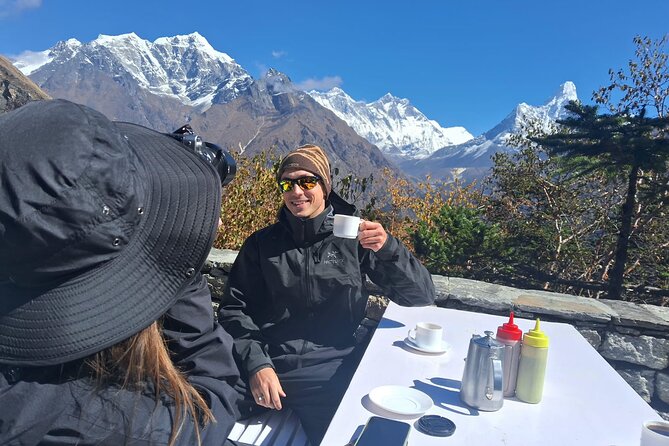
The trek continues for about five hours to Dingboche, at 4,400 meters. Breakfast is planned at Tengboche, lunch around Pangboche or Somare, and dinner in Dingboche.
Pangboche and Somare are useful rest points because the altitude is now a constant part of the experience. The route gradually leaves the lower forest behind, and the views open toward the high peaks.
Dingboche is an important overnight stop because it places you close to the upper Khumbu villages without sending you directly to the highest lodges. The itinerary does not list a separate second acclimatization day here, so you should be honest with yourself about your condition. A moderate fitness level is required, and the increasing altitude can affect people differently.
Day 6: Dingboche to Lobuche
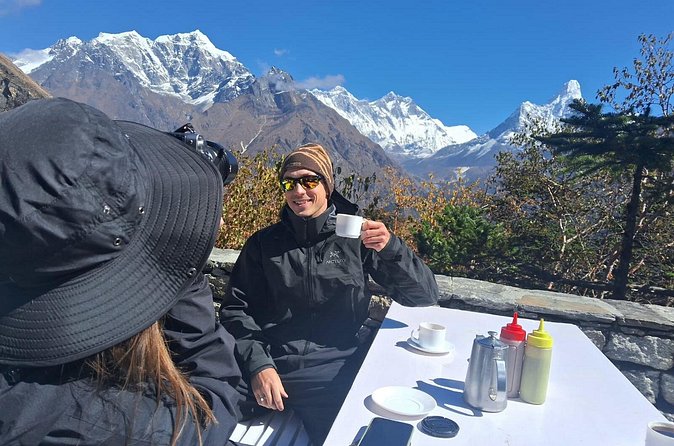
The stated walking time for this day is about five hours, although the shorter summary gives four hours. Plan for the longer estimate.
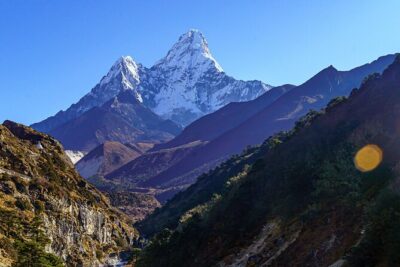
The route reaches Lobuche at 4,910 meters. Along the way, you should have clear views of Nuptse, Island Peak, Lobuche Peak, and Taboche Peak. At this height, the peaks feel close, but the air is thin and the walking pace naturally slows.
This is one of the days when the trek’s challenge becomes plain. The mileage is not extreme, yet every uphill section takes more effort. Your guide’s role matters here, especially in watching the pace and helping the group handle the high terrain.
Day 7: Lobuche to Gorakshep and Everest Base Camp
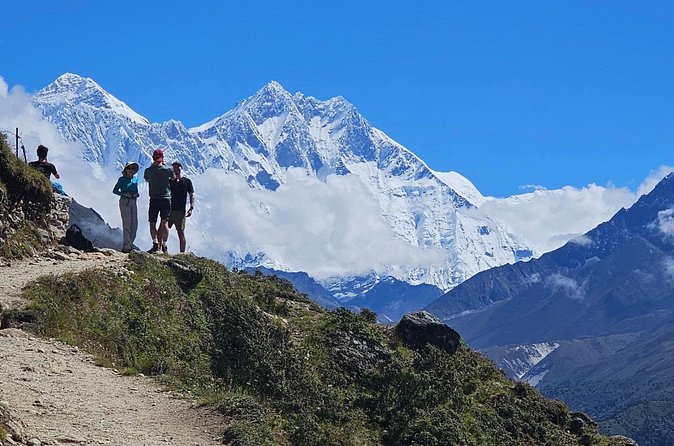
The morning starts with a steep trail toward Gorakshep, at 5,150 meters. The listed walking time is about three and a half hours.
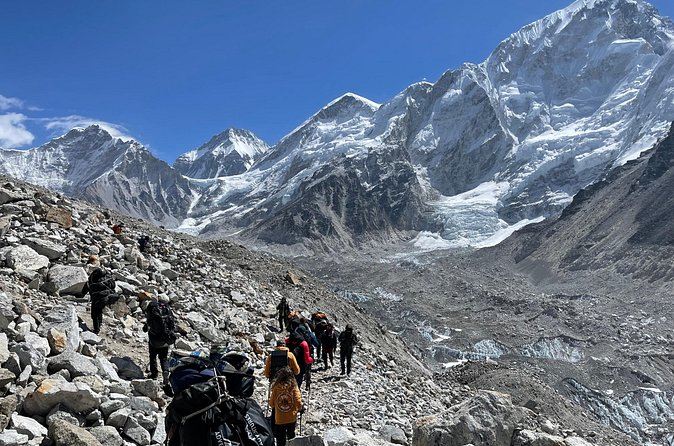
Gorakshep serves as the base for the day’s major goal. After lunch, you continue toward Everest Base Camp at 5,364 meters. The route passes near a small glacier and lake, with the Khumbu Glacier, Kala Patthar, and Everest forming the main visual rewards.
Base Camp is an important destination, but it is not the best place for a broad view of Mount Everest. The next morning’s climb to Kala Patthar is designed for that. At Base Camp, the pleasure comes from reaching the famous point itself and seeing the glacier and surrounding peaks up close.
The return to Gorakshep completes a demanding day. You should expect the altitude to make the walk feel harder than the distance suggests. The plan calls for an overnight stay there before the early viewpoint climb.
Day 8: Kala Patthar, then Lobuche
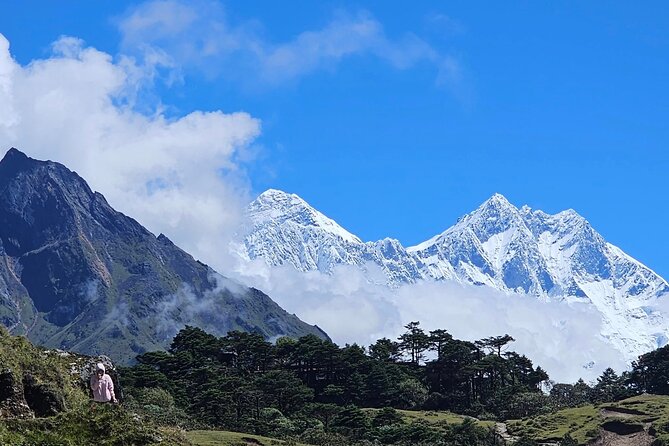
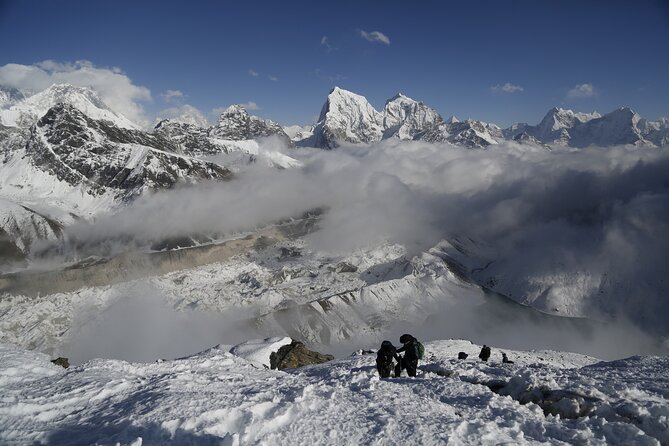
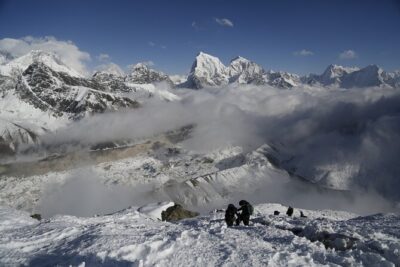
You climb Kala Patthar early, with the ascent taking about three hours. At 5,545 meters, it is the highest point on this itinerary and the stated best viewing platform for Everest.
The early timing is useful because mountain views can be affected by cloud and changing weather. From the viewpoint, you can look toward Everest, Nuptse, and the Khumbu Glacier. The climb is steep enough to demand patience, but it is the visual high point of the route.
After descending to Gorakshep for breakfast, you continue to Lobuche, with about two and a half hours of walking listed for the descent. This is a long day despite the downhill direction. High-altitude descents can be tiring, especially after an early start.
Days 9 and 10: Returning through Tengboche and Namche
Day 9 reverses the route from Lobuche to Tengboche in about five and a half hours. Lunch is planned around Pangboche and Deboche. Monasteries, stupas, bridges, and rivers give the return walk plenty of interest, even though the main goal has already been reached.
The drop in elevation should make breathing easier, but downhill walking can be hard on knees. Trekking poles may be useful, though the tour does not state that they are supplied.
On Day 10, you walk from Tengboche through Namche Bazaar to Monjo in about six hours. The trail passes through rhododendron forest, and lunch is planned in Namche before you continue through Jorsalle.
Monjo gives you a lower overnight stop before Lukla. The day is not a simple short stroll, so keep your energy for the final section after lunch.
Days 11 and 12: Monjo to Lukla and Kathmandu
Day 11 takes about five hours from Monjo to Lukla. You pass Phakding again, cross the Dudh Koshi River by suspension bridge, and walk alongside the river before continuing to Lukla.
The route is described as descending, but the trail still includes rises and uneven sections. Your final night is in Lukla, where you prepare for the return flight.
On Day 12, the flight from Lukla to Kathmandu takes about 25 minutes. A company representative is scheduled to escort you to a hotel by private car after landing, and you can refresh before exploring Thamel. The itinerary also says you will stay overnight in the hotel, so confirm whether that night is included in your package, since extra Kathmandu nights outside the itinerary are listed as an additional cost.
What the $2,500 price covers
At $2,500, this trek is not a budget walk, but the included services add real value. You receive tea house accommodation, three meals each trekking day, hot soup in high places, a professional trekking and sightseeing guide, and porter service arranged at one porter for every two trekkers.
Airport pickup and drop-off are included for both international and domestic flights, using private vehicles. Transportation listed in the itinerary, government and local taxes, guide and porter insurance, a farewell dinner in Kathmandu, a trekking map, a company T-shirt, and a trip completion certificate are also covered.
That package reduces the number of separate costs you need to manage in Nepal. It does not cover your Nepal visa, international airfare, personal rescue and travel insurance, hot showers, battery charging, bar bills, laundry, bottled water, tips, or extra Kathmandu accommodation.
The exclusions matter. High-altitude medical and rescue insurance is your responsibility, and personal expenses can build up during a 12-day trek. Bring a clear spending plan and ask the operator what meals include at each teahouse.
Guides, porters, and the private format
The company provides a professional guide and one porter for every two trekkers. That arrangement lets you carry a lighter day pack, while still keeping some personal items with you.
The activity is private, meaning only your group participates. That is especially useful for families and friends who want to walk together rather than fit into a large fixed group.
Named guides connected with the company include Ajay, who handled airport-to-airport support for one parent and daughter, and Jangbu, who guided a separate 20-day Three Passes Trek. These names show the company uses individual mountain guides, but they do not confirm who will lead this exact Everest Base Camp departure. Ask for the guide’s name, experience, and emergency procedures before paying.
The main risks to consider
The biggest issue is altitude. The itinerary reaches 5,545 meters at Kala Patthar, after rising from Lukla in a little over a week. The experience is marked for people with moderate physical fitness, but fitness alone does not guarantee an easy response to altitude.
The Lukla flights are another practical concern. The flight is short, yet the schedule depends on mountain conditions. If a flight is delayed, the fixed 12-day plan can become difficult to maintain. Keep your international departure plans flexible and confirm how the company handles a missed domestic flight.
The trail also includes steep sections, uneven ground, suspension bridges, long walking days, and cold high places. Hot showers, battery charging, water, laundry, and bar bills cost extra. This is a supported trek, but not a comfort-focused holiday.
Who should book this trek
I would recommend it to you if reaching Everest Base Camp is a major personal goal and you want the basics organized for you. It suits fit walkers who can manage repeated five- to six-hour days and accept simple teahouse accommodation.
It is also a good match for a small private group that wants guide and porter support without joining a large departure. The cultural stops at Tengboche and Namche make it more than a mountain photo trip.
I would hesitate if you want generous rest days, a slow acclimatization plan, luxury lodging, or a schedule with lots of room for flight delays. In that case, ask about a longer itinerary before booking.
Cancellation is free if you cancel at least 24 hours before the local start time. Changes or cancellations inside that window are not accepted for a refund.
Should you book it?
Book this Everest Base Camp Trek if you value a classic route, strong mountain viewpoints, included support, and a private group setup. The best parts are the Namche acclimatization day, Tengboche Monastery, Everest Base Camp, and the early Kala Patthar climb.
Before booking, confirm the assigned guide, the exact Kathmandu hotel arrangements, what happens if the Lukla flight is delayed, and how much personal spending you should plan for. If you understand the altitude and accept the tight pace, the $2,500 package offers a practical way to tackle one of Nepal’s most famous treks.
FAQ
Where does the Everest Base Camp Trek begin?
The trek begins at Tribhuvan Airport in Kathmandu, Nepal. The listed meeting time is 5:15 a.m.
How long is the trek?
The activity lasts approximately 12 days. It includes flights between Kathmandu and Lukla, trekking to Everest Base Camp and Kala Patthar, and the return journey.
How long is the flight between Kathmandu and Lukla?
The flight takes about 25 minutes in each direction.
What is the highest point on the itinerary?
Kala Patthar is the highest point listed, at approximately 5,545 meters. Everest Base Camp is listed at 5,364 meters.
Is an acclimatization day included?
Yes. Day 3 is an acclimatization day in Namche Bazaar, with time for nearby hikes, Everest View Point, the Sagarmatha National Park museum, and shopping.
Where do you stay during the trek?
Accommodation is in teahouses during the trekking portion of the journey.
Are meals included?
Yes. Three meals a day are included during the trek, along with hot soup in the high places.
Is a guide included?
Yes. The package includes a professional guide for trekking and sightseeing.
Is porter service included?
Yes. Porter service is included at a ratio of one porter for every two trekkers.
What does the price exclude?
The $2,500 price excludes the Nepal visa, international flights, your travel and rescue insurance, personal expenses, hot showers, battery charging, bar bills, laundry, water, tips, and extra Kathmandu accommodation outside the itinerary.
Recently added around Kathmandu
- Kathmandu : Swambhunath & Durbar Square Guided Half Day Tour★ 3.3 · 3 reviews
- Private Day Tour in Kathmandu Valley Rim with Bhaktapur Sightseeing★ 5.0 · 3 reviews
- From Kathmandu / Pokhara / Chitwan: River Rafting – 1 Day★ 4.6 · 3 reviews
- Nepali Cooking training & Cultural Homestay Experience★ 5.0 · 3 reviews
- Private 3-Hour Nagarkot Sunset Tour from Kathmandu★ 3.5 · 3 reviews
- From Kathmandu: Everest Base Camp Landing Helicopter Tour★ 5.0 · 3 reviews
- 4 UNESSCO World heritage sites of Kathmandu-private tour★ 5.0 · 3 reviews
- From Kathmandu Budget: 15 Day Everest Base Camp Trek★ 5.0 · 3 reviews
Everest Base Camp Treks, compared.
Everest Base Camp Helicopter Tour landing at Everest View Hotel
Read our review →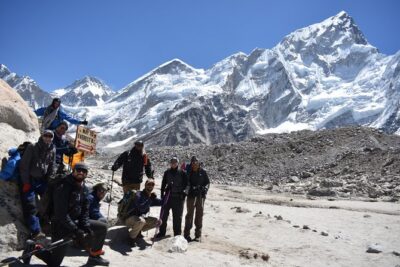
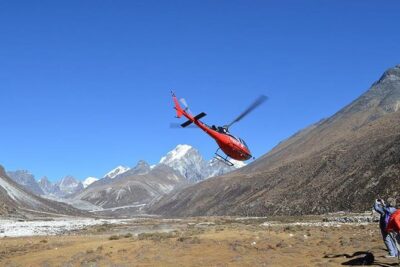
Everest Base Camp Helicopter Tour landing at Hotel Everest View
Read our review →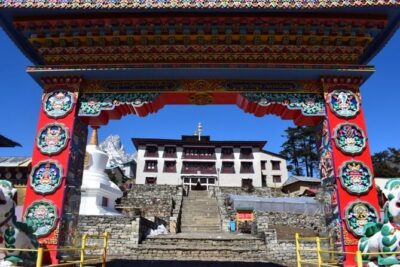
Browse the lists this tour appears in