
Reviewed · EVEREST BASE CAMP TREKS
Everest Base Camp Trek with Helicopter Return from Gorakshep to Lukla
The best part of this 12-day Everest Base Camp trip is the one-way helicopter escape from Gorakshep. You still earn the walk through the Khumbu, crossing prayer-flagged bridges and reaching Base Camp, but you avoid retracing the full route on foot. I especially like the two planned acclimatization days, at Namche Bazaar and Dingboche, and the fact that food, permits, porters, and staff costs are bundled into the price.
The main drawback is the altitude and the demanding schedule. You reach 5,365 meters at Everest Base Camp and climb Kala Patthar to about 5,555 meters, so moderate fitness is not a casual suggestion. The helicopter also depends on good weather, and this is a shared flight rather than a private one.
In This Review
- Key points to know before booking
- What the $3,000 price really covers
- Kathmandu arrival and the practical first day
- Lukla to Phakding, the first taste of the Khumbu
- The bridge crossings and Namche Bazaar
- Tengboche and its hilltop monastery
- Dingboche and the Nangkartshang acclimatization climb
- Lobuche and the memorial stones
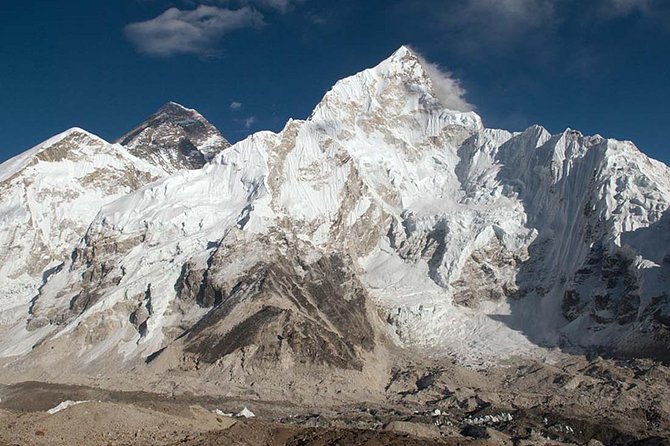
- Everest Base Camp at 5,365 meters
- Kala Patthar, the highest viewpoint on the route
- The helicopter return from Gorakshep to Lukla
- Guides, porters, and day-to-day support
- Food, water, and what you still need
- Who should book this Everest trek
- Should you book it?
- FAQ
- How long is the Everest Base Camp trek with helicopter return?
- What is the price per person?
- Where does the trek begin?
- How long is the helicopter flight?
- Is the helicopter flight private?
- What is the highest point reached?
- Are meals included?
- Is accommodation included?
- What happens if bad weather cancels the experience?
Key points to know before booking
- A 20-minute helicopter flight replaces the long return trek: From Gorakshep, you fly to Lukla instead of walking back through the Khumbu Valley.
- Two acclimatization stops are built in: Namche Bazaar includes an Everest View Point walk, while Dingboche includes a climb to Nangkartshang Peak.
- The highest walking days come at the end: Everest Base Camp reaches 5,365 meters, followed by Kala Patthar at roughly 5,555 meters.
- A local guide and porter team support the trek: The operator provides a licensed English-speaking guide and one porter for every two people.
- The $3,000 price covers many major costs: Lodging, meals during the trek, permits, Kathmandu hotel nights, flights, staff, and the shared helicopter are included.
- Weather can change the transport plan: Poor conditions may cancel the experience, with a different date or full refund offered.
What the $3,000 price really covers
At $3,000 per person, this is not a bare-bones walking holiday. The price includes two nights in a three-star Kathmandu hotel with breakfast, twin-sharing lodge accommodation during the trek, standard meals from breakfast through dinner on trekking days, and a farewell dinner.
It also includes the Kathmandu to Lukla and return airfare, plus the shared helicopter ride from Gorakshep to Lukla. That matters because transport in the Khumbu can make up a large part of a trek budget, and the helicopter leg is the feature that separates this trip from a standard Everest Base Camp route.
You also get Everest National Park and TIMS permits, an Ace the Himalaya duffel bag, trekking map, sun hat, filtered trail water, seasonal fruit, and a first-aid kit with an oximeter. Staff costs, insurance, equipment, medicine, administration, and government taxes are included.
You still need to budget for international airfare, your Nepal visa, meals in Kathmandu, drinks, personal trekking equipment, travel insurance with emergency rescue and evacuation cover, and tips. Alcohol and hot or cold drinks are not included. Tipping is expected, so do not treat the listed price as your total trip budget.
The accommodation arrangement is useful but not identical every night. Lukla, Phakding, and Namche are listed with guesthouses that have attached toilets. Other stops use twin-sharing guesthouses, so comfort and facilities can vary as you gain altitude.
More ways to trek to Everest Base Camp:
- Everest Base Camp Trek – 14 Days
★ 5.0 · 1,499 reviews - Everest Base Camp Helicopter Tour landing at Everest View Hotel
★ 5.0 · 668 reviews - Everest Base Camp Trekking
★ 5.0 · 485 reviews
Kathmandu arrival and the practical first day
Your trip begins with an airport pickup at Tribhuvan International Airport. A private tourist vehicle takes you to the hotel, followed by a pre-trip meeting with the guide.
This first day is more important than it looks. You can meet the guide, check your kit, ask about the walking plan, and sort out any last-minute equipment before heading into the mountains. The start time listed for the experience is 8:00 a.m., but the detailed schedule begins with your arrival day, so confirm the exact pickup and flight arrangements before departure.
The tour requires at least two people to book and allows a maximum group of 14. That is a useful middle ground. You are not signing up for a huge procession, but you also should not expect a private trek unless you arrange one separately.
Lukla to Phakding, the first taste of the Khumbu
The mountain portion begins with an early flight from Kathmandu to Tenzing and Hillary Airport in Lukla. The flight takes about 35 minutes and lands at roughly 2,804 meters.
From Lukla, you walk to Phakding. This first stage gives you a gentle introduction to the route, with village paths and mountain scenery before the harder climbs begin. The short distance on paper should not tempt you to rush. You are beginning the process of gaining altitude, and an easy first day is useful.
Phakding has attached-toilet accommodation listed among the included stays. Meals are covered from this point through the trek, which keeps the daily routine simple: walk, eat, rest, and prepare for the next climb.
The bridge crossings and Namche Bazaar
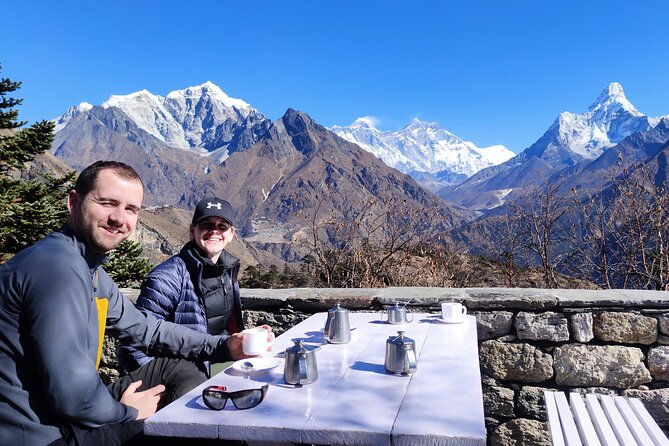
The walk from Phakding to Namche Bazaar takes about six hours. The trail follows the Dudh Koshi and crosses the river several times on suspension bridges decorated with prayer flags.
This is where the route begins to feel properly Himalayan. The bridges are part of the experience, not just a way to get from one side to another, and the river crossings add rhythm to the day. The final approach to Namche includes a significant climb, making this a more serious walking day than the distance alone suggests.
Namche Bazaar is the main acclimatization stop. It is also one of the most useful places to pause because the next stages take you much higher. The itinerary includes a short hike around Namche to an Everest View Point, with mountain views and a sunrise option.
I like this design because you gain height during the day but return to sleep in Namche. That gives you a chance to adjust without pushing straight onward. Take the acclimatization day seriously. It is not wasted time, and it may make the later climb more manageable.
More treks starting in Kathmandu:
- Nagarkot Sunrise View and Day Hiking from Kathmandu
★ 5.0 · 471 reviews - Annapurna Circuit Trek with Tilicho Lake
★ 5.0 · 368 reviews - Everest Base Camp Trekking – 13 Day
★ 5.0 · 365 reviews - Everest Base Camp Trek -14 Days
★ 5.0 · 321 reviews
Tengboche and its hilltop monastery
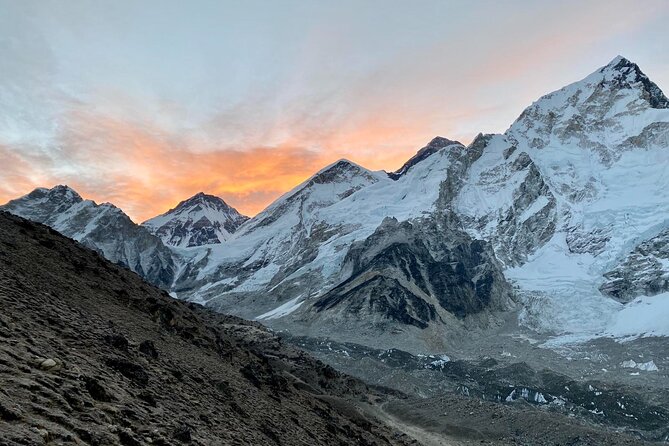
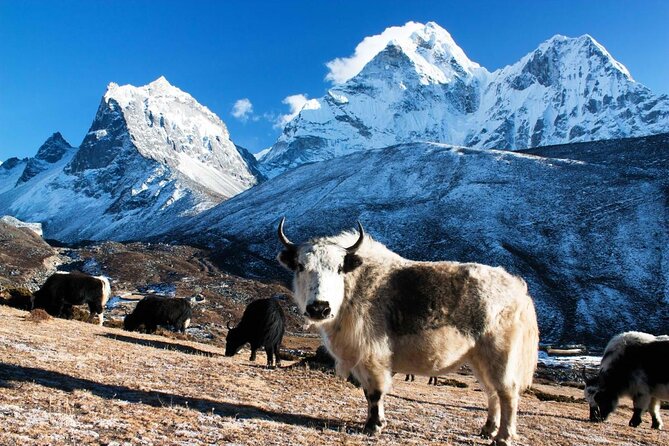
From Namche, the trail follows the Dudh Koshi through mountain scenery toward Tengboche, at about 3,860 meters. The route includes views of the surrounding peaks and follows rushing glacial water.
Tengboche is special for its monastery. The schedule allows time to visit the interior, where you can see religious images and decorations. Even if you are focused on reaching Base Camp, this stop gives the trek a cultural dimension that the trail itself cannot provide.
The day is listed with a long duration, so pace yourself. You are already at a serious altitude, and the climb to Tengboche can feel harder than expected. Your guide is trained in first aid and carries a kit with an oximeter, but you remain responsible for speaking up if you feel unwell.
Dingboche and the Nangkartshang acclimatization climb
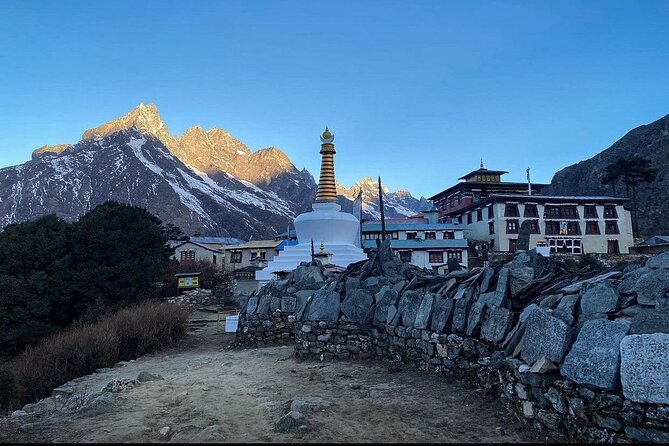
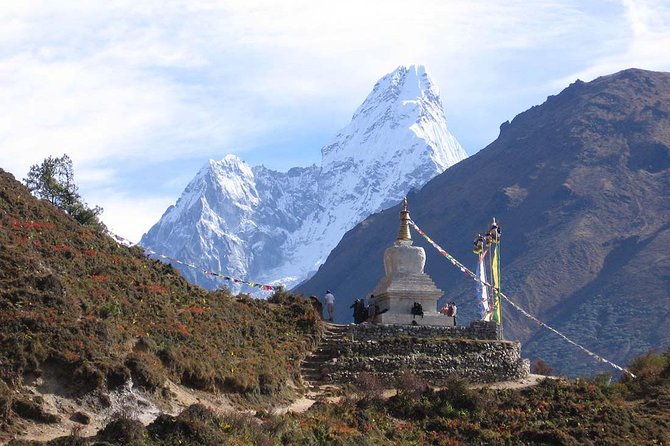
The next stage drops briefly to Debuche, crosses the Imja Khola, and continues through Pangboche. Mani stones line parts of the route, adding a clear spiritual character to the walk.
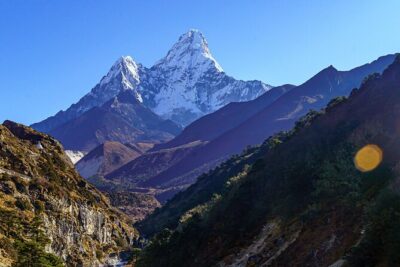
Dingboche is the second major acclimatization stop. The following day, instead of moving toward Base Camp, you climb Nangkartshang Peak above the village. The itinerary describes it as an excellent viewpoint, especially for seeing Ama Dablam and other Himalayan peaks.
This is a smart use of time. You walk high, then return to Dingboche to sleep rather than moving immediately to a higher lodge. The climb is still demanding, and you should expect the thin air to affect your pace. The goal is not speed. The goal is to spend time at altitude and keep your body moving.
Lobuche and the memorial stones
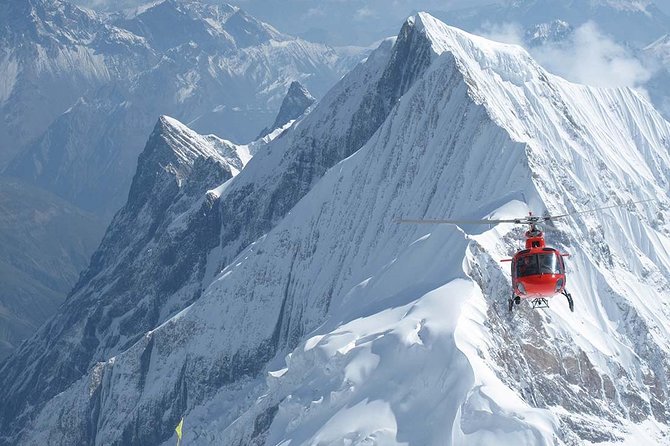
After Dingboche, the trail continues toward Lobuche along the lateral moraine of the Khumbu Glacier. A moraine is a ridge of rock and dirt left by moving ice, so the surface can feel rough and uneven.
The route passes stone memorials dedicated to climbers who died on nearby peaks. This is a quiet, serious part of the walk. Everest is not simply a scenic goal, and these memorials make the cost of high-altitude climbing plain.
Lobuche is one of the higher overnight stops. By now, the mix of long walking days, cold conditions, and thin air can wear you down. The included meals and porter support help, but they do not remove the physical effort. Keep your day measured and follow your guide’s advice about pace and rest.
Everest Base Camp at 5,365 meters
The walk from Lobuche to Everest Base Camp is one of the biggest days of the trek. You follow the Khumbu Glacier and continue over demanding ground to reach Base Camp at about 5,365 meters.
Base Camp is the emotional high point for many people, but it is not a relaxed sightseeing stop. The altitude is extreme, and the route there and back is difficult. The itinerary notes that spring may bring mountaineering activity at Base Camp, though conditions and activity can vary.
You do not need mountaineering equipment for the walk to Base Camp, but you do need proper trekking clothing, footwear, and stamina. The included first-aid kit and oxygen-saturation monitor are reassuring support tools. They are not a substitute for travel insurance or emergency evacuation cover, which you must arrange yourself.
Kala Patthar, the highest viewpoint on the route
The Kala Patthar climb is described as one of the hardest and most rewarding days. The peak reaches roughly 5,555 meters, higher than Base Camp, and the ascent is steep and tiring.
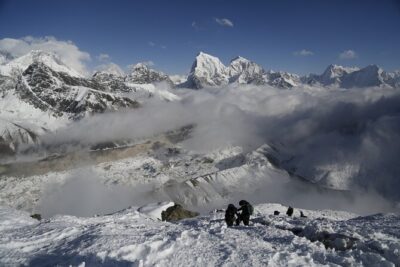
The payoff is the mountain view. Kala Patthar is valued as a viewpoint, giving you a stronger visual connection with Everest and the surrounding peaks than Base Camp alone. It is the sort of morning when a slow pace is wise. The altitude can make every step feel deliberate.
The schedule lists only a short stop duration, but that should not be read as a promise that the climb itself is quick. The walking time depends on the group, weather, and conditions. Your guide may adjust the rhythm to keep the group safe.
The helicopter return from Gorakshep to Lukla
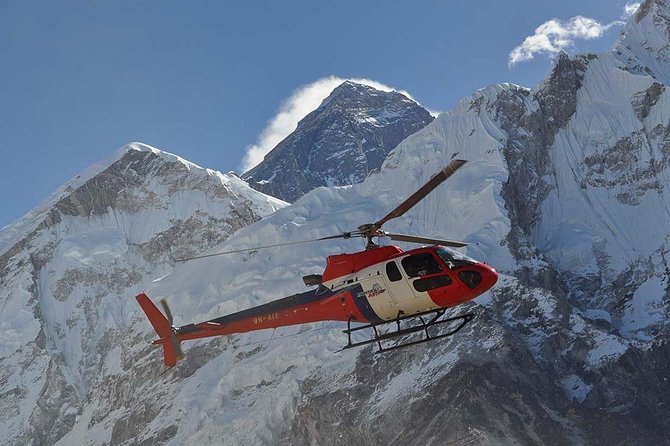
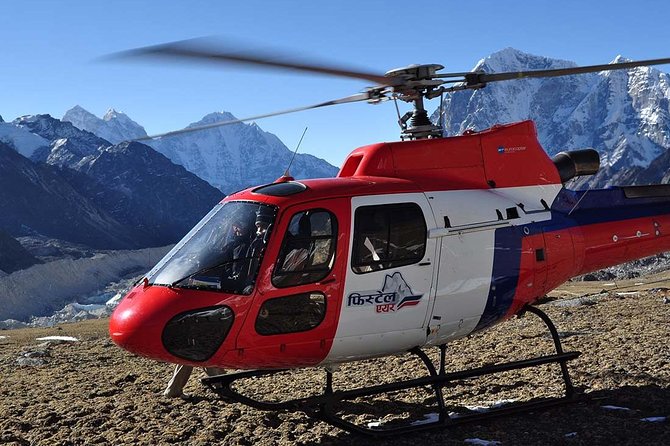
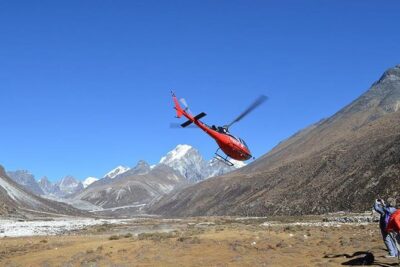
The special feature comes after the high-altitude section. From Gorakshep, you take a shared helicopter flight to Lukla, a scenic ride of about 20 minutes.
This saves several walking days compared with a normal return route. It also changes the feel of the trip. Instead of spending the final stretch retracing familiar paths, you get a dramatic aerial view and return quickly to the airport town.
The word shared matters. You are not booking a private aircraft, and the flight depends on suitable weather. The schedule then includes onward air travel from Lukla back to Kathmandu, although the listed day descriptions present the timing in a slightly compressed way. Confirm the exact sequence of the Gorakshep to Lukla helicopter and the Lukla to Kathmandu flight before you go.
That weather dependence is the main logistical risk. If poor conditions cancel the experience, the stated policy offers a different date or a full refund. Within the trek itself, delays may still affect your plans, so avoid booking a tight international connection immediately after the scheduled return.
Guides, porters, and day-to-day support
The operator provides a local, licensed, English-speaking trekking guide who has first-aid training. One porter is assigned for every two people, and the company covers porter salaries, insurance, equipment, and medicine.
That ratio is valuable on a route where the walking itself is hard enough. You carry a daypack rather than hauling your full luggage, though you still need to pack sensibly and keep your essential items with you.
The named guides and porters vary by departure. Past team members have included guides called Raj, Ram, Madan, Maddy, and Rajendra, with porters including Bishal, Krishna, Probin, Saman, Jit, Sher, Girija, and Pesal. Do not assume you will receive a specific person, but the repeated praise for guide encouragement and porter care points to the importance of the staff structure.
You should ask who your guide is at the Kathmandu briefing, how the group handles altitude symptoms, and how luggage is divided between your daypack and porter load. Clear answers will help you start with fewer worries.
Food, water, and what you still need
Breakfast, lunch, and dinner are included during the trek, along with seasonal fruit. Filtered water is provided on the trail using a Katadyn Pocket Water Filter.
That is a useful cost and convenience benefit. You do not need to depend entirely on buying drinks along the route, though hot and cold drinks are excluded. Bring personal trekking equipment suited to cold, high-altitude conditions, since the package does not include your clothing or gear.
Travel insurance with emergency rescue and evacuation is required for sensible planning. The itinerary reaches above 5,500 meters, so this is not the place to cut corners on insurance.
Who should book this Everest trek
This trip suits you if you want the classic Everest Base Camp walk but do not want to spend the full return journey on foot. It also works well if you value a guided structure, porter support, included meals, and a capped group of 14.
You should be comfortable with long walking days, suspension bridges, steep climbs, and basic mountain accommodation. A moderate fitness level is required, but the altitude remains the bigger challenge than raw distance.
This is not a good match if you want a relaxed holiday, private transport throughout, luxury lodging, or a fixed schedule immune to mountain weather. You also need to accept twin-sharing rooms and a shared helicopter flight.
Should you book it?
I would choose this trip if reaching Everest Base Camp is the main goal and the helicopter return is worth paying for. The two acclimatization days, included staff support, permits, meals, and air transport make the $3,000 cost easier to justify than it first appears.
Before paying, confirm the exact flight sequence, weather arrangements, personal gear list, insurance requirements, and likely guide assignment. If you are fit, prepared for altitude, and happy with shared accommodation, this is a strong way to experience the Khumbu without walking the entire route twice.
FAQ
How long is the Everest Base Camp trek with helicopter return?
The experience lasts approximately 12 days, including arrival and departure arrangements in Kathmandu.
What is the price per person?
The listed price is $3,000 per person.
Where does the trek begin?
The trekking section begins after a scenic flight from Kathmandu to Tenzing and Hillary Airport in Lukla, at about 2,804 meters.
How long is the helicopter flight?
The shared helicopter ride from Gorakshep to Lukla takes about 20 minutes.
Is the helicopter flight private?
No. The included helicopter ride is shared.
What is the highest point reached?
Kala Patthar reaches approximately 5,555 meters. Everest Base Camp is at about 5,365 meters.
Are meals included?
Breakfast, lunch, and dinner are included during the trek. Lunch and dinner in Kathmandu, drinks, and the farewell dinner arrangements specified by the operator should be checked as part of your booking details.
Is accommodation included?
Yes. Two nights in a three-star Kathmandu hotel with breakfast and twin-sharing guesthouse accommodation during the trek are included. Attached toilets are specifically listed for stays in Lukla, Phakding, and Namche.
What happens if bad weather cancels the experience?
The stated policy offers a different date or a full refund if poor weather causes the experience to be canceled. You should still allow flexibility for flight delays and avoid tight onward connections.
More Helicopter Tours in Kathmandu
- Everest Base Camp Helicopter Tour landing at Hotel Everest View
★ 5.0 · 218 reviews - Everest Base Camp helicopter tour with landing
★ 5.0 · 61 reviews - Everest Base Camp Helicopter Tour with Hotel Everest View Landing
★ 5.0 · 52 reviews - Guaranteed Landing at Everest Base Camp Kalapathar by Helicopter
★ 5.0 · 38 reviews
Recently added around Kathmandu
- Kathmandu : Swambhunath & Durbar Square Guided Half Day Tour★ 3.3 · 3 reviews
- Private Day Tour in Kathmandu Valley Rim with Bhaktapur Sightseeing★ 5.0 · 3 reviews
- From Kathmandu / Pokhara / Chitwan: River Rafting – 1 Day★ 4.6 · 3 reviews
- Nepali Cooking training & Cultural Homestay Experience★ 5.0 · 3 reviews
- Private 3-Hour Nagarkot Sunset Tour from Kathmandu★ 3.5 · 3 reviews
- From Kathmandu: Everest Base Camp Landing Helicopter Tour★ 5.0 · 3 reviews
- 4 UNESSCO World heritage sites of Kathmandu-private tour★ 5.0 · 3 reviews
- From Kathmandu Budget: 15 Day Everest Base Camp Trek★ 5.0 · 3 reviews
Everest Base Camp Treks, compared.
Everest Base Camp Helicopter Tour landing at Everest View Hotel
Read our review →
Everest Base Camp Helicopter Tour landing at Hotel Everest View
Read our review →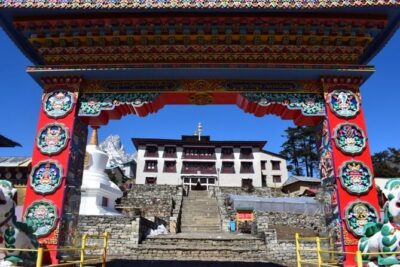
Browse the lists this tour appears in