
Reviewed · EVEREST BASE CAMP TREKS
Everest Base Camp Trekking
Everest Base Camp is not a sightseeing stop you simply pull up to. You walk there, one steady day at a time, through Sherpa villages, high mountain passes, monasteries, and the Khumbu region. This 12-day trek handles the hard planning, including permits, tea-house stays, meals, porters, and flights between Ramechhap and Lukla.
I like the practical setup: one porter for every two trekkers keeps your daily load manageable, and an English-speaking licensed guide stays with you throughout. I also like the chance to see both Everest Base Camp and Kala Patthar, since the two places offer different rewards. The main catch is the physical demand. You need strong fitness, and personal medical or rescue insurance is not included.
In This Review
- Key points to know before booking
- What the $1,350 price really covers
- Starting in Thamel and flying through Ramechhap
- Namche Bazaar, the first major taste of the Khumbu
- Sherpa culture and the trail of famous mountaineers
- Everest views above 8,000 meters
- Reaching Everest Base Camp
- Kala Patthar and the Khumbu Glacier
- Tea houses, food, and the daily routine
- Guides, porters, and the value of support
- Who should book this Everest trek?
- Should you book the Everest Base Camp Trek?
- FAQ
- How long is the Everest Base Camp trek?
- Where does the trek start?
- Are flights to Lukla included?
- Are meals included?
- Is a guide included?
- Are porters included?
- Is personal rescue insurance included?
- What should I know about cancellation?
Key points to know before booking
- Everest Base Camp and Kala Patthar: You reach the famous base camp and also visit the viewpoint known for close views of Everest.
- Sherpa culture: Namche Bazaar, Tengboche Monastery, and village life add meaning beyond the mountain scenery.
- Practical inclusions: Permits, national park fees, tea-house accommodation, meals, porters, guide services, sleeping bags, and down jackets are included upon request.
- Lukla flights: The flight from Ramechhap to Lukla is part of the package and adds a memorable, sometimes demanding part to the trip.
- Small group size: The maximum group is 15 people, which should make communication with the guide easier.
- Named guide experience: Guides including Ram Dhakal and Dillip have been praised for care, communication, flexibility, and keeping the trek safe and organized.
What the $1,350 price really covers
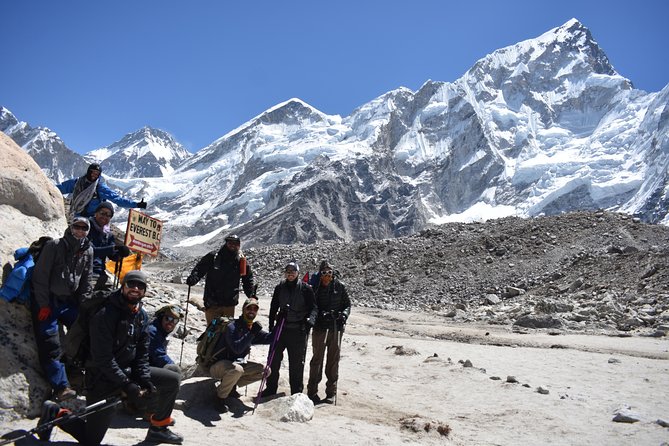
At $1,350 per person, this trek offers a useful bundle for anyone who does not want to arrange every moving part alone. The price includes 11 nights in basic tea houses, all three daily meals during the trek, guide and porter services, domestic flights, permits, national park fees, TIMS fees, and applicable taxes.
That list matters in Nepal. A trek to Everest Base Camp needs more than a route and a plane ticket. You need the right permits, local transport arrangements, accommodation, food, and people who know how the route works. Having those pieces organized lets you put your attention where it belongs: walking well, eating enough, and managing your energy.
The porter arrangement is especially useful. One porter serves two trekkers, so you do not have to carry your full kit each day. You should still pack carefully and bring a daypack with essentials, since the supplied information does not promise that every personal item will be carried at every moment.
The value is less clear if you already have strong Nepal trekking contacts or your own support team. You also need to budget for costs outside the package. Accommodation and meals in Kathmandu are excluded, as are hot showers, hot water, battery charging, Wi-Fi, bottled drinks, laundry, telephone calls, alcoholic drinks, tips, and personal equipment.
Personal insurance is another important gap. The package includes insurance, food, salary, and accommodation for the guide and porters, but your own medical, accidental, and helicopter rescue insurance is excluded. Read that distinction carefully before you book.
More ways to trek to Everest Base Camp:
- Everest Base Camp Trek – 14 Days
★ 5.0 · 1,499 reviews - Everest Base Camp Helicopter Tour landing at Everest View Hotel
★ 5.0 · 668 reviews - Everest Base Camp Trekking
★ 5.0 · 485 reviews
Starting in Thamel and flying through Ramechhap
The trek begins at 6:15 a.m. from Thamel in Kathmandu. Airport pickup and drop-off are included, which removes one small but useful worry at the start and end of the trip.
The flight arrangement is Kathmandu, or more precisely the Ramechhap airport, to Lukla and back. This is worth noticing because the package does not describe the flight as leaving directly from Kathmandu’s main airport. Your operator will organize the domestic flight portion, but you should confirm the exact airport transfer plan and timing before departure.
The Lukla flight is part of the appeal. It takes you quickly from the Kathmandu Valley toward the Everest region and marks the real beginning of the trek. It is also one of the less predictable parts of the schedule, so a little flexibility is wise. The tour includes the airfare, but it does not promise that every flight will operate exactly on the planned clock.
The group limit is 15 people. That is large enough for a social walking group but small enough that you should be able to ask questions and speak with the guide. The guide is with you throughout the trip and explains the cultural and natural importance of the places you pass.
Namche Bazaar, the first major taste of the Khumbu
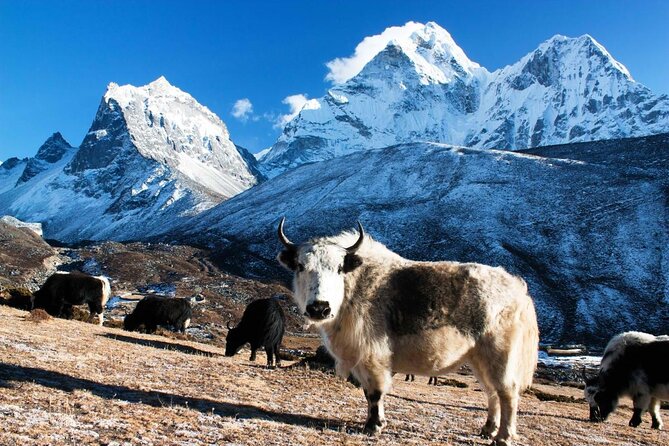
Namche Bazaar is described as the famous gateway to Everest and a high-altitude market town. It is more than a quick rest stop. For many people, it is the first place where the scale of the journey becomes clear.
You can expect a mountain settlement shaped by trekking, trade, and Sherpa culture. The market setting gives the route a human side. You are not simply walking toward a famous peak. You are passing through communities with their own daily rhythms and mountain traditions.
The altitude begins to matter here. The tour requires a strong fitness level, and that warning should guide your expectations from the start. The itinerary is fixed at roughly 12 days, so you should arrive ready for repeated days of walking rather than treating this as a relaxed sightseeing holiday.
The available information does not give exact daily distances, elevation gains, or acclimatization times. That is something I would ask the operator about before paying. A clear day-by-day schedule helps you judge if the trek matches your fitness and previous high-altitude experience.
Sherpa culture and the trail of famous mountaineers
One of the best reasons to choose this route is the cultural setting. You follow paths connected with Sir Edmund Hillary and Tenzing Norgay Sherpa, while passing through villages influenced by Sherpa life and Buddhist practice.
Tengboche Monastery is one of the key stops. You have a chance to receive a blessing from a monk and explore the monastery, giving the trek a stronger sense of place than a simple mountain hike. The stop also helps explain why the Khumbu is not just a route to Everest. It is a lived-in region with religious traditions, families, and local customs.
Your guide’s role matters here. A licensed English-speaking guide is not only there to point toward peaks. The guide is also expected to explain cultural and natural values along the way. Names associated with the operator include Ram Dhakal and Dillip. Ram has been praised for looking after people throughout the trek, while Dillip has been described as especially helpful on a solo trip. You should confirm your assigned guide rather than assume you will receive one particular person.
More treks starting in Kathmandu:
- Nagarkot Sunrise View and Day Hiking from Kathmandu
★ 5.0 · 471 reviews - Annapurna Circuit Trek with Tilicho Lake
★ 5.0 · 368 reviews - Everest Base Camp Trekking – 13 Day
★ 5.0 · 365 reviews - Everest Base Camp Trek -14 Days
★ 5.0 · 321 reviews
Everest views above 8,000 meters
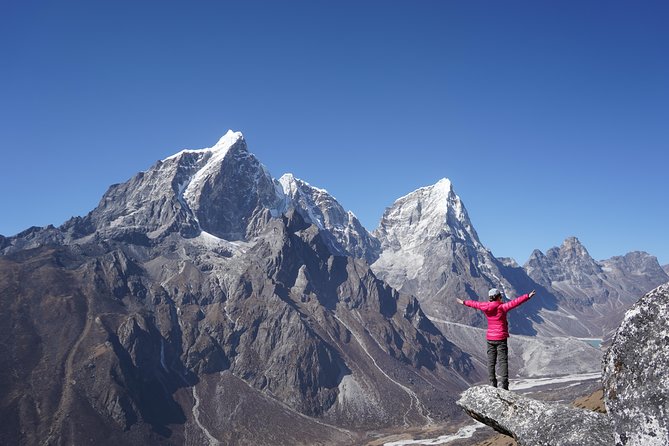
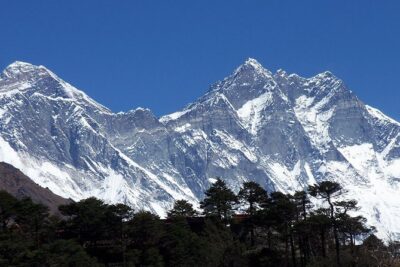
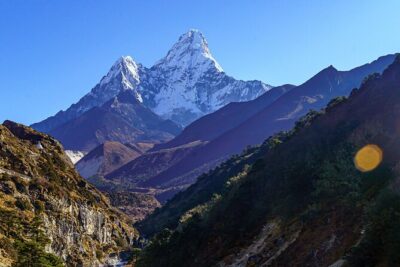
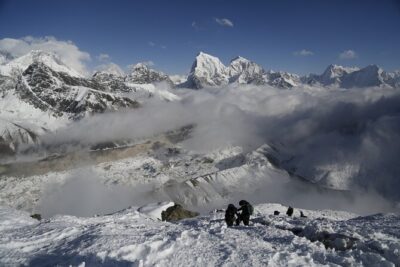
The mountain views are the obvious draw, but the route gives you more than one dramatic look at Everest. You have opportunities to see several peaks above 8,000 meters, along with the Khumbu Glacier and the surrounding high mountain country.
The appeal is not just a single photo at the end. The views change as you move through the region. At lower points, the villages and trails provide scale. Higher up, the rock, ice, and peaks begin to dominate. The tour description promises panoramic views, but the exact visibility will depend on weather and conditions at the time of your trek.
That is an important point. No operator can guarantee a cloud-free mountain view. The trek still has value when the weather is not perfect, because the villages, monastery, glacier, and historic route remain part of the journey. Still, if Everest views are your main goal, ask about the usual conditions for your travel dates.
Reaching Everest Base Camp
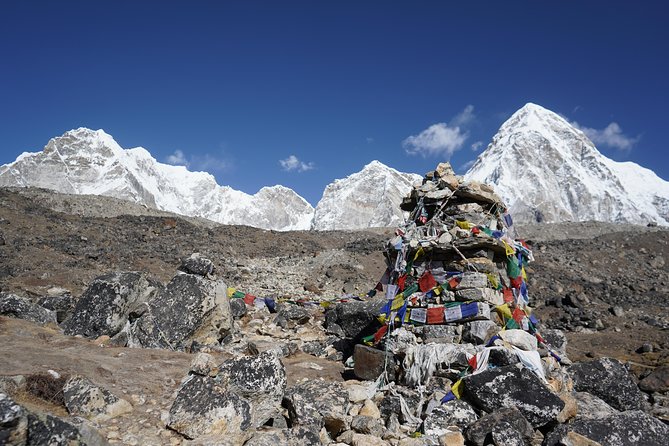
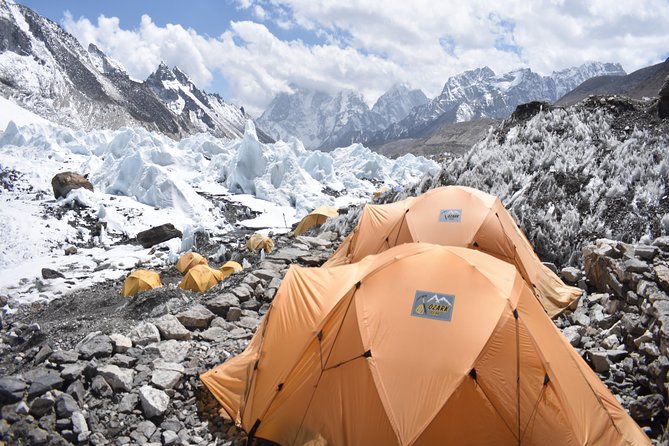
The central goal is to set foot at Everest Base Camp. This is the point where the long approach becomes real. You are standing at a location known around the world as the staging ground for Everest expeditions, surrounded by the high mountain environment of the Khumbu.
The base camp visit is included, and the guide accompanies you. The supplied itinerary lists five hours for the Everest Base Camp stop, though it does not explain whether that figure refers only to time at the stop or to a section of the day. Ask for clarification if the length of this visit affects your planning.
Base Camp is a meaningful destination, but it is not the best viewpoint for seeing Everest itself. That is why the Kala Patthar visit matters. The two stops complement each other: Base Camp gives you the historic mountaineering setting, while Kala Patthar is included for a closer view of Everest.
You also get a chance to see the memorial hill for climbers who died in the mountains. This adds a quiet, serious note to the trek. It reminds you that Everest is not simply a backdrop for achievement. The mountain has a long record of risk and loss.
Kala Patthar and the Khumbu Glacier
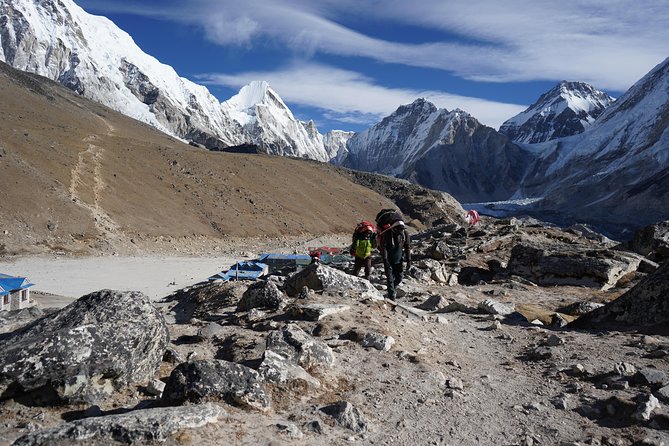
Kala Patthar is described as the famous viewpoint for a close view of Everest. If you want a strong mountain panorama, this is likely to be one of the most important parts of the itinerary.
The attraction here is the perspective. Base Camp places you inside the expedition world, while Kala Patthar gives you a broader view of Everest and the surrounding peaks. The route also includes the Khumbu Glacier, another major feature of the high-altitude terrain.
You should prepare for basic conditions. Tea houses are included, but the accommodation is described as basic. Hot showers, hot water, battery charging, and Wi-Fi cost extra. These are not small details at altitude. If you depend on a charged phone or camera, carry the right power banks and expect to pay for charging when needed.
Sleeping bags and down jackets are available upon request. Make that request before the trek rather than assuming they will appear automatically. Personal trekking equipment is not included, so you remain responsible for boots, clothing, and other essentials.
Tea houses, food, and the daily routine
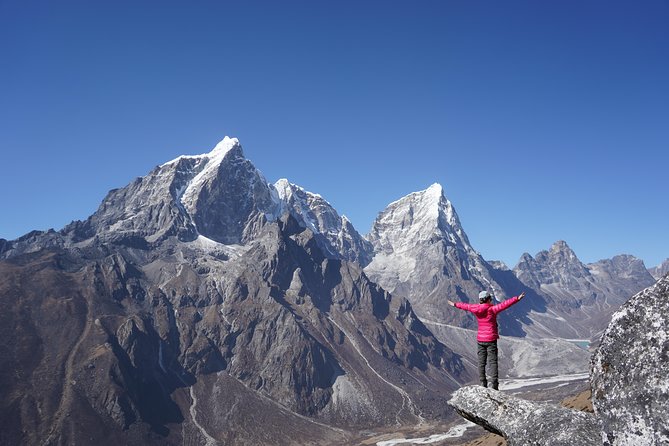
The package includes 11 nights of basic tea-house accommodation. Tea houses are a practical way to stay along the route, and they put you in the same simple network used by many people walking through the Khumbu.
You receive breakfast, lunch, and dinner during the trekking portion. A vegetarian option is available if you request it when booking. Kathmandu meals are not included, so plan separately for food before and after the trek.
The included meals make the price easier to understand. Food at altitude can be costly and difficult to arrange on your own, and having meals organized saves time. You should still budget for drinks and extras. Bottled or mineral water, alcoholic beverages, and other personal purchases are excluded.
The same goes for comfort services. Hot showers, hot water, laundry, Wi-Fi, and battery charging are not part of the base price. If you prefer a more comfortable trek with frequent private rooms and paid services, the advertised rate may not represent your final spending.
Guides, porters, and the value of support
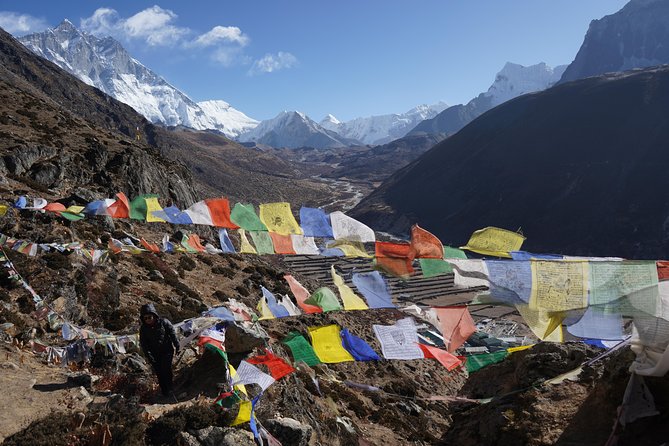
The operator supplies a government-licensed English-speaking guide and porters. Guide and porter insurance, food, salary, and accommodation are included. This arrangement supports the local trekking workforce while giving you people to turn to when the route becomes tiring or confusing.
The guide is meant to accompany you throughout the trip and explain the cultural and natural setting. That matters on a trek where you are crossing from the busy streets of Kathmandu into communities with a very different way of life.
The strongest praise attached to this operator centers on care, communication, safety, planning, and flexibility. Those qualities are worth more than a glossy promise. A guide who keeps an eye on the group and adjusts sensibly to conditions can make a demanding trek feel far more manageable.
Tips are not included. You should plan to tip the guide and porters separately, though the provided information does not state a recommended amount. Ask the operator for current guidance before you go.
Who should book this Everest trek?
This tour suits you if you want Everest Base Camp but do not want to arrange permits, flights, lodging, meals, porters, and local guiding on your own. It also works well for a solo trekker who wants company and logistical support without booking a fully private expedition.
The group can include up to 15 people, so it is not an isolated private walk. That size may be a good match if you like meeting people on the route. If you want complete control over pace, rest days, and accommodation, ask whether private arrangements are possible before booking.
You should not choose this trek casually. The operator requires strong physical fitness, and the high-altitude setting makes preparation important. The supplied details do not state a specific age limit, accessibility standard, medical screening process, or daily mileage. Ask those questions directly if any part of your health or mobility could affect the trek.
Confirmation arrives at booking, and passport name, number, expiry date, and country are required for every participant. The cancellation policy allows a full refund when you cancel at least 24 hours before the start time. Changes or cancellations inside that window are not accepted for a refund.
Should you book the Everest Base Camp Trek?
I would book this trek if I wanted a structured, well-supported route to Everest Base Camp and valued having the major costs gathered into one price. The included porter service, meals, permits, tea-house nights, and Lukla flights give you a strong practical base.
I would pause before booking if you need detailed altitude planning, private rooms, reliable internet, or a fully covered rescue policy. Confirm the daily schedule, your personal insurance, Ramechhap transfers, equipment arrangements, and expected extra costs first.
For a fit trekker who wants the famous route with local support, this is a sensible option. The combination of Base Camp, Kala Patthar, Tengboche, Namche Bazaar, the glacier, and Sherpa culture gives you more than a single mountain photo. Just remember that the price covers the structure of the journey, not every comfort along the way.
FAQ
How long is the Everest Base Camp trek?
The tour lasts approximately 12 days and includes 11 nights of basic tea-house accommodation during the trek.
Where does the trek start?
The meeting point is in Thamel, Kathmandu, at 6:15 a.m. The tour ends back at the meeting point.
Are flights to Lukla included?
Yes. Airfare between Kathmandu, or Ramechhap, and Lukla is included in both directions.
Are meals included?
Breakfast, lunch, and dinner are included during the trekking portion. Meals in Kathmandu are not included.
Is a guide included?
Yes. A government-licensed English-speaking trekking guide accompanies the group throughout the itinerary.
Are porters included?
Yes. The package provides one porter for every two trekkers. Porter insurance, food, salary, and accommodation are included.
Is personal rescue insurance included?
No. Personal medical, accidental, and rescue insurance, including helicopter evacuation, is excluded. Emergency evacuation expenses are also not included.
What should I know about cancellation?
You can receive a full refund if you cancel at least 24 hours before the experience begins. Cancellations or changes made less than 24 hours before the start time are not accepted for a refund.
Recently added around Kathmandu
- Kathmandu : Swambhunath & Durbar Square Guided Half Day Tour★ 3.3 · 3 reviews
- Private Day Tour in Kathmandu Valley Rim with Bhaktapur Sightseeing★ 5.0 · 3 reviews
- From Kathmandu / Pokhara / Chitwan: River Rafting – 1 Day★ 4.6 · 3 reviews
- Nepali Cooking training & Cultural Homestay Experience★ 5.0 · 3 reviews
- Private 3-Hour Nagarkot Sunset Tour from Kathmandu★ 3.5 · 3 reviews
- From Kathmandu: Everest Base Camp Landing Helicopter Tour★ 5.0 · 3 reviews
- 4 UNESSCO World heritage sites of Kathmandu-private tour★ 5.0 · 3 reviews
- From Kathmandu Budget: 15 Day Everest Base Camp Trek★ 5.0 · 3 reviews
Everest Base Camp Treks, compared.
Everest Base Camp Helicopter Tour landing at Everest View Hotel
Read our review →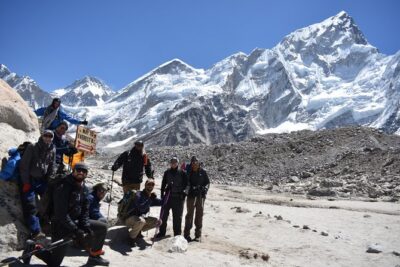
Everest Base Camp Helicopter Tour landing at Hotel Everest View
Read our review →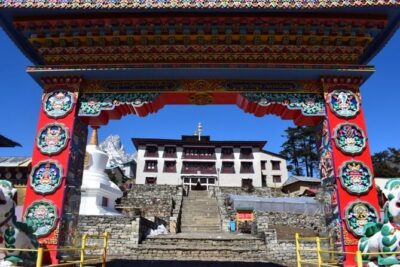
Browse the lists this tour appears in