
Reviewed · BOUDHANATH STUPA TOURS
Half Day Boudhanath Stupa Tour in Kathmandu
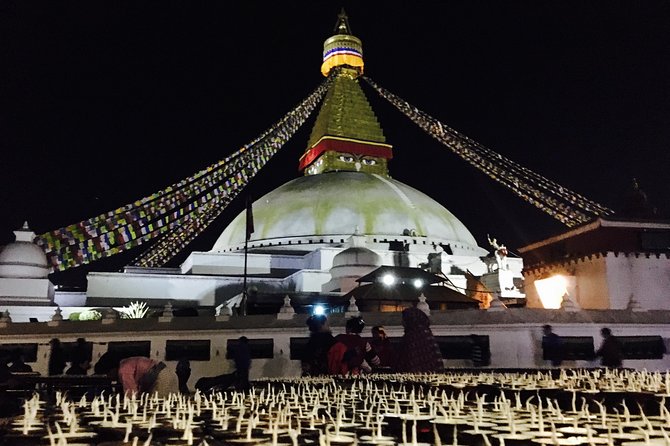
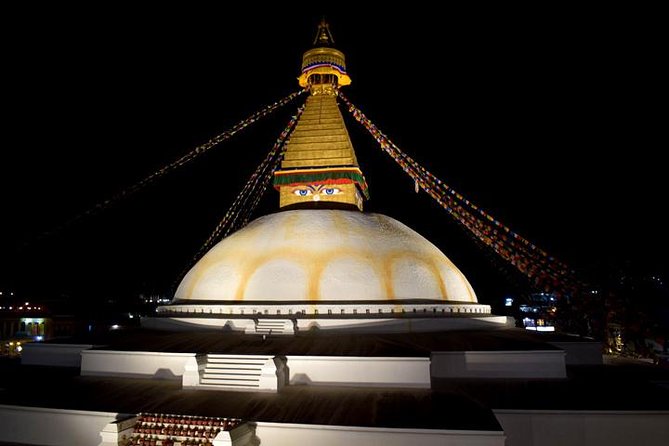
Boudhanath Stupa is the kind of Kathmandu sight that can disappear behind city buildings until you reach its entrance. Then the white dome, golden crown, prayer flags, and steady flow of worshippers open into one of the city’s most striking religious spaces. The stupa itself is the star, but the rituals around it give the visit its meaning.
I like the private format, since your guide can shape the three-hour visit around your questions rather than follow a fixed group script. I also like the practical pickup and drop-off, especially if you want to avoid negotiating a taxi in Kathmandu. The main consideration is simple: the tour is short, and the Thanka center visit takes only about 10 minutes, so this is an introduction rather than a full day of Buddhist culture.
- Circle a 36-meter stupa: Walk around one of Kathmandu’s most important Buddhist sites while devotees turn prayer wheels and chant.
- Travel privately: Your group receives private transportation, hotel pickup, hotel drop-off, and a guide for the visit.
- Learn the meaning behind the rituals: A guide can explain the prayer wheels, prayer flags, monasteries, and religious customs that are easy to miss alone.
- Visit a Thanka art center: See authentic religious paintings made by professional painters near the stupa.
- Keep your schedule open: The tour lasts about three hours, making it a useful half-day addition to a Kathmandu stay.
- Know the value: At $55 per person, the price covers transport, guiding, and entrance fees, but not food or drinks.
In This Review
- Boudhanath Stupa rises above Kathmandu
- Walking the stupa clockwise
- Why a guide changes the visit
- The short visit to the Thanka Stupa Center
- Private transport makes a $55 tour easier
- Who will get the most from this half-day visit
- What makes the experience feel authentic
- A practical three-hour plan
- The main strengths and the limits
- Should you book the Boudhanath Stupa tour?
- FAQ
- How long does the Boudhanath Stupa tour last?
- Is transportation included?
- Is this a private tour?
- Are entrance fees included?
- Is food or drink included?
- Can I cancel for a full refund?
Boudhanath Stupa rises above Kathmandu
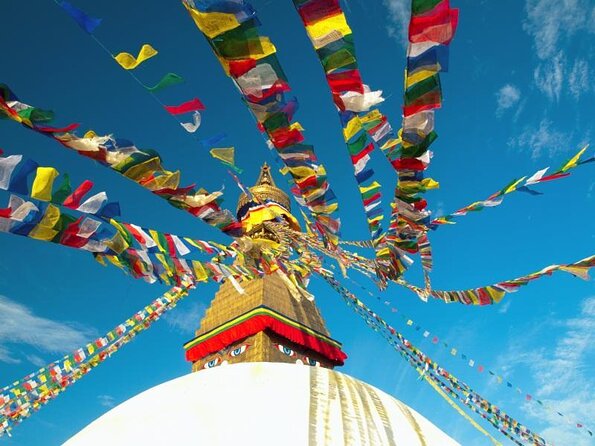
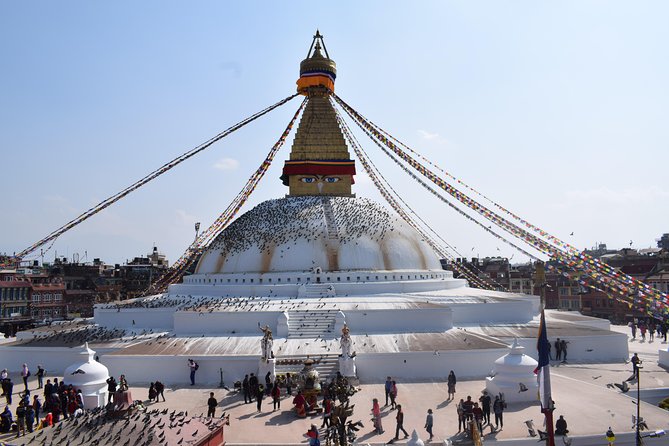
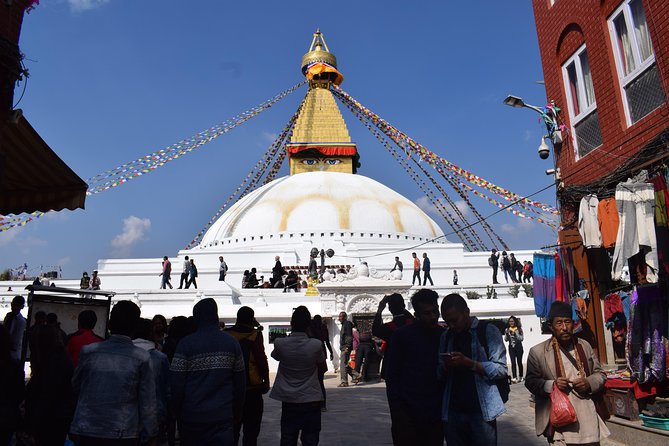
The first surprise at Boudhanath is how enclosed it feels before you enter. Tall buildings circle the site, and the stupa is easy to miss if you do not know where the entrance is. Once you reach the open area, the 36-meter, or 118-foot, structure makes an immediate impression.
Boudhanath is a major Buddhist holy site in Kathmandu. It is also closely linked with Tibetan Buddhist culture, and the surrounding monasteries give the area a distinct character. This is not just a monument to photograph from one angle. The point of the visit is to move around it and watch how people use the space.
Your guide provides the missing context. Without help, you can see the colors and activity but miss the meaning behind them. With a guide, the prayer wheels, flags, chanting, and surrounding religious buildings become part of one connected practice.
Walking the stupa clockwise
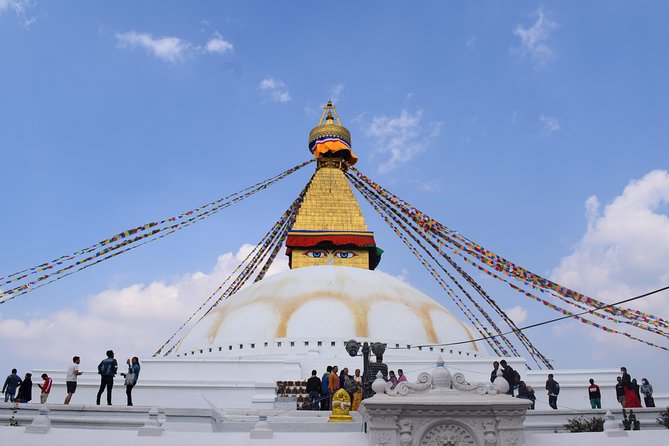
The main activity is an easy circuit around the stupa. Devotees move around it while turning prayer wheels and reciting Om Mani Padme Hum. The tour information notes the traditional use of 108 turns, a detail that helps explain why the movement around the stupa is steady and deliberate.
You will also see prayer flags fluttering above the site. Their colors and placement are part of the visual identity of Boudhanath, but they are not merely decoration. They represent prayers carried toward the heavens, adding a quiet spiritual purpose to what might otherwise look like a colorful city square.
I like this walking format because it gives you time to observe rather than rush from one viewpoint to another. You can look at the stupa, then watch the people moving around it, then notice the monasteries and shops around the wider area. The guide’s role matters most here. A short explanation at the right moment can turn an unfamiliar gesture into something you understand.
The private setup helps if you have a particular interest. You might want more explanation about Buddhist practice, the architecture, the role of monasteries, or the Tibetan presence in Kathmandu. The guide can adjust the commentary to your group instead of giving a speech aimed at strangers with different interests.
More time around Boudhanath stupa:
- PashupatiNath and BoudhaNath – Private/Small Group
★ 5.0 · 18 reviews - Sacred Pashupatinath: Aarati,Cremation Rites & Boudha Stupa
★ 5.0 · 18 reviews - Private Half-Day Tour of Boudhanath and Pashupatinath Temples in Kathmandu
★ 4.5 · 9 reviews
Why a guide changes the visit
You can walk around Boudhanath on your own, but the setting rewards explanation. Religious sites often contain details that are easy to overlook when you do not know what to watch for. The guide points out the significance of the site and helps you read the activity around it with respect.
Kabita is the guide named in the available tour feedback. One particularly positive account describes her as kind and well informed, with the ability to explain the places and their significance during a short visit. If Kabita is assigned to your booking, you can expect a guide who has received strong praise for making the experience personal and clear.
That does not mean the tour becomes a lecture. The best use of a private guide is to ask direct questions as you walk. If you are curious about the chanting, the prayer wheels, or the monasteries, ask. The tour is designed for your party only, so you have more room to set the pace than you would on a large group outing.
The guide also helps with orientation. Boudhanath is surrounded by city buildings, religious centers, and shops. A local guide can help you understand which parts belong to the main visit and which are commercial stops nearby.
The short visit to the Thanka Stupa Center
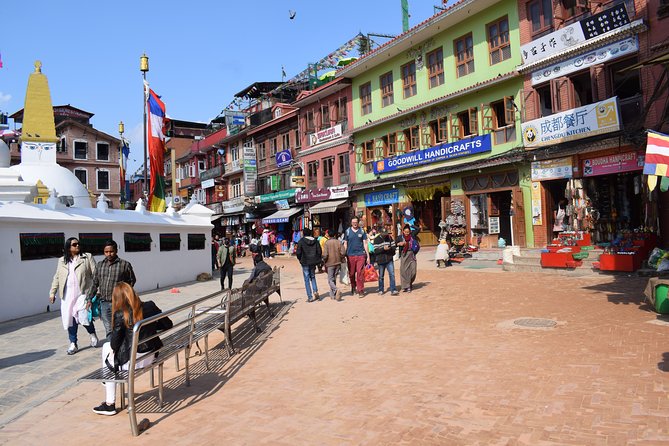
Near Boudhanath, the tour includes about 10 minutes at the Boudha Stupa Thanka Center. The center is described as a gallery-like shop displaying Thanka paintings made by professional painters. The works use authentic and fine materials available to the artists.
Thanka paintings are religious artworks associated with Buddhist practice. At the center, you can look closely at the craft and see how a nearby art space connects with the spiritual setting of the stupa. This is a brief stop, not a full workshop or extended art lesson, so keep your expectations in proportion.
The stop may suit you if you are interested in traditional Buddhist art or want to see work made locally. It may feel less important if your main reason for booking is the stupa itself. Since the visit lasts only 10 minutes and admission is free, it does not take much time from the main walk.
As with any art shop attached to a sightseeing visit, you should decide at your own pace if you want to browse or purchase anything. The supplied details do not state that a purchase is required, and the center is included as a short stop rather than the focus of the tour.
Private transport makes a $55 tour easier
The price is $55 per person. That includes private transportation, hotel pickup and drop-off, a professional tour guide, and entrance fees. Food and drinks are not included.
For one person, the cost is higher than simply finding public transport and visiting the stupa without a guide. But that comparison leaves out the time and uncertainty involved in arranging your own ride. The value improves if you are traveling with family or friends, since group discounts are offered and the transport is private for your party.
I see the price as paying for convenience and interpretation rather than admission alone. You are buying a short, organized visit with the main movement between your hotel and Boudhanath handled for you. You also avoid haggling over taxis, which can be worth something when you want a calm start to the day.
The three-hour length keeps the tour manageable. You can fit it into a morning or afternoon without giving up a full day in Kathmandu. On the other hand, the price may feel high if you already have transportation, know the area, and prefer to explore religious sites without a guide.
Because the tour includes entrance fees, you do not need to work out separate admission costs. The booking information says confirmation is provided at the time of booking, and pickup is offered. The exact pickup details should still be checked when you arrange the tour.
A completely different sort of day in Kathmandu:
- Everest Base Camp Trek – 14 Days
★ 5.0 · 1,499 reviews - Private Kathmandu Sightseeing Tour | UNESCO World Heritage sites
★ 5.0 · 756 reviews - Everest Base Camp Helicopter Tour landing at Everest View Hotel
★ 5.0 · 668 reviews - Half day cooking class in Thamel kathmandu
★ 5.0 · 607 reviews
Who will get the most from this half-day visit
This tour suits you if Boudhanath is high on your Kathmandu list but you want help understanding what you see. It is especially useful for a first visit, when the prayer rituals and religious layout may be unfamiliar.
It also works well for people with limited time. Three hours is enough to focus on Boudhanath without committing to a full day. If you are building a larger Kathmandu sightseeing plan, this tour leaves room for other parts of the city.
Families and small groups may appreciate the private format. You can ask questions freely, pause for photographs, and keep the visit centered on your own interests. Group discounts may also make the $55 rate more appealing when several people book together.
Most people can participate, according to the supplied information. The tour is near public transportation as well, although the main convenience here is the included private ride. Food and drinks are not provided, so plan around the tour if you need refreshments.
This is less suitable if you want a long, highly detailed study of Kathmandu’s Buddhist institutions or a full art tour. The core stupa visit takes most of the time, while the Thanka center is only a short stop.
What makes the experience feel authentic
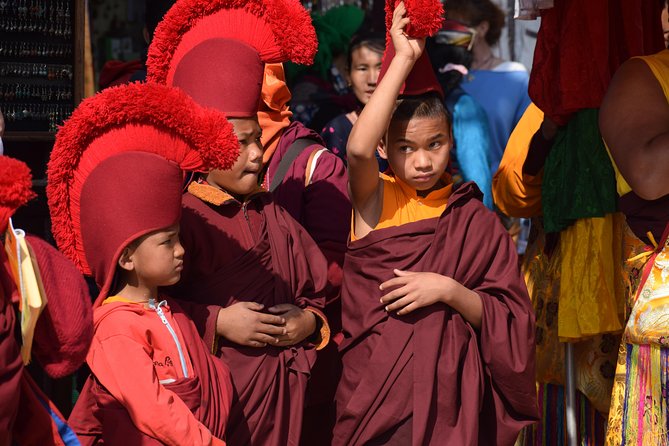
The strongest part of the tour is not a staged performance. It is the chance to watch a living religious practice taking place around an old and important stupa. Devotees turn prayer wheels, chant, and walk the circuit while prayer flags move overhead.
That distinction matters. You are not simply viewing a monument from behind a barrier. You are entering a place still used for worship. Your guide can help you observe without treating the rituals as a show.
The surrounding monasteries add another layer. The tour description points to large, colorful monasteries near the stupa, along with the area’s connection to Tibetan refugees. Even during a short visit, you get a sense that Boudhanath is both a major religious center and a community space.
I would give yourself time to look beyond the central dome. The wider setting explains why Boudhanath feels different from a stand-alone landmark. The surrounding buildings, art centers, monasteries, flags, and steady walking route all belong to the experience.
A practical three-hour plan
Your experience begins with pickup and private transport from your hotel. Since the tour lasts about three hours, allow some flexibility around the stated duration. City traffic and pickup arrangements can affect the exact timing, though no specific traffic estimate is provided.
At Boudhanath, expect the main portion of the tour to center on walking around the stupa. Your guide explains the site, its religious role, and the customs taking place around you. The circuit is described as easy, so you do not need a demanding hike or a full-day commitment.
The visit then includes the nearby Boudha Stupa Thanka Center for about 10 minutes. After that, private transportation returns you to your hotel. The tour includes entrance fees, so you do not need to budget a separate admission payment.
Wear something suitable for visiting a holy Buddhist site and follow your guide’s advice about respectful behavior. The supplied information does not give a formal dress code, so I would avoid treating the visit like a quick photo stop. The religious activity is the reason to come.
The main strengths and the limits
The tour earns its strongest marks for guide quality and the amount of meaning packed into a short visit. Kabita’s kind manner and clear explanations are specifically praised, and that matters because Boudhanath can be visually impressive without being easy to understand.
The second major strength is the private transport. You do not have to arrange separate taxis, and your party does not share the guide with strangers. That makes the tour efficient and gives you a chance to shape the conversation.
The limits are just as clear. Three hours is enough for the stupa and a short art stop, but not enough for an extensive exploration of the surrounding Buddhist sites. The $55 price also assumes you value a guide and transport. If you are comfortable arranging your own way there, you may prefer a less structured visit.
The Thanka center can also feel like a minor add-on if your interest is strictly religious architecture. It is free and short, so it does not undermine the tour, but it should not be the reason you book.
Should you book the Boudhanath Stupa tour?
Book this tour if you want a convenient, private introduction to Boudhanath and prefer to understand the rituals instead of simply taking photographs. The combination of hotel transport, entrance fees, a flexible guide, and a three-hour schedule gives you a clear and easy way to visit one of Kathmandu’s essential sights.
I would especially recommend it for first-time visitors, small groups, and anyone who has limited time in the city. The experience is also a good fit if you want a guide who can explain the religious details in plain terms, with Kabita receiving particularly strong praise for kindness and clarity.
Skip it if you prefer to explore independently, already have transport, or want a longer study of monasteries and Buddhist art. The price is fair for private service, but the value depends on using the guide. If you do book, arrive with questions and treat the stupa as a working place of worship, not just a monument.
FAQ
How long does the Boudhanath Stupa tour last?
The tour lasts approximately three hours, including the visit to Boudhanath Stupa and the short stop at the Boudha Stupa Thanka Center.
Is transportation included?
Yes. Private transportation, hotel pickup, and hotel drop-off are included.
Is this a private tour?
Yes. Only your group participates in the activity.
Are entrance fees included?
Yes. All entrance fees are included in the tour price.
Is food or drink included?
No. Food and drinks are not included.
Can I cancel for a full refund?
Yes, if you cancel at least 24 hours before the experience start time. Cancellations made less than 24 hours in advance are not refundable, and changes within that period are not accepted.
Recently added around Kathmandu
- Kathmandu : Swambhunath & Durbar Square Guided Half Day Tour★ 3.3 · 3 reviews
- Private Day Tour in Kathmandu Valley Rim with Bhaktapur Sightseeing★ 5.0 · 3 reviews
- From Kathmandu / Pokhara / Chitwan: River Rafting – 1 Day★ 4.6 · 3 reviews
- Nepali Cooking training & Cultural Homestay Experience★ 5.0 · 3 reviews
- Private 3-Hour Nagarkot Sunset Tour from Kathmandu★ 3.5 · 3 reviews
- From Kathmandu: Everest Base Camp Landing Helicopter Tour★ 5.0 · 3 reviews
- 4 UNESSCO World heritage sites of Kathmandu-private tour★ 5.0 · 3 reviews
- From Kathmandu Budget: 15 Day Everest Base Camp Trek★ 5.0 · 3 reviews
Boudhanath Stupa Tours, compared.
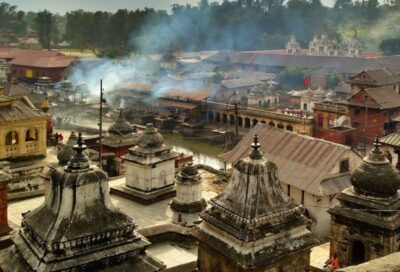
Sacred Pashupatinath: Aarati,Cremation Rites & Boudha Stupa
Read our review →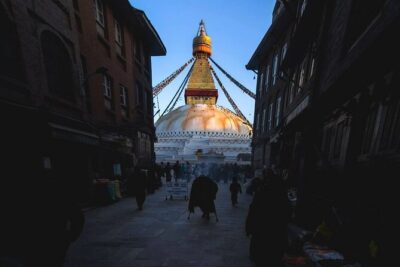
PashupatiNath and BoudhaNath – Private/Small Group
Read our review →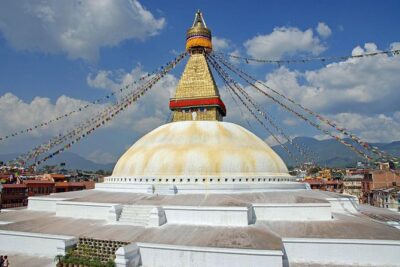
Private Half-Day Tour of Boudhanath and Pashupatinath Temples in Kathmandu
Read our review →
Kopan Monastery, Swayambhu and Boudha Nath Stupa Tour
Read our review →
Browse the lists this tour appears in