
Reviewed · LANGTANG VALLEY TREKS
Kathmandu: 6 Days Langtang Valley Trek with Kyanjin Ri
The best part of this six-day trek is the way it moves from ordinary village life to high Himalayan scenery without requiring a long expedition. You follow the Langtang River, pass through Tamang communities, and finish at Kyanjin Gompa beneath snow-covered peaks. I especially like the Tamang cultural encounters and the chance to visit a local cheese factory, two details that give the walk more character than a simple mountain hike.
I also like the optional Kyanjin Ri sunrise climb, which gives you a powerful mountain viewpoint without adding another day. The main consideration is altitude: Kyanjin Gompa sits at 3,870 meters, and Kyanjin Ri reaches 4,770 meters, so this is a serious high-altitude walk despite its short length. The long road ride from Kathmandu and the extra charge for a porter also deserve attention before you book.
In This Review
- Key points to know before booking
- Why Langtang works in only six days
- Day 1: Kathmandu to Syabrubesi and Pahiro
- Day 2: Forest trails from Pahiro to Ghoda Tabela
- Day 3: Reaching Kyanjin Gompa at 3,870 meters
- Day 4: Kyanjin Ri at 4,770 meters, then down to Thangsyap
- Day 5: Returning through the valley to Syabrubesi
- Day 6: The road back to Kathmandu
- What the $179 price really covers
- Guides, pace, and the private-group setup
- Best seasons and what to pack
- Who should book this Langtang trek
- Should you book it?
- FAQ
- How long is the Langtang Valley trek?
- Is Kyanjin Ri included?
- What languages does the guide speak?
- Is transportation included?
- Are meals included?
- Is a porter included?
- When is the best time to go?
Key points to know before booking
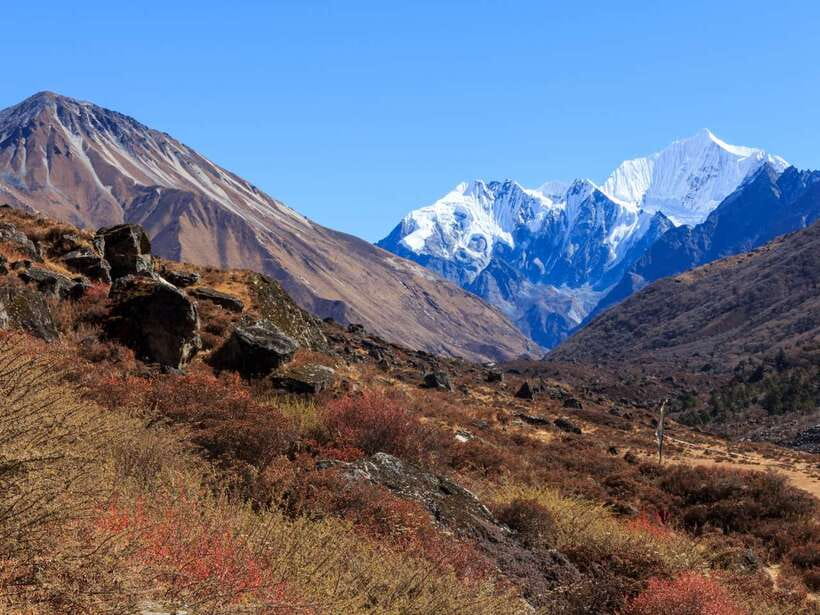
- A short route with real Himalayan altitude: Six days gets you into Langtang Valley, but the climb to Kyanjin Gompa and Kyanjin Ri still demands steady pacing.
- Tamang culture is part of the walk: You pass mountain villages, meet local residents, and visit Kyanjin Gompa rather than simply hiking through empty scenery.
- Kyanjin Ri is optional but worthwhile: The 4,770-meter viewpoint can add the trek’s biggest visual reward, especially in clear morning weather.
- Ghanshyam receives repeated praise: He is described as caring, flexible with pace, helpful, and good at explaining the route.
- A porter costs extra: The guide, permits, staff costs, and accommodation are included, but porter service is not part of the stated price.
- The $179 price is strong if meals are included: Check that you are booking the full package, since breakfast, lunch, and dinner are listed for that option only.
Why Langtang works in only six days
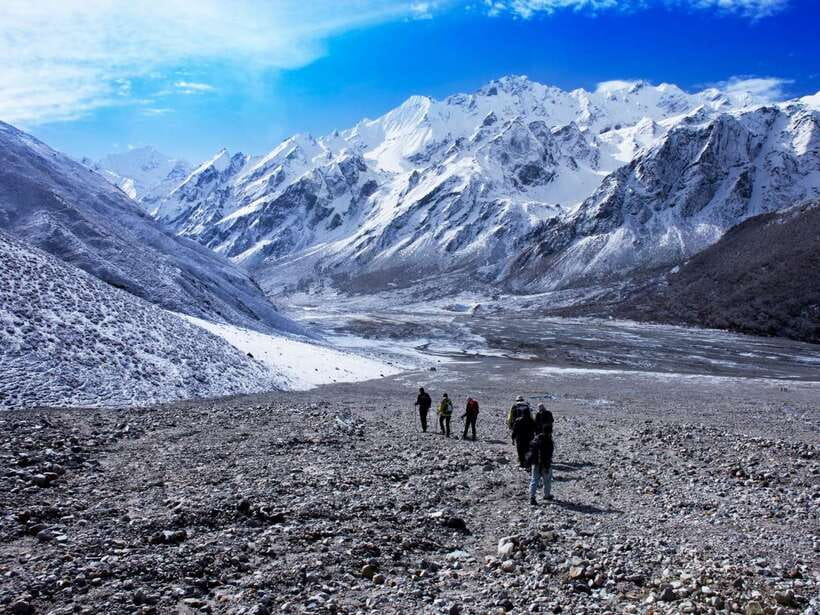
Langtang Valley suits you if you want a genuine Himalayan trek but cannot spare the time required for a longer Nepal route. The schedule begins with a drive from Kathmandu and reaches high mountain country quickly. You get forests, river trails, villages, monasteries, glaciers, and broad views in one compact trip.
The short format does not make this a casual walk. The route rises from Pahiro at 1,550 meters to Kyanjin Gompa at 3,870 meters in two trekking days. That gain is the point at which you need to take altitude seriously. I would treat the optional Kyanjin Ri climb as something to decide after seeing how your body responds, not as a duty you must complete.
This is a private group, with transportation described as shared according to the number of people. That combination matters. You should have a more personal walking experience than on a large group tour, but the road journey may still use shared transport. English and Hindi guiding are available.
More Langtang valley treks:
- Langtang Valley Trek
★ 5.0 · 140 reviews - Langtang Valley Trek
★ 5.0 · 50 reviews - Private 8 – Day Langtang Trekking
★ 5.0 · 29 reviews
Day 1: Kathmandu to Syabrubesi and Pahiro
Your first day begins on the road, not on the trail. The drive from Kathmandu to Syabrubesi follows mountain roads through villages and green countryside before reaching the Langtang Valley gateway.
After arriving at Syabrubesi, you walk toward Pahiro at 1,550 meters. The trail follows the Langtang River and passes through quiet forest. This opening walk helps you shift from city pace to mountain pace, though the road journey can make the day feel longer than the trekking distance alone suggests.
You sleep in Pahiro. The benefit of beginning here is a gentle start to the walking portion. The drawback is that you should not expect a full day of mountain hiking after leaving Kathmandu, since the drive takes up much of the day.
Hotel pickup and drop-off are included, and you are asked to wait in your hotel lobby about 10 minutes before pickup. The driver carries a sign with your last name, a useful detail in busy Kathmandu.
Day 2: Forest trails from Pahiro to Ghoda Tabela
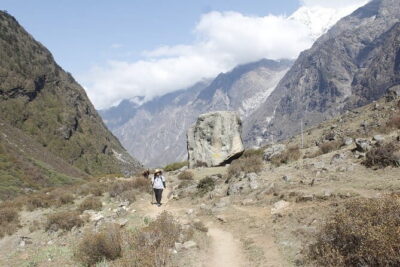
The second day brings a fuller walk toward Ghoda Tabela at 2,900 meters. The trail passes through forest, villages, and waterfalls, with mountain views appearing through the trees and openings along the route.
I like this section because it gives you changing scenery rather than one repeated trail surface. The river, woodland, waterfalls, and settlements make the route feel like a journey through a lived-in valley. You are not simply walking toward a viewpoint. You are following a route used by communities whose homes and daily life are part of the experience.
Ghoda Tabela is also an important altitude step. You are not yet at the highest point, but the overnight elevation is high enough that you should keep your pace controlled and drink water regularly. Your guide should help with breaks. Ghanshyam, one of the guides associated with recent departures, is repeatedly described as adjusting the walk to individual pace and checking on health. Ask for that kind of pacing from the start.
Day 3: Reaching Kyanjin Gompa at 3,870 meters
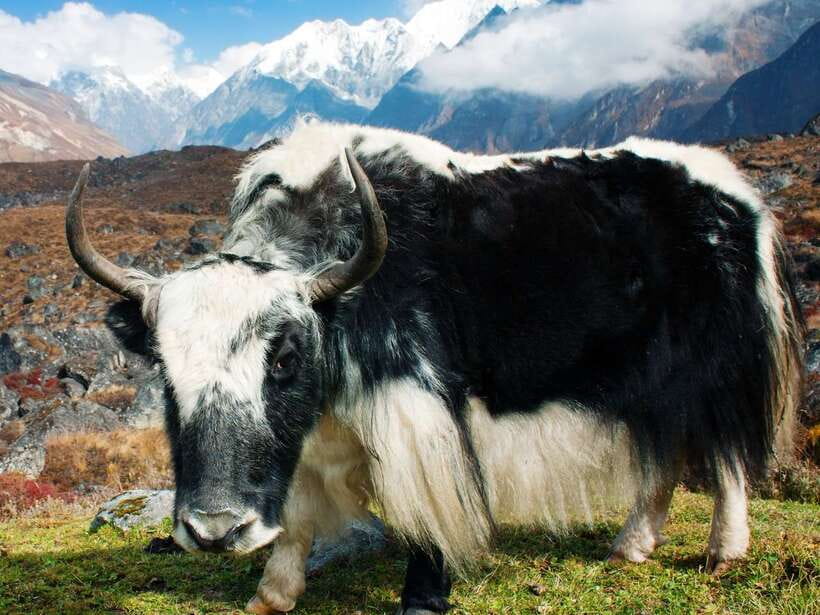
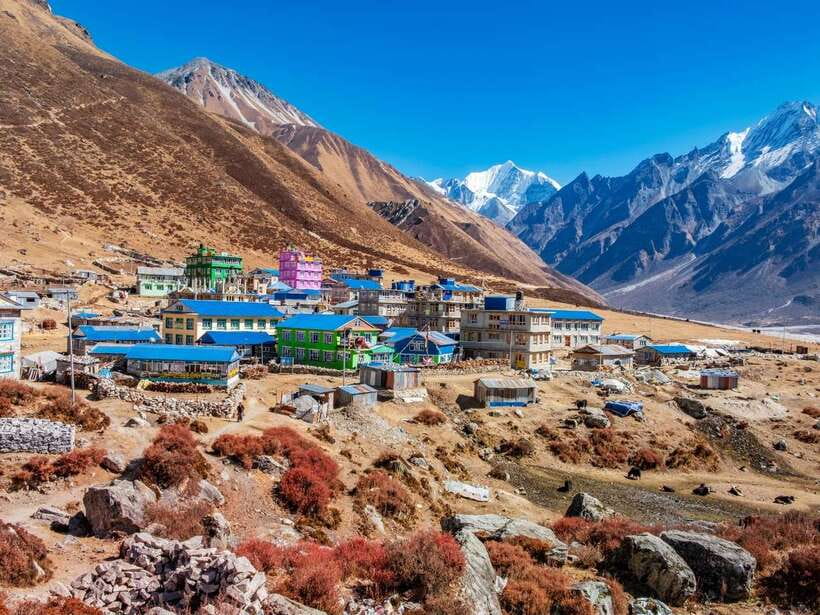
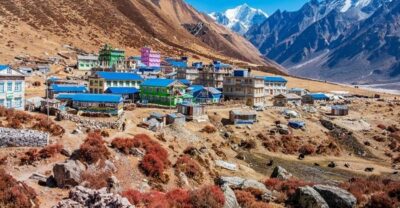
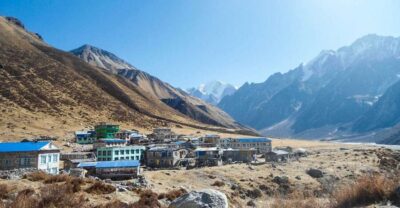
The third day takes you from Ghoda Tabela to Kyanjin Gompa, the high point of the main route. The destination is more than a sleeping stop. It is a traditional Himalayan settlement with monasteries, mountain views, local residents, and a cheese factory.
This is where the cultural side of the trek becomes most useful. You can visit the historic Kyanjin Gompa monastery, learn about the local Tamang community, and taste locally made cheese. Those small encounters help explain how people live in a remote valley where the mountains shape transport, food, work, and daily routines.
The scenery becomes more dramatic as you approach Kyanjin Gompa, with snow-covered peaks and glacial valleys around the settlement. Clear weather makes a huge difference, so keep your expectations flexible. Mountain cloud can block views, and the schedule may change because of weather or seasonal conditions.
At 3,870 meters, Kyanjin Gompa is also where altitude may become the central issue. Acute mountain sickness can cause headache, nausea, fatigue, or loss of appetite. Feeling fine when you arrive does not guarantee that you will feel fine later, so tell your guide promptly about any symptoms. Do not push toward Kyanjin Ri simply because it is on the plan as an option.
More treks starting in Kathmandu:
- Everest Base Camp Trek – 14 Days
★ 5.0 · 1,499 reviews - Everest Base Camp Trekking
★ 5.0 · 485 reviews - Nagarkot Sunrise View and Day Hiking from Kathmandu
★ 5.0 · 471 reviews - Annapurna Circuit Trek with Tilicho Lake
★ 5.0 · 368 reviews
Day 4: Kyanjin Ri at 4,770 meters, then down to Thangsyap
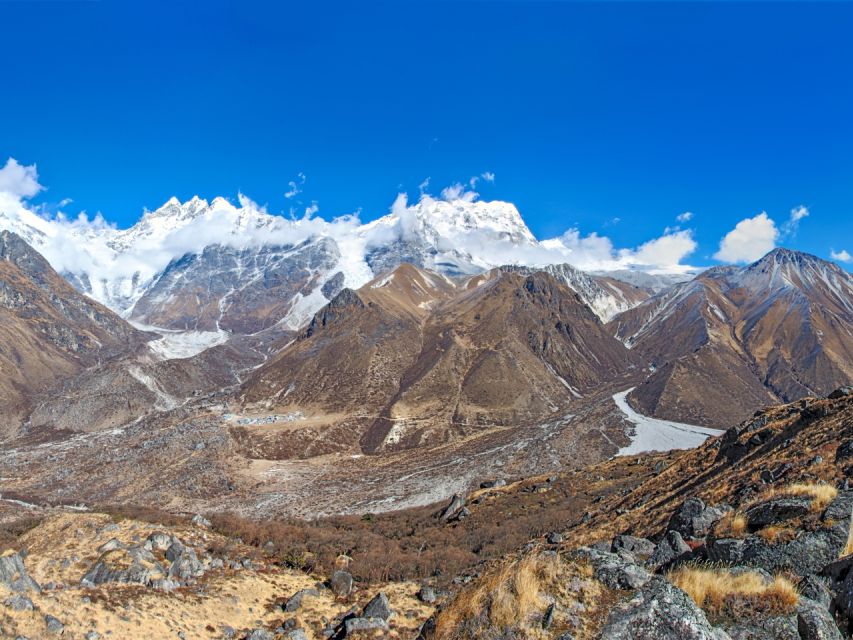
For many people, this is the defining morning. The optional hike to Kyanjin Ri reaches 4,770 meters and offers wide views of the surrounding peaks and glacial valleys. An early start can provide sunrise light and clearer mountain views, as several departures have done successfully.
The climb is described as challenging, and the altitude makes it harder than the number of hours alone might suggest. You need hiking shoes, warm layers, gloves, water, sunglasses, sunscreen, and a flashlight. A sleeping bag is also on the required packing list, so do not assume the accommodation will supply one.
The reward is a high viewpoint with a broad sweep of Himalayan peaks. Wildlife sightings have also been reported along the approach, though you should treat that as a possibility, not a promise. If clouds cover the mountains or your body is struggling, turning back is the sensible choice.
After returning to Kyanjin Gompa, you descend to Thangsyap at 3,200 meters. This makes Day 4 a demanding combination of high-altitude ascent and downhill walking. It is also a practical design: you gain the viewpoint without adding a separate acclimatization day, then sleep lower than Kyanjin Gompa.
If you are new to long treks, this is the day to discuss pace and breaks clearly with your guide. Sudarshan, another guide named in recent departures, is noted for allowing flexible breaks and adjusting the route to the walker. That sort of attention is more valuable here than a fast schedule.
Day 5: Returning through the valley to Syabrubesi
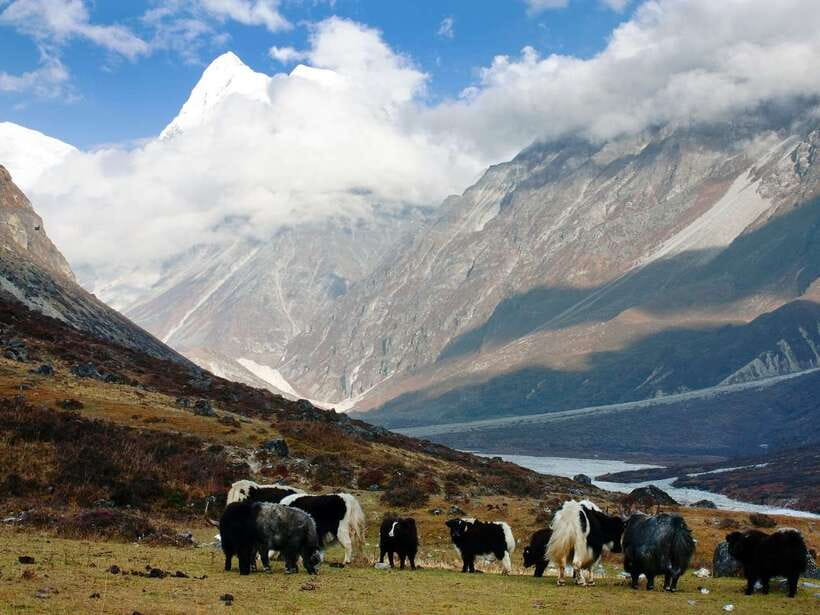
The route descends from Thangsyap to Syabrubesi at 1,550 meters. You retrace sections of the trail through forests and beside the Langtang River, with another chance to notice details that were easy to miss while climbing.
Downhill walking can feel easy at first, but it can also be tiring on knees and feet. Keep your shoes secure and use trekking poles if you bring them. The descent gives you a physical break from high altitude, yet you still need to save energy for the full day.
Returning to Syabrubesi also gives you a final evening in the trekking region before the road journey. The five nights of private accommodation during the trek are included, although the precise comfort level and room arrangements should be confirmed with the provider before departure.
Day 6: The road back to Kathmandu
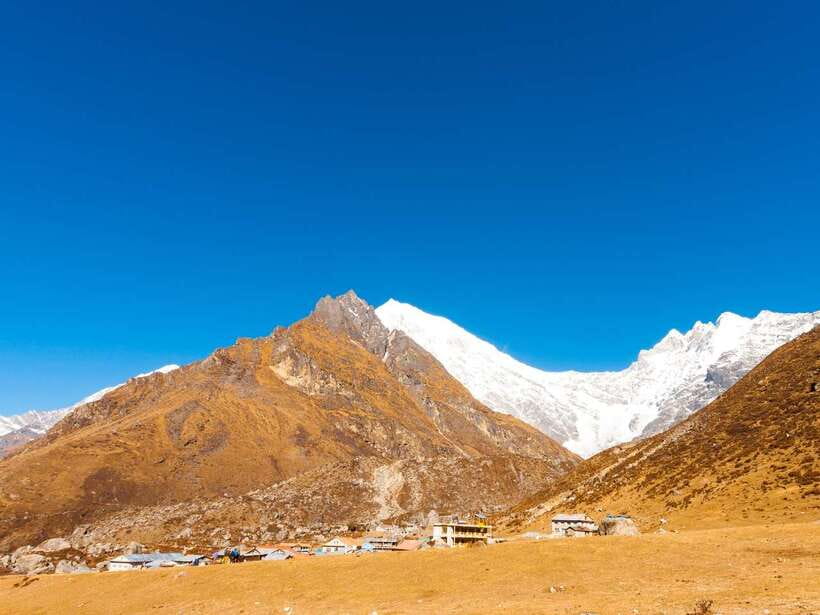
The final day is a drive from Syabrubesi to Kathmandu. It is not another walking day, so you can use the time to look back on the valley, villages, and mountain views you have just crossed.
Road travel in a mountain region is part of the practical cost of reaching Langtang. The drive can be tiring, and weather or road conditions may affect timing. If you have an international flight soon after the trek, leave a sensible buffer. Extra nights in Kathmandu or Pokhara caused by an early arrival, late departure, or an early return are not included when they fall outside the scheduled plan.
What the $179 price really covers
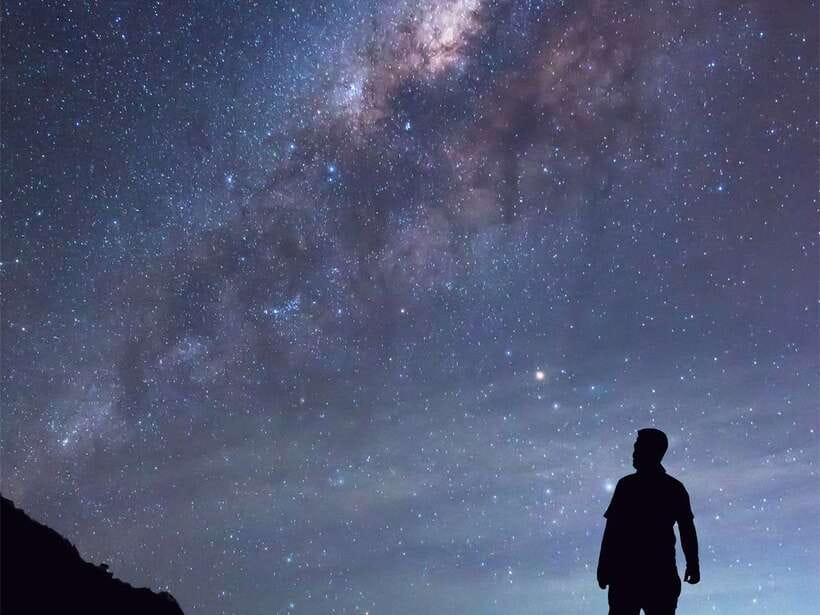
At $179 per person, this trek offers good value if you select the full package. The stated inclusions cover hotel pickup and drop-off, permits, required paperwork, the Trekkers Information Management System fee, government tax, five nights of private accommodation, transportation according to the plan, and staff expenses such as meals, lodging, salary, equipment, insurance, and transport.
The full package also includes breakfast, lunch, and dinner during the trek. That point matters because the meal inclusion is specifically tied to the Full Package option. Confirm what you are selecting before paying, since a lower package could change the final cost.
The price does not include a porter. It also excludes soft and alcoholic drinks, bottled or boiled water, showers, battery charging, laundry, phone calls, bar bills, and personal purchases. Travel and rescue insurance are not included either. I would budget for these extras rather than treating $179 as the total cost of the trip.
Using a porter is worth considering if you are new to trekking or want to keep your daypack light. One recent departure used a porter named Projol, and the choice was considered worthwhile. A porter is not just a comfort upgrade on a route with high-altitude days. Carrying less can help you focus on breathing, footing, and enjoying the valley.
Guides, pace, and the private-group setup
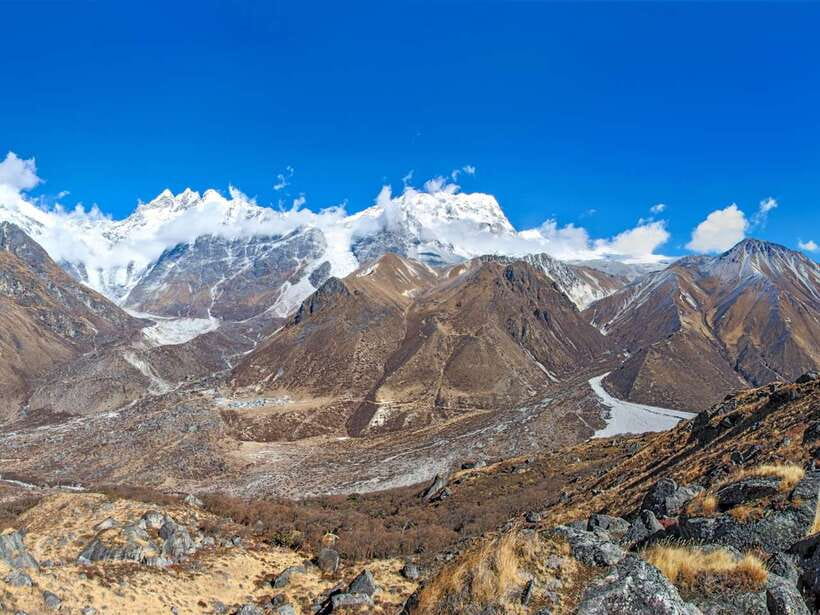
The strongest human part of this experience is the guide service. Ghanshyam is repeatedly associated with patient pacing, health checks, clear explanations, humor, and a kind manner. Sudarshan is also associated with a professional approach, flexible breaks, and careful attention to the walker’s needs.
Guide availability can change, so ask who is assigned to your departure. The important point is not simply the name. You want an English or Hindi-speaking guide who communicates clearly, explains the trail, and takes altitude symptoms seriously.
The group is private, which should make it easier to set a comfortable pace and ask questions. Transportation, however, is described as shared according to the number of people. Do not confuse a private trekking group with a private vehicle for every part of the journey.
The experience is a good fit for first-time trekkers who want support. Past departures included people on their first long trek, and the guide’s ability to slow down, answer questions, and adjust breaks made a major difference. Still, your fitness and altitude response remain your responsibility.
Best seasons and what to pack
The strongest trekking periods are mid-March through April and October through mid-November. Autumn generally brings less wind and warmer temperatures, while late March and April can add rhododendron blooms at lower elevations.
Weather in the mountains can change, so do not book only for a guaranteed postcard view. The operator may adjust the schedule because of weather or seasonal conditions. Build some flexibility into your plans if possible.
The supplied packing list is sensible for the elevation:
- Passport or identification
- Sleeping bag
- Flashlight
- Hiking shoes
- Gloves and a warm jacket
- Water
- Sunscreen and sunglasses
- General trekking gear
You should also arrange travel and rescue insurance before leaving home, since it is not included. Alcohol and drugs are not allowed on the experience.
Who should book this Langtang trek
I would recommend this trek if you want a compact introduction to Nepal’s mountain country, enjoy walking through villages, and prefer a guide-led experience. The combination of Tamang culture, monastery visits, cheese tasting, river trails, forests, and high viewpoints gives you more variety than a pure scenery-focused hike.
It is especially suitable for someone who wants a shorter route around Kathmandu rather than a much longer Himalayan trip. The six-day schedule also works for visitors with limited time, although the road transfers make the days fuller than the number of trekking days suggests.
I would be more cautious if you have no experience with altitude, dislike long road journeys, or want a leisurely schedule with several acclimatization days. Kyanjin Ri is optional, so you can skip it, but the main route still reaches 3,870 meters. Talk honestly with the guide about symptoms and do not treat the summit option as a test of character.
Cancellation is free up to 24 hours before departure, and you can reserve now and pay later. Those terms are useful when weather and travel plans are uncertain, but they do not replace proper insurance.
Should you book it?
Book this trek if you want strong scenery and real village contact in a six-day package, and if you are comfortable preparing for high altitude. The best value comes from choosing the full meal package, confirming guide and porter arrangements, and allowing time for the Kathmandu road transfers.
Skip it if you want a low-effort sightseeing tour or if your schedule leaves no room for weather-related changes. For the right walker, the route offers a lot: Tamang hospitality, Kyanjin Gompa, local cheese, and the chance to watch the mountains brighten from Kyanjin Ri. At $179 before personal extras, it is an appealing way to reach Langtang without signing up for a much longer expedition.
FAQ
How long is the Langtang Valley trek?
The trek lasts six days, including the drive from Kathmandu to Syabrubesi and the return drive to Kathmandu.
Is Kyanjin Ri included?
The hike to Kyanjin Ri is optional. The viewpoint reaches 4,770 meters and is described as challenging.
What languages does the guide speak?
Guides are available in English and Hindi.
Is transportation included?
Yes. Hotel pickup and drop-off are included, along with transportation described according to the number of people in the group. Shared transportation or a shared bus may be used.
Are meals included?
Breakfast, lunch, and dinner are included during the trek with the Full Package option. Drinks and personal purchases are not included.
Is a porter included?
No. Porter service costs extra. The authorized guide is included, but porter charges are separate.
When is the best time to go?
The main trekking seasons are mid-March through April and October through mid-November. Weather can still change, and the schedule may be adjusted for weather or seasonal conditions.
More 6-Day Experiences in Kathmandu
- Kathmandu: 6-Day Limitless Langtang Trek
★ 5.0 · 21 reviews - 6 Days Muktinath Tour Package in Nepal
★ 5.0 · 20 reviews - 6 Days/5 Nights Private Kathmandu Pokhara Tour
★ 5.0 · 9 reviews - 6 Days Private Himalayan Dreams of Nepal
★ 5.0 · 6 reviews
Recently added around Kathmandu
- Kathmandu : Swambhunath & Durbar Square Guided Half Day Tour★ 3.3 · 3 reviews
- Private Day Tour in Kathmandu Valley Rim with Bhaktapur Sightseeing★ 5.0 · 3 reviews
- From Kathmandu / Pokhara / Chitwan: River Rafting – 1 Day★ 4.6 · 3 reviews
- Nepali Cooking training & Cultural Homestay Experience★ 5.0 · 3 reviews
- Private 3-Hour Nagarkot Sunset Tour from Kathmandu★ 3.5 · 3 reviews
- From Kathmandu: Everest Base Camp Landing Helicopter Tour★ 5.0 · 3 reviews
- 4 UNESSCO World heritage sites of Kathmandu-private tour★ 5.0 · 3 reviews
- From Kathmandu Budget: 15 Day Everest Base Camp Trek★ 5.0 · 3 reviews
Langtang Valley Treks, compared.
Browse the lists this tour appears in